What Are Project Goals & Why Does It Matter? A Complete Guide
- What Are Project Goals?
- Why Project Goals Are Important for Service Firms?
- How to Set Project Goals with 6 Proven Strategies?
- How to Write Project Goals Step-By-Step?
- Real-Life Examples of Project Goals and Objectives
- Important Types of Project Management Goals
- Best Practices of Project Goals In Project Management to Follow
- 4 Critical Mistakes to Avoid While Setting Project Goals
- Empower your Dreams With Clear Objectives and Strategy
- FAQs about Project Goals

Key Highlights:
- Project goals are high-level outcomes that a team focus to achieve while objectives break the intent into specific actions for execution.
- Outcome-based, process-oriented, time-bound and performance-specific goals each serve a distinct purpose in project management decisions.
- Help teams write project goals that hold up against real stakeholder scrutiny by clarifying the core problem and confirming feasibility
Most projects fail not only due to poor management but also teams never agree on a goal. This gap is responsible for more wasted budgets and missed deadlines during project delivery.
According to the report, 37% of projects fail due to poorly defined project objectives and goals. It stayed stubbornly consistent because most teams treat goal-setting as a formality instead of a foundation.
Explore what project goals are, their importance to delivery outcomes and how to set them that actually hold under real project pressure. Also, understand methodologies and goal-setting fundamentals that every manager needs to get right.
What Are Project Goals?
Project goals are the high-level outcomes a team works to complete a project successfully. It sets the direction of the entire effort to answer the most fundamental question any project manager asks first.
Project Goals Vs. Project Objectives
One of the most common confusions is treating project goals and objectives both as the same, but they serve different purposes in project management.
Project goals are the meaning of achievable outcomes at a broad level, while objectives break that intent into specific and measurable actions.
Think of both of them as the destination and turn-by-turn directions to achieve it. Understanding the clear distinction between project goals vs objectives helps to stay aligned at strategic as well as execution levels.
Key factors:
- Clarity: A well-defined project goal communicates the intended outcome so team members understand how success looks.
- Alignment: Project management goals must align with broader business objectives to make sure the effort contributes real value beyond.
- Feasibility: Project goals are ambitious to drive progress, but ensure it is realistic enough to be achieved within the available resources and timeline.
- Measurability: each achievable goal is aligned with the implementation strategy and KPIs to evaluate progress in real time.
Why Project Goals Are Important for Service Firms?
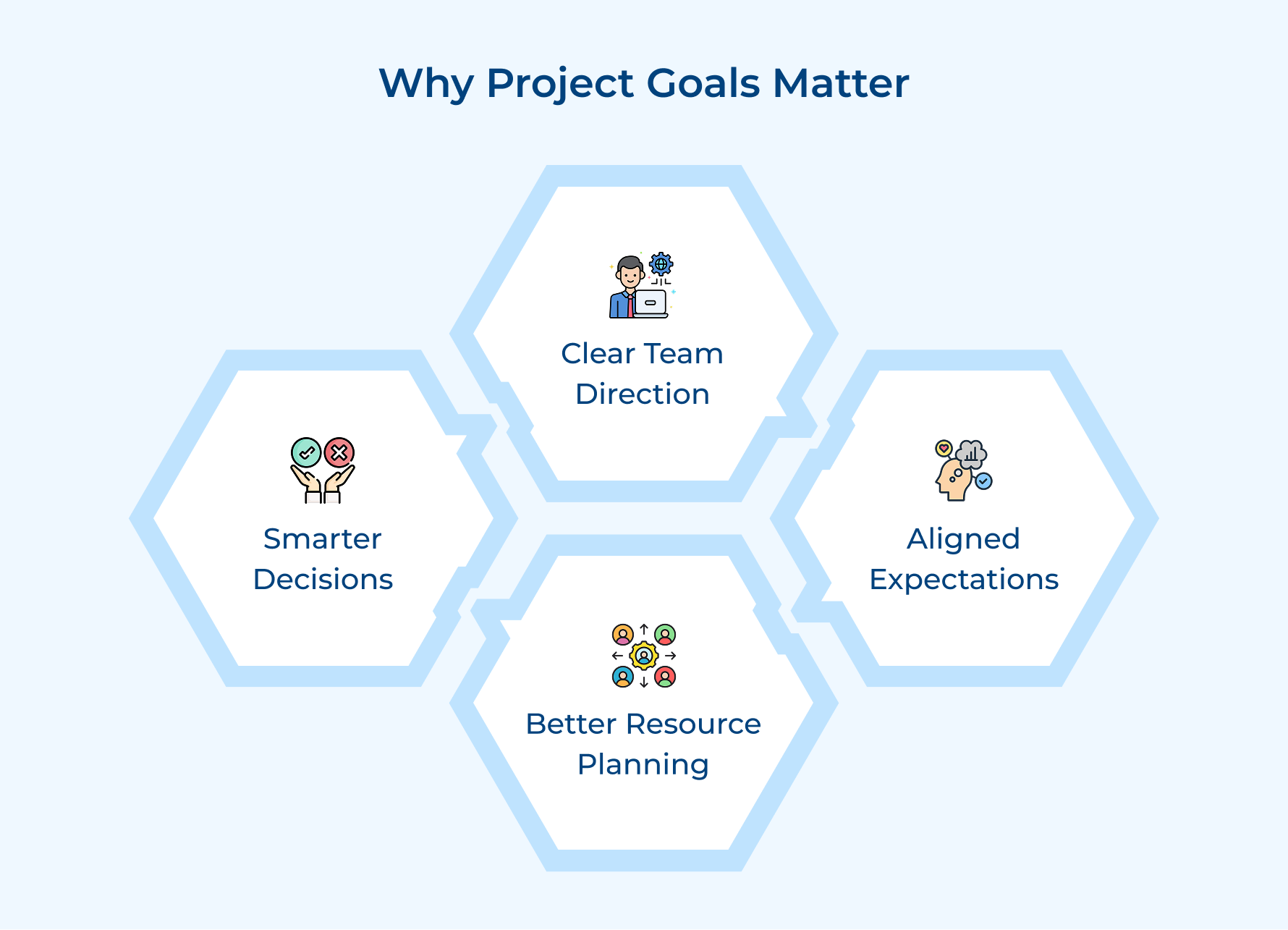
Project goals in project management hold every decision, resource and team effort together — to make sure teams do not lose direction.
1. Gives the Team a Clear Direction
During project management, the first thing that breaks down when there are no clear goals is team direction. Think of a situation when every team member of a single project starts delivering with different targets, and productivity drops immediately.
2. Helps Align Stakeholder Expectations
One of the top reasons most projects fail before even engaging momentum is due to misaligned expectations. Project management goals help in building a common understanding between stakeholders and the delivery team.
3. Enables Better Resource Planning
Budget allocation, resource planning and time management become more informed when you have a well-defined goal to work toward. Poorly defined objectives lead directly to waste resources and costly rework.
4. Supports Smarter Decision-Making
Most projects face unexpected challenges during delivery. A defined goal acts as a decision maker during those moments. Teams, when they know the end target, can evaluate trade-offs quickly without derailing the plan.
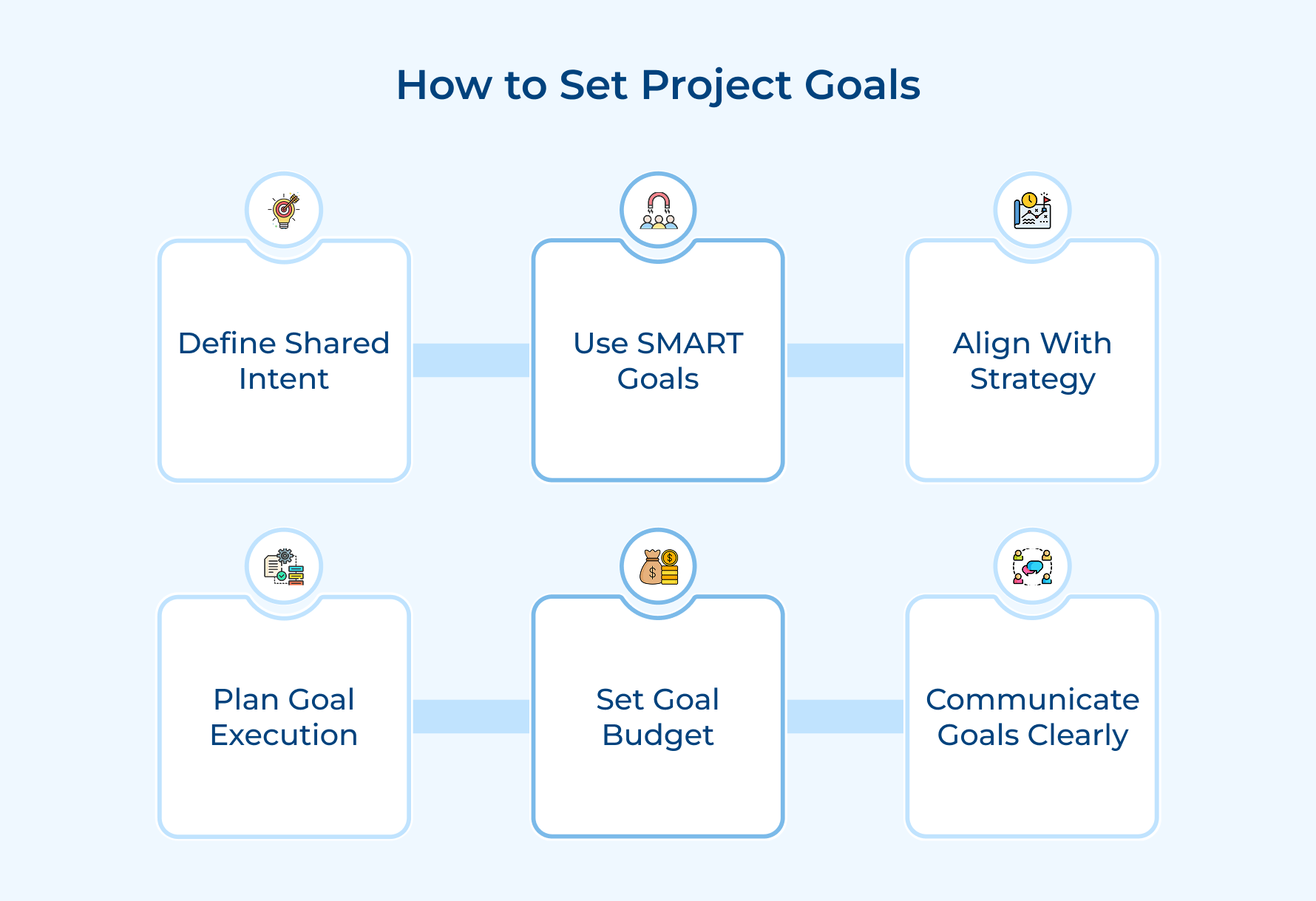
How to Set Project Goals with 6 Proven Strategies?
Project goals set up are all about creating a structured intent that the entire team can focus on and execute with clarity.
1. Identify a Collective Intent
Getting everyone aligned on why this project exists is the most important step before writing a goal. A collective intent means key decision makers, such as stakeholders, project leads and delivery teams, all agree on the core problem.
So what happens without a shared understanding? Departments end up building toward different versions of success, which eventually derail the project.
Start a goal-setting session with these questions:
- What problem or issue are we solving and for whom?
- What will be the achievable target in six months after delivery?
- Are there conflicting priorities that need to be resolved first?
Consider a practical example of identifying project intent to set up goals and objectives. A retail company wants to boost customer satisfaction. Due to unclear goals, the marketing team thinks brand visibility is the target, while the tech team assumes it is a website upgrade. A proper intent session helps in identifying this gap early and builds a unified goal.
2. Apply the SMART Framework
SMART goals are known across most managers, but very few apply the framework with depth. A goal that is technically SMART but vague in practice is a common mistake in project management.
Explore the breakdown of each element like this:
- Specific: What exactly needed to be changed and in which area?
- Measurable: What are the key metrics and KPIs that confirm the goal was achieved?
- Achievable: Does your team have enough skills and bandwidth for the project delivery?
- Relevant: Does this goal directly align with your business objective?
- Time-bound: What is the final deadline with interim checkpoints?
Pro tip: A good SMART goal would look like: “Reduce average page load time by 2 seconds by the end of Q3.” The team can actually build a plan around this.
What do you think every project needs to follow this framework rigidly? No, measurability in most projects is difficult to define upfront. Refine the goal as the project matures instead of forcing a number with no real basis.
3. Ensure Alignment With Business Strategy
Do you know what separates good project goals from the effective ones? How well they align with their wider business strategy. Even a goal that delivers a successful output still moves in the wrong strategic direction. It is a costly detour for any organisation.
Consider using these alignment checkpoints before setting a goal:
- Does this goal support at least one business objective?
- Did the leadership team review and endorse this goal?
- Will this goal create a measurable downstream impact on business?
4. Plan for Success
Success planning involves building the project roadmap that converts a goal and objective statement into an actionable plan for better management. Consider these planning elements for achieving every project goal:
- Milestones: What are the major checkpoints that indicate the project is on track?
- Ownership: Which team member has clear ownership for each milestone?
- Dependencies: Are there any external teams or approvals this goal depends on?
- Risk flags: What are the key threats to the goal and what are the consequences?
What is the best practice that needs to be followed? Build a weekly goal review cadence into the project plan from the start. It assesses whether the project is moving in the right direction, and the defined goal prevents costly drift.
5. Establish a Budget Tied to the Goal
Ambitious goal setup without anchoring them to a realistic budget is a practical mistake. It must be developed together for the defined project and not in separate conversations.
How to map the budget against every project goal?
- Resource costs: People, tools and platforms needed to align for achieving the goal
- Operational costs: Manage all ongoing expenses that continue after successful project delivery
- Contingency budget: more than 10-20 per cent of the budget is reserved for project scope changes
- ROI expectation: ROI is what most businesses expect and within the defined timeframe.
For example, a healthcare provider sets a goal to digitise patient records in three locations. It looks straightforward without a budget attached, but once compliance requirements, data migration, and staff training are factored in, the actual cost increases by three times.
Pro tip: Identify this conflict during goal-setting to keep the deliverables financially viable.
6. Communicate the Goals Clearly and Consistently
A goal that is only defined in a document no one reads or communicates. A proper communication transforms a written objective into a team-wide shared commitment across the delivery timeline.
Strong goal communication is divided into three layers:
- Kickoff alignment: Present the goal in the meeting with full context on its importance and how it was decided
- Visual documentation: Keep the goal visible in real-time dashboards or team wikis instead of hiding it in a buried 50-page brief
- Role-level translation: Break the objectives into what it means for explaining the target from each team involved
Revisit and re-communicate the goal at every major delivery milestone. A goal clearly mentioned before kickoff can slowly drift out of focus when:
- Projects evolve
- Team members change
- Priorities shift.
So it is recommended to have regular goal check-ins to keep your entire team anchored to what matters.
How to Write Project Goals Step-By-Step?
Follow these simple steps to write clear project goals that keep your team aligned and results on track.
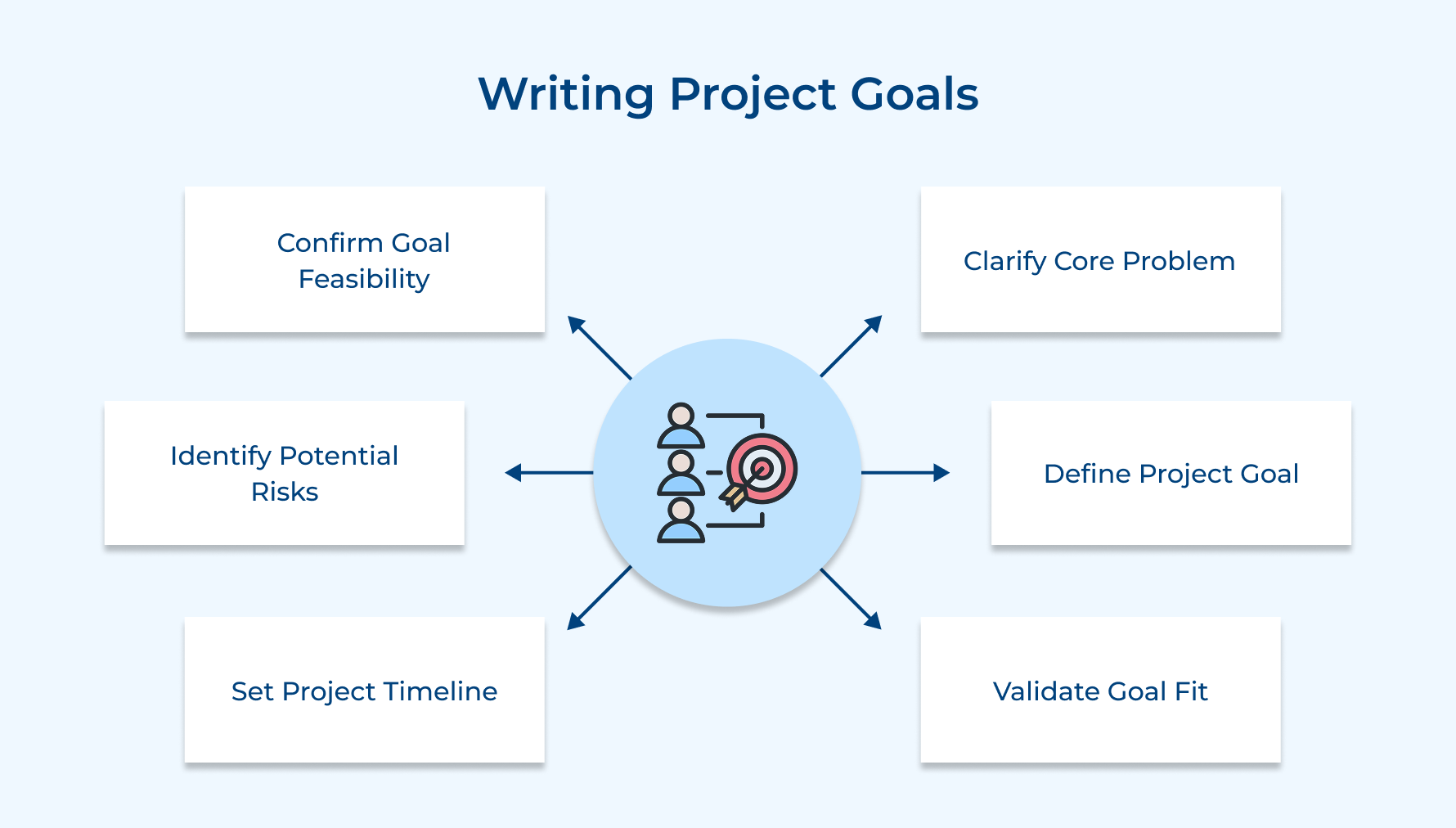
1. Clarify the Core Problem First
Understand the exact problem before defining a goal to determine whether the effort is on the right track. Follow these effective methods to clarify the core problem:
- Run a root cause analysis: Identify the actual problem instead of reacting to visible symptoms. Teams that do not perform efficiently end up solving only surface-level issues while the real blockers remain untouched, leading to delivery issues.
- Conduct a stakeholder discovery session: Collaborate with key stakeholders early to understand the actual problem. It is necessary because different people often see the same problem differently and resolving it prevents goal drift later.
- Benchmark the current state: Maintain proper documentation for benchmarks to keep a record of where things stand with real data before defining the goal.
So what happens during situations when the team starts writing goals without understanding the problem? The project delivers outputs that nobody needs. It is one of the most expensive mistakes a project can face.
2. Write Down the Project Goal
Project goal writing helps to convert a shared intention into concrete commitment that the entire team aligns their work. A goal when only kept in someone’s head instead of being documented is not a real project goal.
Consider this checklist before finalising any written project goal:
- Does the goal clearly define the outcome that needs to be achieved?
- Is the goal written in proper language that every team member can understand?
- Does the goal reduce guesswork about how it will be delivered?
Run through this checklist to immediately identify gaps that create confusion during execution. How is a written goal different from verbal agreement? A written goal creates a fixed point that holds proper team ownership regardless of when they joined the project.
Pro tips:
- Define the goal in one clear sentence first; if not, that means it covers too much ground.
- Avoid using passive language such as “improve” or “support” without a measurable qualifier, as it makes the goal impossible to achieve.
3. Apply a Goal-Validation Framework
A good goal-validation framework makes the objective structurally sound enough to guide execution while withstanding stakeholder scrutiny.
Consider a situation where you have defined an intentional goal, but it is unvalidated. It is one of the most common causes for mid-project misalignment.
Run the Goal Through SMART Criteria for a Structured Validity Check
A goal that cannot qualify the SMART criteria is not perfect for execution. Each of the elements below acts as a filter that eliminates ambiguity and forces precision into the goal statement.
- Specific
- Measurable
- Achievable
- Relevant
- Time-bound
Check for Measurability and a Realistic Scope
Measurability is underestimated by most teams when validating a goal. An unclear metric that does not confirm when the goal has been achieved leads teams to spend more time debating completion than delivering results.
4. Determine a Timeline for the Project Goal
A project goal and objective without a well-defined timeline is similar to an open-ended commitment that rarely gets delivered that a project demands. It transforms intent into a structured and time-bound execution plan.
A deadline defined with a buffer is the best option. But do you know why? Because every project encounters friction. A buffer time reflects experienced planning that accounts for real-world delivery conditions.
Consider these two things in mind when setting project deadline:
- Define the deadline based on an honest capacity assessment instead of stakeholder pressure
- Maintain a buffer of at least 10-15 per cent of the total project duration
Also, you can break the timeline into phased checkpoints to separate a deadline from a real plan. It creates natural moments to assess progress, identify risks and adjust before small delays lead to larger ones.
Here are some project goal examples on how phased checkpoints can be structured:
- Sign off on discovery and requirements by the end of the second week
- Design approval was completed within the fifth week
- Development internal testing planned to close by Week 10
- Final sign-off, along with stakeholder review, locked in by Week 12
Pro tip: Assign ownership to every timeline milestone to a specific person, but if you involve everyone, it leads to unclear accountability and is always the first to slip.
5. Identify Risks That Could Block the Goal
Prevents costly surprises during execution and keeps the project on a realistic path by identifying risks at the goal-setting stage. A goal without risk awareness is built only on guesswork.
Consider these 5 questions to identify risks that block project management goal:
- Do you have any resource constraints that limit the team’s ability to deliver?
- Do any external dependencies come outside the defined scope of the project team’s direct control?
- Is the defined timeline realistic, given the current workload across teams?
Risk identification only belongs to the goal-setting stage because when you identify a risk after defining the goal. It is difficult to address without disrupting stakeholder confidence and project momentum.
For example, a professional services firm is setting a goal to launch a client onboarding system. A proper risk identification is needed, as without it, teams may overlook critical dependencies on the integration vendor. A blocker in between the processes immediately makes the timeline unachievable.
Best practices:
- Involve one team member outside the project group for risk identification. They consistently surface blind spots.
- Review the risk list after every milestone and update it based on changes.
6. Review and Confirm Goal Feasibility
The final quality gate, locking the project goal and objective, is reviewing the feasibility. It confirms the goal is genuinely deliverable. Consider these key metrics to confirm whether the goal is feasible or not:
- Budget availability: Does the budget include all resources and operational costs that align with the goal?
- Team capacity: Does the current team have enough skills to deliver within the defined timeline?
- Dependency readiness: Are all external dependencies available when the project needs?
This gives the project manager a clear view of gaps and how to resolve them before execution begins. It also helps in adjusting the timeline, securing resources and resolving deadlines that match with your team capability.
Real-Life Examples of Project Goals and Objectives
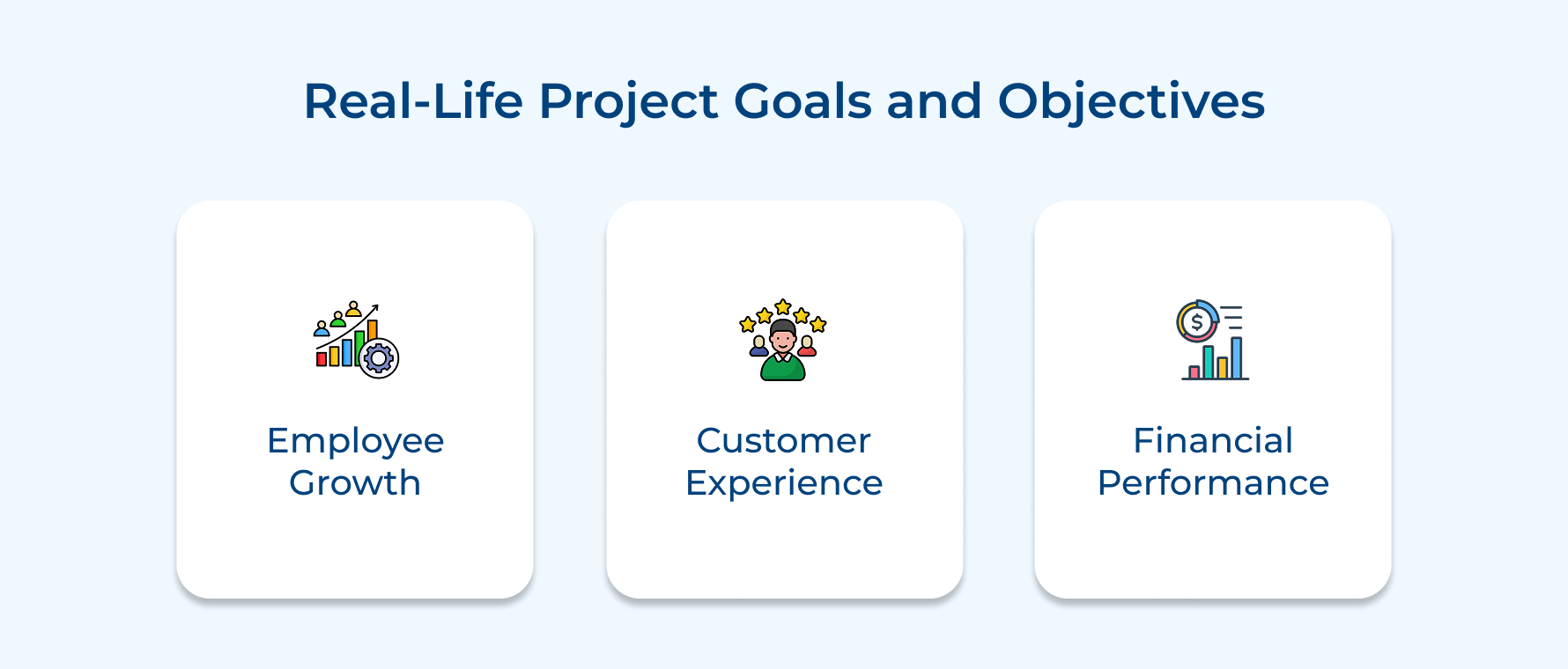
These real-life examples across different functions show how well-structured project goals and objectives actually look in practice.
Employee-Focused Project Goal
Employee-focused goals focus on workforce development, engagement and productivity outcomes that strengthen your team’s performance. It makes sure people-side priorities get the same attention as technical or financial deliverables.
- Decrease employee onboarding time through a structured digital onboarding program
- Increase the internal promotion rate by 20 percent by launching a company-based skills development initiative
- Improve employee satisfaction scores through a revised feedback and recognition program
Customer Service Focused Project Goal
Customer-focused project goals and objectives are built for retention of the people the business serves. The goal is to directly align with project outcomes for better revenue, health and long-term brand loyalty.
- Response to customer queries within 24 hours to 6 hours by deploying an AI-powered ticketing system
- Launch a personalised post-purchase engagement program to increase customer retention rate by 25%
Financial Project Goal
Financial goals are for measurable outcomes that impact cost efficiency or profitability within a defined timeframe. It gives leadership a real-time view of the expected return of a project against its investment.
- Automate three manual finance reporting processes to reduce operational costs by 20 percent.
- Increase monthly recurring revenue over the next two quarters with a tiered subscription pricing model
- Improve gross profit margin by renegotiating with key supplier contracts
Important Types of Project Management Goals
Each type of project management goal has a distinct purpose, and understanding its use cases separates structured thinking from generic processes.
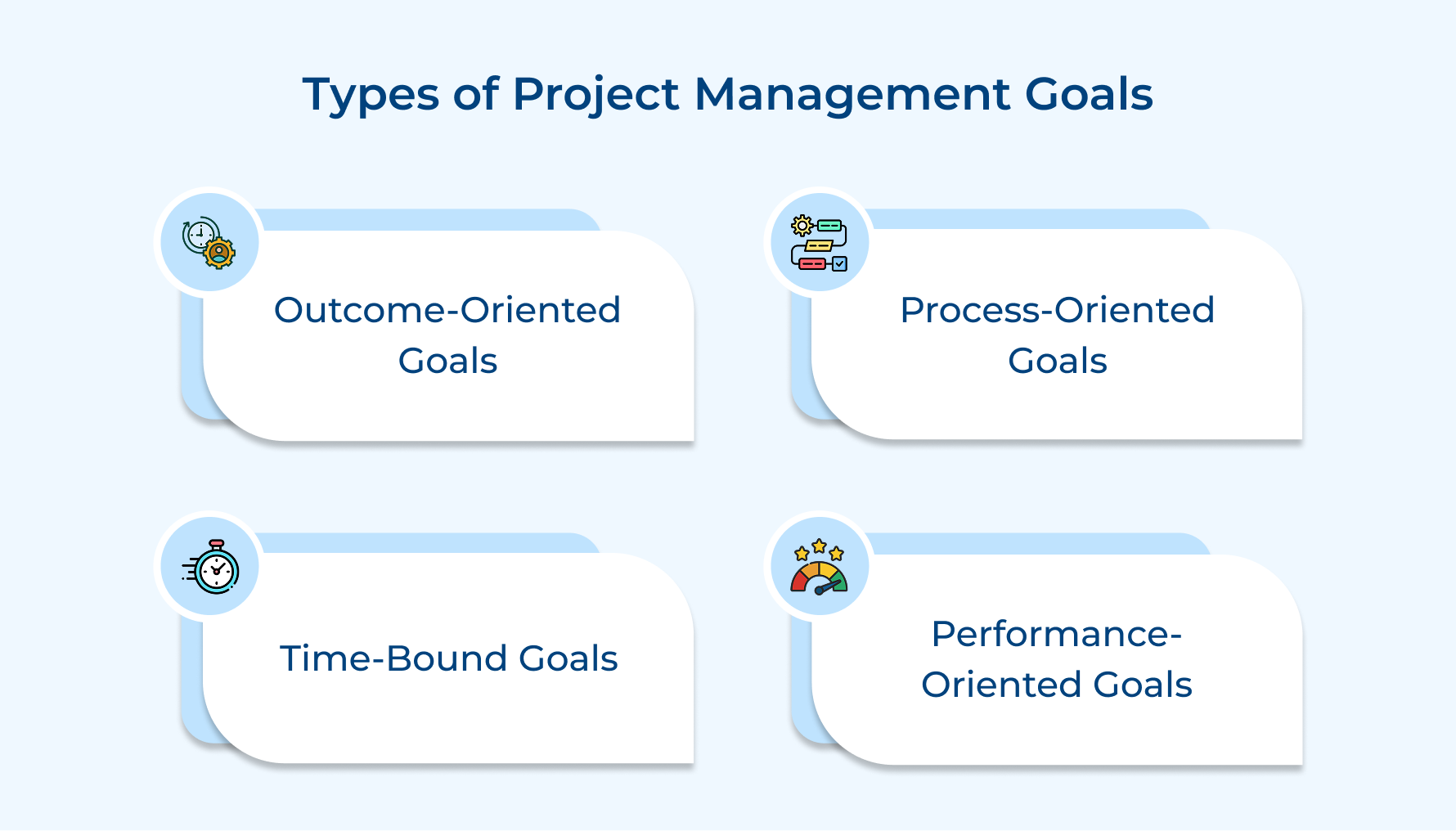
1. Outcome-Oriented Goals
Outcome-oriented goals are all about the end result that project is expected to deliver for the business. These are the goals that reveal an important question in any project: What meaningful change will the effort produce?
2. Process-Oriented Goals
Process-oriented targets on the implementation process of the work instead of just getting delivered at the finish line. It is valuable during situations when the project’s purpose is to improve operational efficiency or build better ways to work across teams.
3. Time-Bound Goals
Time-bound goals deliver a specific outcome within a fixed deadline, where the timeline also carries strategic objectives. These project goals are important in situations when a delayed delivery does not slow progress. It also affects business performance.
4. Performance-Oriented Goals
Performance-focused goals are for pushing a specific metric, capability or output beyond its current baseline within a defined period. It works best when a project has a measurable improvement. It acts as a powerful tool for optimisation-driven initiatives.
Best Practices of Project Goals In Project Management to Follow
Follow proven best practices to separate goals that are delivered from those that are abandoned mid-project
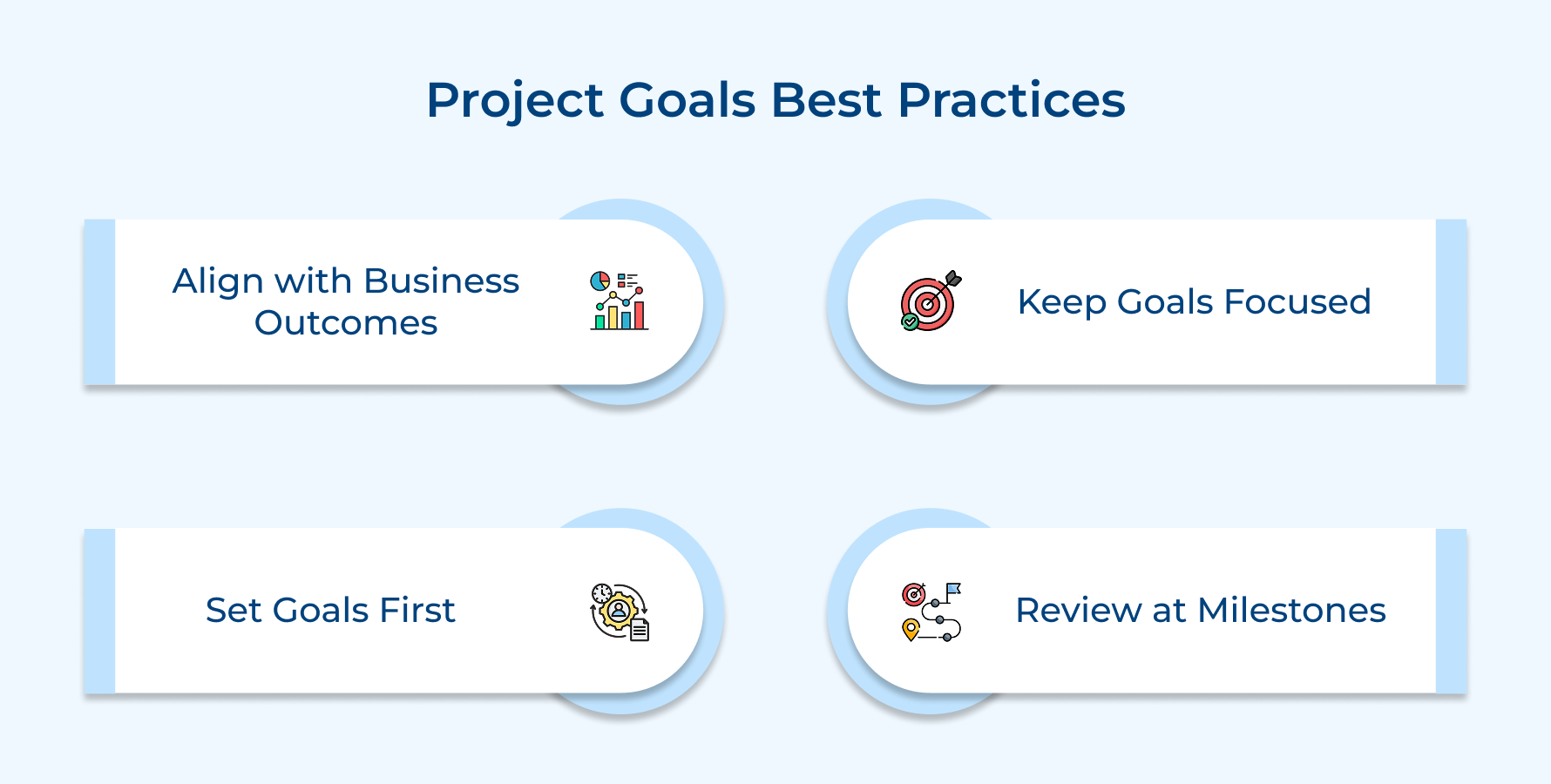
Always tie goals to a business outcome: A goal without an outcome is similar to an activity that uses resources but cannot be justified. Map every goal within revenue, cost or operational metrics that most businesses track.
Write goals before defining the plan: Before defining your goal, when you start planning, it can directly affect your project.
Limit the number of goals per project: Every extra goal during the execution phase leads the team to lose focus and increases delivery risk. Built around a primary goal, combining with two supporting objectives.
Review goals at every major milestone: situations when priorities shift, the defined right goal during kickoff should also be reflected. Maintaining a well-defined goal review at every milestone to protect delivery quality.
4 Critical Mistakes to Avoid While Setting Project Goals
Most well-experienced managers fall into predictable traps when setting goals and these are often unnoticed till an expensive problem arises.
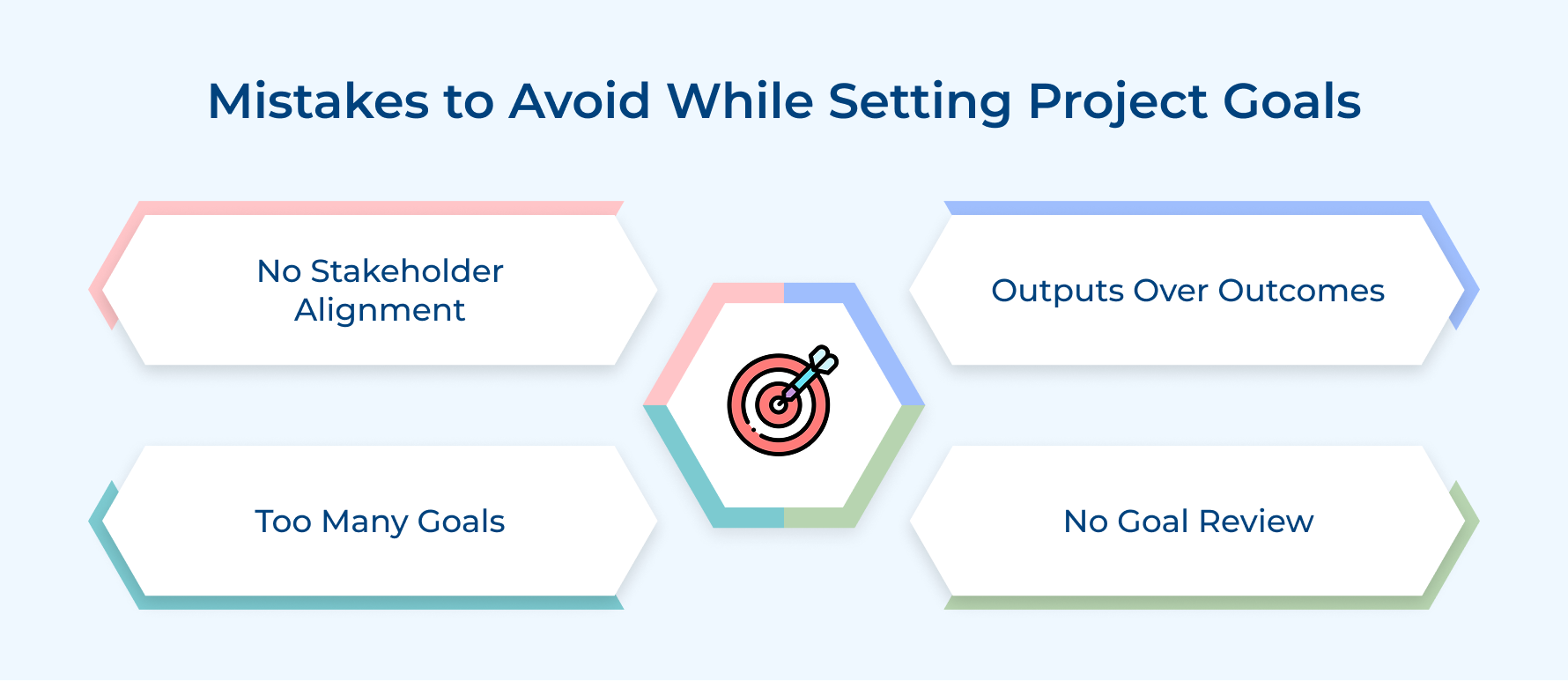
1. Setting Goals Without Stakeholder Input
Goals defined by a single person always miss the critical business context that stakeholders hold. It leads to a defined goal that everyone nods during kickoff, but quietly disagrees with throughout execution.
2. Confusing Outputs With Outcomes
An output of a goal is when delivering a new platform, report or process. If it does not produce a change in business performance, it was never a real objective.
3. Setting Too Many Goals at Once
Priority tasks never get the focused execution that they actually need to succeed. Overloaded goal lists break team bandwidth into thin groups. It consistently produces low-quality work across every objective instead of strong delivery.
4. Never Revisiting the Goal After Kickoff
Project goals and objectives that are locked from the start neglect the situations in which business conditions, resources as well as priorities change. Unreviewed from kickoff to delivery is the quietest driver of project failure.
Builds a goal-setting process that consistently works best under real project pressure.
- Collaborate with two stakeholders from different functions during the setting up of the goal in sessions.
- Before finalising, define the measurable outcome that goal is expected to produce.
- Schedule a weekly goal review session at every major project management milestone
- Keep a record of every goal change with a clear rationale and re-share it with the project team
Empower your Dreams With Clear Objectives and Strategy
Project goals are the single most important factor that defines whether a project delivers real value or consumes resources. All successful project delivery starts with clear and well-structured objectives that the entire team understands.
- A good goal is considered specific, outcome-focused and tied directly to a business priority.
- The project starts falling when the goals are set without stakeholder input to define the timeline or a feasibility review.
- Review project goals at every major milestone to keep teams aligned as priorities and resource conditions shift.
Ready to put this into practice? Start auditing your project goals with respect to the SMART framework. The feasibility checklist helps in making small adjustments at the goal-setting stage to create significant outcomes.
Limit time — not creativity
Everything you need for customer support, marketing & sales.

Neeti Singh is a passionate content writer at Kooper, where he transforms complex concepts into clear, engaging and actionable content. With a keen eye for detail and a love for technology, Tushar Joshi crafts blog posts, guides and articles that help readers navigate the fast-evolving world of software solutions.