A Complete Guide to Resource Planning: Benefits, Use Cases & Best Practices

Streamline project management delivery with smart scheduling and utilization tracking, ensuring efficient resource planning.

No credit card required | Cancel anytime

Resource Planning

Trusted by Professional Services Businesses Globally

 
37
35
33
31
29
25%+

Faster Project Delivery

20%+

Cost Reduction

30%

Higher Sales Conversions

Streamline Project Operations with Effective Resource Planning Management

Boost efficiency with the right resource planning software—track time, allocate resources, and collaborate seamlessly in real-time.

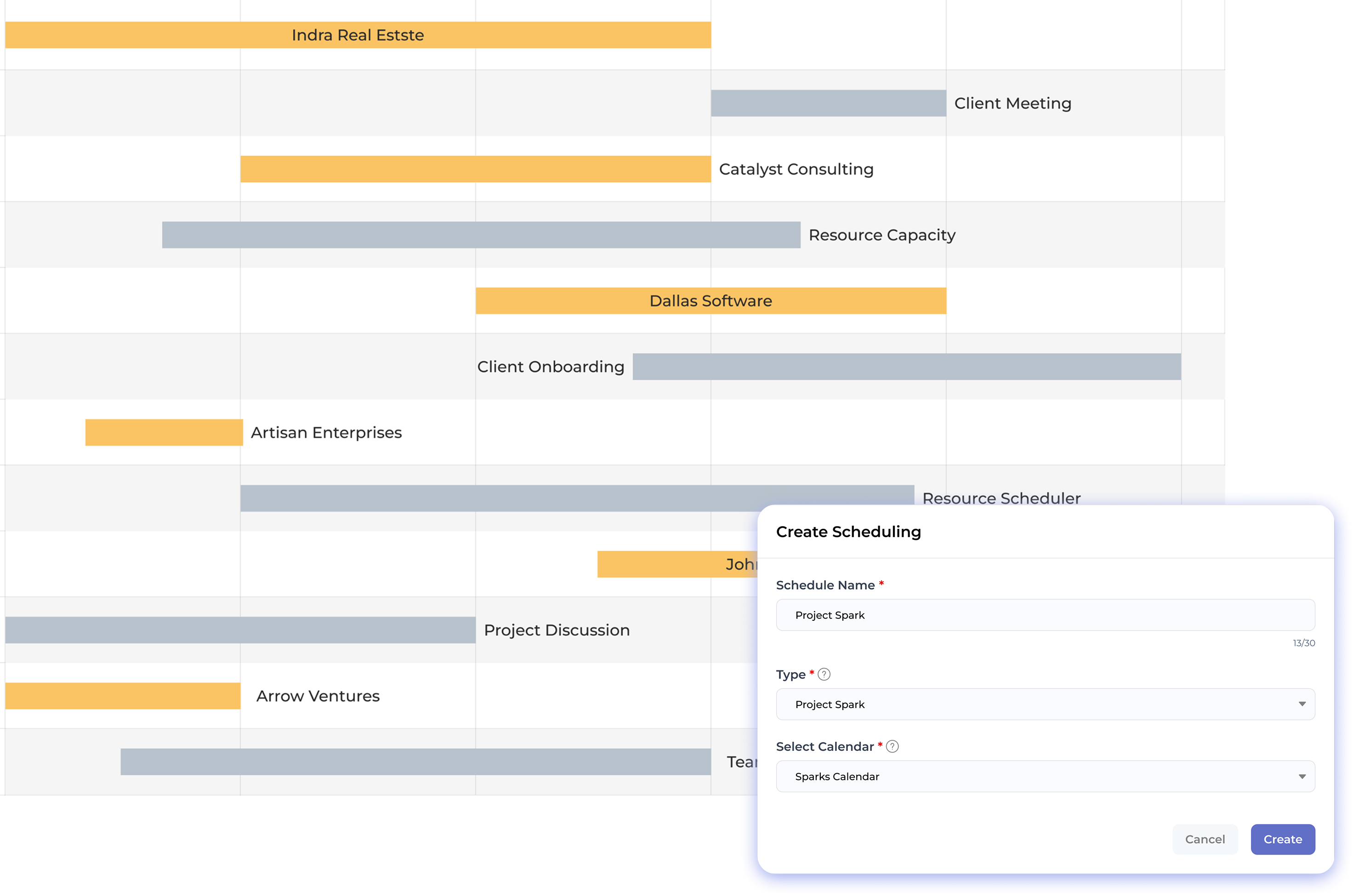
Intelligent Resource Scheduling

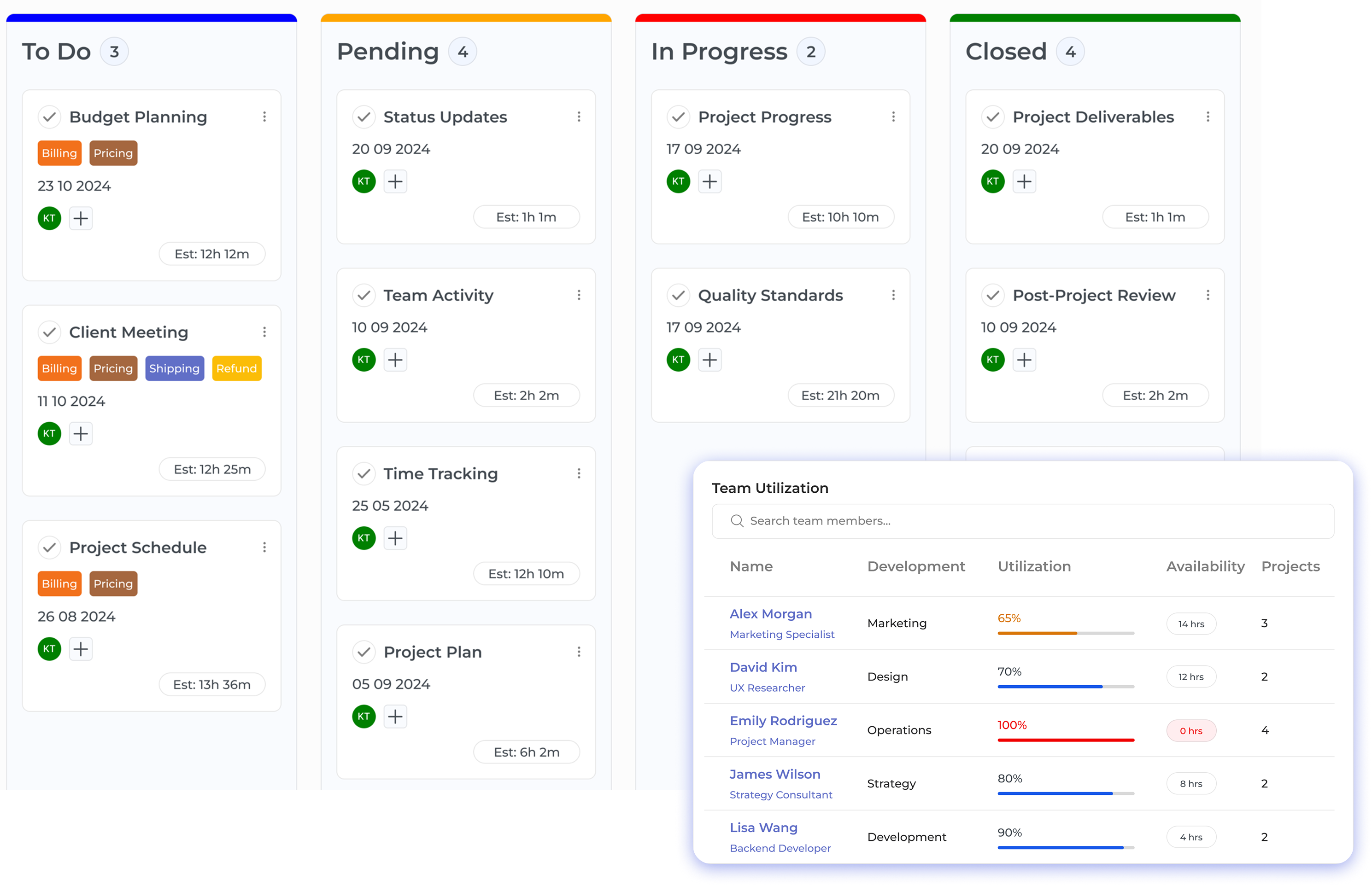
Kooper’s intuitive system offers drag-and-drop functionality, enabling seamless resource assignment. It prevents overallocation and optimizes utilization with real-time availability tracking.

Integrated Project & Task Management

A robust resource planning tool should integrate with project management functionalities, ensuring that resource allocation aligns with milestones, deadlines, and evolving project scopes.

Advanced Time Tracking & Utilization Insights

Kooper’s time tracking automatically syncs with project budgets, providing insights into billable and non-billable hours. Utilization reports help maximize workforce productivity.

Resource Planning Dashboard 1
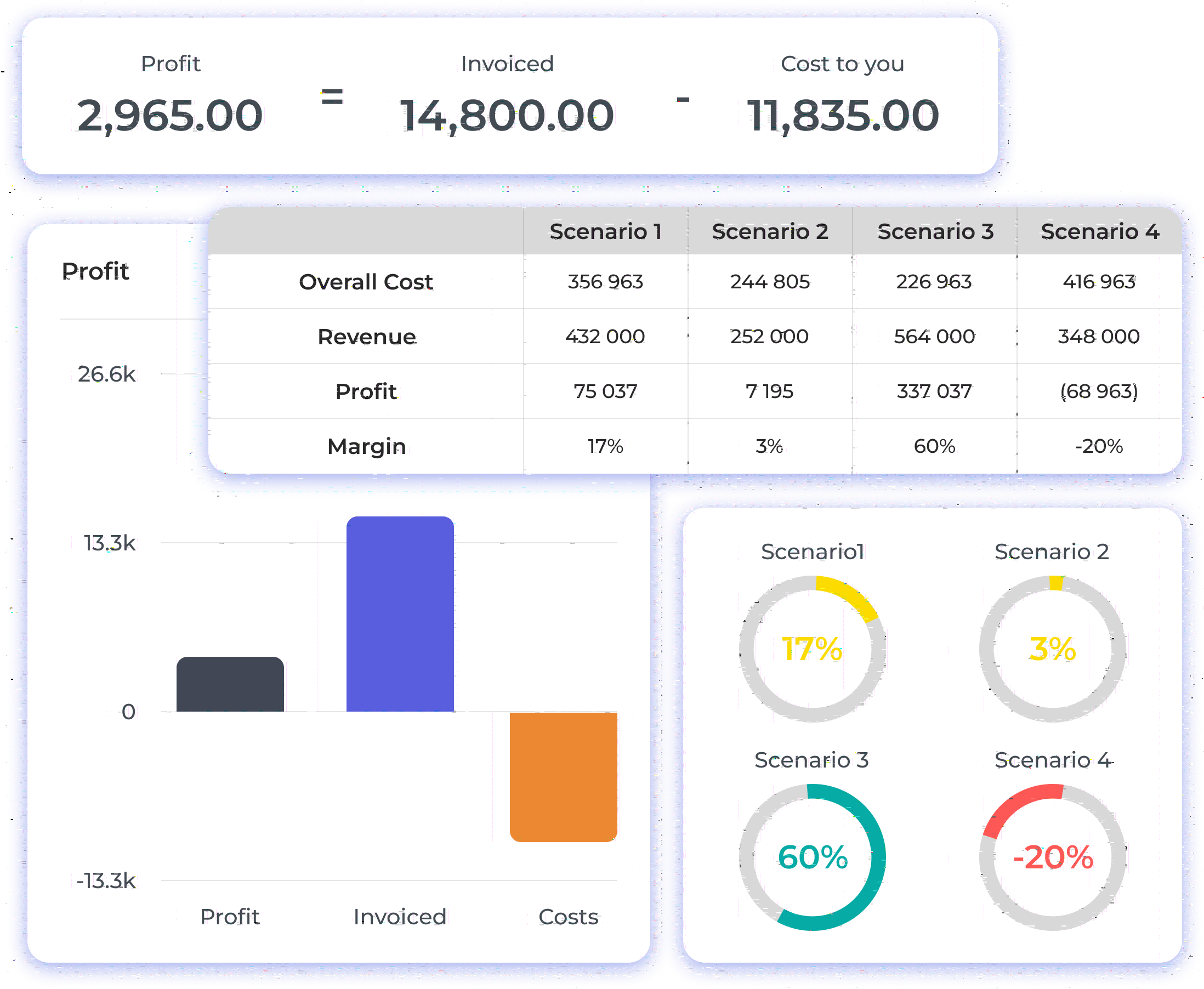
Resource Planning Dashboard 2

Accurate Demand Forecasting & Scenario Planning

Predict future resource needs with AI-driven forecasting. Kooper enables scenario modeling, allowing businesses to plan for multiple resource allocation outcomes effectively.

Financial Budgeting & Profitability Tracking

Ensure financial control with features like budget tracking, expense monitoring, and cost allocation. Kooper connects resource planning with financial forecasting to improve project profitability.

Seamless Collaboration & Communication Tools

Enhance teamwork with shared calendars, automated notifications, and real-time updates. Kooper’s collaboration tools ensure transparency and efficiency across distributed teams.

Projects not only fail due to lack of effort but also because the right resources aren’t available at the right time. As project complexity increases, teams become inefficient and allocation continues to drive delays, leading to cost overruns.

Resource planning helps in identifying and managing people, time, and skills to meet project demands. Even small inefficiencies can reduce profitability by 10–20% and impact delivery timelines with the right solution.

The guide will explain the building process of a resource planning strategy, key frameworks, tools and common challenges. Learn how to forecast demand and improve project outcomes without complication. It helps in practical execution, so you can apply these directly to resource planning.

What is Resource Planning?

Resource planning is the process of identifying, allocating and managing an organisation’s resources to meet project demands efficiently. It involves forecasting future needs and matching the right talent to prevent over- or underutilisation.

CXOs or project heads require real-time visibility into resource allocation, capacity, and utilization across the organization. They need tools that can adapt to dynamic project environments, forecast future resource needs, and provide data-driven insights for strategic decision-making.

Resource planning is critical for:

  • Maximize resource utilization: Ensure that all resources, especially skilled professionals, are optimally employed to increase productivity and profitability.
  • Enhance project delivery: Align the right resources with the right projects at the right time to improve project outcomes and client satisfaction.
  • Improve financial performance: Optimize resource allocation to control costs, improve billing efficiency, and increase overall profitability.
  • Enable strategic growth: Provide insights into resource capacity and skills gaps to inform hiring decisions as well as business development strategies.

Why is Resource Planning Important?

Resource planning makes sure that teams, people, time and resources are efficiently allocated to the right project to prevent delays while keeping projects on track. Below are the core reasons for adopting resource planning in a professional services firm:

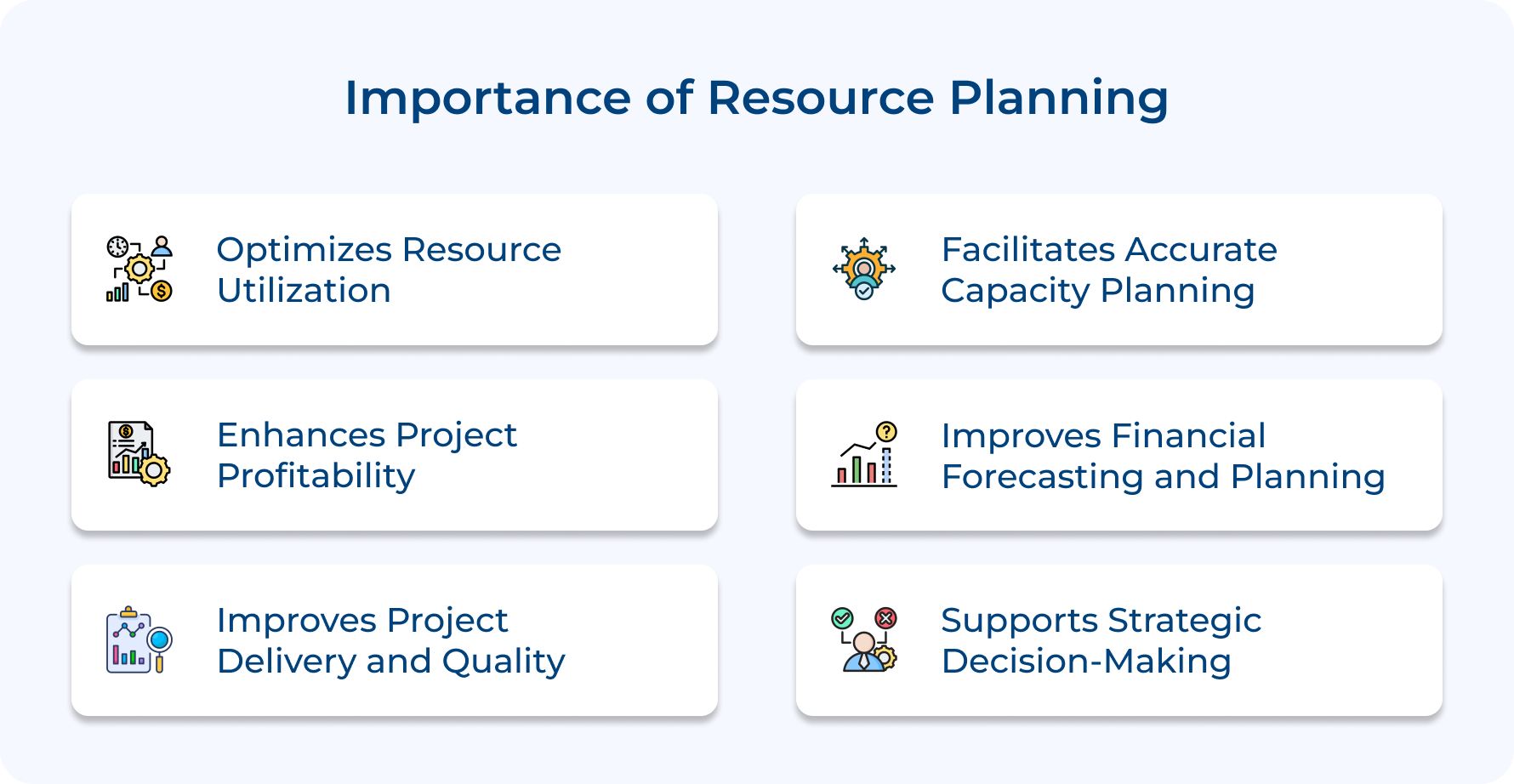
Importance of Resource Planning

1. Optimizes Resource Utilization:
Strategic resource planning with a streamlined capacity planning process ensures optimal utilization of the workforce and assets. It minimizes idle time, aligns team capacity with demand, and enhances overall productivity.

2. Enhances Project Profitability:
The effective allocation of resources improves cost estimation and budgeting accuracy. It helps control expenses, prevent overruns, and maintain strong profit margins.

3. Improves Project Delivery and Quality:
Matching skilled professionals to project needs enhances execution quality. Proper resource planning reduces delays, optimizes workflows, and strengthens client satisfaction.

4. Facilitates Accurate Capacity Planning:
Clear visibility into resource availability enables better workload distribution. It doesn’t just prevent overcommitment and supports scalability but ensures sustainable operational growth.

5. Improves Financial Forecasting and Planning:
Accurate forecasting of billable hours and project pipelines aids in budgeting. While it improves revenue projections and supports cash flow management, the planning also gives insights into informed investment strategies.

6. Supports Strategic Decision-Making:
Resource planning insights guide strategic business initiatives. Firms can identify growth opportunities, address skill gaps, and optimize workforce planning for long-term success.

How to Build a Resource Planning Strategy in 10 Steps

Project resource planning becomes a success not just with one or two but with a full-fledged strategy. Here’s the comprehensive strategy to consider:

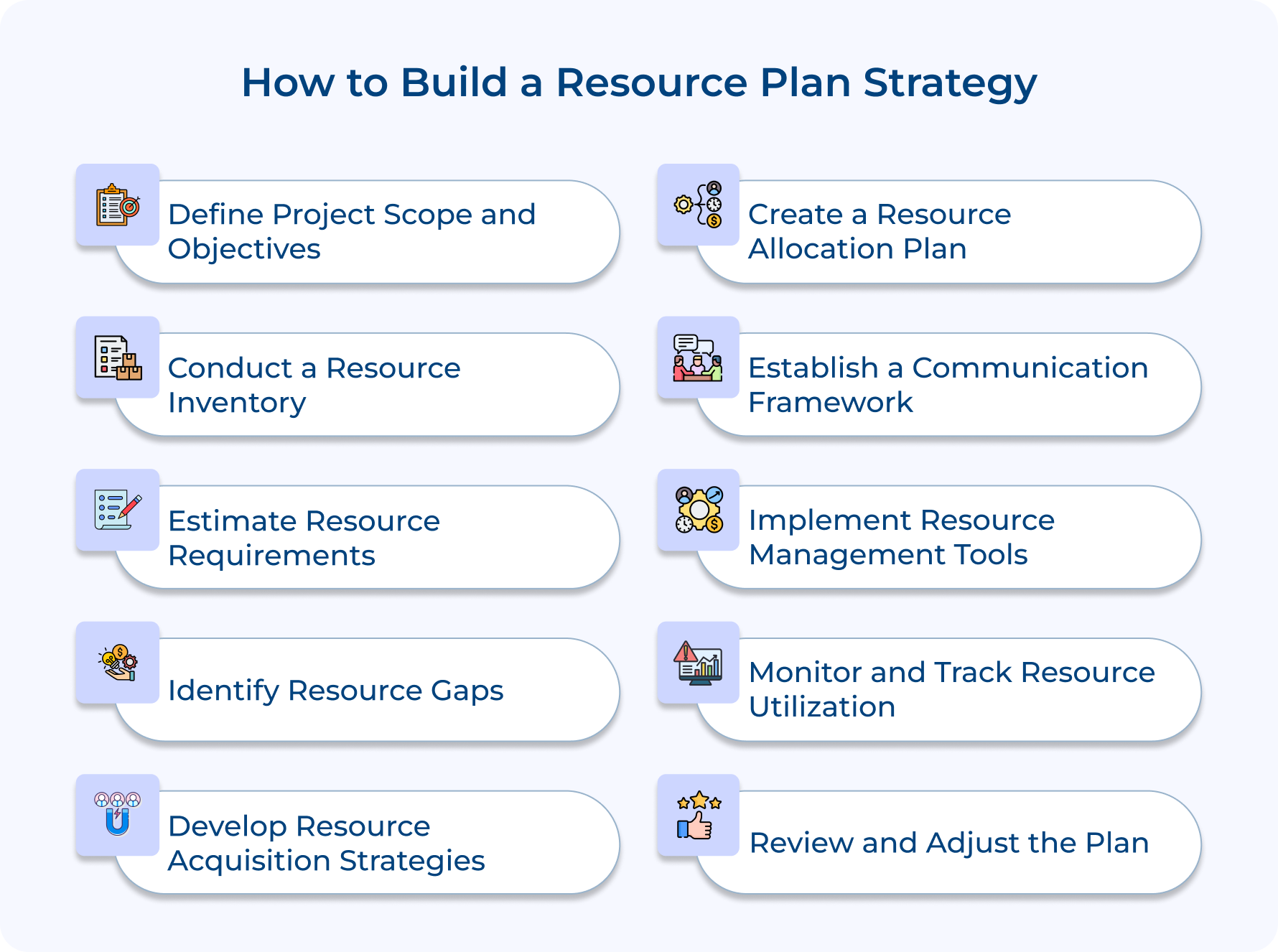
How to Build a Resource Plan Strategy

1. Define Project Scope and Objectives

Define your project scope by documenting objectives, deliverables, timelines and constraints before any resource allocation. It ensures that resources are aligned with project goals and prevents scope creep, which can lead to resource misallocation.

Use the defined objectives to guide resource estimation, allocation, and prioritization throughout the project lifecycle. The clarity helps in making informed decisions about resource needs and trade-offs.

Best practices:

  • Involve key stakeholders in scope definition to ensure alignment and buy-in.
  • Create a detailed project charter that outlines objectives, deliverables, and constraints.

2. Conduct a Resource Inventory

Conduct a resource inventory checkup frequently by tracking current unutilized resources, people or tools that can be used during project demand. It provides a clear picture of available skills, expertise, and capacity within the organization. It’s essential to identify what resources you have and where gaps might exist.

Leverage the inventory to match available resources with project needs, identify training opportunities, and inform hiring decisions. It also helps in balancing workloads across teams and projects.

Best practices:

  • Regularly update the resource inventory to reflect changes in skills and availability.
  • Include both hard skills (technical abilities) and soft skills (communication, leadership) in the inventory.

3. Estimate Resource Requirements

Estimate resource requirements in any project or specific task by understanding the demand using real time data and KPIs. It prevents under-resourcing, which can lead to delays, or over-resourcing, which can inflate costs.

The estimates can help to create a detailed resource plan, allocate budget, and set realistic project timelines. It also helps in identifying potential resource conflicts early in the project.

Best practices:

  • Use historical data from similar projects to inform estimates.
  • Include buffer time in estimates to account for unexpected delays or complications.

4. Identify Resource Gaps

Identify resource gaps by conducting a gap analysis to uncover shortfalls in skills or capacity before they become blockers. It helps in proactively addressing potential shortfalls in skills or capacity. It prevents last-minute scrambling for resources and ensures the project is adequately staffed.

Gap analysis helps in informed hiring decisions, training programs, or outsourcing decisions.

Best practices:

  • Conduct regular gap analyses throughout the project lifecycle, not just at the start.
  • Consider both quantitative (number of resources) and qualitative (skills and expertise) gaps.

5. Develop Resource Acquisition Strategies

Build a resource acquisition strategy by addressing identified gaps and securing the skills as well as capacity a project requires. It helps in maintaining project momentum and quality.

Employ these strategies to guide hiring processes, training programs, or negotiations with contractors and vendors. It ensures that resource needs are met in a timely and cost-effective manner.

Best practices:

  • Consider a mix of strategies, including hiring, training, and outsourcing to balance speed as well as cost.
  • Develop relationships with reliable contractors or agencies for quick access to specialized skills.

6. Create a Resource Allocation Plan

Create a resource allocation plan by assigning the right people to the right tasks when needed. It optimizes resource utilization and prevents conflicts or overallocation.

Use the plan to guide day-to-day resource management, track progress, and make adjustments as needed. It serves as a roadmap for project execution, resource utilization, etc.

Best practices:

  • Use visual tools like Gantt charts to represent resource allocation over time.
  • Build flexibility into the plan to accommodate unexpected changes or delays.

7. Establish a Communication Framework

Set a communication framework by keeping all stakeholders aligned about resource decisions and issues. It promotes transparency and helps in quickly addressing resource conflicts.

The framework guides to setting up regular check-ins, progress reports, and escalation procedures. It facilitates timely decision-making as well as helps in managing stakeholder expectations.

Best practices:

  • Define clear roles and responsibilities for resource-related communications.
  • Use collaborative tools to ensure real-time visibility into resource allocation and utilization.

8. Implement Resource Management Tools

Choose resource management tools based on factors such as centralized tracking, allocation and analysis of resource usage across project. They improve accuracy, save time, and provide valuable insights for decision-making.

The tools automate resource scheduling, track utilization, generate reports, and forecast future resource needs. They can also help in scenario planning and optimization.

Best practices:

  • Choose tools that integrate well with your existing project management and HR systems.
  • Provide thorough training to ensure all team members can effectively use the tools.

9. Monitor and Track Resource Utilization

Monitoring resource utilization by identifying inefficiencies, overallocation or underutilization across all the ongoing projects. It ensures that resources are being used effectively and project goals are being met.

Leverage utilization data to make real-time adjustments to the resource plan, inform performance evaluations, and optimize future resource allocation decisions.

Best practices:

  • Set clear KPIs for resource utilization and regularly track performance against these metrics.
  • Use dashboards to provide real-time visibility into resource utilization across projects.

10. Review and Adjust the Plan

Review and adjust your resource plan regularly by keeping it aligned with shifting project needs and organizational goals. It allows for continuous improvement and adaptation to changing circumstances.

Reviews can identify areas for improvement, reallocate resources as needed, and update forecasts. It helps in maintaining the effectiveness of the resource plan throughout the project lifecycle.

Best practices:

  • Conduct formal reviews at key project milestones or at regular intervals (e.g., monthly or quarterly).
  • Encourage feedback from team members and stakeholders to inform plan adjustments.
Core Elements of a Resource Planning Framework

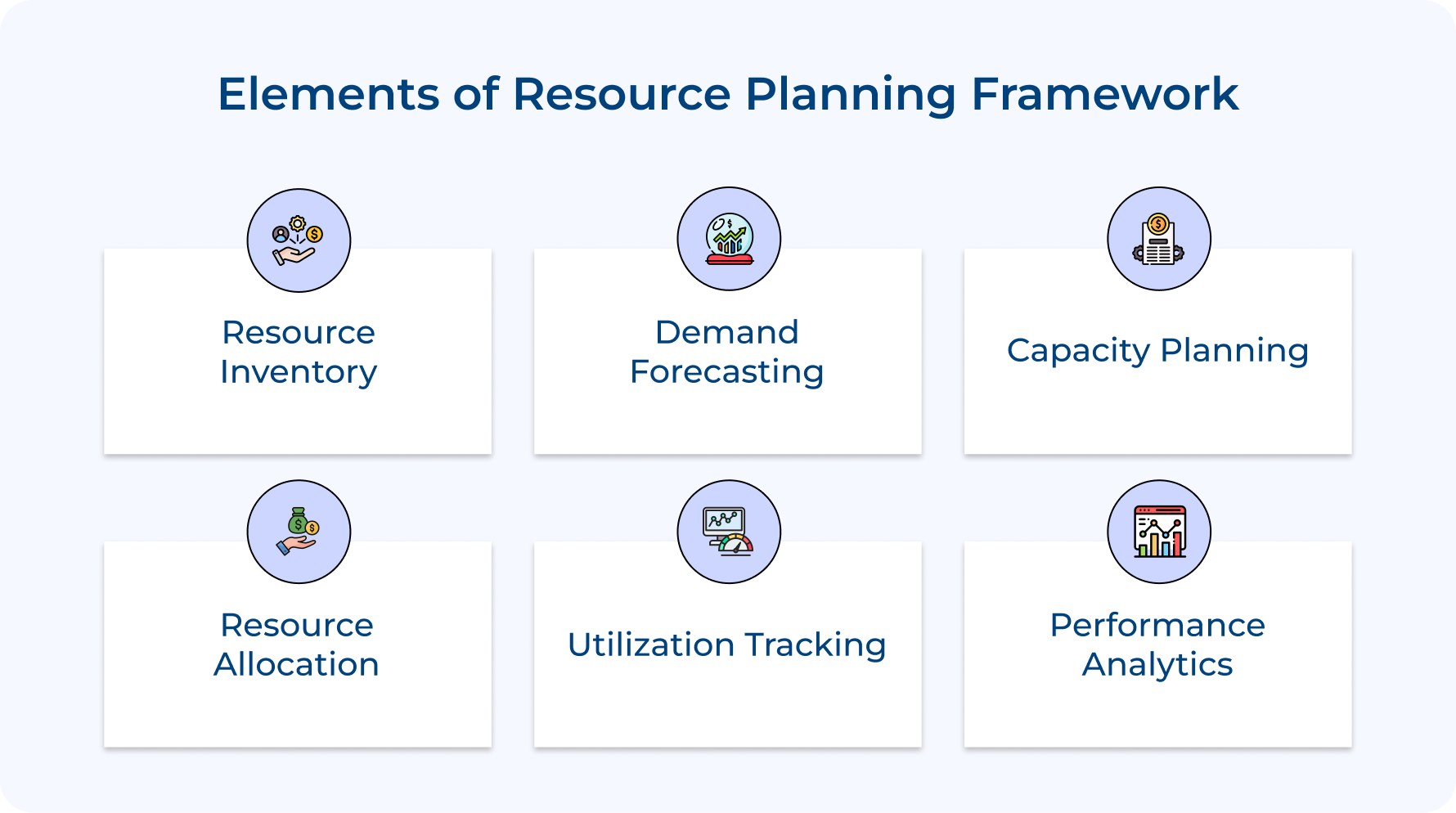
A resource planning framework ensures efficient allocation, utilization, and forecasting of resources. Let’s explore its core elements and how to leverage them:

Elements of Resource Planning Framework

1. Resource Inventory: Tracking Available Skills and Capacity

An up-to-date record of employees, contractors, and equipment aids in precise project resource planning as well as allocation. Knowing the availability, skillset, and cost of each resource allows for optimal utilization.

2. Demand Forecasting: Predicting Future Resource Needs

Forecasting based on business activities helps to project upcoming resource needs. This helps in mitigating the chances of under- or over-resourcing. Well-supported projections assist in anticipating staffing and training requirements.

3. Capacity Planning: Balancing Supply and Demand

Equally, balancing the supply and demand of resources makes sure that no team member is overloaded or underused. A resource management plan helps identify capacity shortages in advance and makes it easy to assign tasks to various projects.

4. Resource Allocation: Assigning the Right Resources to the Right Tasks

Using particular personnel and resources for specific tasks enhances productivity as well as ensures that project timelines are met and small businesses can achieve this efficiently by using SMB resource management software tailored for SMBs. Effective allocation pays attention to availability, budget, skills, and project importance.

5. Utilization Tracking: Monitor Real-Time Resource Consumption

Assessing real-time resource consumption makes it easier to identify poor practices and excessive work. Managing staff workload and billable hours allows teams to function towards productivity without excessive fatigue.

6. Performance Analytics: Measure Productivity and Project Outcomes

Monitoring set objectives during a specific time enables real-time evaluation to enhance strategies. Profitability, productivity, employee satisfaction, and other factors create room for strategy enhancement.

Key Features to Look for in Resource Planning Software

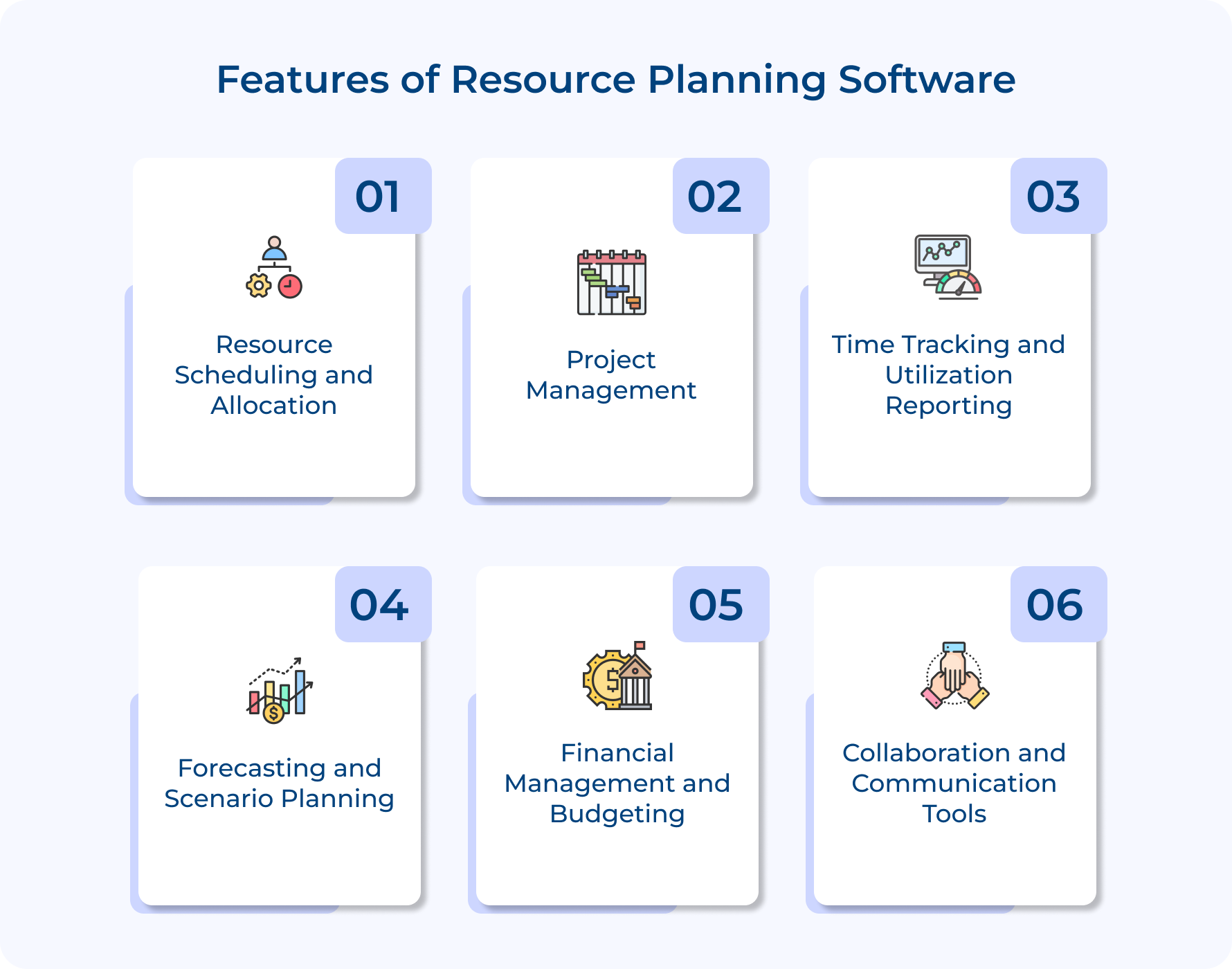
Choosing the right resource planning software ensures efficient scheduling and tracking. But how do you find the right one? This list of features can help:

Features of Resource Planning Software

1. Resource Scheduling and Allocation

Look for a system that offers intuitive drag-and-drop scheduling, allowing you to easily assign resources to projects as well as tasks. Understanding the importance of a resource schedule can help you visualize allocation across multiple projects and resolve conflicts quickly. The software should also support different allocation methods, such as percentage-based or hour-based assignments.

2. Project Management

The resource planning software should seamlessly integrate with project management functionalities. This integration ensures that resource allocation aligns with project timelines, milestones, and deliverables. You should get to easily adjust resource plans as project scopes change, maintaining synchronization between project schedules and resource availability.

3. Time Tracking and Utilization Reporting

An effective resource planning tool should integrate seamless time-tracking capabilities. The best timekeeping software for small business ensures team members can easily log hours against specific projects and tasks, providing accurate data for billing and utilization analysis. Look for customizable utilization reports that offer insights into billable vs. non-billable hours, helping you optimize your workforce’s productivity.

4. Forecasting and Scenario Planning

Look for advanced forecasting capabilities that allow you to predict future resource needs based on pipeline projects and historical data. The project budget software should support scenario planning, enabling you to model different resource allocation scenarios and their impacts on project timelines as well as budgets.

5. Financial Management and Budgeting

The tool should provide features for budget tracking and financial management related to resources. It includes the ability to set billable rates, track project costs, and generate financial forecasts based on resource allocation. The tool should offer real-time visibility into project profitability and help identify potential budget overruns early.

6. Collaboration and Communication Tools

Effective project resource planning requires good communication. Look for features that facilitate collaboration among team members, such as shared calendars, task assignments, and notification systems. The software should also provide client portal capabilities, allowing for transparent communication with clients about resource allocation and project progress.

How to Measure Resource Planning Effectiveness

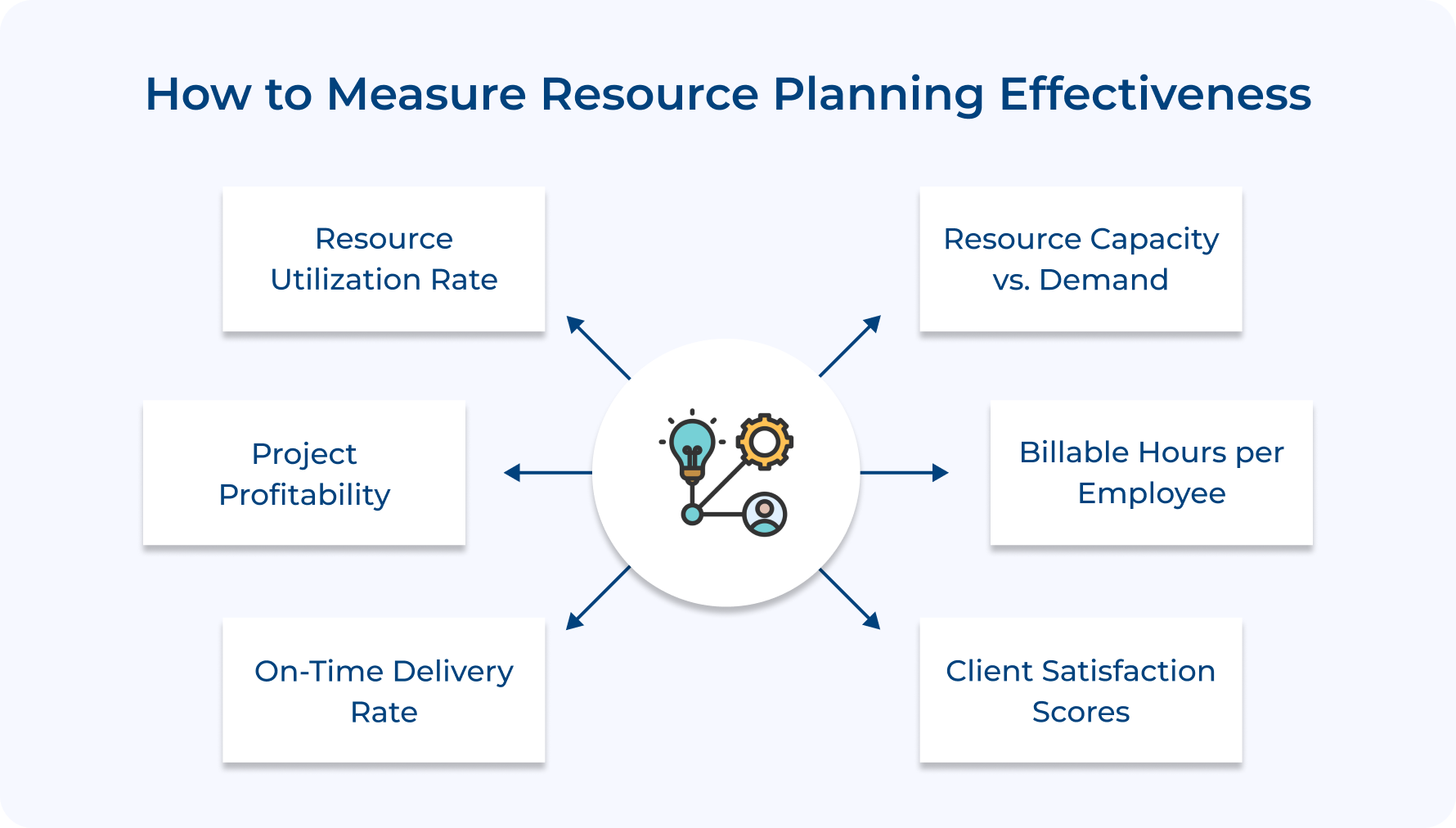
Measuring resource planning effectiveness is key to maximizing efficiency and profitability. The key metrics below help in gauging better.

How to Measure Resource Planning Effectiveness

1. Resource utilization rate: This metric measures the percentage of time resources are actively working on billable projects. It’s calculated by dividing billable hours by total available hours. A high utilization rate (typically 70-80%) indicates efficient resource allocation, while a low rate may suggest overstaffing or ineffective planning.

2. Project profitability: The KPI assesses the financial success of projects concerning resource allocation. It’s calculated by subtracting the cost of resources (and other expenses) from project revenue. Consistently profitable projects indicate effective resource planning and pricing strategies.

3. On-time delivery rate: The metric tracks the percentage of projects completed within the planned timeline. A high on-time delivery rate suggests that resources are being allocated effectively to meet project deadlines.

4. Resource capacity vs. demand: It compares available resource capacity against project demands over time. Capacity vs. Demand helps identify potential resource shortages or excesses, allowing for proactive adjustments to hiring, training, or project scheduling.

5. Billable hours per employee: This metric measures the average number of billable hours per employee over a specific period. It helps gauge individual productivity and can highlight discrepancies in workload distribution or potential issues with time management.

6. Client satisfaction scores: While not directly tied to resource planning, client satisfaction often reflects the effectiveness of resource allocation. High satisfaction scores typically indicate that the right resources are being assigned to projects, delivering quality outcomes.

Resource Planning Challenges and How to Solve Them

1. Skill mismatch: Projects often require specific skills that may not align with available resources.

Develop a flexible workforce by cross-training employees and building a network of reliable contractors. Implement a skills management system to track and match skills with project requirements, ensuring the right expertise is available when needed.

2. Resource conflicts: Multiple projects competing for the same limited resources, leading to overallocation.

Establish a centralized resource management system to provide visibility across all projects. Prioritize projects based on strategic importance and client value. Use resource leveling techniques to balance workloads.

3. Changing project scopes: Frequent changes in project scopes disrupt resource plans and allocations.

Set up robust change management processes. Communicate the impact of scope changes on resources to clients and stakeholders. Regularly reassess and adjust resource allocations based on updated project needs.

4. Inaccurate estimations: Underestimating or overestimating resource needs leads to inefficiencies and budget issues.

Use historical data and past project experiences to inform estimates. Implement a standardized estimation process by regularly reviewing and refining estimation techniques. Conduct post-project reviews to improve future estimations.

5. Lack of utilization tracking: Difficulty in accurately tracking and optimizing resource utilization across multiple projects.

Initiate time-tracking tools integrated with project management systems. Set clear utilization targets and KPIs. Use predictive analytics to forecast future utilization trends. Encourage a culture of accurate time reporting among team members.

Getting Started with Effective Resource Planning

Resource planning is all about aligning capacity, skills and demand to drive project delivery while maintaining profitability. It helps in eliminating bottlenecks, improving utilization and making sure projects are completed on time.

  • Prevent over- or underutilization by aligning resource allocation with real-time capacity and demand.
  • Improve project profitability and delivery outcomes with forecasting, tracking and analytics. 

Effective resource planning turns operational complexity into an advantage. Optimize your workflows with Kooper and book a demo to understand how it helps in building a scalable resource plan.

Frequently Asked Questions About Resource Planning

To handle unexpected shortages, maintain a pool of flexible resources, including contractors or part-time staff. Cross-train your team to increase versatility. Establish partnerships with staffing agencies for quick access to specialized skills. Implement a clear escalation process for resource conflicts and consider reallocating resources from less critical projects when necessary.

Focus on optimal rather than maximum utilization. Set realistic utilization targets (around 80%). Regularly monitor workloads and encourage open communication about capacity. Implement policies to protect personal time and promote work-life balance. Invest in training to improve efficiency as well as expand skill sets.

Improve forecasting accuracy by analyzing historical data from similar projects. Use three-point estimation techniques to account for best-case, worst-case, and most likely scenarios. Regularly review and refine your estimation process. Implement a feedback loop where actual resource usage is compared to forecasts to continuously improve predictions.

The ideal utilization rate typically ranges from 70-80% for professional services firms. This allows for a balance between billable work and necessary non-billable activities like administration, training, and business development. However, the optimal rate may vary based on your specific business model and industry norms.

Align your goals with your business strategy by involving leadership in the resource planning process. Regularly review resource allocation against strategic goals. Prioritize projects and resource investments that support key business objectives. Implement a skills development program to ensure your resource capabilities evolve with your strategic direction.