10 Proven Workload Management Tips to Boost Team Efficiency

Key Highlights:
- Discover actionable workload management tips to balance team capacity and improve client delivery.
- Learn how strategic workload management tips help agencies streamline operations while meeting tight project deadlines efficiently.
- Implement practical workload management tips that align team skills, automate planning and build scalable processes for long-term agency growth.
Agency teams across the industry are drowning in chaotic workloads that create stress and missed deadlines. Talented professionals burn out while projects suffer from poor resource allocation and unclear priorities.
Employee turnover increases while client satisfaction drops and profit margins shrink under the pressure of inefficient operations.
These practical workload management tips create sustainable growth patterns that benefit everyone involved. Smart strategies transform overwhelming chaos into predictable success through proven tips that protect both team wellbeing and client relationships.
What is Workload Management?
Workload management is the strategic process of planning, distributing, and monitoring work tasks across team members to optimize productivity while delivering client projects efficiently.
It involves balancing resource capacity with project demands while ensuring quality standards are maintained. This systematic approach helps agencies and professional services firms avoid burnout as well as meet deadlines consistently.
Workload management operates through continuous assessment of team availability and project requirements. Managers track individual capacity and redistribute tasks when bottlenecks emerge. The process relies on real-time visibility into project progress and resource allocation across all active engagements.
Core objectives of workload management include:
- Maximize team productivity by ensuring everyone works at optimal capacity without overcommitment.
- Prevent employee burnout through balanced task distribution and realistic deadline setting.
- Improve project delivery by matching the right skills to appropriate tasks efficiently.
- Enhance client satisfaction by maintaining consistent quality and meeting promised timelines.
- Increase profitability by optimizing billable hours and reducing project delays or scope creep.
Benefits of Workload Management
Smart workload management transforms how agencies operate by creating predictable workflows and healthier team dynamics. These benefits compound over time to build stronger and more profitable organizations.
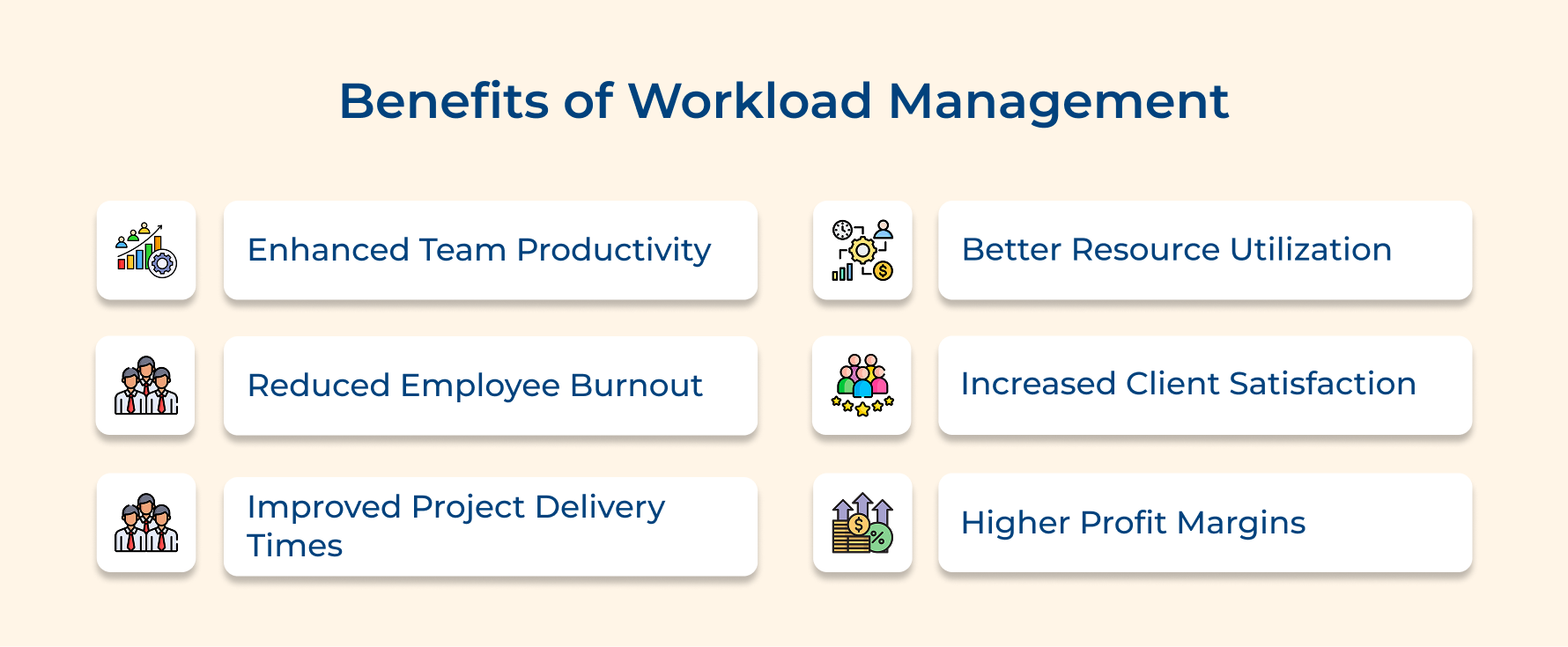
Enhanced Team Productivity
When work is distributed based on individual strengths and current capacity, teams accomplish more in less time. People focus on tasks that match their expertise while avoiding the context-switching that kills efficiency. This targeted approach means projects move faster
without sacrificing quality.
Reduced Employee Burnout
Balanced workloads prevent the feast-or-famine cycles that exhaust creative professionals. Team members maintain consistent energy levels throughout projects instead of experiencing the stress spikes that lead to turnover. Happy employees produce better work and stick around longer.
Improved Project Delivery Times
Clear visibility into who’s available and when eliminates the guesswork that causes delays. Projects flow smoothly from one phase to the next because resources are allocated before bottlenecks form. Clients receive their deliverables on schedule more consistently than ever before.
Better Resource Utilization
Every hour of available capacity gets maximized when you can see the full picture of team availability. Expensive talent isn’t sitting idle while junior team members struggle with advanced tasks. This optimization directly impacts your bottom line profitability.
Increased Client Satisfaction
Clients notice when their projects receive appropriate attention and expertise at each stage. Consistent communication and delivery builds trust that leads to repeat business as well as referrals. Satisfied clients become your best marketing asset over the long term.
Higher Profit Margins
Efficient workload distribution reduces project overruns and eliminates the costly scrambling that happens when deadlines loom. Teams deliver quality work within budgeted hours more frequently. This predictability allows for better pricing strategies and improved financial forecasting across all client engagements.
10 Most Effective Workload Management Tips
Let’s explore some valuable tips that can help you regain control of your workload and make progress towards your goals.
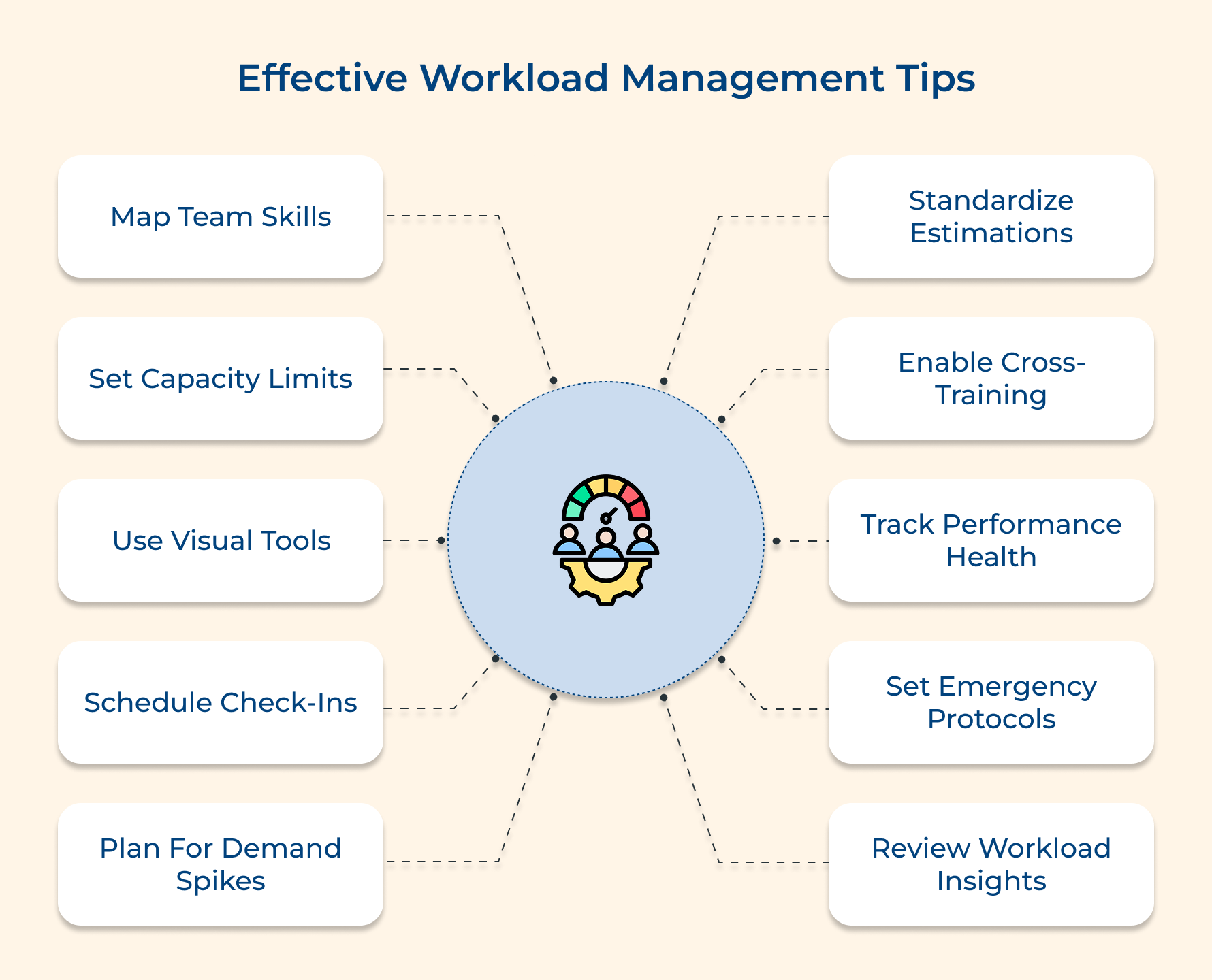
1. Map Out Team Skills Thoroughly
Understanding your team’s capabilities forms the foundation of effective workload distribution across any professional service organization. Without this knowledge you’re essentially flying blind when assigning critical client projects.
Creating detailed skills inventories requires a systematic approach that goes beyond simple job descriptions to capture the full spectrum of each team member’s abilities and potential.
- Skills assessment interviews: Schedule dedicated sessions with each team member to discuss their technical expertise and experience levels in depth. These conversations reveal hidden talents and provide clarity on areas where individuals feel most confident delivering exceptional results.
- Project performance analysis: Review past project outcomes to identify patterns in individual performance and natural strengths across different work types. This historical data shows where team members consistently excel and which assignments energize them most effectively.
- Development goal documentation: Record areas where team members want to grow their skills and expand their professional capabilities. This forward-looking perspective helps you plan training investments while creating natural mentorship opportunities within your existing team structure.
When you truly understand what each person brings to the table you can match the right expertise to client needs instantly. This precision reduces project stress and creates better outcomes for everyone involved.
2. Set Clear Project Capacity Limits
Establishing clear boundaries around team capacity is essential for effective time management and task prioritization. Without limits, chaos creeps in that impacts quality, morale and client trust.
Before setting any capacity rules, ask yourself:
- How many hours can each team member dedicate to billable work without burnout?
- How much time should go toward meetings, admin tasks, or skill-building?
- What buffer should we leave for last-minute client requests?
- How do seasonal shifts affect workload expectations?
Answering these helps you avoid unrealistic goals and overcommitment. Smart capacity management involves setting boundaries like:
- Max concurrent projects: No more than 3 per person to reduce context switching.
- Weekly billable hour caps: Include time for revisions and surprises.
- Client meeting limits: Cap weekly touchpoints to avoid overload.
- Rush project quotas: Control how many urgent tasks one person can take on.
These boundaries create predictable workflows and protect team performance.
3. Use Visual Project Management Tools
Visual dashboards transform abstract workload data into clear actionable insights that help managers make better resource allocation decisions. These tools eliminate the guesswork that leads to bottlenecks and missed deadlines across client engagements.
Visual project management creates transparency that benefits both internal team coordination and client relationship management. When everyone can see project status and resource allocation patterns problems get identified as well as resolved before they impact deliverables.
Best practices
- Update project statuses in real-time rather than waiting for weekly team meetings to avoid outdated information.
- Customize dashboard views for different stakeholders so managers see capacity data while team members focus on their specific task priorities.
4. Implement Regular Check-in Meetings Schedule
Regular check-ins create structured opportunities for managers to assess workload distribution and address potential issues before they escalate into serious problems. Without consistent communication team members suffer in silence while managers remain unaware of brewing capacity issues. These meetings provide early warning systems that prevent burnout and project delays.
Structured agendas ensure these conversations remain focused on actionable insights rather than devolving into general status updates that waste everyone’s time.
- Weekly one-on-ones: Current project status and individual capacity concerns.
- Team bottleneck reviews: Identifying workflow obstacles and resource redistribution needs.
- Monthly workload assessments: Overall team balance and upcoming capacity planning.
- Quarterly strategy sessions: Long-term resource allocation and skill development planning.
Think of monthly reviews like visiting your doctor for a routine checkup. Are your team members showing signs of stress that weekly meetings might have missed? Is workload distribution creating any patterns that suggest systemic issues? These deeper conversations help you spot trends before they become problems that require emergency intervention.
5. Plan for Seasonal Demand Fluctuations
Seasonal planning involves anticipating predictable busy periods and preparing your team structure to handle demand spikes without compromising quality or employee wellbeing.
Most agencies experience cyclical demand patterns that can overwhelm unprepared teams or leave resources underutilized during slower periods. Smart planning smooths these fluctuations for better financial stability.
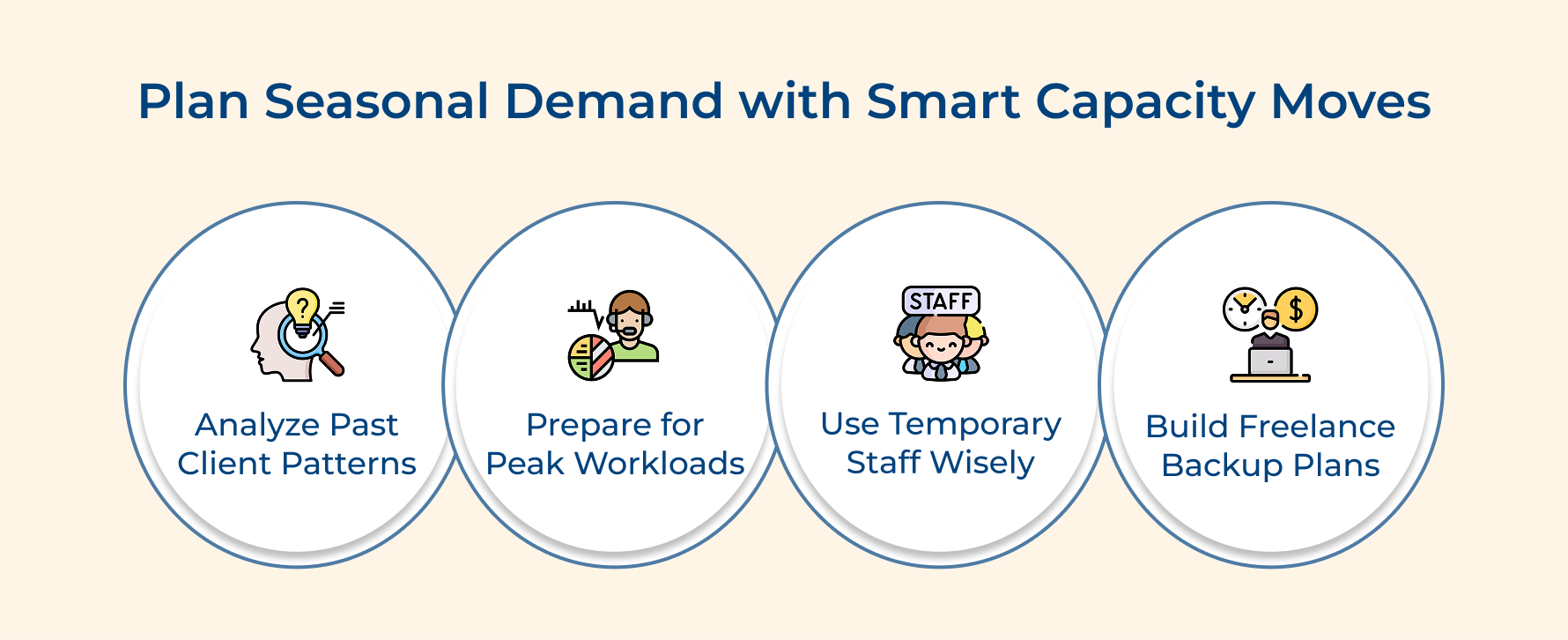
Analyze Historical Busy Periods and Client Patterns
Review past years to identify when client requests typically surge and which service lines drive seasonal demand increases. This data reveals patterns that help you predict future resource needs with greater accuracy than guesswork alone.
Prepare Staffing Adjustments for Predictable Peak Times
Build flexible staffing models that can expand during known busy seasons through temporary hires or freelancer partnerships. Advanced preparation prevents the scrambling that leads to quality compromises and team burnout during critical periods.
Build Flexible Capacity Strategies for Unexpected Spikes
Create contingency plans for demand surges that fall outside normal seasonal patterns through established freelancer networks. These backup resources provide insurance against losing clients when unexpected opportunities exceed your team’s current capacity.
6. Create Standardized Project Estimation Methods
Standardized estimation transforms project planning from guesswork into predictable science that protects both profitability and team sanity across all client engagements. Consistent estimation methods prevent the scope creep and timeline disasters that destroy team morale while damaging client relationships. Standard processes create realistic expectations for everyone involved.
Four Proven Estimation Methods for Professional Services. Smart agencies develop multiple estimation approaches that can be applied depending on project complexity and client requirements for maximum accuracy.
- Template-based estimates: Use historical project data to create time templates for common service offerings like brand identity or website development.
- Phase-based calculations: Break complex projects into smaller components with individual time estimates that aggregate into realistic total timelines.
- Complexity multipliers: Apply scaling factors based on client size and project scope to adjust baseline estimates for specific circumstances.
- Buffer integration: Build contingency time directly into estimates rather than hoping everything goes according to plan.
Ever wonder why projects always seem to take longer than estimated? The answer often lies in the time spent waiting for client feedback and navigating approval processes. Smart estimation includes these inevitable delays because clients rarely respond instantly and decision-making committees move at their own pace regardless of your project timeline.
7. Build Cross-Training Programs for Teams
Cross-training creates skill redundancy that prevents single points of failure when team members are unavailable or overwhelmed with other commitments. This approach ensures client work continues smoothly regardless of individual schedules or unexpected absences.
Four essential cross-training programs for agency teams:
- Skills Shadow Program
- Technical Certification Workshops
- Client Account Rotation System
- Emergency Response Training Initiative
Why do some cross-training efforts fail while others create genuine skill development? The secret often lies in pairing formal training with experienced mentors who can provide real-world context and personalized guidance. Mentorship transforms abstract concepts into practical knowledge through one-on-one coaching that addresses individual learning styles and specific challenges.
8. Monitor Individual Performance and Wellbeing
Performance monitoring involves tracking both productivity metrics and personal satisfaction indicators to ensure team members remain effective as well as engaged. This dual focus prevents the common mistake of optimizing for output while ignoring the human factors that sustain long-term success.
Regular monitoring helps managers identify when workload distribution creates stress patterns or productivity declines that require immediate attention. This proactive approach prevents small issues from becoming major problems that damage both individual careers and client relationships.
Best practices:
- Track productivity trends weekly rather than waiting for annual reviews to identify concerning patterns.
- Schedule informal check-ins focused on wellbeing rather than just project status updates.
9. Establish Emergency Resource Allocation Protocols
Emergencies can derail even the best-laid plans, so smart agencies prepare in advance. A clear protocol helps you act quickly without chaos. Here’s how:
- Crisis communication tree: Define who makes decisions and how team members report issues. This avoids confusion and ensures fast escalation.
- Freelancer emergency network: Keep a vetted list of freelancers who understand your quality standards. Track their skills and availability for quick deployment.
- Work redistribution guidelines: Set rules for reassigning tasks. Consider skill requirements, client sensitivity, and workload balance.
Let’s say your lead designer falls sick during a major client launch. Instead of scrambling, your communication tree triggers the right alerts, a freelancer is briefed, and tasks are reassigned smoothly using your redistribution plan.
10. Analyze Workload Data for Improvement
Data analysis transforms raw project information into actionable insights that help agencies optimize resource allocation and prevent recurring capacity problems. This systematic approach replaces gut-feeling decisions with evidence-based improvements that create measurable results over time.
Four essential sources for workload data collection. Comprehensive data analysis requires information from multiple touchpoints throughout your organization rather than relying on single sources that might miss important patterns.
- Project Management Software Dashboards
- Time Tracking Application Reports
- Client Feedback Survey Results
- Employee Satisfaction Assessment Tools
What story does your workload data tell about your agency’s operational health? Look beyond simple productivity metrics to identify patterns that reveal systemic issues or opportunities for optimization. Are certain project types constantly running over budget or do specific team combinations produce better results than others?
Additional Workload Management Strategies to Consider
These advanced strategies build upon foundational workload management principles to create even more sophisticated systems. Think of them as the next level of optimization once your basic processes are running smoothly.
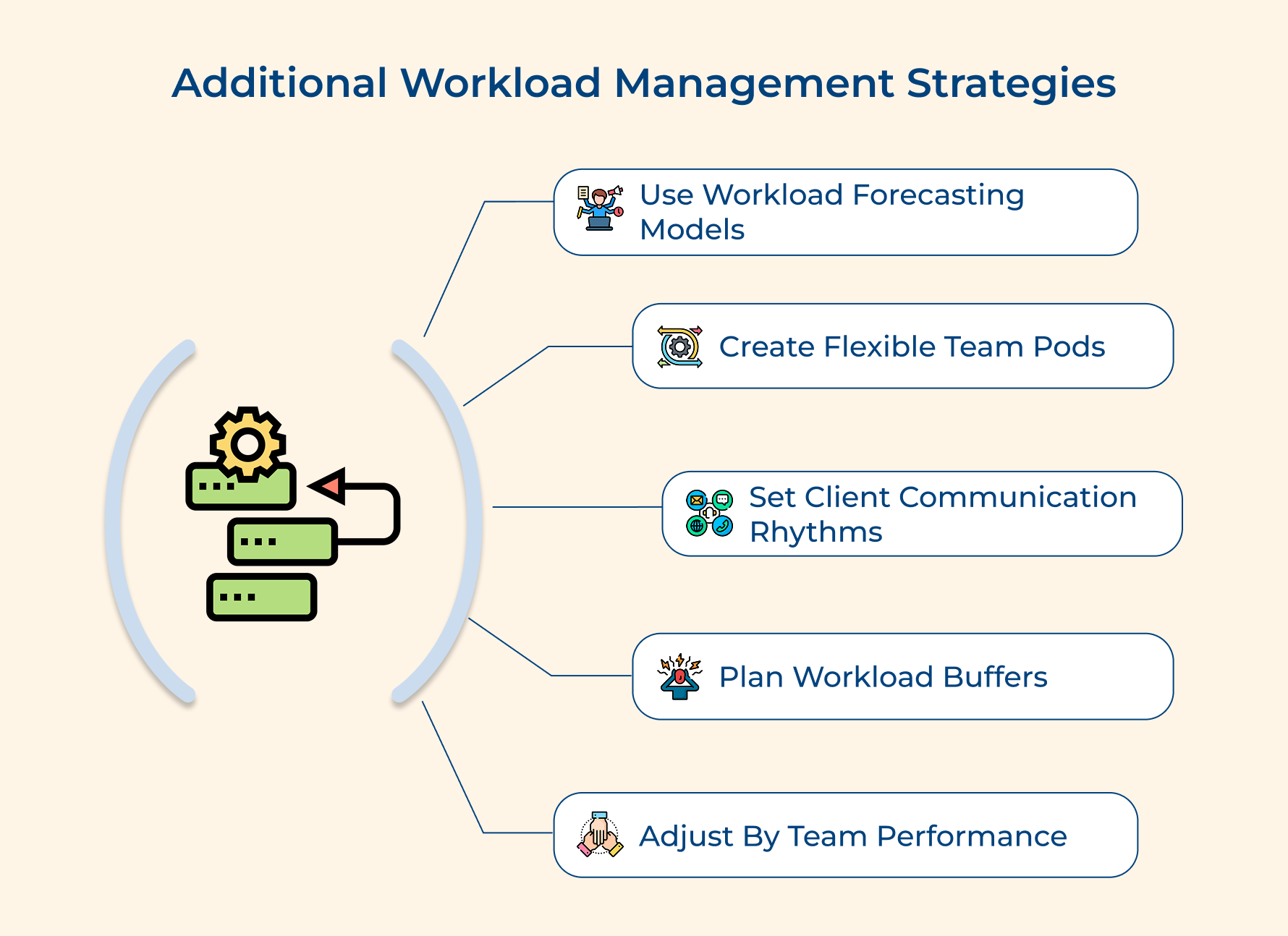
Implement Workload Forecasting Models
Workload forecasting uses historical data patterns to predict future resource needs before they become urgent. Like weather forecasting helps you plan your week, workload forecasting lets you prepare for busy periods by analyzing seasonal trends and client behavior patterns to make proactive staffing decisions.
Create Flexible Team Pod Structures
Team pods are small cross-functional groups that can tackle complete projects independently without constant coordination with other departments. This structure reduces bottlenecks because each pod contains the diverse skills needed to deliver client work from start to finish without waiting for external dependencies.
Establish Client Communication Rhythm Protocols
Communication rhythm protocols standardize when and how you interact with clients throughout project life cycles to prevent ad-hoc requests that disrupt planned work. These structured touchpoints create predictable communication patterns that clients appreciate while protecting your team’s focused work time from constant interruptions.
Develop Workload Buffer Strategies
Buffer strategies involve deliberately maintaining small amounts of unused capacity that can absorb unexpected urgent requests or project complications. Think of this like keeping emergency savings in your bank account, you hope you never need it but you’re prepared when unexpected expenses arise.
Build Performance-Based Workload Adjustments
Performance-based adjustments modify individual workloads based on demonstrated capability and output quality rather than using one-size-fits-all capacity limits. High performers might handle more complex projects while developing team members receive additional support and simpler assignments that build their confidence as well as skills gradually.
Boost productivity: Master Workload Management in your Agency
Effective workload management tips transform chaotic agency operations into smooth predictable workflows that benefit everyone involved. When you implement these ten strategic approaches your team experiences less stress while clients receive consistently excellent results.
The key lies in treating workload management as an ongoing process rather than a one-time fix that solves all problems. Regular monitoring and adjustment ensure your systems evolve with changing client needs as well as team dynamics.
Start with mapping team skills and setting capacity limits then gradually introduce additional strategies as your management confidence grows. Consistent application of these principles creates a productive agency environment where both creativity and profitability thrive together.
Limit time — not creativity
Everything you need for customer support, marketing & sales.

Shivank Kasera is part of the marketing team at Kooper, where he focuses on building content that helps agencies and service providers grow. With a keen interest in SaaS, operations, and scalability, he translates practical insights into actionable resources for business leaders.