The Ultimate Guide to Selling Professional Services Effectively
- What is Professional Services Sales?
- Benefits of Good Professional Services Selling Process
- 8 Proven Steps for Selling Professional Services Successfully
- Practical Tips for Selling Professional Services
- Mastering Selling Professional Services With Proven Growth Strategies
- FAQs about Selling Professional Services

Key Highlights:
- Selling professional services requires clear value propositions to win premium clients consistently.
- Proven strategies help shorten sales cycles and boost win rates in competitive markets.
- Build credibility with discovery conversations, case studies and customized proposals that address unique client needs.
Selling professional services feels like an uphill battle where prospects question your value and competitors undercut your pricing. You struggle to differentiate your expertise while lengthy sales cycles drain resources and momentum.
Every lost deal represents months of wasted effort and missed revenue opportunities that could have transformed your business. Without proven selling strategies you watch competitors win clients who desperately need the exact expertise your firm provides.
This guide shares an eight-step framework for professional service firms. It includes proven strategies that help shorten sales cycles. These strategies also make it easier to win premium clients. Firms can succeed consistently even in competitive markets with this framework.
What is Professional Services Sales?
Professional services sales involves selling expertise and specialized knowledge rather than physical products. These sales focus on building relationships and demonstrating how customized solutions can address unique client needs as well as deliver measurable results.
Professional services sales operates through consultative conversations where salespeople act as trusted advisors. They spend time understanding client pain points and then propose tailored solutions. The process emphasizes demonstrating expertise while building confidence rather than pushing standardized offerings.
Key objectives:
- Build trust and credibility through deep industry knowledge as well as proven track records
- Identify specific client challenges that align with your firm’s core competencies
- Demonstrate clear value propositions that justify premium pricing for expertise
- Establish long-term partnerships that generate recurring revenue and referrals
- Position your team as indispensable strategic partners rather than temporary vendors
Benefits of Good Professional Services Selling Process
A structured selling process transforms how professional service firms connect with clients. Let’s explore six key advantages that emerge when you implement a well-designed framework.
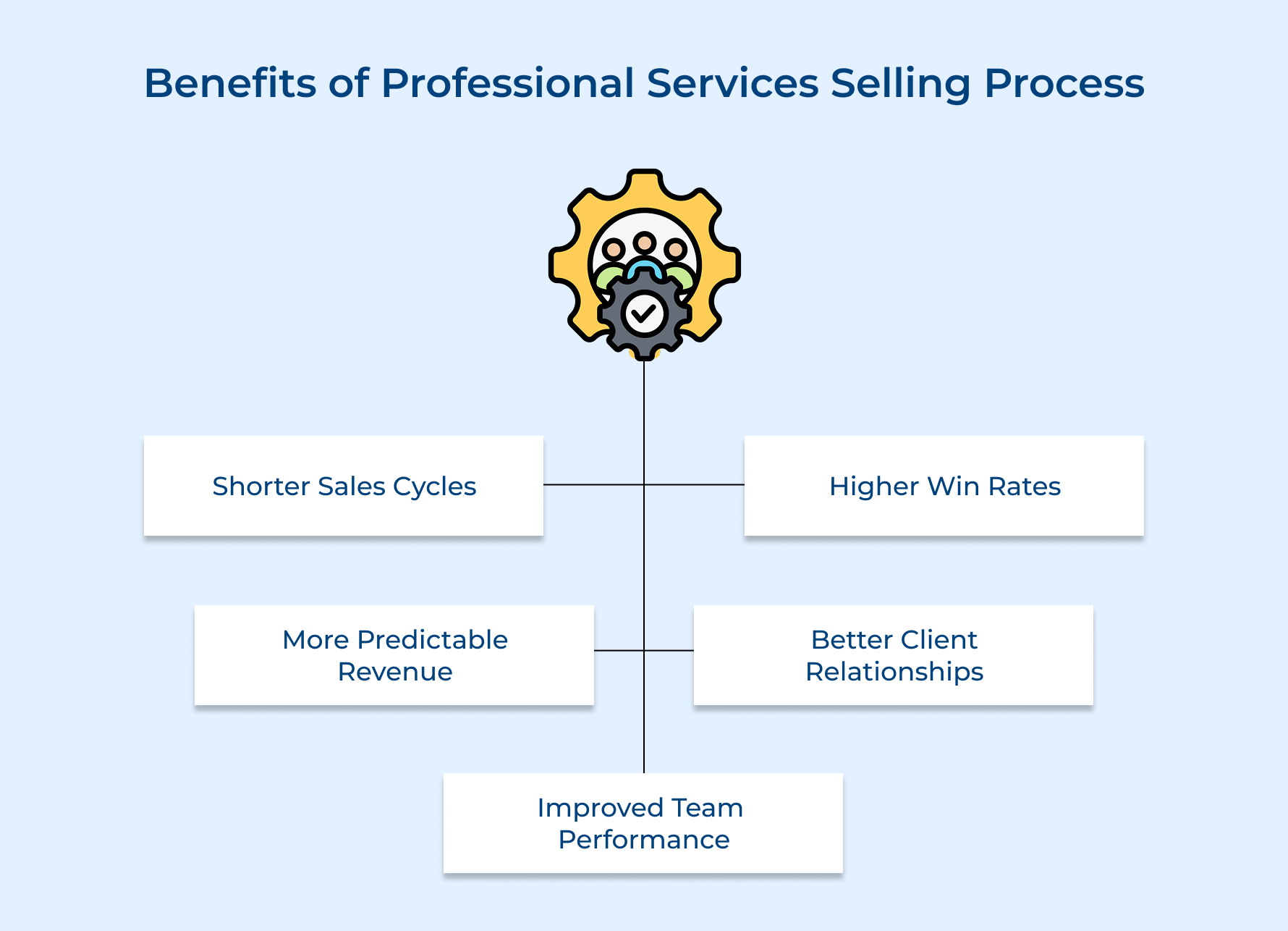
Shorter Sales Cycles
Well-defined processes eliminate guesswork and keep prospects moving forward through clear next steps. Your team knows exactly what information to gather at each stage and can address objections before they stall momentum.
Higher Win Rates
Systematic approaches help salespeople qualify opportunities better and focus energy on winnable deals. You spend less time chasing unlikely prospects and more time nurturing relationships with clients who truly need your expertise.
More Predictable Revenue
Consistent processes create reliable pipeline metrics that help you forecast revenue with greater accuracy. You can spot trends early and make informed decisions about resource allocation as well as business growth strategies.
Better Client Relationships
Structured interactions ensure every prospect receives the same high-quality experience regardless of which team member handles the relationship. This consistency builds trust and positions your firm as professional while also being reliable.
Improved Team Performance
Clear processes give new salespeople proven frameworks to follow while helping experienced team members refine their sales efforts. Everyone benefits from shared best practices and standardized methodologies that actually work.
8 Proven Steps for Selling Professional Services Successfully
If you’re a consultant, accountant, or work in any service-based field, these 8 steps will help you build a sales strategy that connects with your ideal clients.
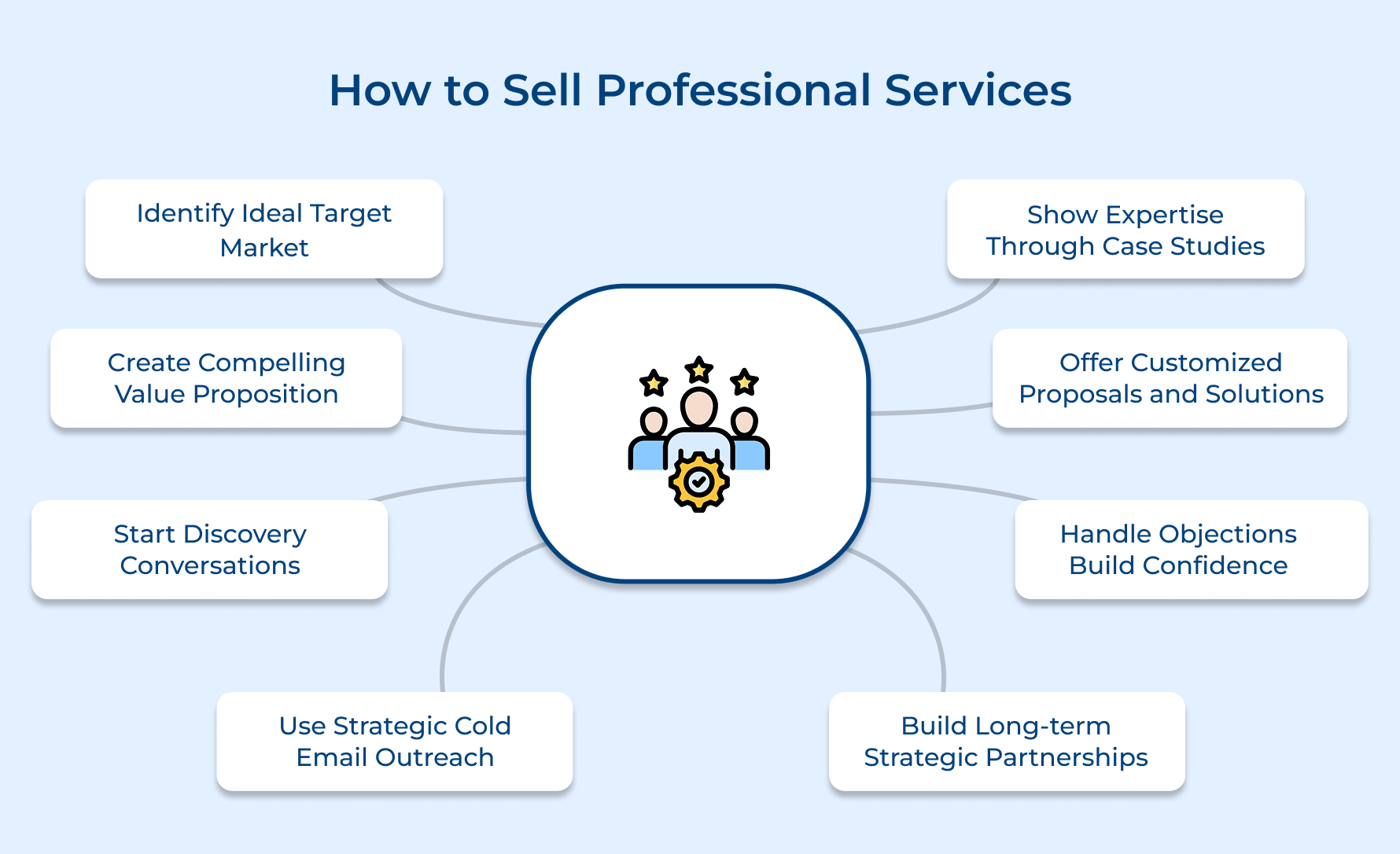
1. Identify Your Ideal Target Market
Target market identification means pinpointing the specific types of companies and decision-makers who need your services most. Without this clarity you waste time pursuing prospects who aren’t good fits and miss opportunities with ideal clients.
Are your professional service business struggling to find the right clients? Ask yourself these essential questions:
- What industry problems does your expertise solve best?
- Which company sizes can afford your premium pricing?
- Who makes the final purchasing decisions in target organizations?
- What geographic markets can you serve effectively?
These questions help you create a clear profile of prospects most likely to buy your services and value your expertise. Strategic targeting prevents you from spreading resources too thin across unsuitable opportunities.
Beyond these questions you can analyze your existing client base to identify patterns and research competitors to understand their target markets. Industry reports and networking events also reveal valuable insights about potential prospects.
2. Develop Your Compelling Value Proposition
A strong value proposition is the key to showing prospects why they should choose your firm instead of a competitor. Think of it as the foundation that guides every sales conversation, just like a project plan guides execution. It tells clients exactly what outcomes they can expect and makes your services stand out in a crowded market.
The best value propositions connect your firm’s unique strengths directly to client pain points and desired results. When shared consistently it builds trust and recognition over time.
Here are a few tips to sharpen yours:
- Be specific: Use measurable results like “cut project costs by 30%” instead of vague claims.
- Test often: Try out different versions with current clients to learn which messages resonate best.
- Stay consistent: Align messaging across outreach, presentations and proposals.
3. Initiate Meaningful Discovery Conversations
Discovery conversations involve structured discussions that uncover prospect challenges and decision-making processes beyond surface-level needs. These conversations separate amateur salespeople from trusted advisors who truly understand client situations.
Here are strategic questions that reveal deep insights:
- What keeps you awake at night regarding this challenge?
- How are you currently handling this situation internally?
- What would success look like six months from now?
- Who else gets impacted when this problem isn’t solved?
Active listening helps uncover hidden challenges during discovery conversations. Pay attention to what prospects don’t say directly and watch for emotional responses that signal deeper concerns.
Key listening techniques include:
- Paraphrasing: Repeat back what you heard to confirm understanding
- Probing: Ask follow-up questions when answers seem incomplete or surface-level
- Noting: Write down specific phrases and concerns for later reference
Building rapport through genuine curiosity means showing authentic interest in prospect challenges rather than pushing your agenda. Ask thoughtful follow-up questions and share relevant insights that demonstrate you understand their industry as well as situation.
4. Leverage Strategic Cold Email Outreach
Cold email outreach involves contacting prospects who haven’t expressed direct interest in your services yet. Ignoring this step means missing countless qualified prospects who need your expertise but don’t know your firm exists.
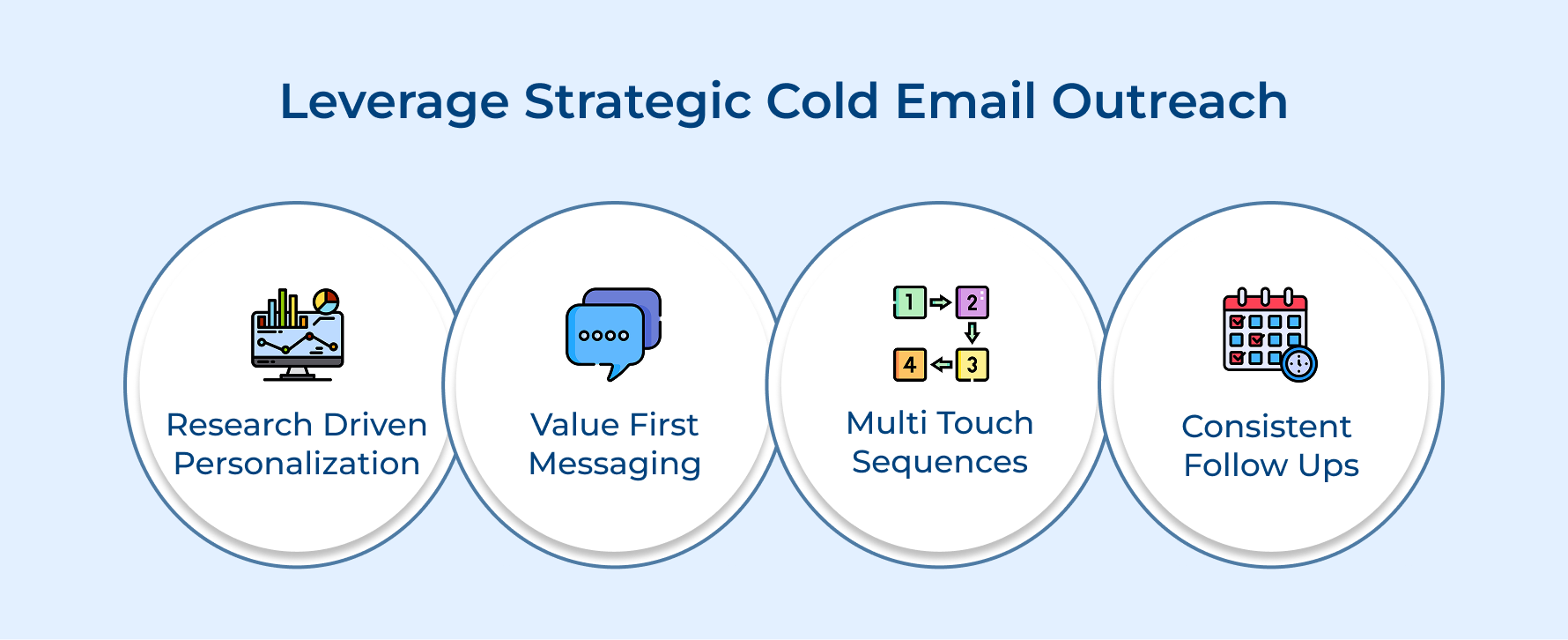
Here are three powerful ways to make cold outreach work effectively:
- Research-driven personalization: Study each prospect’s news and challenges. Reference specifics to show you understand their world beyond generic pain points.
- Value-first messaging: Lead with insights, benchmarks, or case studies that offer immediate value instead of pushing services.
- Multi-touch sequences: Use a planned series of follow-ups, each with fresh value, to stay visible without being pushy.
Here’s an example of strategic outreach: “Hi Sarah, I noticed your company just expanded into European markets. We helped a similar logistics firm reduce their international compliance costs by 35% during their expansion. Would a brief case study be helpful?”
5. Demonstrate Expertise Through Case Studies
Case studies showcase real client success stories that prove your ability to deliver results in situations similar to your prospect’s challenges. Prospects find it hard to choose your firm if you don’t show clear proof of past results.
Case studies work by creating emotional connections between your past successes and prospect aspirations while reducing perceived risk. Present them strategically during sales conversations when prospects express specific concerns or need confidence in your capabilities.
Best practice:
- Choose case studies that mirror your prospect’s industry and challenge as closely as possible for maximum impact.
- Focus on measurable outcomes and specific metrics rather than vague success stories that lack credibility.
6. Develop Customized Proposals and Solutions
Customized proposals present tailored recommendations that address specific prospect pain points rather than generic service offerings. Your proposals blend into the crowd and fail to show real understanding of each client’s unique situation.
When crafting proposals that win professional service contracts consider these essential factors:
- Client-specific challenges: Address the exact problems uncovered during discovery conversations rather than listing all available services.
- Measurable outcomes: Define success metrics that align with prospect goals and provide accountability for results.
- Implementation timeline: Break complex projects into phases with clear milestones that reduce overwhelming scope concerns.
- Investment justification: Connect pricing directly to expected returns and value creation for the client’s business.
How do you implement this step effectively? Start by reviewing your discovery notes and asking yourself what specific outcomes matter most to this prospect. Then structure your proposal around solving their priority challenges rather than showcasing everything your firm can do.
7. Address Objections and Build Confidence
Addressing objections involves responding to prospect concerns that prevent them from moving forward with your services. This step transforms skeptical prospects into confident clients by removing barriers to decision-making.
Successfully handling objections brings three advantages to your sales process:
- Deeper trust development: Addressing concerns honestly demonstrates transparency and builds stronger client relationships.
- Shortened decision timelines: Resolving hesitations prevents prospects from stalling while wrestling with unaddressed doubts.
- Higher close rates: Prospects receiving satisfying answers convert at significantly higher rates than those left wondering.
How should you handle client objections during professional service sales? Start by listening completely to understand the real concern behind their objection. Then acknowledge their perspective before providing a thoughtful response with relevant examples. Ask if your explanation addresses their concern satisfactorily.
Building confidence becomes crucial after addressing initial objections and helps prospects feel secure about their investment:
- Reference testimonials: Share specific quotes from similar clients who achieved measurable results through your services.
- Provide case metrics: Present concrete data showing how you’ve solved identical challenges for companies in their industry.
- Offer pilot engagements: Suggest smaller projects that let prospects experience your expertise before larger commitments.
8. Establish Long-term Strategic Partnerships
Strategic partnerships involve building ongoing relationships with clients beyond individual project completion to create sustained business value. You keep chasing new prospects instead of growing revenue from satisfied clients.
Here are four ways this partnership approach transforms professional service sales:
- Recurring revenue generation: Long-term relationships provide predictable income streams reducing dependence on constantly acquiring new accounts.
- Expanded service opportunities: Established clients often need additional services as their businesses grow and face new challenges.
- Referral network development: Satisfied partners become strong advocates who recommend your services to their professional networks.
- Reduced sales complexity: Existing clients understand your value so additional engagements require less time to close.
Consider a consulting firm that helped a client streamline operations for $50,000. By maintaining regular check-ins they eventually provided strategy and digital transformation services worth over $500,000 across three years.
Practical Tips for Selling Professional Services
Let’s transform how you approach professional service sales and help you build stronger client relationships. Here are six practical tips that successful service providers use to consistently win more business.
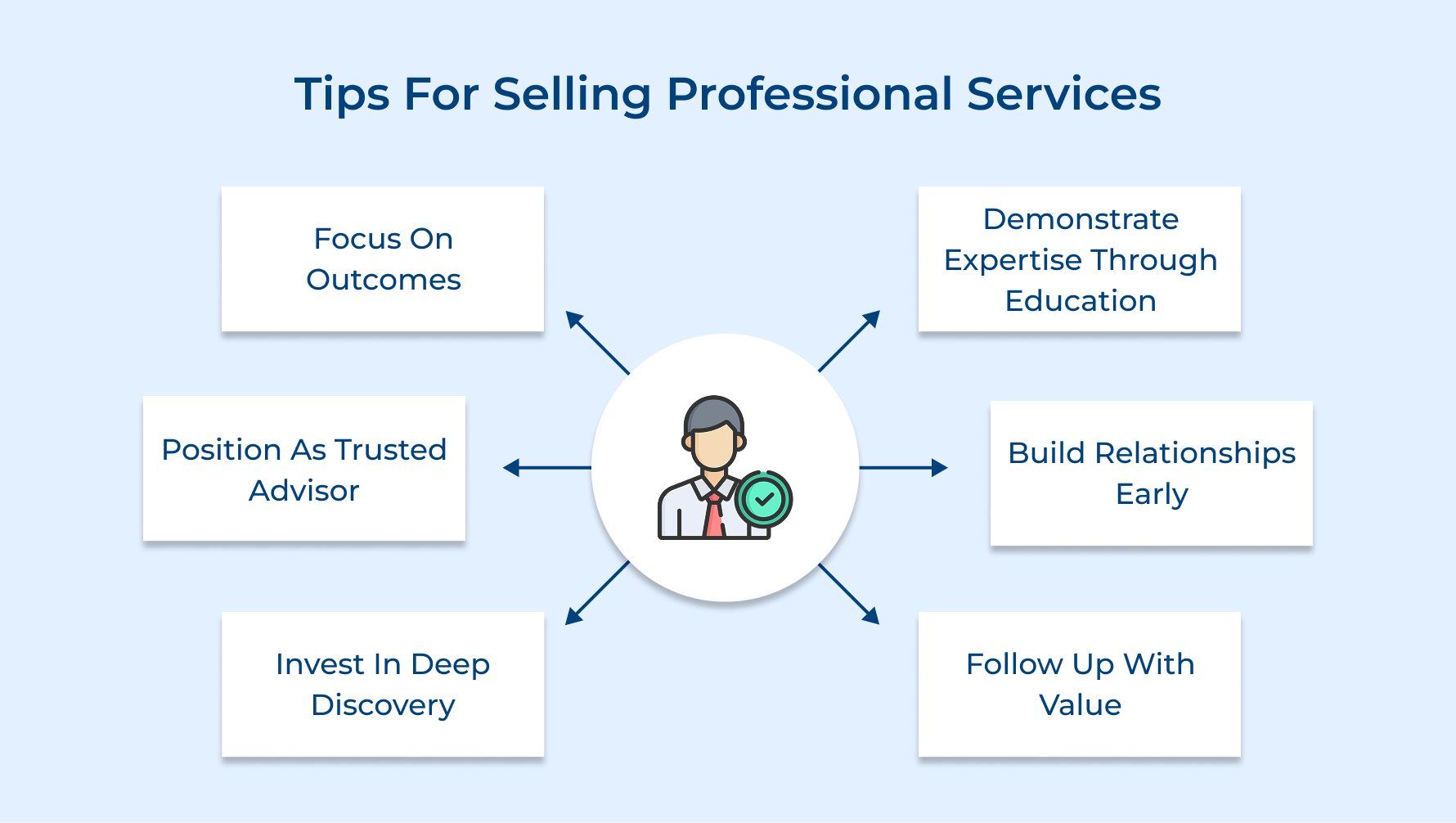
Focus on Outcomes Rather than Features
Professional service buyers care more about results than processes or methodologies you use to achieve them. When presenting your services always lead with the specific business outcomes clients can expect rather than detailed explanations of your approach.
Connect every capability you mention directly to measurable improvements in their business performance. For example instead of saying “we provide strategic planning services” explain “we help companies increase revenue by 25% through strategic market positioning.”
Position Yourself as a Trusted Advisor
Successful professional service sales require shifting from vendor relationships to advisory partnerships where clients view you as strategic counsel. This transformation happens when you consistently provide valuable insights beyond what clients expect from typical service providers.
Here are key ways to establish your advisory position:
- Share industry benchmarks that help clients understand where they stand compared to competitors
- Offer unsolicited insights about market trends that could impact their business strategy
- Provide candid assessments of their current approaches even when it might delay immediate sales
Share industry trends and offer perspectives on challenges they haven’t yet recognized but will likely face soon. When you demonstrate a deep understanding of their business environment, clients naturally begin seeking your guidance on important decisions.
Invest Time in Thorough Discovery
Discovery conversations are what set great service providers apart from average competitors. They go beyond surface-level requests and uncover the real problems clients are facing.
Most prospects only talk about symptoms at first, not the root causes of their challenges. That’s why asking the right questions matters.
Use probing questions to help clients explain their true needs and goals more clearly than they could on their own.
The insights you uncover during these talks become the foundation for strong proposals that solve their most important problems.
Demonstrate Expertise Through Education
Educational content positions your firm as the obvious choice when prospects need the type of expertise you provide. Create valuable resources that help potential clients understand complex issues they’re facing as well as potential solutions available to them.
Smart educational strategies that build credibility and trust include:
- Publishing thought leadership articles that address common industry challenges your prospects face
- Hosting webinars where you share actionable insights without pitching your services directly
- Creating assessment tools that help prospects evaluate their current situation objectively
Share case studies that illustrate how similar companies overcame comparable challenges using approaches you recommend. When prospects learn from your insights they develop confidence in your ability to guide them through their situations successfully.
Build Relationships Before you Need Them
In professional services, sales cycles are often long and relationships matter more than quick transactions. That’s why it helps to build connections with prospects early, long before they’re ready to buy. When their needs arise, you’ll already be top-of-mind.
Stay engaged by joining industry events and following up with useful insights instead of hard sales pitches. Over time, these steady, value-driven interactions build trust. And when opportunities do come up, strong relationships convert far more easily than cold outreach to strangers.
Follow Up Consistently with Value
In professional services, most opportunities need several touchpoints before prospects decide to buy. Still, many salespeople stop after the first conversation. Consistent follow-up is what separates professionals who win deals from those who lose them to more persistent competitors.
Every follow-up should add value. Share an insight, a case study, or something useful. This kind of value-driven follow-up keeps you part of the decision process while showing your expertise and commitment to the client’s success.
Mastering Selling Professional Services With Proven Growth Strategies
Professional service sales success comes from understanding that you’re selling expertise and relationships rather than products. The eight steps and six tips covered here provide a comprehensive framework for transforming how you approach prospects as well as build lasting client partnerships.
Remember that mastering professional service sales requires consistent practice and genuine commitment to serving client needs above your own. Start implementing these strategies systematically and you’ll see measurable improvements in your conversion rates along with client satisfaction levels.
Limit time — not creativity
Everything you need for customer support, marketing & sales.

Shivank Kasera is part of the marketing team at Kooper, where he focuses on building content that helps agencies and service providers grow. With a keen interest in SaaS, operations, and scalability, he translates practical insights into actionable resources for business leaders.