10 Best Lead Generation Strategies to Boost Your Sales Pipeline
- What is a Lead Generation Strategy?
- Why Do B2B Businesses Need Effective Lead Generation Strategy?
- 10 Best Lead Generation Strategies & Tactics That Work for Most Businesses
- How Lead Generation Strategies Changing Over the Years
- Transform Interest into Opportunity with Lead Generation Strategies
- FAQs about Lead Generation Strategies

Key Highlights:
- Implementing proven lead generation strategies ensures consistent high-quality leads while avoiding outdated tactics that no longer convert.
- A structured B2B lead generation strategy reduces acquisition costs, shortens sales cycles, and builds stronger industry authority.
- SEO-driven lead generation attracts qualified prospects by solving real problems, boosting credibility while fueling long-term business growth.
Imagine having a steady stream of qualified prospects reaching out to your business instead of chasing cold leads that never convert. Most businesses struggle with inconsistent lead flow because they rely on outdated tactics that no longer resonate with modern buyers.
The solution lies in implementing proven lead generation strategies that attract the right prospects at the right time with the right message. These thirteen battle-tested approaches work because they focus on building genuine relationships rather than pushing aggressive sales pitches.
Ready to transform your business growth? Let’s explore the specific strategies that consistently deliver results and learn how to implement each one effectively for your unique situation.
What is a Lead Generation Strategy?
A lead generation strategy is your business’s systematic approach to attracting potential customers and capturing their interest in your products or services. This strategy combines various methods as well as channels to identify people who might buy from you and then guides them toward making that purchase decision.
Your lead generation strategy works by creating valuable touchpoints that draw people toward your business naturally. You offer something useful like helpful content or free resources in exchange for their contact information. Then you nurture these new connections through targeted communication until they’re ready to become paying customers.
Key principles:
- Attract qualified prospects: Focus on people who actually need what you’re selling rather than just anyone.
- Capture contact information: Get names and email addresses so you can follow up with interested prospects.
- Nurture relationships over time: Build trust and demonstrate value through consistent helpful communication.
- Convert prospects into customers: Guide leads through your sales process until they make a purchase.
- Create predictable revenue growth: Establish a reliable system that consistently brings in new business opportunities.
Why Do B2B Businesses Need Effective Lead Generation Strategy?
Every B2B company faces the same challenge: finding and connecting with decision-makers who need their solutions. Here’s why a solid lead generation strategy becomes essential for sustainable business growth.
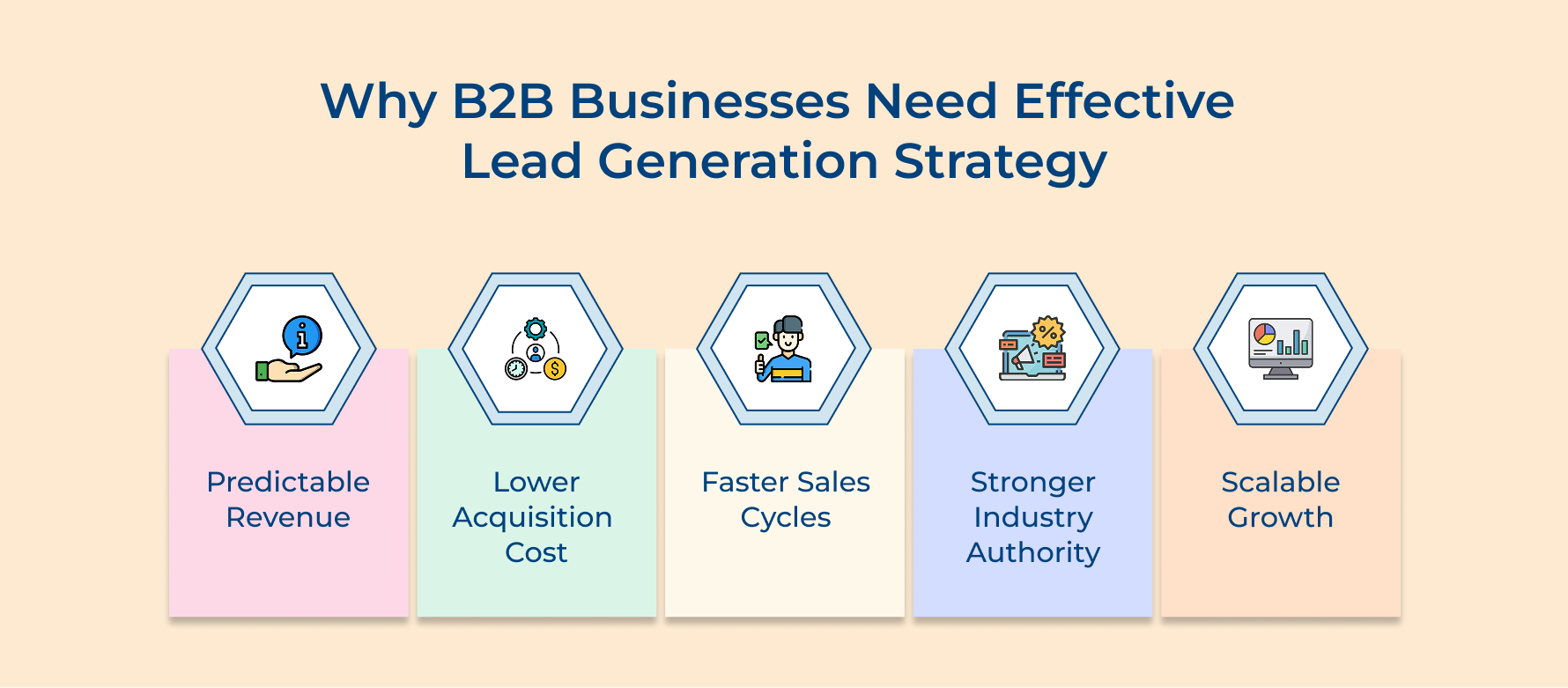
Predictable Revenue Pipeline
Things move slowly and deals take time in B2B sales. That’s why you need a steady flow of good leads. Without it, your revenue becomes unpredictable and growth slows down. A structured approach keeps your sales pipeline full, with deals always moving forward.
Cost-Effective Customer Acquisition
Cold calls and random outreach waste time as well as money. Instead, focus on people who already show interest through Email campaigns, paid social, or other targeted methods. This way, you lower your cost per customer and improve your lead quality.
Shorter Sales Cycles
When prospects find you through relevant content or smart campaigns, they already know what they need. These educated leads move faster through the process because they trust your expertise. Less time explaining means quicker sales and happier teams.
Build Industry Authority
Sharing helpful insights and relevant content makes you stand out. When you consistently show up as a thought leader, prospects start coming to you. This builds trust and attracts better leads without spending big on chasing them down.
Scalable Business Growth
Networking and referrals are great, but they don’t scale well. With smart Email campaigns, paid social, and repeatable systems, you can grow faster. You’ll reach more people while keeping your lead quality high, fueling long-term business success.
10 Best Lead Generation Strategies & Tactics That Work for Most Businesses
Effective online lead generation is key to keeping your sales funnel full and your business growing. Here are proven tactics to attract high-quality leads consistently.
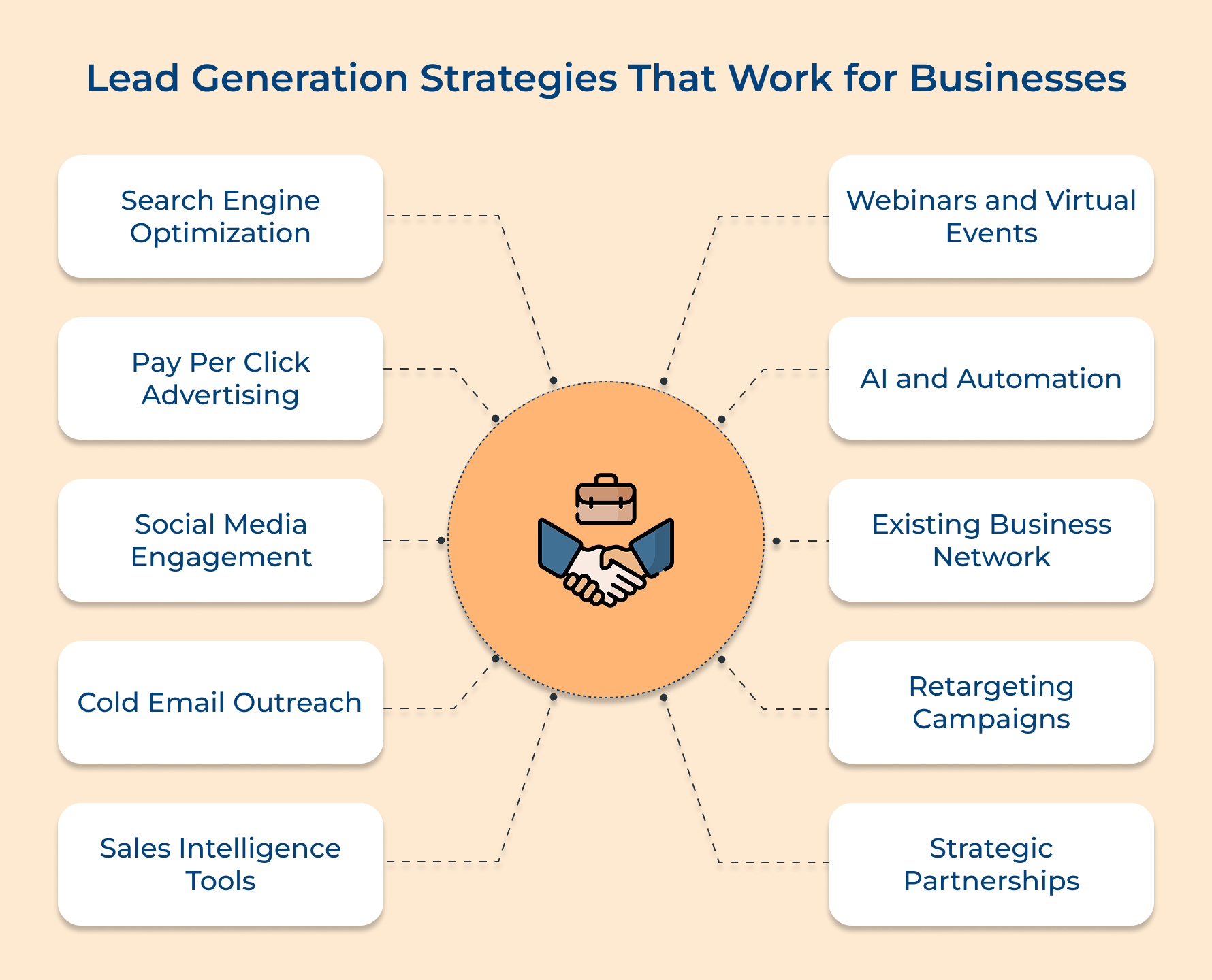
1. Search Engine Optimization for Visibility
Search Engine Optimization (SEO) helps your business get found on search engines by the right people at the right time. Most B2B buyers start with online research, so showing up early in their journey builds trust and positions you as the go-to expert.
Here’s how SEO helps generate leads:
- It brings in people actively searching for your services.
- Valuable content solves real problems, not just promotes products.
- Top rankings build credibility and attract high-quality leads.
Pro Tips:
- Focus your content on solving specific customer challenges.
- Use free tools like Google Search Console to see which keywords drive traffic and create more content around them.
2. Pay-Per-Click Advertising for Immediate Results
Pay-Per-Click (PPC) advertising is a great way to get in front of potential customers fast, especially while your SEO efforts are still growing. With PPC, you show targeted ads to people searching for terms related to your business.
Here’s how to make PPC work for lead generation:
- Do smart keyword research: Focus on high-intent search terms that signal buying interest.
- Optimize your landing page: Match the ad message and guide visitors to take action.
- Track performance: See which ads bring the best leads and shift your budget accordingly.
For example, a software company might run an ad for “project management software for small teams” offering a free trial landing visitors on a page built to capture their details.
3. Social Media Engagement and Networking
Social media engagement is all about building real connections, not just broadcasting messages. It’s key for lead generation because today’s buyers trust brands they interact with regularly on social media channels, not ones that cold pitch them.
Before launching social media campaigns, ask yourself:
- Which social media channels does your audience use professionally?
- How much time can you commit to genuine interaction (not just auto-posting)?
- What specific goals are you aiming to hit through social engagement?
To get started:
- Share valuable, problem-solving content consistently to show expertise.
- Join industry groups and add value through helpful comments as well as insights.
- Focus on relationships first, then let leads come naturally from trust built over time.
4. Run Targeted Cold Email Outreach Campaigns
Cold email outreach is a smart way to connect with potential customers who don’t know you yet but are a great fit for your business. It works well when you want to reach decision-makers who may not find you through other digital lead generation channels.
Here’s how to make your cold emails stand out:
- Personalize your message: Mention their company, recent news, or known challenges
- Lead with value: Share useful insights, case studies, or relevant resources instead of pitching right away.
- Use a follow-up sequence: Space out your emails, each with fresh value or ideas.
What could be the biggest mistake? Sounding too salesy. Focus on starting a helpful conversation, not closing a deal on the first try.
5. Use Sales Intelligence Tools Effectively
Sales intelligence tools help you work smarter by giving deep insights into your ideal customers before you even reach out. This is key to boosting conversions and reducing wasted effort, especially for inbound lead generation.
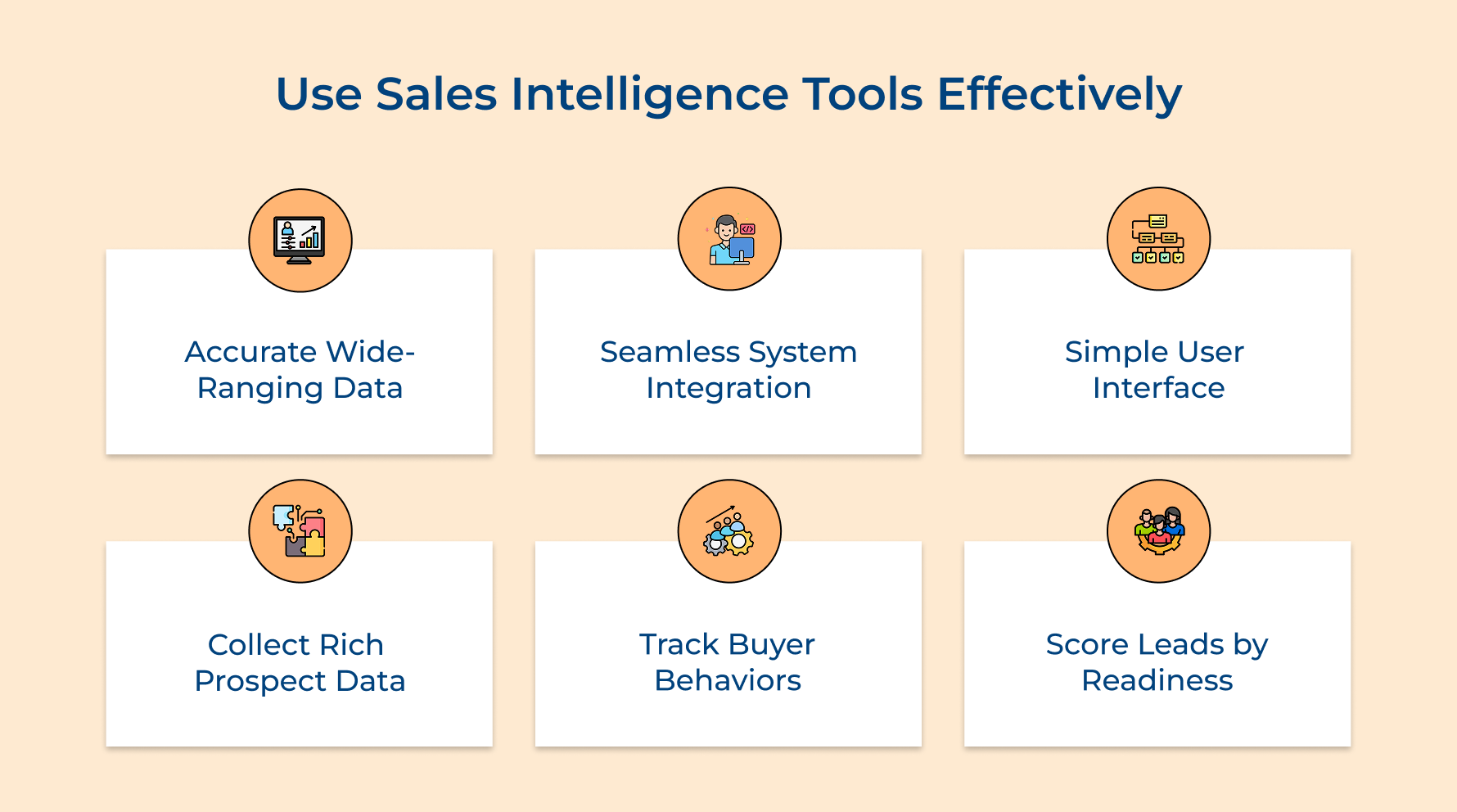
First, choose the right tool. Look for:
- Accurate, wide-ranging data
- Easy integration with your current systems
- A simple user interface that your team can quickly learn
Here’s how these tools support inbound lead generation:
- Collect rich prospect data from websites, socials, and public databases
- Track behaviors like downloads, visits, and social activity
- Score leads based on activity, fit, and readiness
- Time your outreach perfectly based on real buying signals
For example, an agency might contact a prospect within 24 hours of downloading a competitor comparison, while interest is hot.
6. Webinars and Virtual Events for Engagement
Webinars and virtual events involve hosting online educational sessions that attract potential customers while demonstrating your expertise as well as solutions. This strategy becomes crucial because it allows you to engage multiple prospects simultaneously while building trust through valuable content delivery.
Here are four examples of webinars and virtual events that help in engagement along with digital lead generation:
- Industry trends analysis: Host monthly sessions discussing market changes and their impact on your target audience’s business operations.
- Expert panel discussions: Invite industry leaders to discuss challenges and solutions creating valuable networking opportunities for attendees.
- Customer success story sessions: Feature existing clients sharing their transformation stories and results achieved using your services.
Getting people to actually show up after they register is the biggest challenge with webinars for lead generation. Send reminder emails with exclusive preview content and make the session title focus on solving urgent problems rather than promoting your product.
7. Use AI and Automation Strategically
AI and automation are game-changers for inbound lead generation. They help you scale faster by taking over repetitive tasks while also making your outreach smarter and better timed.
Here’s how businesses use them effectively:
- Lead scoring automation: AI tracks behavior and ranks leads based on buying intent, so your sales team focuses on the right people.
- Chatbot engagement: Smart bots work 24/7 to answer questions, capture info, and qualify leads automatically.
- Predictive analytics: AI studies past data to spot the perfect time to reach out, right when prospects are most likely to buy.
But don’t go overboard. Too much automation can feel impersonal. Use AI to support your process, but keep real humans in the loop for meaningful conversations.
8. Leverage Your Existing Business Network
Your current contacts (clients, colleagues, and peers) can be a powerful source of warm leads. Reach out with a clear ask: introductions to businesses similar to your best customers. People are more likely to refer to you if you’ve already delivered great results.
Here’s how to do it right:
- Be specific about who you want to meet
- Offer value in return (like a referral back or useful content)
- Follow up with both the referrer and the new contact to show appreciation
It’s not just about getting the intro, it’s about nurturing every relationship to keep referrals flowing long-term.
9. Run Retargeting and Remarketing Campaigns
Many visitors come to your site and leave without taking action. Retargeting helps bring them back. Instead of showing everyone the same ads, segment your audience based on what they did, like visiting a pricing page vs. reading a blog.
Ask yourself:
- Who showed serious interest?
- What message would re-engage them naturally?
- How long is too long to keep showing ads?
Use those answers to create ad sequences that build trust over time. Start with a soft offer like a free consultation, then follow up with case studies or client success stories to increase conversion chances.
10. Build Strategic Partnerships and Collaborations
You don’t need to chase every lead alone. Strategic partnerships with businesses that offer complementary services can help you reach new audiences without added ad spend.
For example, a web design agency might refer clients to your marketing service and you do the same in return.
To make it work:
- Choose partners who serve the same audience but aren’t competitors.
- Agree early on how leads will be shared and tracked.
- Package services together where it makes sense.
These win-win partnerships help you scale faster while offering more value to clients.
How Lead Generation Strategies Changing Over the Years
Lead generation in 2026 is evolving fast with smarter tech, shifting buyer behavior, and tighter competition. Here are the top trends reshaping how businesses attract and convert leads.
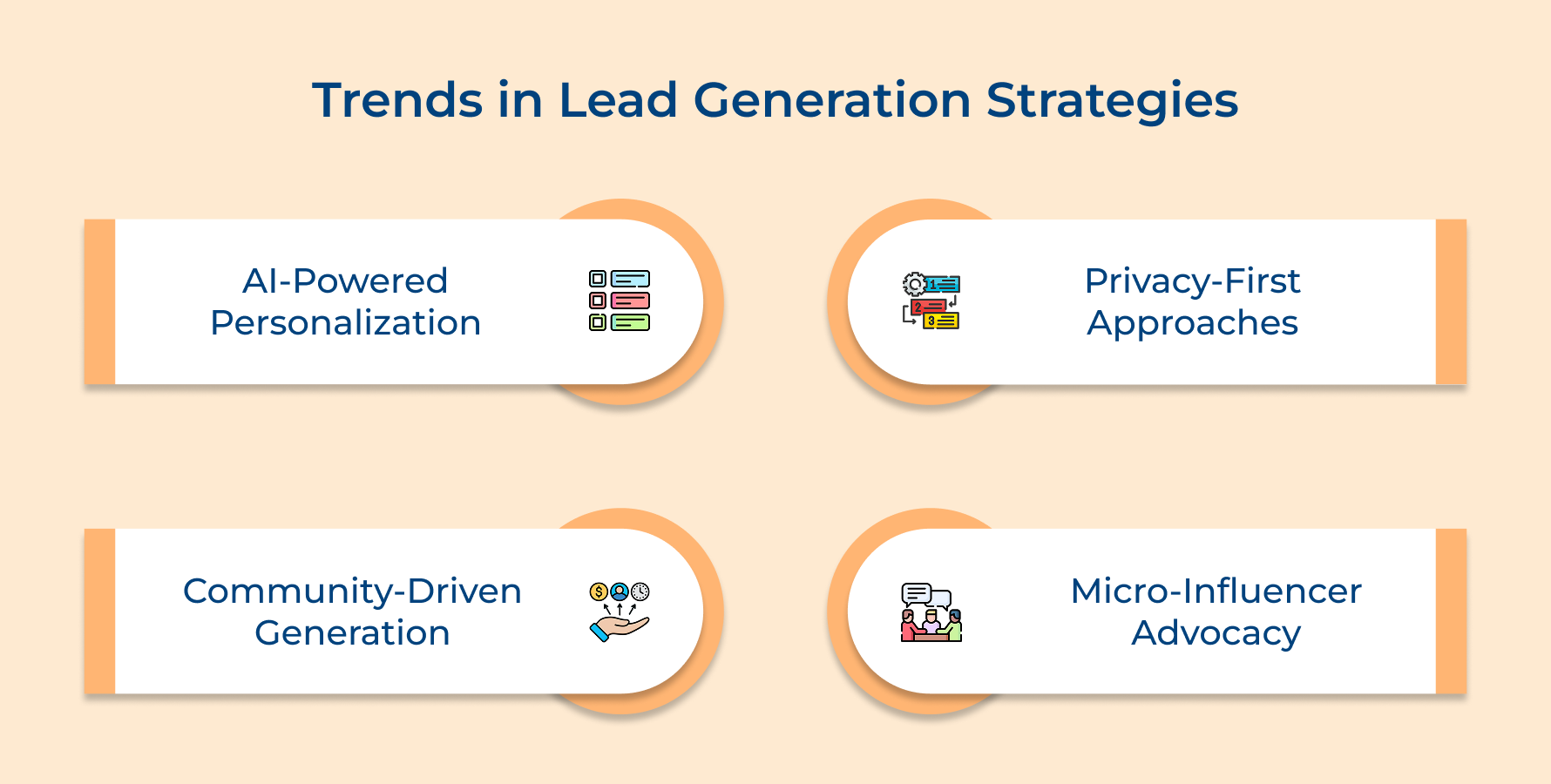
AI-Powered Personalization at Scale
AI is making it easier than ever to personalize content for thousands of leads at once. It studies behavior patterns and automatically delivers messages that fit each person’s needs. From emails to social media posts, everything can now feel custom-made.
Privacy-First Lead Generation Approaches
Businesses can’t rely on sneaky tracking anymore, especially with privacy laws tightening and cookies going away. Now, it’s all about building trust. You need to offer something valuable (like a free guide or tool) in exchange for contact info. That’s the new way of inbound marketing.
Community-Driven Lead Generation
Instead of pushing ads, companies are building communities where people learn, share, and connect. These groups offer real value and attract leads naturally. It turns lead generation into something more human, people join because they want to, not because they’re interrupted.
Micro-Influencer and Employee Advocacy Programs
Trust matters. That’s why businesses now work with micro-influencers and empower employees to share honest, helpful content. These voices feel more real than big ads. They help generate warm leads through genuine conversations and trusted networks.
Transform Interest into Opportunity with Lead Generation Strategies
Lead generation strategies are all about connecting your expertise with the people actively looking for solutions. When you use the right approaches consistently, you create simple, clear paths that guide interested prospects toward real business conversations.
The magic really happens when you don’t rely on just one tactic. Instead, combine several lead generation strategies. Each one supporting the other, like instruments playing in harmony. This kind of well-rounded system helps turn casual interest into qualified leads and steady, long-term growth.
Limit time — not creativity
Everything you need for customer support, marketing & sales.

Pooja Deshpande is a content contributor at Kooper, focused on creating insightful resources that help agencies and service providers scale efficiently. Passionate about SaaS trends, content strategy, and operational excellence, she delivers practical, easy-to-implement guidance for modern business leaders.