Agile Resource Planning Guide for Smarter Team Management
- What is Agile Resource Management & Planning?
- Benefits of Agile Resource Planning
- 7 Crucial Steps in Agile Resource Planning Process
- Common Agile Resource Management Techniques
- Agile Resource Management Tips and Best Practices
- Challenges in Agile Resource Management
- Features to Look for in Agile Resource Planning Software
- Agile Resource Management: Optimize your Team and Maximize Potential
- FAQs about Agile Resource Management
Key Highlights:
- Agile resource planning helps teams stay adaptable and productive as priorities shift rapidly.
- Implement proven agile resource management techniques to optimize team capacity and skills.
- Overcome key challenges like shifting priorities to maximize your team’s full potential.
Traditional resource planning often sets up rigid systems that fall apart the moment project requirements shift. In fast-moving environments, that’s a problem. Teams end up overbooked and bottlenecks kill momentum, making agile transformations harder than they should be.
When there’s no solid agile resource management strategy, teams spend more time putting out fires than delivering value. Urgent tasks take over and burnout rises as workloads become uneven as well as priorities unclear.
This guide helps you fix that. You’ll learn how product owners and project leads can build flexible, scalable frameworks that support continuous delivery. We’ll cover proven techniques and step-by-step methods for efficient resource management – so your teams stay adaptable as well as productive even as project demands evolve.
What is Agile Resource Management & Planning?
Agile resource management is a flexible approach to allocating and managing team members throughout a project’s lifecycle. It emphasizes adaptability and continuous adjustment based on changing project needs as well as priorities. This method allows project managers to reassign people dynamically as requirements evolve and new information emerges during development cycles.
Traditional resource management follows a rigid plan where team members are assigned specific roles for the entire project duration. Agile resource management breaks away from this fixed approach by treating people as adaptable assets who can shift between tasks and teams. The traditional method relies on detailed upfront planning, while agile embraces uncertainty and adjusts resource allocation based on real-time feedback.
Key objectives:
- Maximize team flexibility: Enable team members to move between different tasks and projects as priorities shift.
- Optimize resource utilization: Ensure people are working on the highest-value activities at any given time.
- Reduce project bottlenecks: Quickly reallocate team members to address capacity constraints and maintain project flow.
- Enhance skill development: Provide opportunities for team members to learn new skills through cross-functional collaboration.
- Improve project responsiveness: Enable rapid adaptation to changing requirements and unexpected challenges through dynamic resource reallocation.
Benefits of Agile Resource Planning
Planning resources for agile projects transforms how teams adapt to project challenges. Let’s explore the core advantages that make this approach so valuable for modern project management.
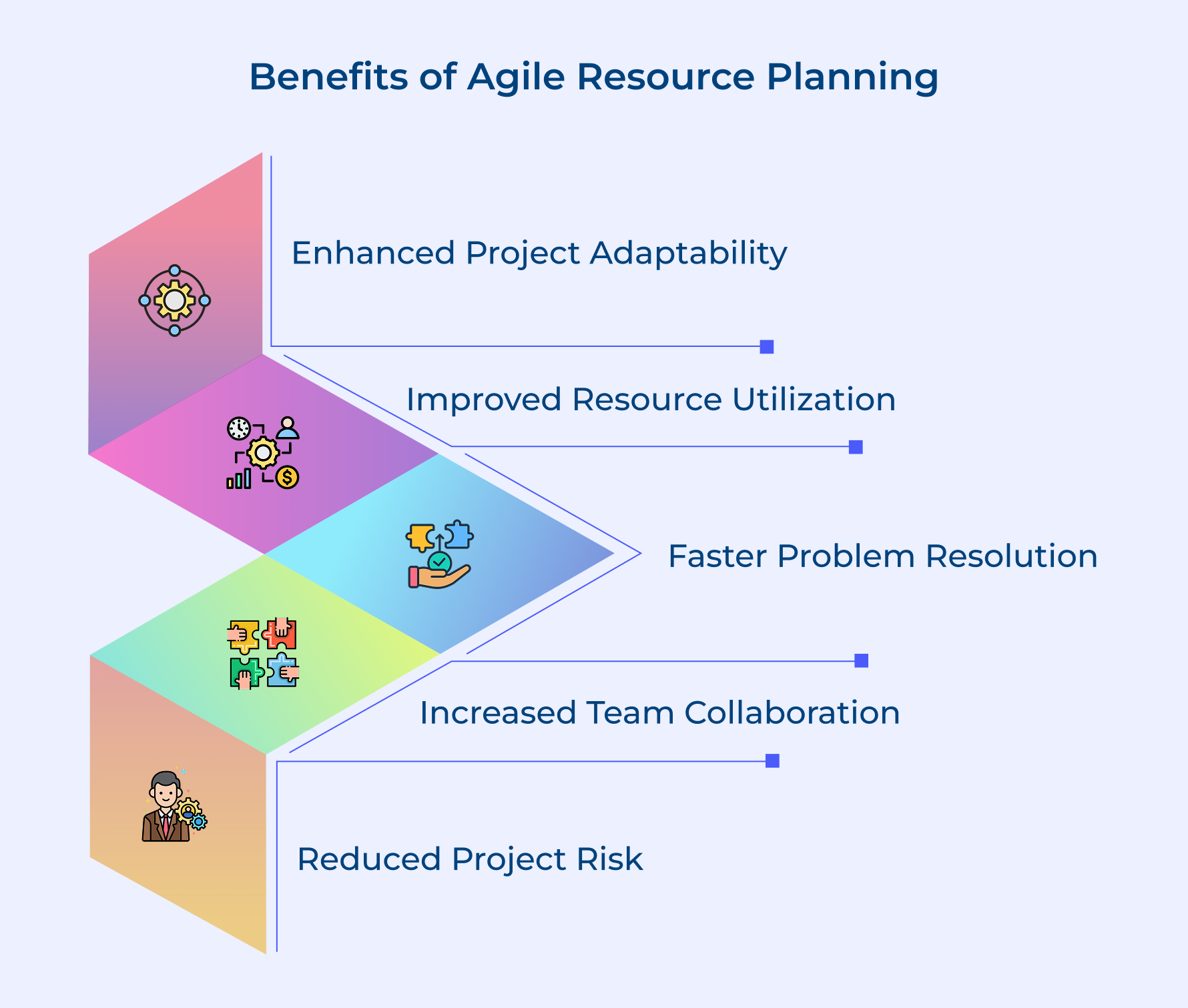
Enhanced Project Adaptability
Teams can quickly pivot when priorities shift or unexpected issues arise with strong resource management practices. This flexibility keeps projects from getting stuck in outdated plans. Project managers can easily reassign people based on new needs, keeping progress aligned with evolving business demands.
Improved Resource Utilization
Smart allocation ensures people focus on high-impact work. When tasks stall, managers can redirect efforts to where they matter most, boosting productivity and keeping timelines on track. This kind of proactive planning helps maintain momentum across every sprint or milestone.
Faster Problem Resolution
Agile practices make it easier to deploy the right skills exactly when and where problems occur. Instead of waiting for formal reviews, teams address roadblocks early, improving response speed and overall delivery times.
Increased Team Collaboration
Cross-functional teamwork becomes second nature as members move between projects and share expertise. These interactions strengthen relationships, align everyone toward shared long-term goals, and build a sense of collective ownership.
Reduced Project Risk
When multiple people understand different project areas, you avoid bottlenecks caused by dependency on one person. Visual tools like a Gantt chart make it easier to track ownership and ensure smooth handovers – keeping projects resilient even when key members are unavailable.
7 Crucial Steps in Agile Resource Planning Process
This article outlines a comprehensive 7-step Agile resource planning process that empowers teams to stay nimble, efficient and on track towards their goals.
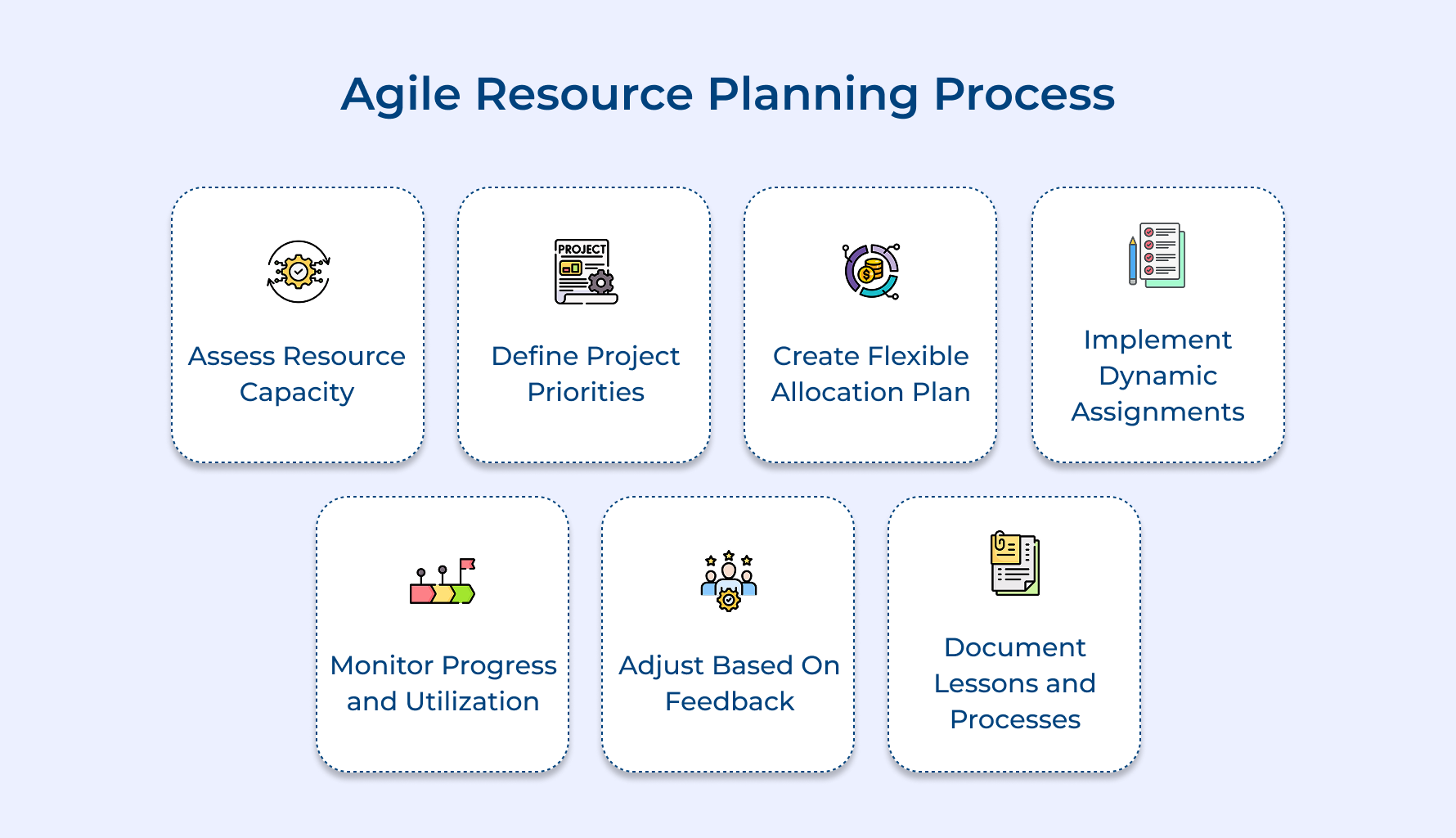
1. Assess Current Resource Capacity
Assess current resource capacity to form the foundation of effective agile planning by providing a clear picture of what resources are actually available. This step prevents overcommitment and ensures realistic project timelines by establishing baseline data about your team’s current state as well as capabilities.
Before diving into resource assessment, ask yourself these critical questions:
- What is the current availability of each team member?
- Which skills does our team possess and which are missing?
- How many hours can each person realistically contribute to new projects?
- What are the existing commitments that might impact resource allocation?
Beyond these fundamental questions, evaluating team member skills and availability becomes crucial for maintaining agile resource management effectiveness. This evaluation helps you understand not just who is available but also what they can actually contribute to different types of work. Without this detailed assessment, you risk assigning people to tasks that don’t match their strengths or availability levels.
To properly review ongoing project commitments and workload, follow this approach:
- Project timeline review: Examine all current project deadlines and deliverable schedules to understand existing time constraints.
- Capacity analysis: Calculate actual available hours by subtracting committed time from total working hours for each team member.
- Priority assessment: Rank existing commitments by importance to determine which projects have flexibility for resource reallocation if needed.
2. Define Project Requirements and Priorities
Defining project requirements and priorities is like setting the GPS for your entire agile planning journey. It ensures every resource, task, and timeline moves in the right direction. This step is crucial. It stops teams from wasting time on low-impact work that doesn’t contribute to core objectives, especially during fast-paced digital transformation initiatives.
Here’s how to nail this stage during project conceptualization:
- Stakeholder collaboration sessions: Bring together key decision-makers early. Regular discussions help clarify goals, validate needs, and align everyone before resource allocation starts.
- User story mapping workshops: Visualize user journeys to spot high-value features. This helps the team prioritize work that delivers the biggest impact first.
- MoSCoW prioritization framework: Use this structured method to separate “Must-haves” from “Could-haves,” making tough allocation decisions clear and fair.
For example, in a mobile app project, if user authentication is a Must-have and social sharing is a Could-have, you instantly know where to focus your resources.
3. Create Flexible Resource Allocation Plan
A flexible resource allocation plan is all about staying adaptable without losing momentum. Agile projects evolve fast, and rigid planning can’t keep up. That’s why creating frameworks that adjust to new priorities is essential for keeping projects on track and avoiding missed deadlines.
Here’s how to make it work – through the lens of Lean methodology, which focuses on efficiency and eliminating waste:
- Skill overlap and cross-training: Train team members in complementary areas so work doesn’t stall when someone’s unavailable.
- Buffer capacity: Keep a 10–20% cushion for sudden changes or urgent needs, it’s your safety net against chaos.
- Communication pathways: Set up quick, transparent channels so everyone knows when resources shift.
- Change management protocols: Create simple, consistent rules for approving and implementing adjustments.
Instead of fixed roles, build resource pools grouped by skill sets. This lets your team move fluidly across tasks, adapting to project needs in real time.
4. Implement Dynamic Team Assignment Strategy
Implement a dynamic team assignment strategy that turns your flexible resource plan into real, actionable teamwork that adapts as projects evolve. This is where planning meets execution – defining who does what, when, and how collaboration drives progress.
Strategic positioning at the start determines how smoothly the game (or sprint) plays out. Early sprint assignments help build momentum and set clear expectations for resource use across the project lifecycle.
Here’s how to make it work:
- Sprint planning sessions: Involve everyone. Let team members volunteer for tasks that match their strengths and availability.
- Skill-task mapping: Align expertise with sprint backlog items to maximize efficiency from day one.
- Workload balancing: Evenly distribute tasks to avoid overloading anyone and maintain steady progress.
Strong communication channels act as the nervous system of this approach. Thus, keeping coordination tight, ensuring smooth mid-sprint adjustments, and preventing confusion when priorities shift.
5. Monitor Progress and Resource Utilization
Monitor progress and resource utilization to continuously track how effectively your team members are contributing to project goals while identifying opportunities for improvement. This step becomes the most important for agile resource planning because it provides the real-time data needed to make informed adjustments that keep projects on track.
This monitoring process works like a fitness tracker for your project – it measures vital signs and alerts you when something needs attention. By collecting data on individual productivity, team velocity, and resource consumption patterns, you can spot trends as well as make proactive changes before small issues become major problems.
Pro tips:
- Use visual dashboards that update automatically so team members can see their progress without manual reporting overhead.
- Schedule brief daily check-ins focused on resource utilization rather than task completion to catch allocation issues early.
6. Adjust Allocations Based on Feedback
Adjust allocations based on feedback – this means taking monitoring insights and translating them into concrete changes in team member assignments. This step is needed because agile resource planning thrives on continuous improvement rather than rigid adherence to original plans.
Here are four common adjustments that agile resource management teams make when feedback reveals optimization opportunities:
- Skill-based reallocation: Move team members to tasks that better match their expertise when initial assignments prove suboptimal.
- Capacity balancing: Redistribute workload from overloaded members to those with available capacity to prevent burnout.
- Priority-driven shifts: Reassign resources from lower-priority activities to high-impact tasks when project priorities change.
- Cross-training implementation: Pair experienced members with those learning new skills to build broader team capability.
The main challenge involves resistance to change and potential disruption from mid-project reassignments. Teams overcome this by establishing clear communication about why changes are necessary and involving members in decision-making processes.
7. Document Lessons and Standardize Processes
Documenting lessons and standardizing processes is about turning what you’ve learned from one project into a playbook for future success. It helps your team move from one-time wins to consistent, repeatable results in agile resource management.
Here’s how you can make it simple and effective:
- Resource planning templates: Create easy-to-use templates to record key allocation decisions, skill sets, and capacity details that worked well. This helps you build a reliable reference for upcoming projects.
- Retrospective documentation sessions: Hold quick meetings after each project to discuss what worked and what didn’t in resource allocation. Turn these insights into practical improvements for the next sprint.
- Process improvement workshops: Bring different teams together to share their experiences. This helps identify best practices and build organization-wide standards that everyone can follow.
For example, if a team finds that pairing cross-functional members cuts delays, document it and roll it out company-wide. That’s how small wins become lasting advantages.
Common Agile Resource Management Techniques
These proven techniques help project managers optimize team performance while maintaining agile flexibility. Let’s explore how each approach transforms resource allocation into strategic advantages.
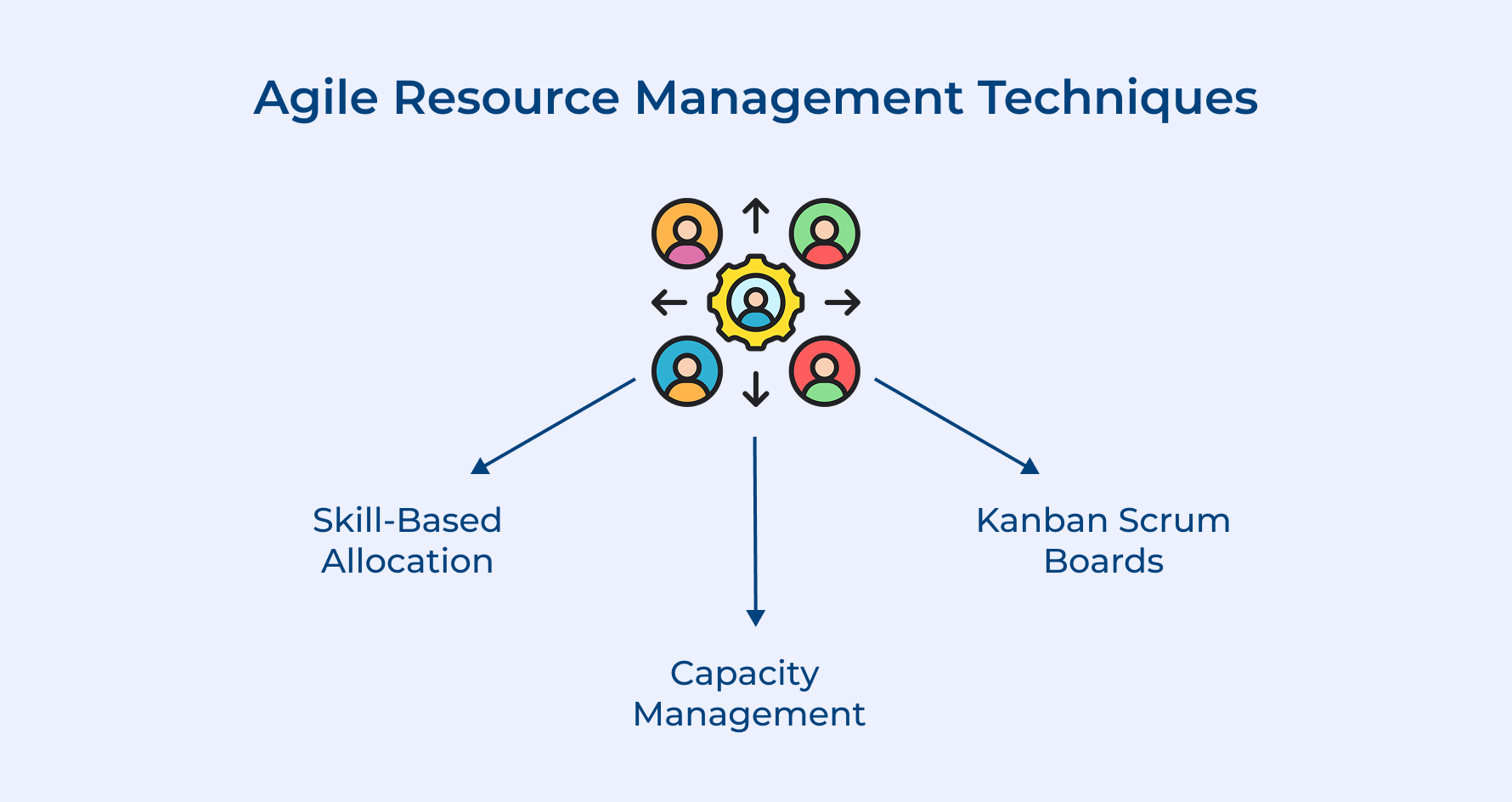
Resource Allocation Based on Skills and Capacity
Allocating resources based on skills and capacity means matching the right people to the right tasks while keeping everyone’s workload balanced. It’s about understanding what each team member does best and how much bandwidth they have. When done well, it boosts both productivity and morale.
Here’s how to make skill-based allocation work smoothly and avoid conflicts in resource allocation:
- Map competencies carefully: Compare each person’s strengths with project needs to make smart, effective assignments.
- Balance workloads: Keep everyone engaged without overloading anyone. This prevents burnout and keeps progress steady.
- Encourage growth: Pair junior team members with experienced ones to build skills and strengthen collaboration.
The goal is simple – create work that feels meaningful and matches people’s abilities. When tasks align with strengths, team members stay motivated and reduce friction across the project.
Capacity Management
Capacity management focuses on understanding how much work your team can realistically handle within timeframes without compromising quality or wellbeing. This technique involves monitoring team velocity and workload distribution to ensure sustainable project delivery.
Think of capacity management like managing water flow through pipes where you need to understand both maximum capacity as well as optimal flow rate. Teams that master this can predict delivery timelines accurately and avoid stress from unrealistic commitments.
Kanban and Scrum Boards
Kanban and Scrum boards make resource allocation simple, visual, as well as transparent. Instead of juggling spreadsheets, your team can instantly see who’s doing what and how work is flowing. These boards turn planning into something everyone can understand while improving together.
Here’s what makes them so effective:
- Work-in-progress limits: Keep team members focused by preventing too many active tasks at once.
- Clear columns: Show exactly what stage each task is in and who’s handling it.
- Visual signals: Make it easy to spot when workloads need rebalancing or when extra help is needed.
During the Daily Scrum, these boards guide quick discussions about progress and priorities. They’re not just for tracking tasks, they also support smarter resource forecasting. When the team can see bottlenecks forming, they can adjust early, stay aligned, while keeping delivery smooth and efficient.
Agile Resource Management Tips and Best Practices
The practical tips transform theoretical agile frameworks into actionable strategies that deliver real results.
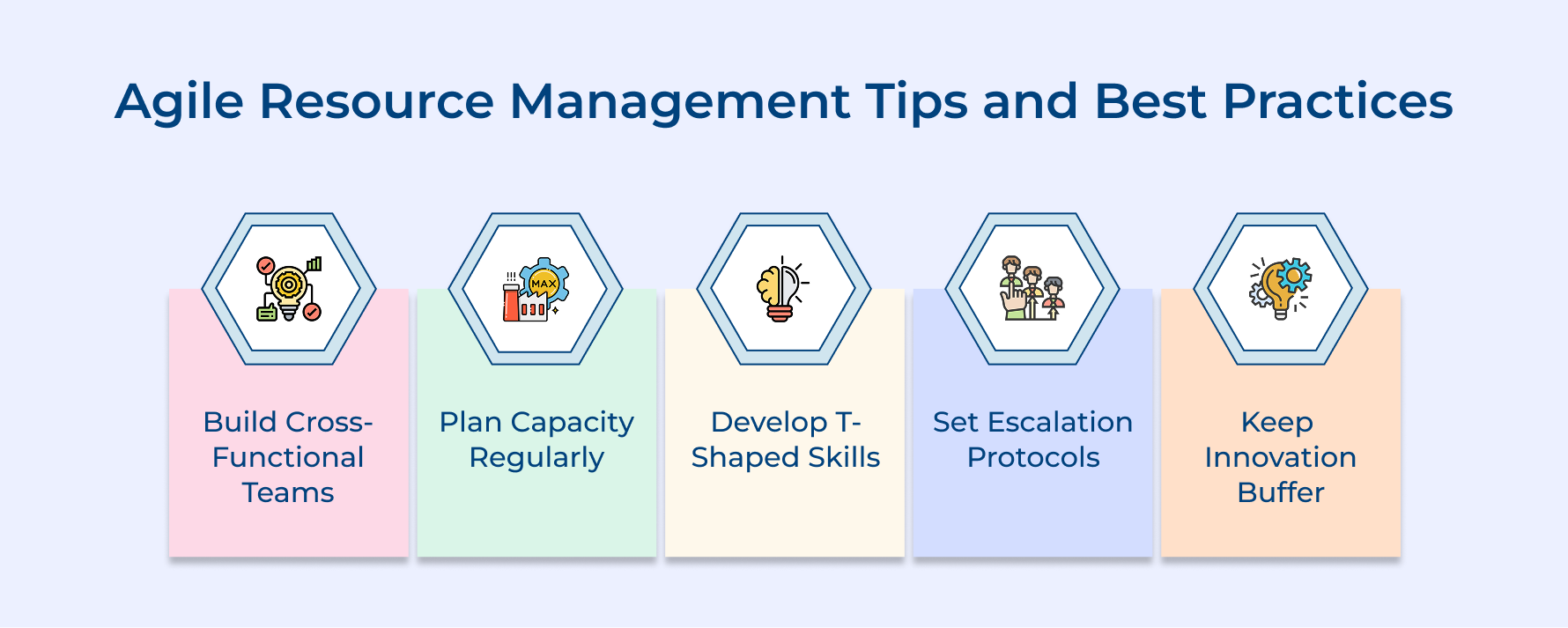
- Start with cross-functional team building: Build teams with diverse skill sets from the beginning rather than trying to add capabilities later when gaps become apparent. This proactive approach creates natural flexibility and reduces dependencies that often cause project bottlenecks as well as delays.
- Implement regular capacity planning sessions: Schedule weekly capacity reviews to assess team availability and adjust workloads before problems emerge rather than reacting to crises. These sessions help you maintain a sustainable work pace while identifying opportunities for optimization.
- Use T-shaped skill development strategy: Encourage team members to develop broad knowledge across multiple areas while maintaining deep expertise in their primary specialty. It creates versatile resources who can contribute to different project areas when priorities shift.
- Establish clear resource escalation protocols: Define specific procedures for requesting additional resources or adjusting allocations when unexpected challenges arise during project execution. Having these protocols prevents confusion and ensures quick decision-making when time is critical.
- Create resource buffer for innovation time: Reserve ten to fifteen percent of team capacity for exploring new ideas and addressing technical debt rather than allocating everything to immediate deliverables. The buffer prevents burnout while fostering continuous improvement as well as creative problem-solving opportunities.
Challenges in Agile Resource Management
Even experienced project managers face obstacles when implementing agile resource strategies. Understanding these challenges helps you prepare solutions and avoid pitfalls that derail planning efforts.
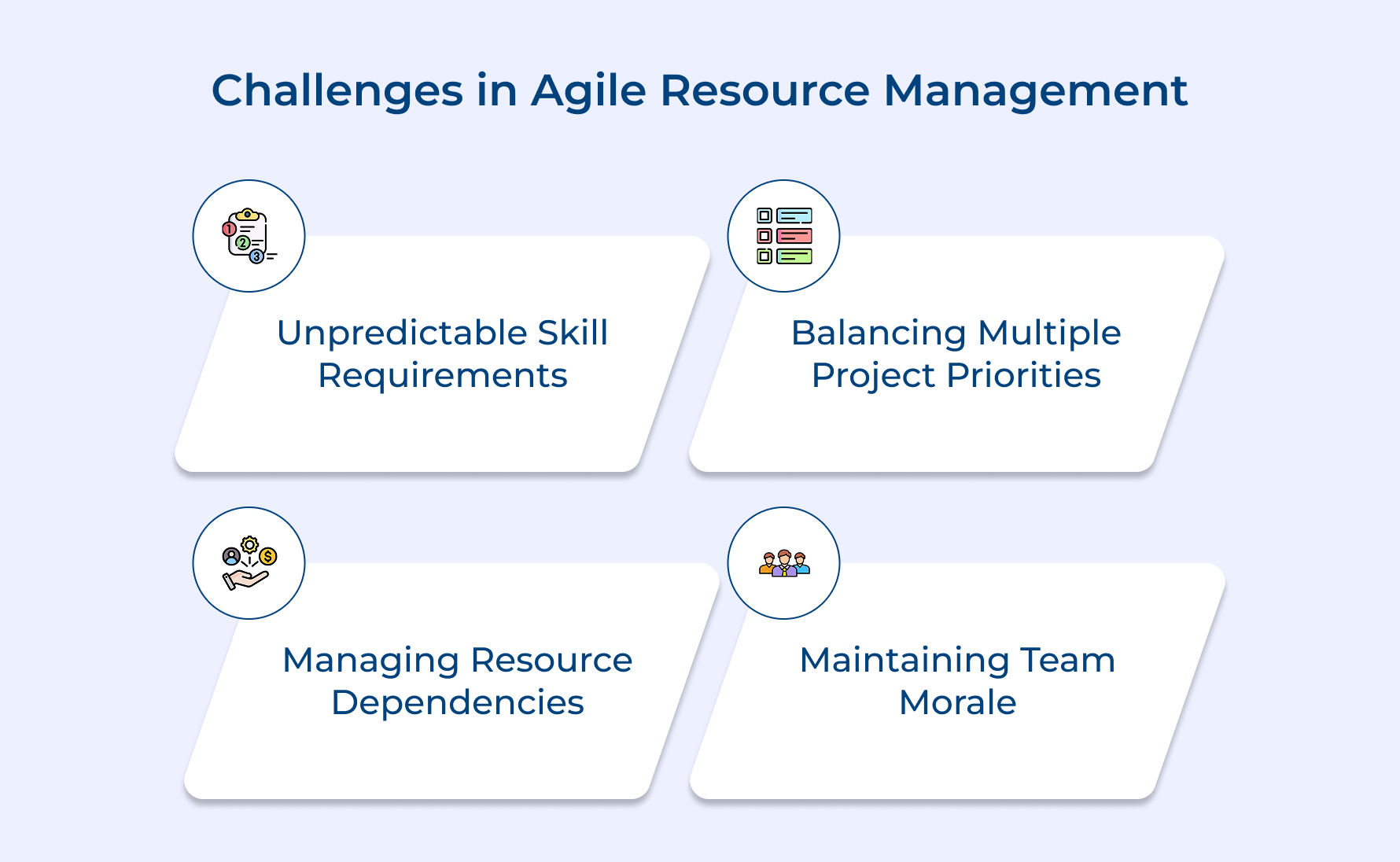
Unpredictable Skill Requirements
Agile projects often reveal new skill requirements as development progresses and user feedback shapes direction unexpectedly. Teams discover they need specialized expertise not identified during initial planning, creating gaps traditional allocation strategies struggle to address.
Balancing Multiple Project Priorities
Organizations frequently run several agile projects simultaneously, creating competition for skilled team members across different initiatives. Resource contention becomes challenging when projects have conflicting deadlines or high-priority work emerges requiring immediate attention from committed resources.
Managing Resource Dependencies
Modern agile environments involve team members working from different locations or time zones, making real-time coordination complex. Communication delays and scheduling conflicts create bottlenecks that impact the dynamic reallocation successful agile management requires.
Maintaining Team Morale
Constant reassignment between tasks and projects creates uncertainty that impacts performance as well as team cohesion. People need stability to build relationships yet agile resource management demands flexibility that can disrupt natural team dynamics.
These challenges require systematic approaches that successful agile teams have developed through experience.
- Build cross-functional skill matrices that map team capabilities and identify training opportunities to reduce specialized dependency.
- Implement resource pooling strategies where members float between projects based on priority levels and capacity.
- Establish communication protocols for distributed teams including regular check-ins and shared visibility tools.
- Create change communication frameworks that help members understand reassignment reasoning and their project role.
- Develop team resilience through relationship activities that maintain connections during different assignments.
Features to Look for in Agile Resource Planning Software
Think of choosing agile resource planning software like selecting the right instrument panel for an airplane cockpit. You need tools that provide clear visibility into your team’s capabilities while enabling quick adjustments when conditions change during flight.
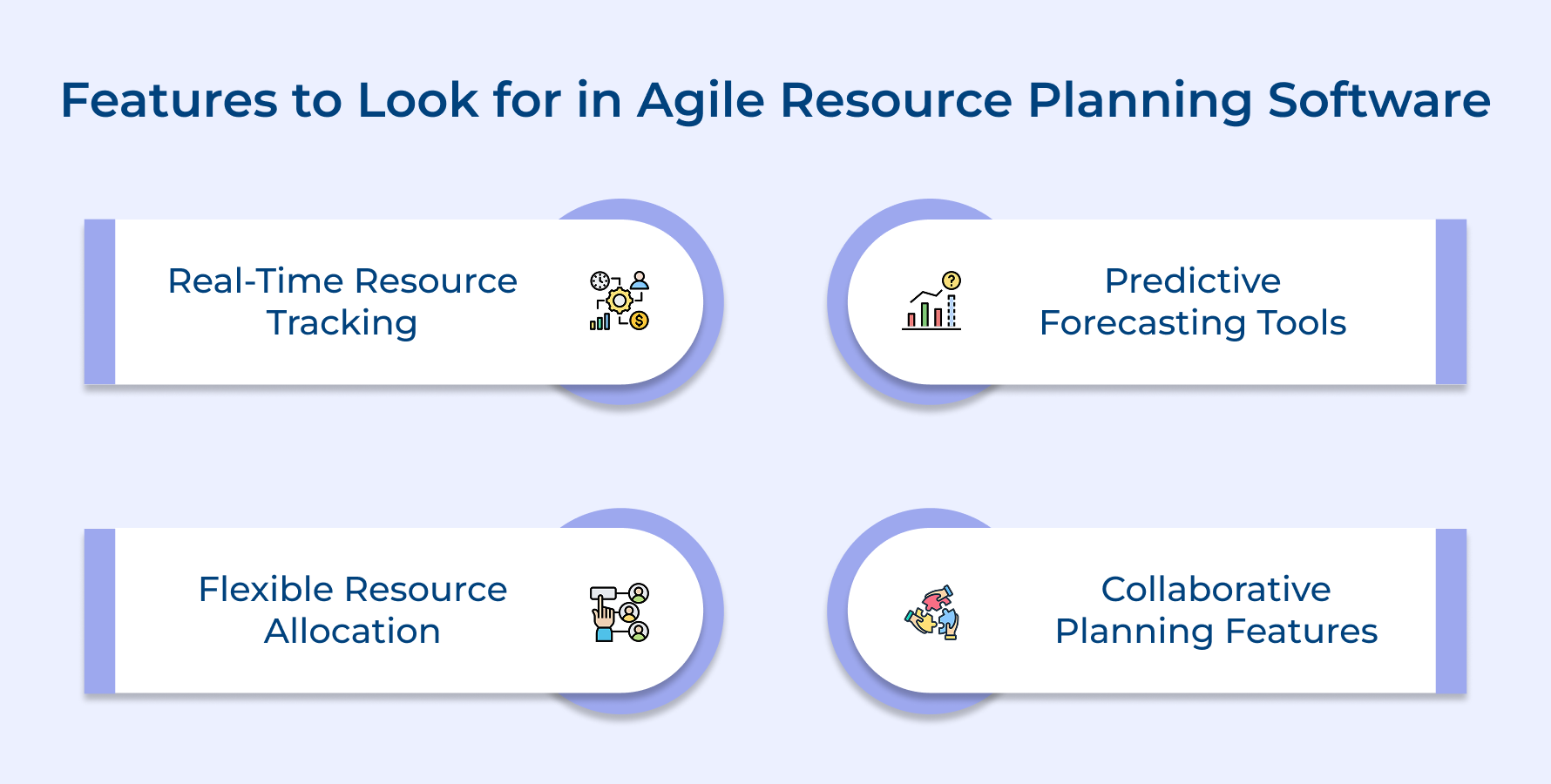
Real-Time Resource Visibility and Capacity Tracking
Choose software that gives you a live view of who’s available and how workloads are distributed. Intuitive dashboards that update automatically act like a project radar, showing exactly where your people are allocated and alerting you to bottlenecks before they cause delays.
Flexible Assignment and Reallocation Capabilities
Go for tools that let you reassign tasks with ease, ideally with simple drag-and-drop functionality. You shouldn’t need to chase approvals or fill endless forms. The best platforms make shifting priorities feel as easy as moving chess pieces.
Predictive Analytics and Forecasting Tools
Look for software that uses past performance data to predict upcoming capacity needs. Think of it as weather forecasting for your projects, it helps you spot potential resource conflicts early and stay ahead of issues before they hit.
Collaborative Planning and Communication Features
Pick tools that encourage teamwork. Built-in chat, notifications, and availability updates help everyone stay aligned. When team members can request assignments or flag capacity changes directly, resource management becomes a shared, transparent process.
Agile Resource Management: Optimize your Team and Maximize Potential
Agile resource management transforms traditional project approaches by creating flexible frameworks that adapt to changing requirements and priorities. When teams master these techniques, they achieve higher productivity while maintaining sustainable work practices that support long-term success.
The journey from rigid resource allocation to dynamic team management requires commitment to continuous improvement and collaborative planning processes. Organizations that embrace these principles discover their teams become more resilient, engaged, and capable of delivering exceptional results consistently.
Limit time — not creativity
Everything you need for customer support, marketing & sales.

Shivank Kasera is part of the marketing team at Kooper, where he focuses on building content that helps agencies and service providers grow. With a keen interest in SaaS, operations, and scalability, he translates practical insights into actionable resources for business leaders.