How Does Resource Allocation in Project Management Work?
- What is Resource Allocation in Project Management?
- Benefits of Resource Allocation in Project Management
- 6 Proven Resource Allocation Frameworks Every Project Manager Should Use
- How to Allocate Resources in Project Management?
- Common Resource Allocation Challenges in Project Management
- Examples of Resource Allocation in Project Management
- Tips and Best Practices for Project Management Resource Allocation
- Optimize Your Project Success With Seamless Resource Allocation
- FAQs about Resource Allocation in Project Management

Key Highlights:
- Clear frameworks help teams align project resources with business goals, improve utilization, while maintaining balanced workloads across complex projects.
- A simple step-by-step process makes resource allocation in project management easier, helping teams protect deadlines, manage capacity and plan using real data.
- Practical methods improve efficiency, strengthen collaboration as well as support long-term profitability in modern project environments.
You’ve got talented team members but projects still miss deadlines because the right people aren’t available when needed. Resources get overbooked on some tasks while sitting idle on others, creating chaos that derails even well-planned projects.
Poor resource allocation burns out your best performers and wastes budget on inefficiencies you could have prevented. Stakeholders lose confidence when you can’t deliver on time and team morale tanks when workloads feel unpredictable.
This guide to resource allocation in project management walks you through proven frameworks and practical steps to allocate resources effectively. You’ll learn how to match skills to tasks, balance workloads and adjust allocations as projects evolve so everything runs smoother.
What is Resource Allocation in Project Management?
Resource allocation is the strategic process of assigning and managing available resources across project tasks as well as activities. It involves distributing team members, equipment, budget and time to maximize efficiency while meeting project goals. This systematic approach ensures that every resource gets used optimally without creating bottlenecks or shortages.
Project managers first identify all available resources and then map them against project requirements. They assign specific resources to tasks based on skills, availability and priorities while continuously monitoring as well as adjusting allocations as the project progresses. This dynamic process requires balancing competing demands and making trade-offs to keep everything moving forward smoothly.
Critical factors:
- The actual number of team members, tools, as well as budget you have on hand directly determines what you can assign and when.
- High-priority tasks and critical path activities naturally get first access to your best resources along with the largest budget portions.
- Matching the right expertise to specific tasks ensures quality work and prevents wasting specialized talent on basic activities.
- Deadlines force you to allocate resources more intensively to time-sensitive deliverables even if it means pulling them from other areas.
- Sequential activities require careful resource planning since you can’t start the next phase until previous resources complete their work and become available.
Benefits of Resource Allocation in Project Management
Effective resource allocation transforms how projects run by creating clarity and preventing chaos. Here’s why it matters for your project success.
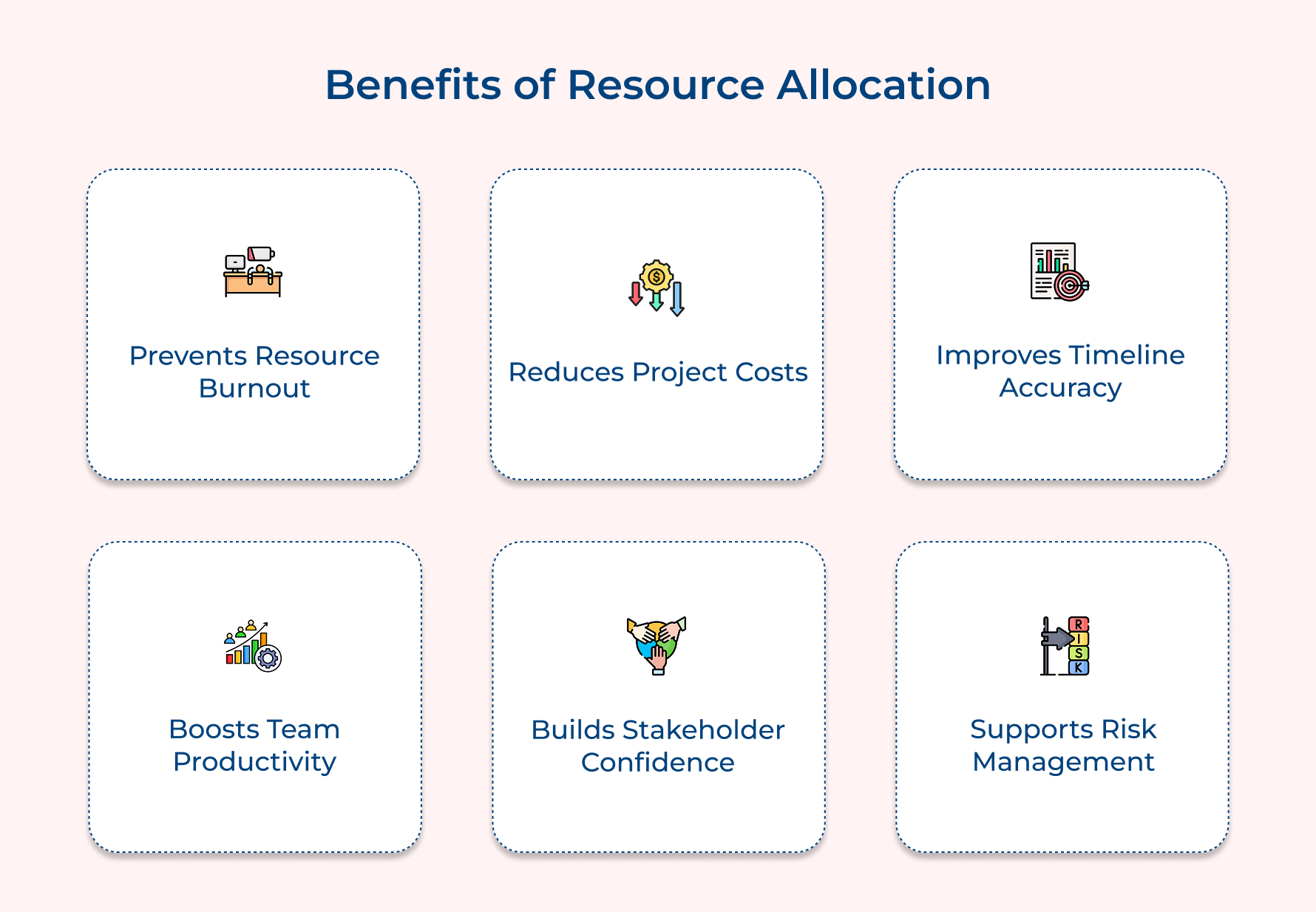
- Prevents Resource Overload and Burnout
Smart allocation keeps any one team member from carrying too many tasks at the same time. This balanced structure of resource utilization supports steady productivity and helps people stay healthy as well as motivated across the entire project lifecycle. - Reduces Project Costs
Proper resource distribution cuts unnecessary spending because you use only what is required at the right moment. Extra payments for idle capacity or rushed last-minute additions become far less likely, keeping budgets under control. - Improves Project Timeline Accuracy
Accurate allocation from the beginning makes realistic scheduling possible. Teams can commit to timelines they can genuinely achieve, which limits delays caused by shortages, scheduling conflicts, or shifting priorities between projects. - Increases Team Productivity
The right match between skills and responsibilities allows work to move faster as well as reach a higher quality standard. People naturally perform better when assignments align closely with their expertise, strengths and available capacity. - Enhances Stakeholder Confidence
Clear and thoughtful resource planning shows that execution has been carefully considered. Clients and leadership gain confidence because the project appears organized as well as responsibly managed from the start. - Enables Better Risk Management
Early visibility into resource requirements highlights bottlenecks or conflicts before they grow into major issues. Teams can prepare backup plans and adjust allocations smoothly to handle unexpected challenges that arise during delivery.
6 Proven Resource Allocation Frameworks Every Project Manager Should Use
Different projects need different approaches to resource allocation. Let’s walk through seven proven frameworks that help you match resources to tasks in ways that actually work for your team.
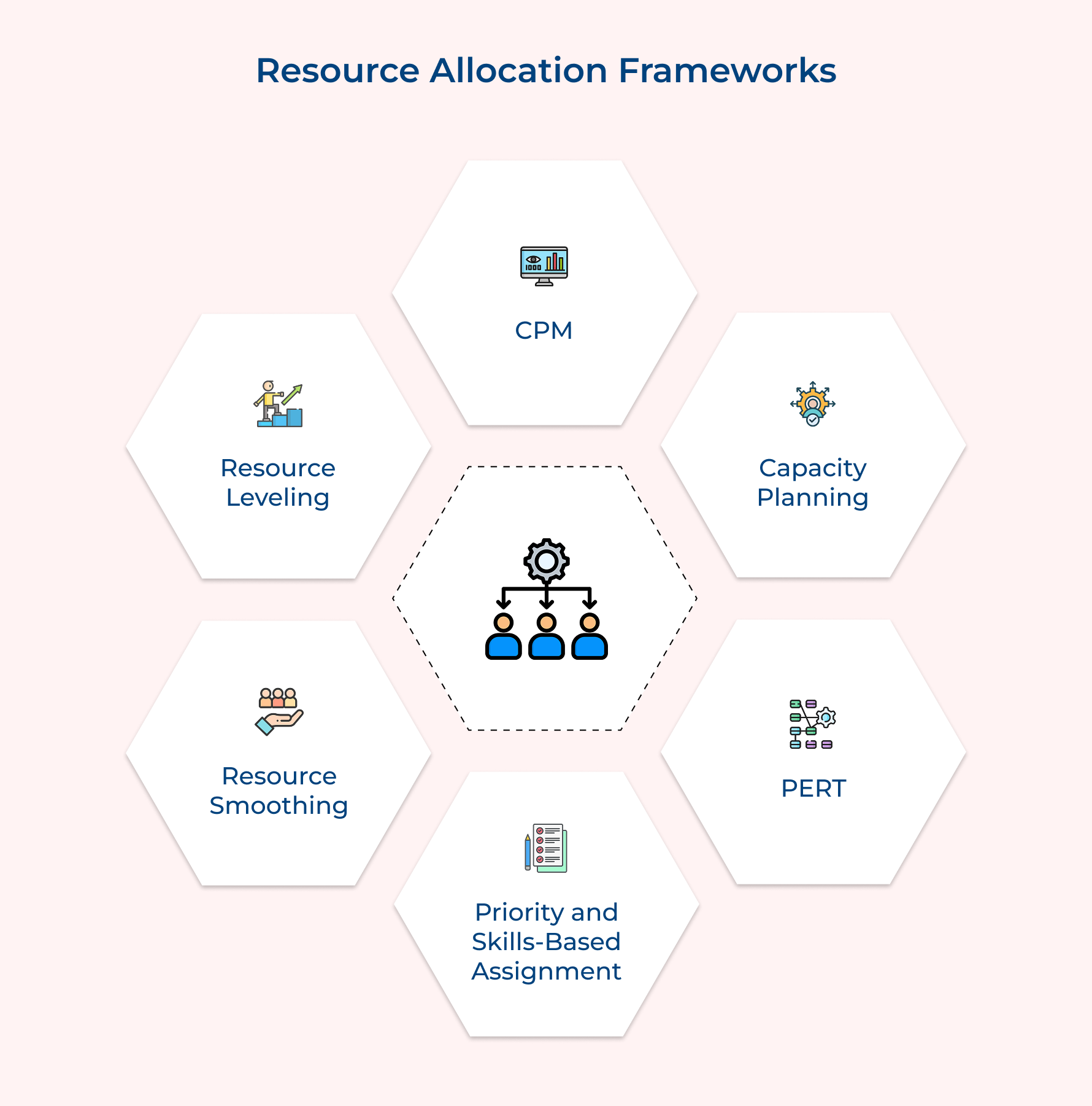
1. Critical Path Method (CPM)
Think of CPM as finding the backbone of your project. It identifies the longest sequence of dependent tasks that determines your project’s minimum duration. You analyze task dependencies as well as durations to find which activities have zero flexibility and must receive resources first.
Key steps to implement CPM effectively:
- Map out all project tasks with their dependencies and estimated durations
- Calculate the earliest and latest start times for each activity
- Identify tasks with zero slack time that form your critical path
Once you know your critical path, you can allocate your best resources to these make-or-break tasks. Meanwhile, you allow more flexibility with non-critical activities that won’t derail your deadline if they shift around a bit.
2. Capacity Planning
Now let’s get practical about what your team can actually handle. Capacity planning matches your team’s available working hours against the total work required across all projects. You calculate how much work each person can realistically handle within a given timeframe before making assignments.
Questions to guide your capacity planning process:
- How many productive hours does each team member have after meetings and administrative tasks?
- What existing commitments are already consuming your team’s capacity?
- Where will capacity shortages occur if you maintain current project timelines?
This framework keeps you honest by preventing overcommitment. It shows you exactly where you’ll need additional resources or extended deadlines based on actual availability rather than hoping people can magically do more.
3. PERT (Program Evaluation and Review Technique)
Here’s where we acknowledge that uncertainty is real. PERT uses three time estimates for each task to account for the unpredictability that comes with any project. You gather optimistic, pessimistic and most likely duration estimates to calculate weighted averages that guide your resource decisions.
Elements that make PERT particularly valuable:
- Optimistic estimate: best-case scenario if everything goes perfectly
- Pessimistic estimate: worst-case scenario accounting for potential problems
- Most likely estimate: realistic duration based on normal working conditions
The beauty of this method is that you allocate buffer resources to high-uncertainty tasks while keeping tight assignments on predictable activities. This way you’re not caught off guard when complex tasks take longer than the best-case scenario suggested.
For example, a software development task might have estimates of 3 days optimistic, 10 days pessimistic and 5 days most likely, resulting in a 5.5-day weighted average for planning purposes.
4. Priority and Skills-Based Assignment
This is the most intuitive method and often where many project managers start. You assign resources based on task importance and the specific skills required for successful completion.
The strategy here is simple but effective. High-priority tasks get your most experienced people while lower-priority work goes to those developing their capabilities. This balances getting critical work done right with helping your team grow their skills.
5. Resource Smoothing
Resource smoothing is all about creating a steadier workflow. It adjusts task timing within available floats to create more consistent resource usage throughout your project timeline. You shift non-critical activities to eliminate those chaotic peaks and frustrating valleys in resource demand.
Three essential elements:
- Float utilization
- Demand leveling
- Schedule flexibility
The key benefit here is that you maintain your deadline while avoiding situations where everyone is frantically busy one week and twiddling their thumbs the next. You create a more sustainable pace by strategically delaying tasks that have scheduling flexibility.
6. Resource Leveling
Sometimes you just don’t have enough resources to meet your original timeline. Resource leveling accepts this reality and resolves conflicts by extending the project schedule when necessary. You delay tasks or split them across longer periods to work within your actual resource constraints.
Implementation steps for effective resource leveling:
- Identify where resource demand exceeds availability in your current schedule
- Determine which tasks can be delayed or extended without catastrophic impact
- Adjust the timeline to reflect realistic resource availability and workload distribution
Unlike smoothing, this method is honest about the fact that limited resources may push out your deadline. It’s the right choice when hiring more people isn’t an option and forcing overtime would burn out your team.
How to Allocate Resources in Project Management?
Let’s dive into a straightforward 7-step process to help you effectively manage and allocate your resources for your next project.
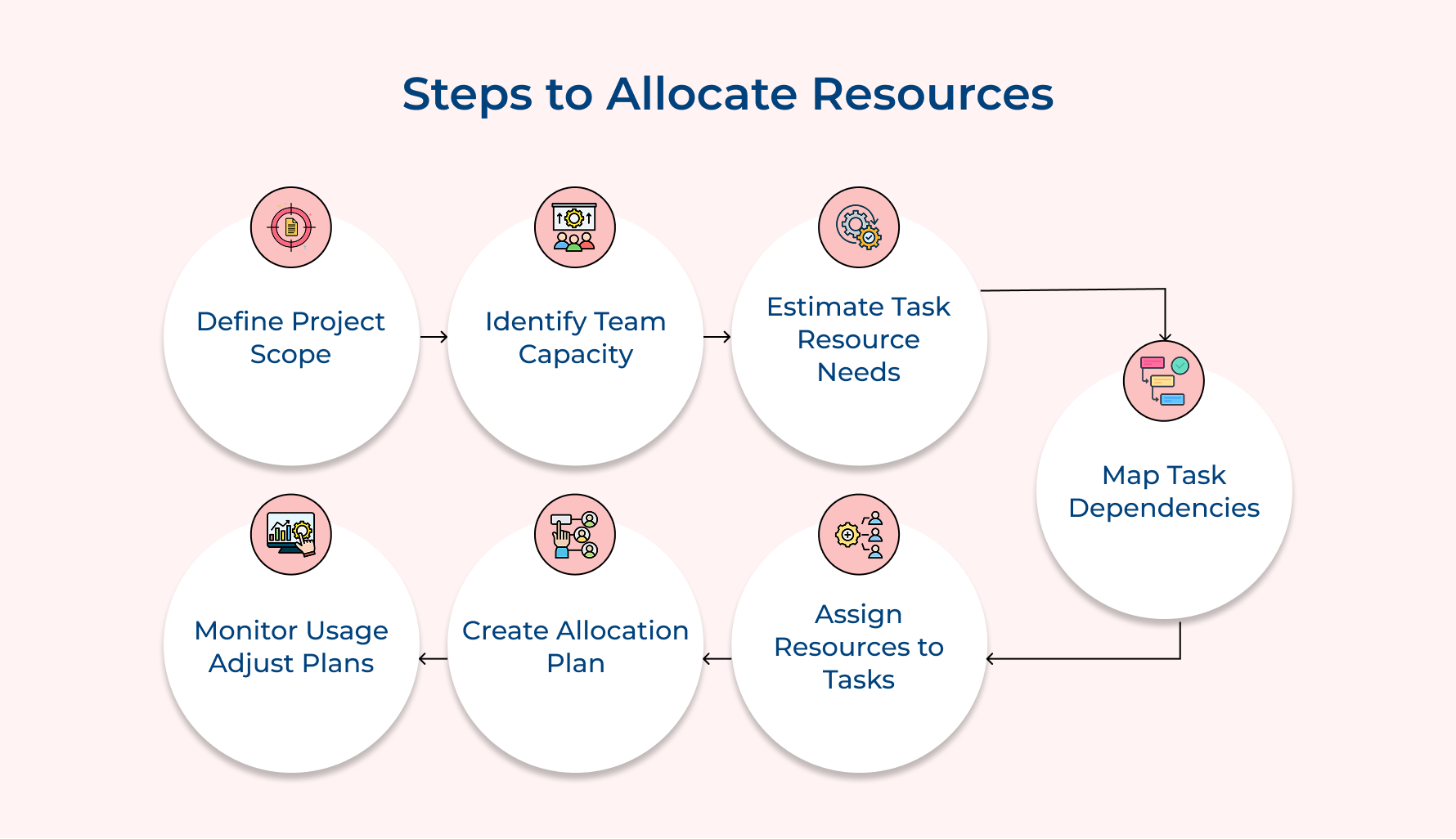
1. Define Project Scope and Requirements
This first step sets the direction for everything that follows by clarifying what the project aims to achieve and how success will be measured. Clear scope makes it easier to connect daily execution to broader business goals and determine which resources truly matter.
The process begins by gathering stakeholder input to outline deliverables, followed by breaking the work into defined tasks and documenting constraints.
Shared clarity keeps expectations realistic, reduces confusion and limits the risk of scope creep. Everyone understands what the project includes and what stays outside its boundaries.
Pro tips:
- Document assumptions alongside requirements so they can be reviewed if conditions shift during execution.
- Invite team members into early scope discussions to surface impractical expectations before they turn into costly problems.
2. Identify Available Resources and Capacity
Create a realistic view of what the team can deliver before any promises are made. A clear understanding of available people, tools and time protects project deadlines from slipping due to overcommitment as well as keeps planning grounded in reality.
Several practical methods help reveal true availability:
- Skills inventory: Build a living record of each team member’s strengths, experience and proficiency levels. Regular updates ensure the right expertise is visible when specialized work appears.
- Capacity calculation: Review calendars to remove leave, meetings and current assignments from total working hours. The remaining time reflects actual team capacity that can support new work.
- Resource audit: List equipment, licenses and materials already in place, including renewal dates or maintenance needs. This confirms which assets are genuinely ready for use.
Early discovery of shortages creates an opportunity to respond thoughtfully rather than react under pressure. Stakeholders can approve added investment, shift scope, or adjust timelines based on clear evidence instead of assumptions.
3. Estimate Resource Needs Per Task
Here, convert your task list into clear resource requirements so every activity has the time, skills and tools it truly demands. Thoughtful estimation supports stronger strategic planning and reduces the risk of budget overruns or missed timelines caused by unrealistic assumptions.
A few guiding questions make the estimation process more reliable:
- What level of expertise is necessary for successful completion?
- How many hours would a qualified person realistically need?
- Which tools or materials must be ready before work begins?
- Do dependencies influence when resources can be assigned?
These questions encourage careful thinking instead of optimistic guessing and often reveal hidden needs such as specialized equipment or additional review time.
Accuracy improves by consulting experienced team members who understand similar work and can highlight complexities early. Three-point estimation using optimistic, pessimistic and most likely scenarios also creates a practical range that reflects real-world uncertainty rather than a single fragile number.
4. Map Timeline and Task Dependencies
A clear timeline turns a simple task list into a structured roadmap that shows how work progresses and which activities rely on others. Understanding these relationships prevents resources from sitting idle on tasks that are not ready to begin and keeps execution aligned with planned sequencing.
- Create your Project Schedule with Milestones
Major deliverables and decision points placed across the schedule act as checkpoints that confirm progress before the next phase begins. Each milestone keeps stakeholders aligned and reduces uncertainty during execution.
- Identify Task Sequences and the Critical Path
Some activities must occur in order, while others can run in parallel. Mapping these connections reveals the longest chain of dependent work and highlights where delays will directly affect completion dates.
- Set Realistic Deadlines for Every Phase
Completion dates should reflect effort, complexity and review time rather than optimistic expectations. Reasonable buffers help the schedule absorb unexpected issues while keeping overall delivery on track.
5. Assign Resources to Specific Tasks
This is where your planning becomes action by matching the right people and resources to each task. Proper assignment ensures work gets done efficiently by people with appropriate skills rather than forcing mismatches that waste time.
Here’s how different task types require different resource assignments:
- Technical development tasks: Assign senior developers to complex architecture work while junior developers handle routine coding under supervision.
- Creative design tasks: Match designers whose portfolio style aligns with the project aesthetic and who have availability during the design phase.
- Administrative coordination tasks: Allocate project coordinators to handle scheduling and documentation rather than consuming expert time on these activities.
- Quality assurance tasks: Assign team members with testing expertise who weren’t involved in creating the deliverable being reviewed.
How do you handle situations where multiple high-priority tasks need the same person simultaneously? You’ll need to either sequence the tasks so the person handles them one at a time or negotiate priorities with stakeholders. Sometimes bringing in additional resources or cross-training team members provides backup options when your expert becomes a bottleneck.
6. Create Resource Allocation Plan Document
A structured resource allocation plan brings all assignment decisions into one clear, accessible reference. Everyone involved can quickly understand responsibilities, timing and support needs, which reduces confusion as well as strengthens accountability across the project.
The document should compile resource assignments in a simple format that shows who is handling each task, the time frame for their involvement and any tools or inputs required for completion.
Teams rely on this plan as a practical roadmap during execution and new members can get up to speed faster because expectations are already documented.
Pro tips:
- Include contact details and escalation paths so issues related to resources reach the right person without delay.
- Maintain version control and timestamps for every update to track how allocations evolve as the project progresses as well as priorities shift.
7. Monitor Utilization and Adjust Allocations
Ongoing visibility keeps the resource plan aligned with real project conditions instead of relying on assumptions made at the start. Regular tracking helps teams notice overload, underuse, or shifting priorities early enough to respond before timelines or quality are affected.
Several practical practices support effective monitoring and adjustment:
- Weekly utilization reviews: Short check-ins compare planned hours against actual effort, making it easier to spot patterns that need correction.
- Resource dashboard tracking: Project management tools display real-time workload across tasks and highlight capacity risks before burnout occurs.
- Variance analysis meetings: Budget and effort are reviewed at key milestones to detect overruns while understanding whether estimates or scope created the gap.
Mid-project changes can feel uncomfortable because they challenge the original plan. Clear data reframes those adjustments as responsible decision-making that protects delivery, quality and team wellbeing rather than signaling failure.
Common Resource Allocation Challenges in Project Management
Even with the best planning, resource allocation rarely goes perfectly smoothly. Here are the most common obstacles project managers face and practical ways to overcome them.
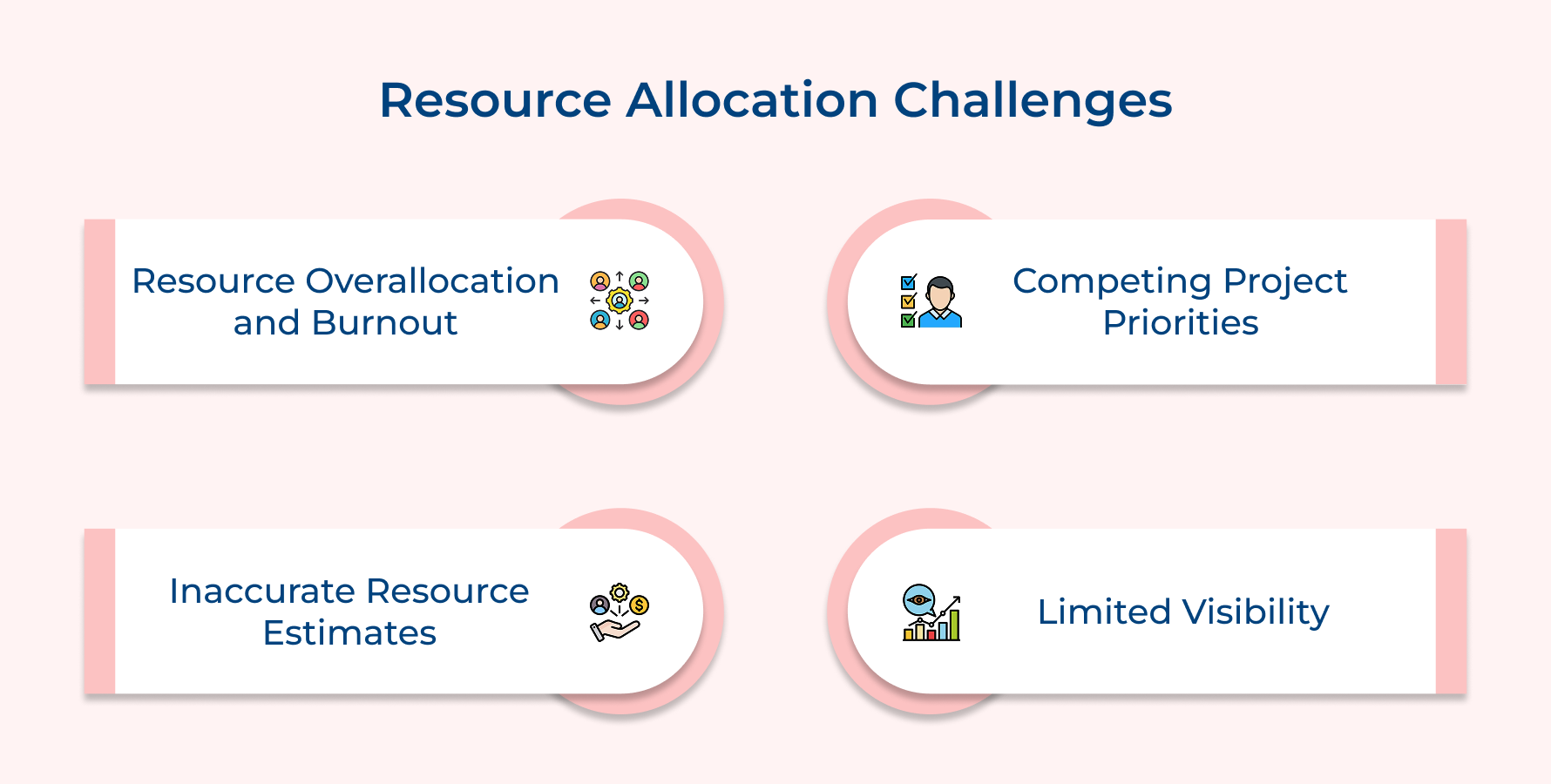
1. Resource Overallocation and Burnout
Assigning too much work to team members creates bottlenecks and leads to exhaustion that destroys productivity as well as morale. This happens when managers underestimate task duration or fail to account for non-project commitments already consuming people’s time.
2. Competing Project Priorities
Multiple projects simultaneously demanding the same resources creates conflicts where you must choose which work gets done first. Teams struggle when everyone claims their project is urgent and resources get pulled in different directions without clear prioritization.
3. Inaccurate Resource Estimates
Underestimating how long tasks take or what skills they require leaves you scrambling for additional resources mid-project. Poor estimates stem from lack of historical data or overly optimistic assumptions about how quickly work can be completed.
4. Limited Visibility Into Resource Availability
Not knowing who’s available or what capacity people have makes it impossible to allocate resources effectively. The challenge intensifies in large organizations where resources are shared across departments and tracking systems don’t communicate with each other.
Solutions to overcome these resource allocation challenges:
- Track actual time spent on tasks to build historical data that improves future estimates and reveals patterns of overallocation before burnout happens.
- Implement a project prioritization framework with clear criteria so stakeholders can make informed trade-offs when resources must be shared across competing initiatives.
- Use three-point estimation techniques and add contingency buffers to account for uncertainty rather than planning with best-case scenario assumptions.
- Adopt centralized resource management software that provides real-time visibility into capacity and commitments across all projects as well as departments.
Examples of Resource Allocation in Project Management
Different industries face unique resource challenges that require tailored allocation approaches. Here’s how organizations across various sectors successfully manage their resources.
1. Marketing Agency Using Capacity Planning
A digital marketing agency manages 15 client campaigns simultaneously by tracking each team member’s billable hours and availability in real time. They use capacity planning to ensure designers and content creators aren’t overbooked while maintaining profitability targets across all active accounts.
2. Software Development Firm Using Critical Path Method
A software company building a mobile app uses CPM to identify which development tasks block others from starting. They allocate their senior architects to critical path activities like database design while junior developers work on independent UI components that have scheduling flexibility.
3. Construction Company Using Resource Leveling
A construction firm extends project timelines when specialized equipment or skilled tradespeople aren’t available for overlapping phases. They use resource leveling to schedule concrete work and electrical installations sequentially rather than forcing parallel execution that would require renting duplicate equipment.
4. Management Consultancy Using Skills-Based Assignment
A consulting firm assigns consultants to client projects based on industry expertise and availability rather than simple workload distribution. They match healthcare specialists to hospital engagements and financial experts to banking clients while balancing utilization rates to keep everyone productively billable.
Tips and Best Practices for Project Management Resource Allocation
Smart resource allocation goes beyond basic planning. Here are proven practices that help you allocate resources more effectively and avoid common pitfalls.
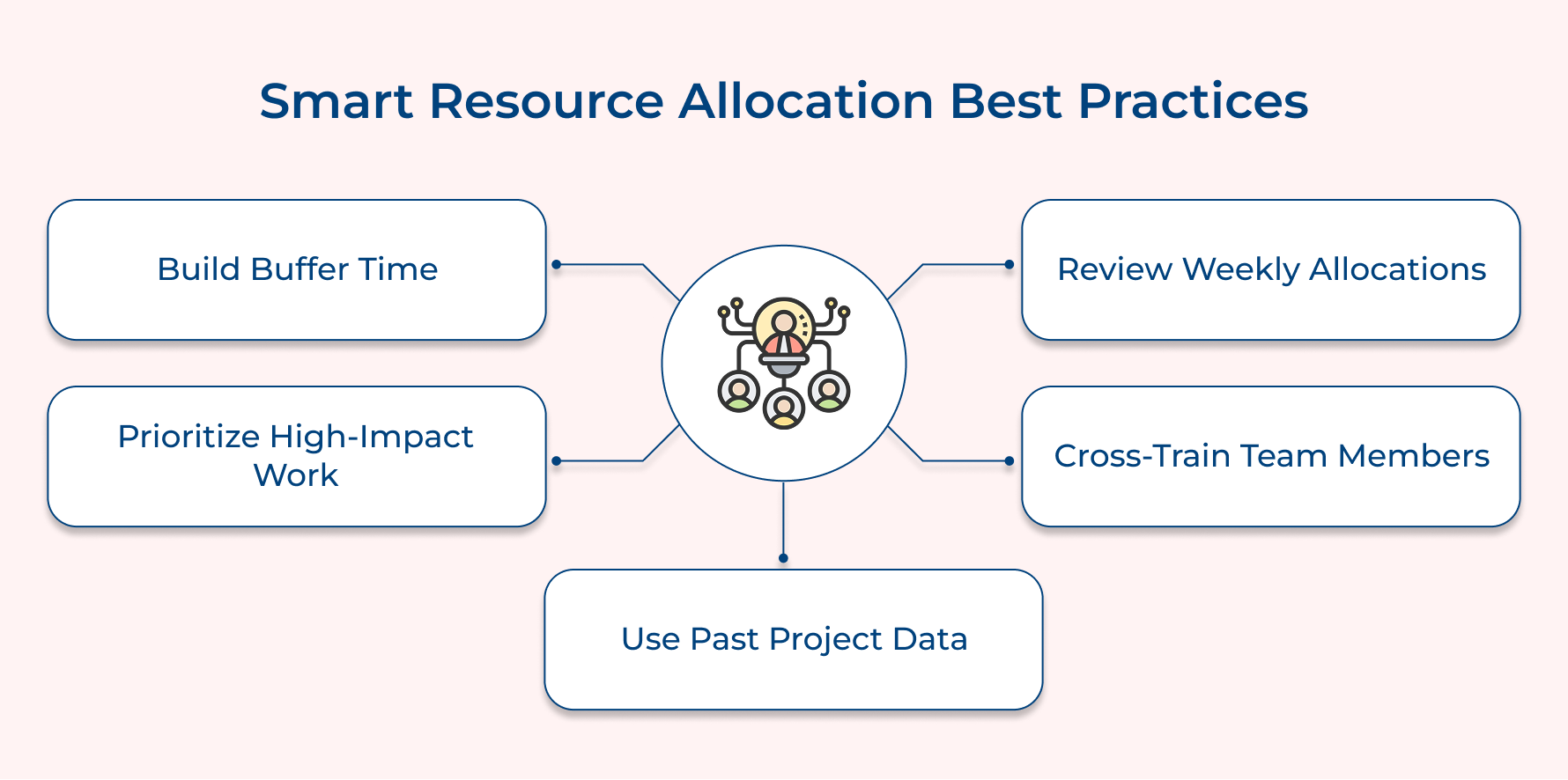
- Build buffer time into your allocations: Always add contingency time to resource plans because unexpected issues will arise. This buffer prevents complete schedule collapse when tasks take longer than estimated.
- Review and update allocations weekly: Resource needs change as projects progress so treat your allocation plan as a living document. Regular reviews let you catch conflicts early and adjust before problems escalate.
- Prioritize based on project value and dependencies: Allocate your best resources to high-impact tasks that deliver the most business value first. Also prioritize work that unblocks other activities to keep momentum flowing through your project.
- Cross-train team members for flexibility: Develop backup skills across your team so you’re not dependent on single individuals for critical tasks. Cross-training creates options when your primary resource becomes unavailable unexpectedly.
- Use data from past projects: Track actual resource usage and compare it against estimates to improve future planning accuracy. Historical data reveals patterns about which tasks consistently take longer than expected.
Optimize Your Project Success With Seamless Resource Allocation
Effective resource allocation in project management is the backbone of successful project delivery. When you match the right people and tools to the right tasks at the right time, projects run smoother as well as teams stay productive without burning out.
Start by understanding your available capacity and project requirements, then use proven frameworks to guide your decisions. Monitor continuously and adjust as needed because flexibility separates projects that succeed from those that struggle when conditions change.
Limit time — not creativity
Everything you need for customer support, marketing & sales.

Neeti Singh is a passionate content writer at Kooper, where he transforms complex concepts into clear, engaging and actionable content. With a keen eye for detail and a love for technology, Tushar Joshi crafts blog posts, guides and articles that help readers navigate the fast-evolving world of software solutions.