10 Core Principles of Project Management for Better Results
- What are the Principles of Project Management?
- Importance of Using Project Management Principles
- 10 Key Principles of Project Management for Efficiency
- How to Implement Project Management Principles in 7 Actionable Steps?
- Deliver Projects Efficiently and Effectively with the Right Principles
- FAQs about Principles of Project Management

Key Highlights:
- Clear goals, defined scope, and stakeholder alignment ensure teams stay focused as well as avoid costly project deviations.
- Applying project management principles improves budget control, reduces risks, and boosts overall team productivity significantly.
- Organizations using formal principles of project management achieve higher success rates and minimize costly performance failures.
Most projects fail not because of bad ideas but because teams lack fundamental structure. Missed deadlines and blown budgets become the norm when you’re flying blind without clear principles guiding your work.
Every failed project wastes money and damages team morale while stakeholders lose confidence in your ability to deliver.
The right principles of project management transform chaos into controlled outcomes that stakeholders can trust. These ten core foundations give your team the framework to deliver consistently regardless of project size or complexity.
What are the Principles of Project Management?
Project management principles are the fundamental guidelines that help teams deliver successful outcomes. These core rules provide a framework for planning and executing work efficiently. They ensure projects stay on track while managing resources and meeting goals within defined constraints.
Project management principles work by creating structure around chaos. Teams use these guidelines to break down complex work into manageable pieces. This approach helps everyone understand their role and keeps the project moving forward with clear direction.
Core factors:
- Clear objectives: Every project needs a specific goal that everyone understands and works toward.
- Stakeholder engagement: Keeping the right people informed and involved prevents surprises as well as builds support.
- Defined scope: Setting boundaries on what’s included stops projects from expanding endlessly.
- Risk management: Identifying potential problems early gives you time to plan solutions before they derail progress.
Importance of Using Project Management Principles
Project management principles aren’t just theoretical concepts. They deliver real results that directly impact your bottom line and team performance.
Latest Stats (2024-2025):
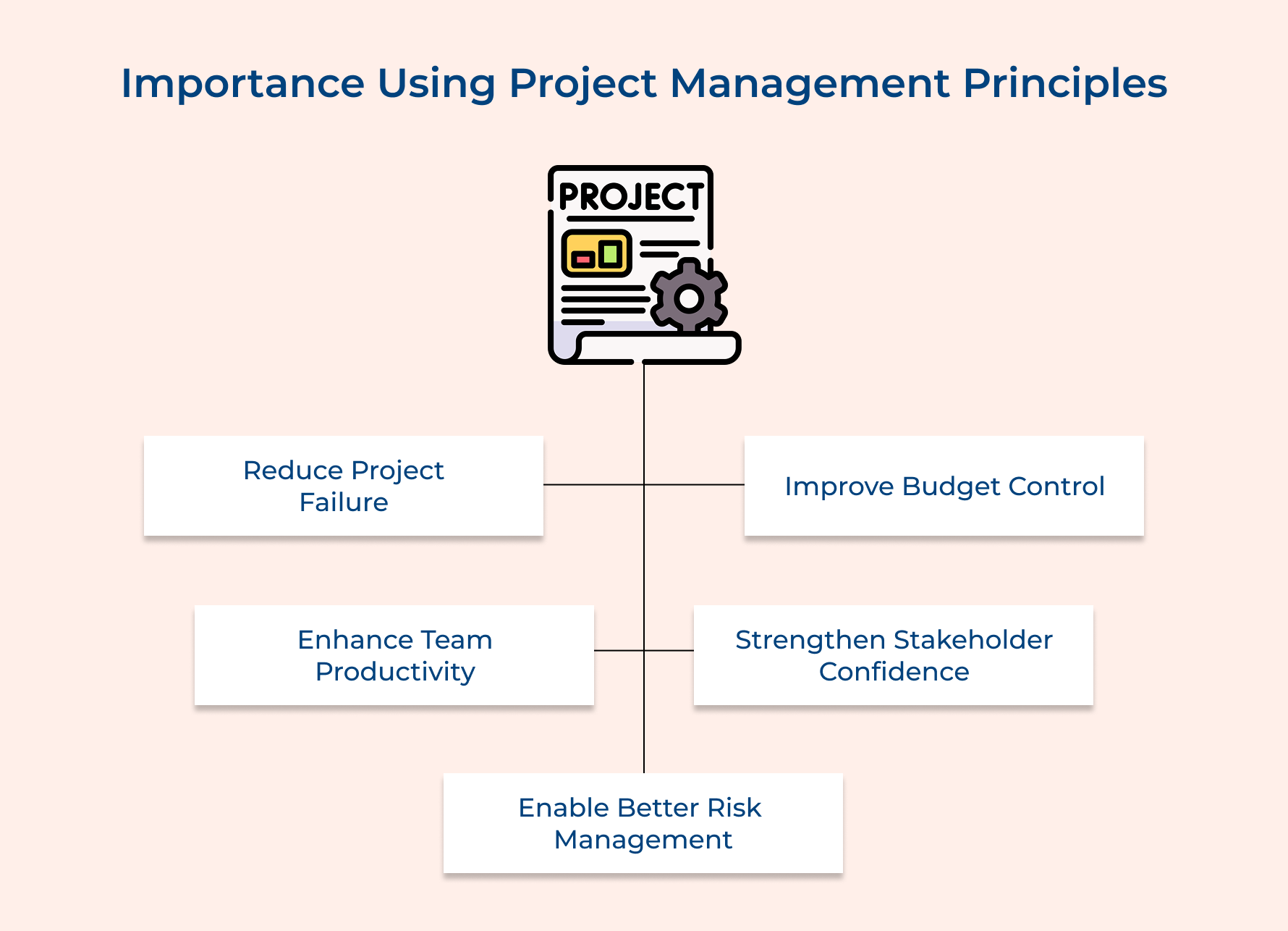
Reduces Project Failure Rates
Sticking to the right principles for projects dramatically cuts down on how often things go sideways. Companies that skip these fundamentals watch most of their initiatives collapse before they ever reach successful completion. The structure keeps costly mistakes from piling up and helps your team stay focused on what actually moves the needle.
Improves Budget Control
Sound principles stop you from burning money on unnecessary changes and avoidable delays. They create real accountability around spending decisions and how resources get distributed throughout the project. Your finance team will genuinely appreciate it when your delivery approach keeps things on track.
Enhances Team Productivity
Clear principles take the guesswork out of project execution by spelling out exactly who owns what and why it matters. Everyone shows up knowing their role instead of spending half the day in meetings trying to answer questions that should have been settled from the start.
Strengthens Stakeholder Confidence
When you apply these principles consistently, clients and executives start seeing something they don’t always expect. Well-defined acceptance criteria play a big role here because everyone agrees upfront on what project success actually looks like.
Enables Better Risk Management
Good principles give you a framework for spotting trouble before it turns into a crisis. You stop reacting to fires and start addressing risks before they damage timelines, relationships or reputations. That kind of foresight is genuinely hard to put a price on when things inevitably get complicated.
10 Key Principles of Project Management for Efficiency
These core principles form the backbone of successful project delivery. Master them and you’ll transform chaotic work into controlled outcomes.
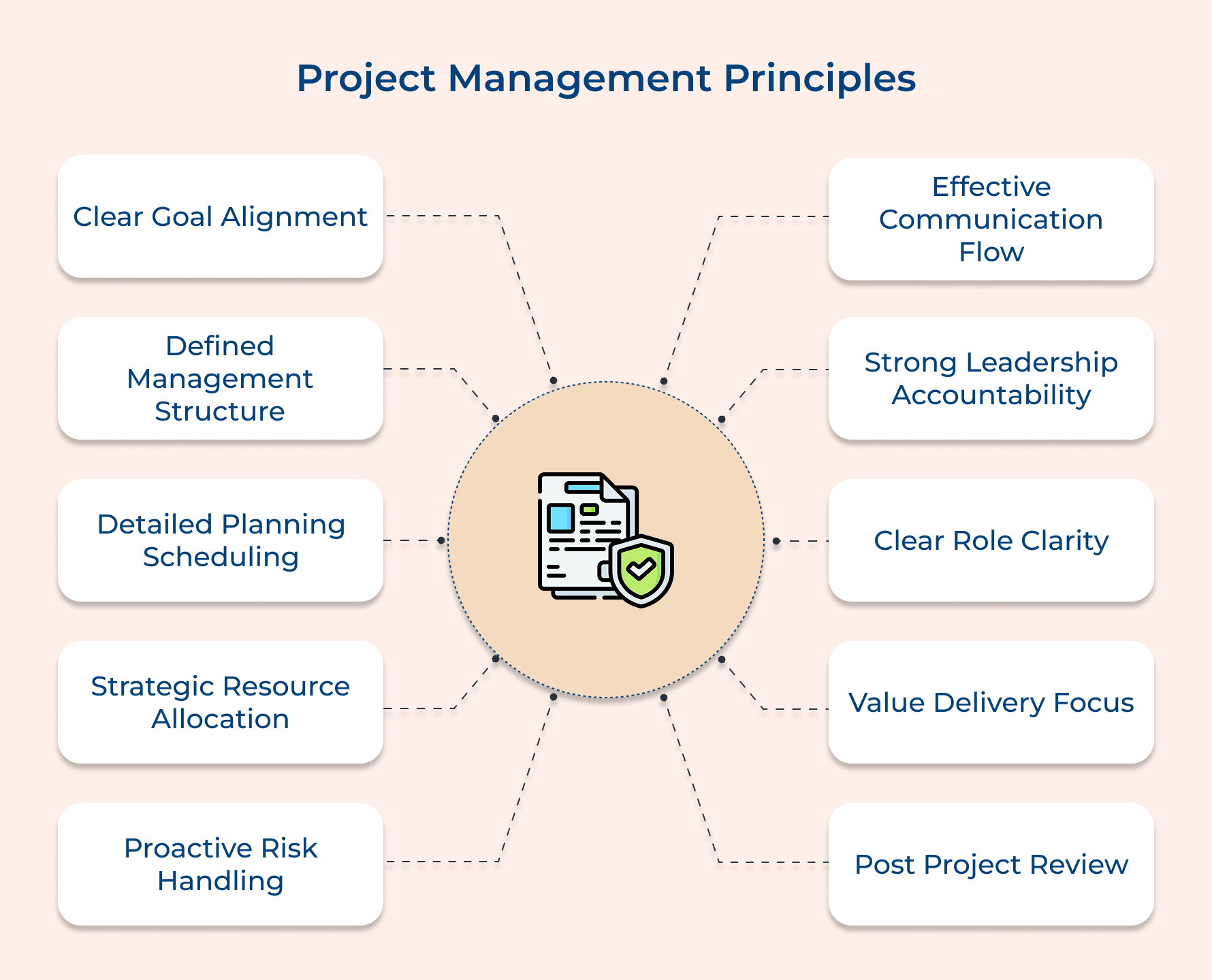
1. Clear and Objective Goals and Outcomes
Every successful project starts with knowing exactly what you’re trying to achieve. Vague aspirations like “improve customer experience” won’t cut it when you need concrete deliverables. Define specific targets that everyone can measure and understand.
Here’s what makes goals work in practice:
- Measurable targets: Set numbers you can track like “reduce response time by 30%” instead of “make things faster”
- Time-bound commitments: Assign deadlines to every objective so urgency stays real throughout the project
- Stakeholder alignment: Get everyone to agree on what success looks like before spending a single dollar
Your team will drift in different directions when there is no clear goal. Each person invents their own version of success and you end up with misaligned effort. The result is wasted time on features nobody asked for.
How do you know if your goals are actually clear enough? Try a simple test – ask three different team members what success looks like and see if they give you the same answer without hesitation.
2. Formal Project Management Structure
Projects need a framework that defines how decisions get made and work gets done. Flying by instinct might work for tiny tasks but complex initiatives require systematic approaches. This structure isn’t bureaucracy for its own sake.
Ask yourself these questions about your current setup:
- Does everyone know who makes final decisions on scope changes?
- Can team members find the information they need without hunting through endless chat threads?
- Do you have a consistent way to track progress across all your projects?
The right structure creates predictability in how your team operates. People spend less energy figuring out processes and more energy delivering results. Good structure becomes invisible because it just works.
3. Comprehensive Planning and Scheduling
Planning transforms your goals into actionable steps with realistic timelines. You break down the massive undertaking into digestible chunks that won’t overwhelm anyone. Smart scheduling accounts for dependencies so work flows smoothly from start to finish.
Effective planning requires attention to these fundamentals:
- Task sequencing: Map out which activities must happen before others can begin
- Buffer time: Build in cushions for unexpected delays without padding every estimate ridiculously
- Milestone markers: Create checkpoints where you can assess progress and adjust course if needed
Great plans also identify what you won’t do. Saying no to scope creep becomes easier when you’ve documented what’s actually in scope. Your schedule becomes a shield against unrealistic demands.
4. Strategic Resource Management
Resource allocation determines what’s possible within your constraints. You can’t clone your best people or print money so smart deployment becomes critical. Every project competes for limited talent and budget.
The art lies in matching resources to priorities without spreading everything too thin. Overcommitted teams deliver mediocre results across the board instead of excellence where it counts. Focus your best assets on your highest-impact work.
Smart resource management depends on these strategic decisions:
- People power: Match tasks to individuals based on their skills and current workload capacity.
- Budget distribution: Allocate funds where they’ll generate the most value for stakeholders.
- Tool access: Ensure teams have the right software and equipment when they need it.
5. Risk Management
Every project faces potential problems that could derail success. Identifying risks early gives you time to prevent them or minimize their impact. Ignoring risks doesn’t make them disappear.
Build your risk management practice around these pillars:
- Risk identification: Regularly brainstorm what could go wrong with technical execution or stakeholder relationships
- Impact assessment: Evaluate which risks would cause the most damage if they actually happened
- Mitigation strategies: Develop specific plans for high-priority risks before they become crises
The teams that handle crises best are the ones who anticipated them. They’ve already thought through responses instead of panicking when things break. This proactive mindset separates amateurs from professionals.
6. Effective Communication Plan
Information needs to flow to the right people at the right time. Too much communication creates noise while too little leaves people confused. Your communication plan defines channels and frequency for different types of updates.
Test your current approach with these reality checks:
- Do team members learn about important decisions from you or through the grapevine?
- Can stakeholders get status updates without scheduling special meetings?
- Does your team know where to ask questions and how quickly to expect answers?
Poor communication kills more projects than technical challenges ever will. Misunderstandings compound until small issues become relationship disasters. Intentional communication prevents these slow-motion train wrecks.
7. Leadership and Accountability
Someone needs to own the project’s success and have authority to make tough calls. Leadership isn’t about being bossy but about clearing obstacles while making decisions when consensus fails. Accountability ensures people follow through on commitments.
Strong project leadership manifests in specific behaviors:
- Leaders make calls quickly enough to keep momentum going
- Protect the team from distractions while raising real blockers to executives
- Take responsibility for failures instead of blaming team members or circumstances
Projects without clear leadership drift into committee-driven paralysis. Every decision requires endless discussions because nobody has the mandate to choose. This democratic dysfunction wastes everyone’s time.
8. Defined Roles and Responsibilities
Everyone needs to know their lane and understand where their work ends. Ambiguity about ownership creates chaos when critical tasks slip through the cracks. Crystal-clear role definitions prevent both gaps and wasteful overlap.
When responsibilities blur people either duplicate effort or assume someone else will handle it. Neither scenario moves your project forward and both frustrate your team members. Documentation eliminates these preventable problems.
Clarity about who does what prevents confusion:
- Role definition: Document each position’s scope of work and decision-making authority
- Responsibility matrices: Create charts showing who’s responsible versus who just needs information
- Handoff protocols: Establish how work moves between different people or teams
9. Mature Value Delivery Capabilities
Your ability to consistently ship quality results depends on having robust processes. Mature teams don’t reinvent approaches for every project because they’ve developed repeatable methods. These capabilities compound over time.
Value delivery maturity shows up in measurable ways:
- Quality metrics: Track defect rates and rework to see if your processes actually prevent problems
- Delivery predictability: Measure how often you hit promised dates versus making excuses
Immature teams lurch from crisis to crisis without learning from mistakes. Mature teams build knowledge that makes each subsequent project easier. This evolution requires intentional reflection and improvement.
10. Post-Project Evaluation
Most teams rush to the next project without stopping to reflect on lessons learned. This sprint mentality ensures you’ll repeat the same mistakes indefinitely because nobody examined what went wrong. Evaluation transforms raw experience into actionable wisdom.
The difference between busy teams and effective teams is this pause for reflection. Busy teams stay perpetually overwhelmed while effective teams get stronger with each delivery. Schedule retrospectives before your team scatters.
Learning happens when you analyze what worked and failed:
- Performance review: Compare actual results against original goals and timelines honestly
- Retrospective insights: Gather team feedback on processes that helped or hindered progress
- Knowledge capture: Document lessons so future projects don’t repeat the same mistakes
How to Implement Project Management Principles in 7 Actionable Steps?
Follow these 7 critical steps so you can harness the power of project management principles to boost efficiency, foster collaboration and improve overall outcomes.
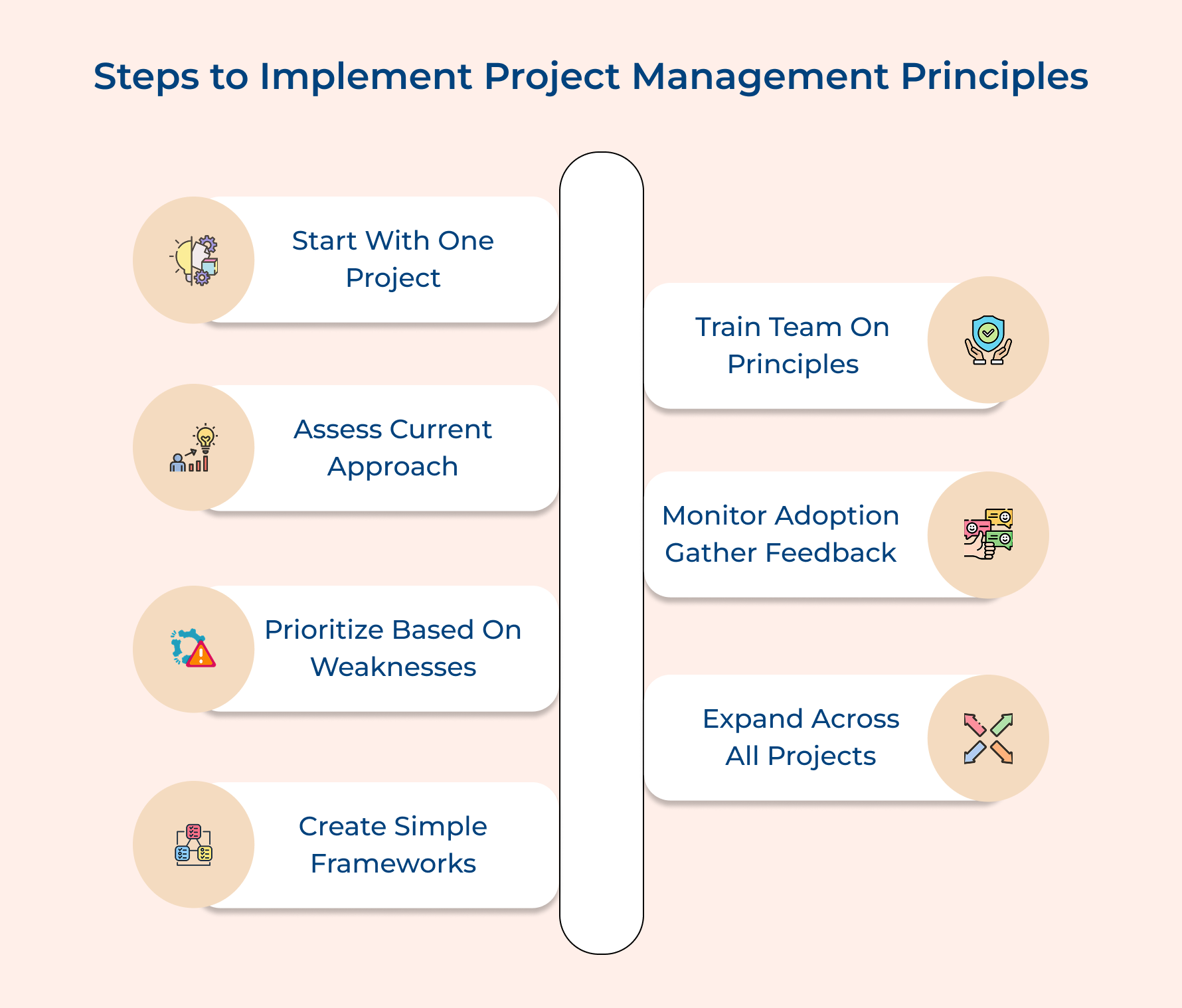
1. Start With One Active Project
The biggest mistake teams make is trying to change everything at once. A principle-based approach works far better when you test it on a single project first. Pick something with moderate complexity and a two-to-four month timeline so you can actually see results.
- Choose a pilot with manageable scope and clear boundaries
- Avoid launching changes across multiple projects simultaneously
- Select team members who genuinely embrace experimentation
Why does starting small matter so much? Because spreading yourself thin across every initiative makes it impossible to measure what’s actually working. One focused project builds the evidence and confidence you need before committing the whole organization to a new way of working.
2. Assess Your Current Project Approach
Before adding anything new, get honest about how work actually happens today. Most teams run on undocumented habits that nobody planned but everyone follows. Surfacing those patterns shows you where real improvements are possible.
Ask yourself these questions:
- How does your team decide what to work on each day?
- What happens when someone flags a risk or blocker?
- Who approves scope changes and budget decisions?
Developing the right mindset for project management starts here, with curiosity rather than blame. Frame this assessment as an honest look at everyone’s work experience. The answers will show you exactly which principles deserve attention first.
3. Prioritize Principles Based On Weaknesses
Your assessment handed you a list of pain points. Now match each one to the principle that solves it most directly. If deadlines keep slipping, comprehensive planning takes priority over everything else.
- Start with principles that require minimal behavioral change for quick wins
- Defer anything needing new tools or significant budget until you’ve proven value
- Focus energy on your two or three worst problems before expanding further
Strategic prioritization is actual project management practice in action. You’re not trying to fix everything simultaneously. You’re concentrating effort where it moves the needle fastest and building momentum that makes the harder changes easier to introduce later.
4. Create Simple Implementation Frameworks
Abstract principles don’t change behavior. Concrete templates and guides do. Your frameworks should make following principles easier than ignoring them, otherwise people revert to old habits within weeks.
Useful frameworks that genuinely stick include:
- Project charter template: One page capturing goals, ownership and a project quality plan everyone agrees to before work begins
- Weekly status report structure: Standardized format that takes five minutes instead of thirty
- Risk register: Simple tracker where anyone logs concerns with severity ratings
- Decision log: Running record of key choices and the reasoning behind them
Start with one template for your biggest pain point and refine it across three project cycles before adding more complexity.
5. Train Team On Selected Principles
Training equips your team with knowledge to apply principles consistently. Without proper education people will misunderstand concepts or implement them incorrectly. Investment in learning prevents the frustration of failed adoption attempts.
Use hands-on practice rather than theoretical lectures to make principles stick. Interactive training creates muscle memory that carries into daily project work.
Best practice:
- Schedule training sessions right before teams need to use the principles on actual projects.
- Record training materials so new team members can onboard themselves without waiting for the next session.
6. Monitor Adoption And Gather Feedback
Monitoring shows if principles are actually being used in real work. Adoption doesn’t happen automatically just because you announced new frameworks and ran training. Continuous feedback reveals obstacles preventing consistent application.
Here are proven methods for tracking implementation progress:
- Schedule weekly check-ins during initial rollout: Host brief stand-ups where team members share what’s working and what feels clunky so you can address concerns before they turn into silent resistance.
- Collect honest input about what’s working: Use anonymous surveys to surface candid opinions since people won’t criticize new initiatives in group settings with leadership present.
- Adjust frameworks based on team experience: Modify templates when feedback reveals unnecessary complexity or missing elements that teams need to do their work effectively.
Flexibility during this phase determines whether principles become helpful tools or ignore bureaucracy that everyone works around.
7. Expand Principles Across All Projects
Expansion takes your proven pilot approach and scales it throughout the organization. Skipping this step leaves you with one successful project while everything else continues operating chaotically.
Before expanding ask yourself these critical implementation questions:
- Which aspects of the pilot worked so well they need zero modification?
- What adjustments are needed for different project types or team sizes?
- Who will champion principles in teams that weren’t part of the pilot?
- How will you enforce standards without becoming the process police?
Roll out principles gradually with support systems in place for new adopters. Make early adopters available as mentors who can guide struggling teams.
Pro tips:
- Create a central repository where all teams can access templates and share improvements they’ve made.
- Celebrate teams that follow principles consistently rather than only rewarding project outcomes to reinforce behavior change.
Deliver Projects Efficiently and Effectively with the Right Principles
Project management principles aren’t optional extras for organized people. They’re fundamental frameworks that prevent chaos and deliver results consistently. Master these foundations and watch your success rate climb dramatically.
Start small with one project and expand gradually as you learn what works. The teams that implement principles thoughtfully outperform those who chase every new trend. Your competitive advantage comes from disciplined execution of timeless fundamentals.
Limit time — not creativity
Everything you need for customer support, marketing & sales.

Neeti Singh is a passionate content writer at Kooper, where he transforms complex concepts into clear, engaging and actionable content. With a keen eye for detail and a love for technology, Tushar Joshi crafts blog posts, guides and articles that help readers navigate the fast-evolving world of software solutions.