How to Build Client Relationships for Service Firms: 8 Best Ways
- What Are Client Relationships?
- Key Principles in Building Client Relationships
- What is The Importance of Building Effective Customer Relationships?
- How to Build Client Relationships in 8 Best Ways
- Strategies To Improve and Strengthen Client Relationships
- Transform Interactions Into Relationships With the Best Client Relationship Strategies
- FAQs about Building Client Relationships

Key Highlights:
- Build client relationships for consistent communication, proactive accountability and personal connection across each phase.
- Teams that invest in building a client relationship retain more clients and reduce costly mid-project conflict.
- Proactive communication and structured accountability enable teams to transform transactions into long-term partnerships.
Ever wonder what makes a client stay with your team post-project deliverables? It is never the quality of the work. It is all about value, heard and prioritized, they felt across the entire engagement.
A recent report suggests that 88% of customers stay with a business when they get experience expected as much as its product or service. Client relationships are the bonds built across consistent communication and reliable delivery that shape long-term retention.
Explore the proven strategies to build client relationships that cover proactive communication, personalized engagement, accountability and technology collaboration. It also covers a practical framework that turns every client engagement into a long-term partnership around trust.
What Are Client Relationships?
Client relationships are professional bonds that you build through consistent communication and mutual trust to deliver outcomes. It goes beyond revenue generation to shape a seamless project run and client retention in the long term.
So why does building and maintaining client relationships matter? Clients feel genuinely comfortable. They don’t just approve budgets but also become long-term partners, bringing repeat work.
A good client relationship influences how confidently you engage with customers with your recommendations to build both business dealings and project executions.
For example, when a client truly trusts your business, they know how to share honest feedback early, which protects the quality of deliverables and strengthens the relationship over time.
Primary objectives:
- Trust-building: Earn client confidence through consistent delivery across every project and business engagement.
- Clear expectation setting: Match goals and boundaries early for both the client as well as customer to stay on the same page throughout.
- Long-term retention: retain customers by nurturing the relationship beyond just the immediate transaction.
- Proactive problem solving: Resolve issues early, before they grow and escalate into bigger problems for the client.
Key Principles in Building Client Relationships
Building relationships with clients is about managing a few core principles repeatedly across every project and business interaction.
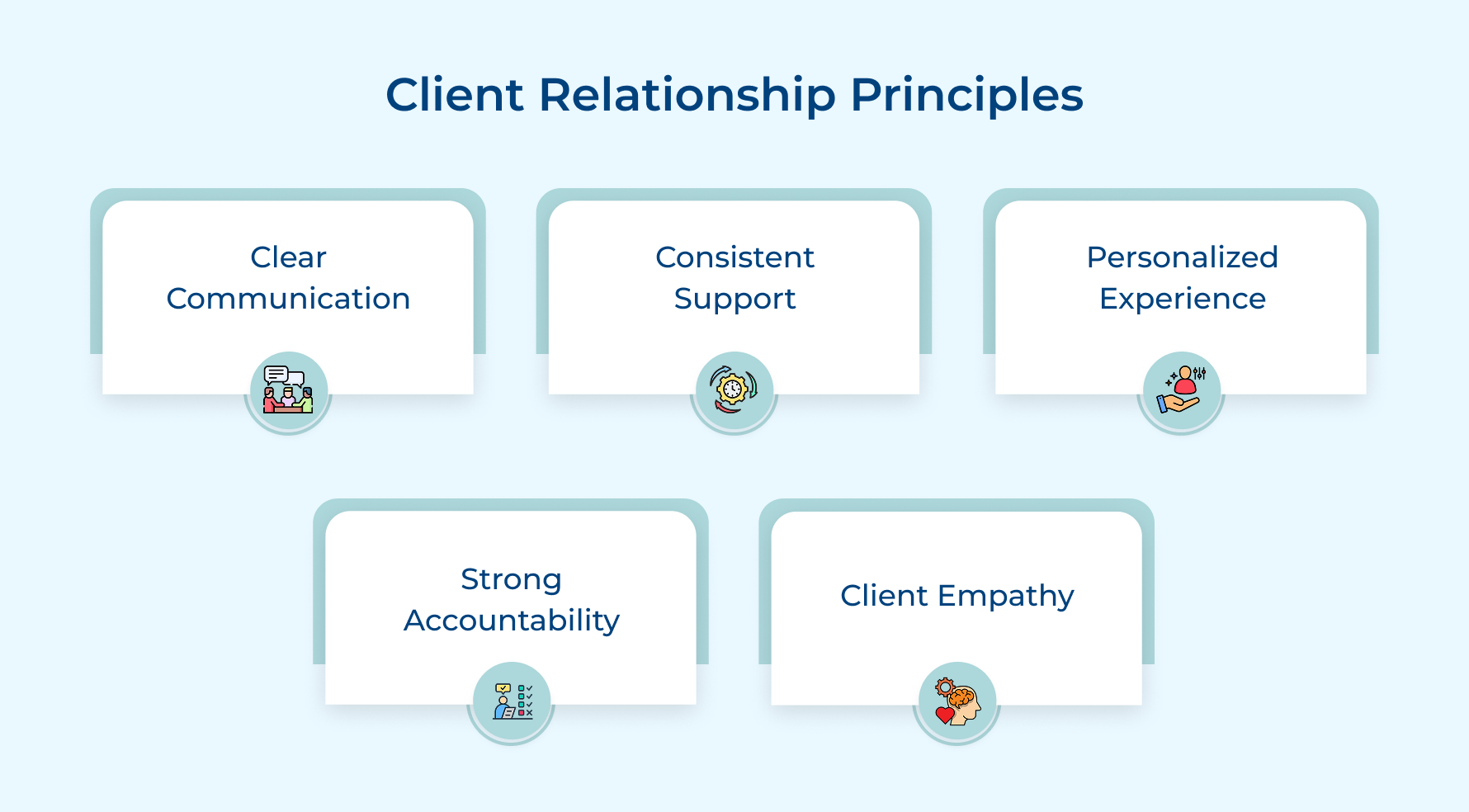
Communication
The strongest relationships are built on effective communication that is proactive. It means don’t wait for clients and set a rhythm of regular touchpoints to keep them informed across every project stage.
Consistency
Clients engage with your service because of the predictability of your standards across every deliverable. What happens when you provide the same level of quality for all projects? You deliver projects on time and build compounds naturally.
Personalization
Keep in mind that no two clients are the same. Treating them similarly is one of the fastest ways to lose their trust. Know your client’s business priorities and communication preferences to personalize your approach while making every project feel personal.
Accountability
Accept your mistakes openly. It is how you transform a good client relationship to a better relationship. for long-term partners from vendors who are easily replaced. Clients respect businesses that fix issues before they impact the project outcome.
Empathy
Empathy is all about understanding a client’s pressures in terms of internal deadlines or a business decision. Clients feel valued when you genuinely care about their success beyond just the building project scope. The relationship shifts from professional to truly collaborative.
What is The Importance of Building Effective Customer Relationships?
When you build client or customer relations with intention, the ROI is beyond project success. It shapes the long-term health of your business.
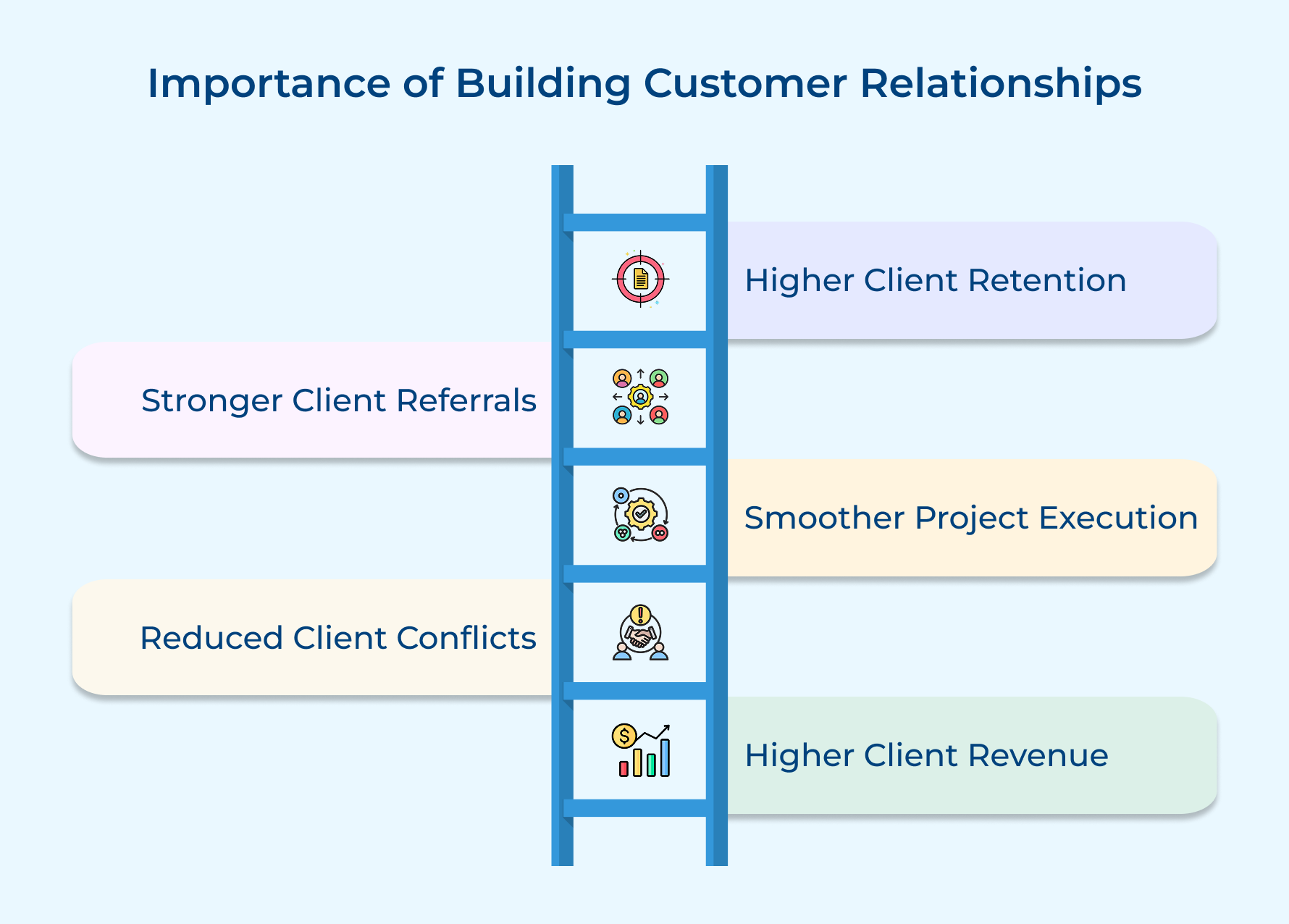
Higher Client Retention
Clients, when genuinely valued, don’t look for alternatives during new project development. Strong relationship management transforms into one-time engagements that deliver predictable and sustainable revenue over time.
Stronger Referrals and Word-of-Mouth
What happens when a satisfied client trusts you deeply? They recommend your business without any prompting. The referrals more than any outbound effort, as they come with built-in credibility which the prospect already trusts.
Smoother Project Execution
When clients trust your judgment they give clearer briefs and faster approvals that keep projects moving without unnecessary back-and-forth. That level of collaboration is only possible when the relationship foundation is strong enough for both sides to communicate openly.
Reduced Conflict and Escalations
Most client conflicts don’t stem from the work itself — they stem from unmet expectations and poor communication along the way. When relationships are managed proactively, issues get surfaced and resolved early before they turn into costly disputes.
Increased Revenue Per Client
A client who trusts you is far more open to expanding the scope of work or investing in additional services over time. Effective client relationship management is all about how to create the environment for organic growth in the hard sales conversation.
How to Build Client Relationships in 8 Best Ways
Explore the best strategies to build and nurture vital client relationships. It makes sure your business not only survives but grows.
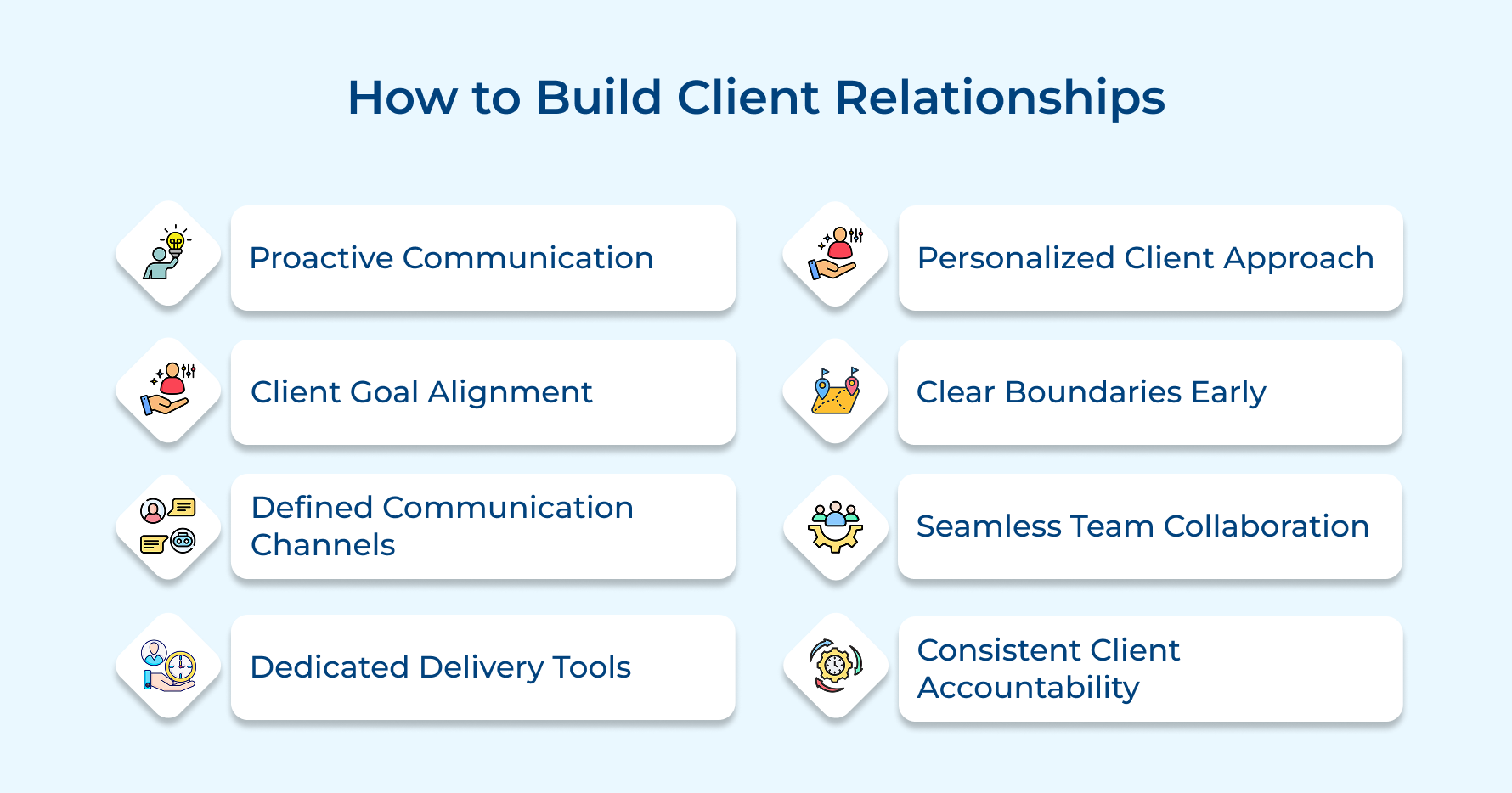
1. Communicate Proactively and Consistently
Proactive communication separates trusted long-term relationships from those that simply execute tasks. Clients who receive consistent updates without asking gain confidence in your work naturally.
Follow these effective ways to communicate proactively with your clients to build a relationship:
- Scheduled status updates: Even when there are no major updates to share, send a structured email at agreed intervals. A weekly summary eliminates unnecessary anxiety between project milestones.
- Anticipate and address risks early: Maintain transparency with your client during potential delays, along with a resolution plan.
- Single point of contact: Give individual team ownership of the client’s business and project context deeply. Clients or customers get a clear path of who to reach and build relationships faster.
Consider the examples of a relationship when a client running a product launch receives a mid-week update about a potential delay in the project build. It is a single proactive move that gives time to adjust internally.
So what does effective communication look like in a live environment? Send the right update at the right time, so clients never have to wonder about project progress.
2. Treat Every Client as an Individual
Every client carries a different business outcome. Working based on it directly shapes the entire engagement process. Teams that recognize this build customer relationships early and outlast any single engagement.
Considering these questions before treating every client as an individual:
- What is this client’s core business objective at the current time?
- How does the client prefer to receive feedback and project updates?
- What past experiences shaped client’s work with external teams?
Answers to these questions shift our entire approach from generic execution to tailored relations that clients can genuinely feel.
So how do you actually use these insights to build client relationships as an individual? Build what you’ve learned about priorities directly into managing every touchpoint across the entire project.
Pro tips:
- Personalize the client’s communication pace, while some prefer daily check-ins, while others want weekly summaries
- Align business goals during project conversations to show that you think beyond deliverables
- Based on how each client responds to information, adjust your feedback delivery style
3. Understand Client Goals at Every Level
Goals at both macro and micro levels enable teams to deliver real business impact. The relationship becomes strategic when every project decision is aligned with the client’s objective, trying to achieve.
So what does client goals at every level mean? It goes beyond the simple understanding of business pressure because the best deliverables reduce real problems.
Follow these methods to understand client goals at every level:
- Discovery conversations: Invest structured time at every engagement to uncover immediate needs as well as business objectives. It surfaces context that transforms every decision throughout the project.
- Goal mapping exercise: Create a simple alignment to map each deliverable directly to a specific business outcome. It keeps both sides aligned with the prioritization decisions that need to be made.
- Regular goal check-ins: Business priorities shift as a goal defined in month one may look very different from month three. Build periodic goal reviews into the rhythm to make sure relations stay on current client needs.
Consider an example where a client briefs you on redesigning a reporting dashboard with better visualization. A discovery conversation helps in identifying the real goal. It reduces weekly report compilation time and changes the value you deliver.
4. Define Clear Boundaries and Shared Agreements Early
Setting clear boundaries is one of the most underrated customer relationship-building moves. It removes the ambiguity that damages trust and derails projects before a deadline arrives.
Most client frustrations don’t just come from bad work. They are the reasons for misaligned assumptions that were never addressed during project initiation.
Best practices:
- Maintain proper documentation of everything so both sides can reference the agreed-upon terms at any point during the project execution without confusion.
- Situation when there are scope changes, recheck the agreement rather than absorbing changes silently. It keeps the relationship honest and prevents resentment.
5. Establish Clear Communication Channels Early
The right communication channels are the first things to build with any new client relationship. Agreed terms on communication help to run the entire project without friction and confusion.
What happens when any business assumes every client communicates the same way? It is a mistake that quietly creates unnecessary tension, as some clients prefer email for formal communication while others move faster for day-to-day project conversations.
Below are the common channel preferences to align with different clients:
- Emails – Formal updates as well as documented project decisions
- Messaging tools – Slack for quick project conversations
- Video calls – During complex discussions for real-time alignment
Communication channels work best when the team and clients know exactly to expect a response. Identify who needs what information to build your communication flow based on that structure.
6. Leverage Technology for Seamless Collaboration
The right technology stack gives clients a level of visualization and control that directly strengthens the relationship. Client trust grows naturally and consistently when collaboration feels effortless across every project.
Key features to consider when choosing the right collaboration tools:
- Real-time project visibility: Clients can have instant access to project status without sending a follow-up message.
- Centralized communication threads: Centralize all project conversations so that they live in one place, so nothing gets lost across scattered emails.
- Document and asset sharing: Access and review the latest project files without chasing your team for updated versions.
- Role-based access controls: control what each client can access based on their role, as every client stakeholder needs full project access.
What happens when you choose the wrong tools? It creates more confusion than it solves. It quietly reduces client confidence. The best technology is the one that can be adopted immediately without a training session.
Here are 4 real-world use cases of seamless collaboration technology:
- Automated progress notifications: receive milestone updates without any manual effort, which keeps them informed.
- Shared approval workflows: Review deliverables within the platform to speed up decisions and keep projects on schedule.
- Live dashboard reporting: Real-time analytics and reporting to track project health as well as timelines in real time instead of waiting for a status call.
7. Use Dedicated Project Delivery Tools
A dedicated project delivery tool brings transparency to every client engagement by keeping deliverables visible in one centralized place. Clients with proper visualization of project progression increase confidence in deliverables.
Consider these use cases of dedicated project delivery tools:
- Milestone tracking: Real visibility on which project milestones are completed and what’s coming next.
- Task ownership visibility: clear ownership to each task along with a deadline, to eliminate the confusion around responsibilities.
- Centralized document management: documentation of all briefs, deliverables and feedback in one place so nothing gets buried in long email threads.
So what’s the key in choosing the right platform? Simplicity over complexity. A tool your client navigates in minutes is more valuable than a feature-heavy platform that is tough to adopt.
Most tools provide onboarding but the tool comes with an adoption challenge. The most common is clients reverting to email because the platform feels unfamiliar. Overcome it by keeping tools consistently updated on the current state of the project.
8. Build Trust Through Consistent Accountability
Trust is built through a consistent pattern of actions for the client to understand commitment towards deliverables. Accountability improves those relationships, which clients remember long after a project ends.
Arriving with a solution before the client raises the issue separates trusted partners from vendors who simply apologize. Honesty is the only thing that clients and teams that take immediate ownership can easily achieve.
Here’s how accountability is done right:
- A missed deadline is identified immediately before the client discovers it themselves
- All missed deliverables are acknowledged and replaced without escalation
- A scope miscommunication from your end is resolved with a clear documentation agreement moving forward
So what does real follow-through look like in building and managing client relationships? Every commitment gets done on time without the client needing to knock. It shifts the relationship to a completely different level of trust, leading to a long-term engagement.
Pro tip: Reliability builds over time as every commitment kept adds to a track record that increases your impression on clients for future projects.
Strategies To Improve and Strengthen Client Relationships
Nurturing your customer relationships is an ongoing practice that keeps trust across every project and business interaction. Teams with the best strategy retain clients and turn them into long-term advocates.
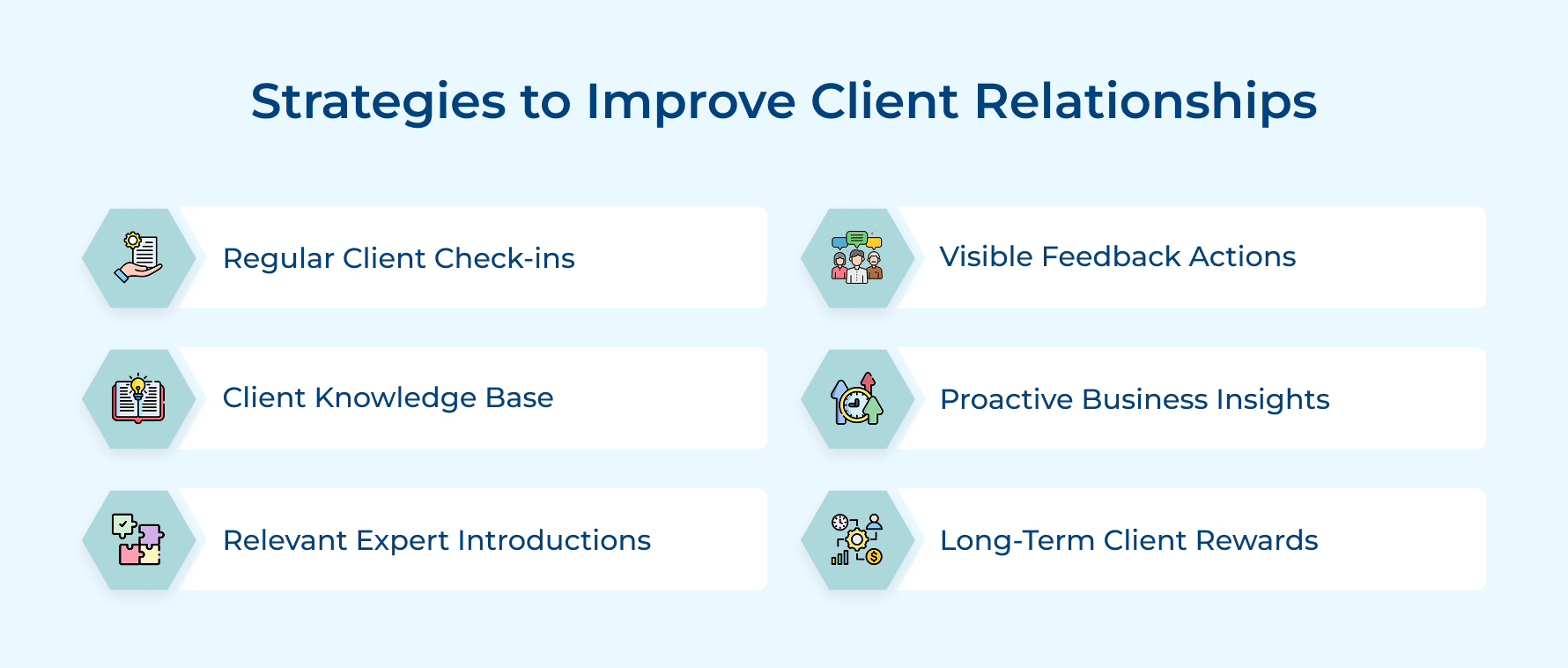
1. Schedule Regular Relationship Check-ins Beyond Project Work
Regular touchpoints outside project work mean your investment in their success goes beyond the regular current deliverables. Consider this yourself before your next check-in:
- Did you acknowledge any recent business wins this client has faced?
- Are you able to bring new value beyond just project updates to client interactions?
- Does the client feel like a priority or just a name on the contact list?
The strategy gives you real-time visibility into client needs. Over time, these conversations help in building and maintaining a relationship that the client feels is genuine rather than transactional.
2. Build a Structured Client Knowledge Base
All client interaction contains some important intelligence about preferences and priorities that most teams simply miss. A structured knowledge base makes sure the relationship context is never lost between projects or during scope management.
This not only stores information but also shows up as more relevant in every future conversation.
3. Introduce Clients to Relevant Expertise and Connections
Route clients with expertise or contacts that understand their business goals is one the most underutilized nurturing strategies. The relationship moves beyond a standard client-vendor relationship when you facilitate a proper introduction.
How does this approach help in practice? It positions your team in the client’s broader success. Customers who receive this value consistently become the most loyal advocates for your business.
4. Ask for Feedback and Act on It Visibly
Consider a situation when you collect feedback without closing the loop. It means that the client’s input doesn’t actually influence anything. The real client relationship-building move is to make the change and then inform the client about what their feedback produced.
5. Share Proactive Insights Relevant to Their Business
Strategic observation before a client asks separates relationship managers from order-takers. It means that your team actively thinks about the client’s goal instead of the immediate project scope.
The most trusted relationships are built when customers feel their partners are always one step ahead in managing deliverables.
6. Recognize and Reward Long-Term Client Loyalty
Long-term clients deserve to feel their loyalty is actively recognized. Priority access to your best resources carries significant weight in building trust. Follow these practices to show the value long-term clients will receive:
- Offer priority scheduling for clients with a long engagement history
- Share the beta option of new thinking or frameworks before they are launched
- Celebrate every customer relationship milestone because they deserve more than just a renewal conversation
Clients who feel recognized for their loyalty actively refer others. A culture of recognition helps in building long-term relationships, to make sure it doesn’t become a headache in managing the most valuable client interaction.
Transform Interactions Into Relationships With the Best Client Relationship Strategies
The process of building strong client relationships is the outcome of consistent communication, trust-building and accountability. Teams that master this strategy become partners clients genuinely rely on.
- Proactive communication builds client relationships that transform one-time engagement into long-term advocates.
- Personal connection reduces conflict, improves project execution and increases revenue over time.
- Collaboration with new technology gives clients visibility to strengthen confidence and reduce friction.
Start applying these strategies and measure the difference in client engagement, trust as well as growth. Teams that treat building client relationships as a business discipline consistently outperform those focusing only on delivery.
Limit time — not creativity
Everything you need for customer support, marketing & sales.

Neeti Singh is a passionate content writer at Kooper, where he transforms complex concepts into clear, engaging and actionable content. With a keen eye for detail and a love for technology, Tushar Joshi crafts blog posts, guides and articles that help readers navigate the fast-evolving world of software solutions.