How to Manage Resource Risk in Project Management?
- What is Resource Risk in Project Management?
- Why is Resource Risk Management Important?
- Effective Steps to Mitigate Resource Risk in Project Management
- Resource Risk Examples in Project Management You Should Know
- 7 Proven Resource Risk Management Strategies
- Tools For Managing Project Resource Risks
- Master Resource Management to Mitigate Risk Effectively
- FAQs about Resource Risk
Key Highlights:
- Apply data-driven estimation, optimization and monitoring techniques to improve long-term resource risk management outcomes.
- Use proven frameworks to identify, analyze and manage resource risks across evolving project environments.
- Build resilient teams and flexible allocation models that support sustainable delivery despite changing supply chain conditions.
You’ve planned everything perfectly but suddenly your lead developer quits or your budget gets slashed. Resource risks turn well-organized projects into chaotic scrambles that miss deadlines and frustrate everyone involved completely.
These disruptions damage team morale, waste money on emergency fixes and erode stakeholder trust in your capabilities. Most project managers lack systematic approaches to identify while addressing resource uncertainties before disasters unfold.
This guide reveals practical strategies for managing resource risks from identification through mitigation. You’ll learn how to spot vulnerabilities early and respond effectively when unexpected challenges emerge during execution.
What is Resource Risk in Project Management?
Resource risk refers to the potential challenges and uncertainties that arise when a project lacks adequate resources to meet its objectives. These resources include people with the right skills, equipment, materials, budget and time. When resource availability or allocation becomes unstable, it threatens project delivery and success.
How Resource Risk Occurs?
Resource risk emerges when there’s a mismatch between what your project needs and what’s actually available. This happens through poor planning, unexpected resource unavailability, competing project priorities, or incorrect assumptions about resource capacity. Budget cuts and sudden team member departures also create these risks.
Common types of project resource risks:
- Human resource risk: Team members leave the project unexpectedly or lack the necessary skills to complete their assigned tasks.
- Budget risk: Financial resources become insufficient due to cost overruns or funding cuts during project execution.
- Equipment and technology risk: Required tools or technology become unavailable or fail to perform as expected.
- Time resource risk: Schedule constraints tighten due to dependencies or key resources being unavailable when needed.
Why is Resource Risk Management Important?
Managing resource risks isn’t just good practice, it’s essential for project survival. Here’s why it matters so much for project success.
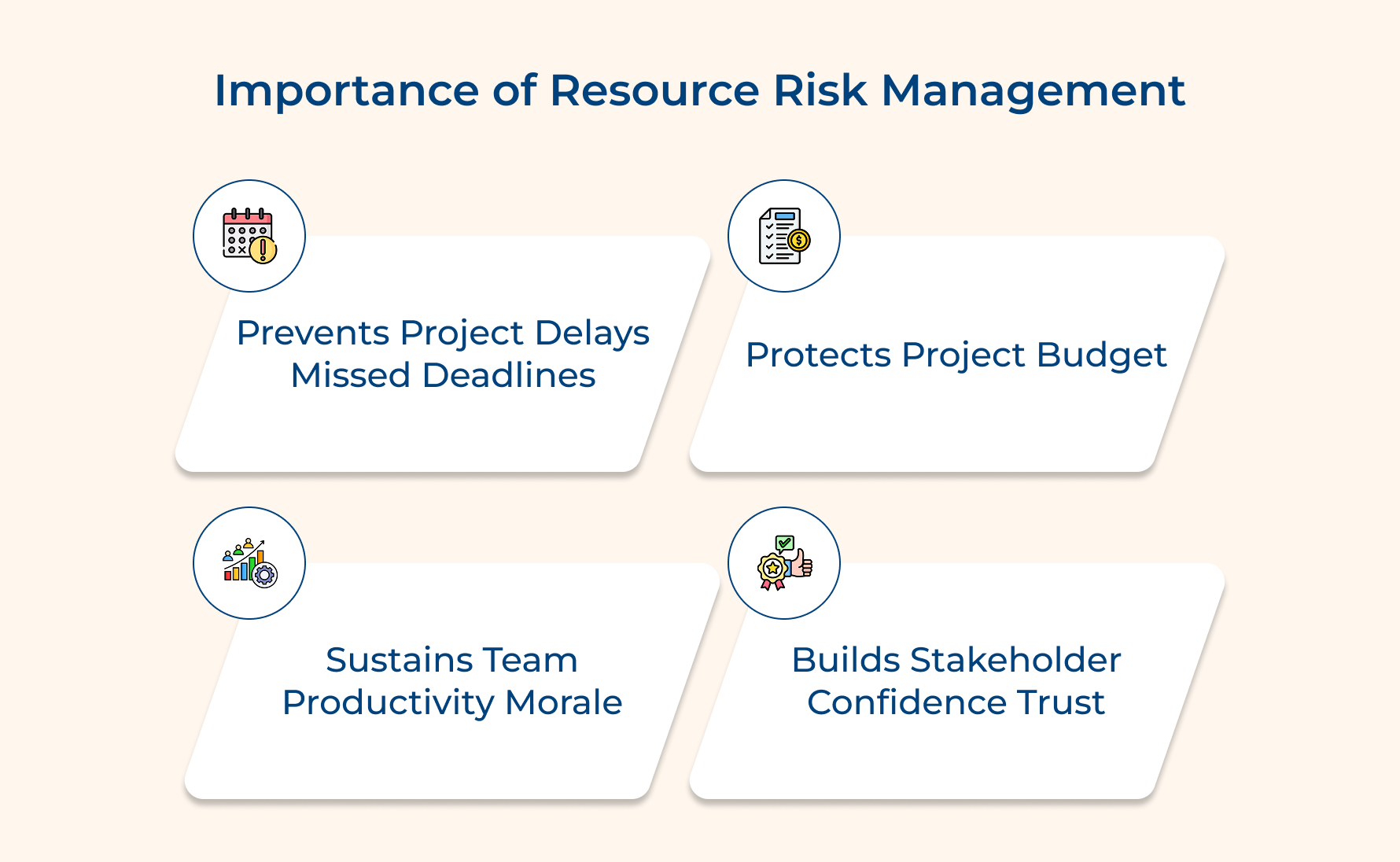
1. Prevents Project Delays and Missed Deadlines
Identifying resource risks early helps you gain time to prepare backup plans before issues surface. Instead of scrambling after a team member leaves or equipment fails, you can adjust timelines calmly and keep progress moving without disruption.
2. Protects Your Project Budget
Strong resource risk management helps you spot cost pressures before they spiral out of control. This allows you to use contingency funds wisely, avoid rushed last-minute spending and maintain financial stability throughout the project lifecycle.
3. Maintains Team Productivity and Morale
Manage resource risks well so your team doesn’t face constant firefighting or frustration. People work more efficiently because they have what they need and morale stays high throughout the project.
4. Improves Stakeholder Confidence and Trust
Stakeholders feel reassured when you demonstrate awareness of potential resource challenges. Your proactive approach shows professionalism and increases their confidence in your ability to deliver despite obstacles.
Effective Steps to Mitigate Resource Risk in Project Management
Here’s a practical six-step process to keep your project resources secure and your delivery on track.
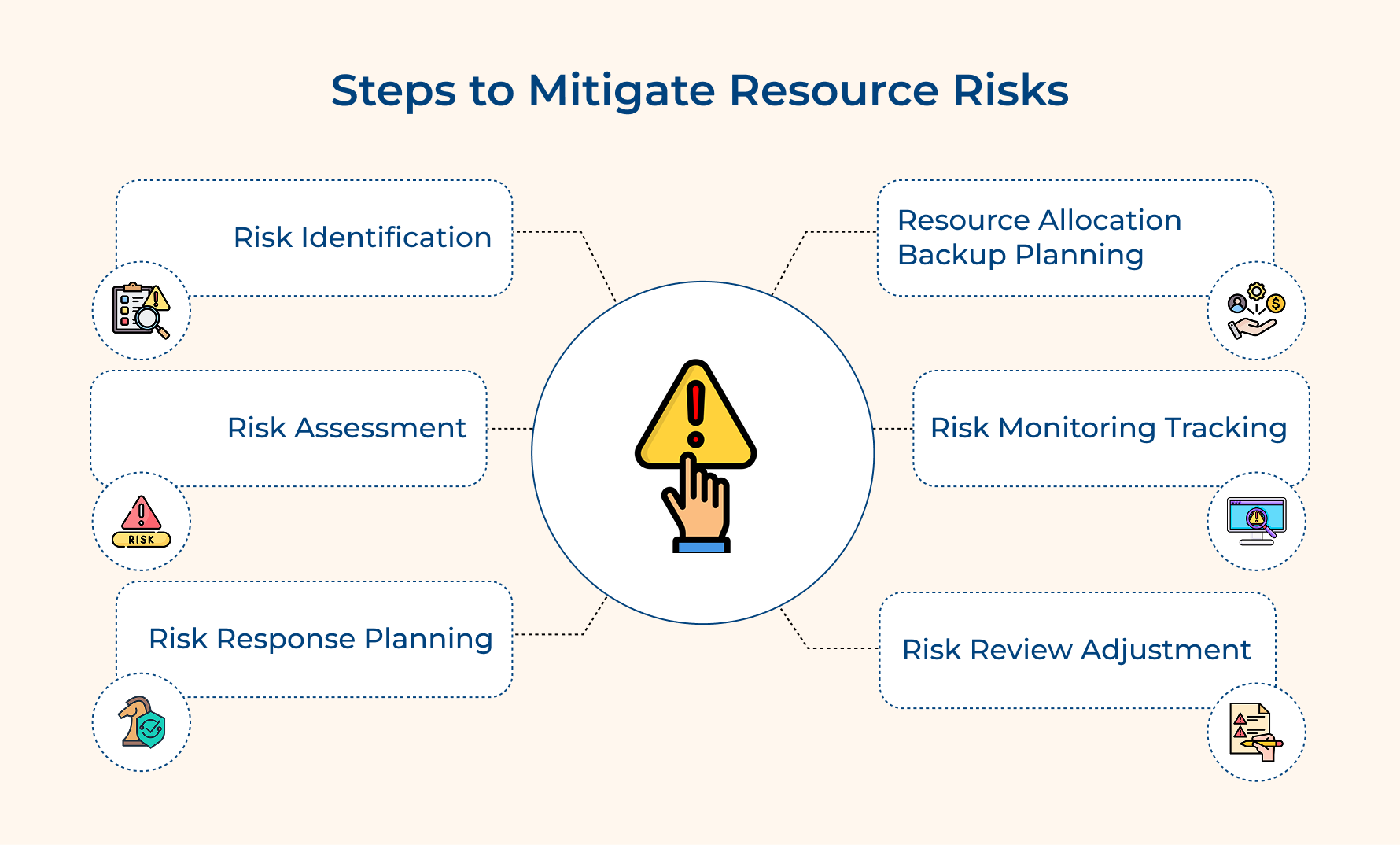
1. Risk Identification
The first step in managing resource risks is simply knowing what could go wrong before the project gains momentum. This means looking closely at your people, budget, equipment and materials with a practical, slightly skeptical mindset.
Focus on a few critical areas while identifying risks:
- Team skill gaps: Spot missing expertise or knowledge your current team may not have.
- Resource dependencies: Understand where work relies on shared resources or outside suppliers.
- Historical patterns: Review past projects to find recurring resource challenges in similar situations.
A helpful way to begin is by bringing stakeholders and team members together for open brainstorming. Encourage them to surface everything, from obvious budget limits to subtle risks like key contributors being unavailable during crucial phases.
So how do you know you’ve identified enough risks? You’re in a good place when every major resource category has been reviewed and everyone with real project insight has contributed.
2. Risk Assessment
Once you’ve identified risks, you need to evaluate which ones deserve your immediate attention and resources. Not every risk carries the same weight or likelihood of actually happening.
Consider these questions when assessing each risk:
- How likely is this resource risk to actually occur during the project timeline?
- What would be the impact on deliverables if this risk materializes?
- Can the project survive this risk or would it cause complete failure?
Create a simple scoring system that ranks risks by probability and potential impact on your project. Focus your energy on high-probability as well as high-impact risks first rather than spreading yourself too thin across every possible scenario.
3. Risk Response Planning
Risk response planning turns awareness into clear, practical action. Every high-priority risk should connect to a response your team understands and can execute quickly, keeping confusion as well as delays out of critical moments.
Practical preparation includes securing backup vendors, cross-training team members on essential skills and setting aside contingency time or budget. Clear ownership matters just as much as preparation, so each response needs a defined responsible person and a specific trigger that signals it’s time to act.
Most response strategies fall into three straightforward paths:
- Avoidance: Adjust the project scope or execution approach to remove the risk entirely.
- Mitigation: Reduce the likelihood or impact through preventive steps and early safeguards.
- Transfer: Shift responsibility to a third party through contracts, insurance, or external partnerships.
Simple precautions – such as identifying alternate suppliers or documenting critical workflows – often create the biggest protection. Effective response planning focuses on clarity, realism and speed so the team stays confident even if risks appear.
4. Resource Allocation and Backup Planning
Resource allocation and backup planning focus on building stability before problems surface. Thoughtful distribution of people, budget and equipment keeps critical work moving while safety nets protect the project from sudden disruptions.
Priority tasks should always receive the strongest support and no single individual or vendor should become a fragile point of failure. A clear resource calendar helps reveal availability gaps, workload pressure and timing conflicts early enough for corrective action.
Strong backup readiness usually includes:
- Identified secondary resources for every mission-critical role or activity.
- Alternative vendors or suppliers prepared to step in if primary options fail.
- Cross-trained team members capable of covering essential responsibilities during absences.
Relationships with contractors or temporary support providers add another layer of protection. A small reserve budget dedicated to resource emergencies also strengthens resilience, allowing fast decisions instead of reactive scrambling during high-pressure moments.
5. Risk Monitoring and Tracking
Continuous monitoring ensures you catch resource problems early when they’re easier to fix. Set up systems that give you visibility into resource utilization and alert you to developing issues.
Track key indicators like budget burn rate, team capacity utilization and supplier delivery timelines regularly. Hold weekly check-ins where team members report on resource availability and any emerging concerns they’ve noticed.
Monitor these critical indicators consistently:
- Resource utilization rates: Track if team members are overallocated or underutilized across project tasks
- Budget variance: Compare actual spending against planned budgets to catch cost overruns early
- Availability changes: Stay updated on team schedules and external resource commitments that might affect your project
Use project management tools that provide real-time dashboards showing resource status across all categories. The goal is to spot warning signs like declining productivity or budget trends before they escalate into full-blown crises.
So how often should you actually monitor these risks? For high-priority risks, check weekly or even daily during critical project phases, while lower-priority risks might only need monthly reviews.
6. Risk Review and Adjustment
Your final step involves regularly evaluating if your risk management approach is actually working. Projects evolve and new risks emerge, so your strategies need to adapt accordingly.
Schedule formal risk reviews at major project milestones to assess what’s working and what needs changing. Update your risk register with new threats and remove risks that are no longer relevant to your current situation.
Key activities during risk reviews include:
- Lessons learned sessions: Gather feedback on which risk responses worked and which failed to deliver results
- Strategy refinement: Adjust your mitigation approaches based on actual project experience and outcomes
- New risk identification: Scan for emerging resource threats that weren’t visible during initial planning
Be willing to reallocate resources or change your approach when monitoring data shows your original plan isn’t effective. Flexibility and responsiveness matter more than stubbornly sticking to outdated strategies that no longer serve your project needs.
Isn’t reviewing risks just extra overhead that slows projects down? Actually, regular reviews save time by preventing small issues from becoming major problems that require emergency responses and extensive rework later.
Resource Risk Examples in Project Management You Should Know
Here are seven common examples that project managers encounter regularly across different industries and project types.
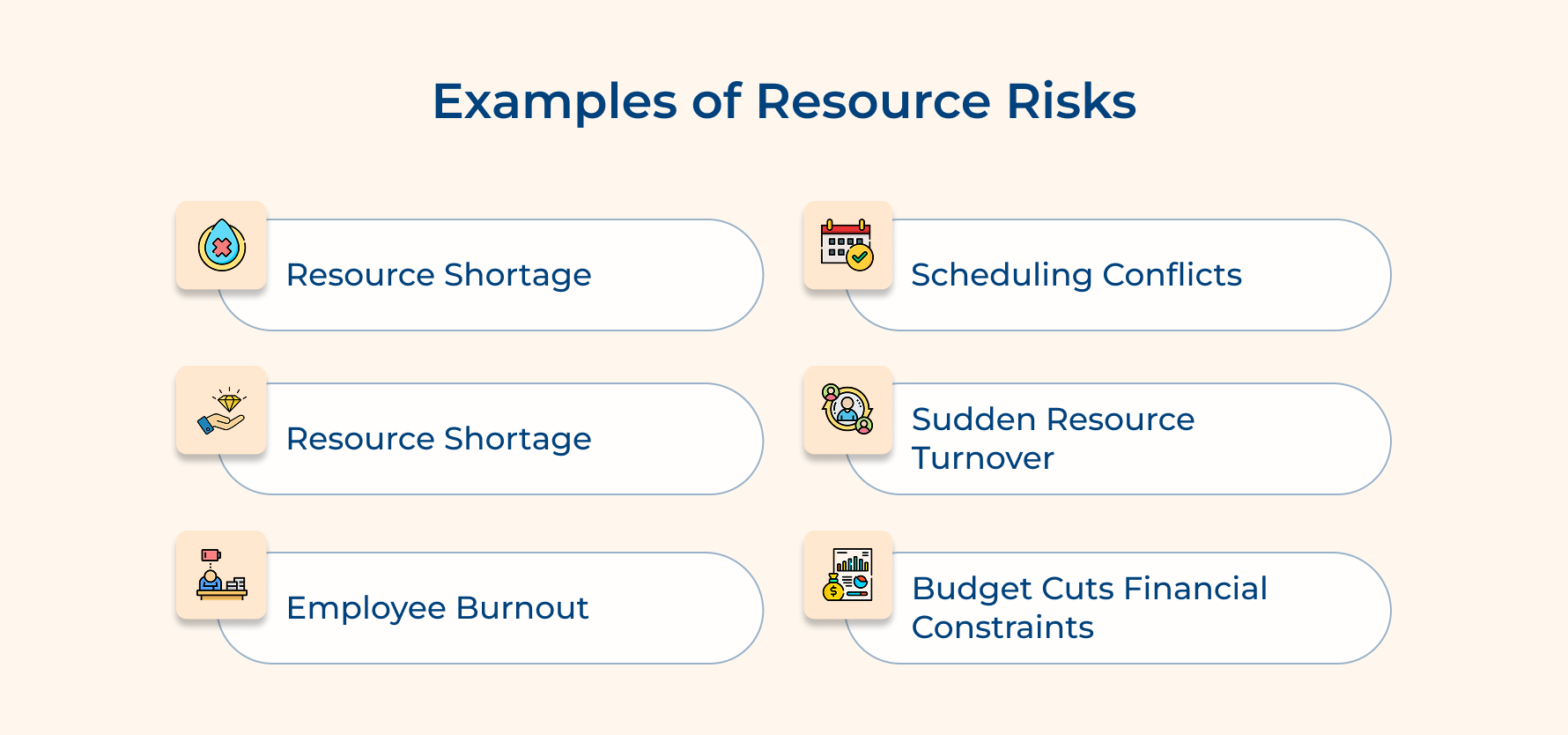
1. Lack of Resources
Your project plan requires five developers but your organization can only provide three due to competing priorities. This shortage means tasks take longer and critical deadlines slip because there simply aren’t enough hands to do the work.
The gap between required and available resources forces you to either extend timelines or reduce scope. You might also face situations where specialized equipment isn’t available or budget allocations fall short of what’s actually needed.
2. Poor Workforce Utilization
Team members sit idle waiting for tasks while others work overtime because assignments aren’t balanced properly. Resources exist but they’re distributed inefficiently, leaving some people overloaded and others underutilized throughout the project.
This misallocation wastes both time and money since you’re paying for capacity that isn’t being used effectively. Skills mismatches also occur when you assign people to tasks that don’t align with their expertise or experience levels.
3. Employee Burnout
Your team members work excessive hours over extended periods and their productivity starts declining noticeably. Burnout leads to mistakes, absences and eventually people leaving the project or organization entirely when the pressure becomes unsustainable.
Quality suffers as exhausted team members lose focus and motivation for their work. The risk compounds because burned-out employees often need extended recovery time or replacement, creating new resource gaps mid-project.
4. Scheduling Conflicts
Key team members are committed to multiple projects simultaneously and their availability doesn’t match your timeline. Critical resources become unavailable exactly when you need them most because another project claimed their time first.
Conflicts also arise when equipment or facilities are double-booked across different initiatives. You end up waiting for resources to become free, which creates delays that cascade through your entire project schedule.
5. Unexpected Resource Turnover
A senior team member accepts another job offer and leaves with critical project knowledge that wasn’t documented. Sudden departures create immediate gaps in expertise and continuity that take weeks or months to fill adequately.
The remaining team scrambles to absorb responsibilities while you search for replacements who need onboarding time. Turnover risks increase when employees feel undervalued or when market demand for their skills creates better opportunities elsewhere.
6. Budget Cuts and Financial Constraints
Your organization reduces project funding mid-execution due to changing business priorities or economic pressures. The budget reduction forces you to eliminate planned resources like contractors or tools that were essential to your original delivery plan.
Financial constraints might also come from inaccurate cost estimates that underestimated actual resource expenses. You face difficult choices about which activities to cut or delay when money runs out before work is complete.
7 Proven Resource Risk Management Strategies
Resource risks can quietly disrupt timelines, budgets and team productivity if they aren’t addressed early. These seven practical strategies help you anticipate uncertainties and keep projects moving forward with confidence.
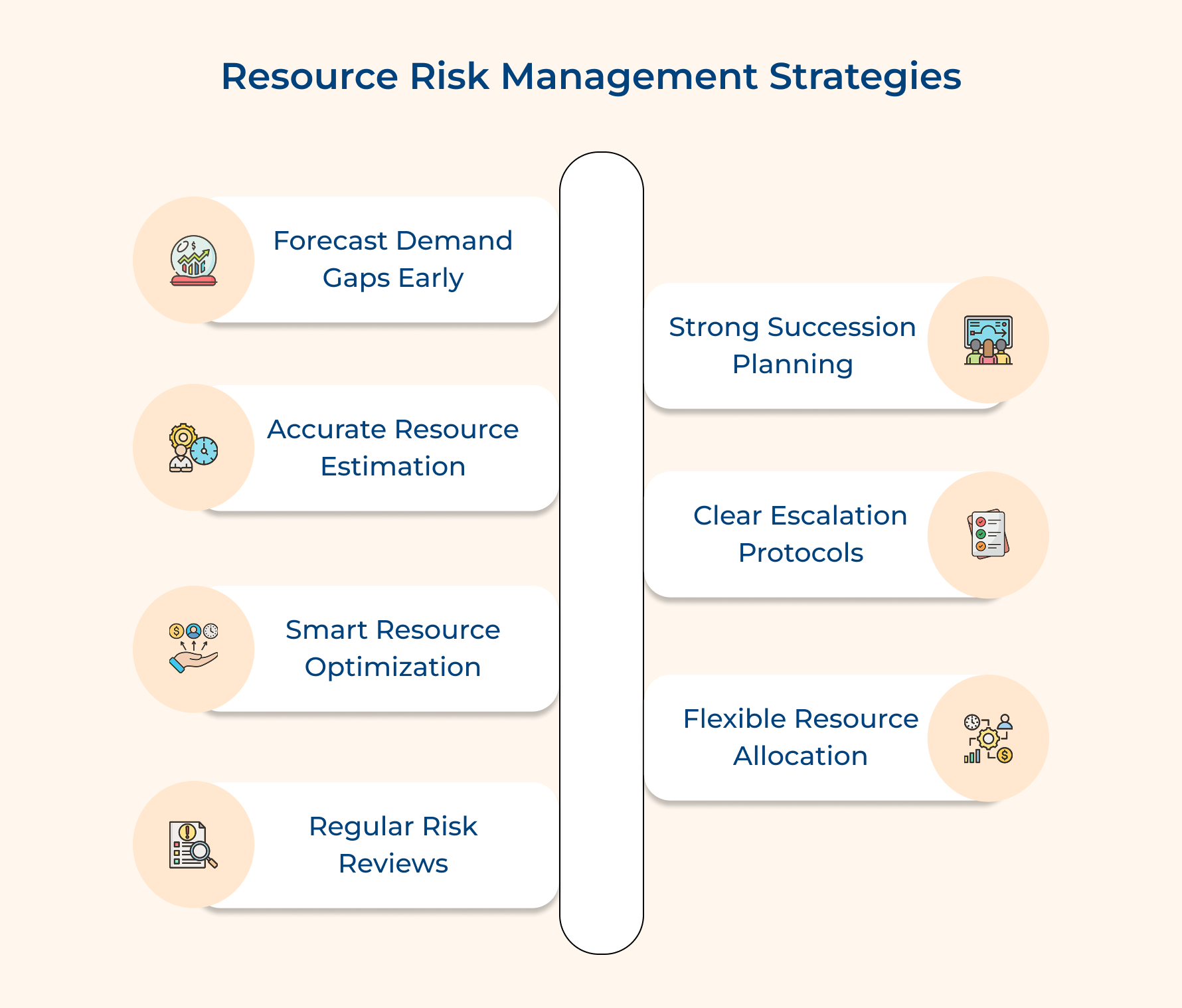
1. Foresee and Bridge Demand Gaps Early
Strong resource management begins with seeing future needs before they turn into urgent problems. Predicting demand early creates breathing room to secure the right people, tools, or materials without rushed decisions, inflated costs, or disruption to the supply chain. Instead of reacting under pressure, teams move forward with clarity and control.
Proactive forecasting delivers several practical advantages:
- Calm, well-planned hiring instead of last-minute recruitment compromises.
- Better cost control through negotiated rates rather than emergency spending.
- Steady project momentum because resources arrive exactly when required.
- Greater stakeholder confidence built on visible foresight and preparation.
A simple way to begin involves mapping the full timeline during project planning, highlighting phases that require specialized skills or extra capacity and comparing those needs against current commitments.
Early demand bridging shifts teams away from crisis response and toward thoughtful execution – freeing energy for quality delivery instead of constant problem solving.
2. Use Accurate Resource Estimation Techniques
Reliable estimation replaces guesswork with evidence. Unrealistic timelines and capacity assumptions often sit at the heart of resource risk, creating expectations that teams simply cannot meet. Clear, data-driven estimation strengthens every risk mitigation strategy because decisions are grounded in reality rather than optimism.
Several proven practices improve estimation accuracy:
- Reviewing historical project data to understand true effort and duration.
- Breaking work into smaller tasks and gathering input from the people performing it.
- Adjusting capacity expectations based on skill level, experience and learning curves.
Consider a website redesign expected to take two weeks based on past projects. A new designer who needs extra review time could realistically require three. Small differences like this dramatically affect delivery confidence.
Estimation becomes more powerful over time. Comparing planned versus actual performance after completion builds feedback loops that steadily sharpen future predictions.
3. Apply Smart Resource Optimization Techniques
Having enough resources doesn’t guarantee success – how those resources are used matters just as much. Intelligent optimization focuses on reducing waste, balancing workloads and ensuring every hour of effort contributes meaningful value to project outcomes.
Continuous visibility into utilization helps reveal overload in some areas and unused capacity in others. Adjusting assignments based on real data keeps teams productive without pushing them toward burnout or inefficiency.
A few practical optimization habits make a noticeable difference:
- Maintain utilization near 80% to preserve buffer space for surprises.
- Align tasks with individual strengths instead of distributing work evenly.
Thoughtful optimization turns limited capacity into sustained performance, allowing teams to deliver consistent results even when resources feel tight.
4. Conduct Regular Risk Review Sessions
Regular risk reviews involve scheduled meetings where you systematically examine current resource status and emerging threats. Missing this strategy means risks grow unnoticed until they explode into crises that require expensive emergency interventions to resolve.
Before structuring your risk review sessions, answer these questions:
- Who needs to attend these sessions to provide complete visibility into resource status?
- What metrics and data points should we examine to spot early warning signs?
- How frequently should we meet based on project pace and complexity levels?
- What actions can we take immediately when new risks are identified?
These questions establish the foundation for effective reviews by clarifying participants, focus areas, timing and response mechanisms. Without this clarity your meetings become unfocused discussions that consume time without producing actionable insights or preventing actual problems.
5. Build a Strong Succession Planning Strategy
Succession planning identifies and prepares backup personnel who can step into critical roles when key team members become unavailable. It’s important because unexpected departures or absences can paralyze projects when only one person holds essential knowledge or skills.
Consider these four factors when developing your succession plan:
- Knowledge transfer mechanisms: Establish regular documentation practices and mentoring sessions where experts share their specialized knowledge with potential successors.
- Skills gap analysis: Identify which critical competencies have single points of failure and prioritize cross-training efforts on those specific areas.
- Development timelines: Recognize that creating competent backups takes months of training and shouldn’t be rushed when emergencies strike.
- Retention incentives: Ensure succession planning doesn’t signal imminent departures but rather creates growth opportunities that keep valuable people engaged.
Start by mapping critical roles against available backups to spot dangerous gaps. Then create structured knowledge sharing through pair programming, shadowing assignments or documented procedures that gradually build backup capability over time.
6. Establish Clear Communication and Escalation Protocols
Communication protocols define exactly how resource issues get reported and who makes decisions when problems arise. Clear protocols are important because resource risks escalate quickly when confusion about reporting processes delays responses or leaves problems unaddressed.
You implement this by creating simple flowcharts showing when to raise alerts and who handles different severity levels. Everyone should know whether to email their manager for minor issues or immediately escalate critical resource shortages to project sponsors.
Pro tips:
- Define severity levels clearly: Specify what constitutes minor versus critical resource issues so people escalate appropriately without overreacting.
- Set response timeframes: Establish how quickly each escalation level requires acknowledgment and resolution to prevent issues from languishing unresolved.
7. Maintain Flexible Resource Allocation Framework
A flexible framework allows quick resource reallocation when priorities shift or unexpected needs emerge during project execution. This strategy is significant because rigid resource assignments can’t adapt to the inevitable changes and surprises that occur in dynamic project environments.
You use flexibility by maintaining pools of cross-functional resources rather than dedicating everyone exclusively to single tasks. This creates options for shifting people between activities based on evolving priorities without completely disrupting workflows or team dynamics.
Pro tips:
- Keep 10-15% of resource capacity unassigned as a buffer for pivots and emerging high-priority work.
- Regularly reassess resource distribution to ensure alignment with current priorities rather than outdated original plans.
Tools For Managing Project Resource Risks
The right tools transform resource risk management from guesswork into data-driven decisions. Here are five powerful tools that help you identify and mitigate resource risks effectively.
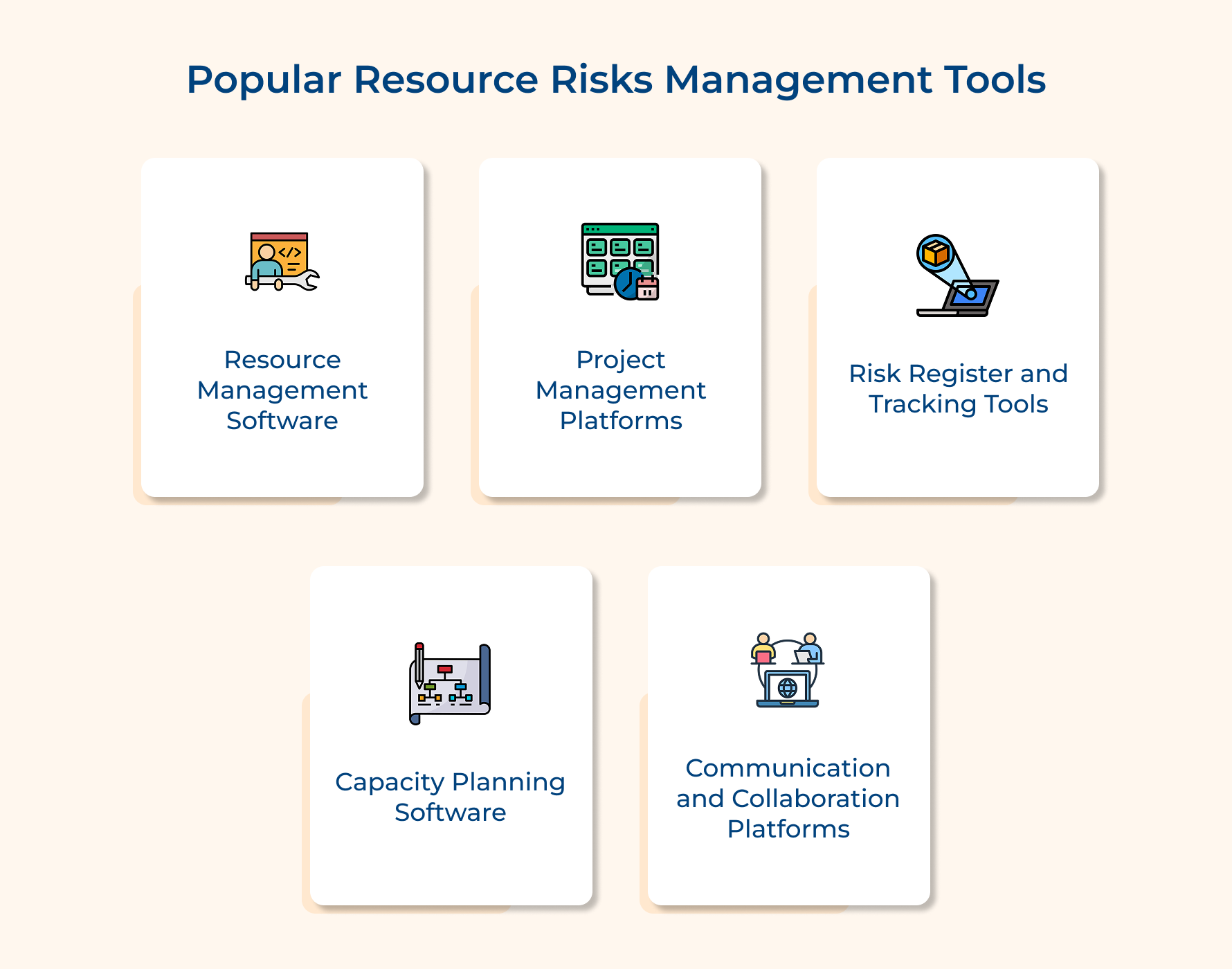
1. Resource Management Software
Dedicated resource management tools give you clear, real-time visibility into team capacity and allocations across every project. Instead of discovering overloads too late, you can quickly identify overallocation, balance workloads and forecast upcoming resource needs before shortages turn into serious problems.
2. Project Management Platforms
Comprehensive project management platforms connect resource usage directly with tasks, timelines and progress. This helps you uncover bottlenecks caused by limited capacity and adjust plans before schedules slip. Having everything in one place makes it easier to keep projects moving smoothly while ensuring no team member is stretched too thin.
3. Risk Register and Tracking Tools
A well-maintained risk register keeps every identified resource risk organized in a single, easy-to-review location. You can track probability, impact and mitigation actions without losing visibility during execution. Digital tracking tools also make it simpler to monitor status updates, ensuring important risks never fall through the cracks.
4. Capacity Planning Software
Capacity planning tools use historical performance data to predict future resource requirements more accurately. They highlight moments where demand may exceed available supply, giving you enough lead time to secure backup resources or rebalance workloads. This forward-looking insight reduces last-minute scrambling and supports steadier delivery.
5. Communication and Collaboration Platforms
Strong communication tools help teams respond quickly when resource challenges appear. Faster discussions, clear escalation paths and quicker decisions reduce delays between identifying a problem as well as resolving it. As a result, teams stay aligned as well as better prepared to keep projects on track.
Master Resource Management to Mitigate Risk Effectively
Resource risk management is what separates successful projects from those that fail despite good intentions. Understanding risks and implementing structured strategies protects your timeline, budget as well as team morale throughout project execution.
Start small by identifying your biggest resource vulnerabilities and addressing them systematically with the strategies covered here. Consistent monitoring and adaptation will build your confidence in handling resource challenges as they emerge naturally during any project.
Limit time — not creativity
Everything you need for customer support, marketing & sales.

Neeti Singh is a passionate content writer at Kooper, where he transforms complex concepts into clear, engaging and actionable content. With a keen eye for detail and a love for technology, Tushar Joshi crafts blog posts, guides and articles that help readers navigate the fast-evolving world of software solutions.