How to Create an Effective Project Timeline?
- What is a Project Timeline?
- Importance of Project Timeline
- Key Benefits of Project Management Timelines
- How to Create a Project Timeline in 7 Effective Steps?
- Best Practices for Making a Project Management Timeline
- Important Types of Project Timelines
- Common Examples of Project Timeline
- Features to Look for in Project Timeline Software
- Keep Client Projects on Track with a Comprehensive Project Timeline
- FAQs about Project Timeline
Key Highlights:
- A well-structured project timeline turns chaotic workflows into organized, on-time project delivery.
- Proper planning and flexible timelines help agencies manage resources as well as avoid workflow bottlenecks.
- Strong project management timelines ensure realistic schedules, consistent communication and fewer missed deadlines.
If you’re like most project managers, you probably know the feeling: workflows are chaotic, deadlines start to slip and your team isn’t sure what to focus on next. Without a clear timeline, you end up in constant “firefighting” mode.
This chaos has a domino effect. Projects end up costing more because they take longer and constantly missing deadlines can really damage client relationships.
The good news is, this is totally fixable. Getting good at creating a solid project timeline turns that chaos into an organized, smooth workflow. Suddenly, every task has a clear owner and you can see how they all connect. Master this and you’ll not only deliver projects on time consistently, but you’ll also become that reliable partner your clients trust.
What is a Project Timeline?
A project timeline is a visual roadmap that maps out all project tasks and deliverables across a specific timeframe. It shows when work begins and ends while highlighting dependencies between different activities. This chronological framework helps agencies coordinate resources and set realistic client expectations throughout the project lifecycle.
Project timelines transform chaotic workflows into organized sequences that prevent any bottlenecks. They create accountability by making commitments visible to both team members as well as clients. When properly maintained these tools become the foundation for successful project delivery and long-term client relationships.
Key principles:
- Start with the end goal: Define your final deliverable first then work backward to identify all necessary steps.
- Build in buffer time: Add 20-30% padding to task estimates because unexpected challenges always emerge during execution.
- Map dependencies clearly: Identify which tasks must be completed before others can begin to avoid workflow disruptions.
- Include client touchpoints: Schedule regular check-ins and approval gates to keep stakeholders engaged throughout the process.
- Keep it flexible: Design your timeline to accommodate scope changes and unexpected client requests without derailing the entire project.
Importance of Project Timeline
Understanding why project timelines matter requires looking at the tangible impact they create in real-world professional environments.
Key statistics you should know:
- Organizations that use project management practices have a 92% success rate in meeting project objectives
- Only 52% of organizations “mostly” or “always” create a scoping document as part of their project planning and just 48% consistently baseline their project schedules
- Billable resource utilization rates in professional services fell to 68.9% in 2024, well below the 75% threshold
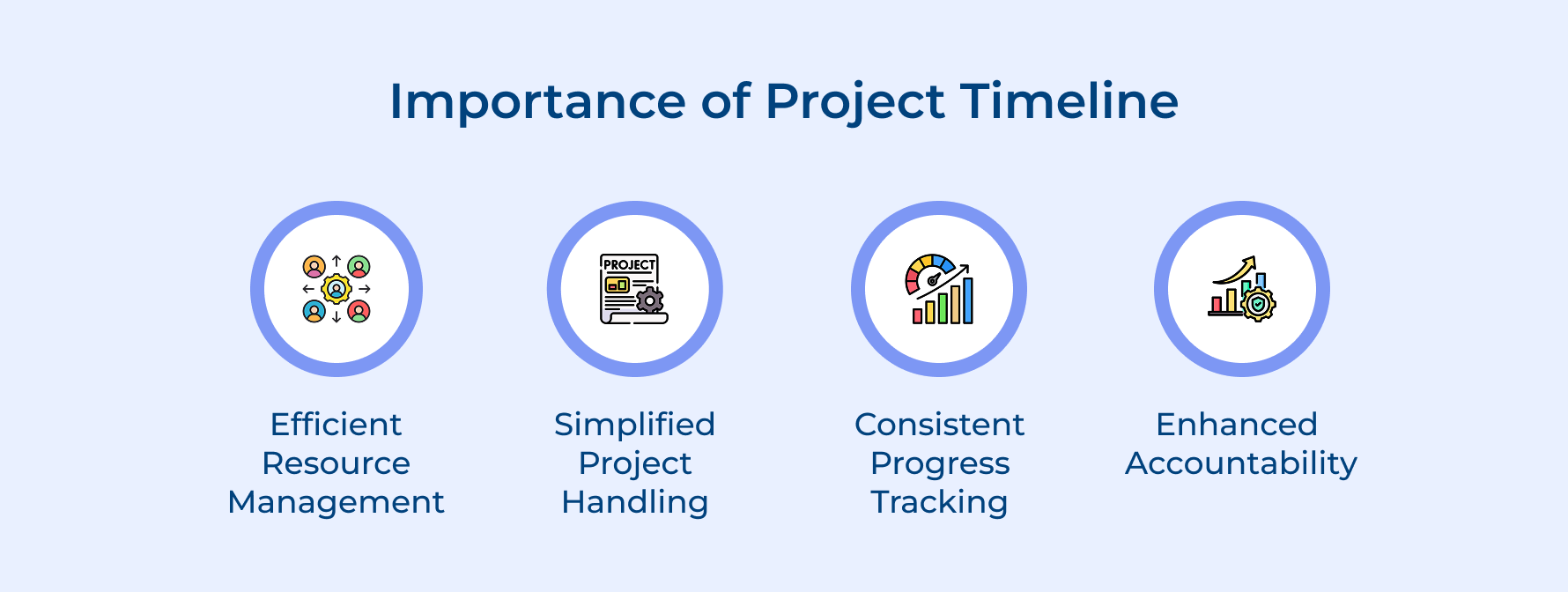
Managing Your Resources More Effectively
Project timelines reveal exactly when you need specific team members and skills throughout your project duration. This visibility prevents double-booking talent while ensuring the right expertise appears at crucial moments.
Making Overwhelming Projects More Manageable
Large projects become digestible when broken into sequential phases with clear boundaries and milestones. Each timeline segment represents achievable goals that teams can focus on without getting distracted. This approach reduces anxiety as well as maintains momentum.
Keeping Projects on Track
Timelines serve as your project compass by providing reference points to measure actual progress against planned expectations. When delays occur you can quickly identify bottlenecks and adjust remaining tasks accordingly. This proactive monitoring prevents small issues from becoming major derailments.
Increased Accountability
Clear timelines create ownership by assigning specific deliverables to team members with defined deadlines. The transparency eliminates confusion about who delivers what and when it needs completion.
Key Benefits of Project Management Timelines
Project timelines serve as the foundation for successful agency operations. It creates a structure that transforms complex client engagements into manageable workflows. Let’s explore its benefits:
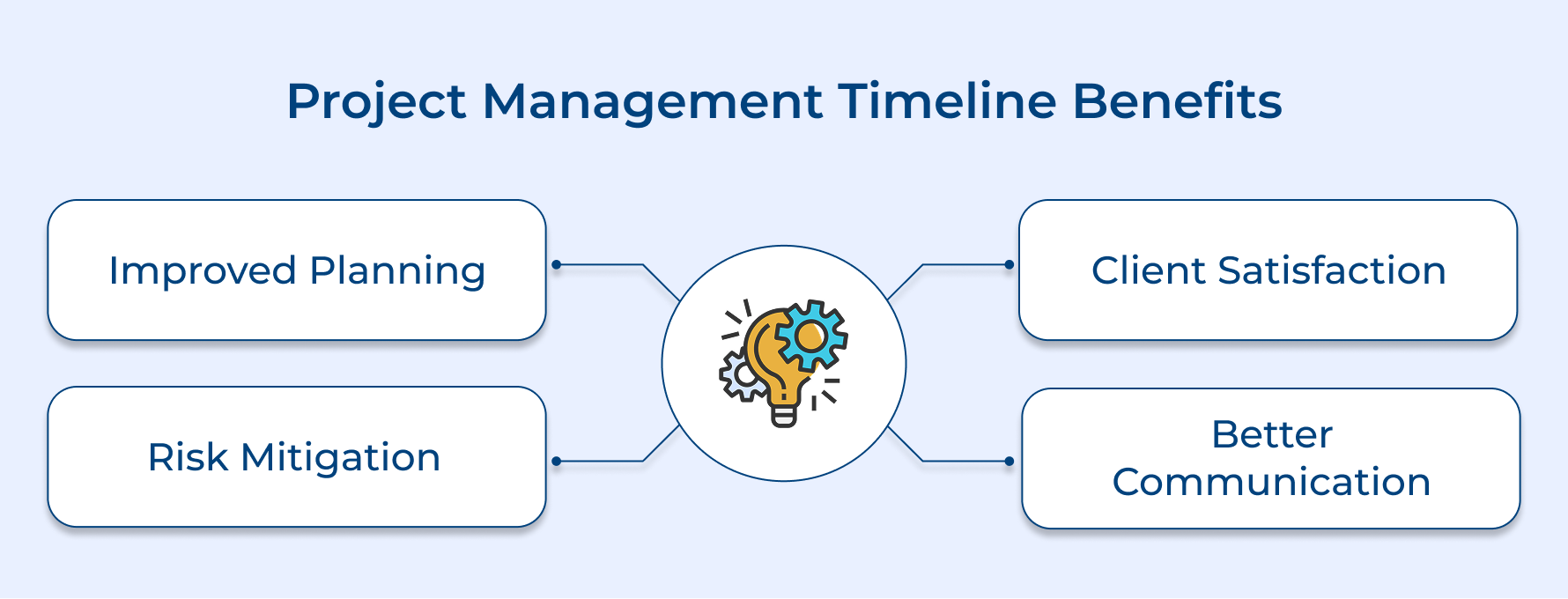
Improved Planning and Organization
A project timeline makes you think through all the steps before you start the work. This means no more last-minute panic or finding out two people need the same resource at the same time. It’s like having a roadmap that keeps everyone focused on the end goal, so you don’t get lost in the day-to-day tasks.
Risk Mitigation
When you map out a timeline, you can see the potential trouble spots – like a task that relies on a slow vendor or a tight deadline with no room for error. This lets you plan for those risks in advance, so a small hiccup doesn’t blow up your entire project.
Client Satisfaction
A clear timeline gives your clients a realistic picture of what to expect and when. This builds trust and keeps them from constantly wondering about progress. When you consistently hit your deadlines, clients feel confident in your work and are much more likely to come back or refer you to others.
Enhanced Communication and Collaboration
A timeline gets everyone on the same page. It shows exactly when handoffs happen and how one person’s work affects another’s. This visibility stops the confusion about who’s doing what and ensures the creative team understands the strategy, while account managers grasp the production needs.
How to Create a Project Timeline in 7 Effective Steps?
An effective project timeline requires systematic planning that transforms abstract ideas into concrete actionable steps. Let’s explore 7 effective steps to build an efficient one:
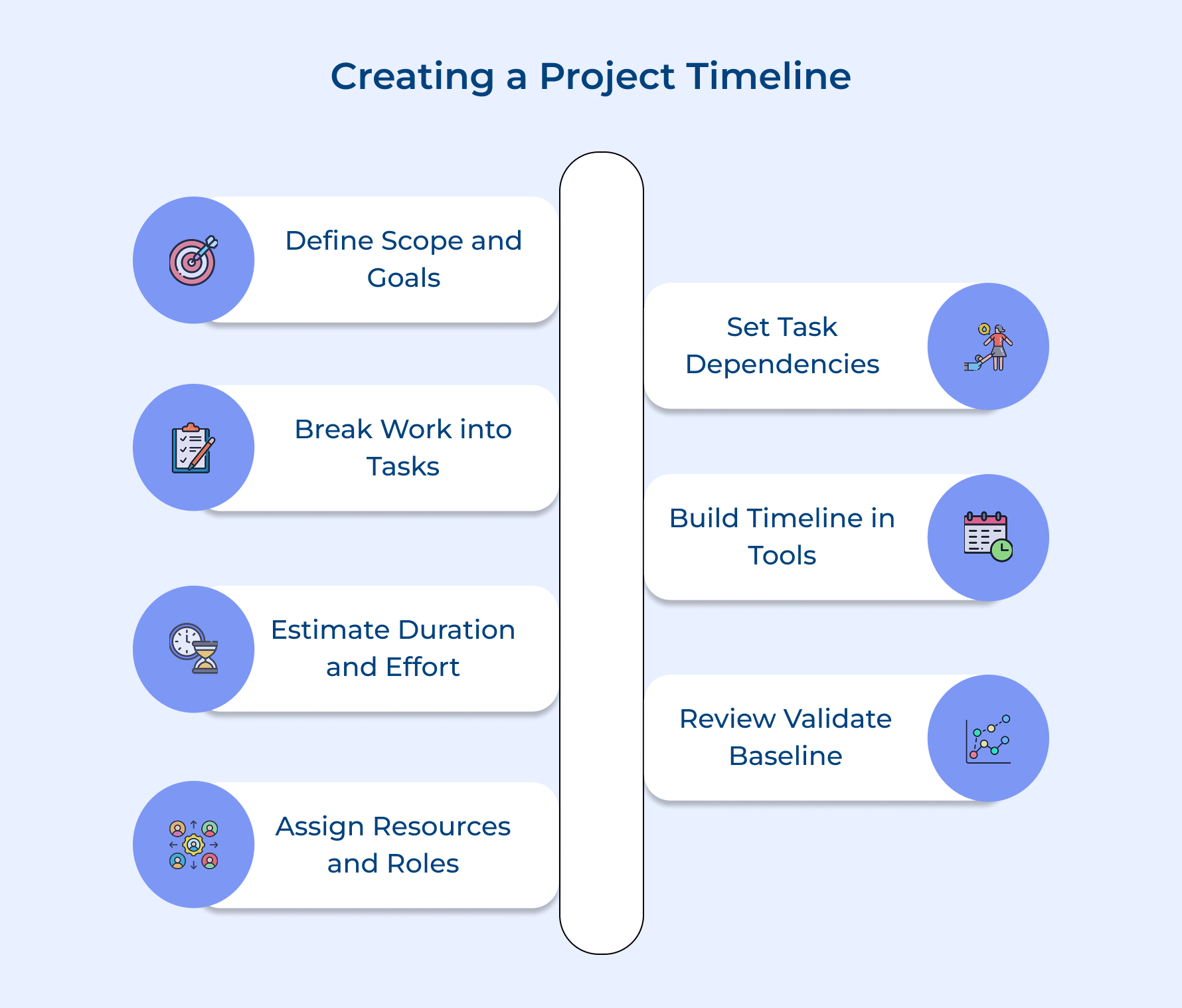
1. Define Project Scope and Objectives
Your project scope is the first step to understanding what your project will achieve and why it matters to your organization as well as stakeholders. Clear boundaries help team members know what they are working toward and when the project is successful.
This process focuses on specific outcomes instead of vague goals. For example, instead of saying “improve marketing,” you could aim to “increase qualified leads by 30% in six months through targeted content campaigns.”
To define your project scope and objectives, consider five key elements:
- Goals: What outcomes should the project achieve?
- Deliverables: What tangible products or services will you produce?
- Success metrics: How will you measure achievement?
- Key activities: What major work streams are required?
- Constraints: What limits exist in time, budget, or resources?
Gathering this information helps you create a clear project scope statement. It serves as a guiding north star, preventing scope creep and ensuring every task contributes to meaningful results.
2. Break Down Work into Tasks
This step transforms your high-level project goals into specific actionable work packages that teams can actually execute and complete.
Creating a comprehensive work breakdown structure starts with your major deliverables then systematically divides them into smaller manageable components.
It’s recommended to identify all necessary project activities within each deliverable through detailed analysis and stakeholder input.
Consider a website redesign project where you’ve defined four key deliverables:
- discovery and strategy phase
- design and user experience work
- development and technical implementation,
- Testing plus launch activities
Now that you’ve identified the deliverables within this example here are the key tasks included in each one:
Discovery and Strategy:
- Stakeholder interviews and requirements gathering
- Competitive analysis and market research
- Technical requirements documentation
Design and User Experience:
- Wireframe creation and user flow mapping
- Responsive design templates for all devices
- Design system documentation and guidelines
Development and Technical Implementation:
- Front-end coding and responsive implementation
- Third-party integrations and API connections
- Performance optimization and security measures
Testing and Launch:
- Content migration and final reviews
- Launch preparation and DNS configuration
- Post-launch monitoring
After considering this example, you can see that an effective breakdown isn’t just listing everything on paper randomly.
3. Estimate Task Duration and Effort
Accurate task estimation is the foundation of a reliable timeline. Skip it and you’ll set unrealistic deadlines that stress your team as well as disappoint clients.
Here are three effective ways to estimate your work:
- Ask the experts: Your team members who’ve done similar work before can give you the most realistic estimates. Just be sure they consider potential complications.
- Learn from the past: Look at how long comparable tasks took on previous projects. Use that data as a baseline, adjusting for your current team and resources.
- Plan for uncertainty: For each task, estimate the best-case, most likely and worst-case scenarios. Averaging these provides a much more reliable picture than a single guess.
Your estimates will improve with practice. The key is to track your accuracy over time, comparing your initial guesses to actual results and refining your approach for the next project.
4: Identify Resources and Team Assignments
Resource identification ensures you have the right people with necessary skills available when each task needs completion. Without proper resource planning your timeline becomes meaningless because tasks sit idle waiting for available team members.
This step matches required competencies to available talent while considering each person’s workload throughout the project duration. Effective resource planning prevents bottlenecks and ensures smooth workflow transitions between project phases.
Pro tips:
- Always identify backup resources for critical tasks to avoid timeline delays when key team members become unavailable.
- Pair junior team members with experts on complex tasks for skill development opportunities.
5. Sequence Tasks and Create Dependencies
Task sequencing establishes logical work order while dependencies define which activities must complete before others begin. Poor sequencing creates workflow chaos where teams waste time waiting for predecessors or duplicate efforts.
Here’s your essential checklist for sequencing tasks effectively:
- Which tasks must be completed before this activity can start?
- What deliverables does this task produce that other activities need?
- Can this work happen simultaneously with other tasks or wait?
- What external dependencies like client approvals affect timing?
- Which team members need to collaborate and when are they available?
These questions help you map the critical path and identify potential scheduling conflicts before they impact your timeline. This process resembles planning a dinner party where timing coordination prevents chaos.
Beyond answering these questions you can implement effective sequencing by visualizing dependencies through flowcharts. This visual approach reveals complex relationships that aren’t obvious in task lists.
6. Build Timeline Using Project Tools
Building your timeline digitally transforms scattered task lists into a cohesive visual roadmap that shows how project pieces connect. Digital tools enable real-time updates and collaborative planning while manual timelines quickly become outdated as well as difficult to share.
When choosing the right project management tool for timeline creation, consider these essential factors:
- Integration capabilities: Does the tool connect with your existing CRM accounting software and communication channels that your agency uses daily?
- Visual timeline features: Can you create Gantt charts and calendar views that help stakeholders understand project progress in their preferred format?
- Resource management: Does the platform track team availability and prevent overallocation across multiple client projects effectively?
- Client collaboration: Can external stakeholders access project information and provide feedback without compromising sensitive internal data?
- Scalability and pricing: Will the tool grow with your agency’s needs while maintaining reasonable costs as you add users and projects?
The right tool centralizes planning data then automatically calculates schedules and highlights potential conflicts. When you update one task the entire timeline recalculates instantly saving hours of manual adjustment work.
7. Review Validate and Baseline Timeline
Before you promise a timeline to a client, it’s crucial to review it. This is your chance to double-check that your plan is actually realistic.
You can spot any hidden problems or tasks you might have missed by getting feedback from your team and the client.
Once everyone agrees, this finalized version becomes your official game plan. It’s what you’ll use to track progress and see if you’re on target, making sure you don’t end up with an impossible deadline that stresses everyone out.
Best practices:
- Have someone uninvolved in planning examine your timeline logic to identify potential blind spots.
- Create version control for your baseline so you can track approved changes and maintain accountability.
Best Practices for Making a Project Management Timeline
Creating effective project timelines requires strategic thinking that balances client expectations with operational realities. These practices help agencies deliver successful outcomes consistently.
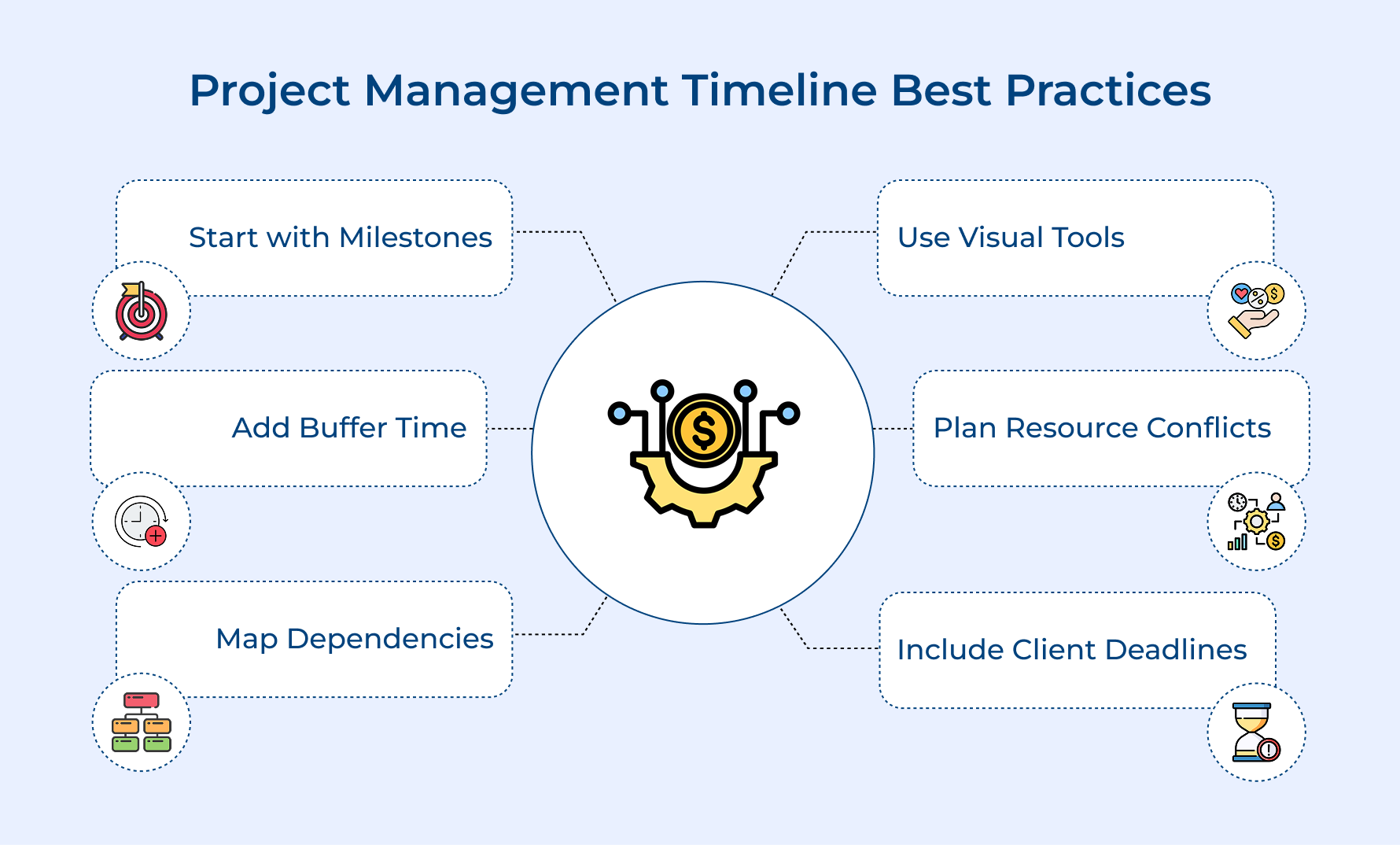
Start with Milestones & Work Backward
Begin by identifying when clients need key deliverables then reverse-engineer your workflow to meet those dates. This approach ensures your timeline aligns with client business needs rather than internal preferences.
Build in Buffer Time
Agency work involves iterative client feedback that can extend timelines unexpectedly so plan 20-30% buffer time. This padding prevents stress when clients request changes or need additional review time.
Map Dependencies
Creative work requires sequential handoffs between strategy design as well as production teams plus client approval gates. Identify these dependency chains early to prevent bottlenecks that derail your schedule.
Use Visual Timeline Tools
Complex Gantt charts confuse clients so choose formats that clearly communicate progress without overwhelming details. Simple milestone charts help clients understand project flow while maintaining confidence.
Plan for Resource Conflicts
Agency teams juggle multiple client engagements which creates scheduling conflicts between competing priorities. Review team capacity before committing to dates ensuring performers aren’t overbooked during critical phases.
Include Client Responsibility Deadlines
Many delays result from late client deliverables like content approvals rather than agency execution issues. Explicitly include client commitments in your timeline to create shared accountability for success.
Important Types of Project Timelines
Project timelines come in different formats that serve various purposes and audiences within project management. Learn these variations to choose the right visualization method for your specific needs.
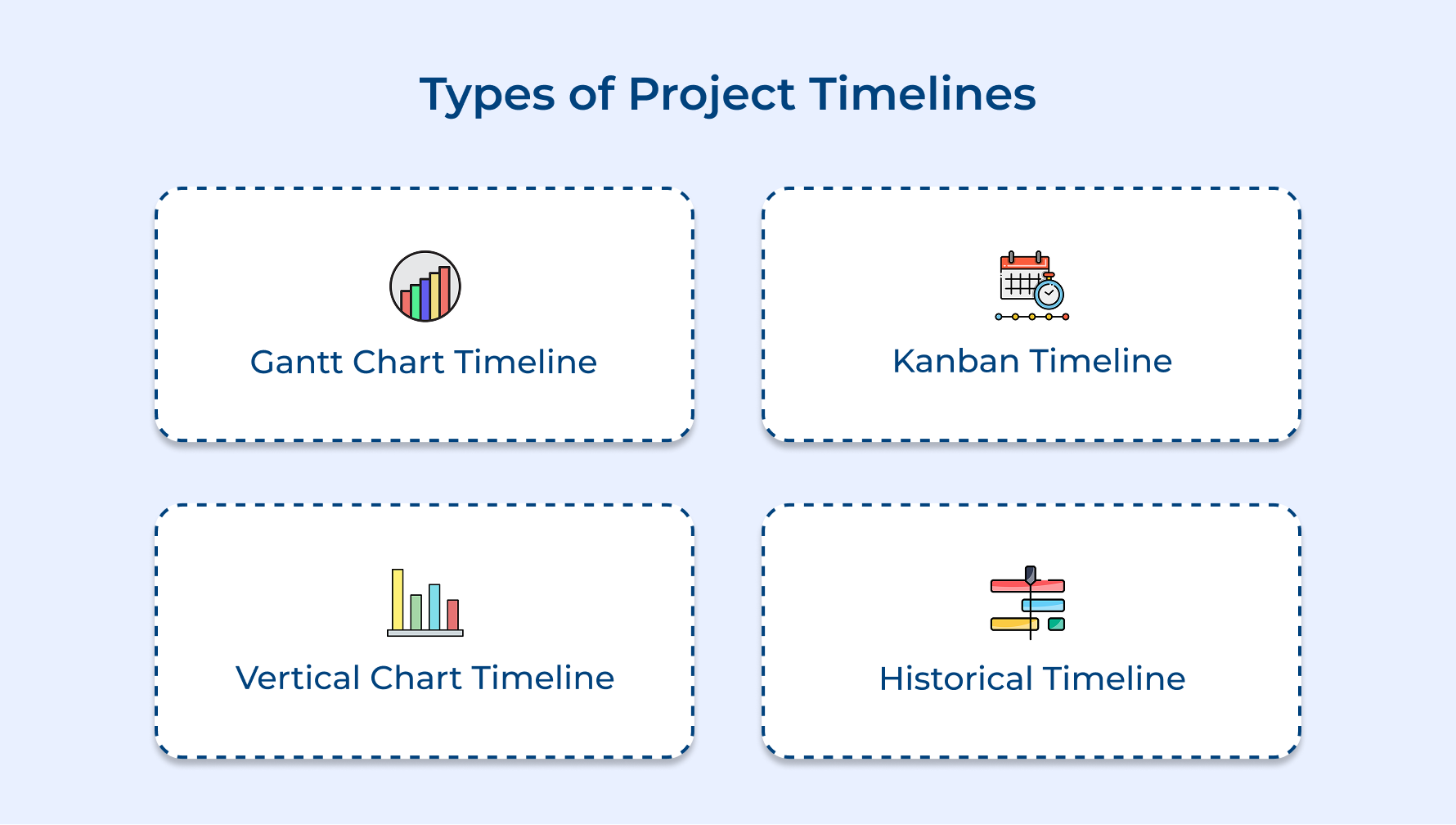
Gantt Chart Timeline
Gantt charts represent the gold standard for comprehensive project timeline visualization by displaying tasks as horizontal bars across a calendar grid. This format excels at showing task durations dependencies as well as resource assignments in a single comprehensive view.
Key elements that make Gantt charts powerful:
- Task dependencies with connecting arrows showing workflow relationships
- Critical path highlighting that identifies schedule-sensitive activities
- Resource allocation views showing team member workloads over time
The visual nature of Gantt charts makes complex project relationships immediately apparent to stakeholders who need to understand cascading delays. Think of a Gantt chart like a detailed roadmap showing not just your destination but every stop along the way.
Kanban Timeline
A Kanban timeline is less about specific due dates and more about the flow of work. Imagine a board with columns like “To Do,” “In Progress,” and “Done.” You just move tasks through these stages.
It’s perfect for creative work that involves lots of feedback and changing priorities. Instead of trying to lock in rigid deadlines, Kanban helps your team make steady progress and quickly spot where things are getting stuck. It’s all about keeping work moving smoothly, not racing against a fixed calendar.
Vertical Chart Timeline
Vertical timelines display project milestones in a chronological list format that emphasizes sequence over duration and complexity. This streamlined approach works perfectly for client presentations where stakeholders need high-level understanding without operational details.
Core features that make vertical timelines effective:
- Milestone markers highlighting key deliverables and decision points
- Clean chronological flow that tells the project story clearly
- Minimal visual clutter focusing attention on essential information
Historical Timeline
Historical timelines document completed project phases and lessons learned while providing context for future planning. This retrospective view helps teams understand project evolution while identifying patterns that inform better estimates for similar work.
Valuable elements within comprehensive historical timelines:
- Actual vs. planned duration comparisons showing estimation accuracy
- Issue and resolution tracking documenting problem-solving approaches
- Resource utilization data revealing efficiency patterns and bottlenecks
Historical timelines become increasingly valuable as organizations build institutional knowledge about delivery patterns. These records help project managers make accurate estimates while avoiding past mistakes and celebrating successful strategies.
Common Examples of Project Timeline
Real-world project timeline examples help you understand how different industries structure their work and manage client expectations.
Marketing Advertising Project Timeline
Marketing campaigns require careful coordination between creative development and media placement to maximize impact within specific launch windows. This timeline balances creative iteration cycles with production deadlines and ensures all campaign elements align for coordinated market launch.
Here’s how a typical marketing advertising campaign unfolds:
Week 1-2:
Strategy and concept development: Conduct market research, define target audiences as well as develop creative concepts with client approval.
Week 3-4:
Creative production and asset creation: Design advertisements, write copy, produce video content while creating all campaign materials.
Week 5-6:
Media planning and placement coordination: Secure advertising placements, negotiate media buys along with scheduling campaign launches across channels.
Week 7-8:
Campaign launch and performance monitoring: Execute campaign rollout, track performance metrics as well as optimize based on real-time data.
Marketing timelines must accommodate creative feedback loops while maintaining firm media deadlines that cannot shift without significant cost implications. The key lies in building adequate review periods that don’t compromise launch schedules or media commitments.
Website Development Project Timeline
Website development projects involve multiple technical phases that build upon each other in a structured progression from planning to launch. It manages planning with iterative development cycles that allow for client feedback and necessary adjustments throughout the process.
Here’s the typical progression for website development projects:
Phase 1:
Discovery and planning (Weeks 1-2): Gather requirements, create site architecture, develop wireframes and establish technical specifications with stakeholder approval.
Phase 2:
Design and user experience (Weeks 3-4): Create visual designs, develop style guides, design responsive layouts as well as conduct user testing sessions.
Phase 3:
Development and integration (Weeks 5-7): Build front-end templates, develop back-end functionality, integrate content management systems while implementing required features.
Phase 4:
Testing and launch (Week 8): Conduct quality assurance testing, perform user acceptance testing, optimize for search engines as well as execute site launch.
Website development timelines require flexibility to accommodate technical challenges while maintaining clear milestones that keep projects moving toward completion. Success depends on early stakeholder alignment and realistic expectations about the iterative nature of both design as well as development work.
Features to Look for in Project Timeline Software
Choosing the right project timeline software can make the difference between smooth project execution and constant firefighting. Understanding these essential features helps you select tools that support your workflow effectively.
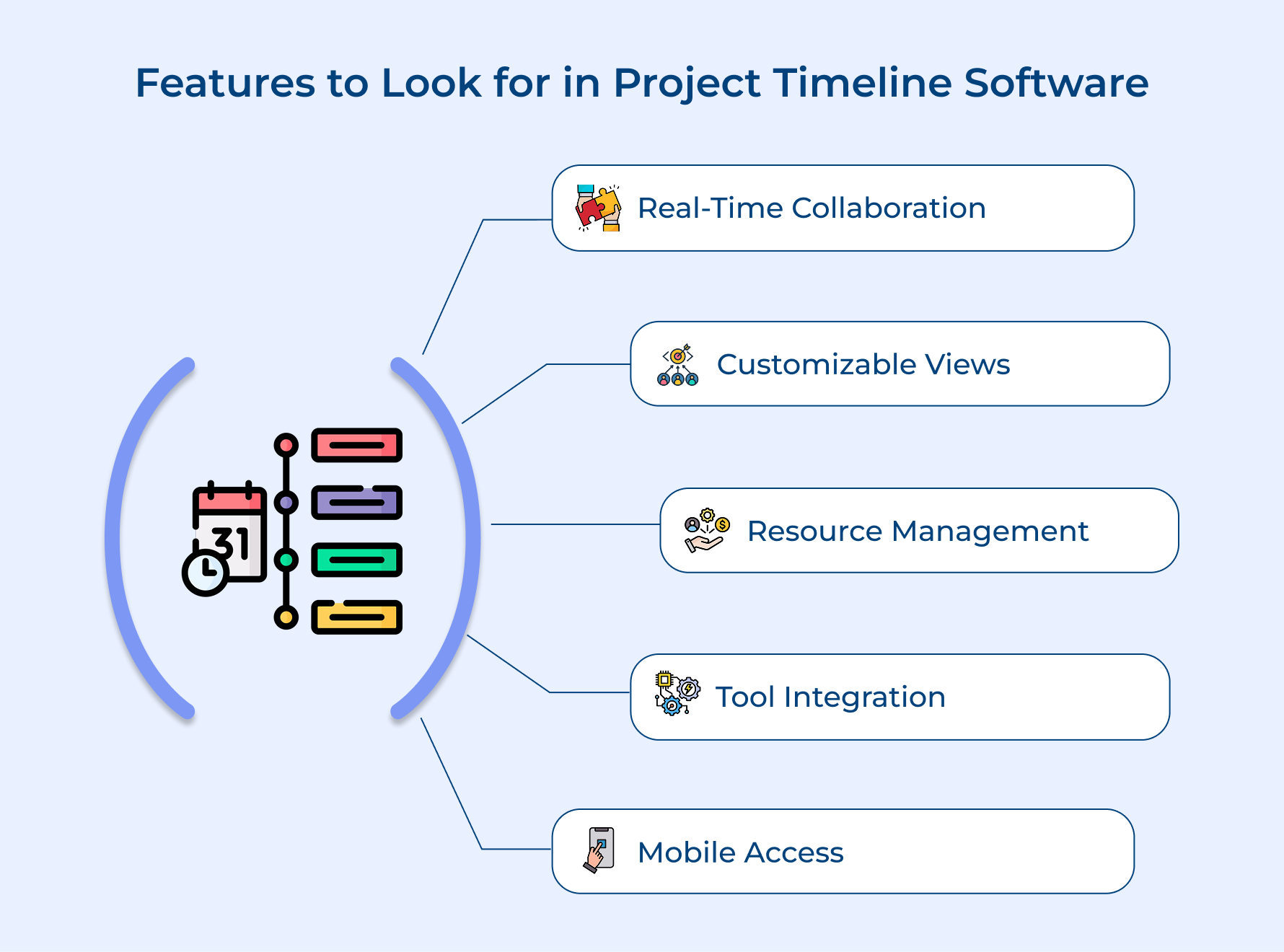
- Real-time collaboration and updates: Choose a tool that lets your whole team update tasks at the same time, with changes syncing instantly. No more confusion over which version of the plan is correct – everyone is always on the same page.
- Customizable views and reporting options: The software should adapt to you, not the other way around. Look for different views like Gantt charts for the big picture and Kanban boards for daily workflow, plus the ability to create simple client summaries from detailed plans.
- Resource management and capacity planning: Avoid overloading your team. Your software needs to show you who is available and how work is distributed across all projects, so you can spot conflicts before they become crises.
- Integration with existing business tools: It should connect seamlessly with the tools you already use (like email, Slack, or your file storage). This saves time and prevents errors by keeping all your information in sync.
- Mobile access and offline functionality: Your team on the go needs full access to project info, even without an internet connection. A powerful mobile app ensures they can stay productive from anywhere.
Keep Client Projects on Track with a Comprehensive Project Timeline
Project timelines serve as your roadmap to successful client delivery by transforming complex engagements into manageable phases with clear milestones and accountability measures. They create transparency that builds client trust while protecting your team from scope creep and unrealistic expectations.
Mastering timeline creation through proper planning, resource allocation and stakeholder communication ensures projects finish on time as well as within budget consistently. This systematic approach transforms project management from reactive firefighting into proactive strategy that drives sustainable business growth and client satisfaction.
Limit time — not creativity
Everything you need for customer support, marketing & sales.

Shivank Kasera is part of the marketing team at Kooper, where he focuses on building content that helps agencies and service providers grow. With a keen interest in SaaS, operations, and scalability, he translates practical insights into actionable resources for business leaders.