How to Boost Employee Performance with Workforce Optimization
- What is Workforce Optimization?
- Benefits of Workforce Optimization (WFO)
- 7 Essential Steps in Workforce Optimization Process
- Important Components of Workforce Optimization
- Workforce Optimization Strategies and Best Practices
- Examples of Workforce Optimization
- Elevate Productivity with Strategic Workforce Optimization Process
- FAQs about Workforce Optimization
Key Highlights:
- Streamline workflows with workforce optimization strategies to enhance employee performance and maximize organizational productivity.
- Leverage data-driven insights along with speech analytics to improve customer engagement and operational efficiency.
- Implement flexible scheduling, training and automation to reduce costs while maintaining high-quality service consistently.
Many businesses face falling productivity, rising costs and employees who feel drained by inefficient processes that waste time as well as resources.
A lack of strategic workforce optimization can lead to top talent leaving and declining customer satisfaction from missed deadlines along with poor service.
These proven strategies boost employee performance, transforming struggling teams into high-performing units that deliver measurable results while improving both morale and profits.
What is Workforce Optimization?
Workforce optimization represents a strategic approach that combines people, processes and technology to maximize organizational performance. It involves analyzing how your teams work, identifying bottlenecks and implementing solutions that help employees perform at their best.
When done right, workforce optimization transforms how organizations operate by creating smoother workflows and happier employees. It reduces the friction that slows down daily tasks while ensuring people feel engaged and productive. The ripple effect touches everything from customer satisfaction to employee retention as teams become more efficient and motivated.
Main objectives:
- Enhance productivity by streamlining workflows and eliminating time-wasting activities that bog down your teams.
- Improve employee engagement through better role alignment and clearer communication about expectations as well as goals.
- Optimize resource allocation by placing the right people in the right positions at the right time.
- Reduce operational costs while maintaining or improving service quality through smarter process design.
- Drive continuous improvement by establishing feedback loops that help identify and solve problems before they escalate.
Benefits of Workforce Optimization (WFO)
Workforce optimization delivers measurable improvements that transform how your organization operates and competes. Here’s the list of benefits to consider:
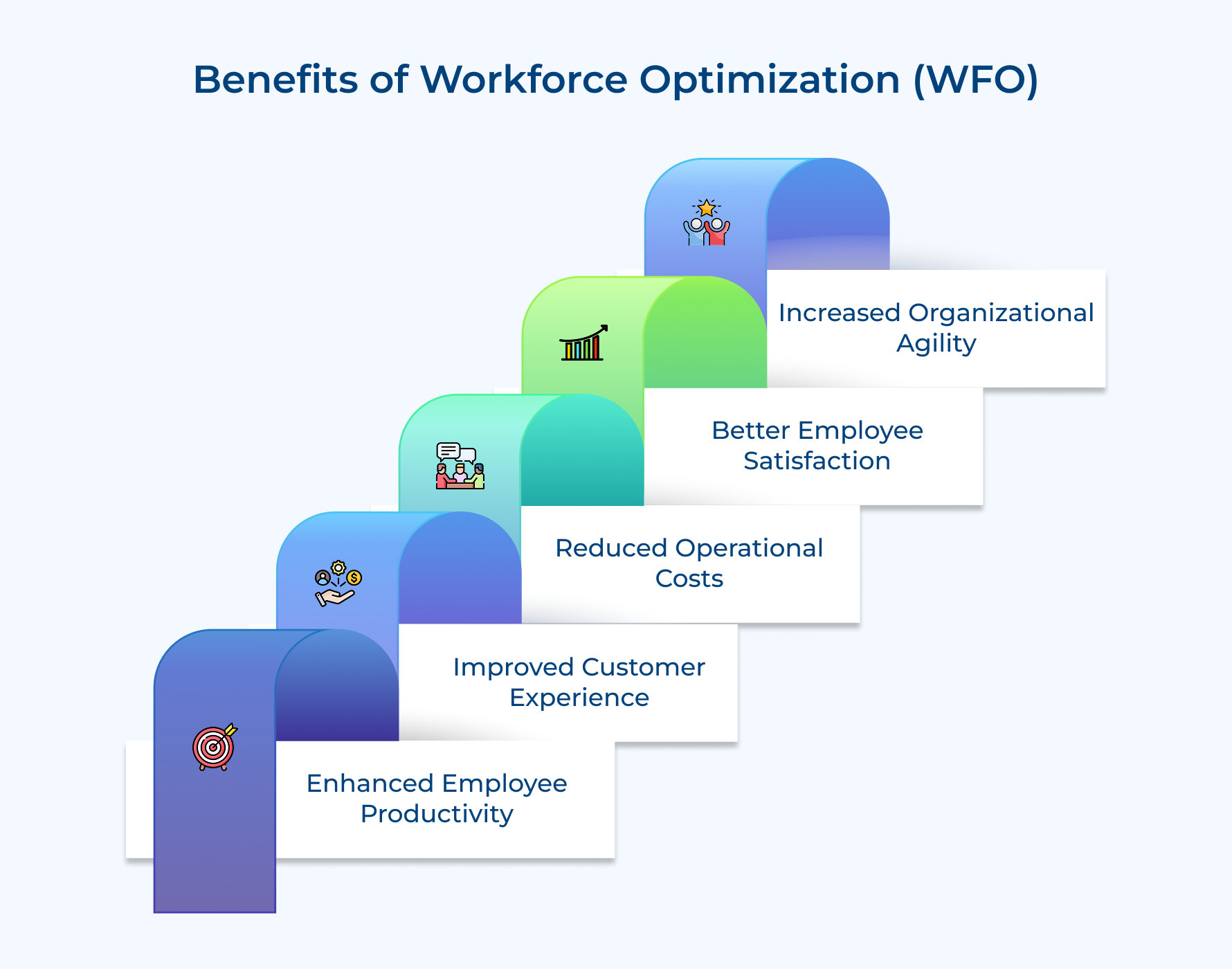
Enhanced Employee Productivity
Workforce optimization with the right WFO software streamlines slow processes and removes redundant tasks. Employees can focus on meaningful work, boosting agent performance and delivering higher-quality output faster.
Improved Customer Experience
Optimized workflows help teams provide consistent, timely service, enhancing customer engagement. Faster responses and more accurate solutions turn satisfied customers into loyal advocates, driving repeat business as well as referrals.
Reduced Operational Costs
Strategic optimization identifies wasted or underutilized resources. Automation handles routine tasks, allowing skilled agents to focus on complex work, cutting costs while maintaining high service standards.
Better Employee Satisfaction
Smooth processes make work less frustrating. Clear expectations and the right tools help employees succeed, boosting engagement, reducing turnover while improving team morale.
Increased Organizational Agility
An optimized workforce can quickly adapt to market changes and unexpected challenges. Flexible processes and cross-trained teams allow companies to seize opportunities while staying operationally stable, creating a strong competitive edge.
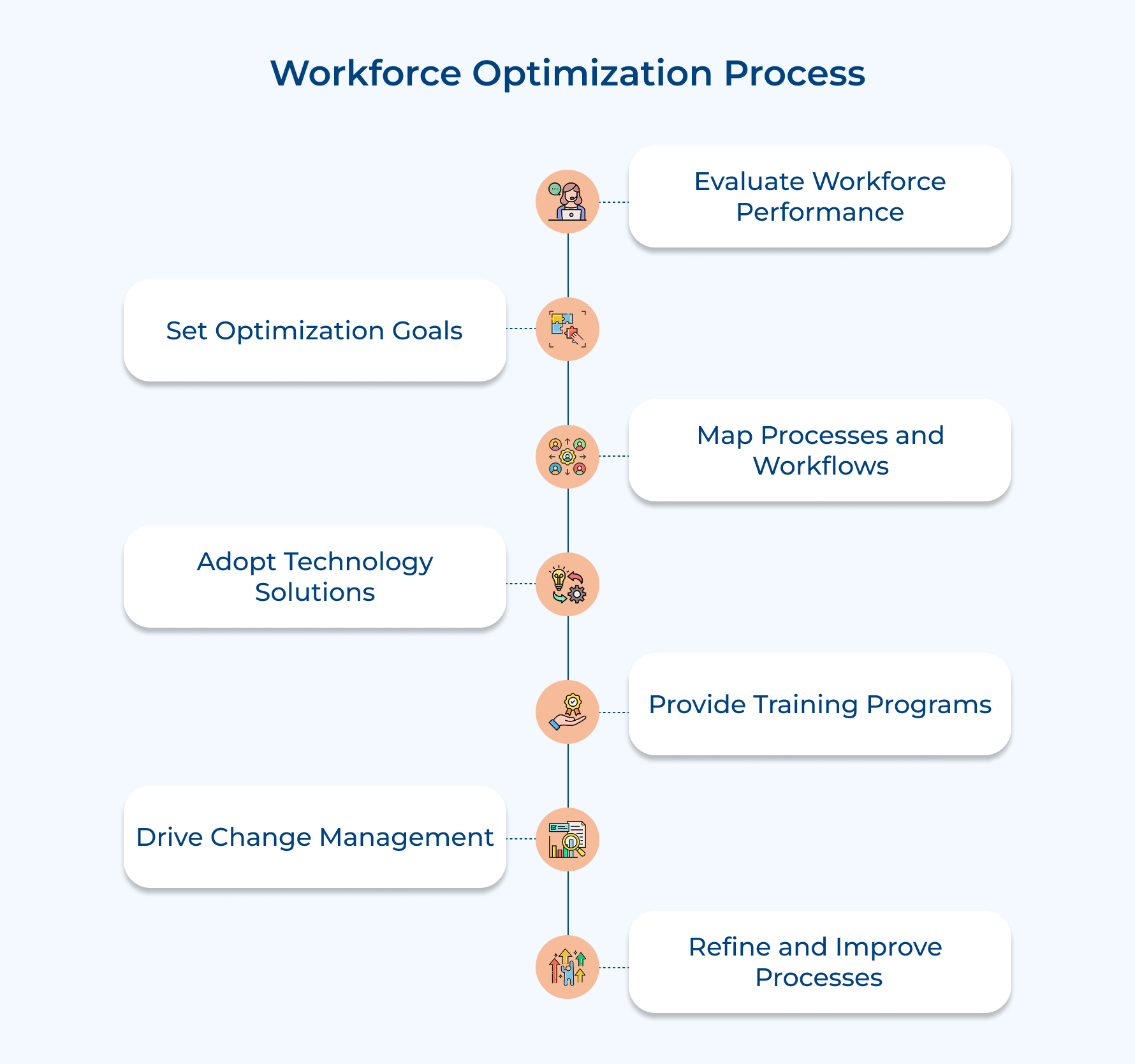
7 Essential Steps in Workforce Optimization Process
Join us as we dive into the essentials of building a robust Agile resource planning system that can transform your team’s productivity and drive project success.
Important Components of Workforce Optimization1. Assess Current Workforce Performance
Understanding your workforce’s current state provides the essential foundation for any optimization effort. This assessment reveals where you stand and helps identify the gaps between current performance along with desired outcomes.
Four essential metrics to evaluate your workforce performance effectively:
- Employee productivity rate measures output per hour and reveals which teams are performing above or below expectations.
- Quality scores track error rates and customer satisfaction to show how well your workforce delivers consistent results.
- Absenteeism and turnover rates indicate employee engagement levels and help predict potential staffing challenges ahead.
- Skills assessment scores identify knowledge gaps and training needs across different roles as well as departments within your organization.
What patterns emerge when you analyze these metrics together? These measurements help you identify key strengths and weaknesses in your workforce performance that need immediate attention.
2. Define Clear Optimization Goals
Setting specific, measurable goals turns vague improvement ideas into actionable targets that drive real change. Clear objectives keep optimization efforts focused and easier to evaluate.
Start by reviewing assessment results and identify the top three areas needing improvement, prioritizing gaps that affect customer engagement or profitability.
Common goals include:
- Boost productivity by 15% through streamlined processes and better resource allocation.
- Reduce employee turnover by 25% via improved satisfaction and career development.
- Cut response times by 30% using workflow redesign and automation.
- Improve quality scores by 20% through training and standardized procedures.
Break larger goals into quarterly milestones with clear deliverables and assign responsibility to team leaders. Aligning goals with overall business strategy ensures improvements support company objectives and secure leadership support.
3. Map Existing Processes and Workflows
Process mapping provides a visual view of how work flows in your organization and highlights inefficiencies. It shows the real workflow versus the intended one, helping you identify areas for improvement before making changes.
Effective mapping methods:
- Process flowcharts: Document each workflow step, decision points and bottlenecks. These maps help teams spot redundancies and unnecessary steps that slow operations.
- Value stream mapping: Focus on activities that add value versus those that waste time. Identify tasks that can be eliminated or automated.
- Journey mapping: Follow work from the employee perspective to capture daily pain points impacting agent performance and satisfaction.
For example, in a customer service team, process mapping may reveal 40% of calls are unnecessarily transferred because agents lack access to complete customer information.
4. Implement Technology and Automation Solutions
Implementing the right technology is a game-changer. Modern Workforce Engagement Management (WEM) tools enhance performance by eliminating inefficiencies and multiplying human capabilities.
The ideal WEM software serves as a central hub, automating scheduling, consolidating employee data and providing real-time visibility into workforce performance. Features like speech analytics offer actionable insights to improve customer interactions and operational efficiency.
Key considerations when choosing software:
- Scalability: Supports growth without costly upgrades.
- Integration: Connects with payroll, CRM and other systems.
- User-friendly interface: Promotes adoption and reduces training time.
- Real-time analytics: Enables immediate, data-driven decisions.
- Mobile access: Supports remote management and self-service options.
Automation of repetitive tasks further boosts productivity, allowing employees to focus on strategic, value-driven work.
5. Develop Comprehensive Training Programs
Training development ensures your workforce can effectively utilize new processes and technologies introduced during optimization efforts. Neglecting this step often leads to employee resistance and failed implementation regardless of how well-designed your optimization strategy appears on paper.
Four proven training programs that accelerate workforce optimization results:
- Skills-based competency training
- Cross-functional capability development
- Leadership and management enhancement
- Technology adoption and digital literacy
Beyond standard programs organizations achieve better optimization results through role-specific learning modules that address unique job requirements and challenges. These targeted modules ensure training relevance while avoiding the generic approach that often fails to create meaningful behavioral changes.
Ongoing education frameworks maintain optimization momentum through continuous skill development:
- Regular assessment cycles identify emerging skill gaps before they impact performance and allow proactive training interventions.
- Mentorship programs pair experienced employees with newer team members to accelerate knowledge transfer and cultural integration.
- Learning pathways create clear progression routes that motivate employees while building organizational capabilities systematically over time.
6. Execute Change Management and Communication
Change management orchestrates the human side of workforce optimization by preparing employees for new processes and addressing their concerns proactively. Without proper change management even the best optimization strategies fail because people resist unfamiliar ways of working.
Effective change management starts with transparent communication about why changes are happening and how they benefit both employees as well as customers. Create multiple touchpoints through team meetings and written updates while acknowledging that adaptation takes time from everyone involved.
Pro tips:
- Build trust by involving employees in solution design rather than simply announcing changes from leadership down.
- Address resistance immediately through one-on-one conversations that uncover specific concerns and provide personalized reassurance about job security.
7: Continuously Refine and Improve Processes
Continuous improvement turns process enhancements into an ongoing advantage that adapts as your organization grows and market demands evolve.
Regularly review performance metrics to see what’s working and what needs adjustment. Compare results against your baseline to measure progress as well as identify stalled areas.
Three ways to refine strategies:
- Process iteration: Make small improvements to workflows instead of overhauling systems that mostly work.
- Resource reallocation: Move people and tools from low-impact initiatives to high-performing strategies.
- Timeline adjustment: Update implementation schedules based on actual progress rather than sticking to rigid original plans.
Scale successful initiatives across the organization once they show at least three months of consistent positive results and measurable improvements in key metrics.
Important Components of Workforce Optimization
These core components work together like interconnected gears, each essential for creating a truly optimized workforce that drives organizational success.
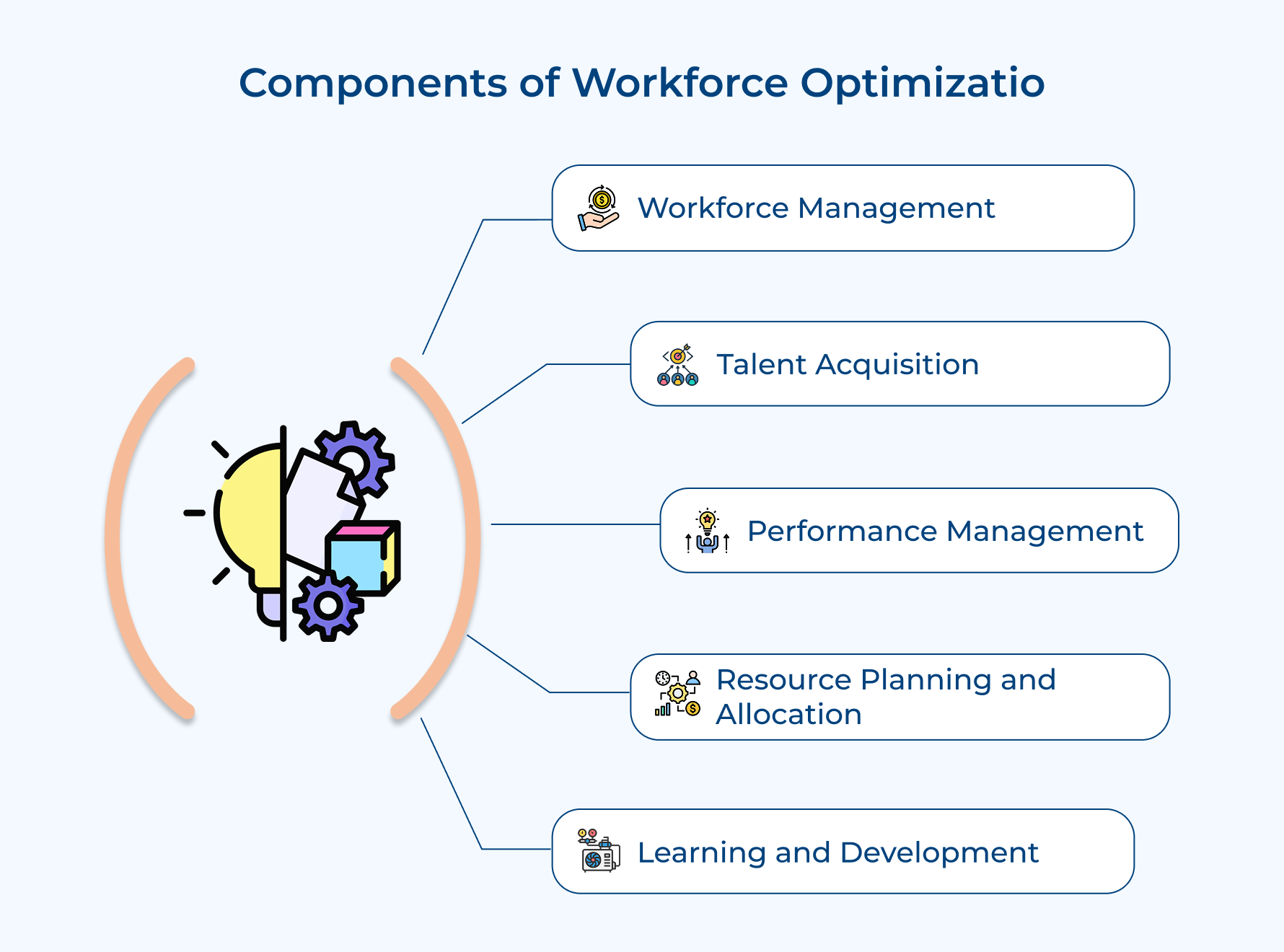
Workforce Management
Workforce management coordinates daily activities through strategic scheduling and resource deployment across your organization. Think of it as the conductor ensuring every employee knows when and where to perform for maximum collective impact.
Talent Acquisition
Talent acquisition strategically identifies and attracts individuals whose skills align with your organizational culture as well as future goals. This component builds a pipeline of exceptional people who will drive long-term success beyond just filling positions.
Performance Management
Performance management creates continuous feedback loops that transform individual potential into measurable results through goal setting and coaching conversations. Consider it your organization’s GPS system keeping everyone moving in the right direction with course corrections.
Resource Planning and Allocation
Resource planning ensures the right people with appropriate skills work on optimal projects at the correct time. This strategic component positions each team member where they can contribute most effectively to achieving the overall plan.
Learning and Development
Learning and development builds organizational capability by expanding employee skills to meet evolving business demands along with technological changes. The component strengthens workforce capabilities and prepares everyone for future challenges as well as opportunities.
Workforce Optimization Strategies and Best Practices
These proven strategies help organizations unlock their workforce potential while creating sustainable competitive advantages through strategic human capital management.
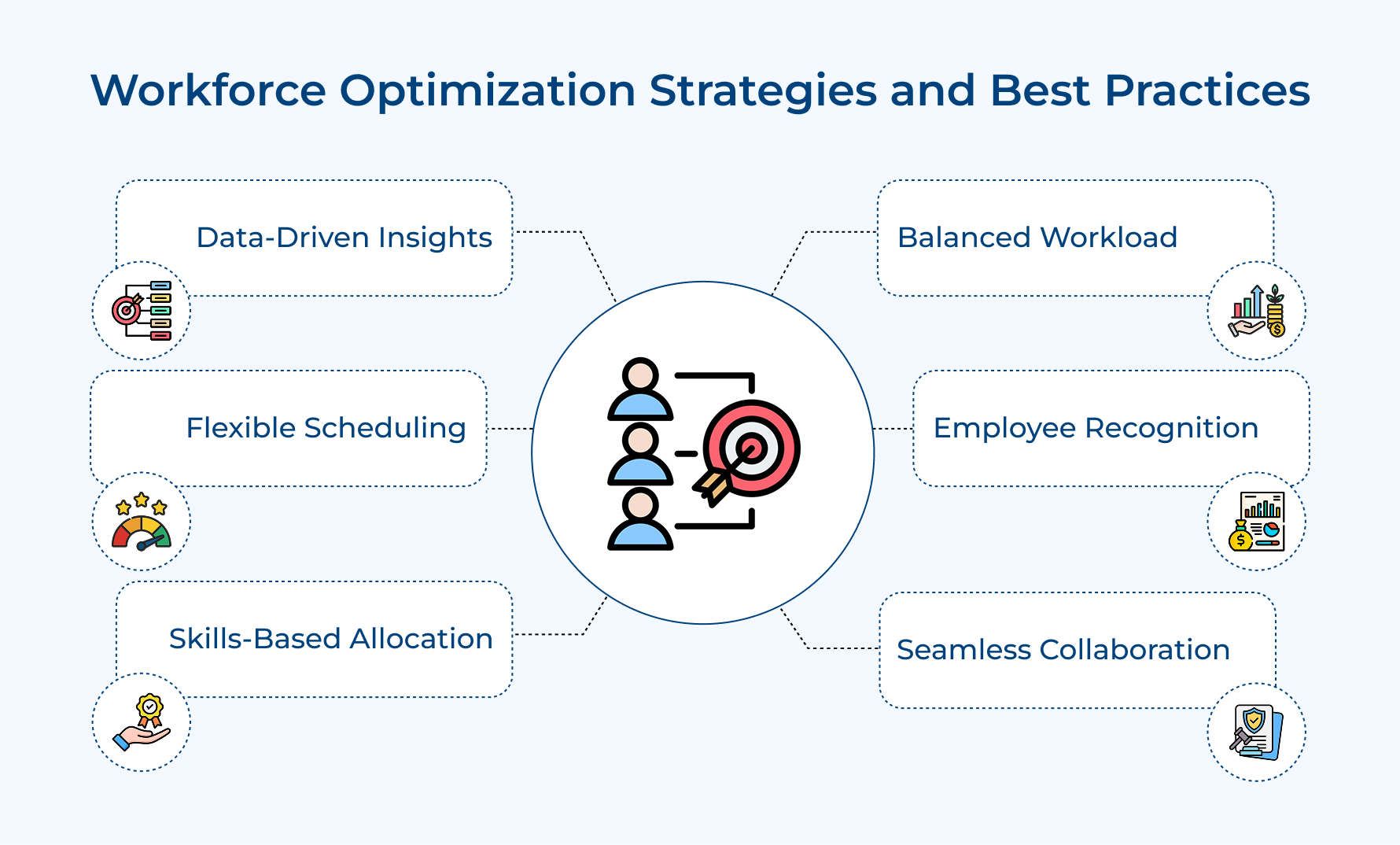
1. Data-Driven Performance Analytics
Performance analytics transforms gut feelings into actionable insights by revealing patterns in employee productivity and engagement across your organization.
Modern analytics platforms track everything from task completion rates to collaboration frequency while identifying high performers along with those needing additional support.
Essential analytics components that drive meaningful workforce improvements include:
- Real-time productivity dashboards showing individual and team performance metrics.
- Predictive models that forecast staffing needs based on seasonal demand patterns.
- Employee engagement scores correlated with business outcomes and retention rates.
Advanced analytics go beyond basic reporting to predict future workforce needs and identify potential problems before they impact operations. Machine learning algorithms can spot trends in employee behavior that indicate burnout risk or readiness for promotion opportunities.
2. Flexible Work Arrangements and Scheduling
Flexibility has evolved from a nice-to-have perk into a strategic workforce optimization tool that attracts top talent while improving productivity.
Smart scheduling systems match employee availability with business demands while accommodating personal preferences that boost job satisfaction and reduce turnover.
Consider these questions when designing your flexible work strategy:
- Which roles can maintain quality standards regardless of location or schedule?
- How will you measure productivity for remote workers without micromanaging?
- What technology infrastructure supports seamless collaboration across different work arrangements?
The key lies in balancing business needs with employee preferences through clear expectations and robust communication systems. Successful flexible arrangements require strong performance metrics and regular check-ins to ensure accountability.
3. Skills-Based Task Assignment
Skills-based assignment ensures the right person handles each task by matching individual capabilities with specific job requirements rather than relying on traditional hierarchies.
This approach maximizes efficiency while developing employee expertise through challenging yet achievable work assignments that build confidence and competence.
4. Strategic Workload Distribution
Strategic workload distribution prevents employee burnout while maximizing team capacity through intelligent task allocation based on individual capabilities and current availability.
It considers both quantitative factors like hours worked and qualitative elements such as task complexity as well as stress levels.
Core workload management principles that enhance team performance include:
- Capacity planning that accounts for employee strengths and peak performance times.
- Buffer time allocation for unexpected urgent tasks or project complications.
- Regular workload assessments to identify overburdened team members before productivity declines.
Effective workload distribution creates a sustainable pace where employees can deliver high-quality work without experiencing chronic stress or fatigue.
5. Employee Feedback and Recognition Systems
Recognition systems boost motivation by acknowledging good work while feedback systems guide improvement efforts through specific and actionable suggestions.
These interconnected systems create a culture of continuous improvement where employees feel valued and understand exactly how to enhance their performance.
Effective feedback and recognition programs incorporate these essential elements:
- Regular one-on-one meetings focusing on development rather than just performance evaluation.
- Peer recognition platforms allowing colleagues to celebrate each other’s contributions.
- Goal-setting frameworks that connect individual achievements to organizational success.
Timely recognition has more impact than delayed rewards while specific feedback produces better results than vague praise or criticism. The most successful systems combine formal recognition programs with informal appreciation that happens naturally throughout the workday.
6. Communication and Collaboration Optimization
Communication optimization eliminates information silos while creating clear channels for knowledge sharing and decision-making across all organizational levels.
Effective collaboration systems ensure that teams work together seamlessly rather than operating as disconnected units that duplicate effort or miss opportunities.
Assess your communication effectiveness with these diagnostic questions:
- Do employees receive consistent messages from different managers about priorities and expectations?
- How quickly can teams access the information they need to make important decisions?
- What barriers prevent effective collaboration between departments or remote team members?
Organizations that master internal communication see faster problem resolution and more innovative solutions because ideas flow freely across traditional boundaries.
Examples of Workforce Optimization
Here are some examples that show how organizations put workforce optimization principles into practice. They highlight how businesses solve common challenges and boost operational efficiency.
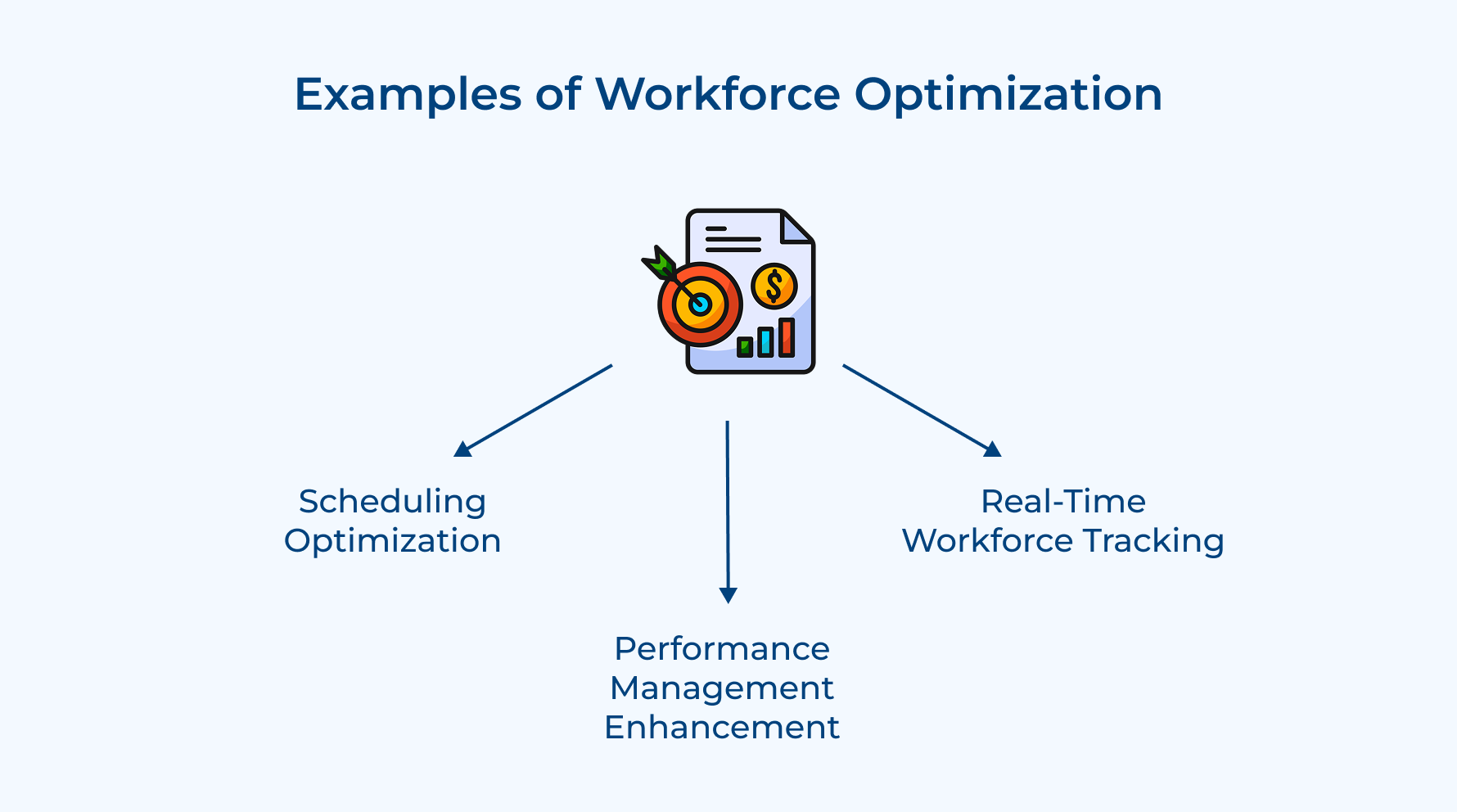
Scheduling Optimization
A retail chain implemented intelligent scheduling software that analyzes customer traffic patterns and sales data to predict staffing needs throughout each day. The system automatically creates employee schedules that match peak shopping times while considering individual availability and labor budget constraints for maximum efficiency.
Performance Management Enhancement
A customer service center transformed its traditional annual reviews into continuous performance coaching using real-time dashboards that track call resolution rates and satisfaction scores. Managers now provide immediate feedback and support to agents while identifying top performers who can mentor struggling team members effectively.
Real-Time Workforce Tracking
A logistics company deployed mobile tracking systems that monitor delivery driver locations and route efficiency while providing instant communication between dispatchers as well as field teams. This visibility allows immediate route adjustments during traffic delays while ensuring customers receive accurate delivery time estimates throughout the day.
Elevate Productivity with Strategic Workforce Optimization Process
Strategic workforce optimization transforms ordinary teams into high-performing units by systematically addressing inefficiencies and maximizing human potential. When organizations follow proven optimization processes they create sustainable competitive advantages that benefit both employees and customers.
The journey requires commitment to continuous improvement and data-driven decision making throughout every organizational level. Companies that embrace workforce optimization see measurable improvements in productivity while building stronger employee engagement and long-term business success.
Limit time — not creativity
Everything you need for customer support, marketing & sales.

Shivank Kasera is part of the marketing team at Kooper, where he focuses on building content that helps agencies and service providers grow. With a keen interest in SaaS, operations, and scalability, he translates practical insights into actionable resources for business leaders.