Project Management vs Resource Management: Key Differences
- What is Project Management?
- Key Benefits of Efficient Project Management
- What is Resource Management?
- Essential Benefits of Efficient Resource Management
- Differences Between Project Management and Resource Management
- 8 Crucial Best Practices for Project and Resource Management
- Project Management Vs Resource Management: Choosing the right process for Success
- FAQs about Project Management Vs Resource Management

Key Highlights:
- Resource management vs project management focuses on assigning the right people at the right time.
- Clear distinction prevents overlapping tasks, delays and underutilized team potential.
- Integrating both approaches creates efficient workflows and long-term organizational success.
Several organizations face challenges when it comes to project management vs resource management, often blurring the lines between the two. This overlap leads to duplicated tasks, poor coordination and confusion that slows down project progress.
When responsibilities aren’t clearly defined, managers end up focusing on overlapping activities while missing critical gaps. It results in delayed project timelines, underutilized talent and wasted opportunities that could have been avoided with better clarity.
The key is recognizing that project management ensures delivery within scope, while resource management focuses on assigning the right people and tools at the right time. Let’s explore the differences one at a time.
What is Project Management?
Project management is the disciplined practice of planning and coordinating resources to achieve specific goals within defined constraints. It involves organizing people and processes to deliver outcomes that meet client expectations.
Teams establish clear objectives and create detailed roadmaps that outline required tasks as well as timelines. Project managers coordinate resources while monitoring progress against established milestones. They identify potential obstacles early and adjust strategies to keep deliverables on track as well as within budget parameters.
Primary goals:
- Deliver projects on time: Meeting agreed deadlines maintains client trust and prevents costly delays.
- Stay within budget constraints: Controlling expenses ensures profitability and demonstrates financial responsibility to stakeholders.
- Maintain quality standards: Consistent excellence in deliverables builds reputation and secures future business opportunities.
- Manage risks proactively: Identifying potential problems early allows teams to implement solutions before issues escalate.
- Facilitate clear communication: Regular updates and transparent reporting keep everyone aligned on progress as well as expectations.
Key Benefits of Efficient Project Management
Efficient project management creates a structured framework that transforms chaotic workflows into organized success stories. Let’s explore how it benefits your business:
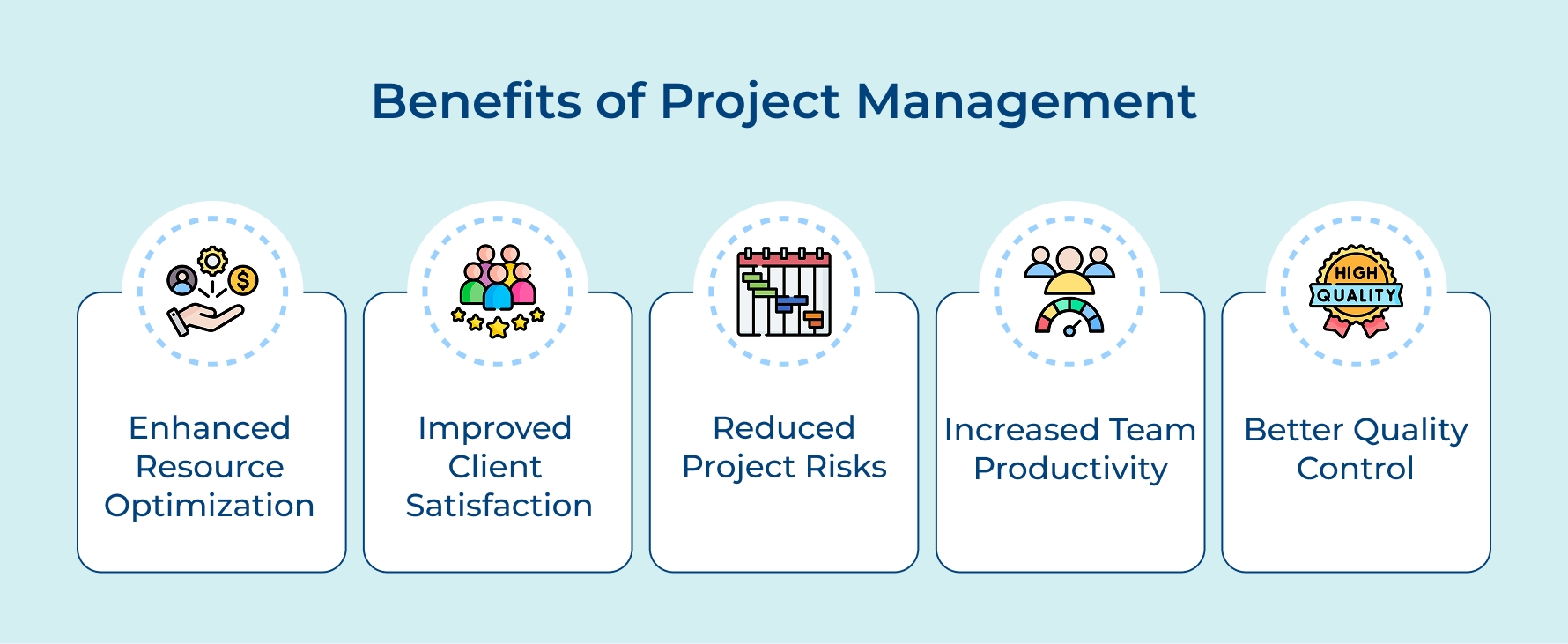
Enhanced Resource Optimization
Using project management tools helps teams allocate time and budget more strategically. Managers can apply techniques like resource smoothing to balance workloads and reduce waste, ensuring that every task gets the right attention without driving up project costs.
Improved Client Satisfaction
Consistent delivery schedules supported by effective tools strengthen communication with clients. When deadlines are aligned with resource constraint planning, expectations are managed more effectively, building long-term trust.
Reduced Project Risks
Structured planning and monitoring enable proactive risk mitigation. Identifying challenges early allows managers to create contingency plans that keep projects on track and prevent costly delays.
Increased Team Productivity
Clear role assignments within project management platforms remove confusion about responsibilities. Teams focus on execution rather than chasing approvals or clarifying priorities.
Better Quality Control
Integrated review features in project systems ensure checkpoints at every stage. These processes catch issues before delivery, helping maintain quality while keeping project costs under control.
What is Resource Management?
Resource management is the strategic process of planning and allocating available assets to maximize productivity and project outcomes. Effective resource management ensures that the right people work on appropriate tasks at precisely the right time.
Proper resource allocation directly influences project profitability and team satisfaction across organizations. When resources are managed effectively teams avoid burnout while maintaining consistent quality standards.
Key factors:
- Capacity planning: Understanding how much work each team member can realistically handle prevents overcommitment and scheduling conflicts.
- Skill matching: Assigning tasks to people with appropriate expertise ensures quality outcomes while providing growth opportunities for developing talent.
- Timeline coordination: Balancing multiple project deadlines requires careful scheduling to avoid resource conflicts and missed deliverables.
- Workload distribution: Spreading assignments evenly across available team members prevents some people from becoming overwhelmed while others remain underutilized.
- Flexibility maintenance: Keeping buffer capacity allows teams to handle unexpected changes or urgent requests without disrupting existing project commitments.
Essential Benefits of Efficient Resource Management
Understanding how resource management impacts your organization requires examining the fundamental questions that drive effective allocation decisions. Let’s start by exploring the core considerations that shape successful resource management strategies.
- What resources do we actually have available right now?
- Which projects deserve our highest priority and attention?
- How can we prevent team members from becoming overwhelmed or underutilized?
- What happens when unexpected opportunities or urgent requests arise?
Now that we’ve established these foundational questions, let’s examine how efficient resource management creates tangible benefits across different aspects of business operations.
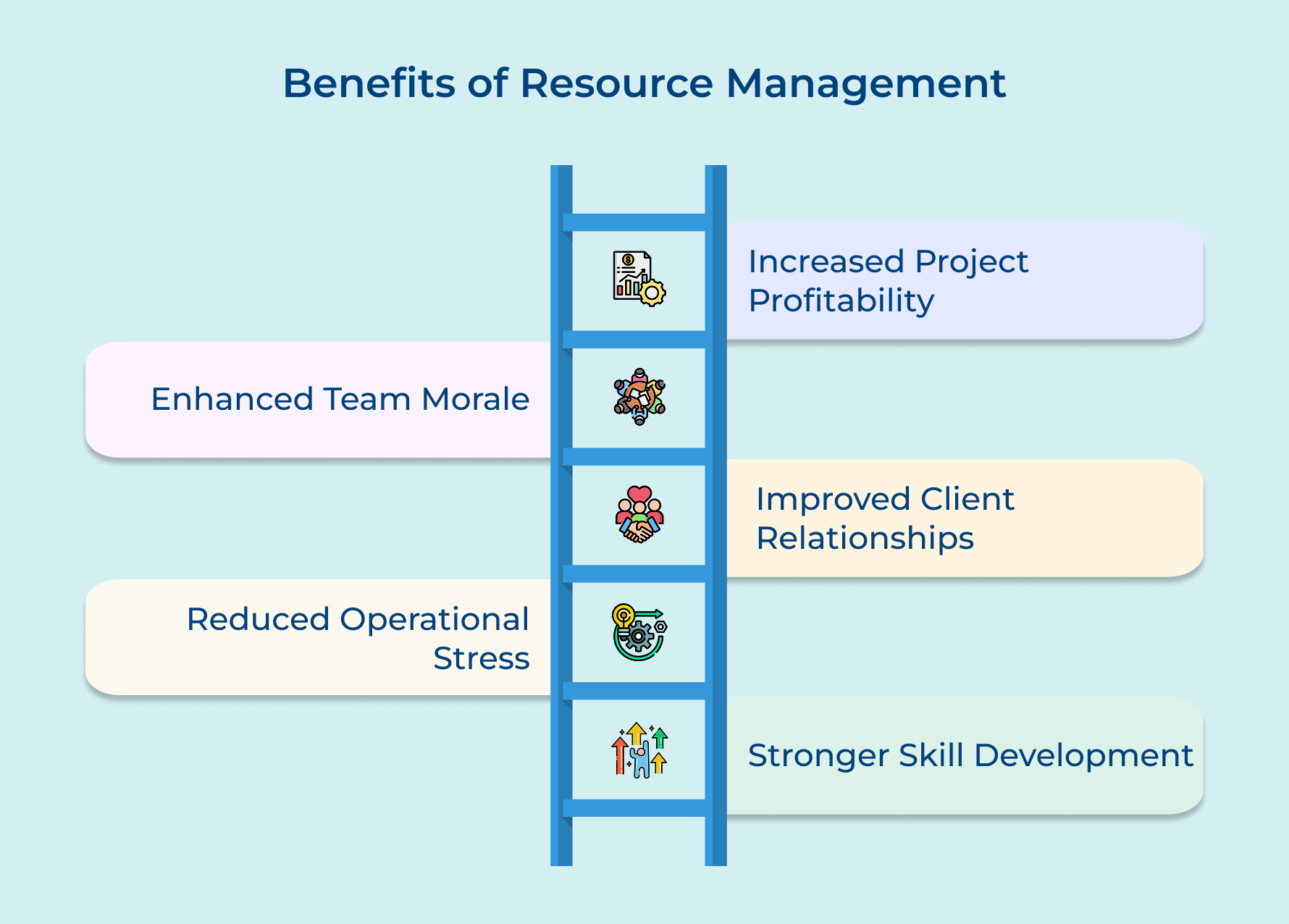
Increased Project Profitability
Effective resource scheduling ensures that top talent focuses on high-value activities rather than routine tasks. By aligning skills with priorities, projects improve margins and deliver stronger returns on investment.
Enhanced Team Morale
Techniques like resource leveling balance workloads and prevent burnout. When team members work on tasks that match their expertise without overwhelming project schedules, they stay motivated and engaged.
Improved Client Relationships
Reliable resource forecasting ensures the right people are assigned to client projects. This consistency strengthens trust, as clients see deliverables completed on time and at the quality they expect.
Reduced Operational Stress
Proactive planning prevents last-minute scrambling caused by resource shortages. Managers avoid constant firefighting, instead focus on guiding projects smoothly through the project schedule.
Stronger Skill Development
Strategic allocation helps employees build new expertise while meeting project needs. By planning resource growth alongside organizational goals, teams improve both quality as well as professional development.
Differences Between Project Management and Resource Management
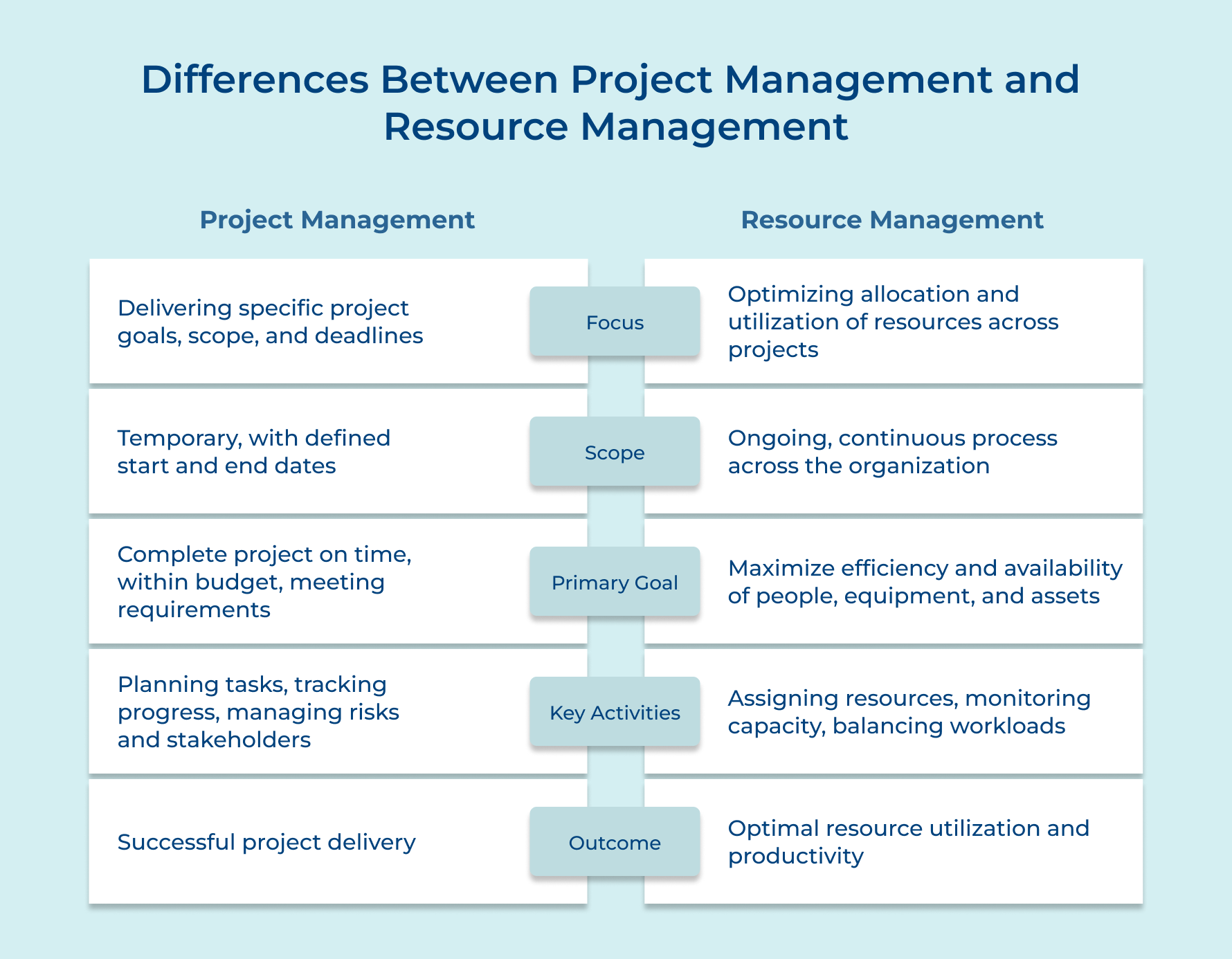
Let’s examine how each approach addresses different aspects of business execution and strategic planning.
1. Primary Focus Area
Project management is all about achieving specific outcomes within set timelines and budgets. Teams focus on hitting milestones, tracking project progress while ensuring deliverables meet agreed quality standards. Success often depends on clear task ownership and steady monitoring of project timelines.
Resource management looks at how people and assets are allocated across different projects. The goal is to use available capacity efficiently while supporting productivity.
Strong team management here ensures workloads remain balanced and resources aren’t wasted. This difference sets the foundation for smoother execution as well as long-term organizational success.
2. Planning Horizon
Project management and resource management differ in how they approach timelines:
- Project management works with fixed timelines. Each initiative has a clear start and end date. Teams build schedules around project milestones and delivery dates, making sure activities stay on track.
- Resource management looks at the bigger picture. It continuously balances workloads across multiple initiatives, using a resource calendar to forecast availability. This approach allows flexibility when priorities shift or new opportunities appear.
Together, these perspectives create balance. Project management drives completion, while resource management ensures long-term sustainability without overloading teams or creating unnecessary employee burnout.
3. Success Metrics
Project management measures success through completion rates and adherence to original specifications as well as timelines. Teams evaluate performance based on whether deliverables meet established criteria within agreed-upon constraints and quality standards.
Success indicators typically include:
- On-time delivery: Meeting established deadlines without compromising quality or scope
- Budget compliance: Completing work within allocated financial resources and constraints
- Stakeholder satisfaction: Ensuring final outputs meet or exceed client expectations consistently
Resource management evaluates success through utilization rates and overall productivity across the entire organization or department. This approach examines how effectively available capacity generates value while maintaining sustainable working conditions.
4. Decision-Making Approach
Project management and resource management handle decisions differently:
- Project management decisions revolve around scope and deadlines. The focus is on keeping the project on track, even if timelines or deliverables need adjusting.
- Resource management decisions prioritize how talent and tools are shared across multiple initiatives. The aim is to balance workloads and avoid employee burnout while ensuring critical projects get the right attention.
Think of a scenario where a key designer becomes unavailable. A project manager adjusts project timelines. A resource manager uses Enterprise Resource Planning tools to reallocate work across cross-functional teams without slowing everything down.
5. Risk Management Strategy
Project management identifies and mitigates risks that could prevent successful completion of specific deliverables or milestones. Teams develop contingency plans that address potential obstacles while maintaining focus on predetermined project outcomes.
Risk categories commonly addressed:
- Technical challenges: Potential complications that could delay or compromise deliverable quality
- Resource availability: Ensuring key team members remain accessible throughout project phases
- Scope creep: Managing client requests that could expand beyond original project parameters
Resource management addresses risks related to capacity constraints and workload imbalances across the entire organization or team. This perspective considers how individual project demands might create conflicts or unsustainable working conditions.
6. Communication Patterns
Communication looks very different when you compare project management and resource management.
In project management, the focus is on progress updates. Teams share status reports, milestone achievements as well as project timelines to keep stakeholders aligned on project progress.
Resource management centers around workload visibility. Managers rely on a resource calendar or Enterprise Resource Planning systems to understand availability across cross-functional teams.
Project updates often happen weekly with detailed progress reports, resource communication happens during planning sessions where team collaboration is key. This approach reduces employee burnout and prevents conflicts in allocation.
7. Performance Optimization
Performance optimization in project management focuses on making each initiative efficient. Teams streamline processes, refine workflows and track project progress to ensure deadlines are met without compromising quality.
Resource management looks at the bigger picture. It evaluates how resources are allocated across multiple projects and uses tools like a resource calendar to balance workloads effectively. This portfolio-wide view helps cross-functional teams avoid employee burnout while maximizing productivity.
Enterprise Resource Planning systems also support smarter resource scheduling by aligning skills with demand. These practices ensure both individual projects and overall operations run at peak efficiency.
8. Client Relationships
Project management builds relationships with clients and team members directly involved in specific deliverables as well as their successful completion. These connections focus on ensuring satisfaction with particular outcomes while maintaining clear expectations about scope and timeline parameters.
Consider these relationship dynamics when comparing both approaches:
- Who needs to stay informed about daily progress and milestone achievements?
- How do communication needs differ between single-project focus and multi-project coordination?
- What level of detail do different stakeholders require about resource allocation decisions?
Resource management develops relationships across the organization to understand capacity needs and coordinate allocation decisions effectively. This approach requires ongoing dialogue with department heads and team leaders about workload distribution as well as skill development priorities.
8 Crucial Best Practices for Project and Resource Management
Here are the fundamental practices that help organizations deliver exceptional results while maintaining healthy team dynamics.
Project Management Best Practices
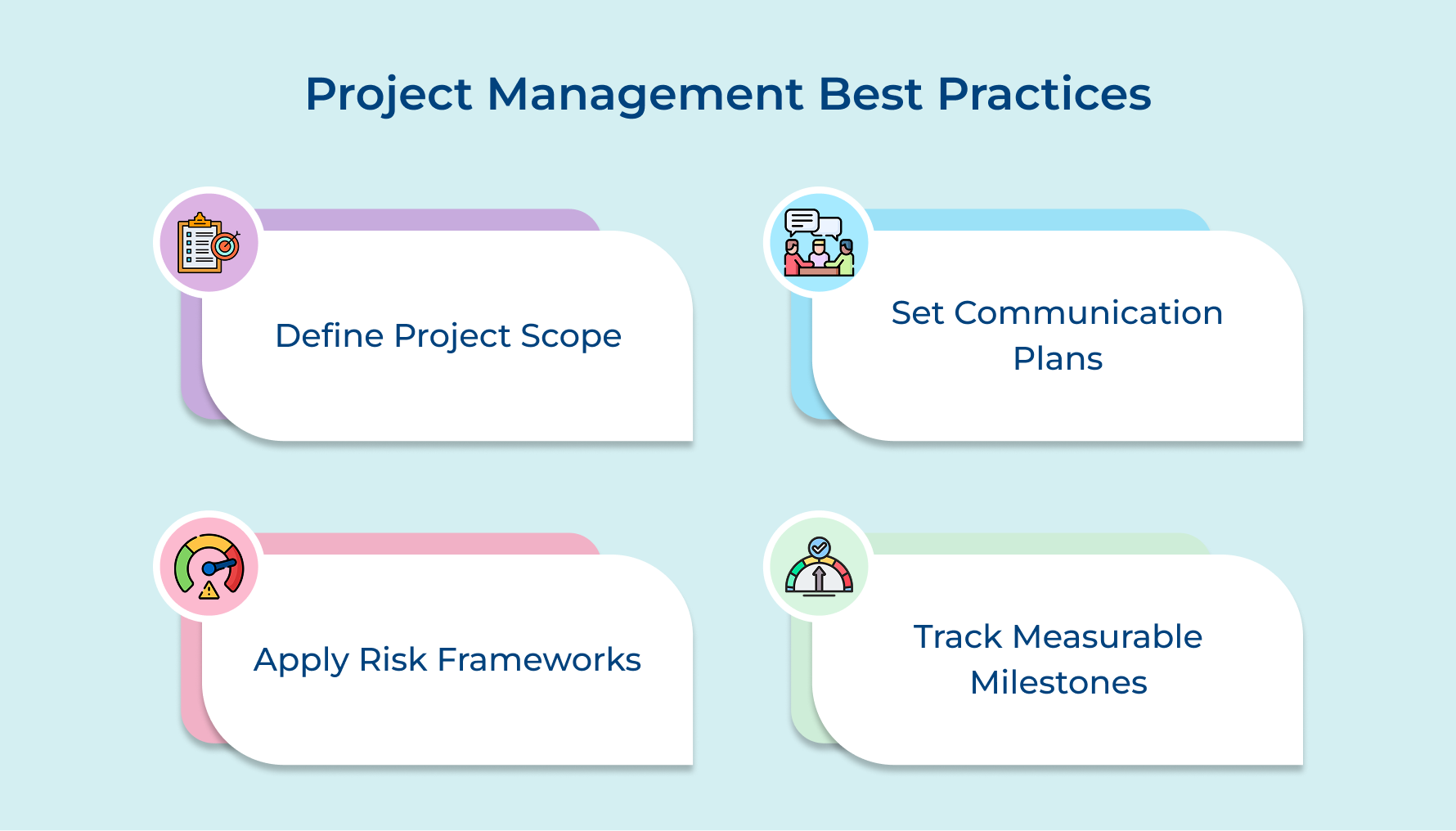
Establish Clear Project Scope and Boundaries
Define exactly what deliverables the project will produce and what falls outside its responsibilities from the very beginning. This clarity prevents scope creep while ensuring that all stakeholders understand precisely what they can expect upon completion.
Create Detailed Communication Plans
Develop structured communication schedules that specify who receives updates and how frequently they occur throughout the project lifecycle. Regular touchpoints keep everyone aligned on progress while preventing misunderstandings that could derail timelines or compromise quality standards.
Implement Risk Assessment Frameworks
Identify potential obstacles early in the planning phase while developing specific contingency plans for addressing each identified risk. Proactive risk management allows teams to respond quickly when challenges arise rather than scrambling to find solutions under pressure.
Monitor Progress Through Measurable Milestones
Break complex projects into smaller achievable segments with clear completion criteria that teams can track as well as celebrate. These checkpoints provide opportunities to adjust course when necessary while maintaining momentum toward the final deliverable.
Resource Management Best Practices
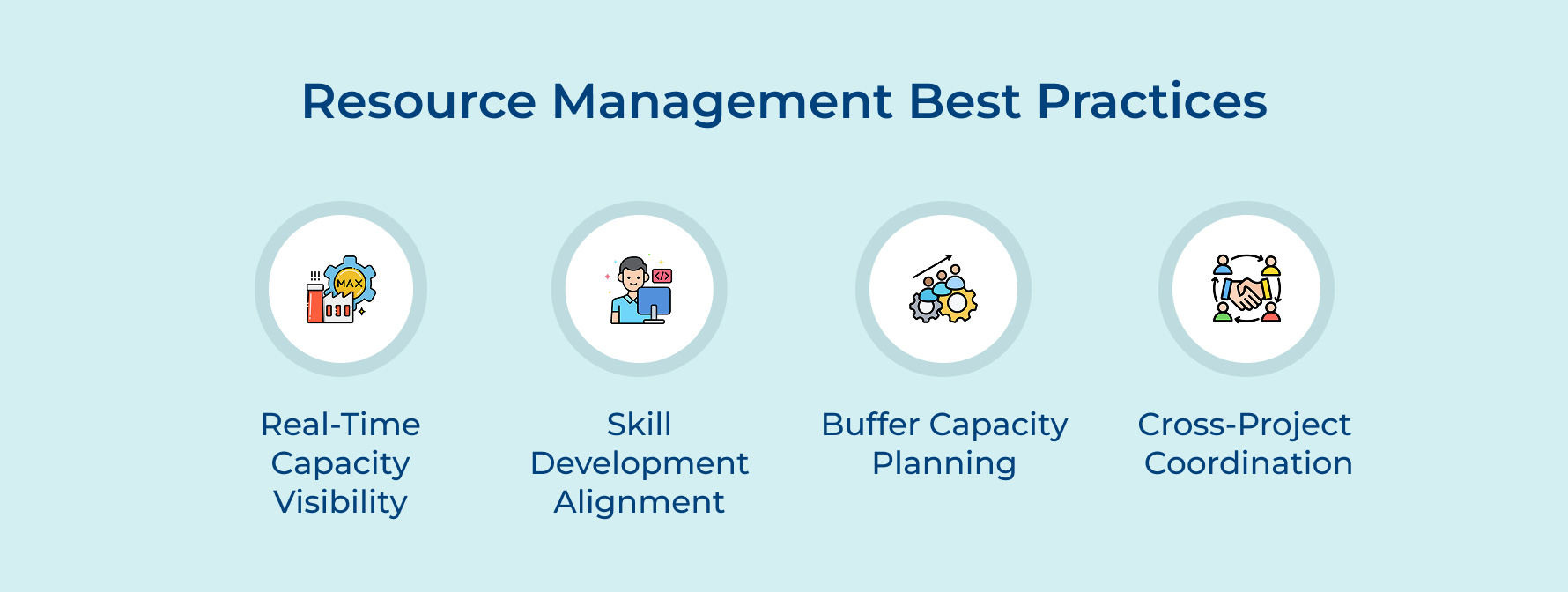
Maintain Real-Time Capacity Visibility
Track current workloads and availability across all team members to make informed allocation decisions based on accurate information. The visibility prevents overcommitting people while identifying opportunities to redistribute work when bottlenecks emerge or priorities shift unexpectedly.
Balance Skills Development with Project Needs
Give team members tasks that push them to grow, but also make sure projects get the right expertise. This way, people learn new skills while projects stay on track. Over time, both employees and the organization benefit from stronger capabilities.
Plan Buffer Capacity for Unexpected Demands
Keep about 15–20% of your team’s time free for sudden requests or new opportunities. The buffer makes it easier to handle surprises without disrupting ongoing work or causing employee burnout. It gives clients quick responses while keeping workloads manageable.
Coordinate Cross-Project Dependencies
Identify situations where multiple projects require the same resources or expertise and coordinate scheduling to prevent conflicts. Early coordination prevents situations where competing deadlines create impossible choices or force teams to compromise on quality standards.
Project Management Vs Resource Management: Choosing the right process for Success
Project management vs resource management serve essential roles in delivering exceptional client outcomes and maintaining sustainable business operations. Project management ensures individual initiatives meet their objectives while resource management optimizes overall organizational capacity and productivity across multiple engagements.
The most successful organizations integrate both approaches rather than choosing one over the other exclusively. This combined strategy creates a framework where specific project goals align with broader resource optimization efforts, resulting in higher profitability and stronger team satisfaction rates.
Limit time — not creativity
Everything you need for customer support, marketing & sales.

Shivank Kasera is part of the marketing team at Kooper, where he focuses on building content that helps agencies and service providers grow. With a keen interest in SaaS, operations, and scalability, he translates practical insights into actionable resources for business leaders.