How to Build a Resourcing Strategy in Actionable 8 Steps?

Key Highlights:
- A structured resourcing strategy aligns business goals with talent allocation, helping agencies scale while reducing overwork and client frustrations.
- Smart resourcing prevents overstaffing, improves profit margins while strengthening client relationships through diversity and inclusion in team allocation.
- Continuous skill development pathways keep your workforce relevant, ensuring long-term growth and resilience against changing market demands.
Many agencies deal with messy resource allocation. Teams end up overworked, deadlines slip and clients feel frustrated.
This way of working drains budgets, leads to wrong hires and pushes good people toward burnout. At the same time, missing the right skills makes it harder to grab the kind of opportunities competitors take with ease.
A structured nine-step resourcing strategy changes all of that. It gives your agency a predictable way to optimize talent and connect staffing choices to business goals. The process also creates room for flexibility, making it easier to scale as your agency grows.
What is a Resourcing Strategy?
A resourcing strategy is your agency’s blueprint for matching the right talent to the right projects at the right time. It determines how you’ll staff current work while building capabilities for future opportunities.
Resourcing strategy operates like a chess game where you’re constantly planning several moves ahead. You analyze upcoming project demands and map them against your team’s skills as well as availability. Then you make strategic decisions about hiring, training, or partnering to fill gaps before they become problems.
Strategic objectives:
- Maximize billable utilization: Keep your talented people working on profitable client projects instead of sitting on the bench.
- Maintain service quality: Ensure every project gets the right expertise level to deliver exceptional results for clients.
- Develop team capabilities: Create growth opportunities that build new skills while serving current business needs.
- Control talent costs: Balance permanent staff with flexible resources to maintain healthy profit margins.
- Reduce project risk: Prevent skill shortages or overcommitments that could derail client deliverables and damage relationships.
Why is a Resourcing Strategy Important?
A well-crafted planning transforms how agencies operate by creating predictable systems for talent management and project delivery. Here are the reasons why all the components of resourcing strategy are important:
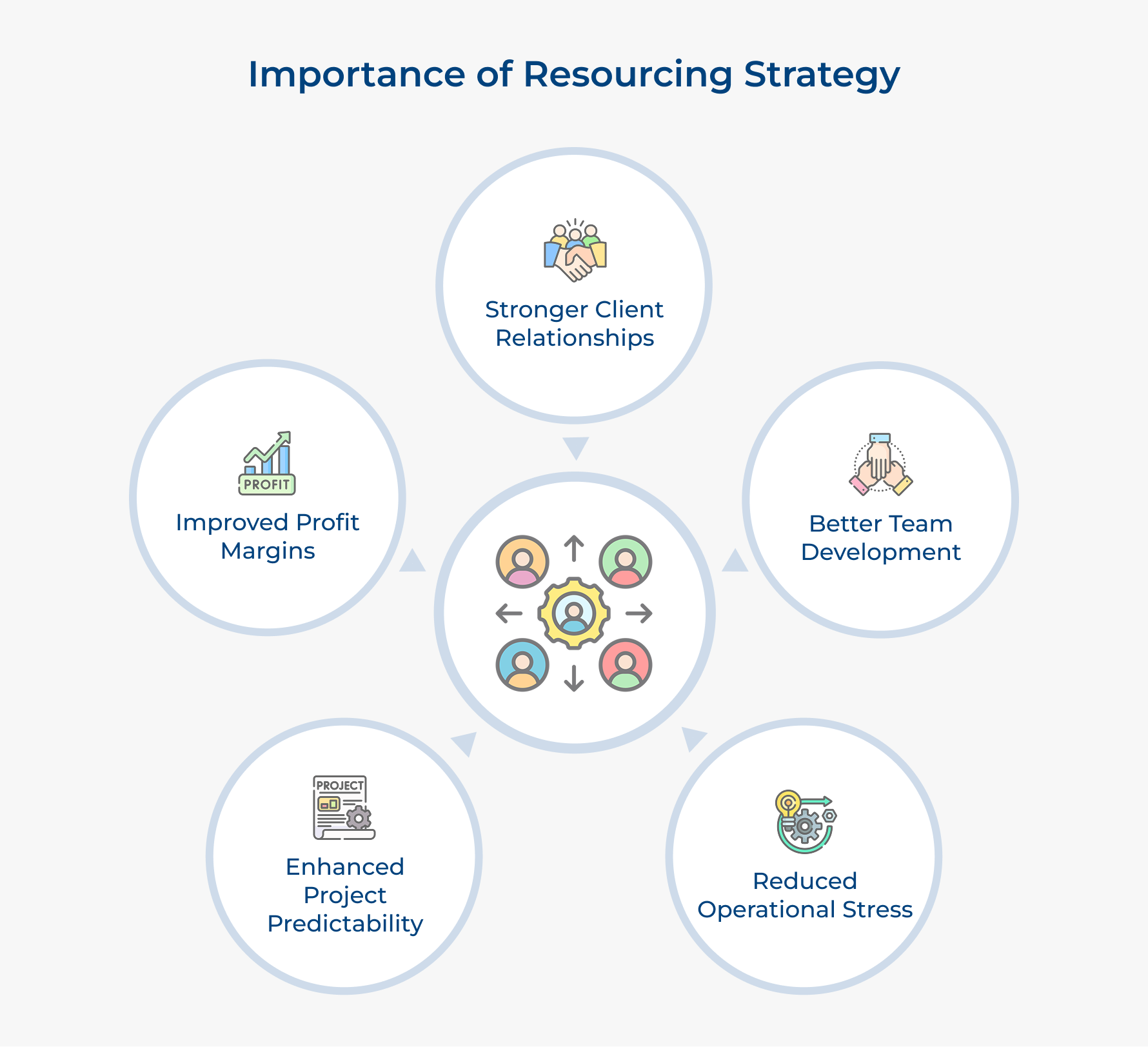
Enhanced Project Predictability
Clear job analysis makes it easier to see who’s available and when. Project timelines stop feeling like guesswork and start becoming reliable. You can commit to deadlines with confidence because talent has already been mapped into the plan. That means fewer panic moments where you discover too late that a key team member is already overbooked.
Improved Profit Margins
Smart resourcing ties directly into organizational strategy. It prevents overstaffing during slower cycles and cuts down the need for expensive last-minute freelancers in peak times. Planning team size on real pipeline data instead of gut instinct ensures labor costs work in sync with revenue.
Stronger Client Relationships
Clients notice the difference when diversity and inclusion are built into resourcing. Projects are matched with the right skills and availability, creating consistent quality. No more assigning junior talent to senior-level work or shifting your best people mid-project. Clients see their priorities being met by a properly allocated team.
Better Team Development
Job analysis also highlights skills gaps before they block growth. This allows you to shape training, mentorship and stretch assignments that build real capability while supporting client work. People see career progression tied to organizational strategy rather than random project allocations.
Reduced Operational Stress
A thoughtful resourcing strategy takes you out of firefighting mode. Project managers anticipate challenges early, focusing on optimizing workflows instead of scrambling for resources. This creates a calmer environment where strategic thinking and inclusive planning replace reactive problem-solving.
How to Build an Effective Resourcing Strategy in 8 Actionable Steps
Let’s guide you through eight essential steps on how to build a resourcing strategy that optimizes performance and drives success in your organization.
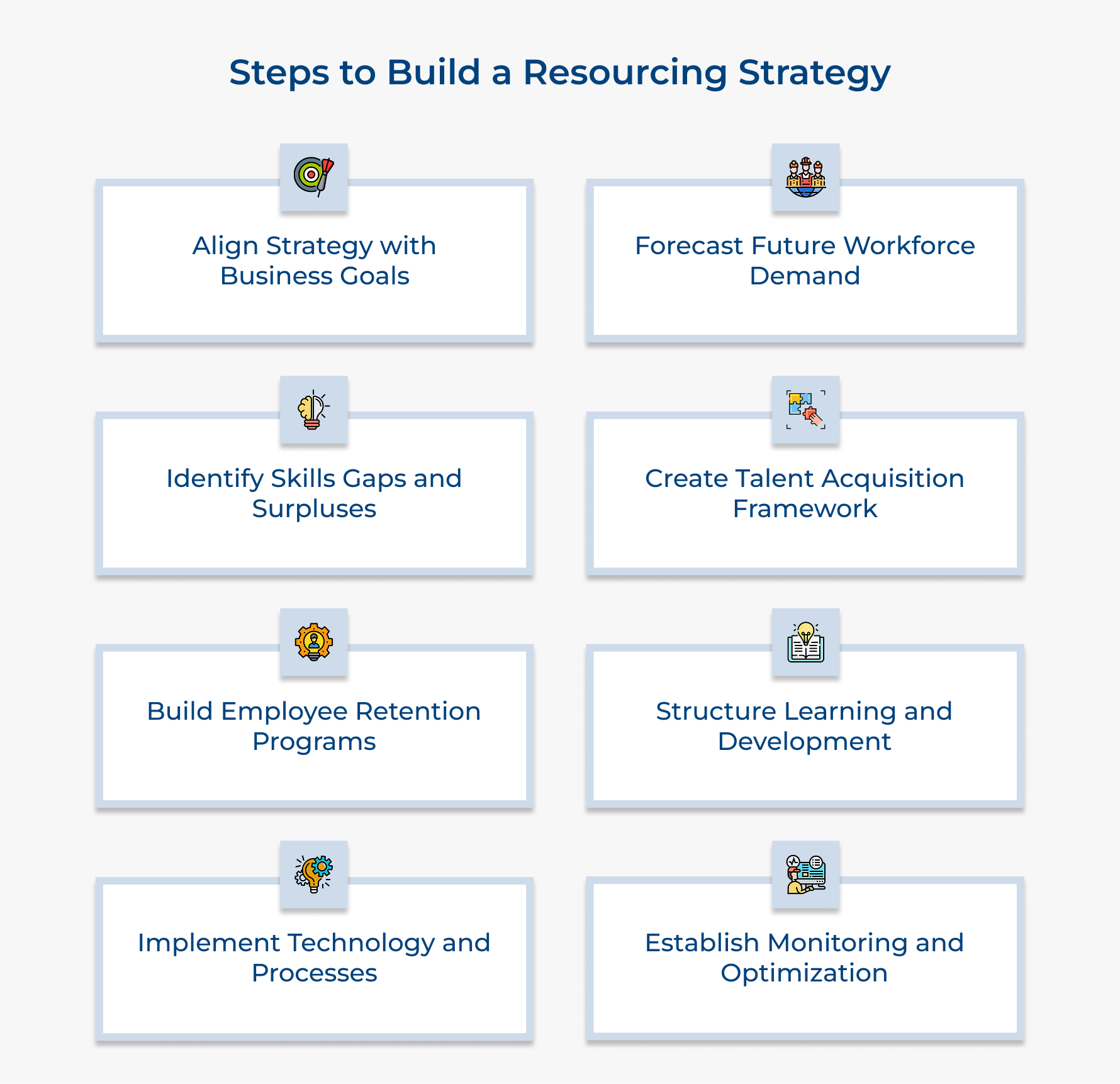
1. Align Strategy with Business Direction
Your objectives of resourcing strategy must mirror where your business is headed otherwise you’ll build the wrong team for tomorrow’s challenges. Without this alignment you risk investing in skills that won’t drive growth or missing talent gaps that could derail your expansion plans.
Here are four key considerations while aligning resourcing strategy with business goals:
- Revenue growth targets: Match your hiring timeline to projected client acquisition and project volume increases.
- Service expansion plans: Build capabilities for new offerings before you need to deliver them to clients.
- Market positioning shifts: Align team skills with your desired reputation whether that’s premium strategy work or cost-effective execution.
- Competitive differentiation: Invest in unique capabilities that set you apart rather than copying what everyone else offers.
Implement it effectively by asking yourself what your business will look like in 18 months. What new services will you offer? Which clients will you serve? Then work backwards to identify which roles and skills you need to hire or develop to make that vision reality.
2. Forecast Future Workforce Demand Patterns
Forecasting workforce demand means predicting how many people with specific skills you’ll need at different times throughout the year. It prevents the expensive scramble of emergency hiring or the profit drain of overstaffing during slower periods.
Here are three effective ways to forecast future workforce demand patterns:
- Pipeline analysis: Track your sales pipeline by service type and projected start dates. Map each opportunity against the specific roles and time commitments required. This gives you concrete data about upcoming resource needs rather than vague estimates.
- Historical pattern review: Analyze your past three years of project data to identify seasonal trends and recurring client cycles. Most agencies have predictable busy periods around budget cycles or industry events that repeat annually with surprising consistency.
- Client roadmap discussions: Schedule quarterly planning sessions with key clients to understand their upcoming initiatives and timeline changes. Clients often know about major projects months before they officially kick off and sharing this intel helps you prepare appropriately.
For example, a marketing agency discovers their retail clients always launch major campaigns in Q3 for the holiday season. By analyzing this pattern they can hire temporary creative staff in summer rather than scrambling in September when everyone else is also recruiting.
3. Identify Skills Gaps and Surpluses
Skills gap analysis shows you the difference between what your team delivers today and what your business will need tomorrow. Without this clarity, you risk overspending on outside help or disappointing clients with the wrong expertise.
Start by asking four simple questions:
- What critical skills are missing for confirmed projects?
- Where do we have too many people with the same skills, creating redundancy?
- How much of each person’s time is billable versus administrative?
- Which skills might fade as technology and market trends evolve?
These questions help you spot immediate staffing risks while also guiding long-term planning.
The aim is to build a skills inventory that’s brutally honest about where you stand now versus where you need to be. Many agencies find they’re rich in execution talent but thin on strategic thinking or the other way around.
Uncover gaps by trying practical approaches like skills matrix audits, post-project reviews, client feedback and competitor benchmarking. Together, these methods highlight both strengths and blind spots.
4. Create Strategic Talent Acquisition Framework
A strategic talent acquisition framework gives your agency a clear, repeatable way to bring in the right people at the right time. Without it, hiring becomes reactive where expensive mistakes happen and you end up with mismatched talent whenever project pressure spikes.
Strong recruitment strategies focus on timing and specialization. Agencies often face unpredictable project cycles, so the framework must balance flexibility with quality standards. To make this work, five elements stand out:
- Clear hiring criteria: Define role requirements around skills, experience and cultural fit.
- Talent pipeline management: Build relationships with potential hires early through networking and industry involvement.
- Hiring timeline coordination: Match recruitment schedules with project start dates and business forecasts.
- Budget allocation planning: Set fair salary ranges and manage recruitment costs.
- Performance measurement systems: Track success rates, retention and time-to-fill.
Employer branding also plays a huge role. In the current competitive market for creative professionals, external recruitment succeeds when candidates see real growth opportunities, engaging projects as well as an inclusive culture reflected across social media and events.
5. Build Comprehensive Employee Retention Programs
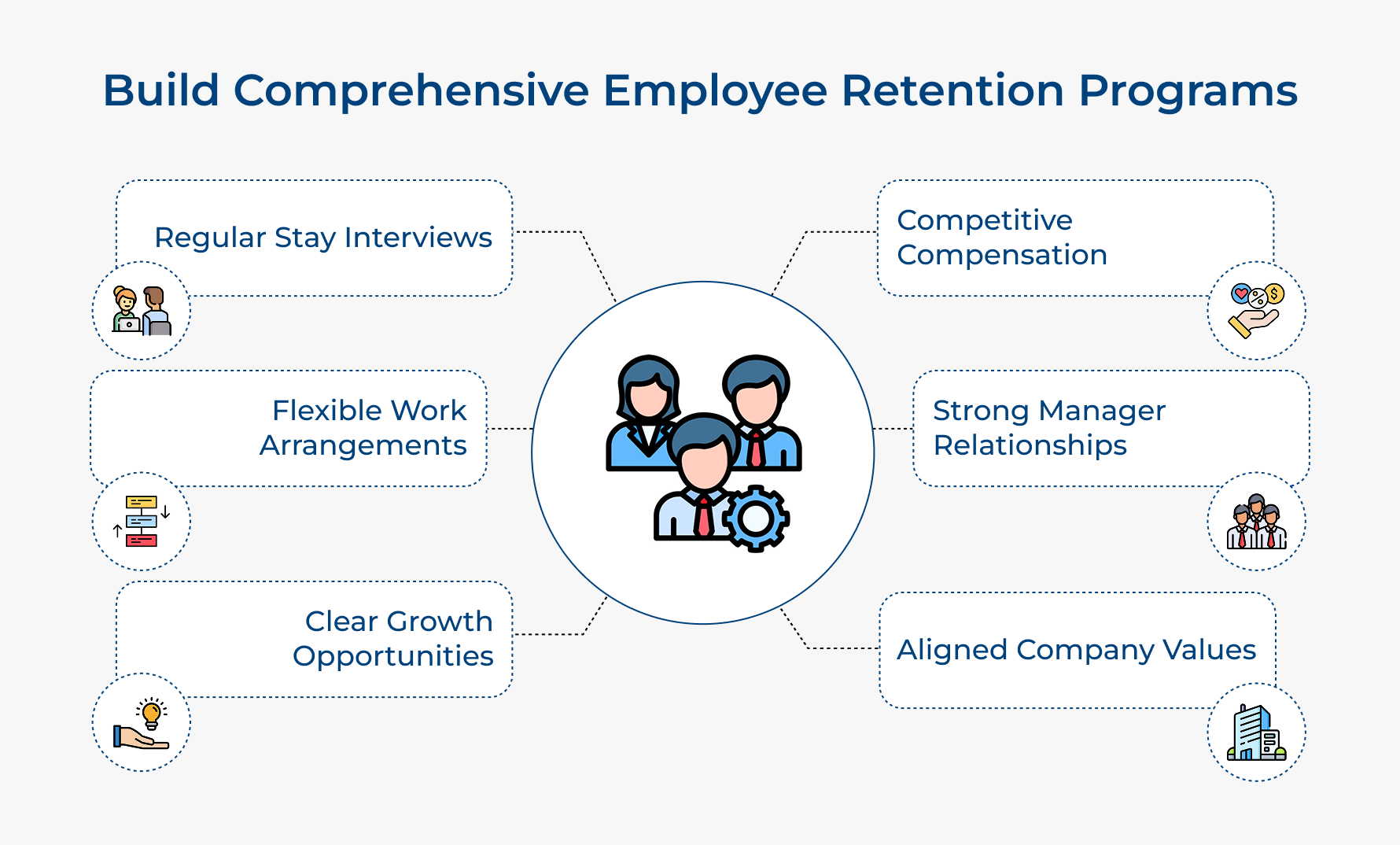
Employee retention programs are structured efforts to keep your best talent engaged and committed to your agency long-term. If you don’t focus on retention, you’ll keep losing experienced team members to competitors. You’ll also waste time and money hiring replacements instead of growing.
Retention programs address core reasons people leave: lack of growth opportunities, insufficient compensation, poor management relationships and company value misalignment. They create positive experiences that make leaving feel like a step backward.
Pro tips:
- Conduct regular stay interviews: Ask valuable employees what keeps them motivated and what might cause them to leave.
- Implement flexible work arrangements: Offer remote options and schedule flexibility helping employees balance personal as well as professional priorities.
6. Structure Continuous Learning and Development
Continuous learning and development keeps your team’s skills sharp as client needs as well as market demands evolve. Skip this and your agency risks falling behind competitors who actively invest in keeping their talent up to date with new trends.
The best way to structure learning is to link it directly to business needs. Map skill development paths to your strategic goals so training dollars actually fuel growth. Career progression charts are a great tool here, they show how mastering certain skills leads to promotions and bigger responsibilities inside your agency.
Most teams benefit from three main pathways:
- Technical specialization: building deep expertise in specific tools or platforms.
- Leadership progression: developing management and client-facing capabilities.
- Cross-functional growth: expanding into multiple service areas for broader impact.
Once you’ve mapped the paths, execution matters. Set aside dedicated budgets and work hours for training. Without time and money reserved, continuous learning stays a nice idea instead of becoming reality.
7. Implement Supporting Technology and Processes
Technology and processes are what turn a resourcing strategy from theory into something that actually works. Relying on spreadsheets wastes time and makes it harder to make smart allocation decisions.
Start by clarifying the problems you’re trying to solve and how resource planning works today. From there, pick tools that fit your existing workflows instead of chasing software just because other agencies use it.
Four types of technology make the biggest impact for project-based businesses:
- Resource management software: shows real-time availability and tracks utilization across the team.
- Project planning platforms: map resource needs during scoping and highlight conflicts early.
- Skills tracking databases: keep updated records of capabilities so matching people to projects is easier.
- Capacity forecasting tools: use historical data to predict staffing needs and guide hiring priorities.
Technology alone isn’t enough. Standard processes (like regular capacity meetings, clear allocation rules and escalation steps) ensure your strategy runs smoothly day to day.
8. Establish Monitoring and Optimization Cycles
Monitoring and optimization cycles keep your resourcing strategy effective as your business evolves. Without regular measurement your strategy becomes outdated policies that hinder growth rather than enable it.
Four key performance indicators monitor resourcing strategy effectiveness:
- Utilization rates: Billable time percentages
- Time-to-fill positions: Hiring speed for critical roles
- Employee retention rates: How long people stay
- Project delivery consistency: On-time completion percentages
These KPIs reveal if your strategy improves business outcomes and help you spot problems early for data-driven adjustments. Scheduling regular review periods becomes essential because conditions shift constantly. Quarterly reviews should examine what’s working and what adjustments maintain alignment with business goals.
Creating feedback loops from project outcomes means systematically learning from completed engagements to improve future decisions. Ask four essential questions:
- Did we assign the right skill levels?
- What conflicts slowed delivery?
- Which members exceeded expectations?
- What would we do differently?
Best Practices to Improve Resourcing Strategy
Strategic resourcing isn’t a set-it-and-forget-it activity but requires ongoing refinement through proven practices. These approaches help agencies transform their talent management from reactive scrambling into proactive competitive advantage.
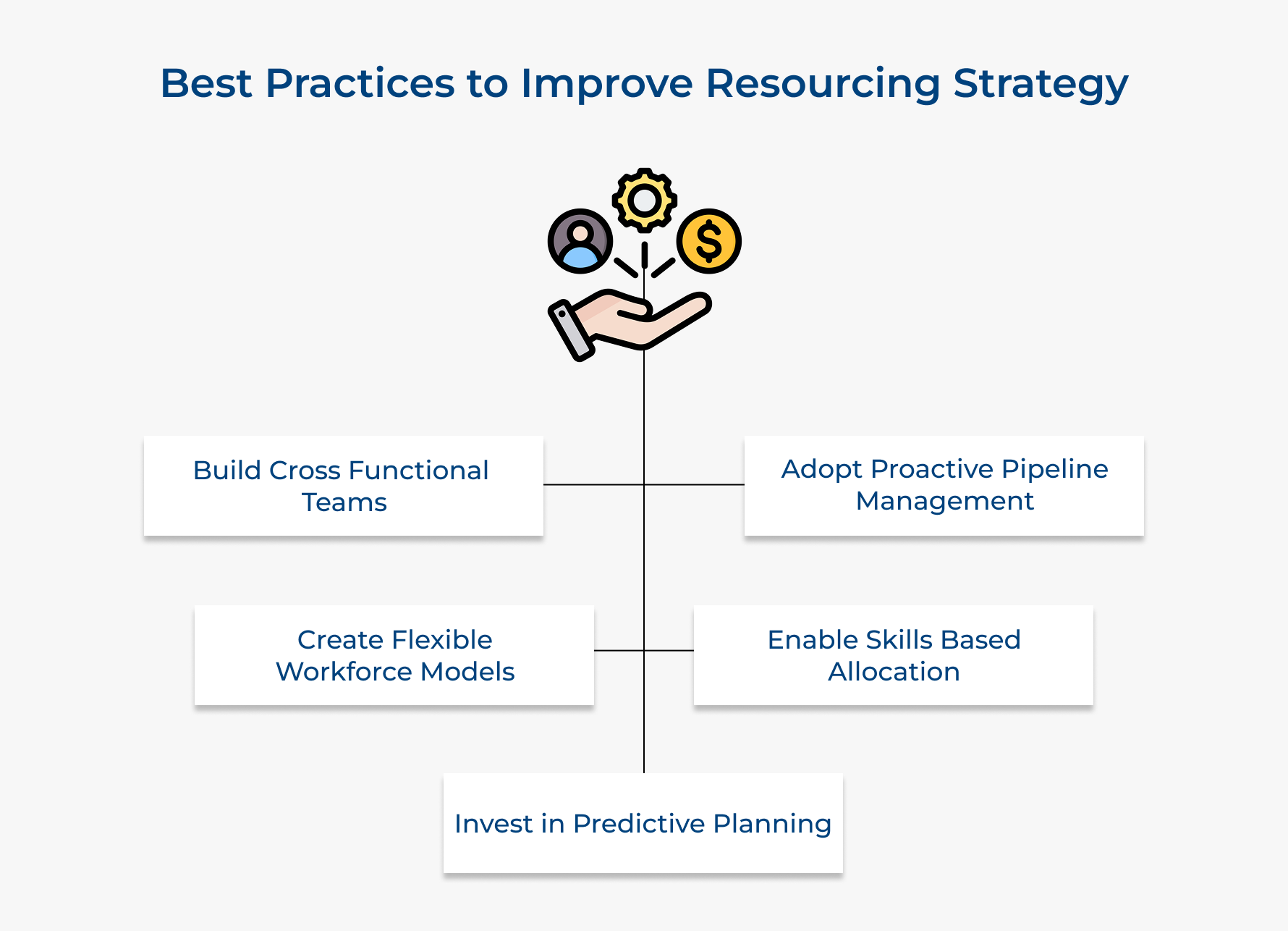
1. Build Cross-Functional Team Capabilities
Cross-functional capabilities mean training your team members to handle multiple types of work rather than staying locked in narrow specializations. This flexibility prevents bottlenecks when your star designer is overbooked while junior staff sit idle waiting for appropriate assignments.
Key areas to develop cross-functional skills include:
- Technical skills that complement primary expertise
- Client communication abilities across all team levels
- Project management fundamentals for individual contributors
The goal isn’t creating generalists who do everything poorly but developing T-shaped professionals with deep expertise in one area plus broad competencies elsewhere. The approach dramatically improves your scheduling flexibility while creating more engaging career paths that keep talented people from getting bored with repetitive work.
2. Implement Proactive Pipeline Management
Pipeline management involves tracking potential projects months before they become official contracts and planning resource allocation accordingly. Most agencies react to signed deals but smart ones prepare for likely opportunities while they’re still in proposal stages.
This practice requires building strong relationships with sales teams and key clients to understand upcoming needs before competitors even know opportunities exist. You can start preparing teams as well as begin preliminary research while others are still waiting for RFPs to hit the market.
3. Create Flexible Workforce Models
Flexible workforce models combine permanent staff with contractors, freelancers and partnership arrangements to match capacity with demand fluctuations. Consider it as creating an accordion that expands during busy periods and contracts when work slows without damaging your core team.
Important considerations for workforce flexibility include:
- Maintaining quality standards across different worker types
- Building reliable networks of trusted external talent
- Creating seamless onboarding processes for temporary additions
The key is identifying which roles require permanent employees for continuity and client relationships versus which functions can be handled effectively by skilled contractors. This strategic mix lets you maintain lean overhead while scaling up quickly for large projects or seasonal demand spikes.
4. Establish Skills-Based Resource Allocation
Skills-based allocation means matching people to projects based on specific capabilities rather than availability alone. It ensures clients get the right expertise level while preventing overqualified team members from getting frustrated with work below their skill level.
Create detailed skills matrices that go beyond job titles to capture actual competencies, experience levels and learning interests. Update these quarterly during performance reviews and use them as your primary tool for project staffing decisions rather than defaulting to whoever seems free.
Critical elements for skills-based allocation include:
- Regular capability assessments and skill gap analysis
- Clear project requirements definition during scoping phase
- Transparent communication about growth opportunities through challenging assignments
5. Invest in Predictive Resource Planning
Predictive planning uses historical data and market trends to forecast resource needs weeks or months ahead rather than reacting to immediate demands. The planning transforms resourcing from constant firefighting into strategic workforce development that supports business growth.
Start by analyzing your past two years of project data to identify patterns in timing, skill requirements and capacity utilization. Most agencies discover their workload follows predictable cycles tied to client budget periods, industry events or seasonal factors that repeat annually with surprising consistency.
Resourcing Strategy: Empowering your Workforce for Success
A well-executed resourcing strategy transforms your agency from reactive talent management into proactive workforce optimization that drives sustainable growth. It creates the foundation for delivering consistent client value while building team capabilities that support long-term business objectives.
Remember that effective resourcing isn’t about perfect planning but about creating flexible systems that adapt to changing demands. Start with one or two practices that address your biggest current challenges then gradually build a comprehensive approach that empowers your workforce for sustained success.
Limit time — not creativity
Everything you need for customer support, marketing & sales.

Shivank Kasera is part of the marketing team at Kooper, where he focuses on building content that helps agencies and service providers grow. With a keen interest in SaaS, operations, and scalability, he translates practical insights into actionable resources for business leaders.