How to Create a Resource Allocation Plan? 7 Best Steps
- What is a Resource Allocation Plan?
- Benefits of an Effective Resource Allocation Plan
- How To Create A Resource Allocation Plan in 7 Actionable Steps?
- Top 5 Features of a Resource Allocation Plan
- Effective Strategies for Resource Allocation in Projects
- Resource Allocation Plan Examples in Different Projects
- Simplify Project Management with a Strategic Resource Allocation Plan
- FAQs about How to Create a Resource Allocation Plan

Key Highlights:
- Discover how to create resource allocation plan that reduces bottlenecks, balances workloads and maximizes every project’s success.
- Learn practical steps and strategies on how to create resource allocation plans with steps as well as examples.
- Building an effective resource allocation plan ensures smarter scheduling, higher productivity and stronger project outcomes.
Project managers often face the headache of chaotic resource distribution—missed deadlines, overworked team members and frustrated clients questioning your agency’s reliability.
When there’s no clear resource plan, your top talent gets stretched too thin while others stay underutilized. But, this doesn’t have to be your reality. With the right strategy, you can turn chaos into smooth workflows where every team member knows their role and deliverables.
If you’ve been wondering how to create a resource allocation plan that actually works, you’re in the right place. Let’s walk through seven proven steps to build effective plans that balance workloads, improve efficiency and keep clients confident in your delivery.
What is a Resource Allocation Plan?
A resource allocation plan is your strategic roadmap for distributing people, time, budget and tools across client projects. It maps out who does what, when they do it and what resources they need to deliver successful outcomes.
When agencies nail their resource allocation, projects flow smoother and clients stay happier. Your agency can take on more projects without chaos, deliver better quality work and build stronger client relationships through consistent performance as well as reliable delivery timelines.
Strategic objectives for resource allocation:
- Maximize billable hours: Ensure team members spend optimal time on revenue-generating client work rather than internal tasks.
- Prevent resource conflicts: Avoid double-booking team members or competing demands that could derail project timelines.
- Match skills to requirements: Assign people with the right expertise to tasks where they’ll be most effective and efficient.
- Optimize capacity utilization: Balance workloads so no one is overwhelmed while others sit idle, maintaining steady productivity.
- Maintain project profitability: Control costs by using appropriate skill levels for tasks and avoiding expensive overtime or rushed deliveries.
Benefits of an Effective Resource Allocation Plan
Smart resource allocation transforms chaotic project environments into well-orchestrated operations. When you strategically distribute your team’s skills and time, every project element works together harmoniously.
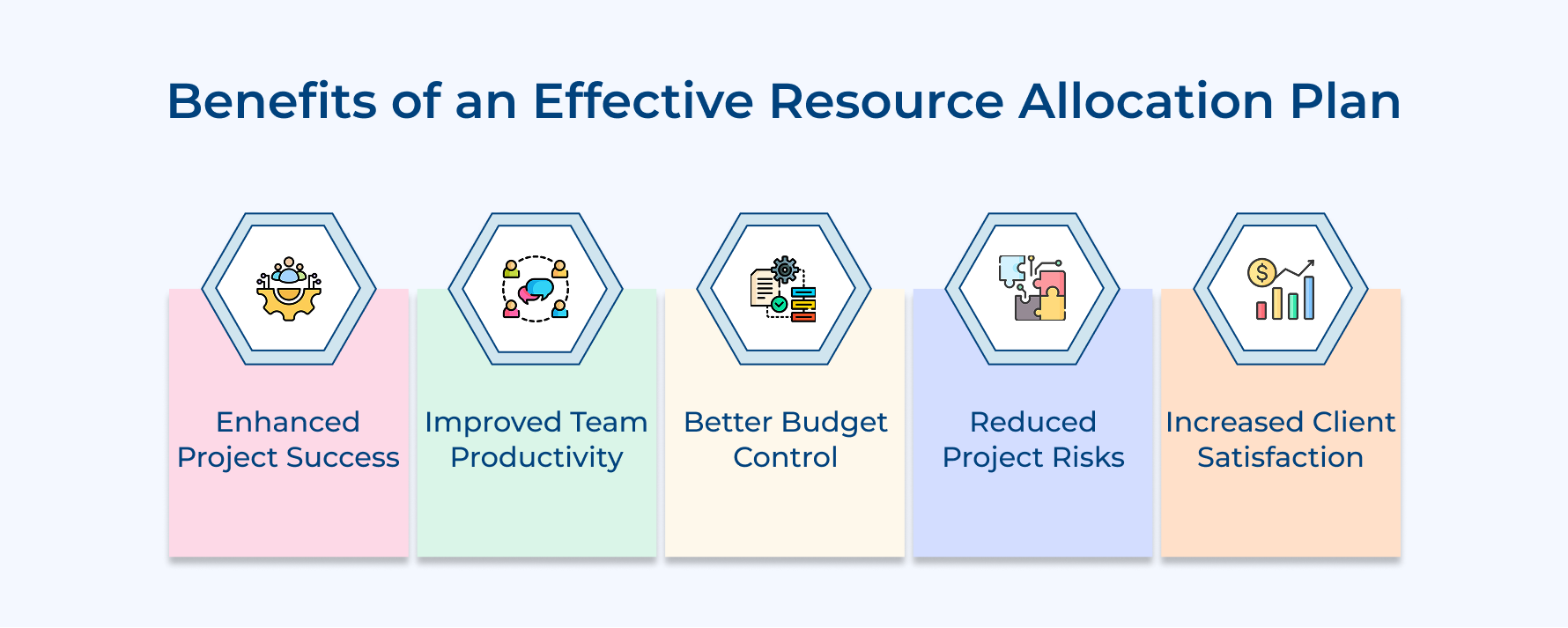
Enhanced Project Success Rates
Good resource allocation helps projects finish on time, within scope and budget. The right people on the right tasks prevent delays and scope creep.
Improved Team Productivity
Strategic planning matches skills to tasks. Developers focus on coding, designers handle visuals and everyone works in their strength zone.
Better Budget Control
Smart allocation avoids wasted resources and costly overtime. You use internal talent well while preventing idle time that burns project funds.
Reduced Project Risks
Planning ahead helps spot bottlenecks and skill gaps early. This allows you to fix conflicts, dependencies and capacity issues before they delay work.
Increased Client Satisfaction
Steady progress and reliable delivery build client trust. Predictable outcomes show clients that your agency is capable as well as dependable.
How To Create A Resource Allocation Plan in 7 Actionable Steps?
Let’s walk you through several crucial steps to develop an effective resource allocation plan that maximizes your team’s potential and keeps every project on track.
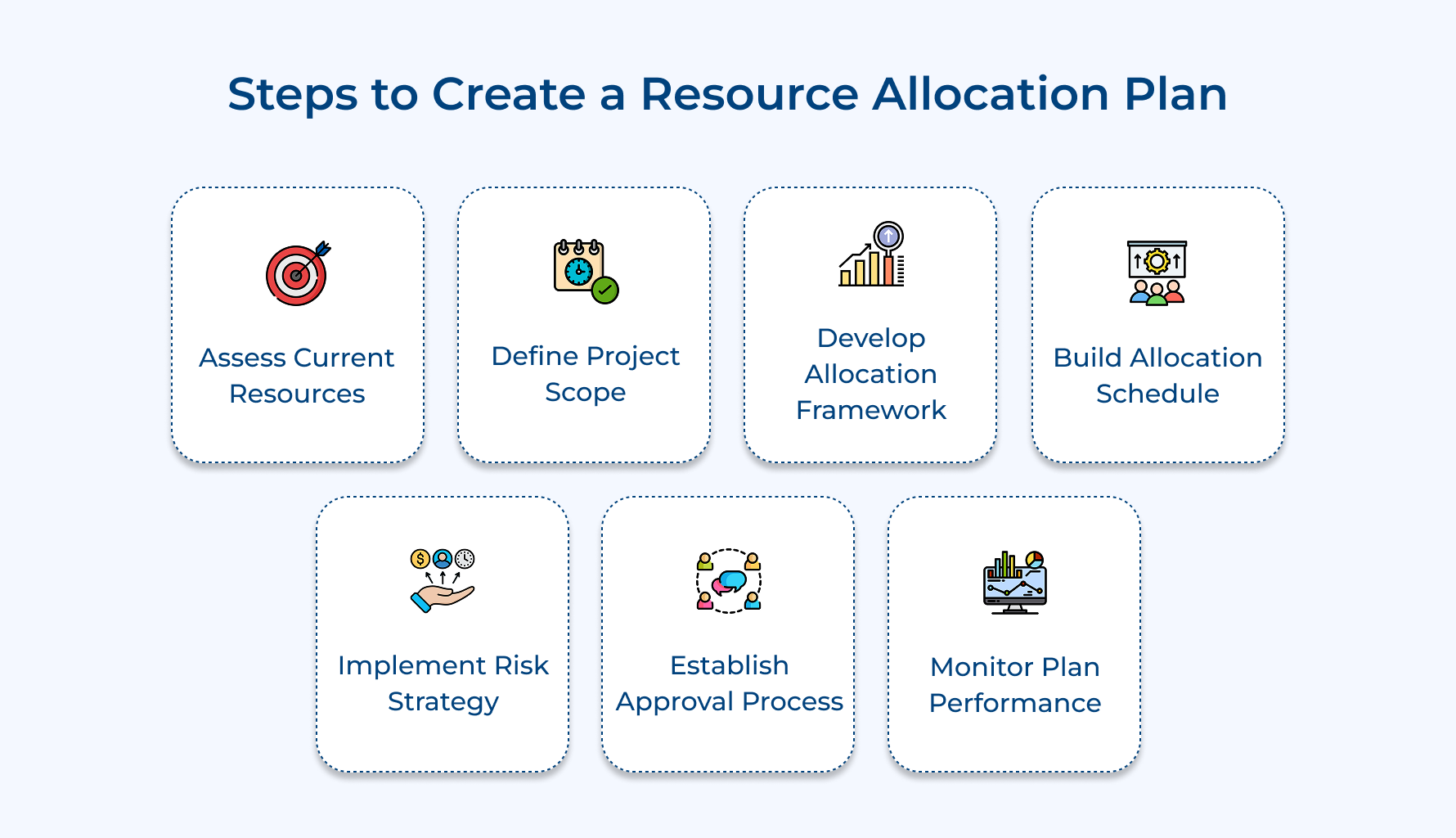
1. Assess Current Resource Inventory Thoroughly
Good project planning starts by knowing exactly what resources are available. Without this step, resource scheduling becomes a guessing game, leading to missed deadlines and unbalanced workloads. A complete inventory helps you track resources and create realistic project schedules.
Key areas to assess include:
- Human resources: List your team members, their core skills, past experience and availability. This prevents overloading some while others sit idle.
- Technology infrastructure: Record software licenses, project management tools, design platforms and any specialized systems used for execution.
- Physical assets: Track devices, servers, testing tools and other hardware needed for delivery.
- Financial capital: Note budgets, reserves, contractor costs and subscriptions so you don’t overspend.
- Intellectual property: Include templates, best practices and historical insights to speed up work.
Why it matters:
- You avoid assumptions and base allocation of resources on facts.
- Past usage trends reveal bottlenecks.
- Strong resource leveling keeps workloads balanced and prevents burnout.
This foundation ensures smoother project planning and consistent delivery.
2. Define Comprehensive Project Scope Requirements
Once you know your resources, the next step in project planning is defining the project scope. Without a clear scope, resource scheduling is inaccurate and you may misalign skills with actual needs. A defined scope ensures proper allocation of resources to the right tasks.
Ways to define scope effectively:
- Work breakdown structure (WBS): Break large deliverables into smaller, manageable tasks. This gives visibility into resource requirements at every stage.
- Stakeholder input: Interview stakeholders to capture both direct needs and hidden expectations.
- Historical analysis: Review similar past projects to anticipate scope creep and recurring challenges.
Why it matters:
- Ensures resource leveling by aligning tasks with skills.
- Keeps the project schedule realistic and avoids last-minute adjustments.
- Makes allocation of resources more efficient by identifying exact needs upfront.
For example, in a web project, defining whether SEO or mobile responsiveness is included helps avoid misallocating designers or developers. Scope clarity ensures smoother project planning and on-time delivery.
3. Develop Strategic Resource Allocation Framework
When there is scope in place, you need a framework to guide decisions. Without it, allocation of resources becomes reactive, causing conflicts and project delays. A framework ensures consistent resource scheduling across projects.
Questions to shape your framework:
- Which project phases need critical skills and should get priority?
- How will you resolve conflicts if multiple projects require the same specialist?
- When should resources shift from low-priority to high-priority tasks?
- How can you balance workload while keeping the project schedule intact?
Why it matters:
- Provides a standard approach for allocation of resources.
- Supports resource leveling so workloads are balanced.
- Reduces conflicts and keeps project planning structured.
Implementation tips:
- Use decision trees to map allocation choices.
- Create escalation rules for urgent conflicts.
This framework transforms resource scheduling from guesswork to a strategic process, ensuring projects progress smoothly without overburdening your team.
4. Build Detailed Resource Allocation Schedule
Even with a solid framework, your project schedule can fail without a clear timeline. A resource allocation schedule turns plans into action by showing who does what and when. This is where resource scheduling and resource leveling play a major role.
Steps to build your schedule:
- Map each team member’s availability against project milestones.
- Track vacations, training days and other commitments.
- Record existing project work to prevent double-booking.
- Factor in company-wide activities that reduce available time.
Why it matters:
- Creates predictability in allocation of resources.
- Helps you track resources effectively over the project lifecycle.
- Supports realistic project planning by showing workload constraints upfront.
Tip: Use visual timelines or project management software to make resource scheduling transparent. With this clarity, your team avoids last-minute rushes, understands their deadlines and keeps the project schedule steady.
5. Implement Risk-Based Resource Distribution Strategy
Not all tasks in a project carry the same weight. Risk-based planning ensures that critical tasks get the right people and that backup plans exist for disruptions. This keeps your project schedule safe from unexpected delays.
Proven strategies include:
- Critical path protection: Assign skilled resources to tasks that directly impact deadlines. Add backups for reliability.
- Skill-based mitigation: Cross-train team members on niche skills or secure external experts in advance.
- Phased commitments: Allocate resources in stages to maintain flexibility for changing conditions.
Why it matters:
- Prevents bottlenecks during high-impact project phases.
- Supports resource leveling by spreading work logically.
- Strengthens allocation of resources by accounting for risks.
Bonus tip: While protecting critical work, balance opportunities for team growth. This avoids knowledge silos and ensures project planning builds stronger teams for future projects.
6. Establish Resource Allocation Approval Process
Allocation of resources can become inconsistent and misaligned with priorities when there’s an oversight. A formal approval process ensures resource scheduling decisions support business goals and the project schedule.
Best practices include:
- Approval templates: Create standard forms with predefined criteria to speed decisions.
- Escalation paths: Define how urgent allocation requests get fast-tracked.
- Stakeholder reviews: Ensure resource plans align with project planning and organizational priorities.
Why it matters:
- Prevents unauthorized commitments that disrupt the project schedule.
- Keeps allocation of resources transparent and accountable.
- Supports resource leveling by ensuring workloads are validated before approval.
This step acts as quality control. Instead of leaving resource scheduling to chance or politics, every decision goes through the right channels. This builds trust among stakeholders and keeps your project planning structured.
7. Monitor Resource Allocation Plan Performance
A resource allocation plan is not static, it needs continuous tracking and adjustments. Without monitoring, your allocation of resources can quickly become outdated, hurting the project schedule.
Key metrics to track resources include:
- Resource utilization rate – are resources fully used or underutilized?
- Schedule variance – is work progressing as planned?
- Task completion velocity – how quickly are tasks being finished?
- Team capacity balance – is the workload spread evenly?
Why it matters:
- Identifies emerging bottlenecks before they become major issues.
- Improves resource scheduling accuracy in future projects.
- Ensures resource leveling remains balanced throughout execution.
Practical tips:
- Hold regular review meetings to evaluate allocation.
- Adjust assignments in real time when workloads shift.
- Reallocate underused resources to high-demand areas.
Here you keep allocation flexible, protect the project schedule and strengthen project planning for long-term success.
Top 5 Features of a Resource Allocation Plan
A well-designed resource allocation plan serves as your project’s strategic blueprint for distributing talent and assets. Understanding these core features helps you build allocation plans that work effectively.
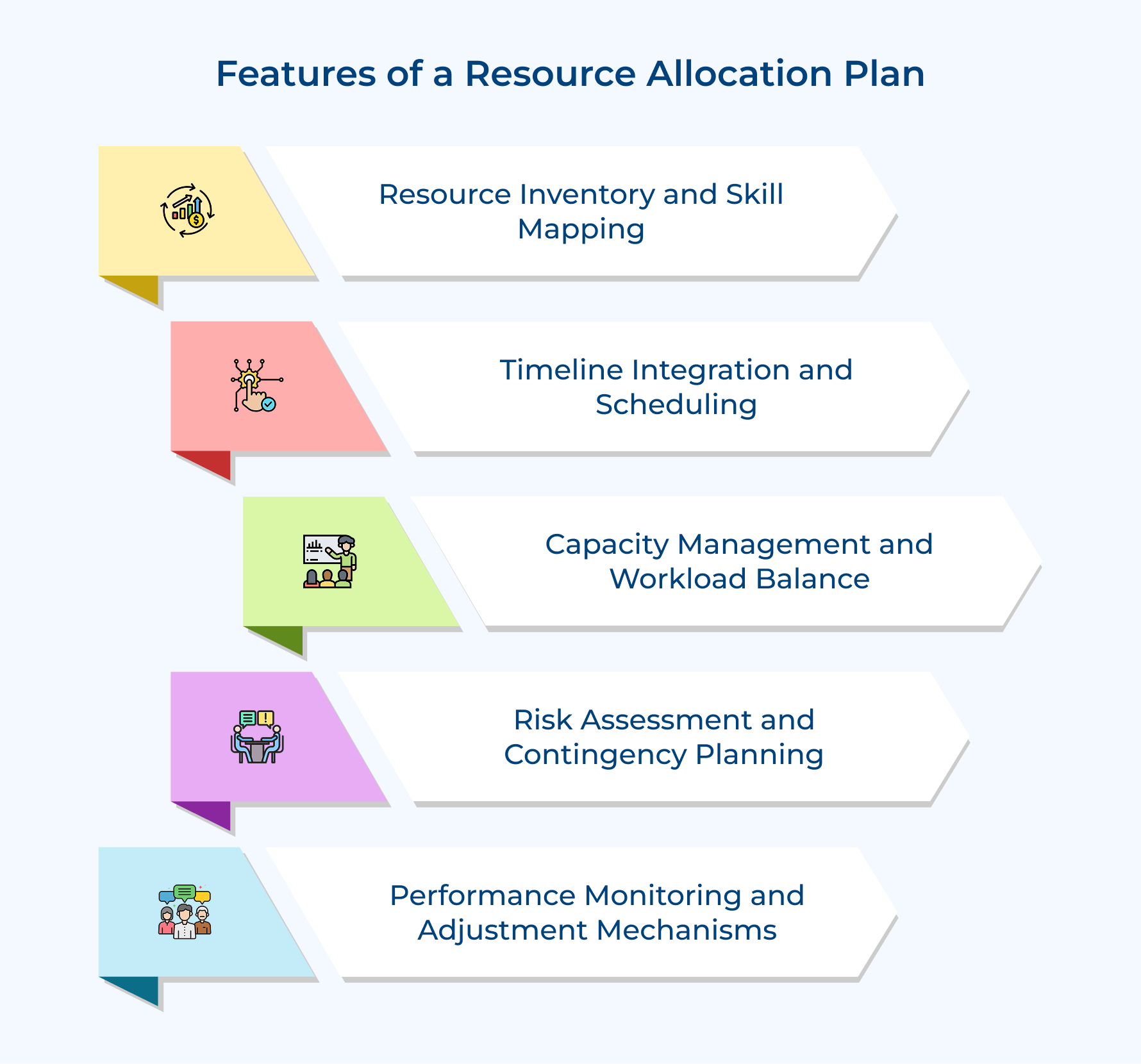
Resource Inventory and Skill Mapping
Start by documenting all available resources in detail. List your team members, their skills, availability and current workload. This becomes your resource database. It helps match the right people to the right tasks based on expertise. When needed, you can also identify where additional resources might be required.
Timeline Integration and Scheduling
A strong resource schedule connects assignments with project milestones. It ensures the right tasks get attention at the right time. Mapping out when each person is available helps prevent conflicts. It also highlights task dependencies that can impact the overall flow of work.
Capacity Management and Workload Balance
Track how much work each team member can realistically handle. This avoids burnout and maintains quality. A good resource schedule accounts for current commitments, upcoming tasks and potential need for additional resources.
Risk Assessment and Contingency Planning
Identify risks early, such as overloaded team members or missing skills. Create backup plans to handle these risks. This could include cross-training, external experts, or additional resources for high-risk phases.
Performance Monitoring and Adjustment Mechanisms
Track resources regularly to see if planned assignments match actual work. Monitor task dependencies and workloads. Update the resource schedule in real time when the project needs to shift. This makes your plan flexible and reliable.
Effective Strategies for Resource Allocation in Projects
Beyond the fundamental features of resource allocation planning, these advanced strategies help you optimize resource distribution for maximum project impact.
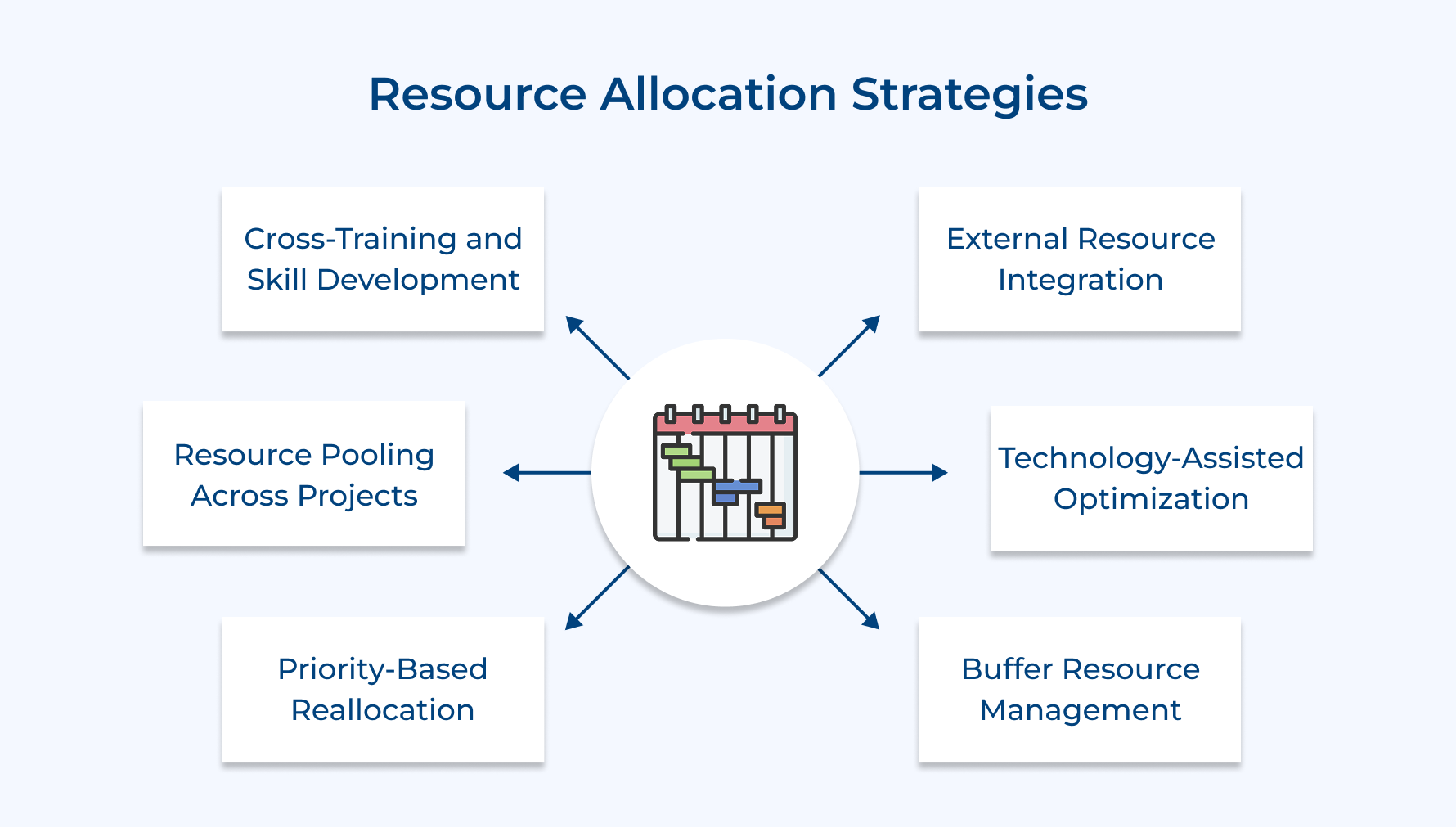
- Cross-training and skill development strategy: Develop multiple team members who can handle similar tasks to create flexible resource pools. This reduces dependency on individuals and creates backup capabilities.
- Resource pooling across multiple projects: Share resources strategically between projects to maximize utilization while maintaining quality standards. This works when projects have different peak demand periods.
- Priority-based dynamic reallocation: Establish clear criteria for shifting resources between tasks based on changing priorities and emerging needs. This ensures critical work receives adequate attention.
- External resource integration planning: Develop relationships with freelancers and contractors who can supplement your internal team during peak periods. This provides scalability without permanent hiring.
- Technology-assisted resource optimization: Leverage project management software to automate allocation decisions and identify optimization opportunities. These tools analyze scenarios and suggest improvements.
- Buffer resource management: Maintain strategic reserve of flexible resources for unexpected challenges or opportunities. This prevents minor disruptions from becoming major delays.
Resource Allocation Plan Examples in Different Projects
These real-world examples demonstrate how agencies and professional service firms adapt resource allocation principles to their unique project requirements.
Digital Marketing Agency: Multi-Channel Campaign Launch
This agency creates their allocation plan by mapping campaign phases against specialist skills, ensuring creative teams handle brand development while analytics experts focus on performance tracking. They allocate senior strategists to conception and junior members to execution based on complexity.
The structured approach eliminates last-minute scrambling and ensures consistent campaign quality across client touchpoints. Clients receive seamless service where each element receives appropriate expertise, resulting in stronger messaging and improved performance.
Software Development Agency: Enterprise Application Development
The development agency structures their plan by matching technical expertise with specific modules, ensuring database specialists handle backend architecture while UX designers focus on interface components. They coordinate frontend and backend timelines to prevent integration bottlenecks.
Coordinated allocation prevents technical dependencies from becoming roadblocks and ensures each component receives appropriate specialist attention. Clients benefit from faster cycles, fewer issues and applications that integrate seamlessly across functional areas.
Legal Services Firm: Corporate Merger Documentation
The law firm organizes their plan by assigning senior partners to negotiation strategy while distributing document review among associates based on specialization areas. They ensure regulatory experts handle compliance while transaction specialists focus on deal structure.
This expertise-based allocation ensures comprehensive legal coverage while maintaining cost efficiency through appropriate seniority matching. Clients receive thorough protection with faster turnaround times, as each aspect receives attention from attorneys with relevant experience.
Simplify Project Management with a Strategic Resource Allocation Plan
Strategic resource allocation planning transforms chaotic project environments into well-orchestrated operations where every team member understands their role, timing and deliverables. This systematic approach eliminates guesswork and creates predictable workflows that consistently deliver results.
Effective resource allocation plans serve as your project’s navigation system, guiding decisions about talent distribution, timeline management and capacity optimization. When you master these planning principles, project management becomes less stressful and more successful.
Limit time — not creativity
Everything you need for customer support, marketing & sales.

Shivank Kasera is part of the marketing team at Kooper, where he focuses on building content that helps agencies and service providers grow. With a keen interest in SaaS, operations, and scalability, he translates practical insights into actionable resources for business leaders.