How to Write Clear Project Objectives for Successful Project
- What are Project Objectives in Project Management?
- Key Benefits of Project Management Objectives
- 6 Essential Types of Project Objectives
- 8 Effective Tips and Best Practices for Writing Project Objectives
- Common Examples of Project Objectives to Consider
- Transform Visions into Reality with Clear Project Objectives
- FAQs about Project Objectives

Key Highlights:
- Clear project objectives guide teams, improve focus and ensure every task aligns with organizational strategy for measurable results.
- Using SMART criteria and stakeholder input creates actionable, time-bound objectives that drive successful project completion and resource efficiency.
- Documenting dependencies, tracking metrics along with reviewing objectives during the project lifecycle ensures alignment, accountability and predictable outcomes.
Many project managers struggle with writing clear objectives that actually guide their teams toward success. Vague or poorly constructed objectives lead to confusion, missed deadlines and frustrated stakeholders who can’t measure real progress.
Ill-defined objectives lead to your projects drifting aimlessly while teams waste time on activities that don’t contribute to meaningful outcomes. Stakeholders lose confidence when they can’t see tangible results from their investment.
Learning to craft effective project objectives using proven frameworks transforms chaotic projects into focused endeavors that deliver measurable value. This guide provides practical techniques and real examples to master objective writing skills.
What are Project Objectives in Project Management?
Project objectives are specific and measurable outcomes that define what your project will accomplish within a set timeframe. They transform broad project visions into concrete targets that guide every decision and action your team takes throughout the project lifecycle.
Project Objectives vs Project Goals
Project goals represent the bigger picture – the overarching purpose or vision behind your project.
They answer the “why” question and often connect to broader organizational strategies or long-term aspirations that may extend beyond a single project.
Project objectives are the specific stepping stones that help you reach those goals. They break down the broad vision into actionable and time-bound targets that your team can directly work toward as well as measure during project execution.
Key factors:
- Specificity: Your objectives must clearly define what exactly will be delivered without any room for interpretation or confusion.
- Measurability: Include concrete metrics or criteria that allow you to track progress and determine when the objective is fully completed.
- Achievability: Set realistic targets that challenge your team while remaining within the bounds of available resources and constraints.
- Relevance: Ensure each objective directly contributes to your project goals and aligns with broader organizational priorities.
- Time-bound nature: Attach specific deadlines or timeframes that create urgency and help prioritize tasks throughout the project timeline.
Key Benefits of Project Management Objectives
Setting clear project objectives transforms how teams approach their work. They create structure and purpose that drives successful project completion.
Before diving into the benefits, let’s explore these fundamental questions:
- How do project objectives influence team decision-making throughout the project lifecycle?
- What role do objectives play in stakeholder communication and expectation management?
- How do well-defined objectives impact resource allocation and budget planning?
- What happens to project success rates when objectives are unclear or missing?
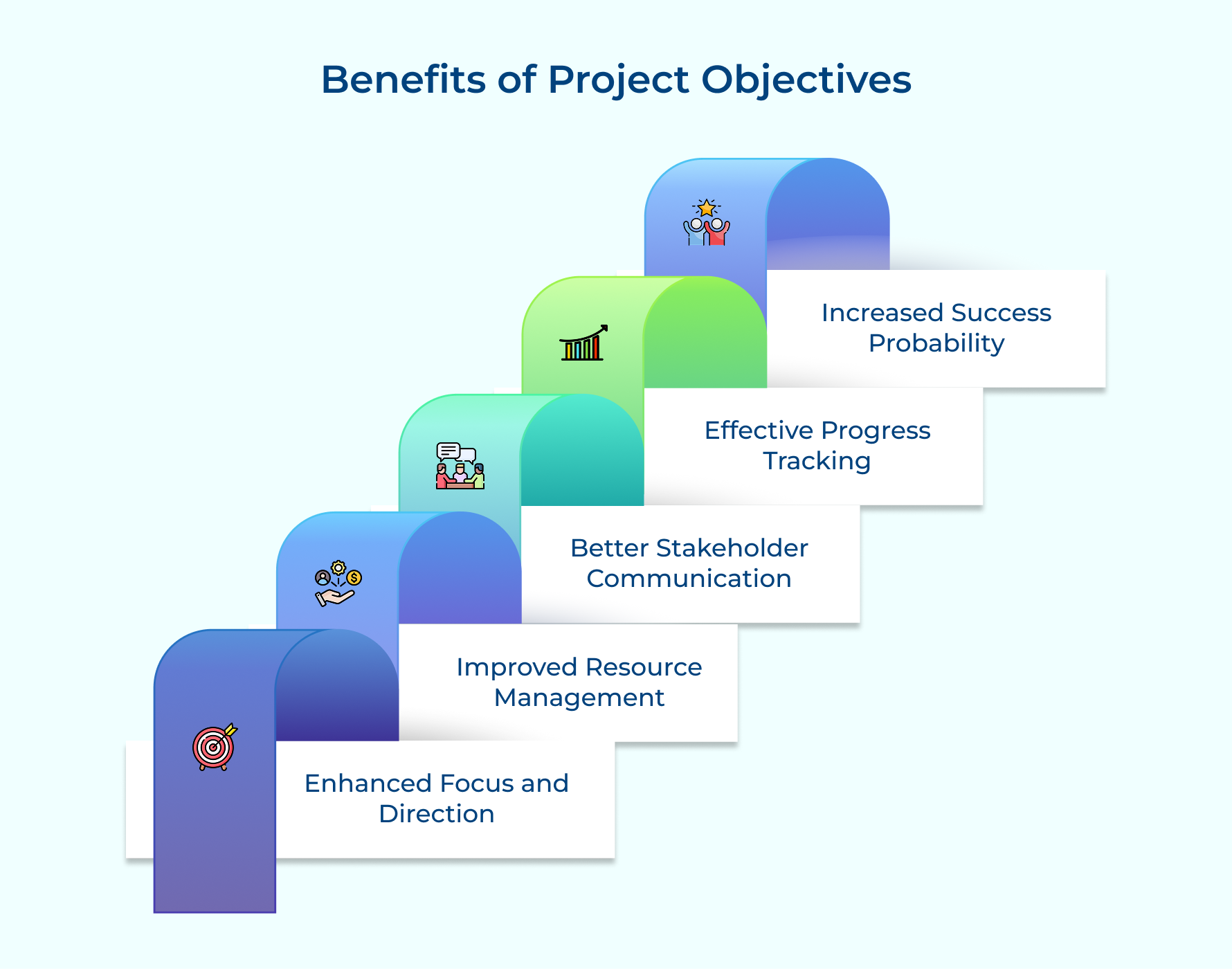
Enhanced Focus and Direction
Project strategic objectives eliminate confusion by providing a clear outline that keeps everyone aligned on priorities. Teams waste less time on irrelevant activities when they understand exactly what needs to be accomplished.
Improved Resource Management
Clear objectives help project managers allocate budget and personnel more effectively by identifying critical tasks. The targeted approach prevents resource waste and ensures maximum return on investment throughout the project.
Better Stakeholder Communication
Well-defined objectives create a common language that stakeholders can easily understand and support. Regular progress updates become more meaningful when measured against specific and measurable targets.
Effective Progress Tracking
Objectives provide concrete milestones that make it easy to monitor project health and identify potential issues early. Teams can quickly adjust strategies when they see measurable gaps between planned as well as actual progress.
Increased Success Probability
Projects with clear objectives have significantly higher completion rates because teams understand success criteria from the start. This clarity reduces scope creep and helps maintain momentum even when challenges arise during execution.
6 Essential Types of Project Objectives
Different projects require different types of objectives to succeed. Understanding these six categories helps you create comprehensive project plans that address all critical success factors.
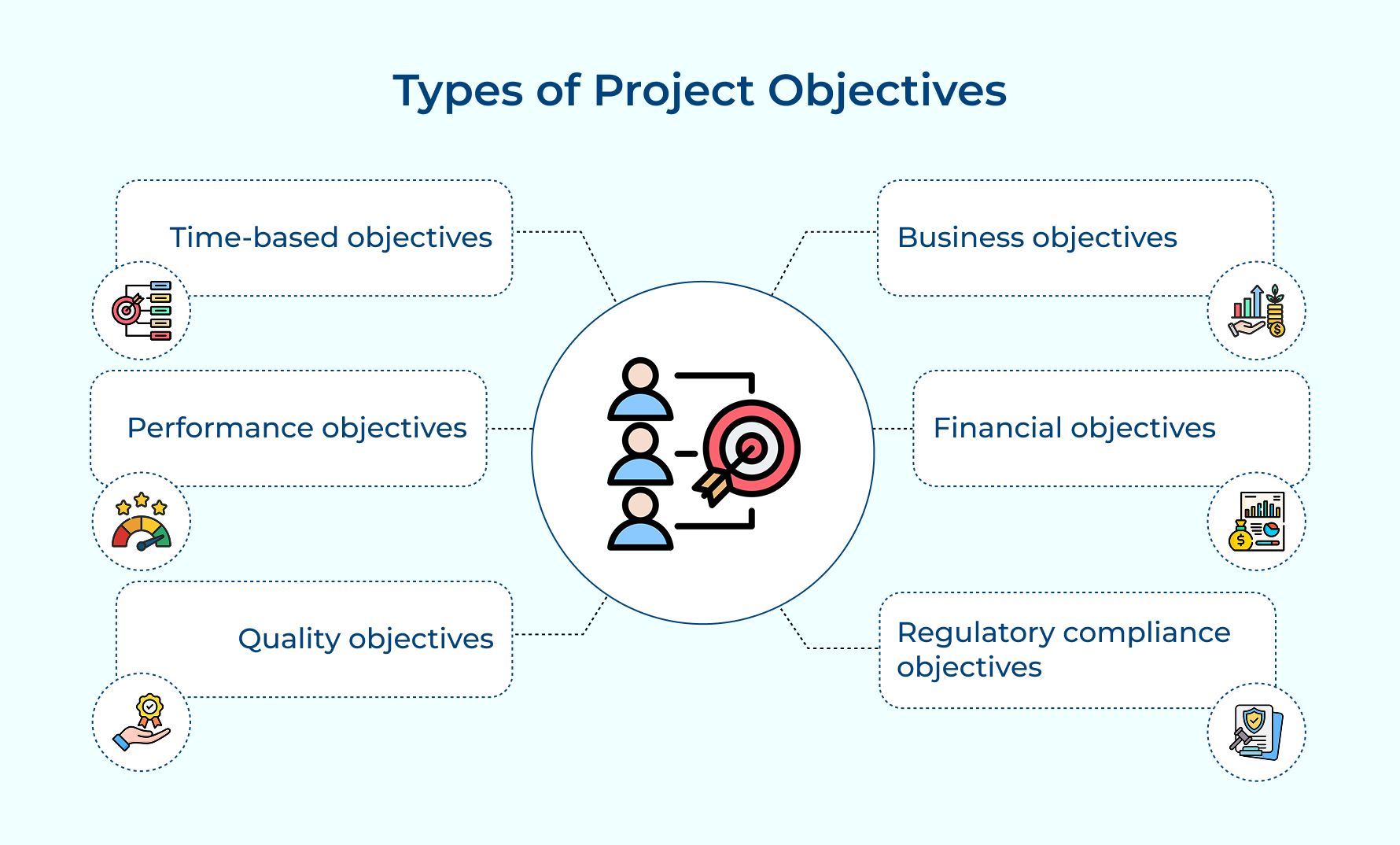
Time-Based Objectives
Time-based objectives establish when specific deliverables or milestones must be completed throughout your project timeline. They create urgency and help teams prioritize tasks based on critical deadlines as well as dependencies.
Essential elements that make time-based objectives effective:
- Specific milestone dates that align with business cycles or market requirements
- Buffer time built into schedules to accommodate unexpected delays or complications
- Clear dependencies between tasks that help teams understand sequencing priorities
These objectives drive project momentum by creating accountability for delivery schedules and resource commitments. Teams can measure progress against time targets and make adjustments when delays threaten overall project success.
Performance Objectives
Performance objectives explain how well your project deliverables should work once implemented. They go beyond just finishing tasks, they set clear benchmarks for system capability and user experience. Consider them as company-wide goals that define real success.
Teams track performance metrics throughout the project life cycle to ensure everything meets operational needs and user expectations. These objectives often include requirements like system speed or capacity limits. They also guide design decisions right from the start and become reference points during performance reviews.
Quality Objectives
Quality objectives set the standards for excellence in project deliverables. They define the acceptance criteria stakeholders will use for final approval. By doing so, they prevent teams from cutting corners under tight deadlines or budget pressure.
These objectives make sure your outputs meet professional standards while delivering long-term value. Quality targets help balance speed with excellence at every stage of the project life cycle.
Business Objectives
Business objectives show how your project connects to the bigger organizational strategy. They answer the “why” behind the project and explain how deliverables impact overall company performance. In short, they prove why the project matters for business success.
Here are a few ways to strengthen business objective alignment:
- Revenue or savings: Show how the project will increase revenue or reduce costs.
- Competitive edge: Highlight how deliverables will support market share growth or create new advantages.
- Customer or efficiency gains: Demonstrate how the project improves customer satisfaction or boosts operational efficiency.
Clear business objectives make it easier to secure leadership support and resources. They also allow decision-makers to track ROI and decide whether to continue, expand, or adjust the project.
Financial Objectives
Financial objectives set specific budget limits and define expected economic returns that justify project investment as well as resource allocation. They create accountability for cost management while establishing value expectations for stakeholders.
Project managers use financial objectives to make trade-off decisions and communicate economic impact to executive stakeholders. These targets help teams balance feature requirements with available funding throughout project execution.
Regulatory Compliance Objectives
Regulatory compliance objectives make sure your project deliverables follow all legal rules and industry standards. They protect your company from legal risks and keep licenses or certifications valid.
When setting compliance objectives, ask questions like:
- Which regulations or standards apply to this project and its deliverables?
- What documentation or certifications must be finished before closing the project?
- How will compliance be monitored after handoff to operations?
These objectives often have the highest priority. Non-compliance can mean fines, penalties, or even business shutdowns. That’s why teams should build compliance into every phase of the project life cycle, not just treat it as a final checkbox.
8 Effective Tips and Best Practices for Writing Project Objectives
Here are some key tips for writing project objectives that are clear and specific. They also align with business goals to guide your team toward success.
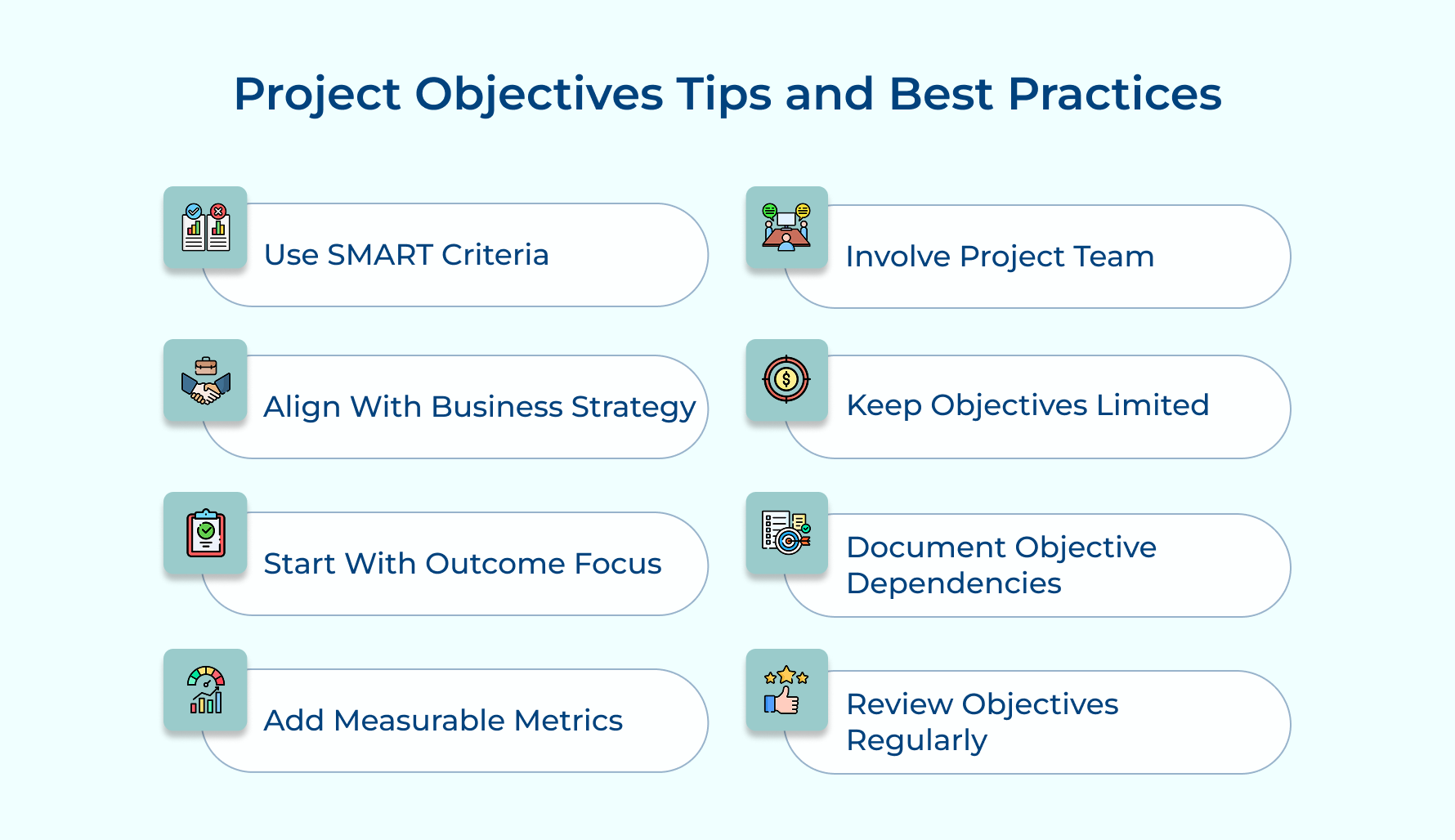
1. Use SMART Criteria for Clarity
SMART criteria transform vague project intentions into crystal-clear objectives that everyone can understand and execute. This framework gives teams clear expectations and prevents wasting time debating what success looks like.
Here’s how SMART criteria creates structure for objectives:
- Specific: Define exactly what will be accomplished without leaving room for multiple interpretations or confusion.
- Measurable: Include concrete numbers or metrics that allow teams to track progress and determine completion status.
- Achievable: Set realistic targets that challenge teams while remaining within available resources and organizational capabilities.
- Relevant: Ensure objectives directly contribute to broader project goals and align with stakeholder priorities.
- Time-bound: Establish clear deadlines that create urgency and help teams prioritize competing demands effectively.
This structured approach eliminates ambiguity by providing concrete benchmarks that teams can rally around. SMART objectives become powerful communication tools that keep everyone aligned throughout the project lifecycle.
2. Align Objectives with Business Strategy
Strategic alignment ensures your project objectives directly support organizational priorities and demonstrate clear business value. Projects that lack strategic connection often face budget cuts or resource reallocation when competing priorities emerge.
Three effective ways to achieve strategic alignment include:
- Strategic mapping: Link each project objective to business goals using visual frameworks to spot gaps early.
- Stakeholder value analysis: Show measurable benefits for different stakeholders to gain executive support for resources.
- Performance metrics integration: Align project success measures with existing KPIs and scorecards to demonstrate impact clearly.
A digital marketing agency recently used strategic alignment to secure executive support for their client management system upgrade. They connected project objectives directly to revenue growth targets and client retention metrics that leadership already tracked monthly.
3. Start with Outcome-Focused Statements
Outcome-focused statements describe the end results your project will deliver rather than the activities teams will perform. When objectives focus on processes instead of outcomes teams lose sight of actual value creation and may complete tasks without achieving meaningful results.
Transform process-heavy objectives into outcome-driven statements by asking what benefit each deliverable provides to end users. This shift helps teams make better decisions when facing trade-offs as well as keeps everyone focused on delivering real value.
Pro tips:
- Begin each objective with phrases like “Users will be able to” or “The organization will achieve” rather than “We will build” or “The team will develop.”
- Test your objectives by asking whether a stakeholder would pay for the stated outcome even if the delivery method changed completely.
4. Include Quantifiable Success Metrics Always
Quantifiable success metrics are specific numerical measurements that define exactly when your project objectives have been successfully completed. These concrete benchmarks eliminate guesswork and provide objective evidence that stakeholders can use to evaluate project performance.
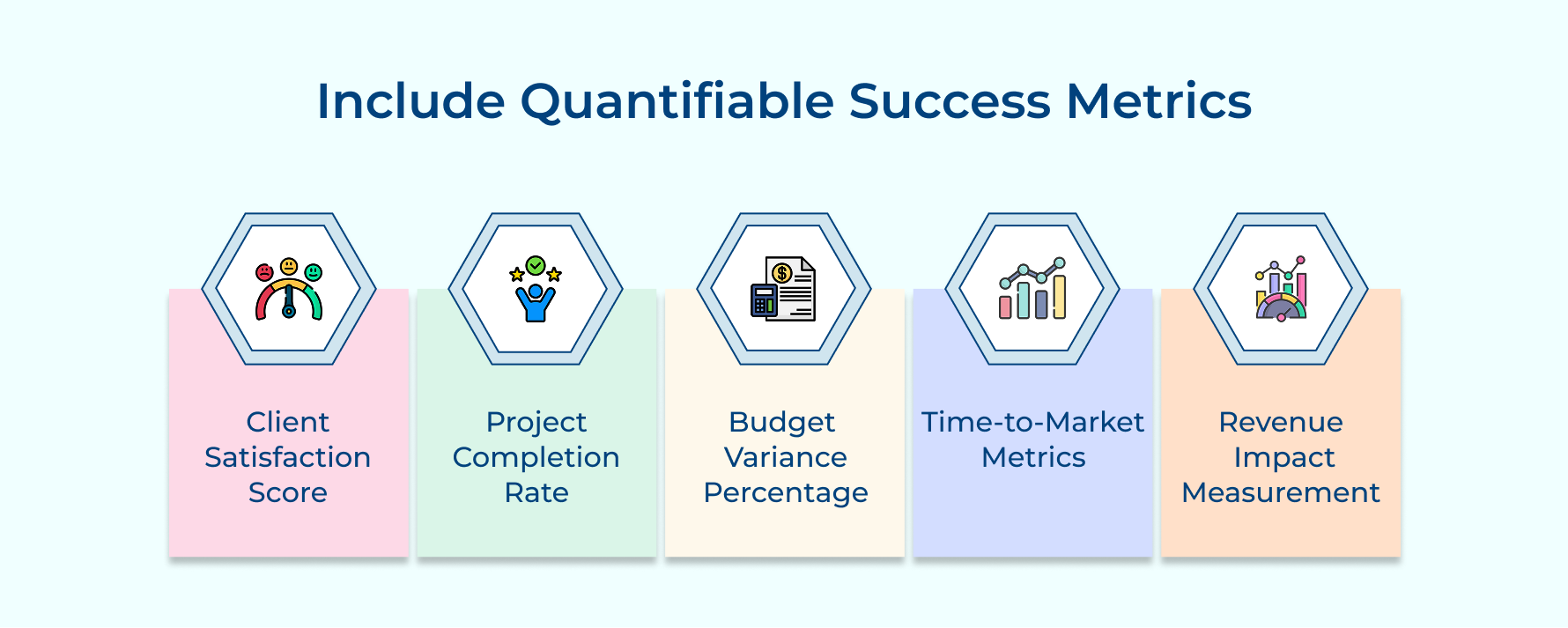
Here are five essential quantifiable metrics for agencies and professional services:
- Client Satisfaction Score
- Project Completion Rate
- Budget Variance Percentage
- Time-to-Market Metrics
- Revenue Impact Measurement
These metrics turn opinions about project success into clear, objective facts everyone can understand and agree on. They let teams track progress consistently and make smart, data-driven decisions if changes are needed during the project.
The tricky part is picking metrics that actually reflect project value, not just the easiest things to count. Focus on outcomes that matter most to stakeholders and ask yourself if these measurements would be meaningful to someone paying for the results.
5. Involve Your Project Team in Goal-Setting Process
Team involvement in objective setting creates shared ownership and ensures that goals reflect real-world implementation challenges as well as opportunities. When teams participate in creating objectives they become more committed to achieving them and can identify potential roadblocks early.
Key questions to address before involving your team:
- Who are the key team members whose expertise is essential for setting realistic and achievable objectives?
- What specific knowledge gaps exist in our current objective draft that team input could address?
- How will we balance individual team member perspectives with overall project requirements and constraints?
- What decision-making authority will team members have when conflicts arise between different objective priorities?
These questions help you structure productive collaboration sessions where team input genuinely improves objective quality rather than creating confusion. You can focus discussions on areas where team expertise adds the most value to planning.
Why should you get your team involved in writing objectives? Because they’re the ones who actually have to deliver the results! Team members often spot unrealistic timelines or resource requirements that look good on paper but create problems during execution.
6. Keep Objectives Focused and Limited
This best practice involves deliberately restricting the number and scope of project objectives to maintain team focus as well as energy. Too many objectives dilute attention and make it difficult for teams to prioritize their efforts effectively.
Three key benefits of focused objectives include:
- Enhanced team performance: Teams achieve better results when they can concentrate their efforts on fewer high-priority targets.
- Clearer communication: Stakeholders can easily understand and remember a limited set of well-defined objectives during project updates.
- Reduced scope creep: Fewer objectives create natural boundaries that help project managers resist unnecessary feature additions.
Limited objectives also make it easier to allocate resources strategically and measure progress against meaningful benchmarks. Teams can celebrate concrete wins rather than feeling overwhelmed by an endless list of competing priorities.
Consider these factors when determining objective limits and focus:
- Strategic impact assessment: Evaluate which objectives contribute most directly to organizational goals and stakeholder value creation.
- Resource availability analysis: Match objective complexity to available team capacity and budget constraints throughout the project timeline.
- Risk tolerance evaluation: Consider how many simultaneous objectives your team can manage without compromising quality or increasing failure risk.
- Timeline coordination requirements: Assess whether multiple objectives create scheduling conflicts or resource competition that could derail project success.
Successful implementation requires discipline to say no to good ideas that don’t align with your core objectives. Start with a comprehensive list then ruthlessly prioritize until you have a manageable number that your team can realistically achieve.
7. Document Dependencies Between Different Objectives
Documenting dependencies means showing how project objectives rely on each other to get work done successfully. It helps prevent scheduling conflicts and resource bottlenecks that can stall multiple objectives when teams don’t see how tasks are connected.
One easy way to do this is with visual charts that map which objectives need to finish before others can start. This approach helps project managers plan the sequence of work, spot critical tasks and allocate extra attention or resources where it’s needed most.
Pro tips:
- Create a simple matrix showing each objective against every other objective to identify all potential dependency relationships systematically.
- Focus on documenting hard dependencies first where one objective absolutely cannot proceed without another rather than soft preferences or conveniences.
8. Check In on Project Objectives During Lifecycle
Regularly reviewing project objectives keeps your work aligned with shifting business needs and stakeholder expectations. Without these check-ins, teams might chase outdated goals or unrealistic targets.
Here are some practical ways to keep objectives relevant:
- Scheduled milestone reviews: Assess objectives at key project milestones. This allows stakeholders to check relevance and feasibility while adjusting targets without disrupting daily work.
- Stakeholder pulse surveys: Send short monthly questionnaires to key stakeholders. Gauge priority changes and satisfaction to catch shifts early as well as make timely adjustments.
- Clear communication of changes: If objectives need updating mid-project, explain the rationale clearly. Document modifications to maintain team morale and stakeholder trust.
Regular reviews help your team stay focused on meaningful outcomes while adapting to evolving priorities.
Common Examples of Project Objectives to Consider
Understanding project objectives becomes clearer when you see them in action across different industries. Let’s explore three distinct examples that showcase how objectives adapt to unique business contexts and requirements.
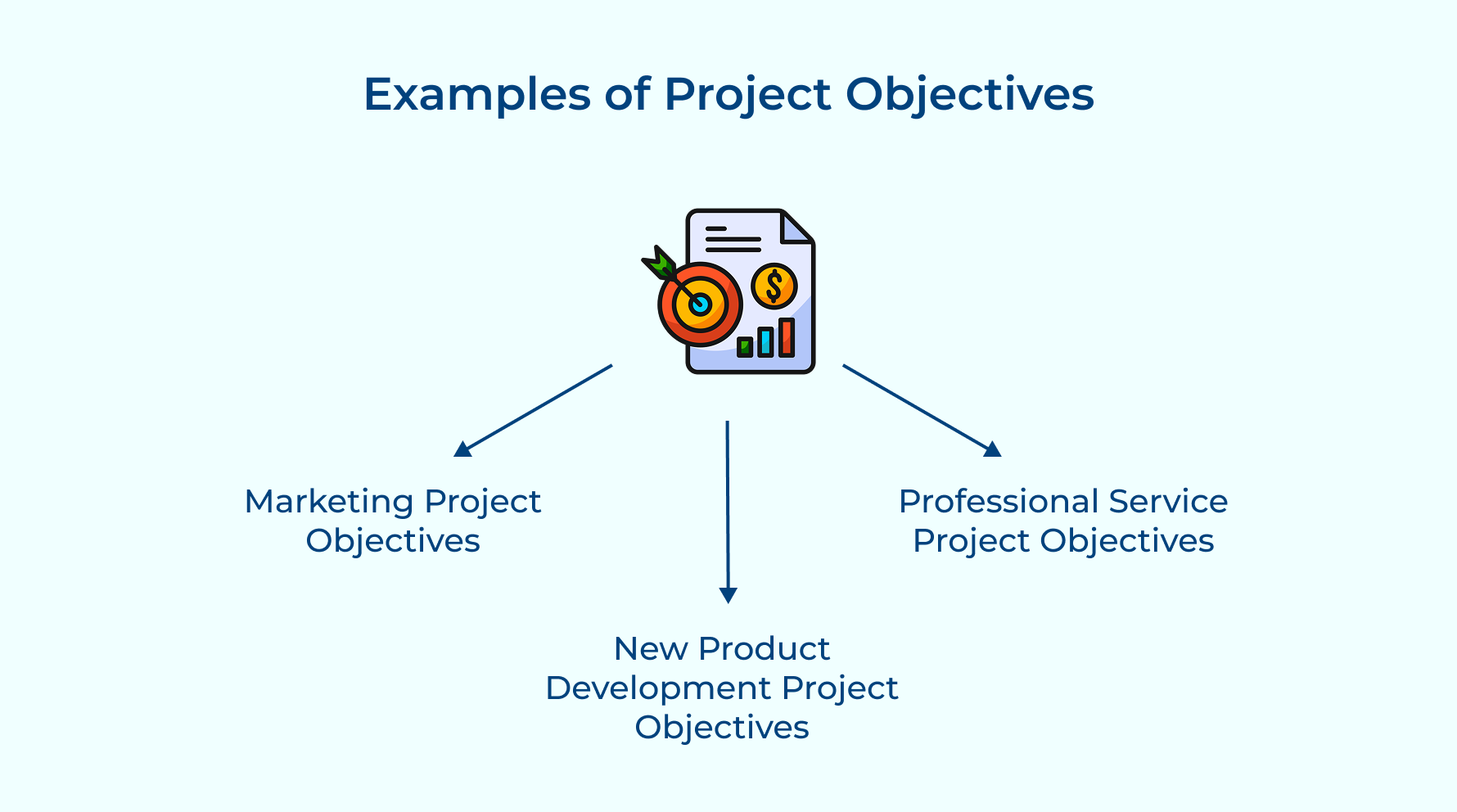
Marketing Project Objectives
Think about a digital marketing campaign designed to boost brand awareness for a new software product launch. The marketing team might establish objectives like “Increase website traffic by 150% within six months through targeted social media advertising and content marketing initiatives.”
This objective demonstrates several key characteristics we discussed earlier. It’s measurable with the 150% traffic increase target and time-bound with the six-month deadline. The objective also connects directly to business strategy by supporting the product launch through enhanced online visibility and lead generation efforts.
Professional Service Project Objectives
Consider a consulting firm implementing a new client onboarding system to improve service delivery efficiency and client satisfaction scores. Their project objective might state “Reduce client onboarding time from 14 days to 7 days while achieving 95% client satisfaction ratings within three months.”
This example highlights how professional services aim to improve both internal operations and the client experience. It balances streamlining processes with delivering real value to stakeholders. You can see it includes several success metrics that together show the project’s overall impact.
New Product Development Project Objectives
Imagine a technology company developing a mobile app for fitness tracking with specific user engagement and market penetration goals. Their objective could be “Launch a fitness app that achieves 50000 downloads and maintains 70% monthly active user retention within the first quarter after release.”
New product development objectives usually focus on how the market responds and how users adopt the product, rather than internal processes. Success is measured through downloads and user engagement, with timelines set to capture first-mover advantages in competitive tech markets.
Transform Visions into Reality with Clear Project Objectives
Clear project objectives serve as your compass for navigating complex projects from initial concept to successful completion. They eliminate confusion by providing specific targets that guide every decision and keep your team focused on delivering measurable value.
When you master the art of writing effective objectives using proven frameworks and best practices, you transform abstract ideas into actionable plans. Your projects become more predictable, stakeholders stay engaged and your team delivers results that truly matter to your organization.
Limit time — not creativity
Everything you need for customer support, marketing & sales.

Shivank Kasera is part of the marketing team at Kooper, where he focuses on building content that helps agencies and service providers grow. With a keen interest in SaaS, operations, and scalability, he translates practical insights into actionable resources for business leaders.