Complete Guide to Project Initiation Document (PID) Steps
- What is a Project Initiation Document (PID)?
- Why is Project Initiation Document Important?
- What Should Be Included in a Project Initiation Document?
- How to Create a Project Initiation Document in 7 Actionable Steps
- Best Practices for Creating a Project Initiation Document
- 4 Project Initiation Document Examples
- Lay the Groundwork for Success with a Project Initiation Document
- FAQs about Project Initiation Document

Key Highlights:
- Project initiation documentation ensures all stakeholders share a clear understanding of objectives, deliverables and project scope from day one.
- A PID outlines roles, responsibilities, timelines, budgets and risk register to prevent miscommunication as well as streamline project execution efficiently.
- Structured project initiation document examples show how agencies map dependencies, define success metrics and maintain alignment across complex initiatives.
Projects often fail before they even begin because teams rush into execution without documenting clear objectives or getting stakeholder alignment. This leads to scope creep, budget overruns and frustrated clients who expect something completely different from what gets delivered.
A weak or missing project initiation document leaves teams building on quicksand, turning every decision into a debate and every change request into a crisis. Team members work from different assumptions while stakeholders question why the project is taking longer or costing more than they imagined.
A comprehensive PID creates the shared foundation that prevents these problems by documenting everything from objectives to risks before work begins. This guide walks you through what a PID is, why it matters and exactly how to create one that sets your projects up for success.
What is a Project Initiation Document (PID)?
A project initiation document serves as the foundation blueprint that officially launches your project. It captures why the project exists, what success looks like and how you’ll get there. This living document transforms vague client requests into concrete plans that your team can actually execute.
How does the Project Initiation Document (PID) work?
The PID works by forcing crucial conversations upfront before anyone writes a line of code or designs a single mockup. You gather stakeholders together to align on objectives, scope boundaries and success metrics.
Once approved, it becomes your reference point when scope creep threatens or when team members need clarity on priorities. The document evolves as the project progresses, but its core purpose remains constant: keeping everyone moving toward the same destination.
Key components:
- Project objectives and deliverables: The specific outcomes you’re committing to deliver and how they ladder up to business goals.
- Scope and boundaries: What’s included in the project as well as equally important, what’s explicitly out of scope to prevent mission creep.
- Timeline and milestones: Key dates that break the project into manageable phases with clear checkpoints for review and adjustment.
- Budget and resources: The financial constraints you’re working within as well as the team members allocated to make it happen.
- Roles and responsibilities: Who owns what decisions, who does the work and who needs to approve things before moving forward.
Why is Project Initiation Document Important?
A well-crafted PID transforms chaotic project starts into organized launches that set your agency up for success.
Before diving into benefits, consider these questions to guide your thinking:
- What happens when team members have different understandings of project goals?
- How do you handle client requests that drift beyond the original agreement?
- When disputes arise about deliverables, what evidence do you rely on?
- How can new team members quickly understand what they’re working toward?
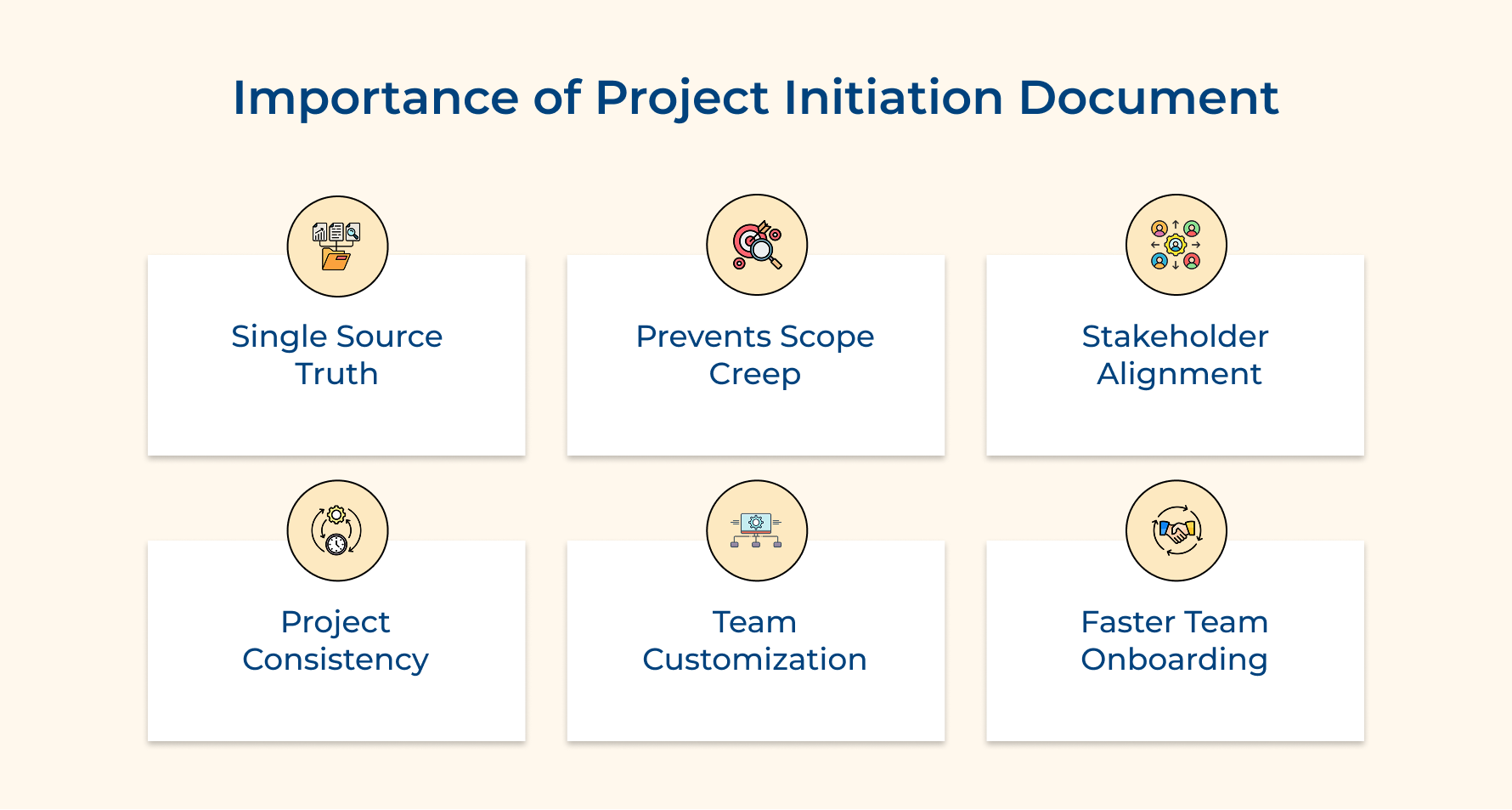
1. Creates a Single Source of Truth
Everyone involved can turn to one clear document whenever questions pop up about scope or deliverables. This removes the confusion caused by relying on memory or digging through scattered email threads where important details often get overlooked.
2. Prevents Scope Creep
The PID gives you clear, written boundaries to fall back on when clients request extra features halfway through the project. Productive change discussions become easier because both sides originally agreed on the same limits and expectations.
3. Aligns Stakeholder Expectations
Sign-off on the PID means everyone has reviewed and agreed on the same vision before work begins. This early alignment helps avoid uncomfortable surprises later when someone assumes a feature was included but it never actually was.
4. Establishes Consistency Across All Projects
Agencies can maintain quality standards and follow proven workflows when every project begins with a structured document. New project managers can learn from previous PIDs and apply the same reliable process without starting from scratch.
5. Allows for Customization for Specific Teams
The core PID structure remains consistent, but individual sections can be adjusted to suit different clients or project types. A website redesign PID highlights different elements than a brand strategy project while keeping the same foundation.
6. Speeds Up Onboarding for New Team Members
Anyone joining midway can read the PID and quickly understand the project without sitting through long explanation meetings. The document preserves key decisions and reasoning that might otherwise live only in early planning conversations.
What Should Be Included in a Project Initiation Document?
A comprehensive PID contains several core components that work together to paint a complete picture of your project from start to finish.
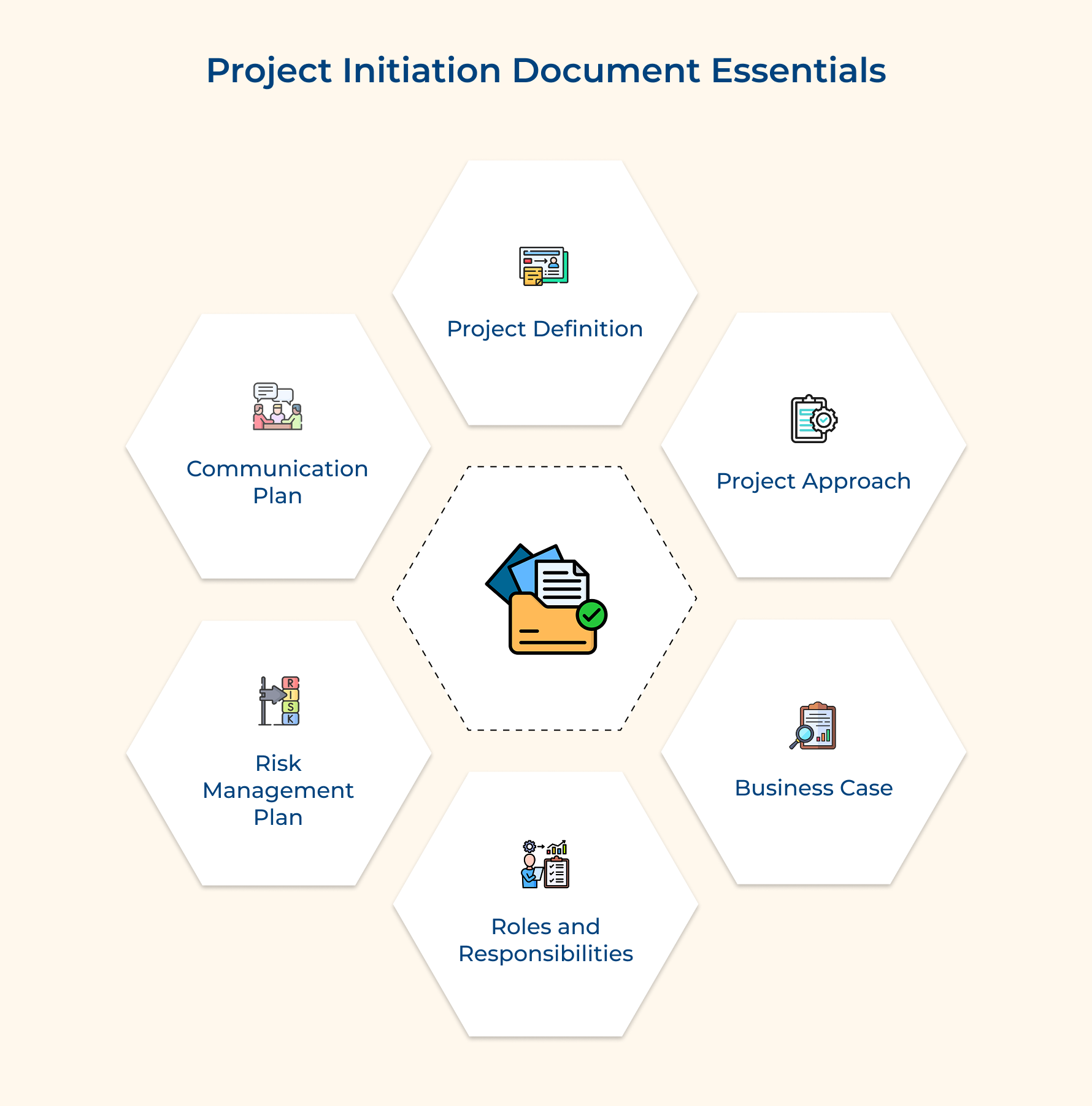
- Project definition clearly sets the purpose and boundaries of what you’re building or delivering for the client. The section answers core questions about what’s included and what will define successful completion.
- Project approach explains how work moves from kickoff to final delivery. The section outlines if agile sprints, waterfall phases, or a blended model will guide execution across each stage.
- The business case connects the project to measurable business value and strategic goals. The section shows how the initiative solves real problems or creates meaningful opportunities for the organization.
- Roles and responsibilities spell out who makes decisions, who executes tasks, as well as who needs to review or approve work at every stage. Clear ownership prevents delays, confusion and duplicated effort.
- Risk management plan highlights potential obstacles that could disrupt progress and outlines how they will be tracked as well as addressed. The proactive approach prepares teams for challenges before they grow into crises.
- Communication plan defines how often updates go out, which channels carry each type of information and who receives what. The structure keeps stakeholders informed while protecting teams from constant interruptions.
How to Create a Project Initiation Document in 7 Actionable Steps
Let’s walk you through the seven crucial steps to crafting an effective Project Initiation Document that will lay the groundwork for successful project execution.
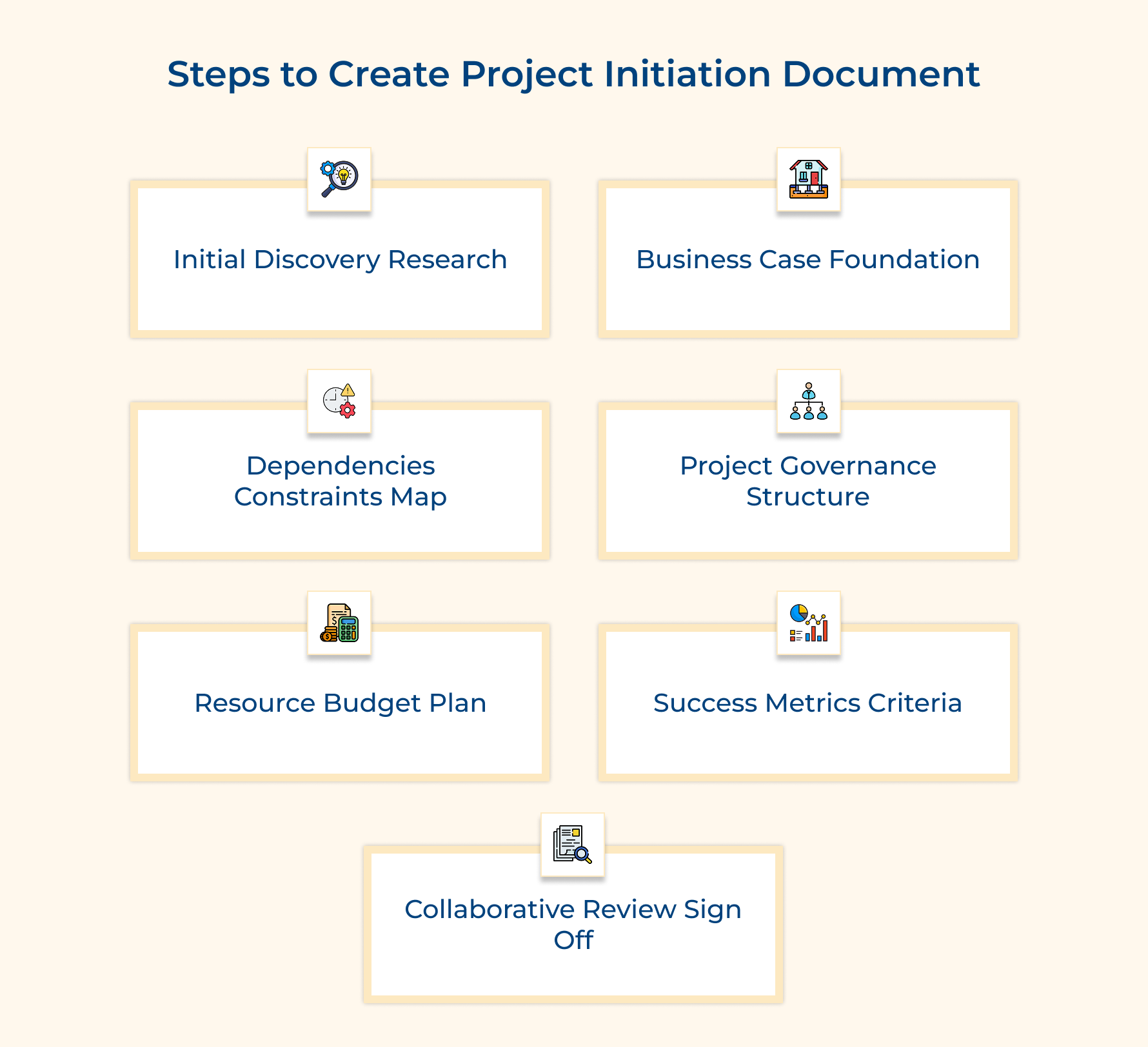
1. Conduct Initial Discovery and Research
Discovery forms the foundation of a strong project initiation document because accurate documentation depends on clear understanding. This phase removes guesswork, exposes hidden complexity and aligns everyone on the same vision before planning begins.
Start with structured stakeholder interviews to uncover real needs, expectations and success criteria. Focus on questions such as:
- What problem must the project solve?
- How will success look after completion?
- What past attempts have already been made?
- Who else will be impacted by the outcomes?
Review existing documents and past projects to understand context while avoiding repeating mistakes. Track decisions that affect scope or budget, study retrospectives for failure patterns and flag inconsistencies for clarification.
Analyze competitors and industry benchmarks to set realistic expectations. Understanding how similar organizations approached the problem helps identify gaps, best practices and opportunities for differentiation. Together, these discovery steps reduce risk, strengthen alignment and ensure the PID is built on clear, verified insights rather than assumptions.
2. Build the Business Case Foundation
The business case justifies why resources should be allocated to this project instead of other competing priorities or initiatives. Without a solid rationale tied to measurable value, your project initiation document lacks the persuasive power needed to secure buy-in and maintain support when challenges arise.
Here are five key considerations when building your business case foundation:
- Financial impact and return: Quantify how the project will generate revenue, reduce costs, or create efficiency gains that translate to bottom-line value.
- Strategic alignment with goals: Demonstrate how deliverables support broader organizational objectives like market expansion, customer retention, or competitive positioning.
- Problem severity and urgency: Articulate the consequences of not doing the project and why timing matters for capturing opportunities or preventing losses.
- Resource feasibility and availability: Assess whether the organization has or can acquire the capabilities needed to execute successfully without overextending current commitments.
- Risk versus reward balance: Evaluate in case potential benefits justify the investment when accounting for likely obstacles and the probability of different outcomes.
How do you actually build this into your PID? You start by connecting each project deliverable to a specific business outcome that stakeholders care about. For instance, if you’re building a customer portal, don’t just say it will “improve user experience”—explain that it will reduce support tickets by 30% which saves $150,000 annually in customer service costs.
3. Map Out Dependencies and Constraints
This step identifies the external factors and limitations that will shape how your project unfolds as well as what’s actually possible to deliver. Understanding dependencies upfront prevents you from creating plans that look great on paper but crumble when they hit real-world constraints.
You can use dependency mapping by creating a visual chart that shows which tasks require other work to be completed first. This reveals critical path items where delays will cascade through the entire timeline and helps you prioritize securing resources or approvals that could become bottlenecks.
Pro tips:
- Document not just what the dependencies are but who owns resolving them and when they need resolution.
- Build contingency plans for your highest-risk dependencies so you have alternative paths when third parties miss deadlines or requirements change.
4. Design the Project Governance Structure
Governance structure defines who has decision-making authority and how information moves across the project. Clear governance avoids approval bottlenecks, reduces conflicts and keeps work moving without confusion over final ownership.
Ways to design an effective governance structure for your PID:
- Create a RACI matrix for major decisions
Clarifies who is Responsible, Accountable, Consulted and Informed. This removes delays caused by unclear ownership or overlapping authority. - Establish tiered escalation paths
Define which issues the team can resolve independently, which require stakeholder input and which need executive involvement. This prevents over-escalation while ensuring serious risks get fast attention. - Set decision-making timeframes
Specify approval deadlines and define when silence counts as agreement. This prevents passive approval delays that quietly stall progress.
For example, in a website redesign, marketing may approve creative while IT owns technical decisions. Predefined escalation ensures fast resolution when design and performance priorities conflict.
5. Create Detailed Resource and Budget Plan
Resource planning turns your project vision into concrete budget allocations and team commitments, ensuring work can proceed smoothly. Skipping this step often leads to cost overruns, overworked team members and compromised timelines or quality.
Key areas to plan carefully:
- Team member time and availability: Estimate hours per role and confirm availability aligns with project phases.
- Software tools and licenses: Account for project management systems, design tools and other subscriptions needed for execution.
- Third-party vendors and contractors: Include specialists like copywriters, photographers, or technical consultants who supplement internal skills.
- Infrastructure and hosting costs: Cover servers, cloud services, domains and other technical resources supporting deliverables.
- Contingency reserves: Set aside 10–15% of the budget for unforeseen challenges or risks.
Break projects into phases and estimate hours for each role to calculate costs accurately. This approach highlights scheduling conflicts as well as ensures stakeholders commit to realistic budgets before work begins.
6. Draft Success Metrics and Acceptance Criteria
Success metrics give a clear, objective way to measure if your project hits its intended goals, avoiding endless debates over deliverable quality or completeness. Without documented acceptance criteria in your project initiation document, teams and stakeholders often disagree on what “done” actually means.
Focus on quantifiable measures like:
- Completion percentage of planned deliverables against the original scope
- Timeline variance comparing actual delivery dates to the baseline project timeline
- Budget utilization tracking forecasted versus actual costs
- Quality scores from stakeholder feedback or user testing
Define specific standards for each deliverable, such as performance thresholds or compliance requirements, to signal when work is truly complete. Include testing and validation steps upfront to catch issues early.
Link these metrics to your risk register so any potential threats that could affect schedule, cost, or quality are visible. Documenting these success measures in the PID ensures alignment, accountability and smooth project execution from start to finish.
7. Facilitate Collaborative Review and Sign-Off
The final step turns your draft project initiation document (PID) into a formal agreement by collecting feedback and securing stakeholder approval. Without documented sign-off, the PID stays internal rather than a shared commitment.
Schedule focused review sessions where stakeholders can ask questions and raise concerns in real time. These discussions uncover misunderstandings early, letting you address objections before they become issues that could block the project.
Pro tips:
- Share the PID at least three business days before your review meeting so participants arrive prepared with specific feedback rather than reading it for the first time.
- Create a change log that tracks all modifications made during review so stakeholders can see how their input shaped the final document.
Best Practices for Creating a Project Initiation Document
A well-crafted PID requires more than just filling in templates—it demands thoughtful practices that ensure the document actually serves its purpose throughout the project lifecycle.
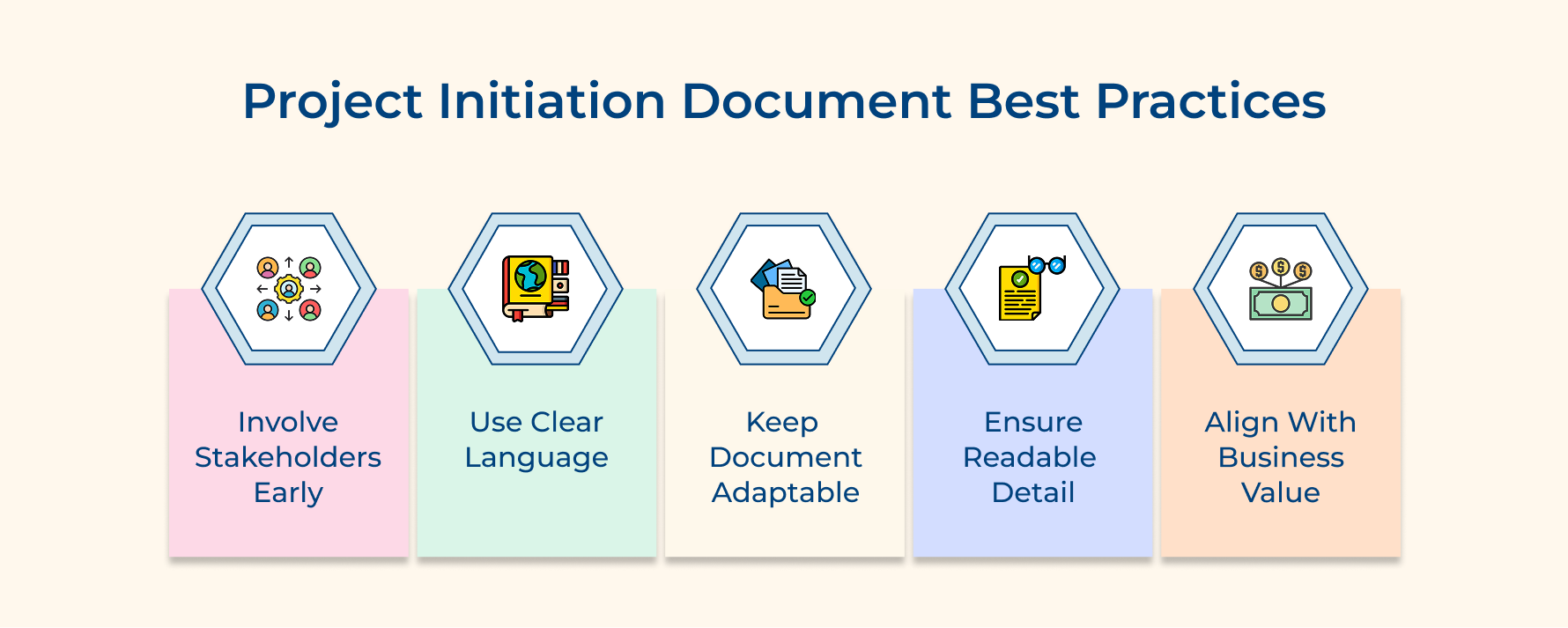
1. Involve Stakeholders Early and Often
Don’t create your PID in isolation and then present it as a finished product to stakeholders for approval. Instead, bring key players into the creation process from the beginning so they contribute their perspectives as well as feel ownership over the final plan.
2. Use Clear Language Without Jargon
Write your PID in plain language that anyone involved in the project can understand regardless of their technical expertise. When you must use specialized terms, define them clearly so the document remains accessible to executives, clients and team members alike.
3. Keep the Document Living and Adaptable
Treat your PID as a living document that evolves as the project progresses rather than a static artifact locked after initial approval. Schedule periodic reviews to update sections when circumstances change so the document reflects current reality instead of outdated assumptions.
4. Balance Detail with Readability
Include enough specificity that people can make informed decisions but avoid overwhelming readers with excessive granularity that obscures key points. Focus on information that directly impacts understanding and decision-making while moving supporting details to appendices or linked documents.
5. Link Everything to Business Value
Connect every component of your PID back to tangible business outcomes that stakeholders care about rather than listing features or activities. This practice ensures the document answers the critical question of why the project matters and keeps everyone focused on delivering meaningful results.
4 Project Initiation Document Examples
Different industries require PIDs tailored to their unique challenges and stakeholder needs. Here are real-world examples that demonstrate how the core PID framework adapts across various professional contexts.
1. Digital Marketing Agency Website Redesign
A marketing agency creates a PID for redesigning an e-commerce client’s website that focuses heavily on user experience metrics and conversion goals. The document specifies design phases, content migration timelines, SEO preservation requirements and success metrics like bounce rate reduction as well as increased average order value tied directly to revenue impact.
2. Management Consulting Firm Strategic Assessment
A consulting firm develops a PID for a three-month organizational efficiency assessment that emphasizes discovery methodology and stakeholder interview protocols. The document outlines which departments will be analyzed, how data will be collected and anonymized, interim presentation milestones, while defining deliverables like process maps as well as recommendation frameworks.
3. Software Development Agency Custom CRM Build
A development agency crafts a PID for building a custom customer relationship management system that details technical architecture decisions and integration requirements. The document breaks development into sprints with specific feature releases, defines API specifications for third-party connections and establishes testing protocols before each deployment to production environments.
4. Creative Agency Brand Identity Refresh
A creative agency produces a PID for refreshing a corporate brand identity that centers on creative exploration phases and stakeholder feedback loops. The document maps out brand workshops, mood board presentations, logo concept rounds, style guide development and rollout planning across digital as well as print touchpoints with clear approval gates.
Lay the Groundwork for Success with a Project Initiation Document
A strong project initiation document transforms uncertain project starts into confident launches backed by clear agreements and shared understanding among all stakeholders. It protects your team from scope creep while giving clients the transparency they need to trust the process you’ve designed.
The time invested in creating a thorough PID pays dividends throughout the entire project lifecycle by preventing miscommunication and costly rework. Start your next project with this foundation while spending less time managing conflicts and more time delivering work that exceeds expectations.
Limit time — not creativity
Everything you need for customer support, marketing & sales.

Neeti Singh is a passionate content writer at Kooper, where he transforms complex concepts into clear, engaging and actionable content. With a keen eye for detail and a love for technology, Tushar Joshi crafts blog posts, guides and articles that help readers navigate the fast-evolving world of software solutions.