Project Risks in Project Management: Types, Examples & Tips
- What Are Project Risks in Project Management?
- Importance of Risk Management in IT Projects
- Common Types of Project Risks in Project Management
- 8 Real-Life Examples of Project Risk in Project Management
- How to Manage Project Risks in Project Management?
- 6 Most Effective Risk Mitigation Strategies for Projects
- 4 Simple Project Risk Management Tools
- Secure Your Project’s Success with Strategic Risk Management
- FAQs about Project Risks in Project Management
Key Highlights:
- Spotting project risks in project management early helps teams respond calmly instead of scrambling during crisis mode.
- Strong risk planning protects timelines, budgets and quality while keeping stakeholders confident throughout delivery.
- Proactive mitigation strategies like avoidance, transfer and contingency planning keep projects resilient under pressure.
You put months into planning your project and then real life steps in. Budgets start creeping up, a key team member suddenly becomes unavailable as well as deadlines that once felt comfortable now feel out of reach.
This isn’t bad luck. These are common project risks in project management that catch teams off guard every day. The difference between projects that struggle and those that succeed usually comes down to how early these risks are spotted as well as how well teams respond.
Once you understand real-world examples and proven ways to handle project risk, everything changes. Let’s walk through six critical risks hiding in your project – and the practical steps you can take to keep them under control.
What Are Project Risks in Project Management?
Project risks are uncertain events or conditions that could positively or negatively affect your project’s objectives if they occur. Every project faces these uncertainties because we’re essentially trying to predict and control outcomes in an inherently unpredictable world.
Risk management works by systematically identifying what might go wrong or right, then analyzing each possibility to understand its likelihood and potential impact. You then create response strategies for the most significant risks and monitor them throughout your project’s lifecycle. This ongoing cycle helps you stay prepared rather than perpetually surprised.
Core purposes of managing risks:
- Spotting risks: before they materialize gives you time to prepare effective responses instead of scrambling during a crisis.
- Plan ahead: Reduces the damage that risks inflict on your timeline, budget, or quality standards.
- Not all risks are bad: Recognizing beneficial uncertainties lets you position your project to capitalize on unexpected advantages.
- Understanding your risk: Helps you make smarter choices about resource allocation and project direction.
- Proactive risk management: It dramatically improves your chances of delivering on time, within budget and meeting stakeholder expectations.
Importance of Risk Management in IT Projects
IT projects operate in a uniquely volatile environment where technology changes rapidly and complexity runs deep. Six Key Benefits of Risk Management in IT Project Management
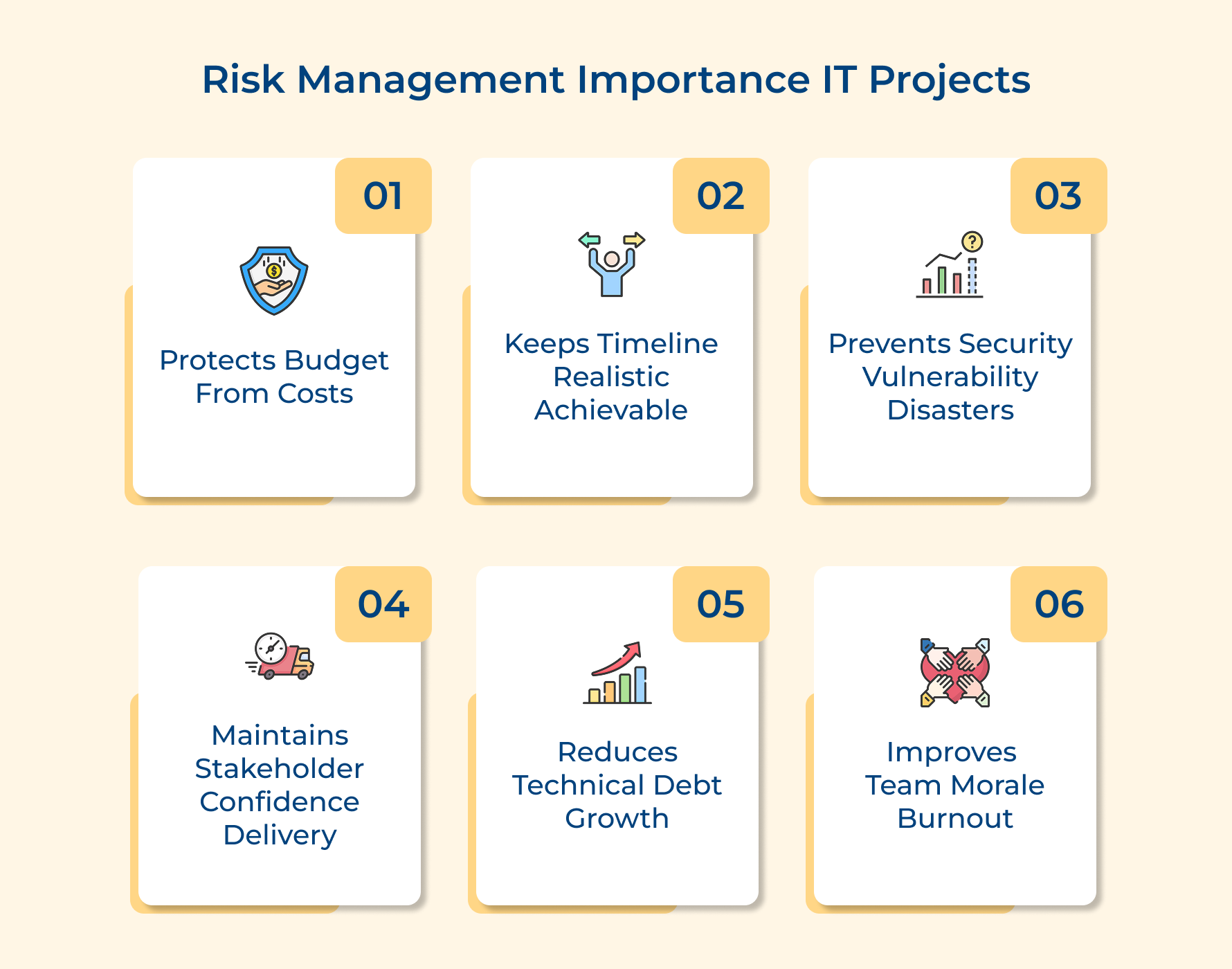
Protects Your Budget From Spiraling Costs
Technology projects are famous for blowing past budgets. Hidden dependencies and surprise technical challenges show up at the worst possible time. Managing cost risks early helps you plan realistic buffers and keep spending aligned with your project objectives.
Keeps Your Timeline Realistic And Achievable.
IT schedules often look great on paper but fall apart in execution. Early risk identification highlights integration issues, testing delays and even supply chain slowdowns so timelines reflect how work actually gets done.
Prevents Security Vulnerabilities From Becoming Disasters.
Security threats change fast and missing one small vulnerability can snowball into a serious problem. Using qualitative risk analysis helps you spot high-impact risks early and design systems that stay secure from day one.
Maintains Stakeholder Confidence Throughout Delivery
Stakeholders lose trust when projects feel unpredictable. Clear risk tracking and visibility – often supported by project management software – shows that risks are being monitored as well as decisions are made with intention, not panic.
Reduces Technical Debt Accumulation Over Time.
Rushing to meet deadlines usually means taking shortcuts that come back to bite later. Applying quantitative risk analysis helps teams weigh long-term consequences and choose solutions that stay manageable well beyond launch.
Improves Team Morale And Reduces Burnout.
Constant firefighting drains energy fast. A structured risk approach creates breathing room, keeps workloads realistic and allows teams to focus on thoughtful execution instead of reacting to the next surprise.
Common Types of Project Risks in Project Management
Every project faces uncertainties that stem from different sources and require distinct management approaches. Understanding these risk categories helps you build comprehensive protection across all aspects of your project.
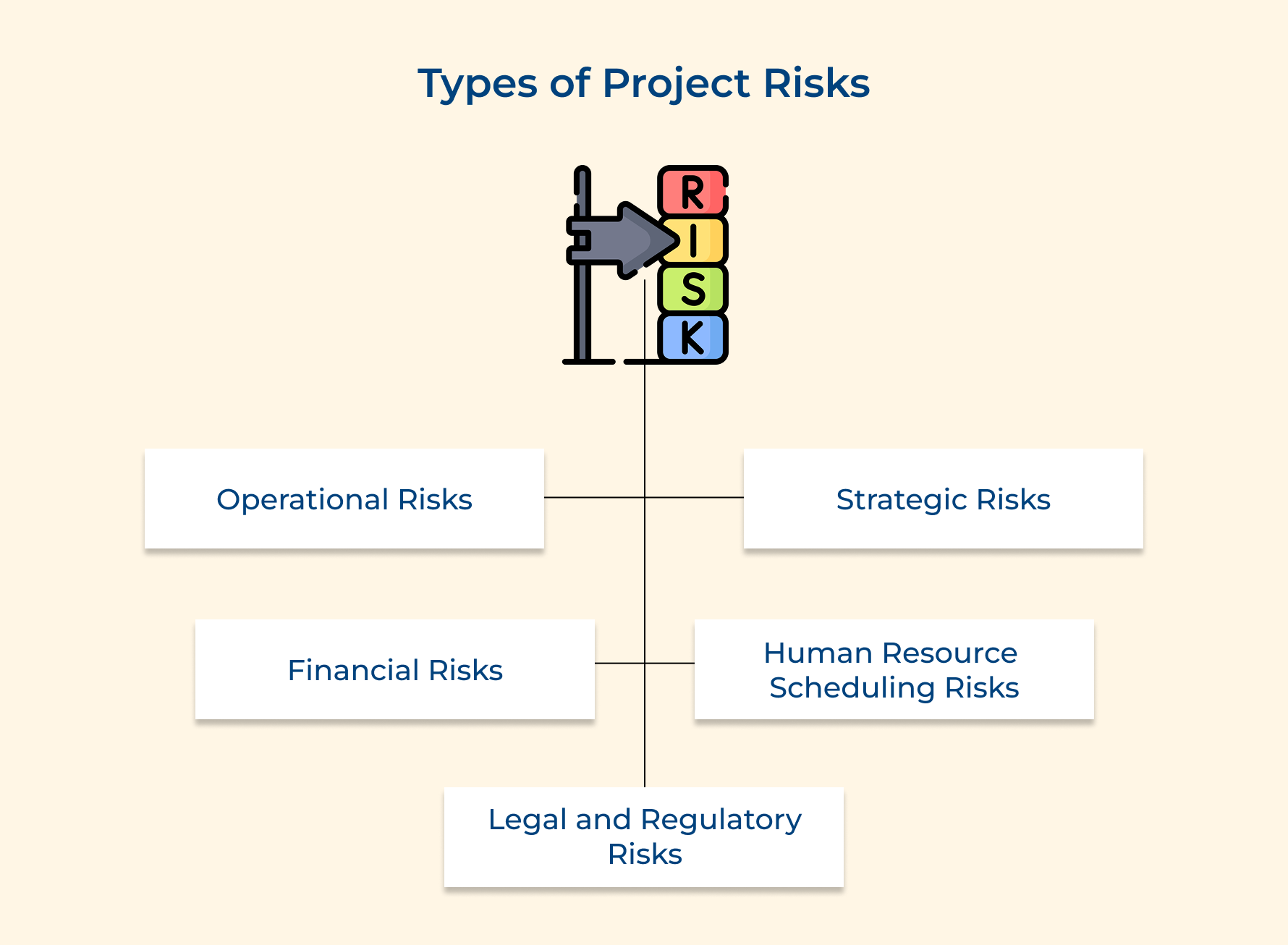
Operational Risks
Operational risks show up in the everyday work of your project. Processes don’t flow as expected, systems fail, or resources suddenly go missing. On paper, everything looks smooth, but reality often tells a different story.
These risks live in the gap between planning and execution. When tasks slip off your Gantt chart or tools break down midstream, operational risks stop being theoretical and start blocking progress immediately.
Strategic Risks
Strategic risks affect how well your project aligns with business goals and market realities. Even flawless execution won’t save a project that no longer supports what the organization actually needs.
These risks surface when priorities shift, assumptions change, or market conditions evolve. Tracking reliable risk data helps teams spot early signals that a project’s direction may need adjustment before it loses relevance.
Financial Risks
Financial risks revolve around money – how it’s estimated, allocated and protected. A project can run smoothly in every other area and still fail because the budget collapses.
Rising costs, funding cuts, or poor forecasts force hard trade-offs. A clear Risk Response Plan helps teams decide in advance how they’ll react when financial pressure starts building.
Human Resource Scheduling Risks
People-related risks are often the hardest to manage. Team members get pulled into other priorities, leave unexpectedly, or lack the exact skills needed at critical moments.
These challenges worsen when expectations aren’t shared clearly. Strong communication channels make it easier to spot availability issues early and rebalance workloads before schedules fall apart.
Legal and Regulatory Risks
Legal and regulatory risks can stop a project in its tracks. Compliance rules and regulations don’t stay static as well as missing a requirement can have serious consequences.
From data privacy laws to licensing rules, these risks demand constant attention. Using risk management software helps teams track obligations, monitor changes and stay compliant as requirements evolve.
8 Real-Life Examples of Project Risk in Project Management
Let’s examine concrete risks that project managers face in their daily work. These examples show you exactly what to watch for.
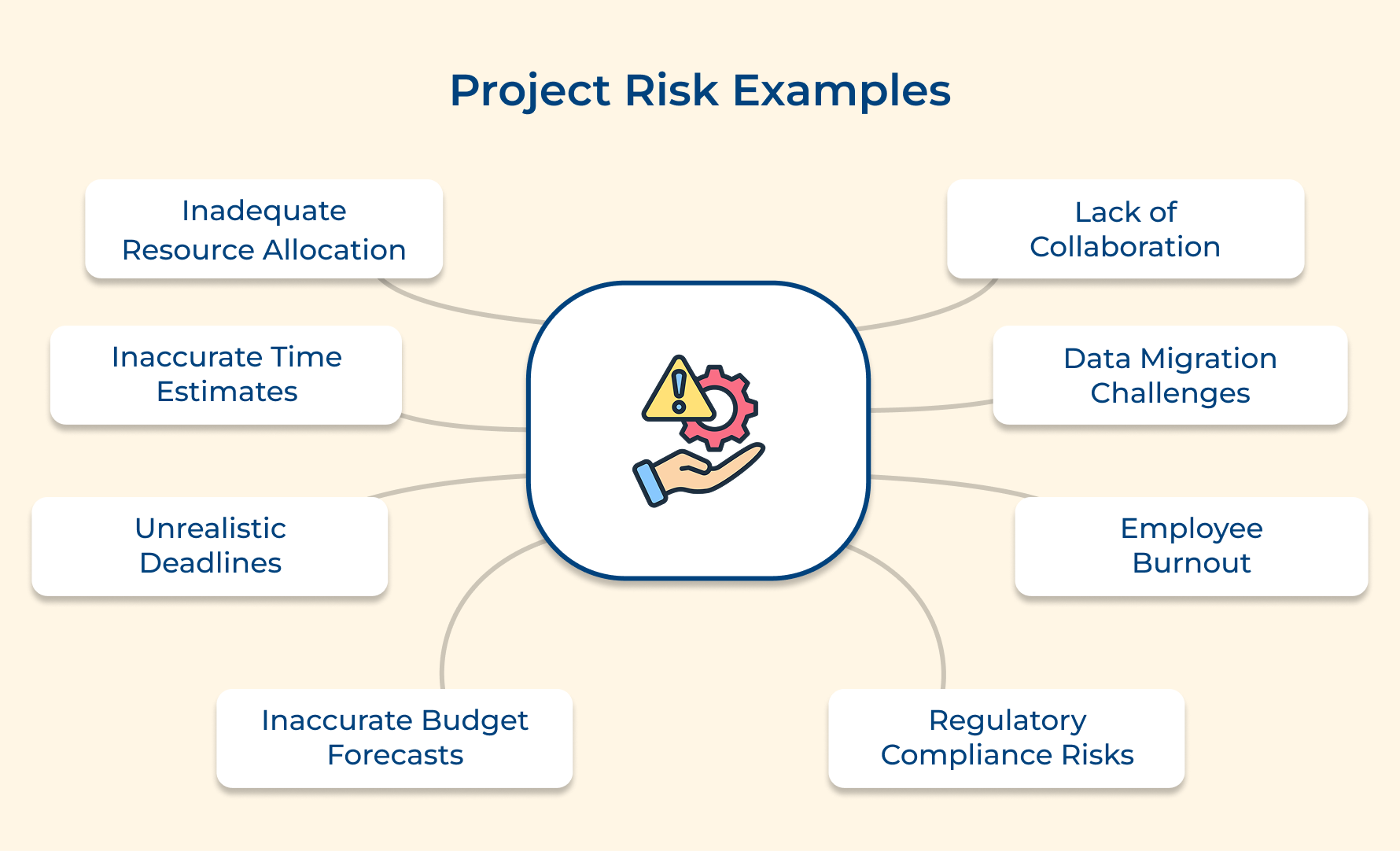
Inadequate Resource Allocation
This risk shows up when your project simply doesn’t have enough people, tools, or materials to get the job done. It usually comes from weak planning or underestimating what the work really requires.
Early warning signs:
- Team members split across multiple projects with no clear priorities
- Critical tasks waiting because no one has the bandwidth
- Managers repeatedly asking for more support
As pressure builds, timelines stretch and quality drops. People rush work, morale sinks and the team starts feeling set up to fail.
Inaccurate Time Estimates
Time estimate issues creep in when schedules rely on optimistic assumptions rather than reality. This often happens when teams ignore dependencies or lack historical data.
Watch out for:
- Tasks taking far longer than planned right from the start
- Experts raising concerns that get brushed aside
- Schedules built with no breathing room
Once delays start, they stack up fast. The Gantt chart gets revised again and again, confidence drops while mistakes increase under pressure.
Unrealistic Deadlines
Unrealistic deadlines usually come from commitments made before the work is fully understood. The dates look firm, but the plan behind them is shaky.
Clear red flags:
- Deadlines handed down instead of agreed on
- Scope reduction discussions shut down immediately
- Team members saying the date feels arbitrary
The result is either missed delivery or rushed output that hurts quality. Burnout rises and trust with stakeholders takes a hit.
Inaccurate Budget Forecasts
Budget risks appear when financial estimates don’t match real execution costs. Hidden expenses and unclear requirements are often to blame.
Warning signs include:
- Spending running higher than planned early on
- Large budget buckets with no detail
- Trade-offs happening sooner than expected
When money runs out, progress stops. Scope cuts follow and financial overruns can damage credibility fast.
Lack of Collaboration
Collaboration risks grow when teams work in silos instead of coordinating. Poor communication and unclear roles create gaps no one owns.
Common indicators:
- Duplicate work happening without anyone realizing
- Decisions made without looping in impacted teams
- Integration issues discovered late
The fallout includes wasted effort, rework and missed details that slow everything down.
Data Migration Challenges
Data migration almost always looks easier than it is. Legacy data issues and unclear dependencies turn simple moves into major projects.
What was planned as weeks can stretch into months as teams clean, validate and fix data. Failed cutovers disrupt operations and risk losing critical information.
Employee Burnout
Burnout builds quietly when pressure never lets up. Constant firefighting and long hours take a toll.
Productivity drops as exhaustion sets in. People leave, knowledge walks out the door and remaining team members face even heavier loads.
Regulatory and Compliance Risks
Compliance risks emerge when legal requirements aren’t fully understood or kept up to date.
Key warning signs:
- Design decisions made without legal input
- Regulations changing while plans stay the same
- Repeated compliance issues during reviews
Using structured risk assessment frameworks and tools like decision tree analysis helps teams evaluate options early while avoiding costly rework or shutdowns later.
How to Manage Project Risks in Project Management?
Now, let’s guide you through seven critical steps to manage project risks successfully, ensuring your projects remain on track and achieve their goals
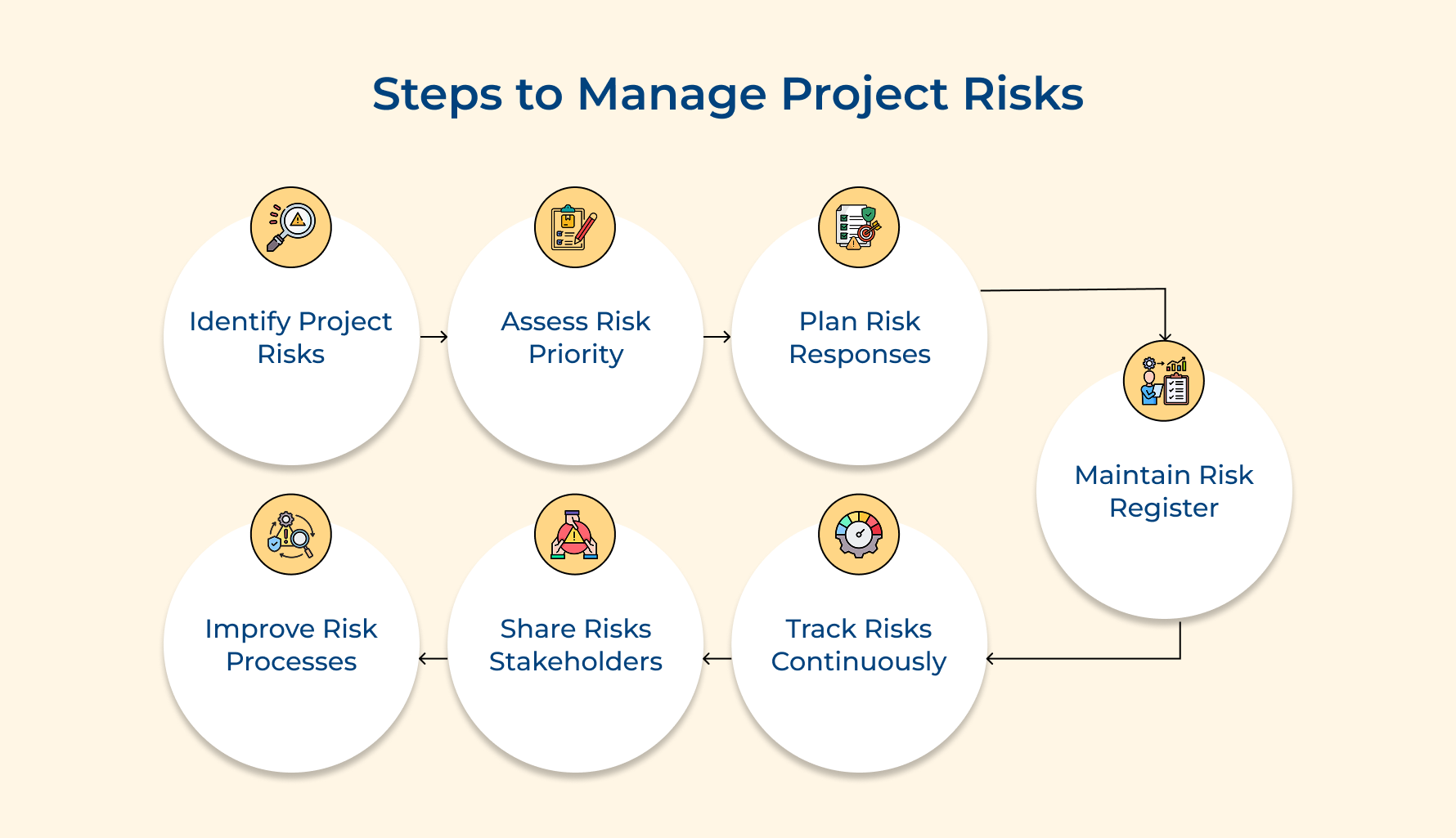
1. Identify All Potential Project Risks
Risk identification is the foundational step where you systematically uncover everything that could potentially affect your project’s success. This step matters tremendously because you simply cannot manage risks you haven’t discovered yet.
Here are four effective methods for uncovering those hidden risks:
- Brainstorming sessions: Gather your team in a room and let ideas flow freely without judgment to surface risks people might hesitate to mention individually.
- Historical analysis: Dig into lessons learned documents and post-mortems from similar past projects to spot patterns that typically cause trouble.
- Documentation review: Comb through your requirements, contracts and technical specifications looking for ambiguities or unrealistic assumptions that signal potential problems.
- Stakeholder interviews: Talk one-on-one with clients, sponsors and subject matter experts who often see risks from angles your team might miss.
Imagine you’re launching a new customer portal and your developer mentions during brainstorming that the legacy authentication system has caused integration headaches before. That single comment just identified a technical risk worth investigating before you’re knee-deep in development.
What happens if you rush through identification and miss important risks? You’ll find yourself constantly firefighting surprises instead of executing your carefully crafted plan. Take the time upfront to be thorough because discovering a risk during planning costs far less than discovering it during crisis mode.
2. Assess and Prioritize Each Risk
Assessment is the process of evaluating each identified risk to understand both how likely it is to occur and what damage it could inflict if it does. It prevents you from wasting energy on minor concerns while critical threats lurk unaddressed in your project.
Here are the key criteria you should consider when prioritizing:
- Probability of occurrence: How realistic is it that this risk will actually materialize during your project timeline based on available evidence?
- Impact severity: What kind of damage would this risk inflict on your schedule, budget, quality, or scope if it actually happened?
- Detection difficulty: How easy or hard will it be to spot warning signs that this risk is about to occur?
- Response time available: Once triggered, how much time would you have to react before the risk causes serious harm to your project?
How do you actually use these criteria to make decisions? Start by scoring each risk on probability as well as impact using a simple scale like low, medium and high. Then multiply those scores together to create your priority ranking. A high probability and high impact risk obviously demands immediate attention as well as mitigation planning.
3. Develop Risk Response Strategies Proactively
Creating specific action plans for major risks helps you stay prepared before problems escalate and disrupt your project. The goal is moving away from last-minute panic toward steady, proactive control as threats arise.
Develop these strategies by pairing each high-priority risk with a clear response type. Some risks can be avoided by changing your approach. Others can be mitigated by reducing their likelihood or impact. Certain risks can be transferred to parties better equipped to handle them. Lower-impact risks can be accepted deliberately, with full awareness of potential consequences.
Here’s what an ideal risk response strategy should include:
- Mitigation actions: Concrete steps you’ll take now to reduce the probability that the risk occurs or lessen its impact if it does.
- Contingency triggers: Specific conditions or warning signs that indicate it’s time to execute your backup plan for this risk.
- Assigned ownership: A named individual who takes personal responsibility for monitoring this risk and implementing the response when needed.
- Resource allocation: Budget and time reserves set aside specifically to fund your response activities without stealing from other work.
4. Document Risks in Risk Register
A risk register is your central repository where every identified risk lives with its assessment, response plan and current status all in one accessible location. This documentation matters because it creates institutional memory while ensuring critical risk information doesn’t disappear when team members go on vacation or leave the project.
You use the register as a living document that gets updated throughout your project as new risks emerge and existing ones evolve or resolve. Think of it as your project’s risk control center where anyone can quickly understand the threat landscape and see who’s responsible for what.
Pro tips:
- Don’t create a complex multi-tab spreadsheet that nobody will actually maintain; a straightforward format.
- Schedule recurring calendar reminders to review and update your register because an outdated risk register is worse than no register at all.
5. Monitor Risks Throughout Project Lifecycle
Monitoring is your continuous surveillance system that watches for risk triggers and tracks how threats evolve as your project progresses. This step is essential because risks don’t stay static; they shift constantly throughout execution.
Reviewing risk status in regular meetings creates accountability and ensures risks don’t slip through the cracks while everyone focuses on daily tasks. You do this by dedicating a standing agenda item in your weekly project meetings where risk owners provide brief updates.
Here are specific scenarios where regular review becomes critical:
- Budget overrun risks: Regular reviews catch spending pattern deviations before you exhaust your contingency reserves.
- Resource availability risks: Weekly check-ins reveal scheduling conflicts before they turn into missed deadlines.
- Technical integration risks: Consistent monitoring spots compatibility issues while there’s still time to architect solutions.
Beyond structured meetings, you need to track early warning indicators that signal a risk is about to materialize. You establish specific measurable thresholds for each major risk and then monitor those metrics continuously.
6. Communicate Risks to All Stakeholders
Risk communication is the practice of sharing relevant threat information with the right people at the right time and level of detail. This matters because stakeholders can’t support your mitigation efforts if they’re operating in the dark about potential problems.
You implement effective communication by tailoring your message to each audience’s needs and creating regular reporting rhythms. Your project team needs detailed tactical information while executive sponsors want high-level summaries focused on risks requiring their intervention.
Best practices:
- Present risk information through color-coded heat maps rather than dense spreadsheets because executives absorb visual information much faster.
- Define clear criteria for when risks get elevated to senior leadership so you’re not hiding major threats.
7. Learn and Improve Risk Processes
This final step involves systematically capturing lessons from your risk management experience and using those insights to strengthen your approach on future projects. The significance lies in transforming individual project experiences into organizational wisdom.
Conduct Thorough Post-Project Risk Reviews
After project completion, gather your team to discuss what worked and what failed in your risk management approach. This session should examine which risks you identified accurately and which ones blindsided you. The goal is honest reflection rather than blame assignment.
Document Actionable Lessons for Future Teams
Transform your review insights into concrete recommendations that future project managers can actually use. Write these lessons in specific terms like “always involve security during API design” rather than vague advice. Store these lessons where they’re easily discoverable by others.
Continuously Refine Your Identification Methods
Use what you learned to improve how you spot risks at the start of new projects. If certain risk categories consistently caught you off guard, add specific brainstorming prompts that force teams to consider those blind spots. Your toolkit should evolve based on accumulated experience.
6 Most Effective Risk Mitigation Strategies for Projects
Every project manager needs a toolkit of practical strategies to reduce the likelihood or impact of risks. Let’s explore six proven approaches you can deploy when threats emerge in your projects.
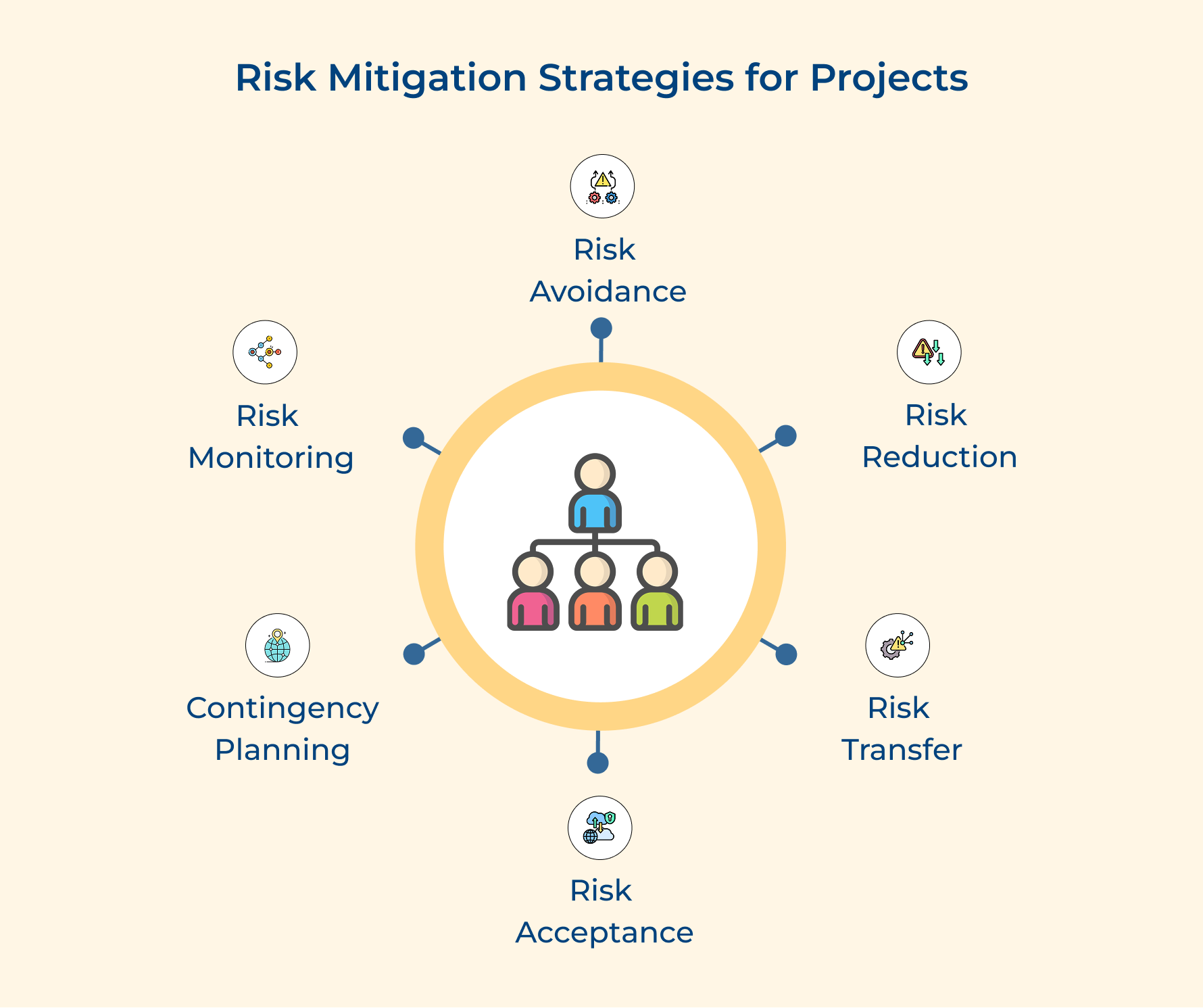
Risk Avoidance
Risk avoidance is about steering clear of trouble altogether. If something looks too risky, you change the plan so it’s no longer a threat. That could mean cutting a risky feature from scope, switching to a more stable technology, or replacing a vendor that keeps causing issues.
Risk Reduction
Risk reduction focuses on lowering the chances of a problem happening or limiting the damage if it does. Extra testing, cross-training team members, or building small prototypes early all help reduce surprises before they turn into bigger setbacks.
Risk Transfer
A transfer means passing responsibility to someone better suited to handle it. Insurance, outsourcing risky work, or clearly defined contract clauses are common ways to move risk away from your core team and reduce direct exposure.
Risk Acceptance
Risk acceptance is a conscious choice. Some risks just aren’t worth fixing because the effort or cost outweighs the impact. These risks get documented clearly and stakeholders know exactly what could happen if they show up.
Contingency Planning
Contingency planning is your backup plan. You prepare alternatives ahead of time – extra budget, backup suppliers, or workaround solutions – so you can react fast if a risk actually becomes reality.
Risk Monitoring
This strategy keeps you one step ahead. Regular check-ins, simple dashboards and clear warning thresholds help you spot trouble early as well as take action before issues spiral out of control.
4 Simple Project Risk Management Tools
Managing project risks effectively requires the right tools to identify, analyze and track threats systematically. Here are five essential tools that help project managers stay in control.
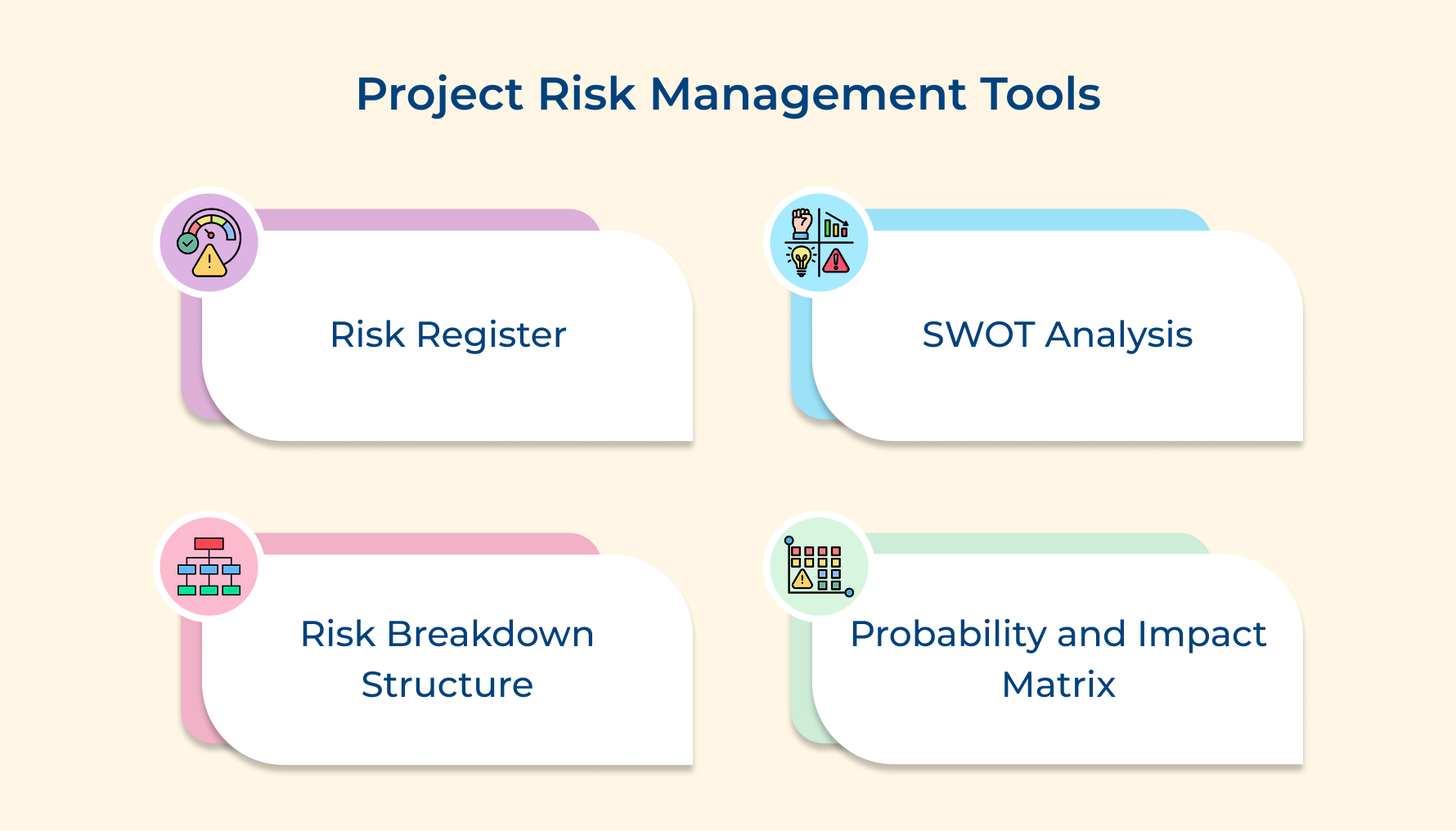
Risk Register
A risk register is your centralized database where you document every identified risk along with its assessment, ownership and response strategy. This spreadsheet or software tool captures the risk description, probability and impact ratings, mitigation plans, as well as current status so nothing falls through the cracks.
SWOT Analysis
SWOT Analysis examines your project through four lenses: Strengths, Weaknesses, Opportunities and Threats to uncover risks you might otherwise miss. By systematically working through each quadrant, you build a comprehensive view of your project’s risk environment while also spotting positive risks worth pursuing.
Risk Breakdown Structure
A Risk Breakdown Structure organizes potential risks into hierarchical categories like technical, organizational, external and project management to ensure comprehensive coverage. This tree-like diagram helps teams brainstorm more effectively because thinking in categories triggers recognition of risks that random brainstorming might miss.
Probability and Impact Matrix
The Probability and Impact Matrix is a simple grid that plots each risk based on how likely it is to occur as well as how much damage it would cause. You assign each risk a color code like red for high priority or green for low priority, making risk prioritization decisions transparent and defensible.
Secure Your Project’s Success with Strategic Risk Management
Project risks in project management isn’t about eliminating uncertainty because that’s impossible in any worthwhile endeavor. Instead it’s about building resilience so your project can absorb shocks and adapt when unexpected challenges emerge during execution.
The teams that succeed consistently are those who treat risk management as an ongoing discipline rather than a checkbox exercise. By identifying threats early and responding proactively, you transform potential disasters into manageable challenges that strengthen rather than derail your project’s path to success.
Limit time — not creativity
Everything you need for customer support, marketing & sales.

Neeti Singh is a passionate content writer at Kooper, where he transforms complex concepts into clear, engaging and actionable content. With a keen eye for detail and a love for technology, Tushar Joshi crafts blog posts, guides and articles that help readers navigate the fast-evolving world of software solutions.