Effective Project Communication Management: A Complete Guide
- Types of Project Management Communication to Consider
- How to Create a Project Management Communication Plan?
- 7 Actionable Steps to Manage Project Management Communication
- Why is Project Communication Management Important?
- Best Practices to Improve Project Communication Management
- Take Project Management to the Next Level with Effective Communication
- FAQs about Project Management Communication

Key Highlights:
- The guide explains practical ways to choose the right project communication management methods and tools so your team shares information clearly.
- Strong communication practices help teams avoid confusion, stay aligned on priorities and move forward with clarity.
- A well-planned communication rhythm keeps updates flowing smoothly, speeds up decisions and ensures project progress stays visible to everyone.
Your project team seems busy but clients keep asking for updates you thought you already sent. Meetings run long without clear outcomes and deadlines get missed because someone didn’t receive critical information on time.
These communication breakdowns don’t just create frustration and waste hours in clarification emails. They erode client trust as well as cause expensive rework when teams build features based on misunderstood requirements or outdated decisions.
Project communication management gives you a structured approach to ensure the right information reaches the right people at the right time. This guide covers everything you need to build communication systems that keep projects running smoothly.
What is Project Communication Management?
Project communication management is the systematic process of planning how information flows between everyone involved in a project. It ensures the right people receive the right messages at the right time through the right channels. This discipline creates a framework for sharing updates and building alignment across your team.
When communication management works well, your project moves faster because people spend less time searching for information or clarifying misunderstandings. Teams make better decisions since everyone works from the same knowledge base. Trust builds naturally when stakeholders feel informed as well as included in the project’s progress.
Key objectives:
- Planning information flow: Determine who needs what information and establish the channels through which it will travel.
- Ensuring message clarity: Make certain that technical details and project updates are understandable to each audience receiving them.
- Managing expectations: Align what people anticipate about timelines and deliverables with what the project can actually achieve.
- Documenting decisions: Create a reliable record of choices made and rationale behind them so the team can reference this knowledge later.
Types of Project Management Communication to Consider
Different situations call for different communication methods. Understanding these types helps you choose the most effective strategy for each message with your team or clients.
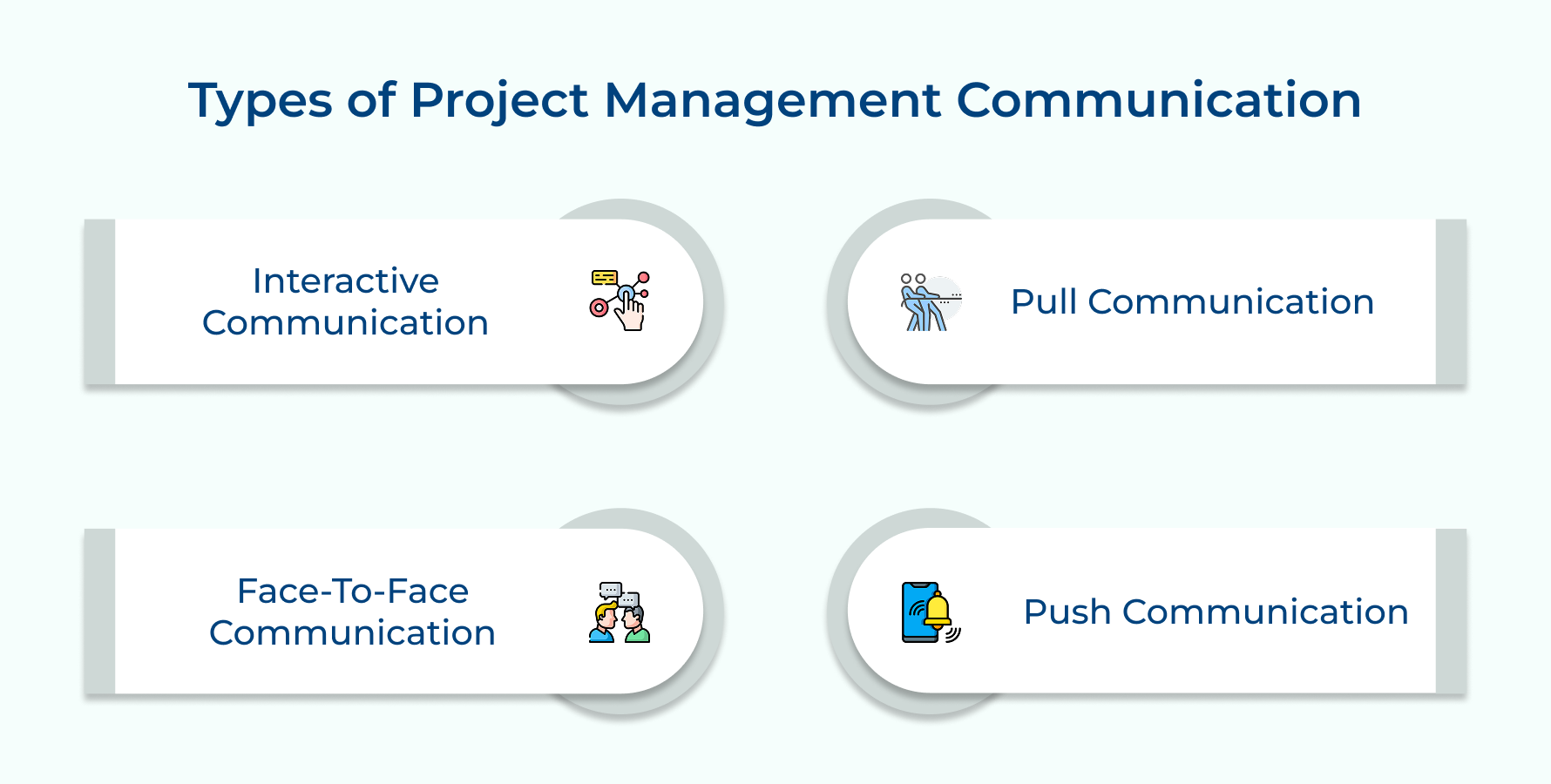
Interactive Communication
Interactive communication happens when teams share information in real time and can respond instantly. It’s the most dynamic of all communication methods because you can clarify doubts, reset expectations, or realign project objectives right on the spot. Whether you’re discussing a tricky part of the project scope or trying to unblock tasks in your project plans, this back-and-forth keeps everyone moving in sync.
Typical channels include:
- Phone calls, where tone and urgency become clear during quick check-ins or client updates.
- Video conferences, which add facial expressions and make remote standups feel more connected.
The style fits perfectly into many communication models because it strengthens relationships and ensures everyone feels heard. Real-time dialogue helps teams build trust, solve problems faster and stay aligned on what matters most.
Pull Communication
Pull communication is all about making information available for people to access when they need it. Instead of pushing updates, you keep everything organized in one place so stakeholders can pull the content that’s relevant to them. This works especially well for non-urgent project documentation that supports the broader project objectives.
Common examples include:
- Project wikis where technical details or project scope notes stay searchable.
- Shared drives that hold files team members can review as tasks progress.
- Project dashboards clients can check whenever they want a quick visual snapshot.
It’s an efficient communication method because it respects everyone’s time and reduces interruptions. People stay informed without needing constant reminders.
Face-to-Face Communication
Face-to-face communication brings everyone into the same room—literally. It’s the richest form of interaction because you can read expressions, understand reactions and sense the energy during key project discussions. When you’re navigating sensitive topics or reviewing major changes to the project scope, nothing beats this format.
Helpful in-person settings include:
- Workshops, where teams unpack problems together and refine project plans.
- One-on-one meetings for honest feedback or client conversations.
- Team gatherings that support both planning and team bonding.
The communication model becomes essential for complex or emotionally charged situations. When stakes are high, being physically present helps everyone stay focused and aligned.
Push Communication
Push communication sends information directly to people without expecting an immediate reply. It’s great when you want to make sure no one misses critical updates tied to deadlines, deliverables, or changes in project objectives.
Typical channels include:
- Emails for detailed updates or shared documents.
- Text alerts for urgent changes that need quick visibility.
- Scheduled status reports that keep stakeholders informed at consistent intervals.
It helps maintain record-keeping and accountability. Since you’re pushing updates to specific people at specific times, you know the right information reaches the right audience—especially during fast-moving phases of a project.
How to Create a Project Management Communication Plan?
A strong project management communication plan ensures that the right people receive the right information at the right time. These steps will help you design a framework that keeps information flowing smoothly throughout your project lifecycle.
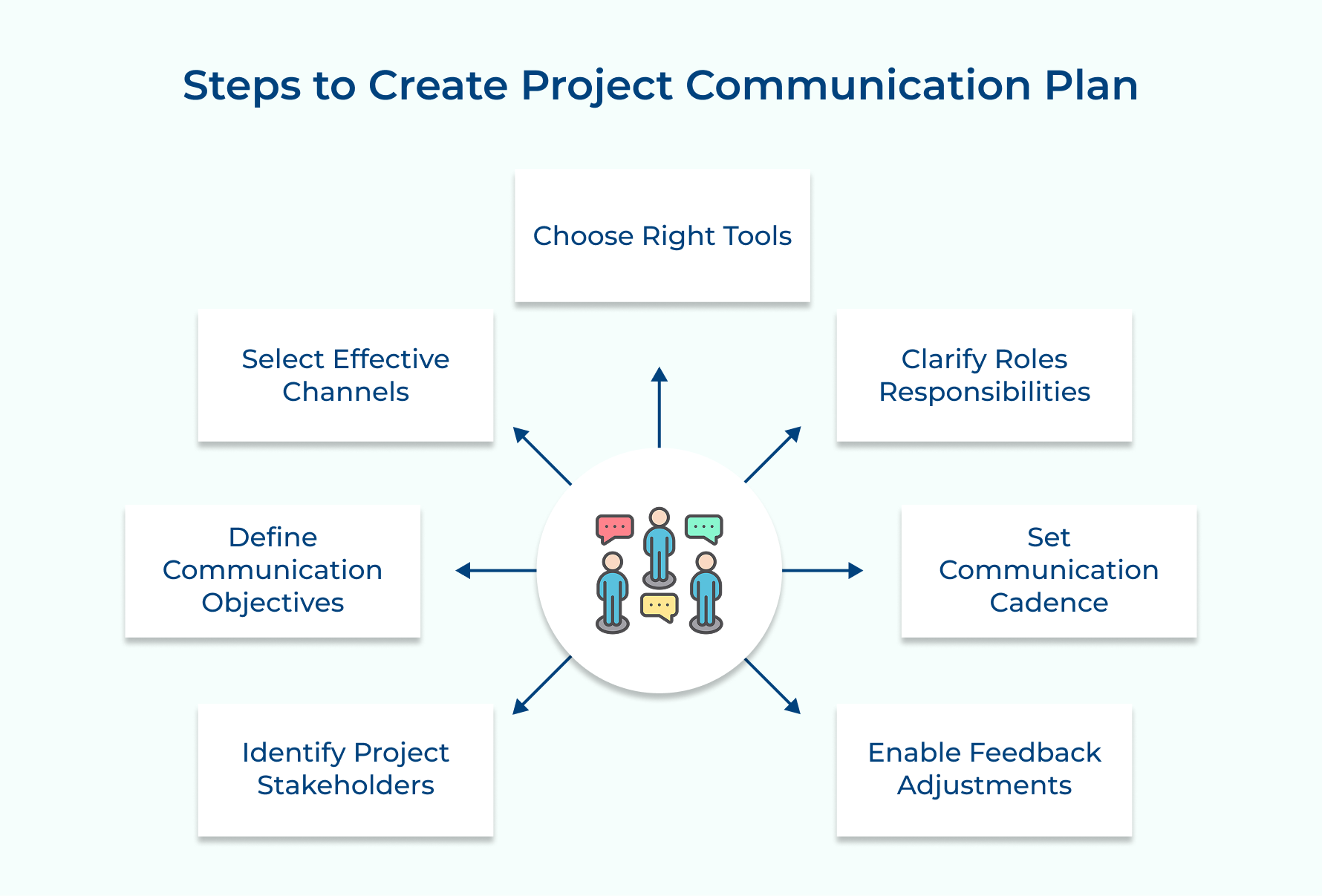
Identify and Understand Key Project Stakeholders
Start by mapping out everyone who influences your project’s outcome or will feel the impact once it’s delivered. This step acts like a quick Communication Requirements Analysis, helping you understand who needs what information and when. Include your team, clients and executives so no one gets left out because of simple communication barriers.
Define Clear Communication Objectives
Think about what each message should achieve instead of sending updates just to stay visible. Maybe you’re clarifying shifts in project schedules or helping team members prioritize their tasks. Clear goals make every interaction more meaningful and reduce confusion as the project evolves.
Select the Most Effective Channels
Choose channels based on the type of message you’re sharing. Detailed technical discussions often work best face-to-face, while routine updates fit nicely into emails or quick pings. This flexibility mirrors how teams operate in agile project management, adjusting communication as work progresses.
Choose the Right Tools
Use tools your stakeholders actually like and will consistently check. If it’s project software, chat apps, or shared folders, the best tools are the ones everyone uses—otherwise, information gets lost and communication barriers start to grow quickly.
Clarify the Roles and Responsibilities of the People Involved
Define who’s responsible for each communication task so nothing gets overlooked during busy phases. A RACI matrix works great here, ensuring the project manager, team leads and contributors all know who updates clients, assigns tasks, or shares progress.
Establish Communication Frequency and Timing
Create a predictable rhythm for your communication so stakeholders always know when updates are coming. Daily standups help teams stay aligned, while biweekly client reports offer consistent insight without overloading anyone.
Create Feedback Loops and Adjustment Mechanisms
Make sure your plan evolves as the project moves forward. Regularly check if everyone’s getting the clarity they need and adjust your approach if gaps appear. Feedback helps identify hidden communication barriers early, keeping information flowing smoothly.
7 Actionable Steps to Manage Project Management Communication
Let’s explore seven essential steps to enhance communication in your projects, helping you steer your team toward achieving their goals smoothly and efficiently.
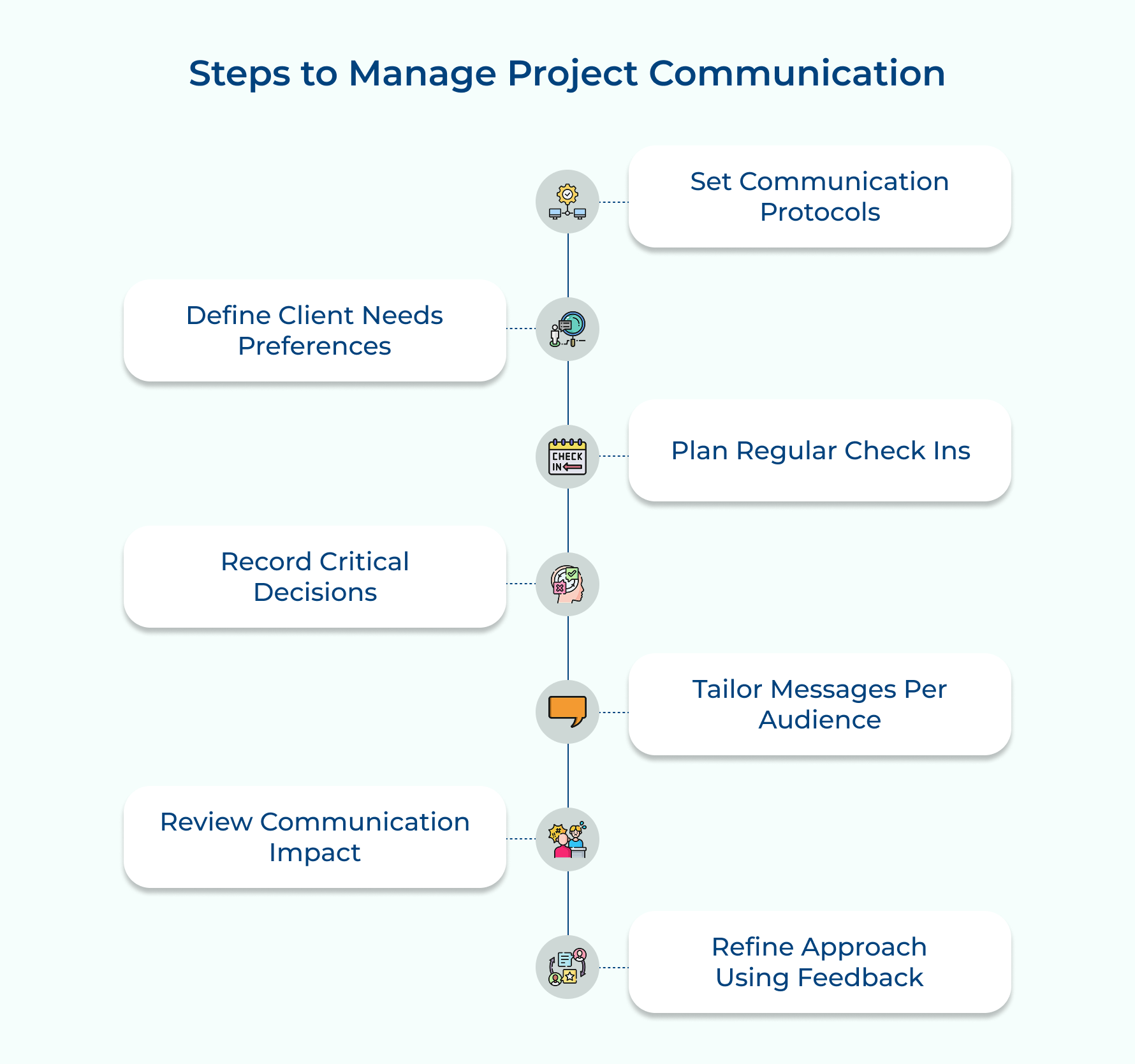
1. Establish Communication Protocols from Day One
Setting clear communication rules at the project’s start prevents confusion and creates predictable patterns that everyone can rely on. When your team and clients understand how information will flow, they spend less time wondering when they’ll hear back.
Here are four essential protocols to establish right from your project kickoff:
- Define response time expectations: Specify that urgent client requests get replies within two hours while routine questions receive responses by end of business day.
- Set standard formats for updates: Create templates that show project status using consistent sections so clients know where to find the information they need.
- Create escalation procedures: Outline the exact steps for raising critical issues so problems reach the right decision-makers without unnecessary delays.\
- Establish communication ownership: Assign specific team members to handle different types of client inquiries so messages don’t get lost.
For example a web development agency starts every client project with a communication charter that states all bug reports get acknowledged within one hour. When a client reports a broken checkout page, the project manager responds immediately to confirm receipt and provides an estimated fix timeline.
2. Map Client Information Needs and Preferences
Understanding what each client actually needs to know prevents you from overwhelming them with irrelevant details or leaving them in the dark. Different clients care about different aspects of your project and communicating effectively means tailoring your approach to match their specific concerns.
If you’re unsure about your client’s communication preferences, start by asking them these four key questions:
- What specific project metrics or milestones do you want to track most closely?
- Which communication channels do you check most frequently during your workday?
- How much technical detail do you prefer in status updates versus high-level summaries?
- What time of day or day of week works best for scheduled project discussions?
These questions reveal the practical realities of how your client operates and what information actually helps them do their job. A busy executive might prefer brief weekly emails while a hands-on product manager wants daily Slack updates with technical specifics.
How do you turn these answers into an actual communication map? Create a simple matrix that matches each client contact with their preferred channels and the type of information they need. If your client wants to track the budget closely, add monthly spend reports to their plan.
3. Schedule Regular Touchpoints and Check-Ins
Creating a predictable rhythm of communication keeps everyone aligned without requiring constant ad-hoc meetings that interrupt productive work. When clients know exactly when the next conversation will happen, they can prepare their questions instead of operating in reactive mode.
Why does scheduling matter so much for project communication? Regular touchpoints create accountability because everyone knows they’ll need to report progress at specific intervals. This structure also prevents small issues from festering into major problems.
Consider adding these regular touchpoints to your project communication schedule:
- Weekly team standup meetings: Keep your internal team synchronized on current tasks so coordination problems get caught before they impact client deliverables.
- Monthly strategic planning sessions: Evaluate in case the project direction still aligns with client goals and make course corrections if needed.
- Milestone completion demos: Schedule live walkthroughs when major features finish so clients can verify that deliverables meet their expectations.
What happens if you schedule too many meetings and everyone gets exhausted? Watch for declining attendance or participants multitasking during calls and then consolidate your touchpoints. You might combine your weekly standup with a brief client check-in if the topics naturally overlap.
4. Document All Critical Project Decisions
Recording why you made specific choices creates a shared memory that prevents repetitive discussions and helps new team members understand the project’s evolution. When questions arise weeks later about why something was built a certain way, documentation provides clear answers.
Documentation serves as your project’s insurance policy against confusion and miscommunication down the road. A client might forget they approved a scope reduction and later question why a feature is missing.
How do you actually use this documentation during active project work? Reference your decision records whenever similar questions come up to maintain consistency in your approach. If a client asks to add functionality that you previously decided against, pull up the original discussion.
Pro tips:
- Tag each documented decision with the project phase and stakeholders involved so you can quickly filter to find relevant precedents.
- Store your decision logs in the same tools where you manage daily project work so team members actually see and use them.
5. Adapt Your Message for Each Audience
Tailoring your communication to match each audience’s expertise level ensures your message actually lands instead of creating confusion. When you speak the right language for each stakeholder group, they can quickly grasp what matters to them.
Here are three effective ways to customize your messaging for different audiences:
- Translate technical details for non-technical clients: Strip away jargon when explaining progress to business stakeholders who care about outcomes rather than implementation methods.
- Provide executive summaries for leadership teams: Distill your updates into high-level impacts on budget and timeline since executives need to understand project health at a glance.
- Share detailed specifications with implementation teams: Include the technical depth that developers need to actually execute the work without making assumptions. Provide exact acceptance criteria so your team doesn’t waste time building unnecessary features.
For example a digital marketing agency sends three different updates about the same website redesign. The CEO receives a brief email stating the site will launch on schedule. The marketing director gets a detailed walkthrough of new conversion features with screenshots. The IT team receives technical documentation about server requirements.
6. Monitor Communication Effectiveness and Gather Feedback
Tracking how well your communication approach actually works reveals gaps before they damage client relationships or derail project progress. What seems like a perfect communication plan often needs adjustment once you see how people respond.
You can monitor your project management communication effectiveness by directly asking clients. Rather than assuming your updates hit the mark, create intentional moments to check if clients feel properly informed. This feedback helps you spot patterns like certain stakeholders feeling left out.
- Are you receiving project updates frequently enough to feel confident about our progress?
- Do our status reports contain the right level of detail for your needs?
- Which communication channel works best for reaching you when we need quick input?
Beyond asking questions, track these four key metrics that reveal communication health. These metrics give you concrete data about engagement levels and in case your communication actually prompts the responses you need. Low email open rates might signal that your subject lines don’t convey urgency.
- Response time to client inquiries
- Meeting attendance rates
- Email open and read rates
- Action item completion percentages
Based on these insights you can identify communication gaps early. When you notice a client consistently missing approvals, you can proactively adjust by building in earlier review windows.
7. Adjust Your Approach Based on Results
Refining your communication strategy based on real feedback keeps your approach effective as project conditions evolve and stakeholder needs shift. What worked perfectly during project kickoff might need modification once you hit the intense execution phase.
How do you actually implement these adjustments during active projects? Review your communication metrics monthly and compare them against client feedback to spot misalignments. If clients say they want fewer emails but your response rates are high, maybe the frequency isn’t the real issue.
Pro tips:
- Document what communication changes you make and why so you can evaluate in case the adjustments actually improved things.
- Involve your client in major communication shifts by explaining what you noticed and proposing the change rather than suddenly switching formats.
Why is Project Communication Management Important?
Well-structured communication models transform how projects unfold from start to finish. These benefits show why investing time in communication planning pays off throughout the entire project journey.
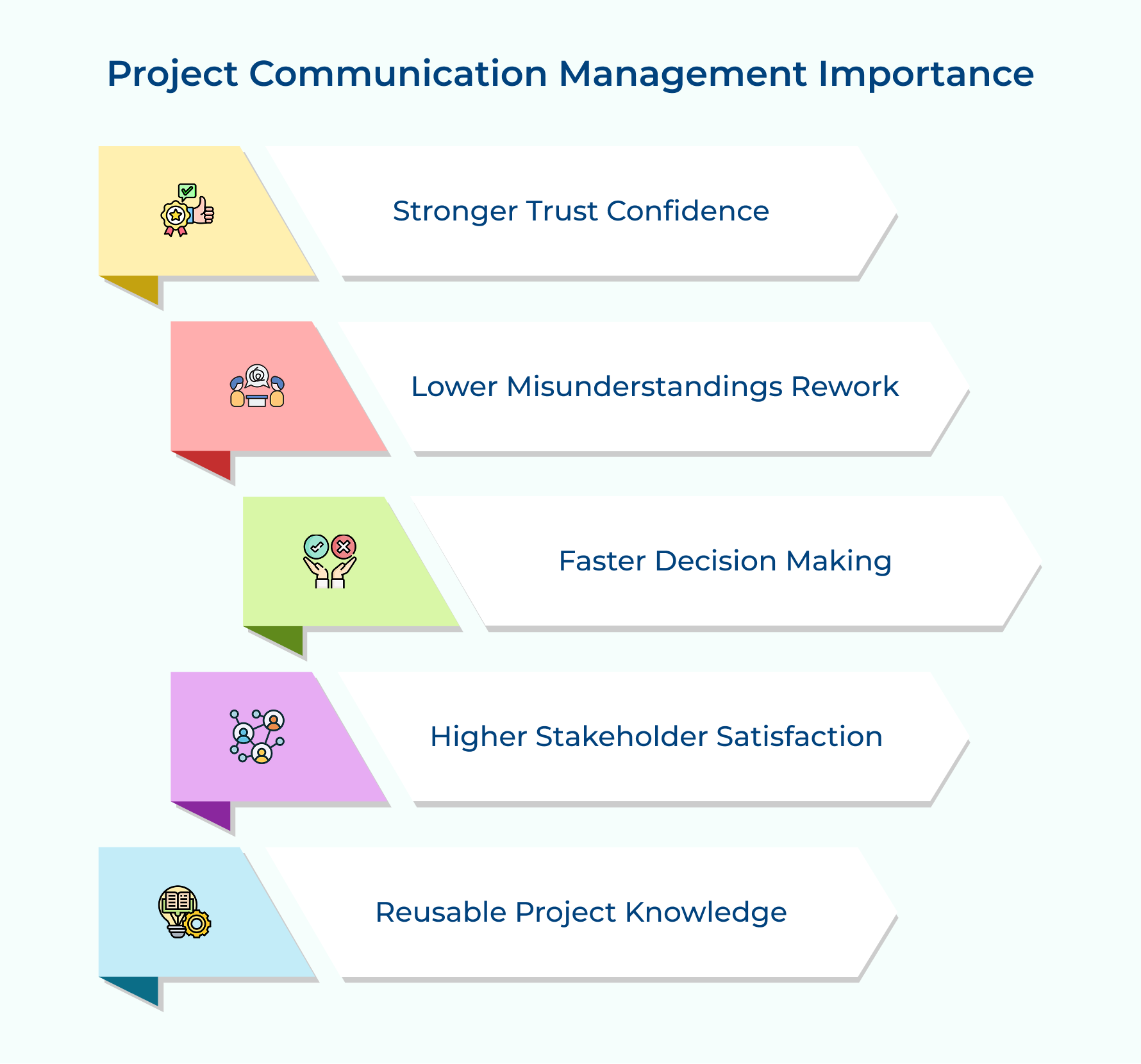
Builds Stronger Trust and Confidence
When stakeholders get consistent updates on progress, they naturally gain confidence in your ability to meet the project objectives. Transparent communication makes it clear that the team is moving in the right direction, even when issues pop up and shows that your communication methods keep everyone informed as well as aligned.
Reduces Costly Misunderstandings and Rework
Clear communication helps everyone understand the project scope and expectations from the start. When the team knows exactly what needs to be delivered, they avoid building the wrong features or making assumptions that lead to expensive fixes and wasted effort later in the project.
Accelerates Decision-Making Processes
Strong communication methods create smoother pathways for sharing information when decisions are time-sensitive. Stakeholders can respond quickly because they already understand the context and have the details they need without waiting for clarification or digging through outdated project plans.
Increases Stakeholder Satisfaction and Engagement
Stakeholders feel respected when they receive timely updates and have chances to share feedback on the project direction. This involvement keeps them engaged and supportive of the project objectives, rather than feeling like spectators waiting for a final outcome.
Creates Knowledge Assets for Future Projects
Your documentation and communication records eventually become helpful knowledge assets. Future teams can look back on what worked, what didn’t and where communication gaps occurred, making it easier to improve processes as well as refine project plans for upcoming initiatives.
Best Practices to Improve Project Communication Management
These practices help you build a communication culture that keeps everyone informed throughout your project.
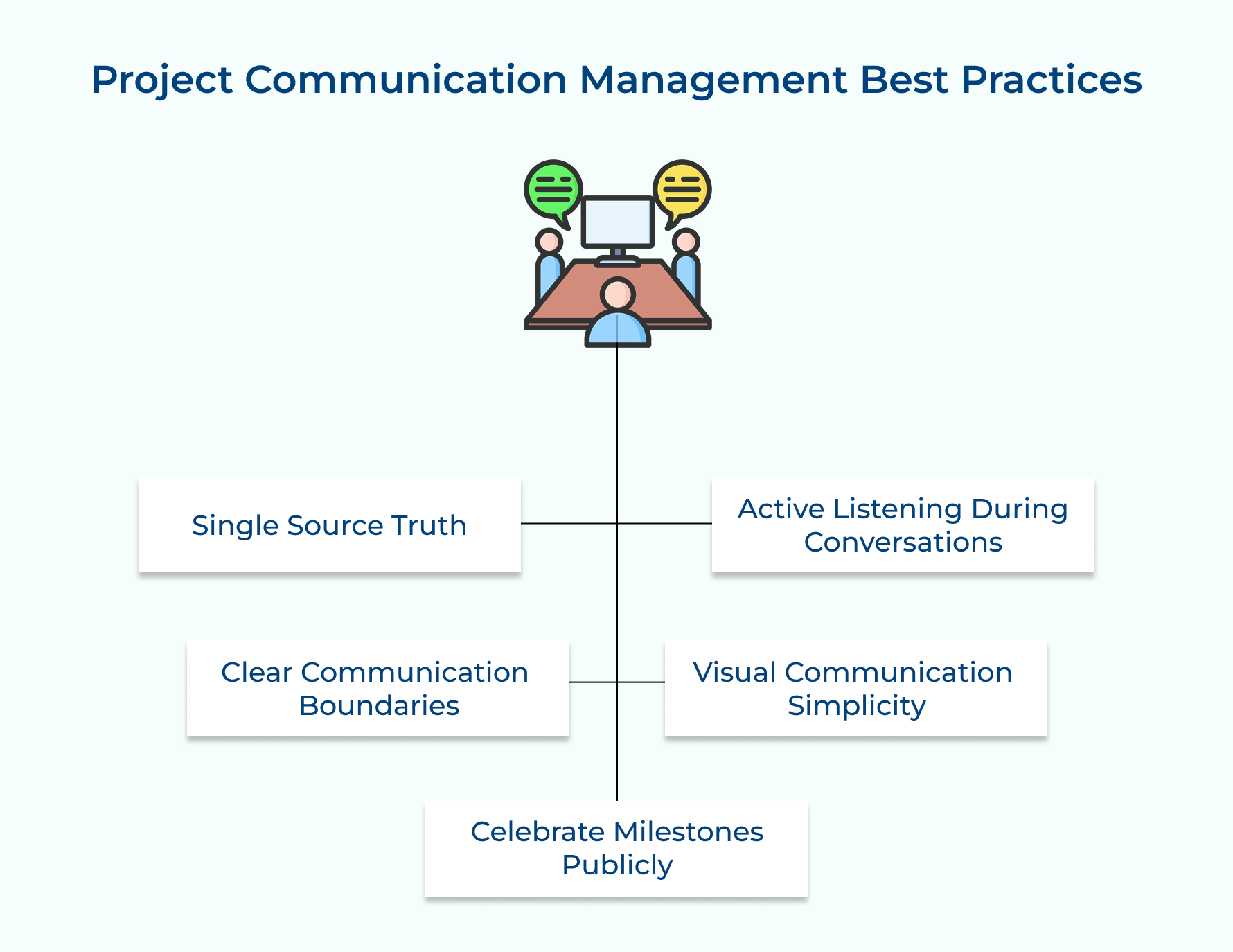
Create a Single Source of Truth for Project Information
Keep all project documentation in one easy-to-access place. It removes the confusion of outdated versions or scattered files. When everyone knows exactly where to look, they avoid digging through long email threads and spend more time actually moving the project forward.
Practice Active Listening During Client Conversations
Give clients your full attention and confirm what you’ve heard to prevent costly misunderstandings. Active listening is as simple as asking clarifying questions so you’re fully aligned before you begin building anything based on assumptions.
Set Clear Expectations About Communication Boundaries
Let the team members and clients know when you’re available to protect everyone from burnout while still keeping communication efficient. Clients appreciate clear expectations—they know when to expect replies instead of wondering why a message hasn’t been answered yet.
Use Visual Communication to Simplify Complex Concepts
Mockups, diagrams and simple sketches make it much easier for clients to understand complex ideas. A quick wireframe can explain interface plans far better than long paragraphs trying to describe the same thing.
Celebrate Milestones and Communicate Wins Publicly
Call out completed milestones to keep team morale high and show clients steady progress. Sharing these wins reminds everyone that the project is moving forward, even when you’re working through challenging phases.
Take Project Management to the Next Level with Effective Communication
Mastering project communication transforms how smoothly your projects run and how satisfied your clients feel with the entire experience. Clear protocols and consistent touchpoints eliminate the confusion that causes delays while building the trust that turns one-time clients into long-term partners.
Start implementing these communication practices gradually rather than overhauling everything at once and overwhelming your team. Even small improvements like documenting decisions or adapting messages for different audiences will create noticeable positive changes in how your projects flow from kickoff to delivery.
Limit time — not creativity
Everything you need for customer support, marketing & sales.

Neeti Singh is a passionate content writer at Kooper, where he transforms complex concepts into clear, engaging and actionable content. With a keen eye for detail and a love for technology, Tushar Joshi crafts blog posts, guides and articles that help readers navigate the fast-evolving world of software solutions.