Why is Project Management Important for Business Success

Key Highlights:
- The importance of project management lies in transforming chaos into clarity and control.
- Clear goals, timelines and roles keep teams aligned as well as clients confident.
- Structured planning helps predict risks early and prevent costly last-minute issues.
You’ve watched projects spiral into chaos where deadlines get missed and budgets disappear while clients grow frustrated asking basic questions nobody can answer confidently.
This confusion costs you money as profitable projects turn into break-even disasters that drain energy and damage client relationships. Without structure, you’re constantly firefighting problems that proper planning would have prevented.
The importance of project management is that it transforms chaos into clarity by giving you frameworks for planning work and tracking progress that keeps everyone aligned. This guide explores why structured project management matters and shows practical approaches for implementing it successfully.
What is Project Management?
Project management is the practice of organizing work from start to finish to deliver specific outcomes for clients. It involves coordinating people and resources while keeping everyone aligned on goals as well as timelines. At its core, it’s about turning client requirements into reality through structured planning and execution.
When project management works well, clients get what they need on time and within budget. It prevents miscommunication and keeps teams focused on delivering value rather than reacting to chaos. Strong project management builds trust because clients see their investment producing tangible results consistently.
Key factors for Success:
- Clear objectives: Every project needs well-defined goals that everyone understands from day one.
- Realistic timelines: Setting achievable deadlines prevents burnout and ensures quality work reaches the client.
- Open communication: Regular updates keep clients informed and allow teams to address concerns before they become problems.
- Resource allocation: Assigning the right people to the right tasks ensures efficiency and expertise where it matters most.
- Risk management: Identifying potential obstacles early gives you time to create backup plans and protect project outcomes.
Why is Project Management Important?
Project management isn’t just a nice-to-have skill or process. It’s the foundation that determines whether your work delivers real value to clients or becomes a source of frustration for everyone involved. Let’s explore why it matters so much.
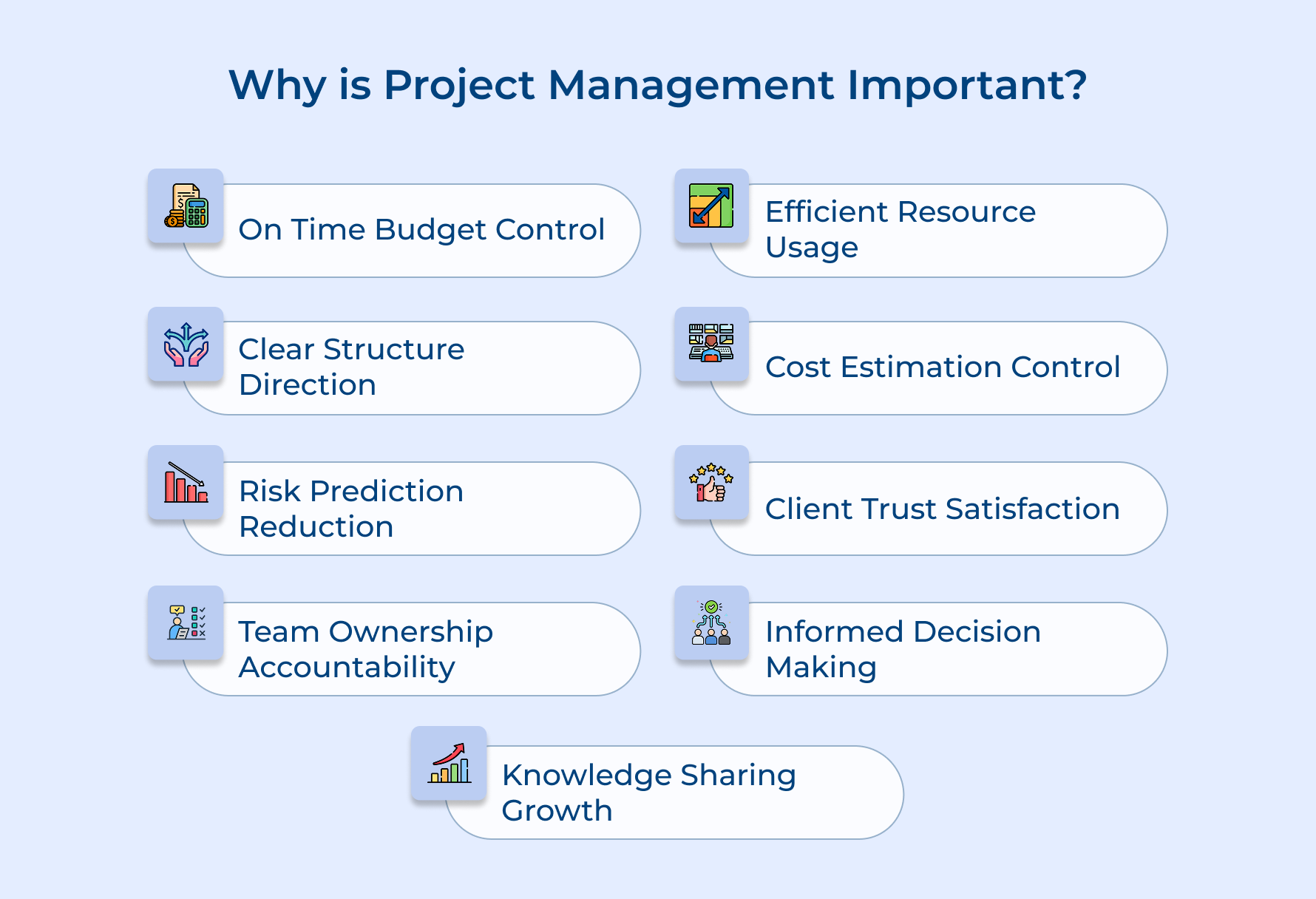
1. Keeps Projects on Schedule and Budget
Strong project management practices act as the guardrail that keeps timelines and budgets under control. Clear systems help you spot problems early and track how work compares to the original plan.
How schedules and budgets stay on track:
- Baseline establishment: Teams define timelines and budgets upfront so the project objectives are clear.
- Regular monitoring: Weekly reviews show if work is slipping before issues escalate.
- Scope management: Every request is evaluated for its impact on time and cost instead of being added automatically.
- Early warning indicators: Tracking project activities—like task progress—helps predict delays in advance.
Consistently delivering within agreed parameters builds client trust because they can rely on accurate timelines and stable budgets.
2. Clear Structure and Direction
The teams here get a roadmap to move from concept to completion without confusion. Clear structure reduces wasted time and ensures every task contributes to project objectives. Teams end up repeating work, missing important steps, and giving clients unclear or conflicting progress updates.
Here’s how structure is established through proper planning:
- Defined workflows: Each project phase has clear entry and exit criteria, guiding teams when to start and finish.
- Role clarity: Everyone knows their responsibilities and who to collaborate with at each stage.
- Milestone mapping: Breaking work into measurable chunks helps teams see progress and understand how individual tasks fit into the bigger picture.
Investing in upfront planning prevents chaos and keeps project performance smooth throughout.
3. Predicts and Minimizes Project Risks
Project management software helps the teams turn uncertainty into manageable scenarios, letting you plan for potential problems before they impact project performance. Instead of relying on luck, teams actively identify risks and create contingency plans.
Here’s how effective management predicts and mitigates risks:
- Client delays: Anticipate feedback or approval delays and adjust timelines accordingly.
- Resource availability: Plan for key team members potentially being unavailable during critical stages.
- Technical dependencies: Identify tasks dependent on vendors or systems that may take longer than expected.
- Budget and scope changes: Monitor project scope to prevent unexpected cost impacts.
- External factors: Consider regulations or market changes that could affect project activities.
You minimize these risks by building buffer time into schedules and maintaining open communication channels with everyone involved. Regular risk reviews let you adjust plans before small concerns escalate into project-threatening issues that could damage client relationships.
4. Team and Individual Accountability
Project management practices create transparency so everyone knows their responsibilities and deadlines. This reduces confusion, prevents missed deadlines and improves overall project performance, ensuring clients receive high-quality work consistently.
Here’s how accountability is built:
- Clear assignment: Each task is assigned to a specific team member with defined deadlines and success criteria.
- Progress tracking: Regular updates highlight who is on track and who may need support.
- Performance visibility: Stakeholders can see who delivered what and when, making contributions clear.
- Review points: Scheduled check-ins allow feedback before work progresses, reducing errors and misalignment.
How does this accountability benefit client relationships though? When clients ask about project status, you can give them specific answers about what’s done and what’s coming next. They trust you more because you demonstrate control over the work rather than offering excuses or vague reassurances about everything being fine.
5. Efficient Resource Utilization
It is all about ensuring the right people work on the right tasks at the right time, reducing idle periods and preventing burnout. Efficient resource planning improves project performance while maintaining team morale.
Here’s how resources are utilized effectively:
- Skill matching: Assign tasks based on team members’ strengths, giving complex work to experienced staff and growth opportunities to juniors.
- Capacity planning: Track availability across projects to prevent overcommitment and bottlenecks.
- Workload balancing: Distribute tasks to ensure no one is overwhelmed while others are underutilized.
- Resource visibility: Maintain a clear view of ongoing project activities to optimize team efforts.
6. Estimate and Control Costs
Create reliable delivery which builds long-term client relationships. Clients gain confidence when timelines, project objectives and quality expectations are consistently met, making them more likely to return or provide referrals.
Here’s how satisfaction and trust are strengthened:
- Transparent communication: Regular status updates keep clients informed about project activities and progress.
- Expectation alignment: Clear timelines and deliverables prevent surprises as well as confusion.
- Proactive problem solving: Issues are flagged early with proposed solutions rather than hidden until they escalate.
- Consistency: Delivering on promises reinforces reliability, showing clients they can depend on your team.
Satisfied clients provide more autonomy, trust your judgment and reduce micromanagement, improving overall project performance.
7. Client Satisfaction and Trust
Project management practices provide clear visibility into project activities and performance, replacing guesswork with data-driven insights. This allows teams to make timely, informed decisions that keep projects on track and aligned with objectives.
Here’s how better decisions are supported:
- Real-time tracking: Dashboards and status updates give an accurate view of progress as well as resource availability.
- Trend analysis: Reviewing completion rates and task performance highlights potential issues early.
- Impact evaluation: Understand how decisions affect project scope, schedules and costs before acting.
- Documentation: Record key decisions to learn from outcomes and improve future project activities.
Informed decision-making improves efficiency, minimizes risks and strengthens client trust in project management practices.
8. Better Decision Making Process
Having clear visibility into your work replaces gut feelings with actual data when you need to make critical choices. You can respond quickly to changing circumstances because you understand how different options will impact timelines and resources.
Better decisions come from maintaining current information about project health and team capacity. Real-time dashboards and regular status reviews give you the insights needed to evaluate tradeoffs while choosing the best path forward when circumstances change.
Pro tips:
- Review metrics weekly: Set aside time each week to examine completion rates and resource utilization so you spot trends before they become problems.
- Document decision rationale: Keep brief notes about why you made key project decisions so you can learn from outcomes and improve future choices.
9. Knowledge Sharing and Growth
Capturing lessons and processes from completed work makes your team smarter with each project they tackle together. Instead of starting from scratch every time, you build on past experience to deliver better results faster.
Before understanding how this works, consider these questions that highlight the value:
- What processes worked exceptionally well on your last successful project that you could reuse?
- Which mistakes cost you time or money that you’d want to avoid repeating?
- How could newer team members benefit from seeing how experienced colleagues approached similar challenges?
- What client feedback patterns suggest improvements you should make to your standard approach?
Documentation means each project contributes to your collective expertise rather than remaining isolated in one person’s memory. You create templates and playbooks that help everyone deliver consistently high-quality work.
Importance of Project Management in Different Industries
Project management principles adapt to fit the unique demands of different sectors. While the core concepts remain consistent, each industry applies them in ways that address their specific challenges and client expectations.
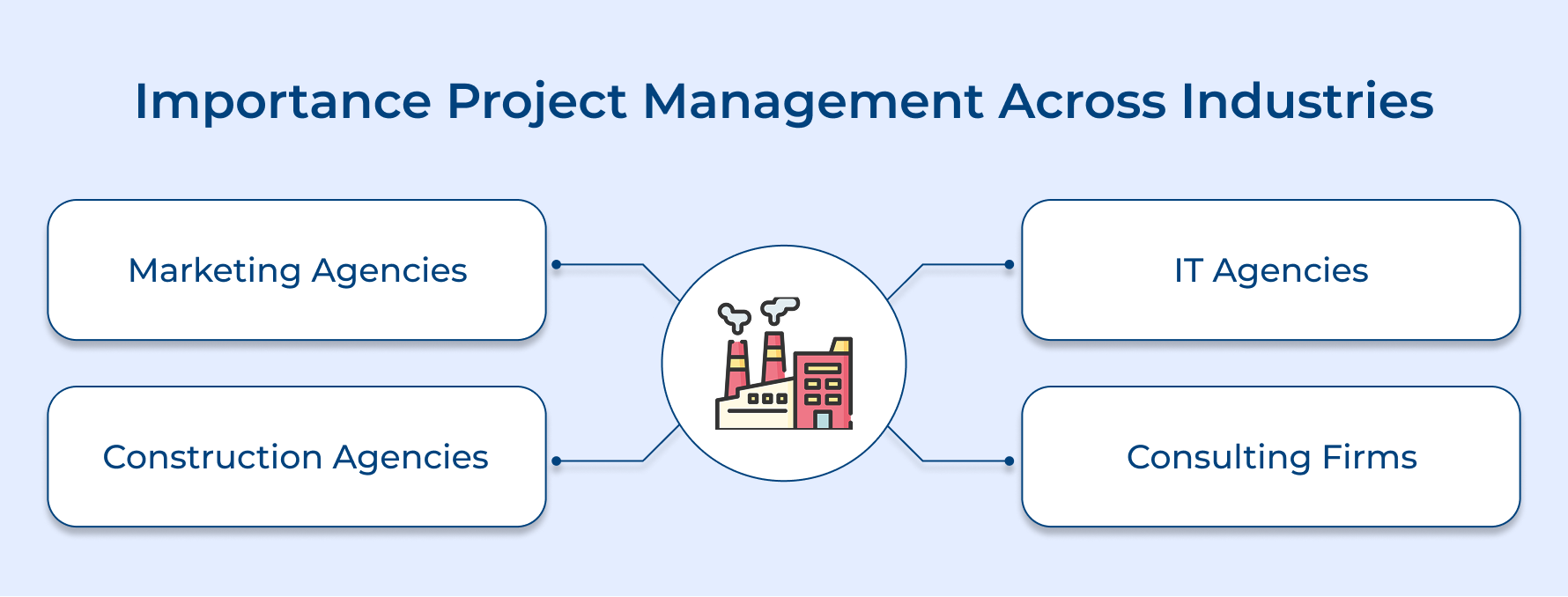
Project Management in Marketing Agencies
Marketing agencies thrive on clear project execution to keep campaigns on track. Without defined workflow stages, creative teams often wait on approvals or feedback, which slows content production and frustrates clients.
Project milestones help everyone understand what needs to be done and when, keeping designers, copywriters, as well as account managers aligned. Project management software helps tracking progress consistently. It enables agencies hit deadlines and budgets while ensuring campaigns launch smoothly. When teams follow structured plans, clients feel confident their marketing investments will deliver results without last-minute surprises.
Project Management in IT Agencies
IT agencies rely on structured planning to handle complex technical dependencies where one delayed component can disrupt entire software development timelines. Using a solid project schedule, managers ensure developers, QA teams and engineers work together efficiently.
Track progress against defined milestones to identify bottlenecks early and reduce costly fixes post-launch. With clear coordination, teams can deliver functional software that meets client requirements on time, keeping both technical staff and clients satisfied.
Project Management in Construction Agencies
Construction projects demand precise timing to coordinate subcontractors, deliveries and site readiness across long, variable timelines. Managing a detailed project schedule ensures crews arrive when needed and materials are used efficiently, preventing idle labor or wasted supplies.
Monitoring project milestones and progress allows managers to adjust for weather, permits, or unexpected delays, keeping the project on track. When planning is structured, construction teams save time and money while clients stay informed as well as confident in delivery.
Project Management in Consulting Firms
Consulting firms guide clients through complex business changes that involve multiple stakeholders and shifting priorities. Clear project execution ensures that strategy, workshops and deliverables stay aligned with goals.
Measure project milestones and progress against agreed objectives to prevent scope creep from expanding engagements beyond budget or timeline. Access to accurate project data helps consultants make informed recommendations and adjustments quickly, giving clients confidence that their transformation will stay on course without surprises.
Objectives of Project Management
Every project aims to accomplish something specific for a client. Project management objectives define what success looks like and give teams concrete targets to work toward throughout execution.
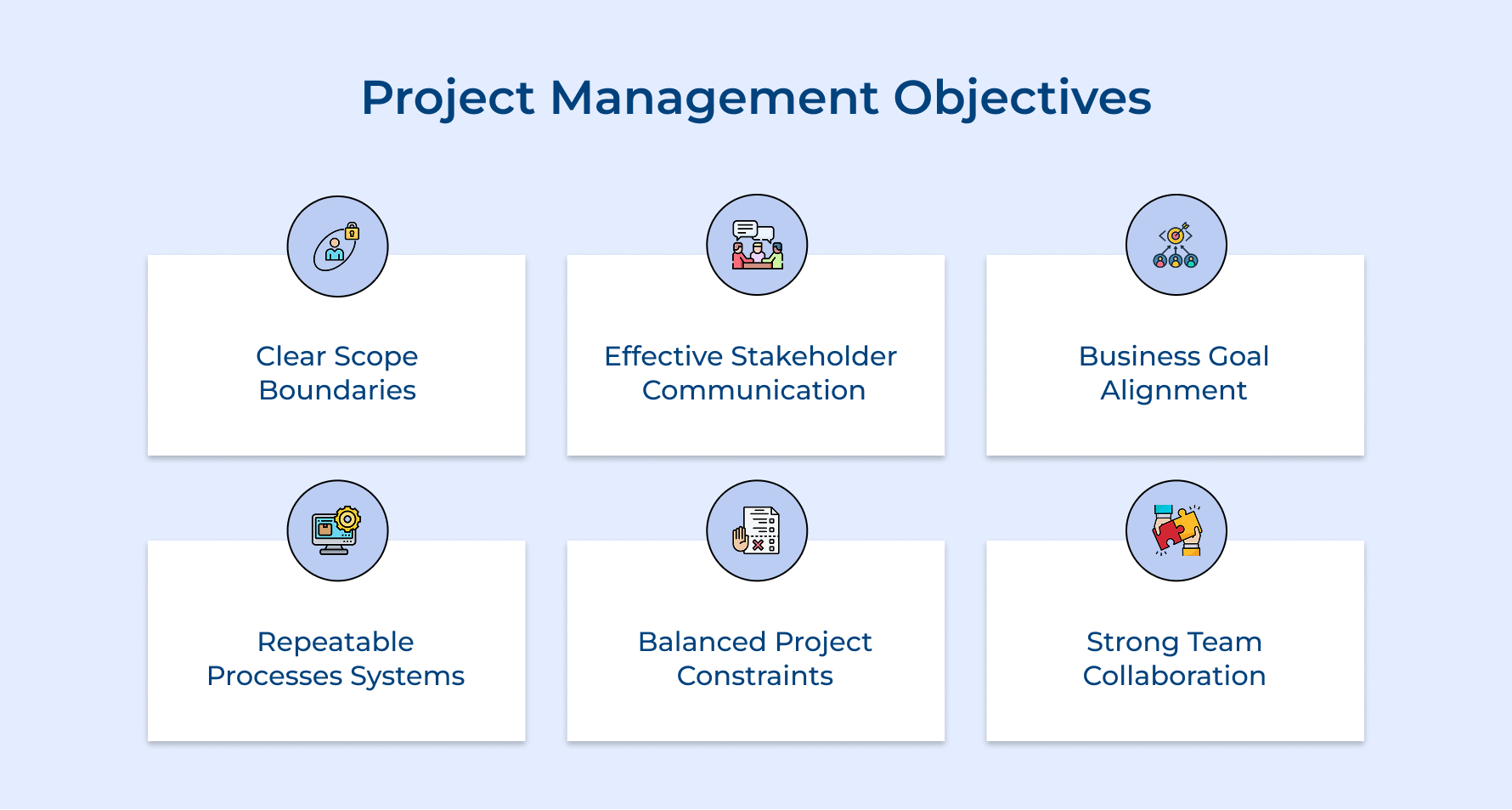
Establish Clear Scope and Boundaries
This objective focuses on defining exactly what the project will deliver and what falls outside its boundaries. You’re creating a shared understanding so nobody assumes work that was never part of the agreement. Clear scope prevents clients from expecting features you never planned to build.
Facilitate Effective Communication Across Stakeholders
Communication objective keeps information flowing smoothly between everyone involved in making the project successful. You’re building channels where team members share updates and clients provide feedback. This objective recognizes that many project failures stem from people working with outdated information.
Align Project Outcomes With Business Goals
The work you’re doing actually advances what the client is trying to achieve in their broader business strategy. You’re constantly checking that project decisions serve the client’s real needs rather than just completing tasks. Projects aligned with business goals show clear value, helping clients feel confident about their investment.
Create Repeatable Processes and Systems
A clear system objective encourages documenting what works so future projects benefit from today’s lessons. You’re building frameworks that let teams execute similar work more efficiently next time. This objective transforms individual project success into organizational capability that compounds over time.
Balance Competing Project Constraints
Project objectives acknowledge the constant tradeoffs between time, cost, quality, and scope during execution. You’re making informed decisions about where to be flexible based on what matters most to the client. Changing circumstances make it easier to adjust one constraint while protecting the others.
Build Collaboration and Team Performance
The final objective centers on creating an environment where people work together effectively rather than in isolated silos. You’re removing barriers that prevent collaboration and building team dynamics where people support each other. Great project outcomes depend on how well people work together, not just on individual talent.
Master your Goals with Effective Project Management
The importance of project management is that it transforms how you deliver work to clients by replacing chaos with clarity and guesswork with data-driven decisions. When you master these principles, projects stop feeling like unpredictable struggles and start becoming repeatable successes that build your reputation.
The goals and objectives we’ve explored give you a framework for handling any project regardless of its complexity or industry. Start applying these concepts to your next client engagement and watch how structure creates better outcomes for everyone involved in the work.
Limit time — not creativity
Everything you need for customer support, marketing & sales.

Neeti Singh is a passionate content writer at Kooper, where he transforms complex concepts into clear, engaging and actionable content. With a keen eye for detail and a love for technology, Tushar Joshi crafts blog posts, guides and articles that help readers navigate the fast-evolving world of software solutions.