How to Prevent Team Overutilization Effectively to Avoid Burnout
- What is Overutilization of Resources?
- Key Types of Overutilization to Consider
- 8 Effective Strategies to Prevent Resource Overutilization
- Common Factors Causing Resource Overutilization
- The Impact of Overutilization in Service Firms
- Control Overutilization and Drive Better Resource Outcomes
- FAQs about Overutilization of Resources

Key Highlights:
- Overutilization occurs when teams are pushed beyond sustainable capacity, causing burnout and quality decline.
- Understanding what is overutilization helps identify early warning signs before productivity and morale suffer.
- Poor planning, scope creep and fear of saying no are major drivers of resource overutilization.
Your talented team members are drowning in an endless sea of competing deadlines while quality standards slip and stress levels skyrocket across your organization. This overwhelming workload creates a vicious cycle where good people burn out and leave.
Every day you watch productivity plummet despite longer working hours as mistakes multiply and client satisfaction scores decline steadily. The harder your team works the further behind they fall creating mounting pressure that threatens your business reputation.
Resource overutilization doesn’t have to destroy your firm’s success when you implement proven strategies that balance workload distribution effectively. Smart resource management transforms chaos into sustainable growth while protecting your team’s wellbeing and maintaining exceptional client service.
What is Overutilization of Resources?
Overutilization happens when professional services firms assign their team members to work beyond sustainable capacity levels. This creates a situation where employees are stretched too thin across multiple client projects simultaneously. The result is decreased quality of work and increased risk of burnout across your organization.
When you push your team past their limits you create a domino effect of problems. Quality suffers as rushed work leads to client dissatisfaction. Employee burnout increases turnover costs and damages your reputation in the market.
Key principles:
- Monitor workload distribution regularly: Track how many hours each team member is allocated across all active projects to spot overallocation before it becomes problematic.
- Build buffer time into project schedules: Always include 10-15% extra time in your project timelines to account for unexpected complexity or scope changes that commonly arise.
- Implement capacity planning tools: Use resource management software to visualize team availability and prevent double-booking your most skilled professionals across overlapping client engagements.
- Cross-train team members strategically: Develop multiple people who can handle similar tasks so you’re not dependent on single individuals for critical project deliverables.
- Set realistic client expectations upfront: Communicate honest timelines based on your actual capacity rather than promising aggressive deadlines that force your team into unsustainable work patterns.
Key Types of Overutilization to Consider
Overutilization happens when resources are stretched beyond their limits, leading to inefficiency and burnout. Let’s look at the different types it can take.
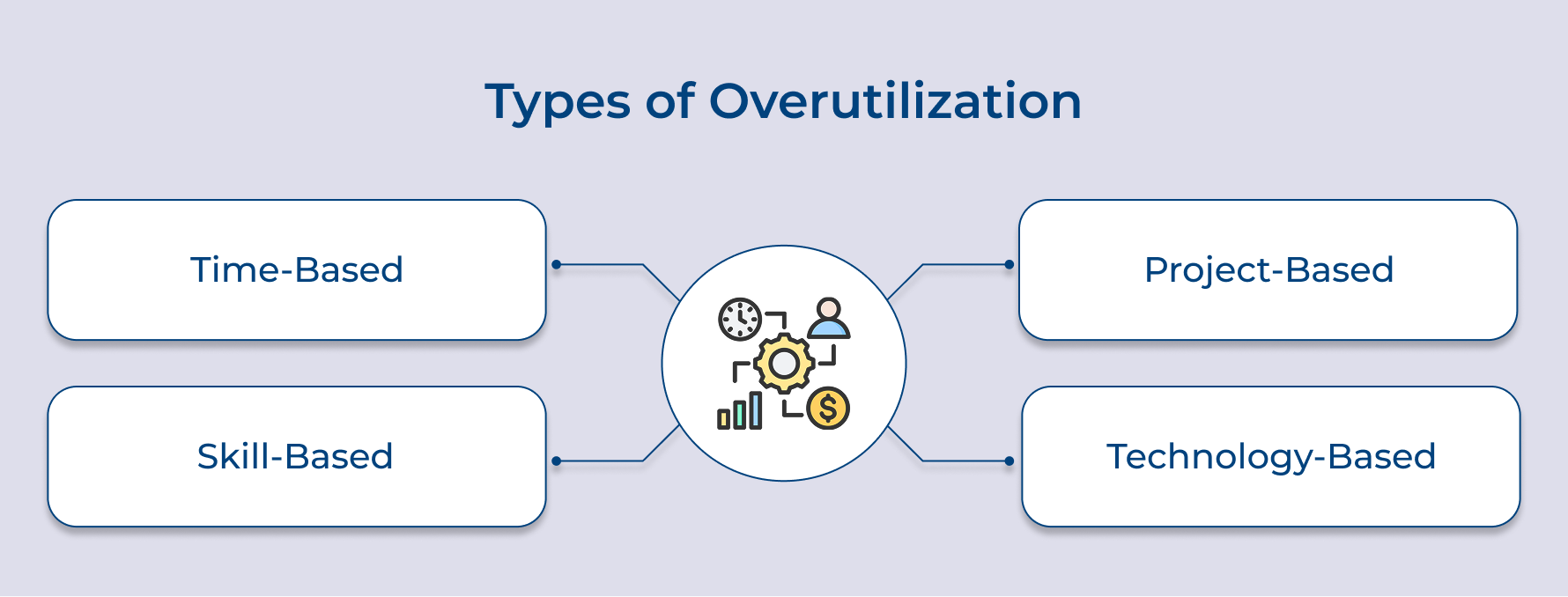
Time-Based Overutilization
Time-based overutilization happens when staff utilization pushes employees to work beyond their normal capacity—late nights, weekends and constant overtime. While it might seem like a quick fix for project delays, the reality is harsh.
Sustained overtime shouldn’t replace balanced schedules. When overwork becomes routine, burnout is inevitable and quality care in projects takes a hit. Utilization Review practices, much like in health insurance, should be applied here to prevent long-term strain while ensuring sustainable workloads.
Skill-Based Overutilization
Skill-based overutilization occurs when you lean too heavily on a few star performers to carry multiple critical projects. These individuals become bottlenecks, much like how lack of access impacts health equity in healthcare systems. It may feel efficient to use your best people everywhere, but this creates risky single points of failure.
If these key players burn out, take leave, or move on, project delays become unavoidable. Balanced staff utilization ensures every team member contributes while protecting your top talent.
Project-Based Overutilization
Project-based overutilization is when you take on more client projects than your current team can handle while maintaining quality care standards. It spreads resources thin across competing priorities, leading to inevitable project delays.
Every deliverable feels rushed, clients grow frustrated and your team constantly feels behind. Just like in health insurance, where utilization review ensures patients get appropriate care, project planning must ensure proper staff utilization to balance demand with capacity and protect overall project health.
Technology-Based Overutilization
Technology-based overutilization arises when systems and tools are pushed beyond their designed capacity. Software slows down, processes lag and even simple tasks become frustratingly complex.
The hidden costs show up as lost productivity and recurring project delays. It’s similar to healthcare systems where outdated infrastructure limits health equity and access to quality care. Overextended tech undermines staff utilization by wasting time and energy, making it crucial to regularly assess your tools as well as upgrade before bottlenecks grow.
8 Effective Strategies to Prevent Resource Overutilization
Preventing resource overutilization requires proactive planning and smart management. Here are eight strategies to keep workloads balanced and performance steady.
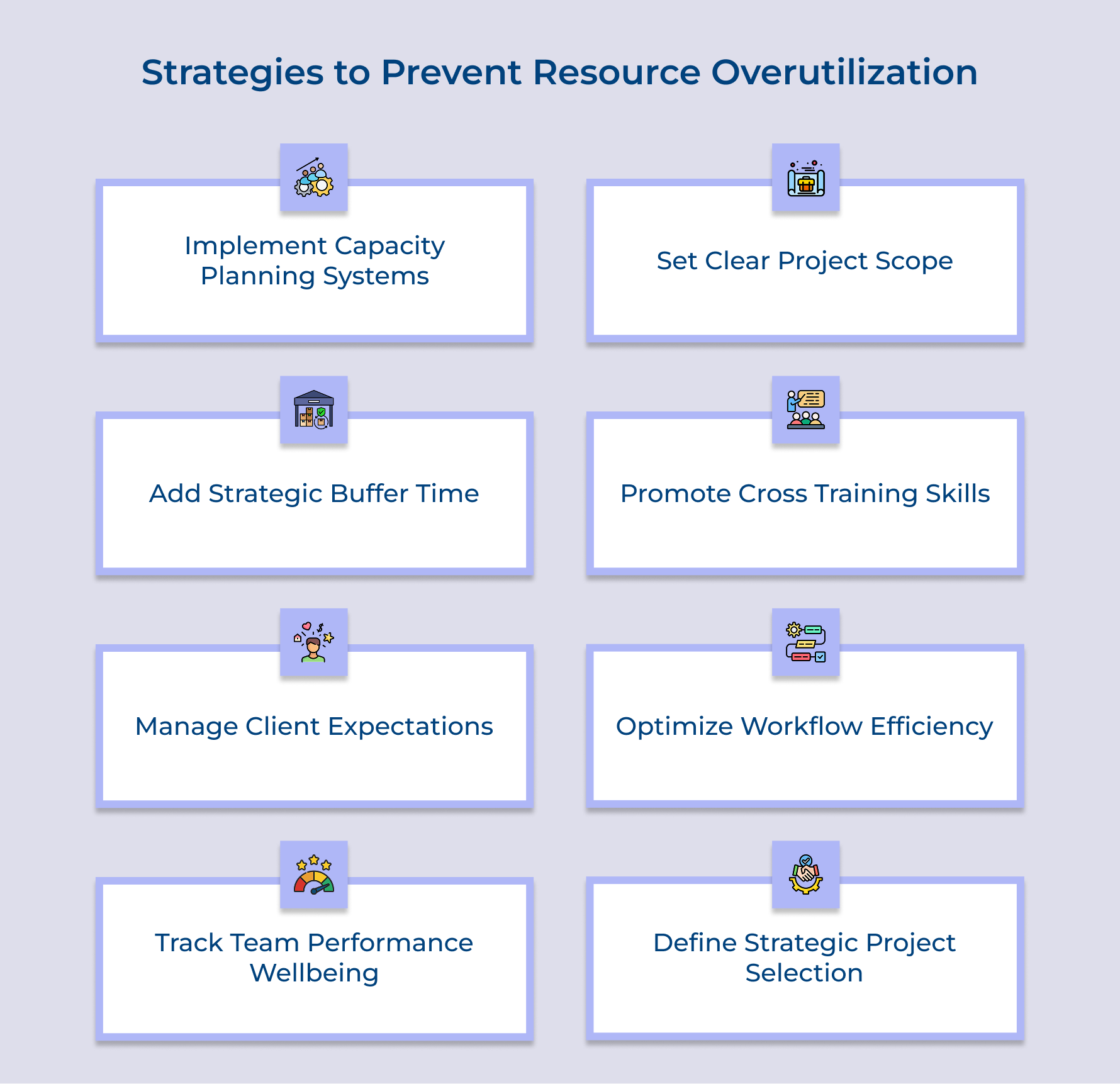
1. Implement Comprehensive Capacity Planning Systems
Capacity planning gives you a clear view of who’s available and when. It helps you avoid the chaos that comes with poor over-utilization practices. Lacking capacity planning, you guess and base resource decisions on assumptions rather than clear, reliable data.
Here’s how capacity planning systems prevent overutilization:
- Real-time availability tracking: See exactly who has open hours this week. This prevents double-booking top talent across multiple client deadlines. Instant visibility helps you stop overcommitment before it begins.
- Quarterly resource forecasting: Spot bottlenecks months in advance. You can hire ahead of time or adjust project timelines to prevent last-minute stress when big projects overlap.
- Visual workload dashboards: Color-coded charts make it easy to see which teams are overloaded and which have spare capacity. This makes resource reallocation smarter and faster.
Initially start simple. Ask yourself, do you know who’s working on what and for how long? Pick one easy tracking method and ensure everyone uses it consistently before adding more features.
2. Establish Clear Project Scope Boundaries
Project scope boundaries act like fences that keep your team safe from endless requests outside the original agreement. These barriers stop clients from expanding expectations while deadlines stay the same, which often creates impossible pressure on your team.
You set clear scope boundaries by preparing detailed project documents. These documents explain exactly what is included and what needs extra time as well as budget. This clarity upfront avoids confusion and keeps your team from being overworked with unrealistic demands.
Pro tips:
- Always get scope changes approved in writing before starting extra work to maintain professional boundaries.
- Build scope review checkpoints into every project timeline to catch drift early before it becomes overwhelming.
3. Build Strategic Buffer Time Allocations
Buffer time acts like shock absorbers in your project schedule protecting your team from the inevitable surprises that make projects run longer than expected. This strategic padding prevents the domino effect where one delayed project crushes your entire team’s workload.
Ask yourself these four essential questions before building buffers:
- What typically goes wrong in our projects that creates delays?
- Which team members are most likely to become bottlenecks during busy periods?
- How much extra time do we realistically need for quality review processes?
- What external factors beyond our control could impact our project timelines?
These questions help you identify the specific risks your buffer time needs to address rather than just adding random padding. Each answer reveals where your projects are most vulnerable to delays and resource crunches.
Now that you understand your risk points you can build targeted buffers that actually protect your team’s capacity. Start by adding 20% extra time to your estimates and adjust based on what you learn from each completed project.
4. Develop Cross-Training and Skill Diversification
Cross-training builds backup expertise across your team. It makes sure you’re not relying on one person for critical deliverables. If a star developer or lead designer is unavailable, projects don’t stall because others can step in.
Here are some effective training programs for skill diversification:
- Technical skills bootcamps: Short, focused sessions where team members learn related tools or methods from in-house experts.
- Shadowing and mentorship: Juniors observe specialists on real projects and gradually take on more tasks.
- Cross-department rotations: Temporary assignments in other teams help employees see different perspectives and develop broader skills.
- Client-facing skills workshops: Training in presentations, stakeholder management and requirements gathering so more people can talk to clients directly.
- Industry certifications: Support for earning recognized credentials in new technologies or methods.
This approach prevents overutilization. A flexible team can adapt to project changes without burning out key people. Sharing responsibilities evenly works like a daily email check—simple, consistent and effective in keeping everything moving smoothly.
5. Create Realistic Client Expectation Management
Client expectation management means setting clear timelines and deliverables from the start. It helps clients understand what is realistic with the resources you have. This transparency stops unrealistic demands that often push teams into overtime and harm employee wellness.
Here are three simple ways to manage expectations:
- Upfront capacity discussions: Talk openly during the sales process about your team’s workload and realistic availability. This honesty builds trust and prevents overpromising.
- Transparent project timelines: Share schedules with buffer time and explain why each phase takes a certain duration. Clients see the complexity behind their requests.
- Regular check-ins: Weekly or bi-weekly updates help flag challenges early. This prevents last-minute surprises and resource crunches.
For example, one marketing agency avoided overutilization by telling a client they were fully booked for six weeks. Instead of rushing, they scheduled a later start and used time tracking software to manage workloads. The result was better planning, improved employee wellness and exceptional client outcomes.
6. Optimize Workflow and Process Efficiency
Workflow optimization helps remove bottlenecks and unnecessary steps that overload your team. When processes run smoothly, work moves faster and stress levels stay low. This makes it easier to handle more projects without slipping into overuse. A well-designed Client Overutilization Program can support this by keeping workloads balanced.
Here are five simple steps to streamline workflows:
- Map current processes: Write down each step from client onboarding to delivery. Spot where work slows down or gets repeated.
- Remove approval bottlenecks: Cut unnecessary sign-offs. Let team members make routine decisions within their expertise.
- Automate repetitive tasks: Use tools for reports, file organization, or client updates so teams focus on meaningful work.
- Standardize formats: Create templates and style guides to save time on repeat tasks.
- Enable parallel work: Allow different team members to work on separate tasks at the same time.
Review processes regularly. As your business grows, small adjustments keep workflows efficient and prevent overallocation.
7. Monitor Team Performance and Wellbeing
Team performance monitoring helps you spot warning signs early. It shows when someone is close to burnout before quality or morale takes a hit. This proactive approach stops problems from snowballing into missed deadlines or poor work.
You can do this by tracking two things. First, watch the numbers—like overtime hours. Second, pay attention to how people feel through regular check-ins. Combining both gives you a clear picture of how your resource decisions affect the team doing the work.
Pro tips:
- Schedule weekly one-on-ones focused specifically on workload rather than just project status updates.
- Create anonymous feedback channels where team members can report feeling overwhelmed without fear of appearing incapable.
8. Establish Strategic Project Selection Criteria
Strategic project selection means being deliberate about which projects to accept. Instead of saying yes to every profitable offer, you look at your current capacity first. This discipline protects your customer service team and prevents overcommitting resources just because an opportunity looks attractive.
Here are four simple criteria to check before taking on new projects:
- Team capacity: Ask if your staff can handle the new workload without sacrificing quality or working long, unsustainable hours.
- Skill set match: Check if the project needs skills your team already has, or if it would require heavy training that stretches resources.
- Timeline flexibility: See if the client allows realistic deadlines that fit within your team’s capacity instead of rushed delivery.
- Revenue per hour: Compare the financial return to the resource investment and other projects in your pipeline.
This selective approach safeguards your customer service team, supports wellbeing and ensures consistent quality in delivery.
Common Factors Causing Resource Overutilization
Understanding what drives overutilization helps you identify warning signs before they damage your business. Let’s examine the most common culprits that push teams beyond their limits.
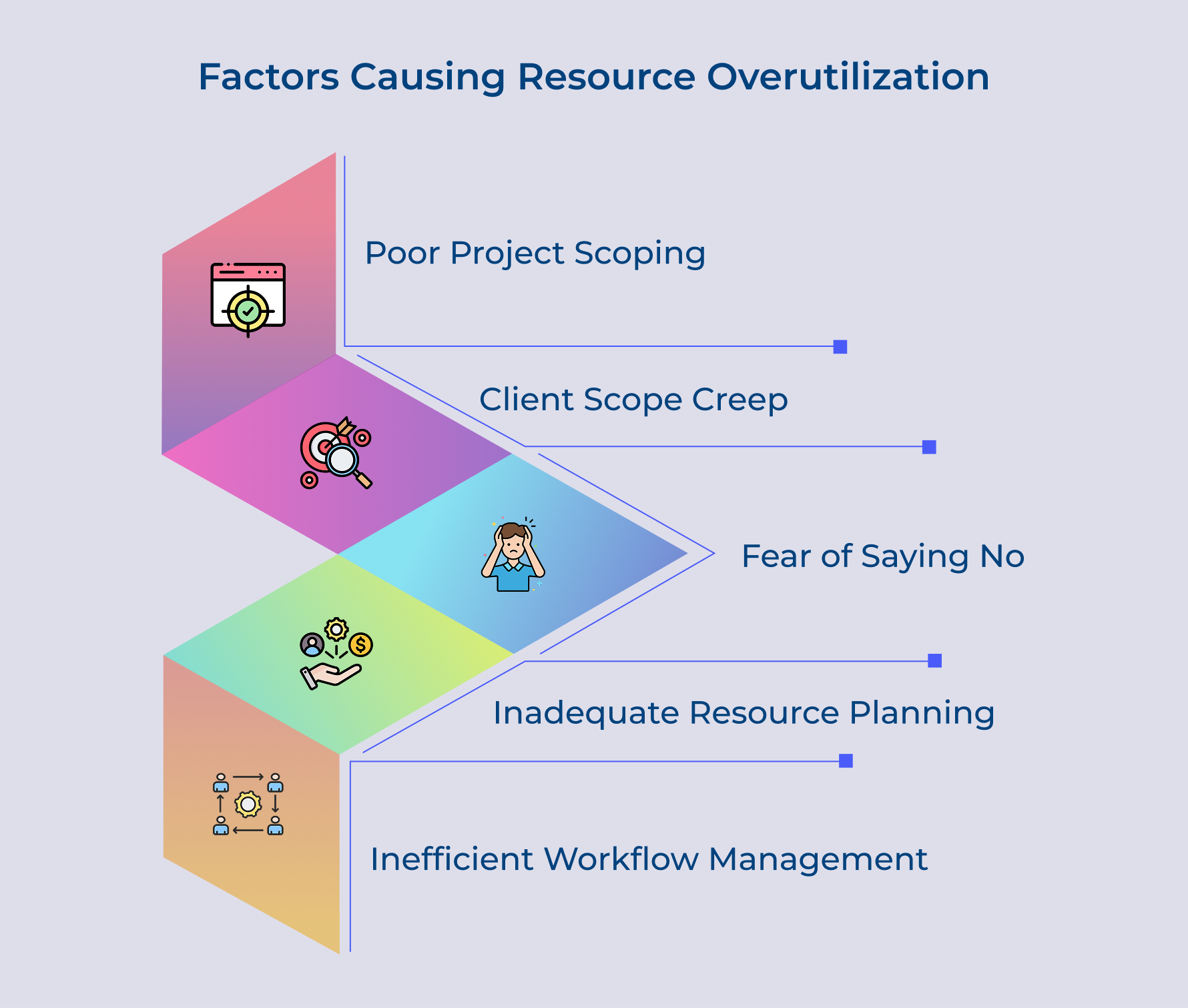
Poor Project Scoping and Estimation
Agencies often underestimate project complexity during the sales process to win new business. When reality hits and projects require more hours than budgeted your team gets squeezed to deliver within unrealistic timeframes.
Client Scope Creep Without Resource Adjustment
Clients frequently request additional features or changes after project kickoff without extending deadlines. Your team absorbs these extra requirements by working longer hours rather than renegotiating project terms appropriately.
Inadequate Resource Planning and Visibility
Many firms lack centralized systems to track who’s working on what and when. This blind spot leads to double-booking talented team members across multiple client projects during the same time periods.
Fear of Saying No to New Opportunities
Growth-focused agencies accept every profitable project that comes their way regardless of current team capacity. This opportunistic approach overloads existing staff rather than building sustainable growth through proper resource management.
Inefficient Workflow and Process Management
Poorly designed workflows create bottlenecks where work piles up waiting for specific team members to complete tasks. These process inefficiencies force people to work overtime to clear backlogs that could be prevented.
The Impact of Overutilization in Service Firms
Resource overutilization creates a cascade of negative consequences that ripple through every aspect of your professional service firm. Understanding these impacts helps you recognize the true cost of pushing your team beyond sustainable limits.
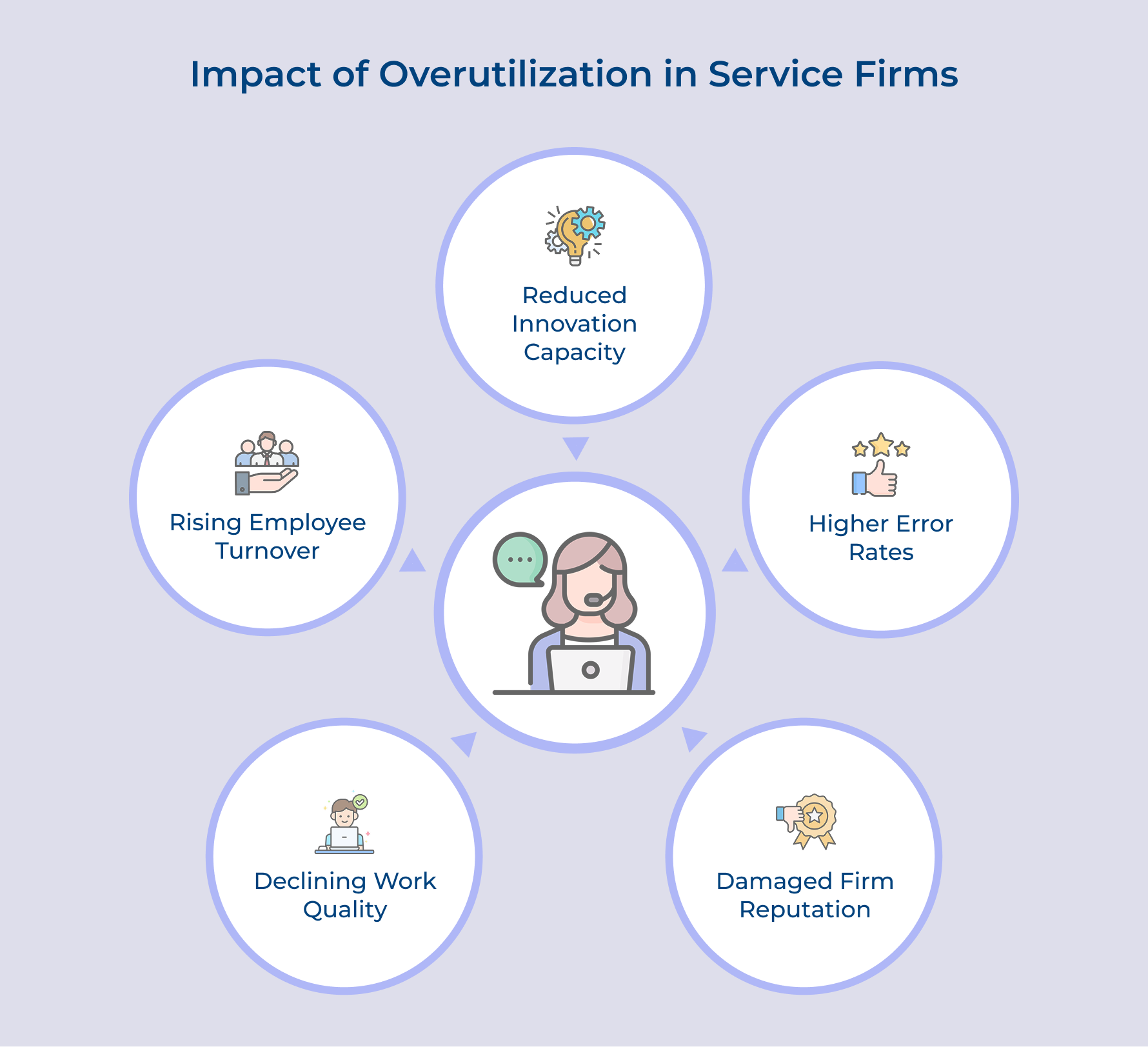
Declining Work Quality and Client Satisfaction
When your team works beyond capacity, quality always takes a hit. Corners get cut to meet deadlines and deliverables are rushed. This means more errors and less depth in analysis. Clients expect thoughtful work from professional services, not quick fixes.
Over time, this creates dissatisfaction that hurts long-term relationships. A poor utilization profile shows where the problem lies. Both employee engagement and client trust suffer without balance, damaging the value you bring to every marketing campaign or project.
Increased Employee Turnover and Recruitment Costs
Overworked employees eventually burn out and leave. They look for firms that offer better work-life balance and realistic expectations. When this happens, you face higher recruitment costs as well as longer onboarding timelines.
Experienced professionals are expensive to replace. The loss in productivity adds to the expense. Strong employee engagement strategies can reduce this cycle. But if ignored, the firm pays more in turnover while struggling with cost containment and gaps in critical project delivery.
Reduced Innovation and Strategic Thinking Capacity
When teams are always in firefighting mode, they have no energy left for creativity. Innovation and strategic thinking get pushed aside for urgent tasks. This means fewer fresh ideas for clients and less process improvement inside the firm.
Over time, the lack of innovation hurts your competitiveness. Just like a weak utilization profile shows inefficiencies, low employee engagement signals wasted potential. Firms that fail to nurture innovation can’t design standout solutions or marketing campaigns that differentiate them in the market.
Higher Error Rates and Rework Expenses
Tired employees make more mistakes. These errors take time and money to correct. Deadlines are missed, quality drops and clients lose confidence. The extra hours spent fixing problems cancel out any productivity gains.
Instead of moving forward, your team is stuck redoing the same work. Poor employee engagement makes this worse, as people feel disconnected and less motivated. A balanced utilization profile helps with cost containment. Hence, reducing rework expenses while keeping projects on track without unnecessary stress.
Damaged Firm Reputation and Market Position
Reputation matters in professional services. When firms deliver subpar work or miss deadlines, word spreads quickly in the market. Over time, this damages trust and credibility. It becomes harder to win top clients or attract strong talent.
Instead of competing on expertise, you’re forced to compete on price. Strong employee engagement, balanced staff utilization and consistent cost containment protect your brand.
Control Overutilization and Drive Better Resource Outcomes
Smart resource management transforms your professional service firm from a chaotic juggling act into a well-orchestrated symphony. In this system, every team member contributes meaningfully without burning out. This strategic approach protects your most valuable asset.
The eight strategies we’ve explored create a comprehensive framework that prevents overutilization while maintaining high-quality client delivery. When you implement these principles systematically, you’ll discover that sustainable growth actually accelerates when your resources are properly managed.
Limit time — not creativity
Everything you need for customer support, marketing & sales.

Shivank Kasera is part of the marketing team at Kooper, where he focuses on building content that helps agencies and service providers grow. With a keen interest in SaaS, operations, and scalability, he translates practical insights into actionable resources for business leaders.