The Ultimate Guide to Setting Strong Business Objectives
- What is a Business Objective?
- Importance of Having Business Objectives in the Organization
- Key Differences Business Objectives vs. Business Goals
- Important Types and Examples of Business Objectives
- How to Create Effective Business Objectives in 6 Quick Steps
- Actual Examples of a Business Objectives You Need
- Transform Goals Into Growth With Business Objectives
- FAQs About Business Objectives

Key Highlights:
- Business objectives turn broad strategic ambitions into specific measurable outcomes every team can execute against.
- Skipping the performance assessment step means setting targets based on ambition rather than business reality.
- The SMART framework is the most reliable structure for turning intentions into objectives teams actually deliver.
Most businesses set goals with strong intent but never build the structured objectives needed to translate that intent into measurable execution. That gap between ambition and accountability is exactly where business growth stalls.
Teams without defined objectives end up optimizing for different outcomes, and leadership loses the visibility needed to make confident strategic decisions. Misaligned effort is one of the most expensive and underdiagnosed problems in business management today.
This blog breaks down 20 business objectives every firm must measure covering financial health, operational efficiency, customer success and people development. Each objective is built to give your business the execution clarity that separates consistent performers from the rest.
What is a Business Objective?
A business objective is a precise and measurable outcome that a company commits to achieving within a defined period to move its strategy from paper to reality. Talented teams without clear objectives often work hard in different directions and end up producing results that miss what the business actually needs.
What Makes a Good Business Objective?
A good business objective strikes the right balance between being ambitious enough to drive real growth and realistic enough to keep your team motivated through execution. From my experience working across business functions, the objectives that actually get achieved are the ones written with full clarity on what success looks like on day one itself.
Key considerations:
- Clarity: Your objective must communicate the exact outcome expected so there is zero room for misinterpretation across teams.
- Measurability: An objective without a measurable indicator is simply a statement of intent that no one can be held accountable for.
- Relevance: Every objective must directly serve your broader business strategy or it will quietly drain resources without delivering value.
- Timeframe: Deadlines are not pressure tactics, they are the mechanism that converts intention into disciplined execution.
Importance of Having Business Objectives in the Organization
Here are five reasons why defining your business objectives is non-negotiable for sustainable growth.
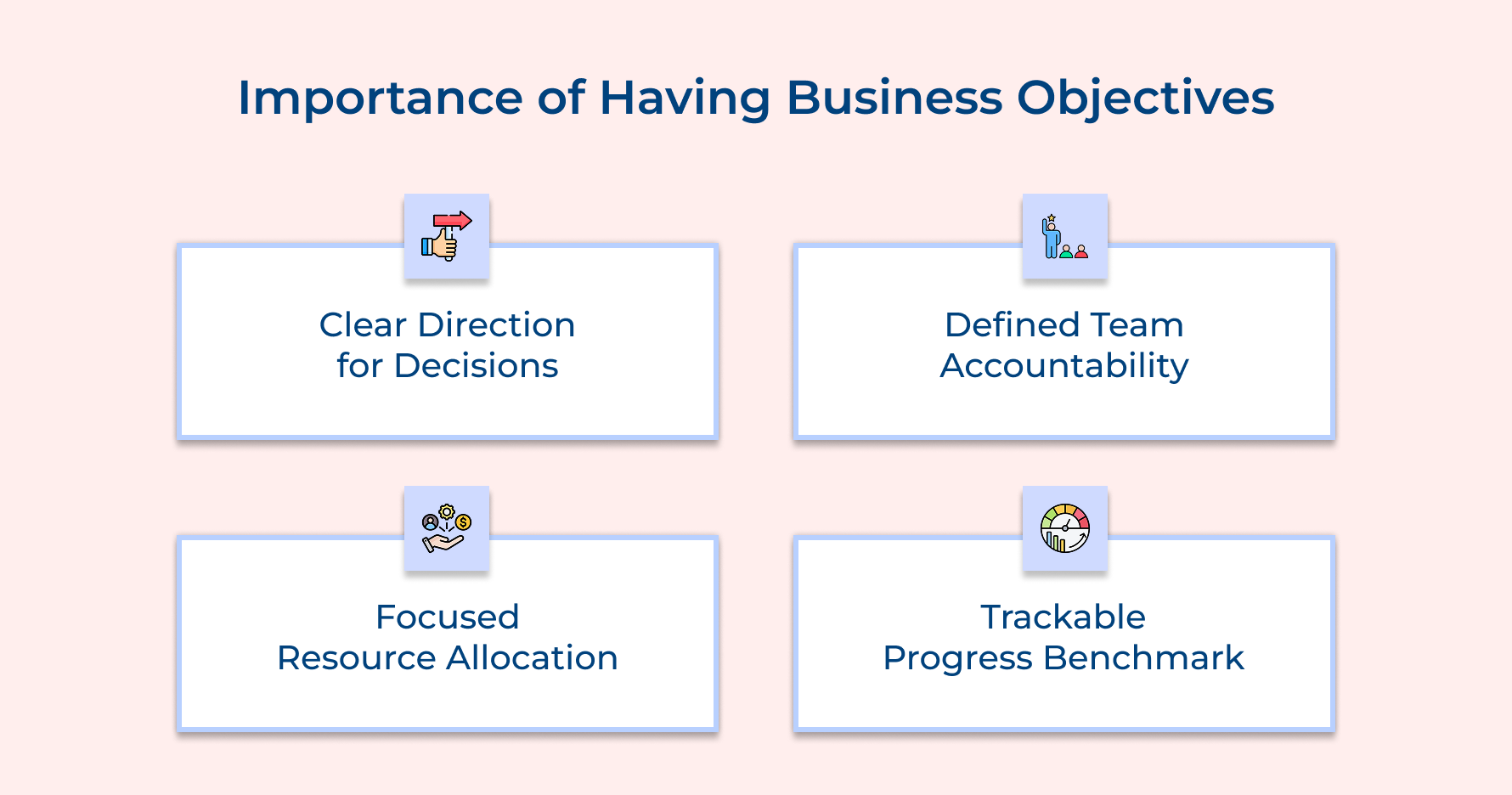
Gives Direction to Every Business Decision
Teams without a defined objective make decisions based on assumptions rather than aligned priorities. Every resource allocation, hiring call, and strategic pivot becomes sharper when a clear objective is anchoring the decision.
Creates Accountability Across Teams
Objectives turn vague responsibilities into measurable commitments that individuals and teams can own. When people know exactly what they are working toward, performance conversations become far more focused and productive.
Enables Smarter Resource Allocation
Businesses have limited budgets and limited bandwidth. Knowing your objectives helps you invest both where they generate the highest return. Without this clarity, companies often spread resources thin across initiatives that fail to move any single needle meaningfully.
Provides a Benchmark to Measure Progress
Objectives give you a baseline to measure if your strategy is actually working in real time. Without that benchmark, businesses only discover they are off track after significant time and money have already been lost.
Key Differences Business Objectives vs. Business Goals
These two terms operate at completely different levels of strategy and mixing them up leads to misaligned teams as well as wasted resources.
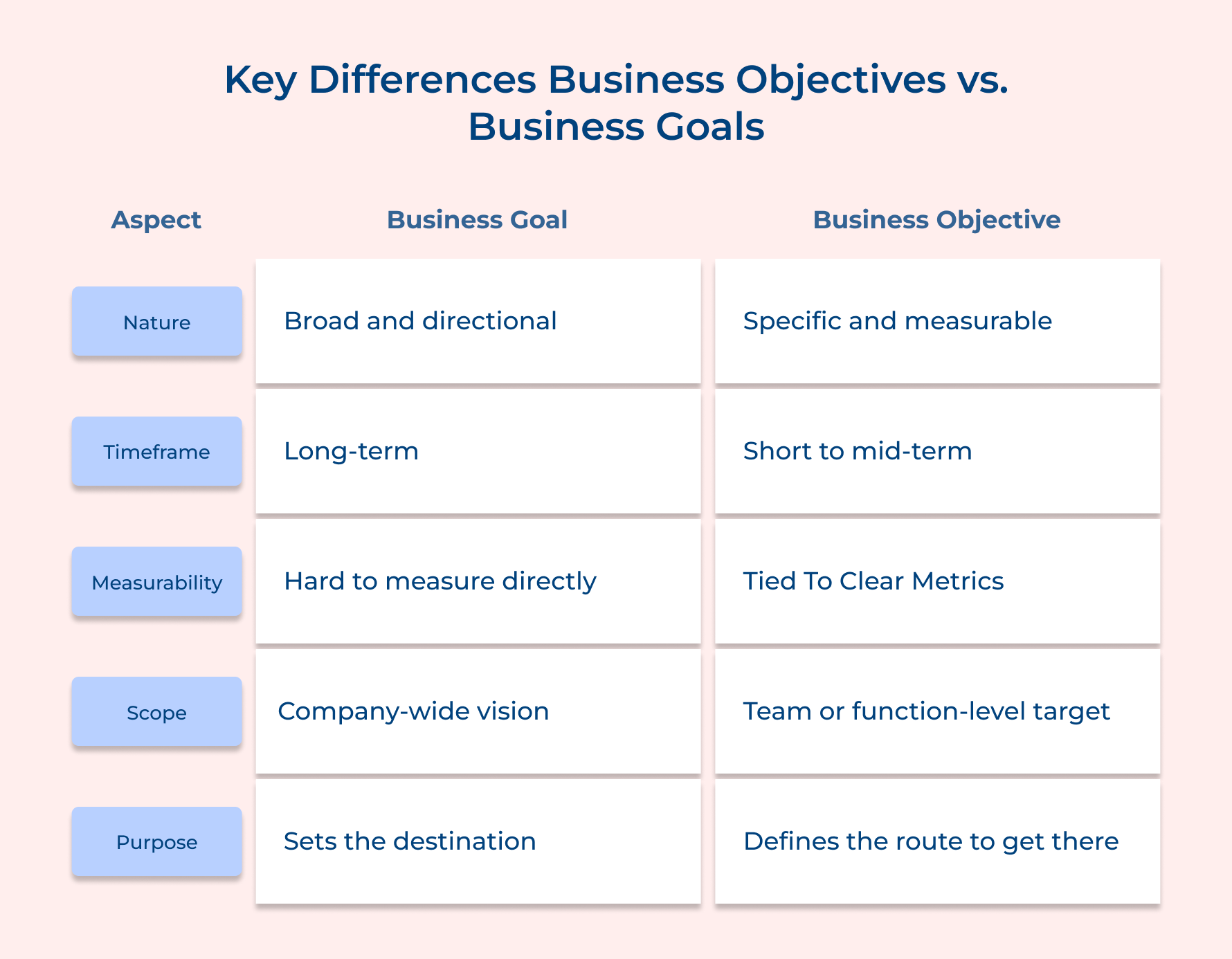
1. Nature
A business goal captures the broad ambition of where a company wants to position itself without defining the exact steps to get there. It sets the strategic tone for every decision leadership makes.
Converting that ambition into a specific target that teams can act on immediately is exactly what a business objective does. This precision is what separates companies that execute well from those that simply plan well.
2. Timeframe
A business goal is built for the long horizon and guides the company’s direction across multiple years without being disrupted by short-term shifts. It gives leadership the patience to stay committed to a larger vision.
Quarterly milestones that keep daily execution connected to that long-term goal are what a business objective creates. Without these shorter cycles, even the best goals quietly lose momentum over time.
3. Measurability
A goal like “become the most trusted brand in our category” is powerful for alignment but gives your team nothing concrete to measure week on week. It inspires direction but cannot drive accountability on its own.
Something like “improve Net Promoter Score by 15 points in 9 months” gives every stakeholder a precise number to track and own. That measurability is what transforms intention into focused and disciplined team execution.
4. Purpose
Communicating where the business is ultimately headed and giving leadership a shared language for long-term strategy is the core job of a business goal. It is the destination every project and initiative should trace back to.
A business objective tells your teams exactly what needs to be delivered right now so execution stays precise and accountable at every level. Without this clarity, businesses move fast but rarely in the direction that actually matters.
Important Types and Examples of Business Objectives
Here are 15 unique business objectives across 5 key categories giving your strategy real structure and execution power.
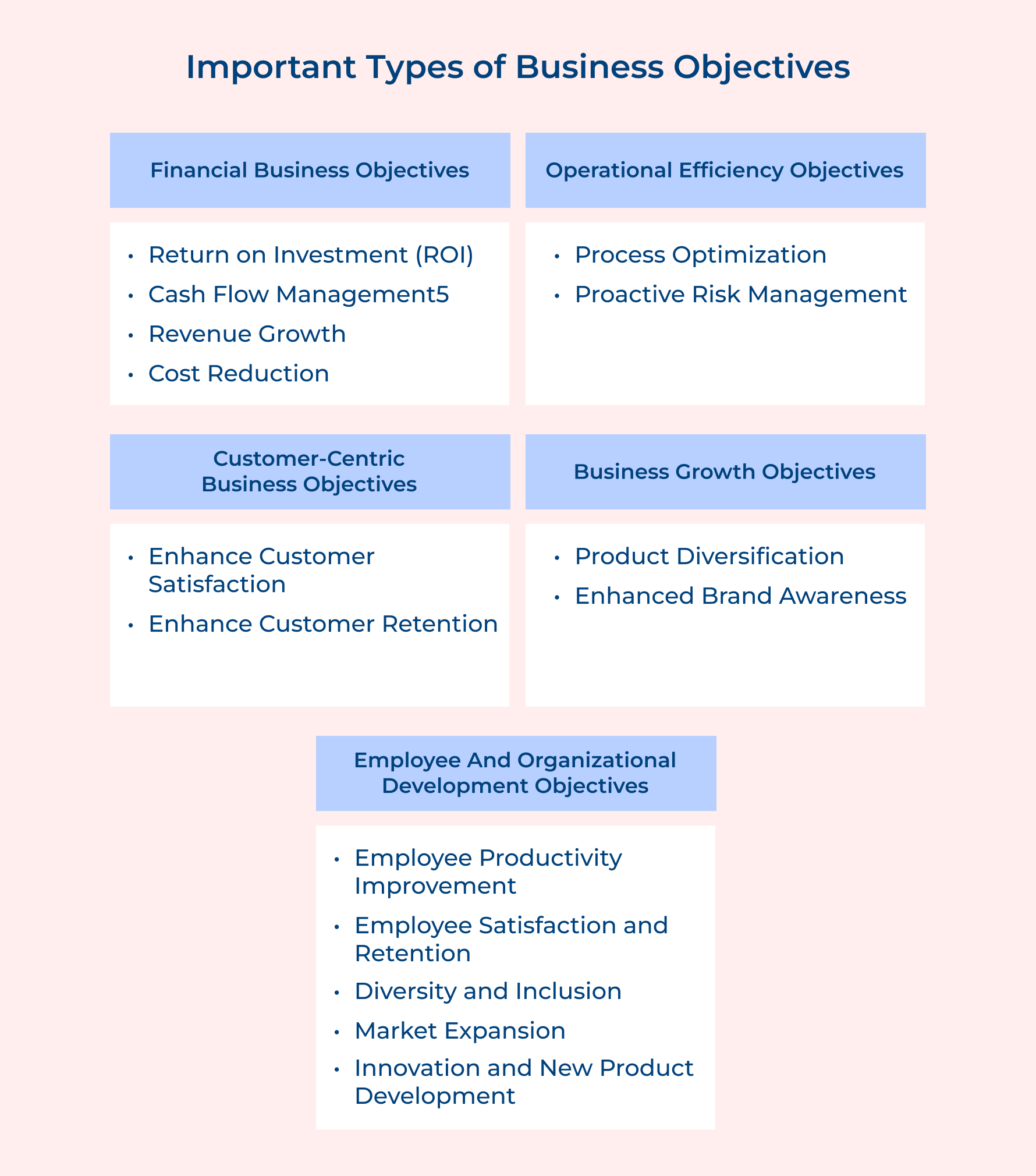
Financial Business Objectives
Financial objectives are the backbone of any serious business strategy and without them businesses make decisions based on instinct. These objectives create the financial discipline that separates growing businesses from stagnating ones.
1. Return on Investment (ROI)
ROI is the most honest measure of whether business decisions are actually creating value or consuming resources. Every investment must be justified by the return it generates and that starts with a clear objective.
Ask yourself these questions before setting your ROI objective:
- Are we measuring ROI at the campaign level or only at the business level?
- Do our teams understand what inputs directly affect our return?
- Are we tracking ROI consistently across all investment categories?
Businesses that build ROI thresholds into their project approval process make smarter and more accountable investment decisions. Without that threshold teams keep funding initiatives that look busy but deliver no measurable business value.
2. Cash Flow Management
Cash flow is the pulse of your business and poor cash flow has destroyed more profitable businesses than poor sales. Managing cash flow as a deliberate objective means treating liquidity as a strategic business priority.

A business generating strong revenue but sitting on 90-day receivables is walking a dangerous financial tightrope without realizing it.
Key elements of a strong cash flow management objective:
- Reserve threshold: Define a minimum cash reserve that triggers immediate leadership review.
- Receivable cycles: Set a target collection period and track it against actuals every week.
- Vendor alignment: Align payment terms with vendors to protect outflow timing strategically.
3. Revenue Growth
Revenue growth tells you incase your market strategy is translating into real commercial outcomes at the ground level. Setting this objective forces leadership to get specific about which channels and segments will drive growth.
A revenue growth objective carries the strategic intent of knowing exactly which products and markets you are betting on. Businesses that break revenue targets down by segment execute growth plans with far greater precision and speed.
4. Cost Reduction
Cost reduction done right is about eliminating waste while protecting investments that genuinely drive business growth forward. A well-defined cost reduction objective targets specific cost centers without compromising quality or operational capability.
Before setting a cost reduction objective, audit these areas:
- Review contracts that have not been renegotiated in over 18 months.
- Identify manual process steps that technology can replace without disrupting output.
- Cut initiatives consuming the budget without delivering any measurable business return.
Businesses treating cost reduction as a one-time exercise always end up back where they started within 12 months. Building cost efficiency as a quarterly objective creates a permanently leaner and more competitive operation.
Operational Efficiency Objectives
Operational efficiency is where strategy meets reality and the gap between them is where businesses lose time as well as money. These objectives ensure your internal engine runs at the performance level your growth ambitions demand.
5. Process Optimization
Every business has processes that made sense at one growth stage but have quietly become costly bottlenecks at the next. A process optimization objective identifies those bottlenecks and sets measurable targets for reducing cycle time as well as errors.
Is your team spending more time managing the process than delivering the outcome? That is the clearest signal that optimization is overdue and must become a formal objective with a dedicated owner.
A strong process optimization objective should cover:
- Cycle time: Define current process cycle time vs. the target cycle time you want to achieve.
- Error rate: Set a specific rework rate reduction that the optimized process must deliver.
- Automation: Identify tools to be deployed within the project to achieve the targeted improvement.
6. Proactive Risk Management
Most businesses build risk frameworks only after something has already gone wrong and that reactive approach is expensive. A proactive risk management objective identifies and quantifies risks before they materialize into operational or financial damage.
A proactive risk management objective must include:
- Maintain a risk register updated quarterly with a clear owner assigned to each risk.
- Define triggers that automatically escalate critical risks to leadership review immediately.
Businesses building risk management into their operational rhythm make faster and more confident strategic decisions consistently. The objective is not to eliminate risk — it is to ensure no risk catches your business completely unprepared.
Customer-Centric Business Objectives
Customer-centric objectives bridge what your business delivers and what customers actually experience at every touchpoint..
7. Enhance Customer Satisfaction
Customer satisfaction is a leading indicator of revenue retention and referral growth that directly impacts the bottom line. A formal customer satisfaction objective commits the business to closing the gap between what it promises and delivers.
To build a meaningful customer satisfaction objective, define:
- Touchpoint mapping: Identify the specific journey touchpoints where satisfaction is actively being measured.
- Review threshold: Set a minimum CSAT score that triggers an immediate service quality review process.
What happens when businesses collect satisfaction data but never act on it? They create a false sense of control while customer experience silently deteriorates quarter after quarter. The objective is to build a closed-loop improvement process driving consistent quarterly progress.
8. Enhance Customer Retention
Acquiring a new customer costs five times more than retaining an existing one yet most businesses invest heavily in acquisition. A customer retention objective forces the business to treat its existing customer base as its most valuable growth asset.
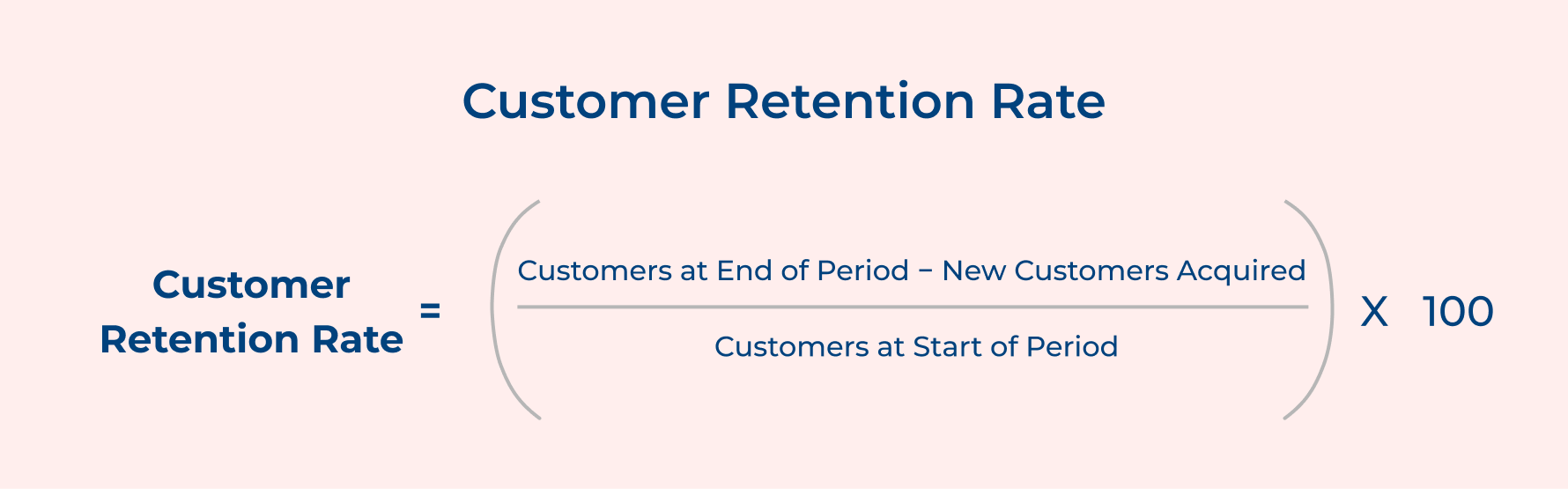
A retention rate below 80% in a repeat-purchase business is a problem no acquisition strategy can sustainably fix.
Businesses setting segment-level retention targets identify churn risks far earlier than those tracking a single overall number. Companies with the highest lifetime customer value consistently operate the most deliberate and data-driven retention strategies.
Business Growth Objectives
Growth objectives define the commercial ambition of your business and give every team a clear target to build strategy around. These objectives push the organization beyond maintaining status quo and into creating new sustainable value.
9. Product Diversification
Product diversification is one of the most powerful growth levers available and also the most mismanaged without a clear objective. The goal is not to launch more products, it is to expand revenue base while leveraging existing capabilities.
Businesses diversifying successfully treat each new product as its own business case with defined milestones and kill criteria. Diversification without that discipline dilutes your brand and drains operational bandwidth simultaneously.
10. Enhanced Brand Awareness
Brand awareness is the foundation of every commercial objective because customers cannot buy from a brand they have never encountered. Setting this objective means treating visibility as a strategic investment rather than a marketing department afterthought.
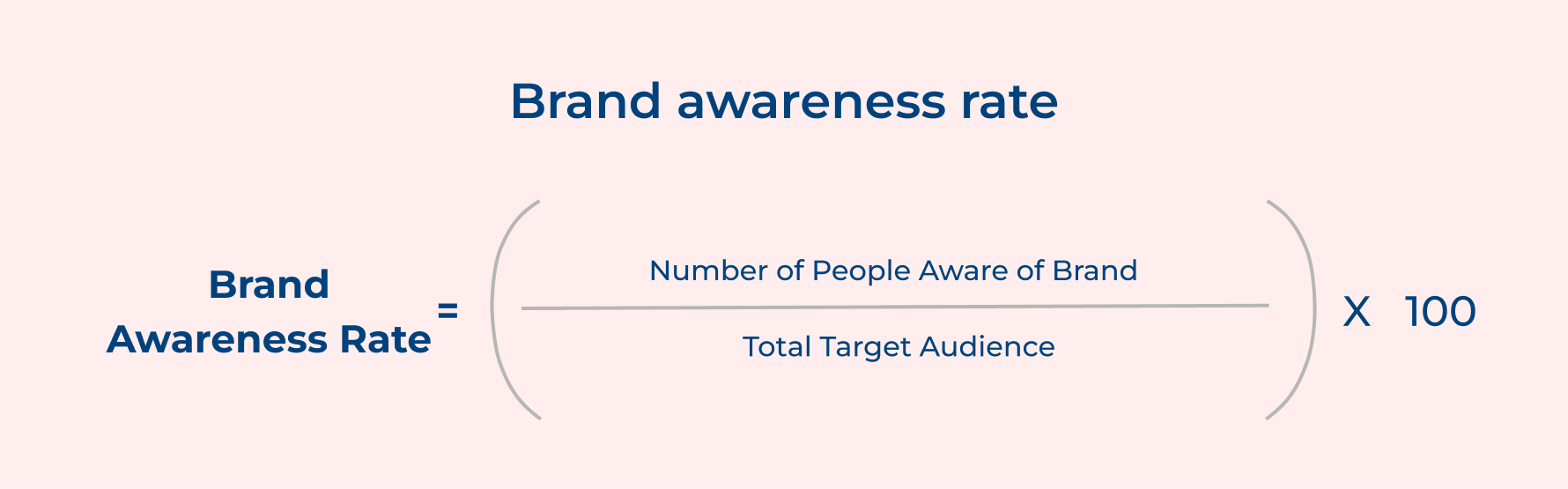
Tracking this consistently gives a measurable baseline to evaluate if brand investment is actually expanding market presence.
A strong brand awareness objective should include:
- Audience target: Define a specific audience segment with a clear awareness penetration goal.
- Channel reach: Set channel-specific reach targets connecting brand spend to measurable outcomes.
- Tracking cadence: Run a quarterly brand tracking study measuring unaided and aided brand recall.
Employee and Organizational Development Objectives
Your people are the only business asset that appreciates in value when invested correctly and consistently over time. These objectives ensure the organization builds human capability required to sustain every other growth and efficiency objective it sets.
11. Employee Productivity Improvement
Employee productivity is one of the most direct levers of business performance yet most organizations measure it too broadly. A productivity improvement objective sets a specific baseline and defines the tools as well as processes needed to move it meaningfully.
To drive a meaningful productivity improvement objective, focus on:
- Bottleneck identification: Identify the top 3 workflow bottlenecks that are reducing output per person.
- Role-based baselines: Set productivity baselines by role so improvement targets are realistic and fair.
12. Employee Satisfaction and Retention
Employee satisfaction directly determines how long your best people stay and how productively they perform while with you. A business setting a formal employee satisfaction objective treats talent retention as a strategic priority rather than an HR function.
To strengthen employee satisfaction as a business objective, address these areas:
- Define clear career progression paths so employees can see their future within the organization.
- Create consistent recognition programs that reward performance beyond annual appraisal cycles.
13. Diversity and Inclusion
Diversity and inclusion is not a compliance checkbox — it is a business objective that directly impacts innovation, decision quality and market reach. Organizations with genuinely diverse teams consistently outperform homogeneous ones on complex problem-solving and revenue growth.
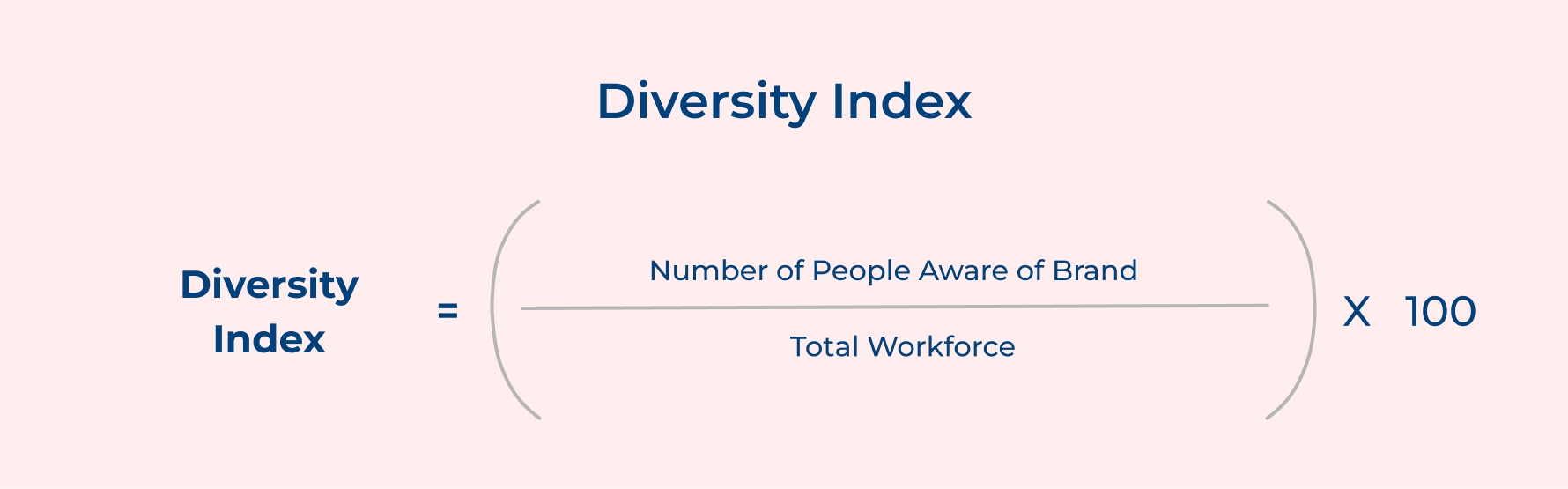
Tracking this across hiring, promotion and leadership levels reveals exactly where inclusion gaps are silently limiting organizational capability.
To build an effective diversity and inclusion objective, define:
- Set measurable diversity representation goals at each level of the hiring funnel.
- Track promotion rates across demographic groups to identify systemic advancement barriers.
14. Market Expansion
Market expansion takes a business from being a strong local player to building a significant presence in new geographies or segments. Without a defined expansion objective businesses either move too slowly losing first-mover advantage or too fast destroying operational stability.
Before committing to a market expansion objective, validate these factors:
- Is there validated demand in the new market or are you expanding on assumption alone?
- Can your current operations and project infrastructure support a new market without breaking?
- Do you have a clear differentiation strategy for the specific market you are entering?
Businesses that expand markets without validating demand and operational readiness burn through capital at an alarming rate. The discipline of setting a structured expansion objective with stage-gates separates sustainable growth from expensive overreach.
15. Innovation and New Product Development
Innovation as a business objective means committing organizational resources to creating solutions that meet future customer needs proactively. Businesses setting formal innovation objectives consistently outpace competitors who only optimize what already exists.
What kills innovation in most businesses is not a lack of ideas, it is the absence of a structured objective connecting creative thinking to commercial delivery. Building innovation as a formal business objective transforms it from a culture aspiration into a real growth engine.
How to Create Effective Business Objectives in 6 Quick Steps
These 6 steps give your business a structured and repeatable process for building objectives that actually get executed.
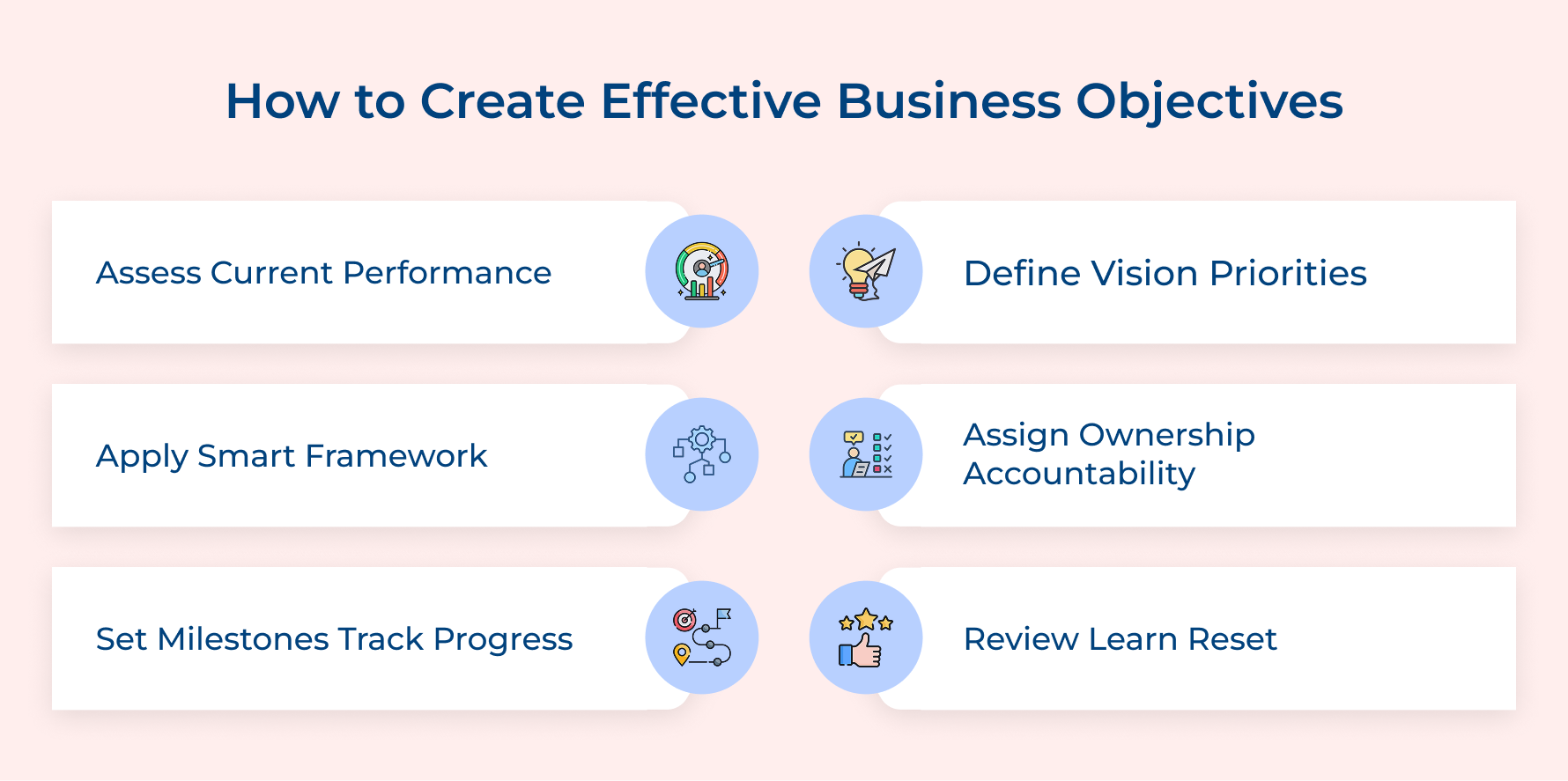
1. Assess Your Current Performance
Before setting any objective you must know exactly where your business stands today across every critical performance area. Setting targets without this baseline is like navigating without a map, you have no way of knowing how far you actually need to travel.
Assess your current performance effectively, gather data across these areas:
- Revenue metrics: Understand your current revenue trends, growth rate and key contributing segments.
- Operational efficiency: Identify where your processes are delivering and where they are creating costly bottlenecks.
- Customer health: Review satisfaction, retention and engagement scores to understand your current customer relationship quality.
What happens when businesses skip the performance assessment step entirely? They set objectives based on ambition rather than reality and end up with targets that demoralize teams. A grounded baseline makes every objective you set both credible and achievable.
Use these questions to validate your performance assessment before moving forward:
- Is the performance data you are reviewing current, complete and free from reporting gaps?
- How does your current performance compare against industry benchmarks and direct competitors?
- Have you clearly identified the performance gaps that your new objectives must specifically address?
2. Define Your Vision and Priorities
Your vision defines where the business is ultimately headed and your priorities determine which objectives deserve the most focused attention. Teams that lack this clarity end up working hard on objectives that never connect to the larger strategic direction.
Define your vision and priorities with precision, focus on these elements:
- Long-term direction: Articulate where you want the business positioned in the next 3 to 5 years.
- Strategic priorities: Identify the 3 to 5 focus areas that will have the highest impact on achieving your vision.
- Non-negotiables: Define the boundaries your objectives must operate within including budget, resources and brand values.
Why do so many businesses struggle to align their teams around a shared direction? Because the vision exists in leadership’s heads and has never been translated into clear priorities that teams can act on. Defining priorities removes the ambiguity that silently kills execution at every level.
3. Apply the SMART Framework
The SMART framework is the most proven structure for turning broad business intentions into objectives that teams can actually execute. Every objective must pass the SMART test before it is approved and assigned to any team.
Break down the SMART framework across these five dimensions:
- Specific: Define exactly what needs to be achieved with no room for multiple interpretations across teams.
- Measurable: Attach a clear number or outcome so progress can be tracked and evaluated without subjectivity.
- Achievable: Ensure the objective is ambitious enough to drive growth but realistic given current resources and constraints.
What is the most common SMART framework mistake businesses make in practice? They make objectives specific and measurable but forget to validate if they are actually achievable given available resources. An unachievable objective does not challenge teams — it discourages them from trying at all.
4. Assign Ownership and Accountability
Every business objective must have one named owner who is personally accountable for its outcome without delegating that accountability. Shared ownership without a single accountable individual is the most reliable way to ensure an objective never gets achieved.
Build a strong ownership and accountability structure, define these elements clearly:
- Single owner: Assign one named individual to each objective who is fully responsible for driving it to completion.
- Supporting team: Identify team members and cross-functional stakeholders who will actively contribute to the objective.
- Escalation path: Define a clear escalation process for when the objective faces blockers the owner cannot resolve alone.
Why do well-designed objectives still fail despite strong leadership intent and clear strategic direction? Because accountability gets distributed across multiple people who each assume someone else is leading the hard decisions. Single ownership creates a direct and unambiguous line between personal commitment as well as business outcome.
5. Set Milestones and Track Progress
An objective without milestones is a destination without a map and businesses skipping this step consistently miss their targets. Breaking each objective into defined milestones creates checkpoints that keep execution on track between start and final deadline.
Effectively set milestones for each business objective, structure them around these principles:**
- Milestone spacing: Distribute milestones evenly across the timeline so progress remains visible and consistent throughout execution.
- Leading indicators: Identify early performance signals that predict if the objective is on track to be achieved.
- Review triggers: Define specific milestone outcomes that automatically trigger a strategy review if targets are being missed.
6. Review, Learn and Reset
The final step is building a structured review process that extracts real learning from every completed objective cycle. Businesses skipping this step repeat the same execution mistakes across every new objective-setting cycle they go through.
Strong strategies still set the same objectives year after year without meaningful progress because they close one cycle and immediately open the next without capturing the institutional learning sitting between them. The review step is what converts accumulated experience into lasting organizational intelligence.
Use these reset checkpoints to set stronger objectives in the next cycle:
- Learning documentation: Record key lessons from the completed cycle so they actively inform the next objective-setting process.
- Objective refinement: Adjust scope, timeline or ownership of recurring objectives based on what the review clearly revealed.
Actual Examples of a Business Objectives You Need
Here are 4 functional examples that show exactly what well-structured business objectives look like in practice.
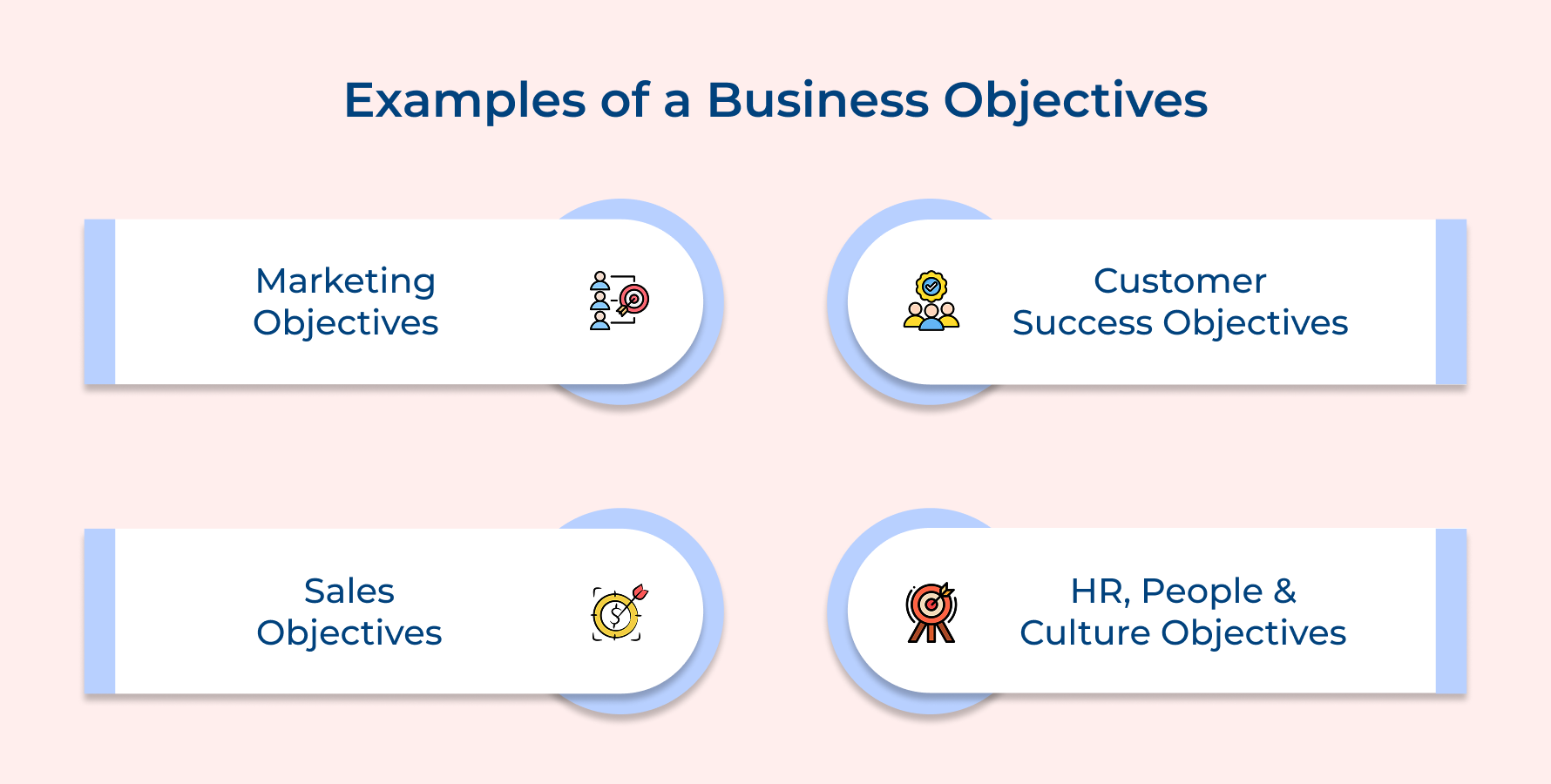
1. Marketing Objectives Examples
Strong marketing objectives go beyond campaign metrics and connect directly to revenue, brand growth along with customer acquisition outcomes.
- Brand awareness growth: Increase unaided brand recall by 20% among the target audience within the next two quarters.
- Lead generation target: Generate 500 qualified marketing leads per month through organic and paid channels combined.
- Customer acquisition cost: Reduce customer acquisition cost by 15% within 6 months through optimized campaign targeting.
2. Customer Success Objectives Examples
Customer success objectives are built to protect revenue, deepen relationships and turn satisfied customers into long-term advocates.
- CSAT improvement: Improve customer satisfaction score from 72% to 85% within the next two financial quarters.
- Churn reduction: Reduce monthly customer churn rate from 5% to below 2% within the next 6 months.
- Onboarding efficiency: Decrease average customer onboarding time from 14 days to 7 days by end of Q2.
3. Sales Objectives Examples
Sales objectives define the commercial targets that drive revenue growth and give the sales team a clear as well as measurable performance standard.
- Revenue target: Achieve ₹5 crore in new business revenue by the end of the current financial year.
- Pipeline growth: Build a qualified sales pipeline of at least 3X the quarterly revenue target by mid-year.
- Conversion rate: Improve lead-to-close conversion rate from 18% to 28% within the next two sales quarters.
4. HR, People & Culture Objectives Examples
HR and culture objectives ensure the organization is building the human capability as well as workplace environment needed to sustain every business growth target it sets.
- Employee retention: Reduce annual employee attrition rate from 22% to below 12% by the end of this financial year.
- Training completion: Achieve 95% completion rate for all mandatory skill development programs across every business function.
- Hiring efficiency: Reduce average time-to-hire from 45 days to 25 days for all mid and senior level positions.
Transform Goals Into Growth With Business Objectives
Business objectives convert strategic vision into measurable outcomes that every team and project can execute against with full accountability. Organizations treating objectives as living commitments consistently outperform those that treat them as annual documentation exercises.
Setting the right objectives gives your business the clarity and performance discipline needed to turn ambition into sustainable growth. Every goal your organization sets deserves a structured objective behind it that makes achievement a matter of execution.
Limit time — not creativity
Everything you need for customer support, marketing & sales.

Neeti Singh is a passionate content writer at Kooper, where he transforms complex concepts into clear, engaging and actionable content. With a keen eye for detail and a love for technology, Tushar Joshi crafts blog posts, guides and articles that help readers navigate the fast-evolving world of software solutions.