Top Business Management Tips for Small Business Success

Key Highlights:
- Practical business management tips help reduce daily firefighting and refocus owners on growth
- Strong business management creates efficiency, profitability, adaptability and long-term stability
- Clear goals, communication and automation form essential small business management tips
Running a small business means you’re constantly putting out fires while trying to move forward at the same time. You juggle customer complaints and cash flow worries as well as employee issues all before lunch – the stress of managing everything alone keeps you up at night.
The good news is that most daily headaches come from a handful of fixable management gaps rather than unsolvable problems. When you address these core areas systematically, you eliminate recurring issues that drain your energy and steal time from actually growing your business.
These practical business management tips target the exact pressure points that cause the most pain for small business owners every single day. Apply them consistently and you’ll spend less time firefighting as well as more time building the business you actually envisioned when you started.
What is Business Management?
Business management is the practice of organizing and directing a company’s resources to achieve specific goals. It involves planning what needs to be done, coordinating people and materials, as well as making decisions that keep the business running smoothly. Think of it as the engine that turns ideas and resources into actual results.
Impact of Business Management
Good business management directly affects if a company succeeds or struggles in its market. It determines how efficiently teams work together and how quickly problems get solved. When done well, it creates stability for employees as well as delivers value to customers consistently.
Key objectives:
- Efficiency: Maximize output while minimizing wasted time and resources
- Profitability: Generate more revenue than expenses to sustain and grow the business
- Employee Development: Build skilled teams through training and clear career pathways
- Customer Satisfaction: Meet or exceed what customers expect from your products or services
- Innovation: Adapt to market changes and find new ways to serve your audience better
Benefits of Using Business Management Strategies
Strategic business management isn’t just theory—it creates real advantages that help your organization thrive in competitive markets.
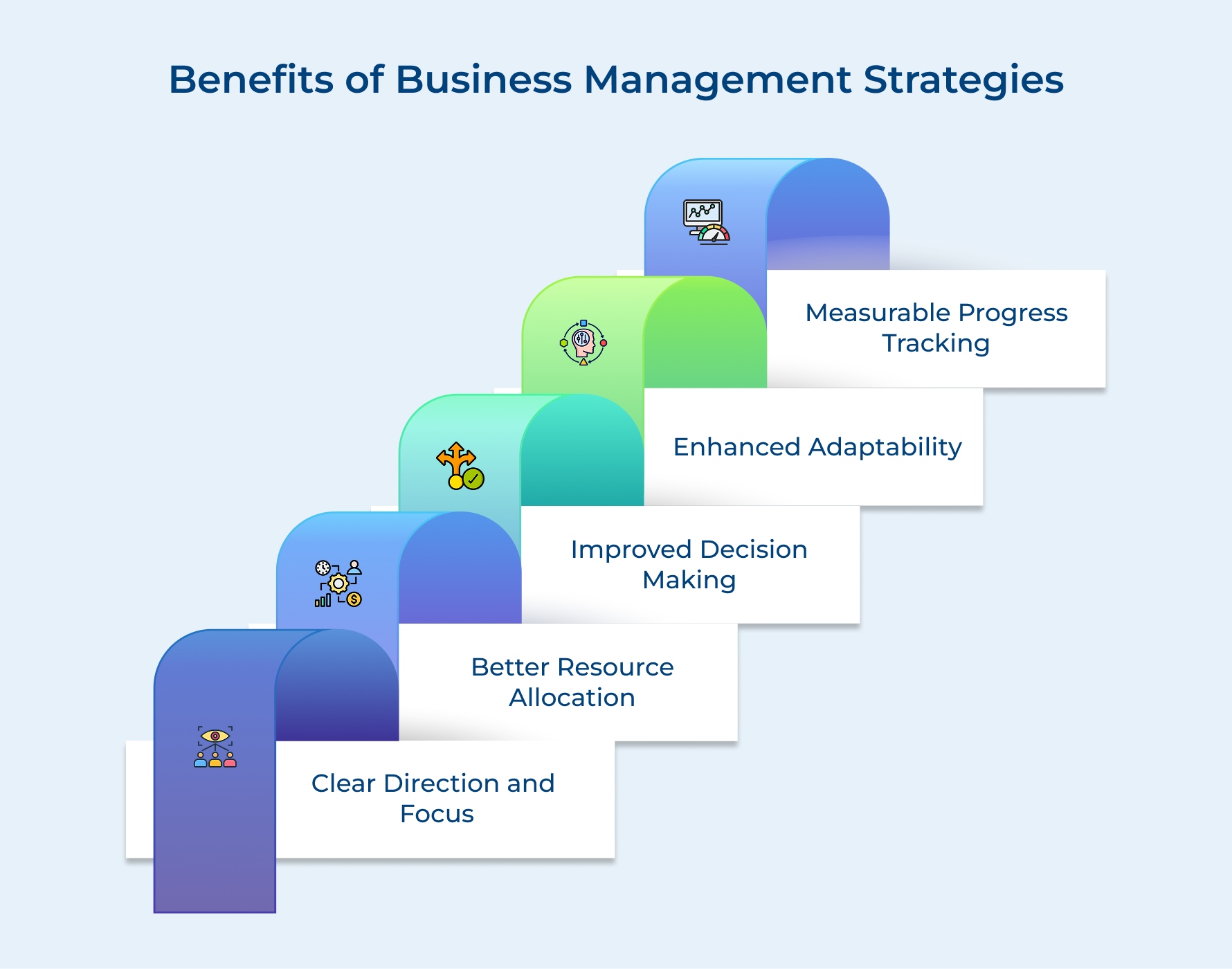
Clear Direction and Focus
A clear business strategy gives teams a shared roadmap tied to common goals. Conflicting priorities fade away as everyone understands what matters most. Daily efforts start lining up, making day-to-day operations smoother and more focused. Progress feels collective, not fragmented and momentum builds naturally.
Better Resource Allocation
Strategic planning shows exactly where time and money deliver the strongest returns. Teams avoid spreading themselves thin across too many initiatives. Delegating Tasks becomes simpler because ownership is clear. Attention stays on work that supports growth and protects long-term financial health.
Improved Decision Making
Structured frameworks and reliable data bring clarity to tough choices. Leaders compare options against clear criteria instead of relying on instinct alone. Decisions feel easier to explain and defend. Confidence grows because every choice supports the bigger picture laid out in the business plan.
Enhanced Adaptability
Regular reviews help organizations notice industry shifts early. Teams respond faster because priorities are already aligned. Flexibility becomes a habit rather than a reaction. Potential threats often turn into opportunities before competitors even realize what’s happening.
Measurable Progress Tracking
Defined benchmarks reveal if work is creating real impact or just filling calendars. Teams see how everyday actions connect to outcomes. Accountability improves, wins feel tangible and the entire business stays aligned around measurable results.
8 Business Management Tips for Your Business Growth
Let’s delve into nine critical business management tips that can empower your organization, helping you navigate challenges and seize opportunities for growth.
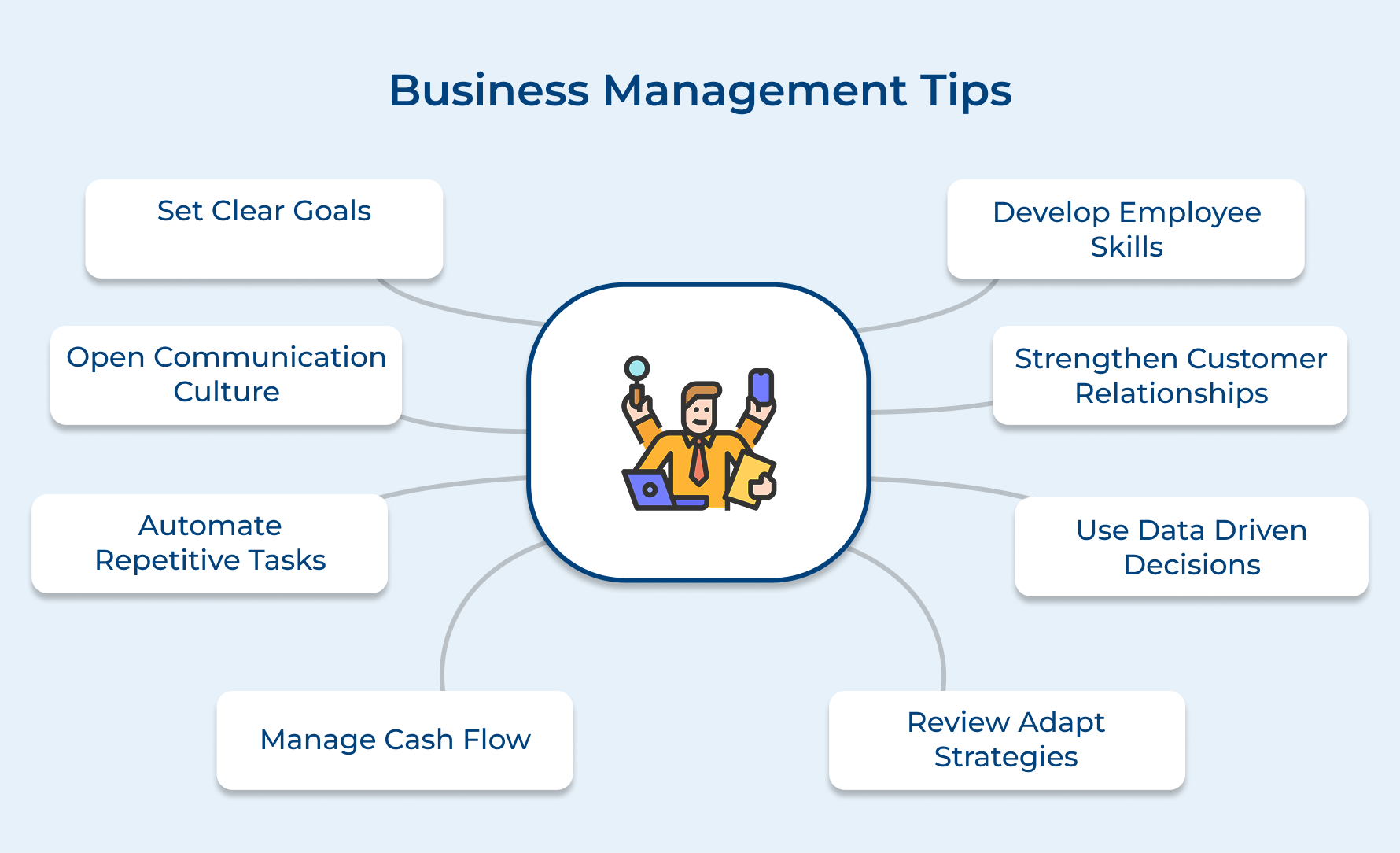
1. Set Clear Goals and Expectations
Setting goals means you’re defining exactly where your business needs to go and what success looks like when you arrive there. Without this clarity, teams drift in different directions and waste energy on activities that don’t move the needle forward.
Here are five key considerations when setting goals:
- Specificity: Make goals concrete enough that anyone can understand exactly what needs accomplishing.
- Measurability: Attach numbers or clear indicators that show in case you’ve hit the target.
- Timeframes: Assign realistic deadlines that create urgency without overwhelming your team.
- Alignment: Ensure every goal connects directly to your larger business vision and strategy.
- Communication: Share goals transparently so everyone knows their role in achieving them.
Implementation starts with writing down your goals and breaking them into smaller milestones that teams can tackle weekly or monthly. Review progress regularly with your team and adjust targets when you discover they’re too aggressive or too easy to reach.
2. Build Open Communication Culture Daily
Open communication means creating an environment where people feel safe sharing ideas and concerns without fear of negative consequences. It matters because hidden problems fester and grow while opportunities get missed when team members stay silent about their insights.
You can build this culture by actively asking for input during meetings while showing genuine appreciation when people speak up. Create multiple channels for feedback including anonymous options and demonstrate that you act on the suggestions you receive.
Pro tips:
- Model vulnerability by admitting your own mistakes and sharing lessons you’ve learned from failures.
- Respond to every piece of feedback within 48 hours even if it’s just acknowledging receipt.
3. Automate Repetitive Business Tasks Strategically
Automation involves using technology to handle routine tasks that don’t require human judgment or creativity for completion. This is crucial for growth because it frees your team to focus on strategic work that actually differentiates your business from competitors.
Lets explore the use cases of Automation in details:
- Invoice processing and billing: Set up systems that generate invoices automatically when projects complete and send payment reminders to clients on scheduled intervals.
- Customer support responses: Deploy chatbots that handle common questions instantly while routing complex issues to human team members who can provide personalized attention.
- Social media scheduling: Use tools that publish content across platforms at optimal times without requiring anyone to log in manually each day.
Smart automation doesn’t replace human workers but instead amplifies what they can accomplish by removing tedious bottlenecks from their workflows. The key is choosing tools that integrate well with your existing systems rather than creating new complications.
4. Master Your Cash Flow Management
Managing cash flow means keeping track of every dollar coming in and going out so you always know your true financial position. Even businesses with strong sales can fail if cash runs dry, because running out of money kills companies faster than low profits ever could.
Monitor Income and Expenses in Real-Time
Check your financial dashboard daily instead of waiting for monthly reports that might be too late. Using Project Management Software or accounting tools that update automatically with each transaction helps you spot worrying patterns before they turn into full-blown problems.
Create Buffer Funds for Unexpected Situations
Keep three to six months of operating expenses in a separate account, reserved only for genuine emergencies. This safety net helps you handle equipment failures or sudden market changes without scrambling for expensive emergency loans.
Negotiate Better Payment Terms with Vendors
Talk to suppliers about extending payment windows or offering early-payment discounts when your cash position is strong. These discussions usually go well because vendors prefer keeping reliable customers rather than searching for new ones in competitive markets.
5. Invest in Employee Development Programs
Employee development means systematically improving your team’s knowledge and abilities through structured learning opportunities beyond their daily work. This investment pays dividends because skilled employees solve problems faster while bringing innovative approaches that less experienced workers simply cannot match.
Building employee skills strengthens your entire organization’s capabilities:
- Technical skills training: Workshops that teach software proficiency or industry-specific certifications that keep your team current with evolving standards.
- Leadership development programs: Courses that prepare high-potential employees for management roles before you desperately need to fill those positions.
- Cross-functional training: Opportunities for team members to learn about other departments and understand how their work connects to the bigger picture.
- Soft skills enhancement: Sessions focused on communication and emotional intelligence as well as conflict resolution that improve how people collaborate daily.
Development programs signal to employees that you’re invested in their futures rather than viewing them as interchangeable resources. This builds loyalty and reduces turnover costs while creating a deeper bench of talent ready to step up when your business expands.
6. Build Strong Customer Relationship Systems
Customer relationship systems help you organize interactions with your customer base so no one slips through the cracks and everyone receives consistent service. Strong relationships lead to repeat business and referrals, which cost far less than acquiring new customers through advertising.
- A centralized customer database is key. Using a CRM platform, every team member logs interactions and updates information in one place. This stops customers from repeating themselves and allows your team to deliver personalized service.
- Automated follow-up sequences add another layer of care. Email workflows check in after purchases and request feedback, showing customers that their experience matters beyond the initial sale.
- Loyalty recognition programs strengthen bonds further. Reward your best customers with exclusive benefits or early access to new offerings, making them feel valued as relationships grow.
Together, these systems turn scattered data into actionable insights, helping you make smarter decisions about where to focus resources for maximum impact.
7. Make Data-Driven Business Decisions Always
Data-driven decision making means basing your choices on actual numbers and measurable trends rather than gut feelings or assumptions about what might work. This approach matters because even experienced leaders have biases that can lead them astray when they rely solely on intuition.
You can implement this by identifying which metrics truly indicate success in your specific business and then tracking them consistently. Start with three to five key performance indicators that directly connect to revenue or customer satisfaction and review them weekly.
Pro tips:
- Create a simple dashboard that displays your most important metrics in visual formats that reveal patterns at a glance.
- Compare your current data against the same period last year to account for seasonal variations that might skew interpretations.
8. Review and Adapt Strategies Regularly
Regular strategy reviews mean stepping back from daily operations to assess in case your current approach is still moving you toward long-term goals. This matters because markets shift and customer needs evolve as well as what worked brilliantly last year might be completely ineffective.
Before implementing reviews, consider these four critical questions:
- Are we achieving the results we forecasted when we launched this strategy?
- What external factors have changed since we created our current plan?
- Which of our assumptions about customers or competitors have proven incorrect?
- Where are we seeing unexpected successes or failures that deserve attention?
These questions help by forcing you to challenge your existing thinking rather than simply defending decisions you’ve already made. They create space for honest evaluation where you can admit what’s not working without feeling like you’re admitting failure.
You can implement effective reviews by scheduling quarterly sessions where leadership examines performance data against these questions and makes concrete adjustments. Document what you’re changing and why so you can track in case those modifications actually improve results in the next review cycle.
What are the Biggest Challenges of Managing a Business
Managing a business means constantly juggling competing demands while trying to keep everything moving forward. Let’s explore the major obstacles that test even experienced leaders.
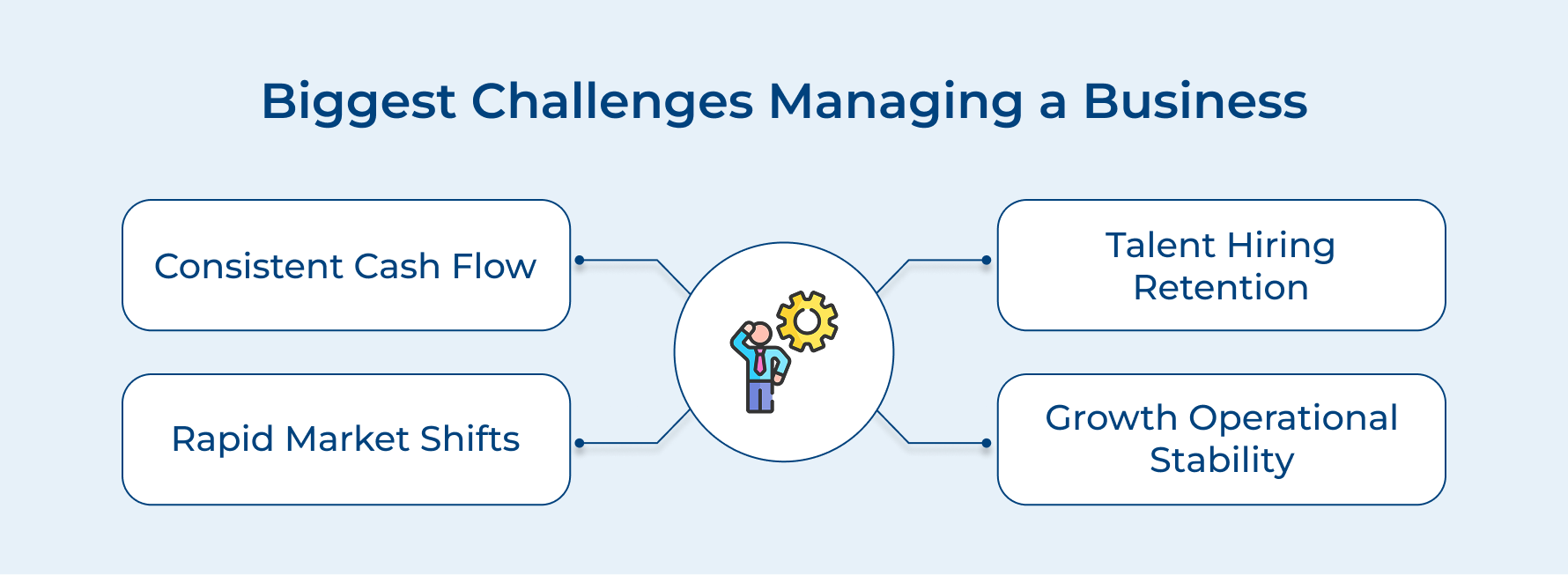
Maintaining Consistent Cash Flow
Cash flow problems strike businesses of all sizes because income arrives unpredictably while expenses demand payment on fixed schedules. You might have strong sales on paper but still struggle to cover payroll when customers pay late or seasonal slowdowns hit your revenue streams hard.
Finding and Retaining Talented Employees
The right people make your business thrive while poor hires drain resources and damage team morale over time. Competition for skilled workers intensifies constantly and keeping top performers engaged requires more than just competitive salaries in today’s market landscape.
Adapting to Rapid Market Changes
Technology shifts and customer preferences evolve faster than most businesses can adjust their operations or product offerings accordingly. What worked brilliantly two years ago might be completely obsolete and falling behind competitors happens quickly when you resist necessary changes.
Balancing Growth with Operational Stability
Scaling too quickly strains your systems and overwhelms your team while growing too slowly lets competitors capture market share you’ll never recover. Finding the sweet spot between ambitious expansion and sustainable operations requires constant recalibration as conditions change around you.
These challenges might seem daunting but practical solutions exist that successful businesses use every day. Here are five approaches that directly address the obstacles above.
- Build a cash reserve equal to three months of operating expenses to cushion against income fluctuations
- Create a strong company culture that attracts quality candidates and makes current employees want to stay long-term
- Schedule quarterly strategy reviews to spot market trends early and adjust your approach before falling behind
- Implement scalable systems and processes before you need them so growth doesn’t break your operations
- Invest in management training so your leadership team develops skills to navigate uncertainty with confidence
Unleash Your Managerial Potential with Business Management Tips
Effective business management focuses on steady improvement, not perfection. Using practical business management tips helps you tackle real challenges and build systems that support long-term growth.
For example, reviewing financial statements and analyzing financial reports can reveal areas where you can cut costs or invest more wisely. Similarly, streamlining Supply chains step by step reduces bottlenecks and keeps operations running smoothly.
Small, consistent changes add up over time. The key is to prioritize, act and monitor progress so every decision strengthens your foundation and drives sustainable growth.
Limit time — not creativity
Everything you need for customer support, marketing & sales.

Neeti Singh is a passionate content writer at Kooper, where he transforms complex concepts into clear, engaging and actionable content. With a keen eye for detail and a love for technology, Tushar Joshi crafts blog posts, guides and articles that help readers navigate the fast-evolving world of software solutions.