How the Project Life Cycle Works: Stages, Examples & Tips
- What is a Project Life Cycle in Project Management?
- Why is Project Life Cycle Management Important?
- Advantages & Disadvantages of Project Life Cycle in Project Management
- Types of Project Life Cycles in Project Management
- 5 Phases of the Project Life Cycle in Project Management
- Best Practices in Project Life Cycle Management
- Common Challenges in Project Life Cycle Management
- Project Life Cycle Examples in Project Management
- From Start to Finish, Master Every Stage of your Project Life Cycle
- FAQs about Project Life Cycle
Key Highlights:
- Clear project life cycle structure helps teams prioritize tasks, reduce confusion, while keeping timelines and budgets consistently on track.
- Defined project management life cycle phases improve collaboration, minimize risks early and ensure predictable outcomes for client-driven projects.
- Using project life cycle models enables better planning, stronger communication and smoother execution from initiation to final project closure.
If your projects keep slipping on deadlines or blowing past budgets, it usually means the team is unsure about priorities and everything feels a bit scattered. Instead of staying ahead of issues, you end up reacting to problems as they pop up—frustrating for you and confusing for clients.
Even with a hardworking team, progress can feel disorganized when there’s no clear sequence to follow, making it harder to spot risks early.
A defined project life cycle brings order to all that chaos. It gives you a clear path from the first idea to final delivery. In this guide, you’ll see how each phase works and how it helps you run smoother, more predictable projects.
What is a Project Life Cycle in Project Management?
A project life cycle represents the complete journey of a project from its initial conception through to its final closure. Think of it as the natural progression that every project follows—beginning with an idea, moving through planning/execution, while ending with delivery and evaluation. This framework helps teams understand where they are and what comes next at any point during their work.
In client-based organizations, the project life cycle becomes your roadmap for maintaining transparency and building trust with clients. This structured approach reduces surprises and keeps both (your team & the client) aligned on expectations as well as timelines throughout the engagement.
Key characteristics:
- Sequential progression: Each phase builds upon the previous one and follows a logical order that moves the client project forward toward completion.
- Defined boundaries: Every phase has clear starting and ending points that help teams know when to transition their focus as well as show clients tangible progress.
- Deliverables at each stage: Each phase produces specific outputs or results that you can present to the client as evidence of progress and that enable the next phase to begin.
- Varying resource intensity: Different phases require different levels of effort, with execution typically demanding the most resources and client interaction while initiation as well as closure need fewer.
- Predictable patterns: Similar types of client projects tend to follow comparable life cycle patterns, which allows teams to learn from past experiences and set more accurate expectations with new clients.
Why is Project Life Cycle Management Important?
Project life cycle management gives client projects clear structure and direction while reducing the risk of scope creep or missed deadlines. When you follow a defined life cycle, your team knows exactly what needs to happen at each stage and your client receives consistent updates that build confidence in your delivery.
Recent data highlights why structured life cycle management matters:
- Organizations with standardized project management practices report 28% more projects meeting their original goals and business intent
- Companies using defined project life cycles waste 13 times less money due to project failures compared to those without structured approaches
- Projects following formal life cycle processes are 2.5 times more likely to be completed on time and within budget based on Wellingtone’s 2024 State of Project Management survey:
- Organizations that invest in proven project management practices meet goals 89% of the time versus only 36% for low-maturity organizations
The life cycle framework also protects your client relationships by establishing accountability at every phase and creating natural checkpoints for feedback. When problems arise, you can identify them early and adjust course before they impact the final deliverable or strain the partnership.
Advantages & Disadvantages of Project Life Cycle in Project Management
Every framework has its strengths and limitations. Understanding both sides helps you use the project life cycle effectively while staying aware of potential pitfalls.
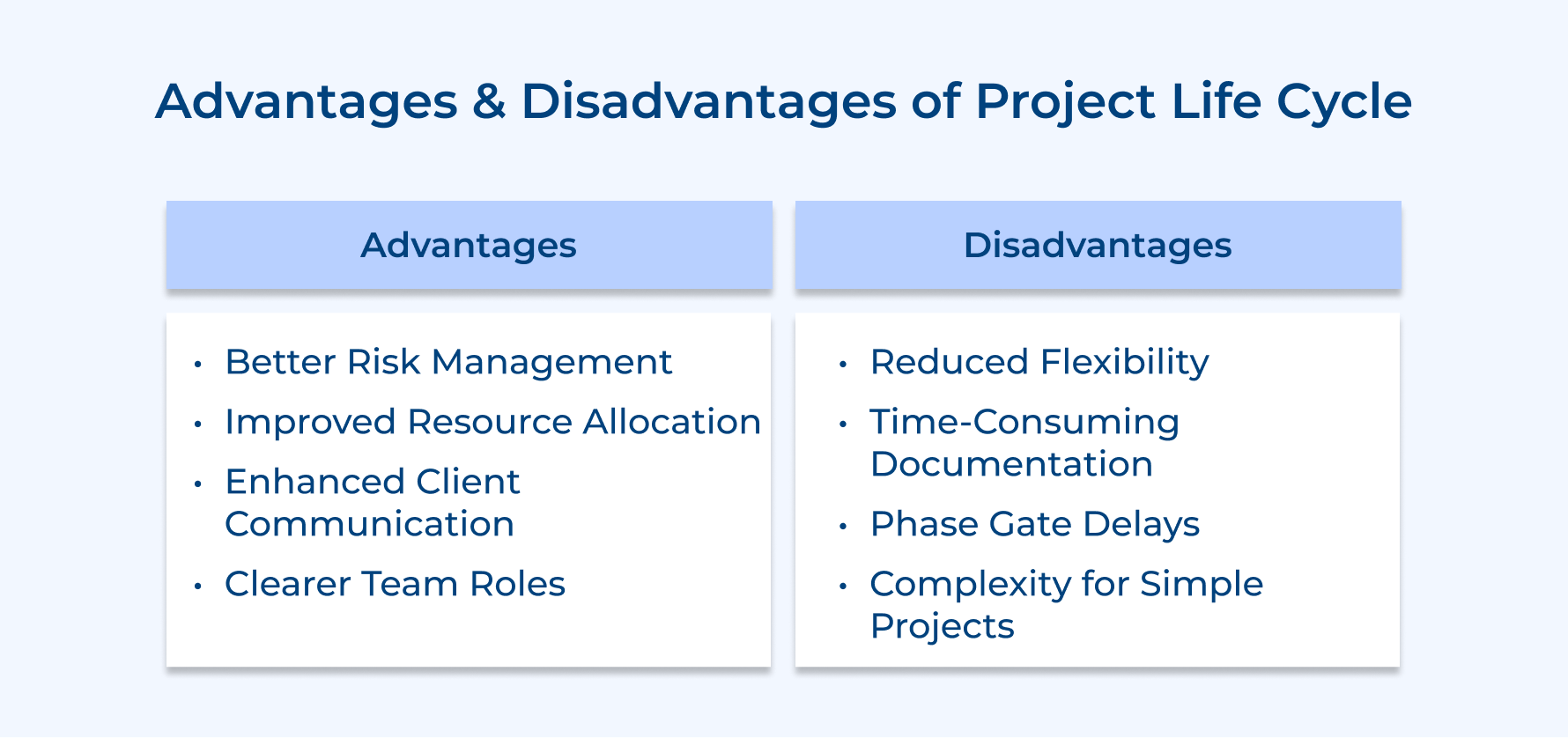
Advantages:
- Better risk management: The life cycle approach lets you identify potential problems early in each phase before they become costly disasters. Your team can spot issues during planning rather than discovering them when the client deadline is approaching.
- Improved resource allocation: When you know which phase comes next, you can plan your team’s time and budget more accurately. This prevents the common problem of overcommitting resources in early stages and running short when execution demands peak effort.
- Enhanced client communication: Each phase creates natural touchpoints where you can update your client on progress and gather their feedback. The regular rhythm of communication prevents misunderstandings and keeps everyone moving in the same direction.
- Clearer team roles: The life cycle defines what needs to happen at each stage so team members understand their responsibilities. A developer knows when to start coding and a designer knows when their input is most valuable.
The structured nature of the life cycle also creates documentation that becomes valuable knowledge for future client projects. Your team learns what works and what doesn’t at each phase.
Disadvantages:
- Reduced flexibility: Following a rigid life cycle can make it hard to adapt when client requirements change mid-project. You might feel locked into a phase even when circumstances call for a different approach.
- Time-consuming documentation: Each phase transition often requires formal approvals and paperwork that can slow down fast-moving projects. Small client projects might suffer from this administrative overhead rather than benefit from it.
- Phase gate delays: Waiting for one phase to completely finish before starting the next can create idle time for team members. Your developers might sit waiting while the design phase wraps up even though they could begin preliminary work.
- Complexity for simple projects: Not every client project needs a full life cycle treatment with multiple phases and formal handoffs. Small engagements can become unnecessarily complicated when you apply a framework designed for larger initiatives.
Types of Project Life Cycles in Project Management
Different client projects need different approaches based on how much uncertainty you’re dealing with and how clearly requirements are defined upfront. Let’s explore four common life cycle models.
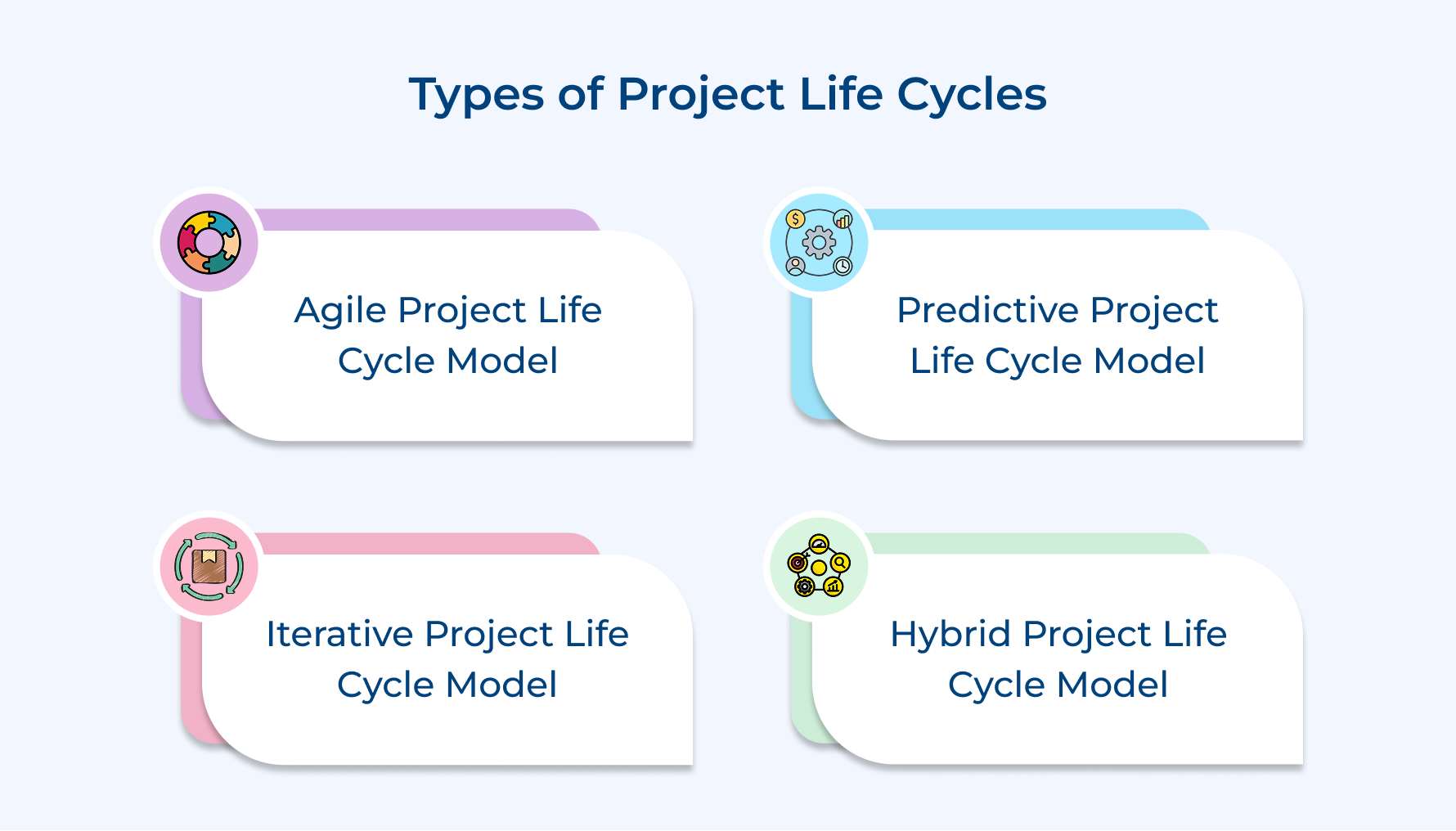
Agile Model
The Agile model breaks a project into short sprints—usually two to four weeks. You deliver small, working pieces often and get client feedback right after each sprint. It’s great for projects where requirements are still evolving or the client needs to see progress quickly. Your team can adjust plans fast, making it ideal for software and creative work.
Predictive Project Life Cycle Model
The predictive or waterfall model follows a clear, step-by-step sequence. You gather requirements upfront, plan in detail, execute and then close the project. It works best for stable, well-defined projects like construction or manufacturing where changes later are costly. Clients get a fixed timeline and budget early on.
Iterative Project Life Cycle Model
The iterative model focuses on steady improvement. You launch a basic version first, then refine it through several rounds of planning, building and reviewing. Each cycle adds clarity and functionality, making this approach ideal for products that need testing as well as adjustment before they’re fully ready.
Hybrid Project Life Cycle Model
The hybrid model adapts to real-world complexity. It lets you blend structured planning for stable parts of the project with Agile techniques for areas that need exploration. This mix gives you the control of a traditional model and the flexibility of a modern one, all within the same engagement.
5 Phases of the Project Life Cycle in Project Management
Let us now delve into these stages and explore how each contributes to the holistic growth as well as culmination of any project endeavor.
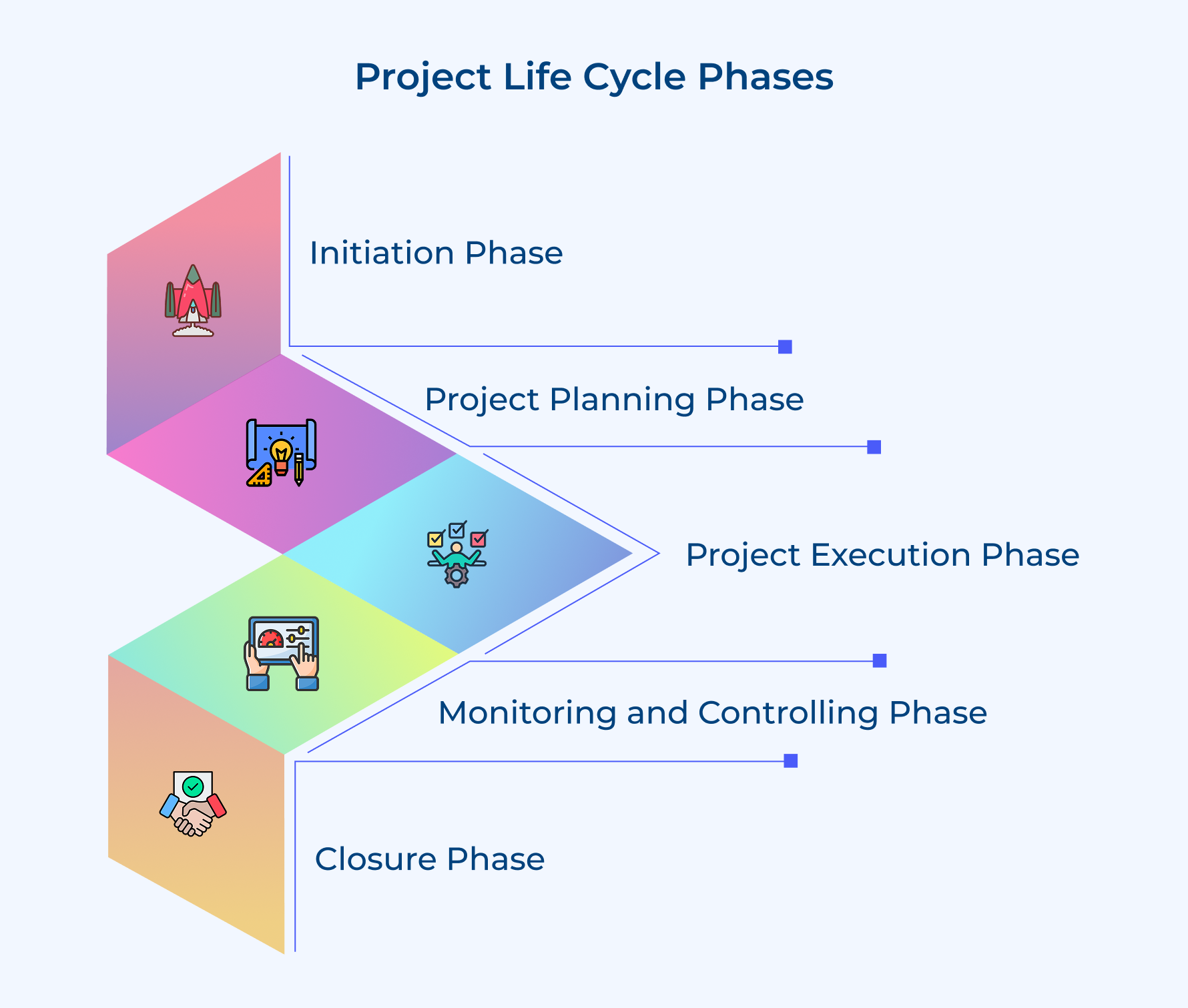
Initiation Phase
The initiation phase is where your client project transforms from a vague idea into a defined opportunity worth pursuing. This first phase sets the direction for everything that follows and helps you determine whether the project aligns with your client’s needs as well as your organization’s capabilities.
The initiation phase varies dramatically depending on project size. A small website redesign might need just a few hours while a multi-million dollar system implementation requires weeks of feasibility studies and extensive stakeholder interviews before anyone commits resources.
Here are three key activities this phase includes:
- Defining project objectives and scope: You work with your client to establish exactly what the project will deliver and what sits outside the boundaries.
- Identifying stakeholders and client expectations: You map out everyone who has a stake in the project outcome and document what each person expects.
- Creating the project charter and business case: You formalize the project’s purpose and justify why it deserves investment of time as well as resources. The charter gives your team official authority to proceed while the business case explains the expected return for the client.
The initiation phase ends when your client and leadership approve the project charter while committing the initial resources needed to move forward.
Project Planning Phase – The Foundation of Your Entire Project
The planning phase transforms your approved project concept into a detailed roadmap that guides your team’s work. This phase is crucial because even the most talented team will struggle without a solid plan that addresses timing, resources and potential obstacles.
During this phase you break down the project into manageable tasks and estimate how long each will take as well as identify dependencies between different work streams. Your team determines who needs to do what and when while also anticipating what could go wrong.
Here are the essential items you need to create during planning:
- Work breakdown structure: A hierarchical decomposition of all project work into smaller components that your team can estimate and assign to specific members.
- Project schedule: A timeline showing when each task starts and ends along with key milestones where you’ll demonstrate progress to your client.
- Resource plan: Documentation of which team members, equipment and budget allocations you need at different points throughout the project.
- Risk register: A living document identifying potential threats to project success along with your planned responses if those risks materialize.
- Communication plan: A framework defining how often you’ll update your client and through which channels as well as what information different stakeholders will receive.
Consider a client project to develop a custom inventory management system. Your planning phase would map out database design before front-end development and schedule client review sessions after each major module completion.
Project Execution Phase
The execution phase is where your plans turn into real deliverables and your team begins producing the work your client expects. This is the phase where value is actually created, so getting it right matters.
Deploying your team effectively:
- Assign tasks based on skills, not just availability, so work moves faster.
- Give clear instructions on what each deliverable should include and when it’s due.
- Help everyone understand how their tasks support the client’s bigger objectives.
Once work begins, your team follows the project schedule—developers start coding, designers create mockups and each task moves forward according to the plan. The focus is on keeping momentum steady while maintaining quality while adjusting quickly if something begins to slip.
Keeping clients informed:
- Hold short, regular status meetings to update progress and answer questions.
- Share project dashboards so clients can track milestones in real time.
- Build feedback loops after key deliverables so clients can review work before you move ahead.
Monitoring and Controlling Phase – Tracking Progress Against the Plan
The monitoring and controlling phase runs parallel to execution as well as ensures your project stays aligned with the plan. This phase is necessary because projects rarely go exactly as planned and you need mechanisms to detect problems early.
You need to monitor schedule performance to see if tasks are finishing on time and budget consumption to verify spending matches your projections. Tracking scope changes is equally important because even small additions can snowball into major delays.
Here are three effective ways to monitor and control your project:
- Earned value management: You compare the value of work actually completed against what you planned to complete and what you’ve spent.
- Regular status reviews: You hold weekly meetings where team members report progress and surface obstacles they’re facing. These sessions create accountability and help you spot patterns like consistently missed deadlines or tasks taking longer than estimated.
- Change request process: You establish a formal system where any proposed changes to scope or timeline must be documented and evaluated for impact before approval.
Project management software helps execute this phase by automatically calculating schedule variances and centralizing status updates. These tools generate dashboards showing real-time progress and send alerts when tasks fall behind schedule.
Closure Phase
The closure phase is the formal wrap-up of your client project. You deliver the final work, confirm everything meets requirements and document what you learned. This stage ensures client satisfaction and gives your team clear insights to improve future projects.
What happens during closure:
- Get client sign-off on all deliverables.
- Run a retrospective to capture lessons learned.
- Measure client satisfaction through structured feedback.
- Review team performance to understand strengths and challenges.
Key questions to ask:
- Did we meet all objectives and promised deliverables?
- What would the client change about our approach?
- Which team members excelled or struggled?
- What unexpected issues came up and how well did we respond?
- If we started over, what would we do differently?
How to close the project properly:
- Release team members and reassign them to new work.
- Archive all project documents in one central location.
- Close financial accounts to prevent future charges.
Best Practices in Project Life Cycle Management
Managing the project life cycle well requires more than just following the phases. These proven practices help you navigate each stage effectively and deliver better results for your clients.
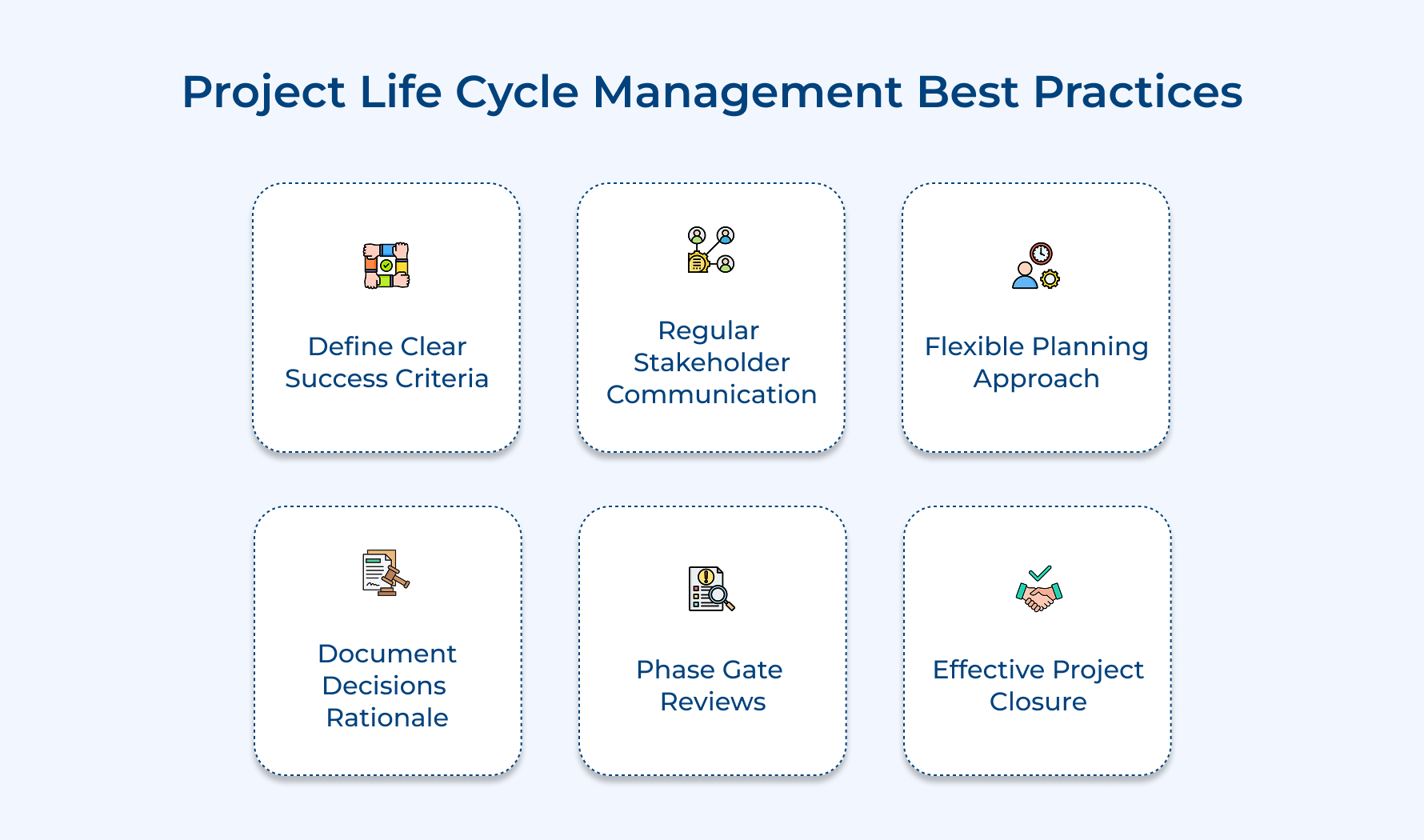
- Define clear success criteria upfront: You need measurable outcomes that both you and your client agree on before work begins so everyone knows exactly what finished looks like.
- Maintain regular stakeholder communication: Consistent updates throughout every phase keep your client informed and engaged while preventing the disconnect that leads to rejected deliverables at the end.
- Build flexibility into your plans: Even detailed planning cannot predict everything so leave buffer time in your schedule and budget to accommodate the inevitable changes that arise.
- Document decisions and rationale: Recording why you made certain choices creates a valuable reference when questions emerge later and helps future project teams learn from your experience.
- Conduct phase gate reviews: Pausing between major phases to evaluate progress ensures you caught any problems before moving forward and gives stakeholders a formal approval checkpoint.
- Invest time in closure activities: Properly ending the project with retrospectives and documentation ensures lessons learned actually improve your next client engagement rather than getting forgotten.
Common Challenges in Project Life Cycle Management
Even experienced project managers encounter obstacles when guiding client projects through their life cycles. Understanding these common challenges helps you anticipate problems and prepare effective responses.
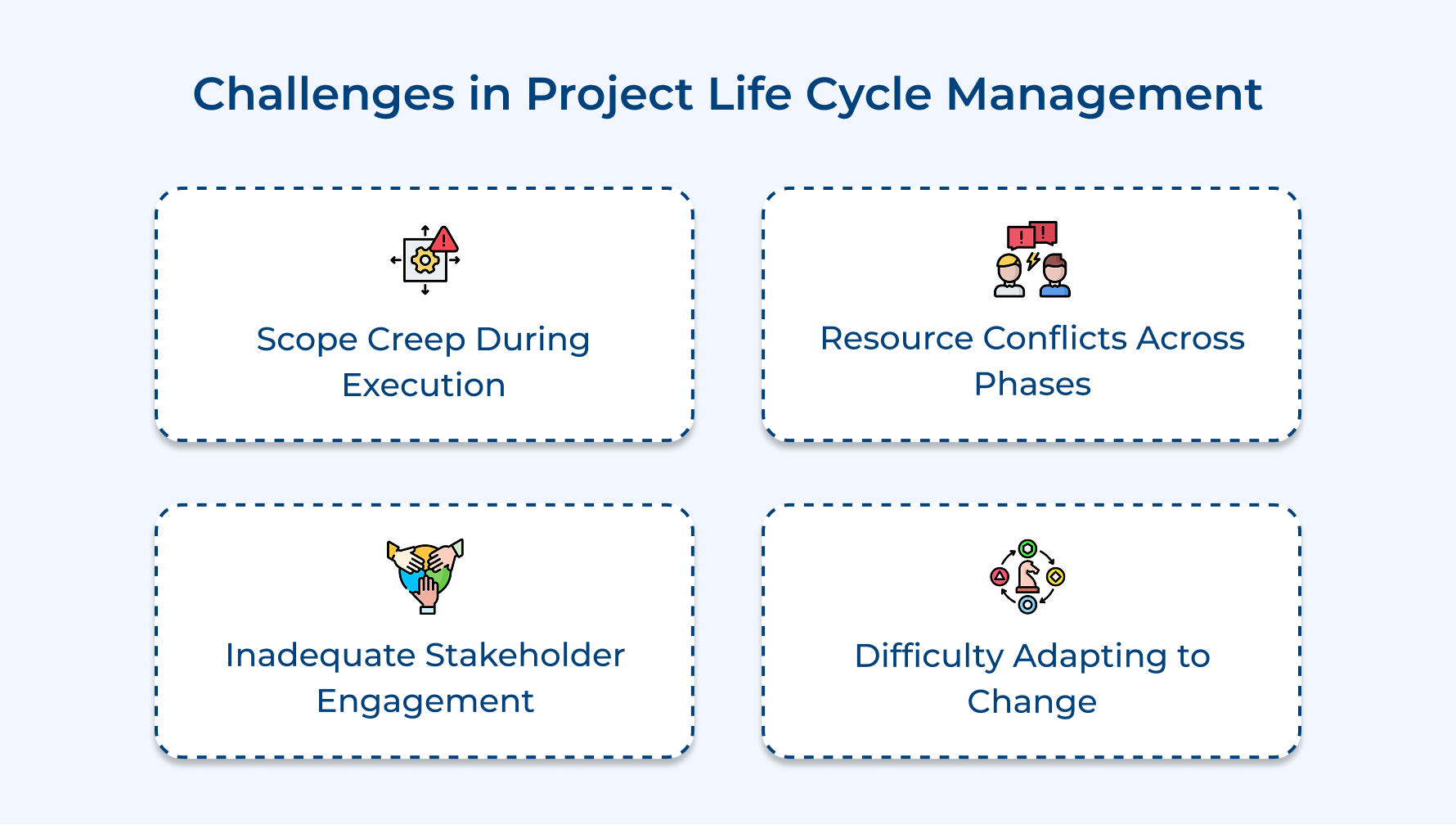
Scope Creep During Execution
Your client requests additional features or changes that weren’t in the original plan and each small addition gradually expands the project beyond its defined boundaries. Before you know it your timeline has stretched by weeks because you accommodated what seemed like minor adjustments.
Resource Conflicts Across Phases
The best team members get pulled onto urgent issues from other projects right when you need them most. This challenge intensifies when multiple client projects compete for the same specialized resources and you lack the authority to guarantee their availability.
Inadequate Stakeholder Engagement
The primary client contact stays involved but other key stakeholders remain distant until the end. When these stakeholders review the finished product they raise fundamental concerns that should have surfaced months earlier during planning.
Difficulty Adapting to Change
Your carefully planned life cycle becomes a constraint when your client’s business priorities change mid-project. The sequential nature of phases makes it hard to pivot quickly and you struggle to balance structure against the reality that the client needs to evolve.
Here are practical solutions to overcome these challenges:
- Implement a formal change control process that requires client approval and timeline adjustment for any scope additions beyond the original agreement.
- Create a resource management calendar that reserves key team members for your project phases and escalate conflicts to leadership early.
- Schedule regular check-ins with all stakeholders throughout the life cycle rather than waiting for formal review gates to gather their input.
- Demonstrate the value of processes by showing how documentation and reviews prevented problems on past projects as well as saved time.
- Adopt a hybrid life cycle approach that combines structured phases for stable work with agile techniques for components likely to change.
Project Life Cycle Examples in Project Management
Let’s walk through two example client projects to see how the life cycle phases work in practice.
Example 1: Digital Marketing Campaign Project
A client needs a digital marketing campaign to launch their new product line targeting millennial consumers across social media and email channels.
Initiation phase: You meet with the client to understand their target audience and define success metrics like lead generation targets. You create a project charter that outlines the campaign scope and identifies key stakeholders including the marketing director.
Planning phase: Your team develops a content calendar showing when each post and email will go live as well as creates a budget breakdown for ad spend. You establish approval workflows so the client can review content before it goes public.
Execution phase: Your designers create visual assets while copywriters draft engaging posts that speak to the target audience. The team launches ads and sends emails while maintaining daily communication with the client about performance.
Monitoring and controlling phase: You track conversion metrics against your targets and adjust ad spending toward the platforms showing the strongest results. When certain messages resonate better you modify upcoming content to emphasize those themes.
Closure phase: You compile a report showing total leads generated and overall ROI compared to the client’s investment. The team conducts a retrospective as well as transfers all campaign assets to the client.
Example 2: Website Redesign Project
A client wants to redesign their outdated corporate website to improve user experience and increase conversion rates for online service inquiries.
Initiation phase: You analyze the current website’s pain points through user testing and document specific problems like confusing navigation. Together with the client you define the redesign objectives and create a project charter.
Planning phase: Your UX team creates wireframes showing the new site structure while developers estimate the technical work required. You establish a testing plan and schedule client review sessions after completing the design mockups.
Execution phase: Designers transform approved wireframes into polished visual designs while developers set up the content management system. Your developers build out the responsive templates and your content team migrates existing pages.
Monitoring and controlling phase: You conduct code reviews to ensure the site meets performance standards and run user acceptance testing sessions. When the client requests additional functionality you evaluate the impact on timeline and budget.
Closure phase: You launch the redesigned website and monitor it closely for the first week. Your team provides training to the client’s staff on updating content while delivering comprehensive documentation before closing the project.
From Start to Finish, Master Every Stage of your Project Life Cycle
Mastering the project life cycle transforms how you deliver client projects by providing structure without sacrificing flexibility. Each phase builds upon the previous one to create a clear path from initial concept through successful completion and handoff.
The key is understanding that the life cycle serves as your guide rather than a rigid rulebook you must follow blindly. Adapt these phases to fit your specific client needs while maintaining the discipline that separates successful projects from chaotic ones.
Limit time — not creativity
Everything you need for customer support, marketing & sales.

Neeti Singh is a passionate content writer at Kooper, where he transforms complex concepts into clear, engaging and actionable content. With a keen eye for detail and a love for technology, Tushar Joshi crafts blog posts, guides and articles that help readers navigate the fast-evolving world of software solutions.