Complete Guide to Building an Effective Project Pipeline
- What is a Project Management Pipeline?
- Stages of Project Pipeline Management
- Why Should Businesses Focus on Project Pipeline Management?
- 7 Important Steps to Streamline Your Project Pipeline
- Key Best Practices for Project Pipeline Management
- Common Challenges in Project Pipeline Management
- Examples of Project Management Pipeline
- Streamline Your Success with Project Management Pipeline
- FAQs about Project Pipeline

Key Highlights:
- Clear structure helps teams prioritize work, allocate resources efficiently, and maintain consistent delivery across every stage of the project pipeline.
- Strong project pipeline management improves visibility, reduces bottlenecks, and connects execution directly to measurable business value.
- Practical steps and proven best practices guide teams toward smoother collaboration as well as continuous improvement across projects.
Projects start piling up when priorities aren’t clear, and your team quickly feels overwhelmed by competing demands. Deadlines begin to slip, resources stretch too thin, and no one truly knows what work is getting completed.
Chaos soon becomes the default when a structured pipeline is missing, and important work gets buried under constant urgent requests. Teams spend valuable time on low-impact projects while critical initiatives slow down simply because focus is unclear.
A well-managed project pipeline brings clarity and control back into your workflow. This guide walks you through practical steps to build and maintain a pipeline that keeps projects moving smoothly every step of the way.
What is a Project Management Pipeline?
A project management pipeline is a structured system that organizes work from start to finish. It maps out every stage a project goes through and helps teams track progress. Think of it as a visual roadmap that shows where each task sits in the journey from idea to completion.
The pipeline breaks down your project into clear stages like planning, execution and review. Tasks move through each phase sequentially. Teams can see bottlenecks at a glance and adjust resources where needed to keep everything flowing smoothly.
Key objectives:
- Visibility: Everyone on the team knows exactly what’s happening and where things stand at any moment.
- Efficiency: Resources get allocated to the right tasks at the right time without waste or overlap.
- Consistency: Every project follows the same proven process so quality stays high and predictable.
- Accountability: Clear ownership at each stage means no task falls through the cracks.
- Adaptability: The pipeline reveals problems early so you can pivot quickly before small issues become big ones.
Stages of Project Pipeline Management
Every successful project moves through distinct phases that build on each other. Understanding these stages helps you guide work from concept to completion with clarity and control.
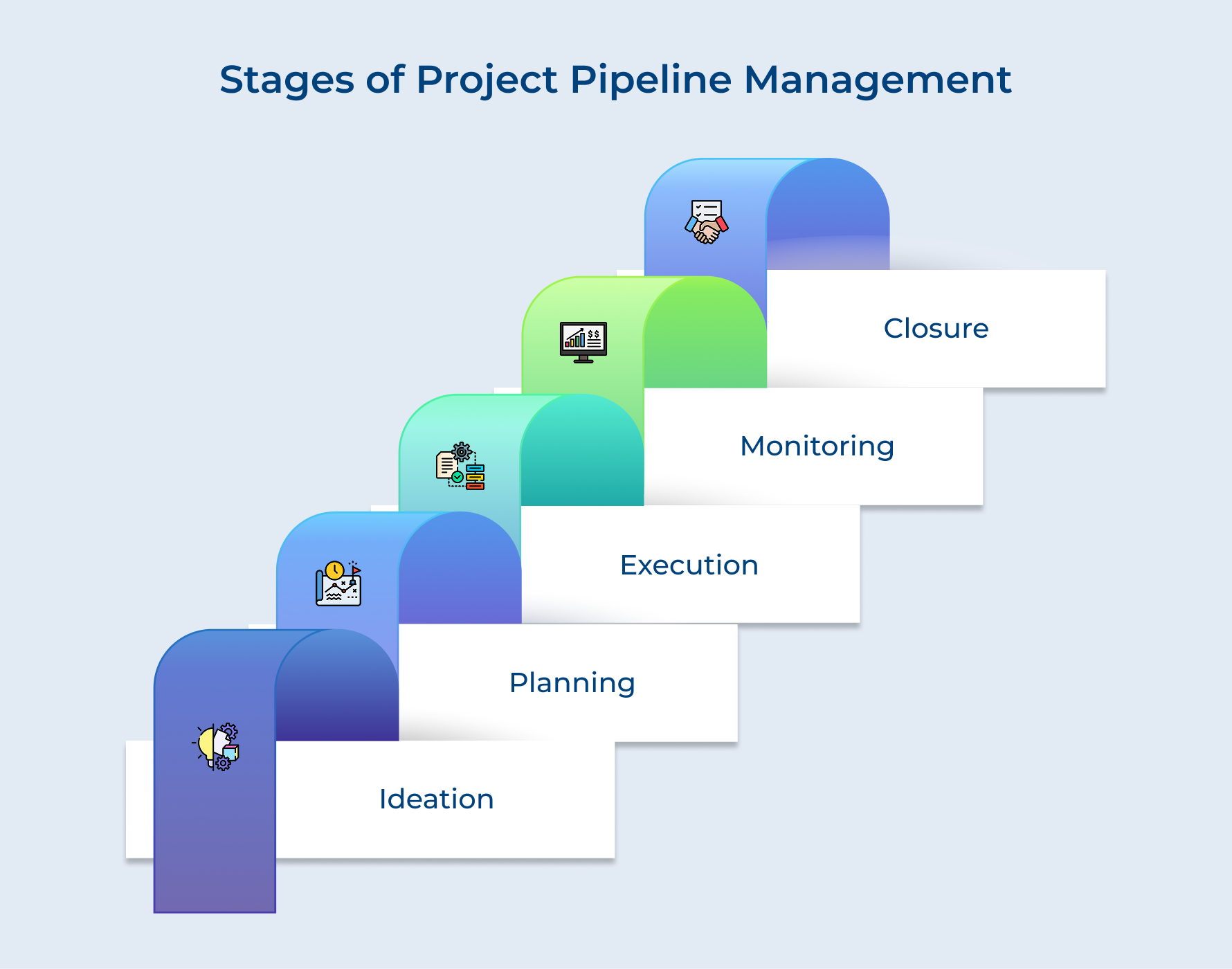
1. Ideation
This is where possibilities take shape and raw concepts get explored. Your team brainstorms solutions, identifies opportunities as well as defines what success looks like for the project ahead.
Core activities that drive effective ideation:
- Gathering input from stakeholders to understand real needs and pain points
- Evaluating feasibility by weighing resources against potential impact
- Defining clear project goals that align with broader business objectives
The best ideas emerge when you challenge assumptions early. You refine the concept until it’s concrete enough to move forward with confidence and shared understanding across the team.
2. Planning
Planning transforms your idea into a detailed roadmap with timelines and milestones. You break down the work into manageable tasks, assign responsibilities and establish budgets that keep everything realistic as well as achievable.
This stage sets expectations for everyone involved. You identify potential risks, create contingency plans and build a framework that guides decision-making throughout the entire project lifecycle.
3. Execution
Your plan comes alive as teams start delivering actual work. Tasks get completed, progress gets tracked and the project moves from abstract planning into tangible results that you can see as well as measure.
Essential elements that keep execution on track:
- Regular check-ins to ensure alignment and catch issues before they escalate
- Resource management to balance workload and prevent team burnout
- Quality control measures to maintain standards throughout the delivery process
Communication becomes critical here because things rarely go exactly as planned. You adapt in real-time, remove obstacles and keep momentum going even when unexpected challenges arise.
4. Monitoring
Monitoring runs parallel to execution and measures how reality compares to your plan. You track metrics, assess performance while gathering data that shows if you’re hitting targets or drifting off course.
This ongoing vigilance helps you spot trends early. You can intervene quickly when something goes wrong and make informed adjustments that keep the project healthy while moving toward its goals.
5. Closure
The project wraps up with final deliverables handed off and stakeholders signed off. You document lessons learned, celebrate wins while ensuring nothing gets left hanging as the team transitions to new work.
Critical steps that complete the project properly:
- Conducting post-project reviews to capture what worked and what didn’t
- Archiving documentation so future teams can learn from your experience
- Releasing resources and formally closing contracts or commitments
Proper closure creates institutional knowledge that makes your next project stronger. You turn individual success into repeatable processes that benefit the entire organization going forward.
Why Should Businesses Focus on Project Pipeline Management?
Strong pipeline management isn’t just nice to have anymore. It directly impacts your bottom line and determines if projects deliver real value or drain resources without meaningful results.
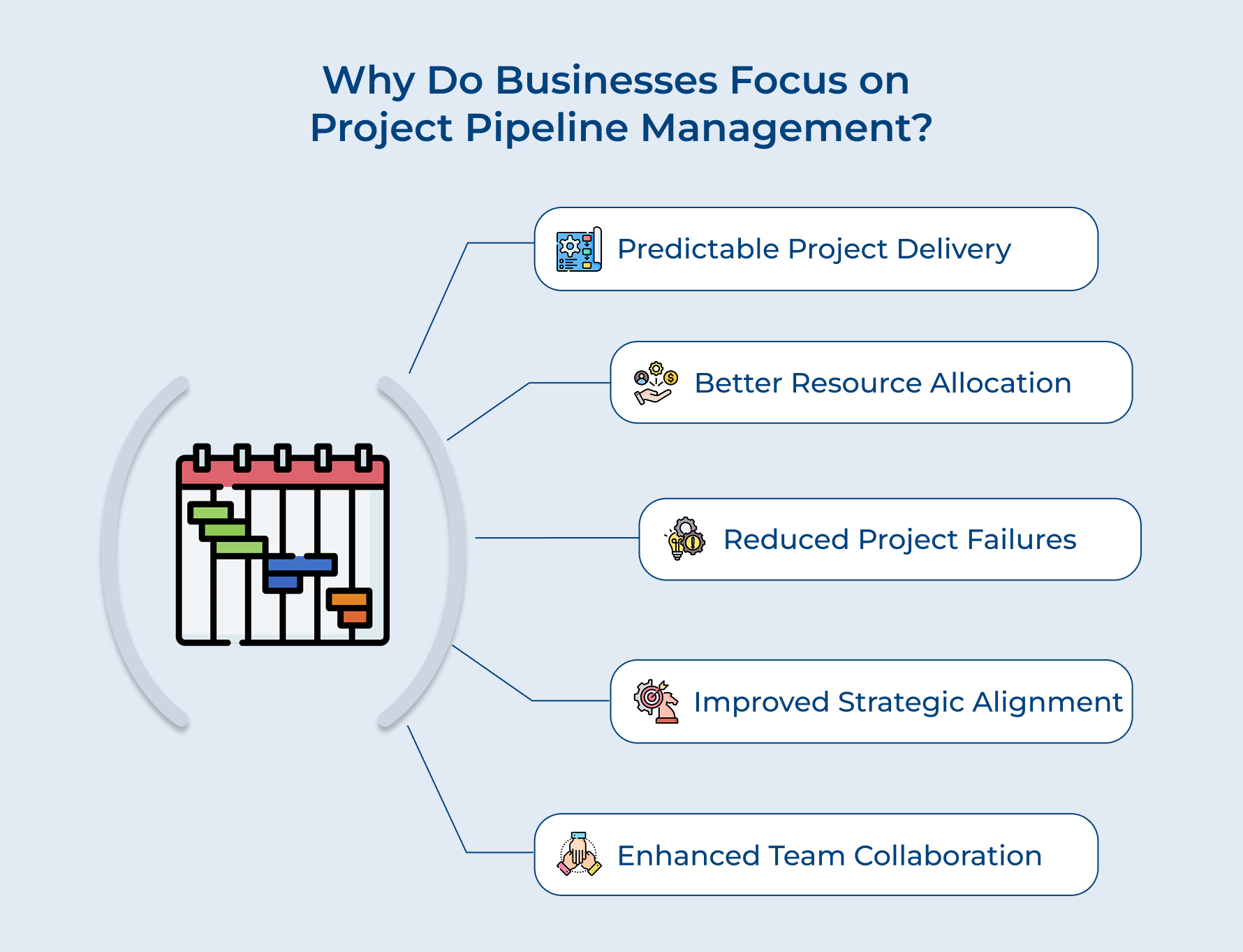
1. Predictable Project Delivery
Consistency starts to build when pipeline management shapes how work moves across your organization. Deadlines become easier to meet because teams rely on proven processes instead of guessing their way through each new project. Insights from predictive analytics also help anticipate delays early, making delivery timelines far more reliable.
2. Better Resource Allocation
Clear visibility into people, budgets, and workloads makes smarter planning possible at any moment. Teams avoid burnout, hidden gaps, or uneven distribution of effort because resources are aligned to real priorities. This balanced approach ensures the right support reaches the projects that generate the most business value.
3. Reduced Project Failures
Early warning signs become easier to spot when projects move through a structured pipeline. Risks surface sooner, adjustments happen faster, and costly surprises stay under control. Predictive analytics further strengthens decision-making by highlighting patterns that typically lead to delays or breakdowns.
4. Improved Strategic Alignment
Every initiative begins to connect more clearly to long-term goals instead of operating in isolation. Effort shifts toward work that truly drives business value, while low-impact activities gradually fade out. Multichannel approaches to planning and communication also keep leadership, teams, as well as stakeholders aligned around shared priorities.
5. Enhanced Team Collaboration
Defined stages and smooth handoffs remove the daily confusion around ownership as well as timing. Teams collaborate more naturally because everyone understands dependencies, workflows, and expectations. Multichannel approaches to communication strengthen coordination, helping individual contributions come together as meaningful progress across the entire pipeline.
7 Important Steps to Streamline Your Project Pipeline
Let’s explore the seven essential steps to ensure your projects not only start strong but also finish on time and within budget
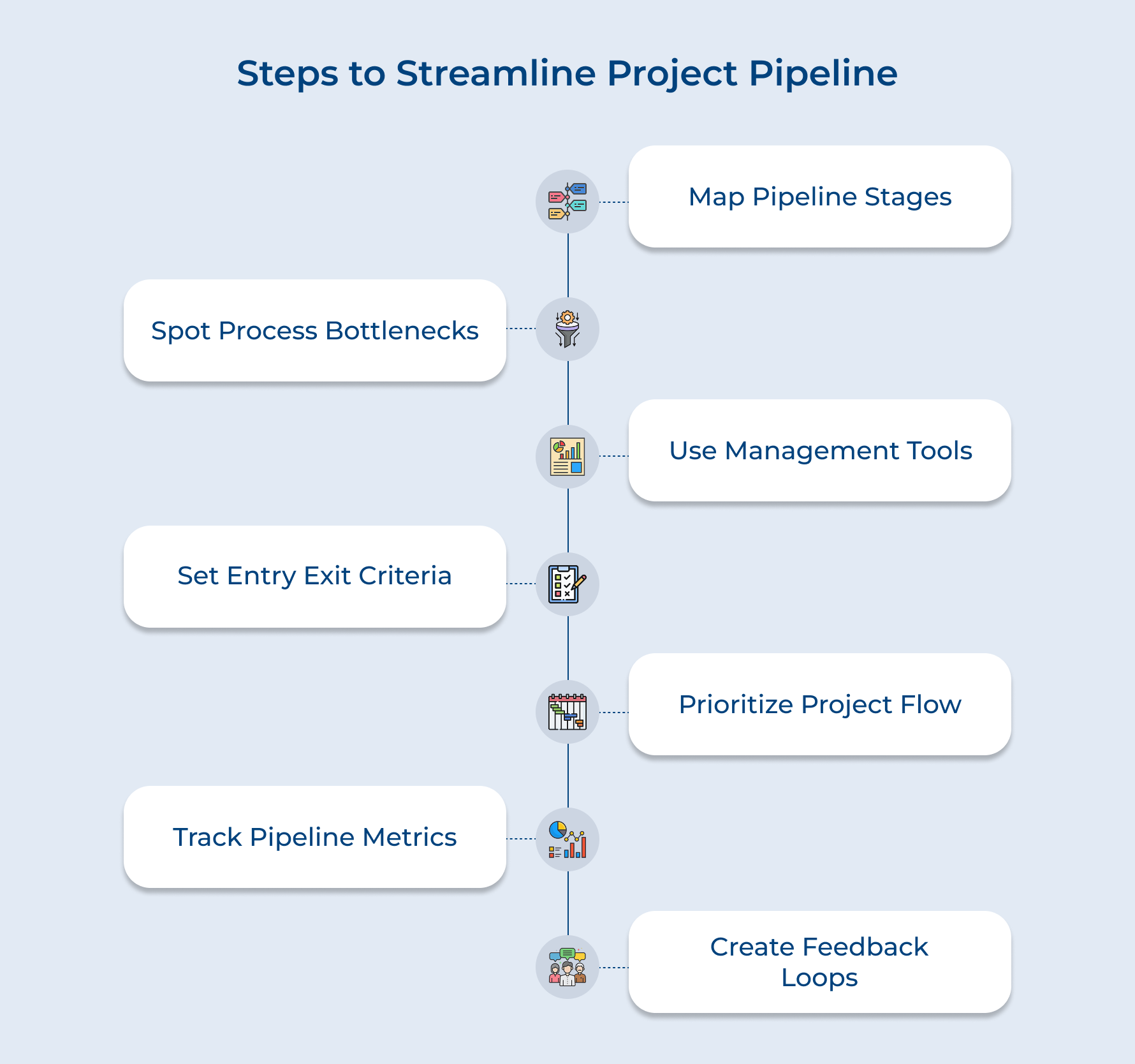
1. Map Your Complete Pipeline Stages
Mapping creates a visual blueprint of how projects flow through your organization from start to finish. It eliminates confusion by showing everyone the exact path work takes and ensures nothing falls through the cracks along the way.
Key questions to guide your pipeline mapping process:
- What are the distinct phases every project must pass through?
- Who owns each stage and makes decisions at transition points?
- What deliverables or milestones mark the end of each phase?
- Where do handoffs happen between teams or departments?
- How long should projects typically spend in each stage?
These questions force you to think critically about your actual workflow instead of assumptions. They reveal gaps in your process and highlight where you need clearer definitions or better coordination mechanisms.
Start by documenting your current state before designing an ideal pipeline structure. Include input from people who actually execute the work because they understand the real-world complications that theoretical plans often miss.
2. Identify Bottlenecks in Your Current Process
Bottlenecks are the choke points where projects pile up and progress stalls unnecessarily. Finding and fixing these problem areas directly impacts how quickly you can deliver results as well as frees up capacity for new work.
Three proven methods to uncover bottlenecks in your workflow:
- Process mapping with time analysis: Walk through your entire pipeline and record how long projects actually spend at each stage versus how long they should take.
- Team interviews and surveys: Ask people on the ground where they experience the most frustration or delays in moving work forward.
- Data pattern analysis: Review your project history to spot stages where completion rates drop or cycle times spike consistently.
Imagine a marketing team that realizes 60% of projects get stuck waiting for legal review. The actual review takes two days but projects wait an average of twelve days to even start because legal is overwhelmed with requests.
Once you identify bottlenecks like this you can address root causes directly. Maybe you need more legal resources or perhaps you can create pre-approved templates that reduce review volume altogether.
3. Implement Project Management Tools
The right tools centralize information and automate tracking so your team spends less time on admin work. They create a single source of truth that keeps everyone aligned without endless status meetings or email chains.
Four critical factors when selecting project management software:
- Team size and complexity: Choose tools that match your scale without overwhelming small teams or limiting large ones.
- Integration capabilities: Ensure the tool connects with your existing software for communication and file storage seamlessly.
- Ease of adoption: Pick intuitive interfaces that people will actually use instead of complex systems that gather dust.
- Reporting features: Look for dashboards that surface insights without requiring manual data compilation or analysis.
Start with a pilot program where one team tests the tool on real projects before company-wide rollout. Gather honest feedback about what works and what frustrates people so you can adjust training or configuration accordingly.
How the right tool transforms your pipeline management:
- Automatic status updates: Projects move through stages with notifications sent to relevant stakeholders without manual intervention.
- Resource visibility: Managers see who’s overloaded and who has capacity across all active projects instantly.
- Bottleneck alerts: The system flags projects stuck too long in any stage for immediate attention.
- Historical analytics: You can compare current performance against past projects to spot trends and improvement opportunities.
4. Establish Clear Entry and Exit Criteria
Entry and exit criteria act as quality gates that ensure projects meet standards before advancing. They prevent half-baked work from moving forward and protect downstream teams from inheriting problems they shouldn’t have to solve.
These criteria create objective checkpoints that remove ambiguity from decision-making about project readiness. Everyone knows exactly what’s required to progress instead of relying on subjective judgment calls that vary by person.
Essential criteria that keep your pipeline flowing smoothly:
- Entry requirements: Define minimum documentation like business case approval and resource allocation confirmation before projects enter the pipeline.
- Stage transitions: Specify deliverables such as completed designs or stakeholder sign-offs required to move between phases.
- Exit standards: Establish final acceptance criteria including testing completion and documentation handoff before marking projects done.
- Escalation thresholds: Set clear triggers for when projects need executive review due to budget overruns or timeline delays.
What happens when criteria feel too rigid and slow everything down? The key is making them rigorous enough to maintain quality but flexible enough to accommodate genuine exceptions with proper justification.
Pro tips:
- Make criteria visible at the start of each stage so teams know targets upfront rather than discovering requirements at the end.
- Review and refine criteria quarterly based on real project outcomes to ensure they remain relevant.
5. Prioritize Projects for Maximum Efficiency
Prioritization ensures your team focuses energy on work that delivers the biggest impact first. Without it you risk spreading resources too thin and completing low-value projects while critical initiatives languish in the pipeline.
Rank Projects by Business Impact First
Start by evaluating each project against strategic goals and potential return on investment. Projects that directly support revenue growth or solve urgent customer problems should naturally rise to the top of your queue.
Consider Resource Availability Before Committing
Check whether you have the right people and budget actually available before saying yes. Committing to projects without adequate resources sets everyone up for failure and creates bottlenecks that slow your entire pipeline down.
Balance Quick Wins with Long-Term Goals
Mix in smaller projects that deliver fast results alongside bigger initiatives with longer timelines. Quick wins maintain team morale and stakeholder confidence while you work toward transformational changes that take months to complete.
6. Monitor Pipeline Health and Metrics
Monitoring gives you real-time visibility into how well your pipeline actually performs versus expectations. Without tracking you operate blind and only discover problems after they’ve caused serious damage to timelines or budgets.
How do you pick metrics that actually matter instead of vanity numbers? Focus on measures that directly connect to outcomes you care about like delivery speed and resource utilization rather than activity counts.
Key metrics that reveal your pipeline’s true performance:
- Pipeline throughput rate
- Average cycle time per stage
- Project completion percentage
- Resource utilization rates
- Bottleneck frequency and duration
Use these metrics to spot trends and patterns that signal where intervention is needed most. If cycle times are increasing or projects are stalling at specific stages then you know exactly where to focus improvement efforts.
7. Automate Routine Pipeline Tasks
Automation eliminates repetitive manual work that drains time and introduces human error into your process. It frees your team to focus on strategic thinking and problem-solving instead of administrative tasks that software handles better.
Three powerful ways automation streamlines your project pipeline:
- Automated status notifications: The system alerts stakeholders when projects move between stages or hit milestones so teams stay informed without constant check-ins or email updates.
- Standard approval workflows: Routine decisions like budget approvals under certain thresholds route automatically to the right people based on predefined rules and escalation paths.
- Recurring project templates: Common project types launch with pre-populated tasks and timelines so teams don’t rebuild the same structure manually every single time.
Start small by automating your most repetitive tasks first and gradually expand as your team gets comfortable. The goal is making your pipeline run smoother without creating complex systems that become maintenance headaches themselves.
Key Best Practices for Project Pipeline Management
Mastering pipeline management requires more than just following steps. These proven practices help you maintain a healthy pipeline that consistently delivers results while adapting to changing business needs.
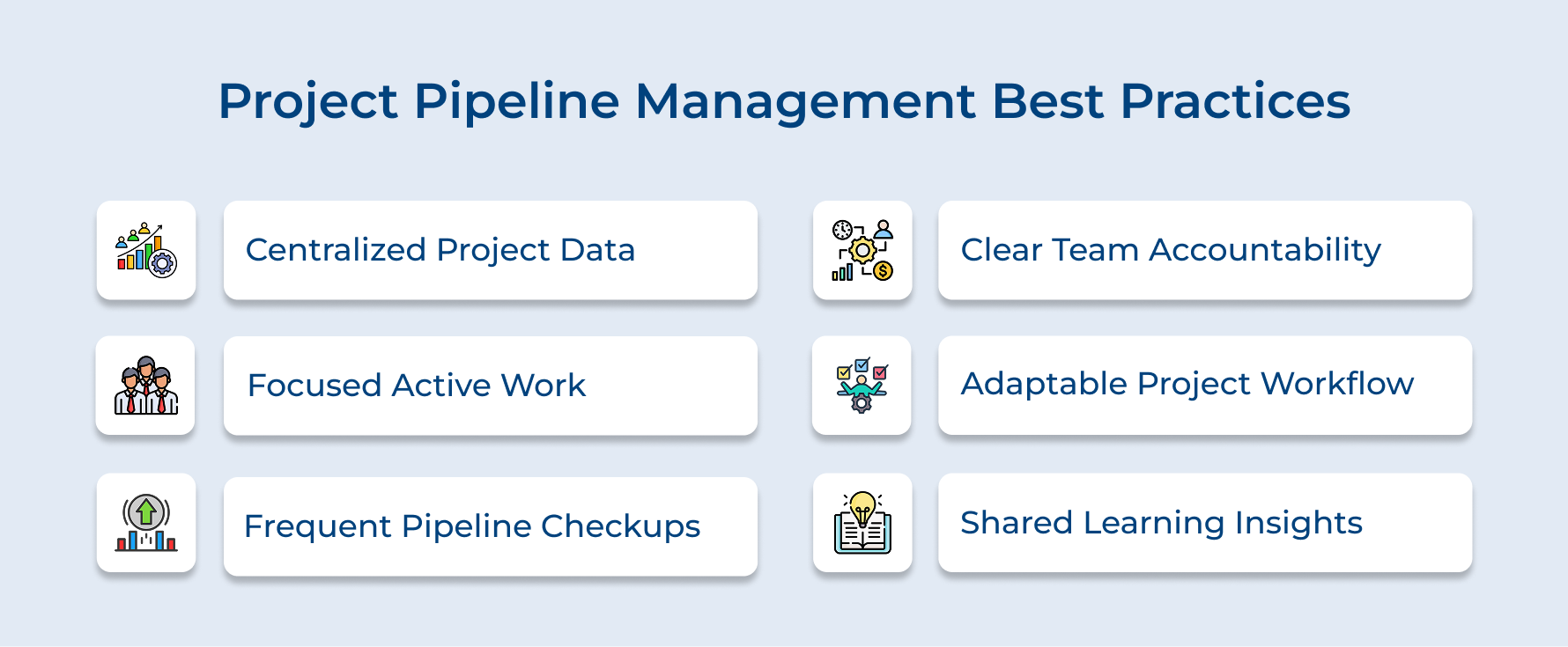
- Maintain a single source of truth: Keep all project information in one centralized system that everyone can access easily. This eliminates confusion from conflicting updates and ensures teams always work from the most current data.
- Limit work in progress: Cap how many projects run simultaneously to prevent team overload and context switching. Finishing fewer projects completely beats starting many and completing none on time.
- Conduct regular pipeline reviews: Schedule weekly or biweekly sessions to assess pipeline health and address emerging issues. Consistent reviews catch small problems before they become major roadblocks that derail progress.
- Empower team members with ownership: Give individuals clear accountability for specific pipeline stages and decision-making authority. Ownership drives engagement and speeds up resolution when challenges arise during execution.
- Build flexibility into your process: Design your pipeline to accommodate urgent requests and changing priorities without complete disruption. Rigid systems break under pressure while flexible ones adapt and keep delivering value.
- Document and share lessons learned: Capture insights from completed projects and make them accessible to future teams. Institutional knowledge prevents repeating mistakes and helps everyone improve with each new initiative.
Common Challenges in Project Pipeline Management
Even well-designed pipelines face obstacles that can derail progress and frustrate teams. Recognizing these common challenges helps you prepare strategies to overcome them before they impact your project delivery.
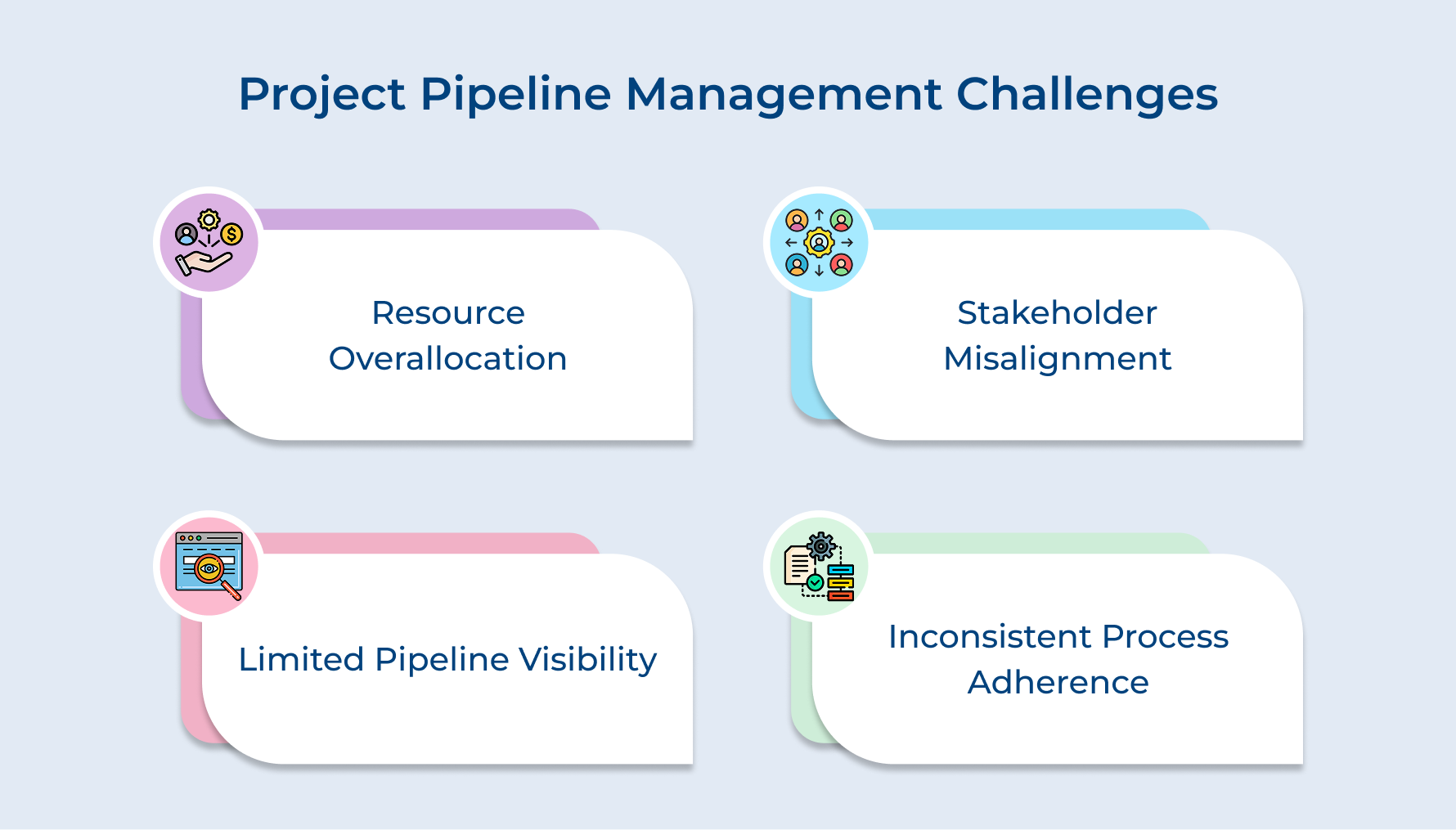
1. Resource Constraints and Overallocation
Teams often face competing demands with limited people and budgets spread too thin across projects. This leads to burnout, missed deadlines and quality issues as individuals struggle to juggle multiple priorities simultaneously without adequate support.
2. Lack of Stakeholder Alignment
Projects stall when stakeholders have conflicting expectations or disagree on priorities and direction. Misalignment creates endless revision cycles, scope creep and frustration as teams try to satisfy contradictory requirements from different decision-makers.
3. Poor Visibility into Pipeline Status
Without transparency teams waste time chasing updates while managers lack data for informed decisions. Projects slip through cracks and problems go unnoticed until they’ve escalated into crises that require emergency intervention.
4. Inconsistent Process Adherence
Teams skip steps or create workarounds when processes feel cumbersome or don’t fit their needs. This inconsistency makes it impossible to track performance accurately or identify where improvements are needed across the organization.
Addressing these challenges requires both strategic thinking and practical action. Here are proven solutions that tackle each obstacle directly:
- Conduct capacity planning before accepting new projects and use resource management tools to visualize allocation across all work
- Hold alignment workshops at project kickoff and document agreed-upon goals that all stakeholders formally approve
- Implement real-time dashboards and establish automated alerts when projects exceed time thresholds or hit risk triggers
- Involve teams in designing pipeline processes and keep workflows simple enough that following them takes less effort than working around them
Examples of Project Management Pipeline
Different industries adapt pipeline management to fit their unique workflows and deliverables. Here are practical examples that show how pipelines work across various business contexts.
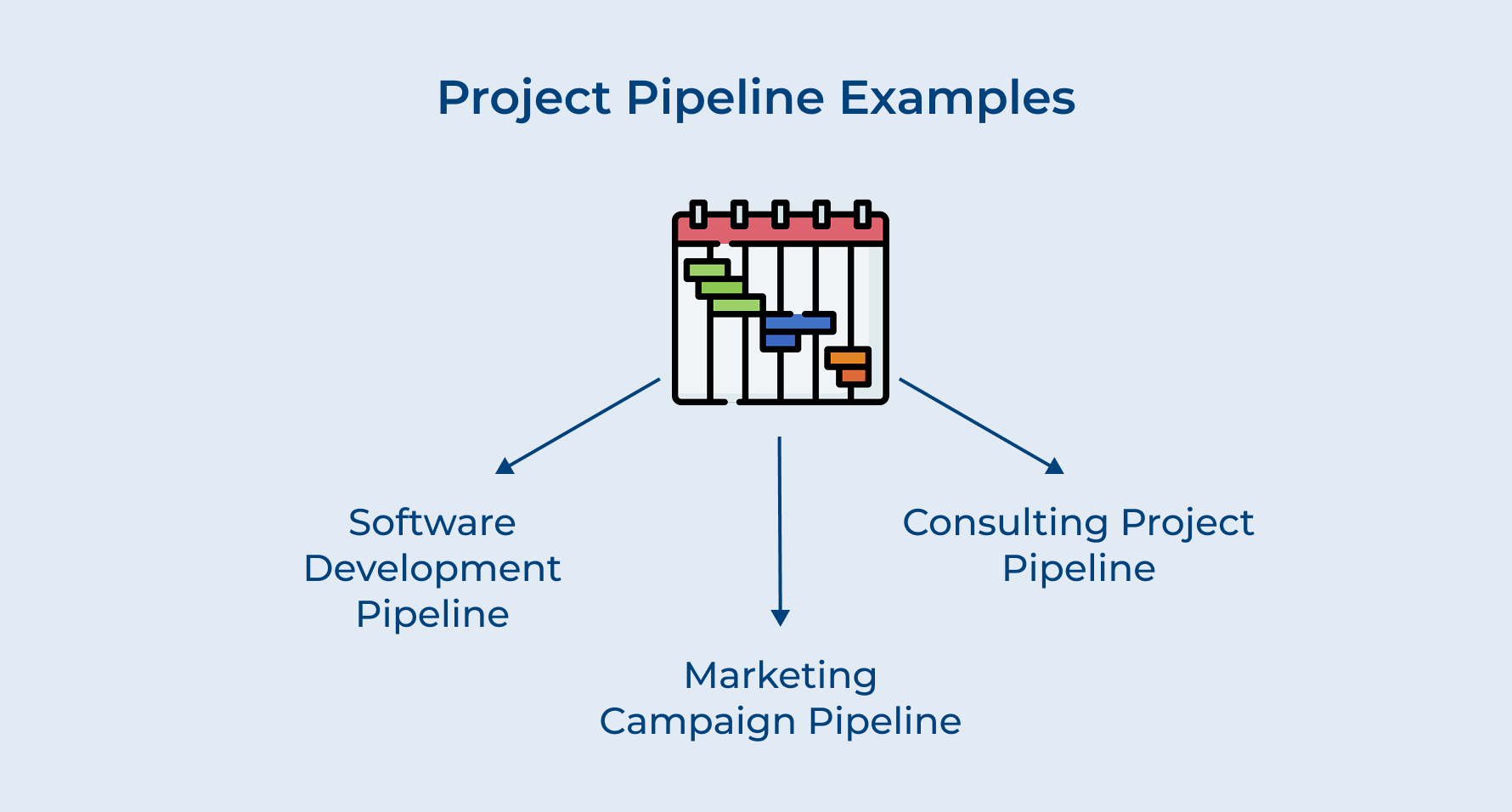
1. Software Development Pipeline
A software development pipeline guides code from initial concept through production deployment with quality checkpoints. Teams use it to manage feature releases, bug fixes and technical improvements while maintaining code quality standards throughout.
The typical stages that structure a software development pipeline:
- Ideation & planning: Product teams define requirements, prioritize features and create technical specifications for upcoming releases.
- Development & coding: Engineers write code, conduct peer reviews and integrate changes into the main codebase systematically.
- Deployment & monitoring: Code moves to production environments with performance tracking and rollback capabilities if issues emerge.
2. Marketing Campaign Pipeline
A marketing campaign pipeline tracks promotional initiatives from brainstorming through post-campaign analysis and reporting. It ensures campaigns launch on schedule with proper approvals and that teams capture learnings for future initiatives.
Key stages that move marketing campaigns from concept to completion:
- Campaign ideation: Marketing teams brainstorm concepts, identify target audiences and align campaigns with business objectives clearly.
- Content creation: Designers and copywriters produce assets while stakeholders review while approving creative materials before launch.
- Campaign execution: Teams schedule posts, send emails and activate paid media across selected channels simultaneously.
3. Consulting Project Pipeline
A consulting pipeline manages client engagements from initial proposal through final deliverable and ensures quality standards. Firms use it to balance workload across consultants and maintain consistent service delivery for every client.
Essential stages that structure consulting engagements from start to finish:
- Lead qualification: Business development teams assess potential clients and determine if projects align with firm capabilities.
- Proposal & contracting: Consultants scope work, price services and negotiate agreements that protect both parties’ interests.
- Project delivery: Teams conduct research, develop recommendations and work closely with clients to implement solutions effectively.
Streamline Your Success with Project Management Pipeline
A well-structured project pipeline transforms chaos into clarity and helps your team deliver consistently. It creates visibility, prevents bottlenecks and ensures resources flow to where they’re needed most for maximum impact.
Start implementing these strategies to see immediate improvements in how work moves through your organization. The right pipeline doesn’t just manage projects – it becomes your competitive advantage in executing faster and smarter than others.
Limit time — not creativity
Everything you need for customer support, marketing & sales.

Neeti Singh is a passionate content writer at Kooper, where he transforms complex concepts into clear, engaging and actionable content. With a keen eye for detail and a love for technology, Tushar Joshi crafts blog posts, guides and articles that help readers navigate the fast-evolving world of software solutions.