Complete Guide to Resource Tracking for Project Management
- What is Resource Tracking?
- Benefits of Resource Tracking in Effective Project Management
- Types of Resources Tracking to Consider
- 7 Actionable Steps in Resource Tracking in Project Management
- KPIs For Resource Tracking in Project Management
- Resource Tracking Best Practices in Project Management
- Common Resource Tracking Challenges in Project Management
- Resource Tracking: The Key to Efficient Project Management
- Frequently Asked Questions about Resource Tracking

Key Highlights:
- Poor resource visibility is the main cause behind most projects’ budget and deadline failures.
- Weekly track resource utilisation, planned-versus-actual variance and CPI to get data about the intervention.
- Set up a resource tracking system before project kickoff to create a productive and efficient team for project delivery.
Do you know what actually causes projects to fall apart in the middle of a phase? It is not only due to less effort, but also because the right resources were never allocated to the right task.
The gap between planned allocation and actual consumption is where deadlines are missed and budgets blow past. Most organizations waste a $97 million budget due to poor resource visibility and planning. The damage is already done by the time overallocation appears in a status report.
What will you understand after reading this guide? A detailed breakdown of resource tracking, which includes what it is, how it works and how to implement. It helps you set up a practical system that gives genuine control over budget and time.
What is Resource Tracking?
Resource tracking is the process of monitoring and managing your project’s assets, such as people, budget and tools to make sure everything is used where it is needed. It gives managers a real-time view of available and consumed resources across the project lifecycle.
The method works as a tracker by continuously logging resources allocated against planned tasks to measure actual usage in comparison to the forecasted. It helps to get the control to course-correct the allocation before it becomes costly.
Main objectives:
- Visibility: Know who is working and what capacity is left at any given phase.
- Accountability: A clear owner and a defined purpose tied to every resource for a specific deliverable.
- Forecasting: Make your resource estimation more accurate by passing usage data into future planning.
- Control: Intervene in real time when resources are overused or sitting idle unnecessarily.
Benefits of Resource Tracking in Effective Project Management
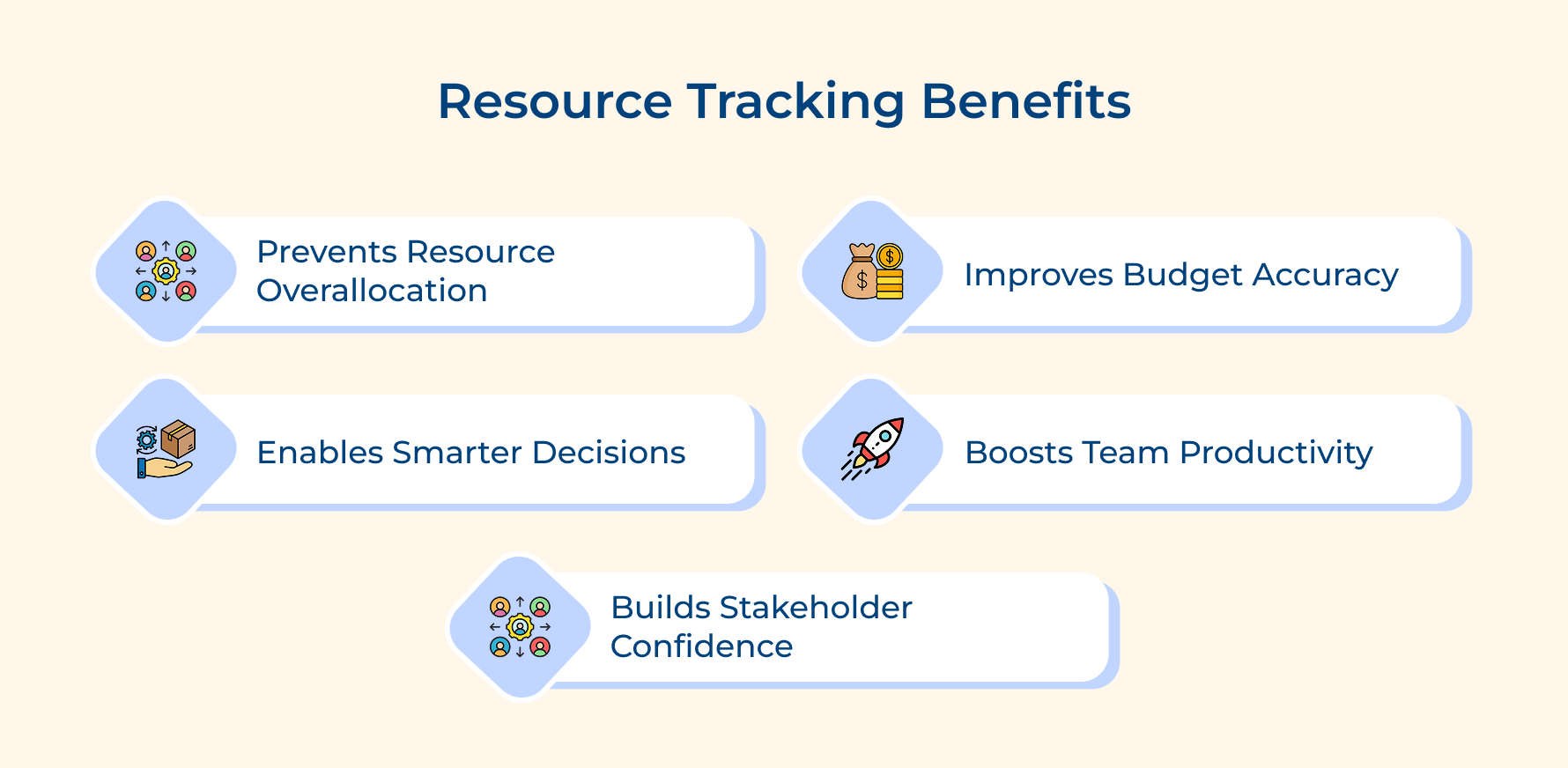
Project management is just guesswork with a good resource tracking system. These benefits show exactly why it makes a project successful.
1. Prevents Resource Overallocation
Track resources in real time to see exactly which team members are stretched beyond capacity before missing deadlines. Catching overallocation early is what keeps your project delivery on track within a defined scope.
2. Improves Budget Accuracy
Projects blow budgets gradually through untracked and unmonitored resource consumption. Resource tracking gives you a clear line of sight into how every amount is spent in project delivery against the planned budget.
3. Enables Smarter Decision Making
A real resource utilization report gives your project decision evidence instead of assumptions. A manager with accurate tracking data can confidently reallocate people without creating chaos.
4. Increases Team Productivity
Tracking reveals all the unused resources and bottlenecks that delay project delivery over time. It helps to redistribute workloads and keep the entire team moving at the right pace.
5. Strengthens Stakeholder Confidence
Project managers boost stakeholders’ confidence by showing them clear data on how resources are being tracked and used against project milestones. It converts the shift from justifying decisions to reporting measurable progress.
Types of Resources Tracking to Consider
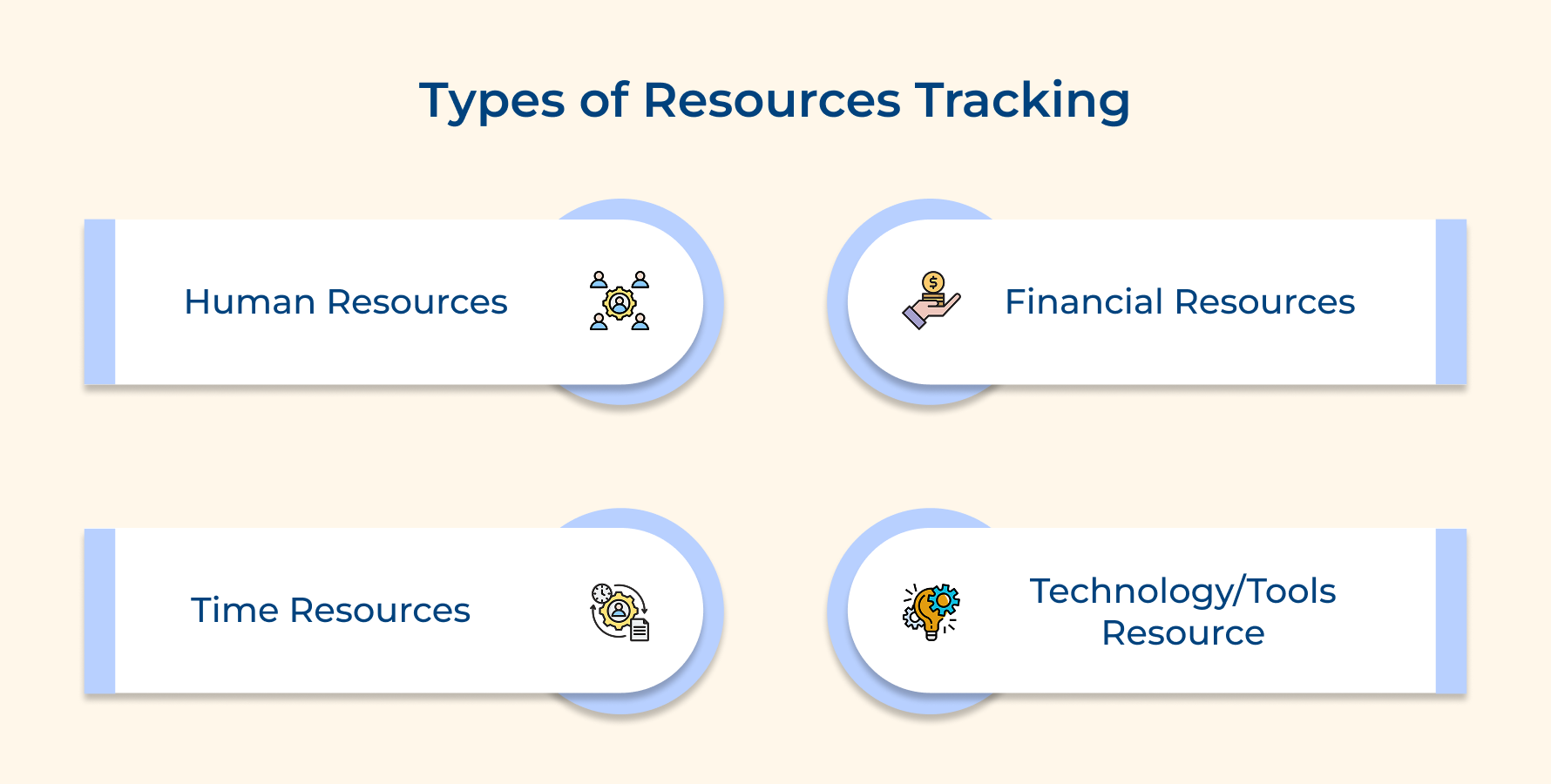
Follow the four core resource types that most project managers need to actively track in any project.
1. Human Resources
The most valuable and most complex asset is human resources because people’s capacity shifts constantly across priorities. Track utilization percentages to understand your team’s performance efficiently, or leading toward burnout.
2. Time Resources
Time is the one resource that, once gone, cannot be recovered. So how does it help? Tracking planned hours with respect to actual hours at the task level shows the exact point where time is bleeding.
Here’s an experienced project managers track closely within time resources:
- Estimated vs. actual hours per task to identify task types that consistently run over schedule
- Idle for seamless task handoffs because waiting time is invisible, but simultaneously, it destroys project velocity
The pattern data from time tracking becomes your sharpest system to build strategic resource timelines for future projects.
3. Financial Resources
Financial tracking is the monitoring of the amount spent at tasks and phase level instead of going for overall budget number. This visibility gives you room to respond before a budget overrun and becomes unrecoverable.
Most budget problems are not sudden shocks, so consistently tracking protects profit margins every single time. The moment you start tracking financial resources with the same discipline as people, you can catch overrun early.
4. Technology/Tools Resources
Technology resources are the most important tracking category in project management. As this is untrackable, it directly impacts both team productivity and project costs. Tracking it tells you exactly which stage your tool budget is being wasted.
Key technology resources every project manager is actively tracking:
- Software licenses: Unused tools drain the budget in long-term projects.
- Shared tool availability: Projects overloaded with systems create hidden blockers across multiple workstreams
- Automation tools: Shows whether automation is actually saving time or adding more complexity in the workflow.
Consider a situation when a tool is needed in a project, but it will take time to get access. This delay in getting access leads to blocking an entire workstream.
Pro tips: Maintain a proper resource tracker for tools to make sure your team operates without friction at every project stage.
7 Actionable Steps in Resource Tracking in Project Management
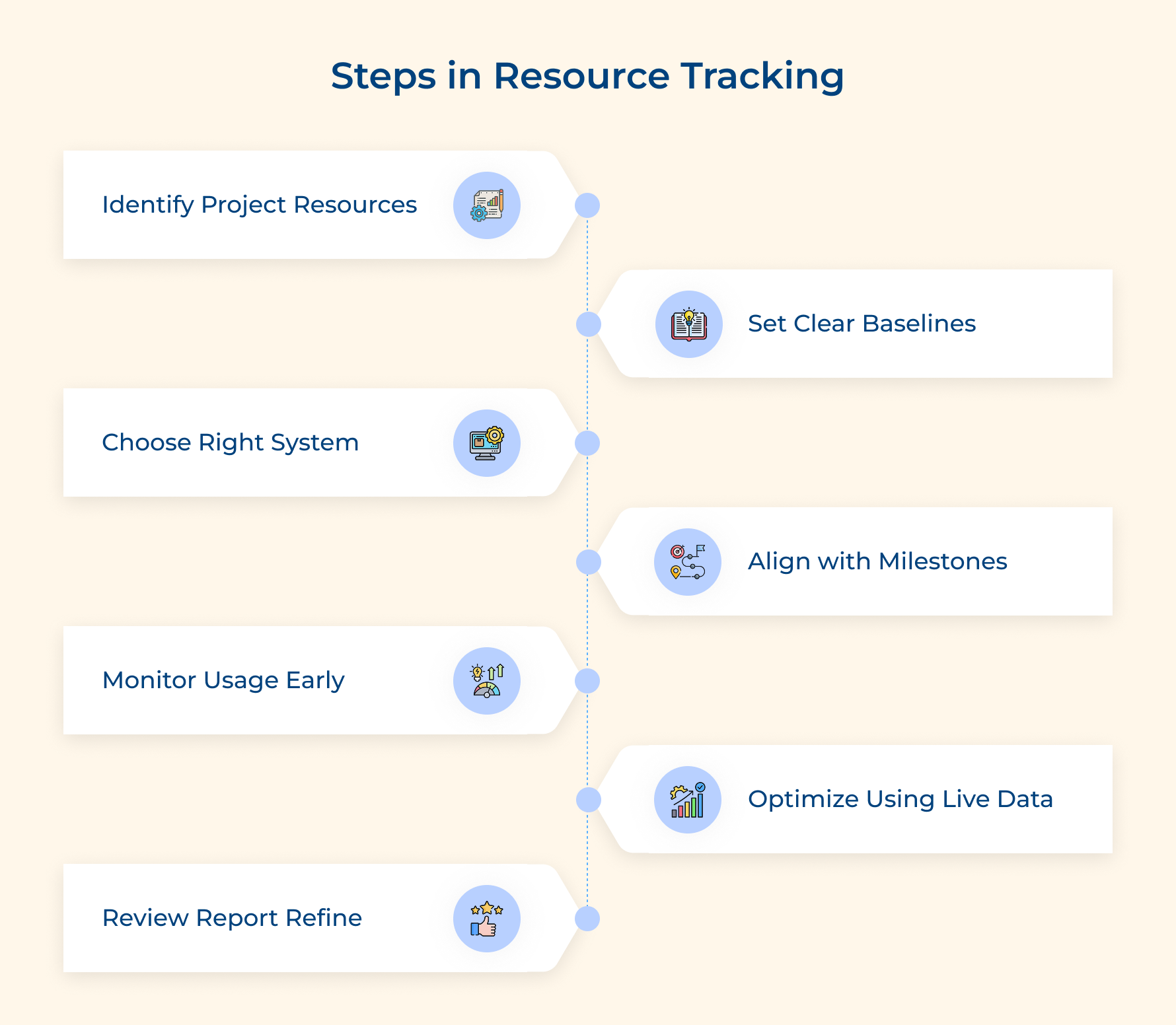
Follow a detailed look at the essential steps needed to implement effective resource tracking in your project management.
1. Identify and Categorize All Project Resources
Identifying resources is the first step that separates a structured plan from one that constantly fights shortages. An unclear resource inventory is like managing resources blindly from the start.
Do not know where to start identifying resources, consider these four questions:
- What human skills and team capacity does your project actually need?
- What tools and software will each project phase need?
- What is the total budget distributed across each project phase?
- What are the realistic times for each resource involvement?
These questions help you to think beyond resources and surface hidden dependencies before it escalates. Once identified, it’s time to categorize your resources based on:
- Type-based grouping: Separate resources based on human, financial, time and technology for cleaner tracking
- Priority ranking: Separate resources based on critical path dependencies and supporting paths
2. Set Clear Resource Baselines Before Kickoff
A resource baseline is your separation of plans from what actually happened. Every resource loading report you generate looks like just a number without a proper benchmark.
Follow these things to lock in when setting your resource baseline:
- Planned allocation percentage: Define the exact percentage of the resource that is committed to this project
- Task-level effort estimates: Before work begins, specify expected hours or budget per task allocation.
- Utilization benchmarks: Set a contrast healthy utilization rate to maintain it throughout the project lifecycle.
Think of your resource baseline as a measurement stick that you will use every week to evaluate the project on the tracker. Now the question is what are the three most common baseline project tracking?
- Effort baseline for total planned hours per resource across the entire project lifecycle.
- Cost baseline for the budget broken down into phases and resource categories
- Schedule baseline agreed timeline along with resource availability, planned against the milestone.
Pro tips: Once baselines are locked, freeze them at kickoff and update them only using formal control management to keep your data clean.
3. Choose the Right Resource Tracking System
The tracking system you choose helps in making confident resource decisions with real-time visibility for project management. It also shapes your entire team to engage with resource data throughout execution.
So, how to choose the right solution? Start mapping your project’s complexity with the tool’s capability, as spreadsheets break down when managing multiple resources at the same time.
Features to look for in a resource tracking system:
- Real-time utilization dashboards: Live visibility into overallocation and underallocation.
- Integration capability: the system should seamlessly connect with your project management and time-logging tools.
- Forecasting and scenario planning: should forecast future resource needs based on current consumption across tasks.
Are there any common challenges when implementing a new system? Inconsistent adoption is the biggest problem. Even the best tool fails when your team skips logging time irregularly. Fix it by keeping the input simple and embedding resource logging directly into the daily workflow.
4. Align Resource Tracking With Project Milestones
Turns passive monitoring into an active project control mechanism that aligns resource tracking with milestones. It helps in catching resource risks in the initial phases. The exact benchmark for consumption per milestone surfaces risks weeks before they become real problems.
Checklist to set up milestone-aligned resource tracking:
- Map the milestone to resource consumption target before the project starts
- Before the milestone deadline, set a resource review checkpoint.
- At each stage of the project, compare actual utilization against planned consumption
Milestone reviews change to status updates when there is a right alignment between the resource tracker and the milestone, leading to genuine decision points.
Pro tips:
- Keep a buffer of 10-15% of capacity at each phase to absorb unexpected client scope changes.
- Recalibrate phases immediately if you consumed 20% more resources than planned at the milestone.
5: Monitor Utilization and Spot Gaps Early
Monitoring utilization shifts your project from drifting off track between milestone reviews. Catch this gap in the early stage to get the window to intervene before a small deviation converts to an unrecoverable problem.
Track Planned Versus Actual Usage on a frequently
Daily tracking gives a real-time gap analysis of planned and consumed resources across your project. It is your most reliable signal that needs your attention immediately.
Identify Overallocation and Idle Resources Consistently
Overallocation frustrates your best people and idleness without any utilisation drains your budget without any outcome. Monitor constantly, both your extremes, to catch them before they compound.
Log Every Deviation the Moment It Happens
What happens when you wait until the week to log a deviation? It means you are already running behind in your response time for issues. Maintain a real-time deviation that gives you an accurate picture of project health in the early stage.
6. Optimize Resources Based on Live Data
Is resource optimisation a one-time planning activity? No, it is an ongoing response that provides live resource tracking data for better project management.
Consider an example of a situation where your tracking data shows one team member at 110% utilization and another at 60%. It means there is an imbalance that is costing productivity as well as morale. Here is how redistribution works in practice:
- Identify the tasks that are driving overallocation and assess those that shift to available capacity
- Reassign lower-complexity tasks to free up your high-utilization resources.
- Update your current tracking system immediately so that the new resource allocation reflects in real time
Now, when you come to underutilization, it means you’re paying for capacity that is not delivering value. Identify and eliminate waste and optimize your resource management efforts. Follow these other strategies to eliminate underutilization:
- Redeployment: Move idle resources to overdue tasks that are waiting for allocation to start.
- Scope absorption: Pull forward upcoming tasks and compress your timeline by using available capacity
7. Review and Refine Resources After Every Phase
A post-phase resource review converts your project experience into a clear visualization of resources for every future project your organisation takes. Follow this structured way to execute this step:
- Conduct audits at each phase closure: Compare every resource’s planned utilization in detail and maintain proper documentation, which includes the variances that occurred and the reasons
- Share timesheet reports with stakeholders: Give stakeholders a clear visibility into how resources were used against the plan. So that decisions in the next phase are made with real data
For example, a digital agency running a website redesign project is over-consuming developer hours in the migration phase. Resource tracker helps in reviewing this pattern to recalibrate developer allocation and recover weeks of schedule buffer.
So does this actually change future project resource planning? Absolutely, teams that run structured post-delivery reviews make every estimate sharper and the resource plan more reliable.
KPIs For Resource Tracking in Project Management
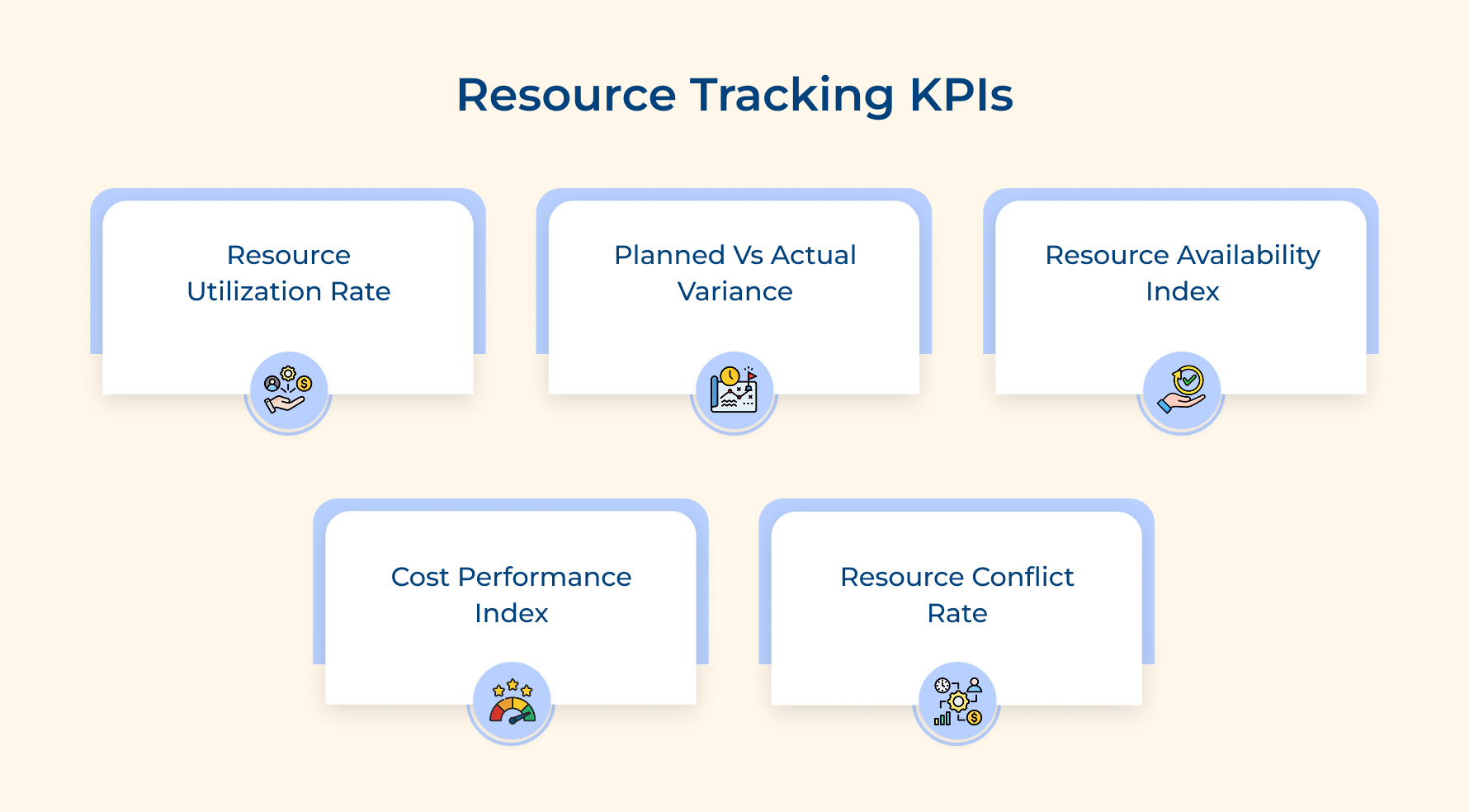
Following these key indicators gives you the clearest on how well your resources are being managed across the project life cycle.
Want to measure resource tracking with a question? Consider these questions that sharpen your tracking:
- Are your resources being utilized based on the original rate planned?
- What is the biggest gap between forecasted and resource consumption?
- Have you identified resources that are hitting capacity limits before the phase ends?
1. Resource Utilization Rate
The resource utilisation rate tells you the exact percentage of resources that are actively used on projects. A rate exceeding 85% or above means there is a bottleneck risk that needs immediate attention.
2. Planned vs. Actual Variance
Planned versus actual variance is the most honest tracker that reveals whether your initial resource estimates were realistic or not. A growing variance trend across is an early warning that your project plan needs rethinking before team labour costs and timelines escalate.
3. Resource Availability Index
Measures the remaining capacity that is actually left with respect to the upcoming project demands. A capacity dropping below the estimated availability for the next phase needs an immediate timeline adjustment.
4. Cost Performance Index (CPI)
Track the amount of value you are getting for every unit of resource spent against your approved budget for the project. A CPI under 1.0 means your project is consuming more budget than allocated.
5. Resource Conflict Rate
Resource conflict rate tracks how a resource is used in the same project tasks multiple times. A high conflict rate signals that there is a structural gap and a better resource allocation model is needed to fix.
Resource Tracking Best Practices in Project Management
Separate teams that track resources reactively from teams using strategic intent with these best practices.
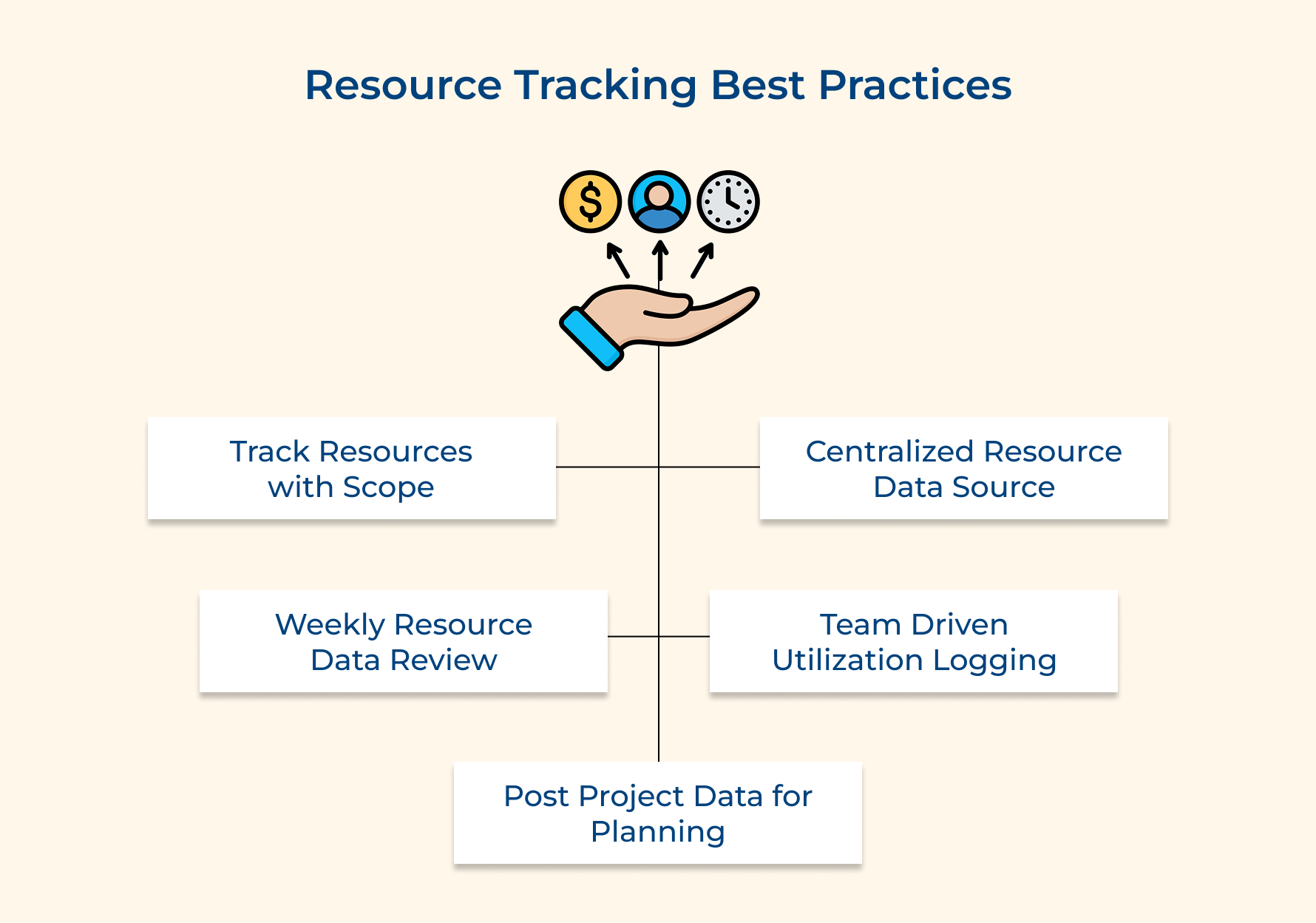
- Track resources along with project scope: Connect every resource to a specific project deliverable. Tracking without a scope context produces data that is useless.
- Establish a centralized source for all resource data: Different teams maintain separate resource tracker leading to faster data conflicts and also decision-making. Follow a single source of truth for better data management.
- Review resource data at weekly intervals: Sporadic reviews create blind spots in your resource leakage. Fix a non-negotiable cadence to keep your data relevant.
- Involve team members in logging their own utilization: Self-tracking billable hours helps in improving capacity because nobody understands workload reality better than the person doing it.
- Treat post-project data as a planning asset: Projects that are completed leave behind resource utilization patterns to help in understanding estimated and allocated resources.
Common Resource Tracking Challenges in Project Management
Follow these key challenges that consistently derail your well-intentioned resource tracking efforts.
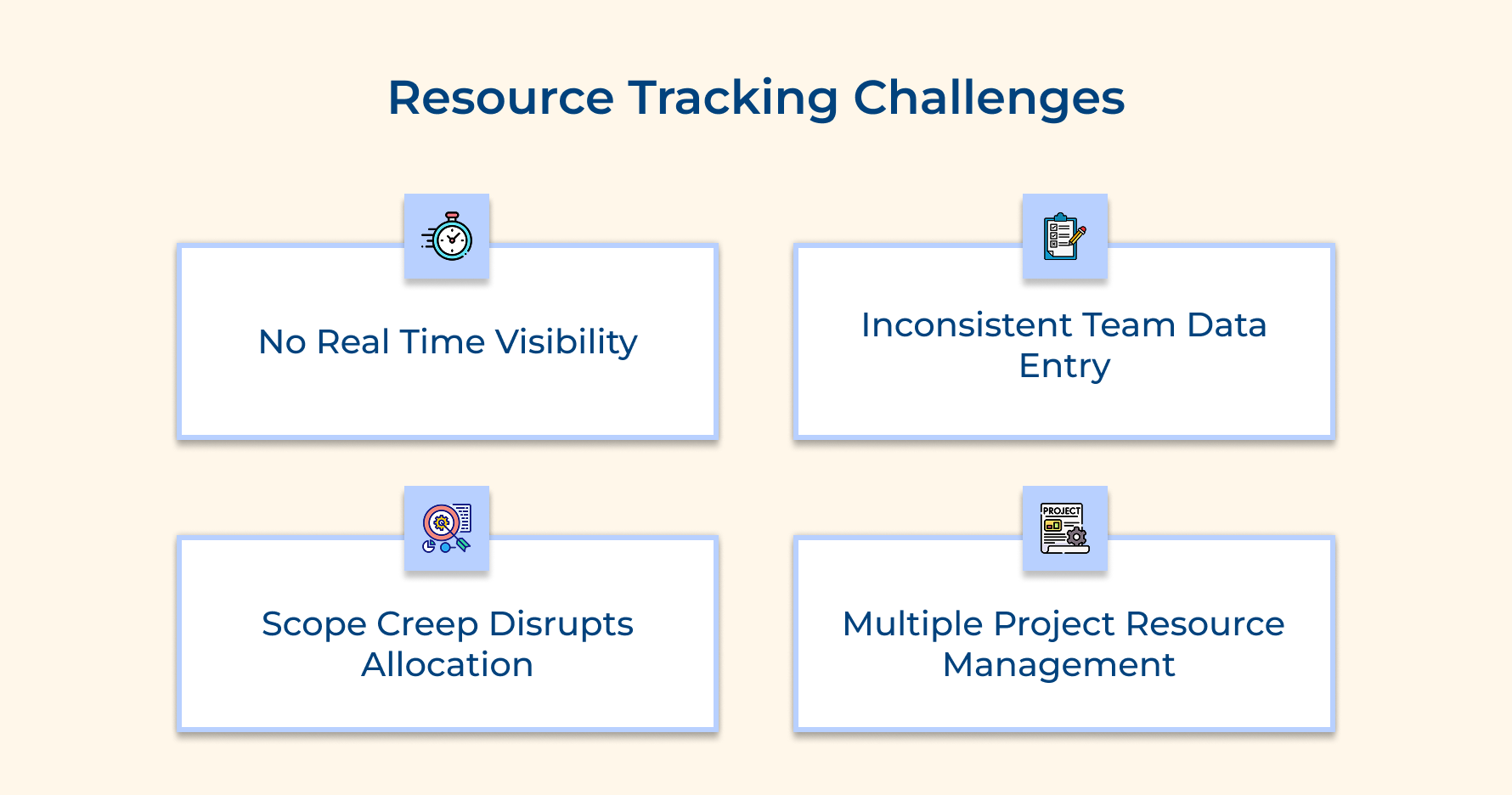
1. Lack of Real-Time Data Visibility
Most teams are making resource decisions based on 48 to 72 hours of old data by the time the result reaches the manager. Outdated visibility means you are always running one step behind the problems that you are trying to resolve..
2. Inconsistent Data Entry Across Team Members
Consider a situation when half your team logs billable time daily, while others log it whenever they remember. Your utilization data becomes unreliable at the moment when you need it. Inconsistent inputs lead to unstable billing outputs and poor resource decisions.
3. Scope Creep Disrupting Resource Allocation Plans
Uncontrolled scope management leads to consuming more resources than are already committed to planned deliverables. The damage to your timeline and budget is done by the time the impact shows up in your resource tracker.
4. Managing Resources Across Multiple Simultaneous Projects
Sharing the same resources across two or more active projects leads to conflicts and overallocation. These conflicts are only noticeable after productivity has already taken a significant hit.
Overcoming these challenges is solvable with the right approach from the start:
- Choose a centralized resource tracking system that updates data in real time for better project management.
- Set mandatory logging rules with a simple format to reduce friction for the entire team
- A formal change control process evaluates resource impact before approval of any scope change.
- Use a resource management dashboard for clear visibility across all active projects from a single interface.
Resource Tracking: The Key to Efficient Project Management
Resource tracking is the operational backbone that keeps projects’ financial health and team performance. Every missed deadline means a visibility gap that a better resource tracking process can identify in the initial stage.
- Set clear baselines before kickoff so every timesheet report has a benchmark to measure planned against used accurately.
- Monitor weekly resource usage so small issues never compound into unrecoverable project problems.
Build your resource tracking system and measure the impact on your next project. Project managers that are treating it as a non-negotiable process are delivering projects on time.
Limit time — not creativity
Everything you need for customer support, marketing & sales.

Neeti Singh is a passionate content writer at Kooper, where he transforms complex concepts into clear, engaging and actionable content. With a keen eye for detail and a love for technology, Tushar Joshi crafts blog posts, guides and articles that help readers navigate the fast-evolving world of software solutions.