Top Resource Management Objectives for Project Success

Key Highlights:
- Align resource management objectives with business strategy to improve project outcomes, client satisfaction and long-term organizational growth.
- Balance utilization and training to prevent burnout while developing future leaders as well as sustaining a skilled workforce.
- Implement flexible, measurable goals with regular reviews to optimize resource allocation, maximize profitability and maintain high service quality standards.
Project managers often wrestle with resource allocation decisions that seem fine today but create bigger headaches down the line. Teams are caught in the tug-of-war between hitting immediate deadlines and building skills that support long-term growth.
A weak resource plan leads to organizations ending up stuck in cycles of crisis management and reactive hiring. Projects get delayed and talented professionals burn out juggling urgent tasks instead of contributing to strategic work that truly moves the business forward.
That’s where understanding your resource management objectives comes in. By clearly distinguishing short-term needs from long-term goals, you can make smarter staffing decisions. Thus, balancing project deadlines with training and development initiatives that strengthen your workforce as well as support sustainable growth.
What are Resource Management Objectives?
Resource management objectives define the strategic goals for optimizing human talent and assets throughout project lifecycles. These objectives establish clear frameworks for allocating skilled professionals efficiently across multiple client engagements. They ensure teams have the right expertise at the right time while maintaining quality standards and profitability targets.
Well-defined resource management objectives directly influence project success rates and organizational profitability. They prevent talent bottlenecks that could delay deliverables and help maintain consistent service quality across all engagements. These objectives also support better client satisfaction through improved project outcomes and timely delivery.
Key factors:
- Skill matching accuracy: Align individual expertise with specific project requirements to maximize value delivery.
- Capacity forecasting: Predict future resource needs based on pipeline opportunities and current commitments.
- Utilization optimization: Balance billable hours with professional development time and administrative responsibilities.
- Cross-training investments: Develop versatile team members who can adapt to changing project demands.
- Succession planning: Identify and prepare backup resources for critical roles to minimize disruption risks.
Top 8 Resource Management Objectives and Goals
Let’s learn eight essential resource management objectives and goals that can help align your project strategy with actionable steps. Hence, steering your projects toward success.
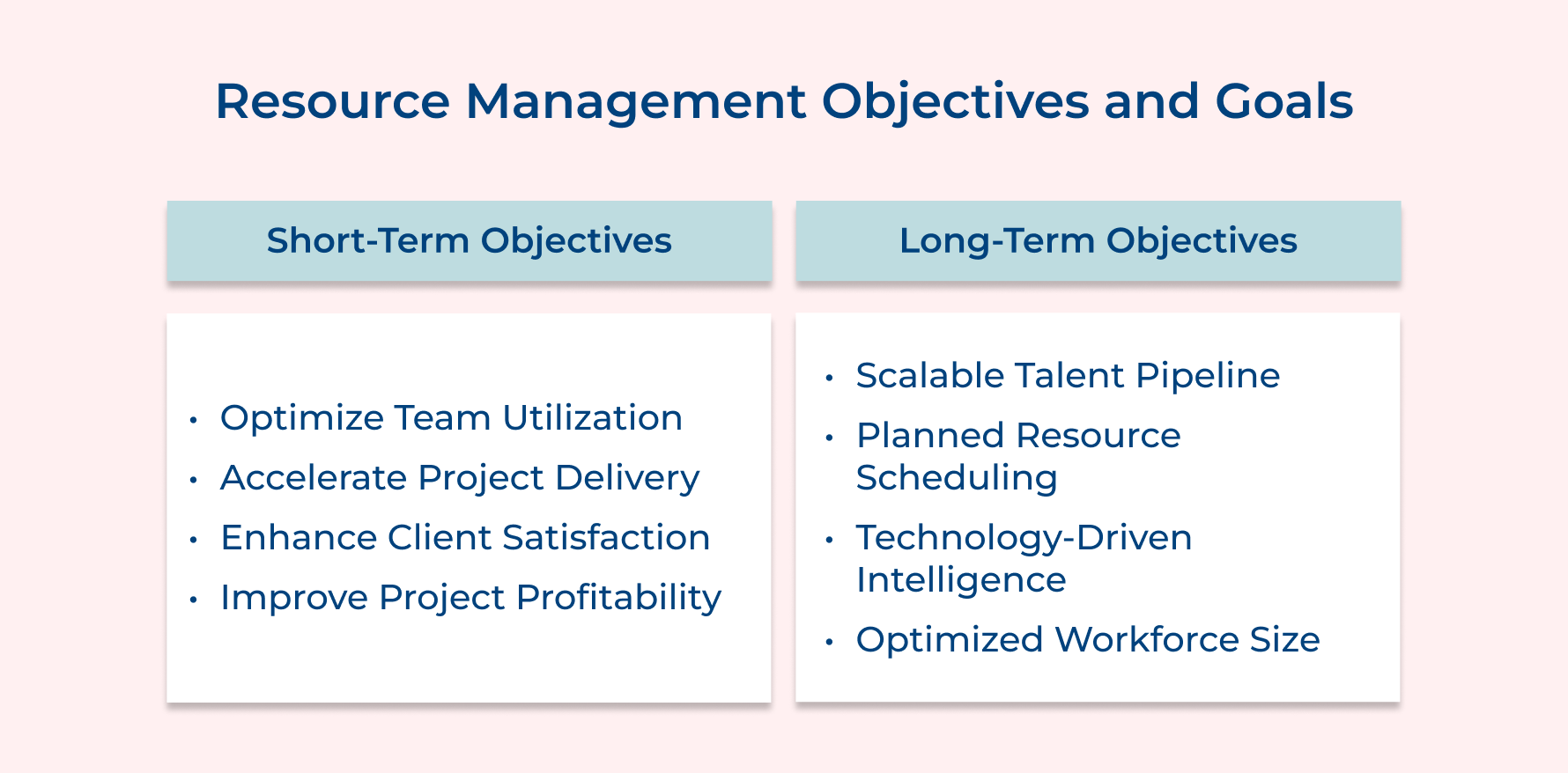
A. Short-term Resource Management Objectives
1. Optimize Current Team Utilization Rates
Maximizing your team’s billable hours without sacrificing quality is key to immediate project success. The idea is to ensure every team member contributes meaningfully to revenue while avoiding burnout or compromised deliverables.
Here’s how strategic planning can help boost team utilization:
- Real-time capacity monitoring: Keep track of workloads daily or weekly to spot gaps before they affect deadlines. Time-tracking tools help you compare actual versus planned resource allocation across projects.
- Dynamic resource reallocation: Shift underutilized talent to high-demand projects, ensuring skills are aligned. Flexible team structures make it easy to pivot when priorities change or client needs evolve.
- Workload balancing protocols: Evenly distribute tasks based on capacity and expertise. Regular check-ins prevent overloading top performers and give junior resources chances to grow.
For example, if a data analytics expert is at 60% capacity while project managers are stretched to 120%, quick reallocation lets the analyst support managers with reporting and insights, keeping projects on track.
2. Accelerate Critical Project Delivery Timelines
When projects are time-sensitive, resource optimization becomes critical to hitting tight deadlines and exceeding client expectations. The goal is to strategically deploy your best talent while keeping service quality consistent across all projects.
Here’s how resource management can speed up delivery:
- Senior resource prioritization: Put your most experienced team members on tasks that directly affect project deadlines.
- Fast-track knowledge transfer: Onboard team members quickly so they’re productive in days, not weeks.
- Conflict resolution frameworks: Use clear decision-making hierarchies to settle resource disputes without slowing progress.
- Cross-training initiatives: Build backup skills across multiple team members to avoid single points of failure.
- Agile resource pools: Keep flexible talent reserves ready for urgent, unexpected needs.
When multiple projects compete for the same resources, a transparent priority matrix helps managers allocate talent based on client impact and revenue, not favoritism.
3. Enhance Client Satisfaction Through Staffing
Strategic staffing decisions directly influence how clients perceive your organization’s competence and commitment to their success. This objective ensures the right professionals work on appropriate projects while building long-term client relationships through consistent service delivery.
Effective client-focused staffing requires matching individual strengths with specific client needs and project requirements. Consider factors like communication styles as well as industry experience alongside technical capabilities when making assignment decisions for maximum client impact.
Pro tips:
- Document client preferences and feedback about team members to inform future staffing decisions across similar engagements.
- Rotate junior resources through different client accounts to build versatility while maintaining senior continuity for relationship stability.
4. Improve the Profitability of Projects
Looking at project economics through a resource lens helps organizations make smarter staffing decisions that boost margins.
Before diving in, ask yourself:
- What’s our current profit margin per project and how does the staffing mix affect it?
- Which team members deliver the best billable-to-cost ratios across projects?
- How does scheduling flexibility impact our ability to seize unexpected opportunities?
- How does our resource model compare to competitors’ pricing?
Project profitability isn’t just about salaries – it also includes opportunity costs and quality impacts. The right balance of senior expertise and junior execution ensures projects stay on track while protecting margins.
Achieving sustainable profitability requires project planning that covers the full portfolio, supported by tools and processes that minimize admin overhead as well as maximize client-facing, billable work.
B. Long-term Resource Management Objectives and Goals
5. Build Scalable Talent Pipeline Infrastructure
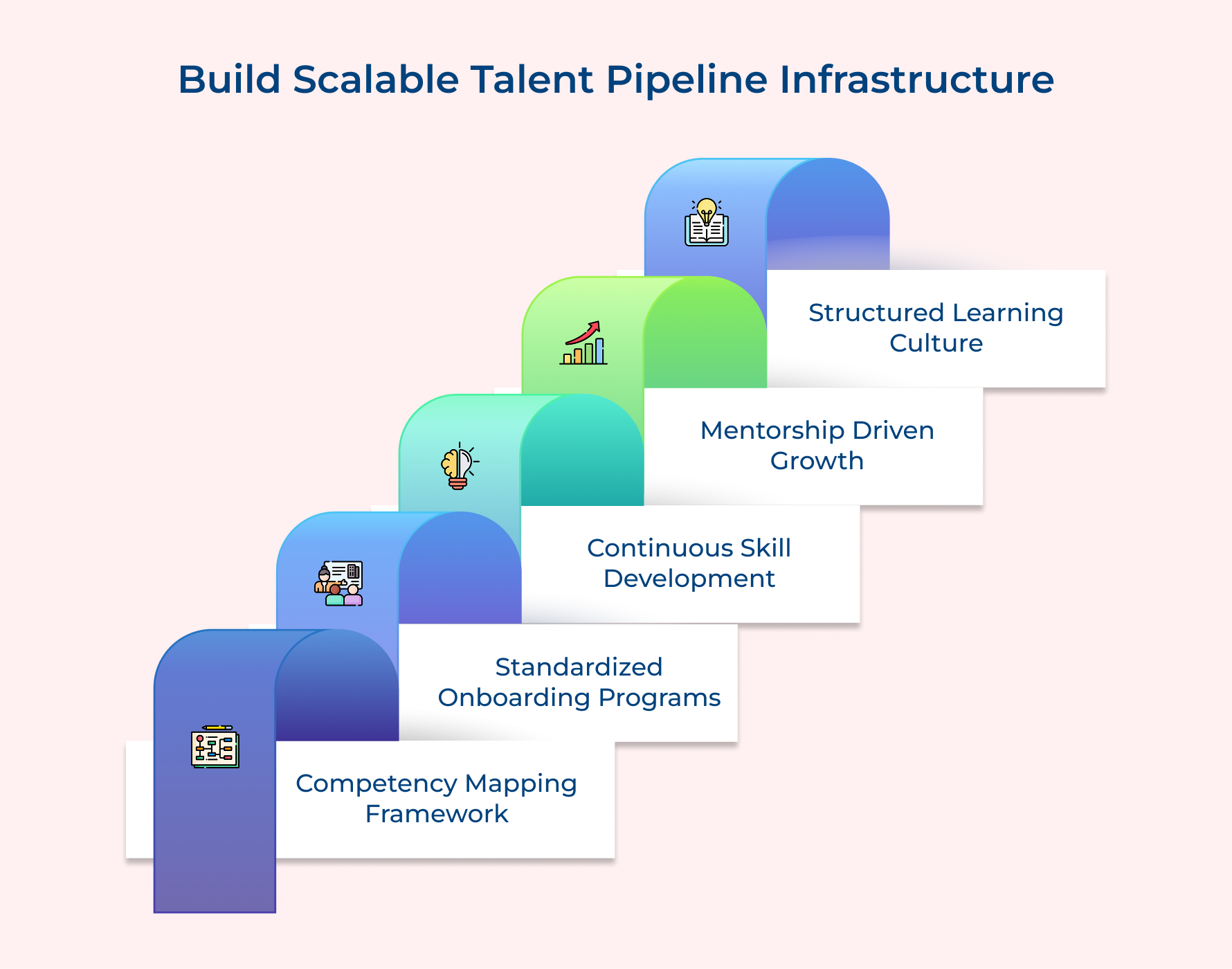
Building a scalable talent pipeline is one of the most strategic long-term resource management objectives. It gives organizations a sustainable competitive edge by systematically developing skills, keeping the right talent ready and lowering recruitment costs.
Begin with competency mapping – turn abstract skills into measurable capabilities with detailed skill matrices that link individual strengths to project needs. This makes talent decisions much clearer.
Implement standardized onboarding and training programs to help new hires integrate quickly while maintaining consistent service quality. Structured programs save time, improve knowledge retention and build confidence across the team.
Examples include:
- Leadership Excellence Academy
- Technical Skills Certification Program
- Client Management Bootcamp
- Project Management Professional Development
A strong talent pipeline creates a self-reinforcing cycle: experienced professionals mentor newcomers while everyone keeps sharpening skills through structured learning.
6. Plan for & Schedule the Resources You Need
Strategic resource planning turns project management from constant firefighting into proactive opportunity capture. By forecasting demand systematically, organizations can secure the right talent ahead of competitors as well as avoid costly last-minute staffing decisions.
Here’s how to make long-term resource planning work:
- Predictive analytics: Use data-driven tools to analyze past project trends and forecast future resource needs. Combine this with market insights to make accurate staffing projections.
- Flexible staffing models: Build hybrid teams that balance permanent staff with contract specialists. Scalable structures let you expand efficiently without losing core capabilities.
- Cross-functional capability matrices: Maintain a detailed skills inventory to match team strengths with project requirements, optimize assignments and spot skill gaps early.
This results in fewer project startup delays, happier clients and improved profit margins.
7. Establish Technology-Enabled Resource Intelligence Systems
Technology-enabled resource intelligence systems provide real-time visibility into talent allocation and performance metrics that inform strategic staffing decisions. Modern project management demands sophisticated tools that automate routine scheduling tasks while highlighting optimization opportunities.
Consider these strategic questions when evaluating technology-enabled resource intelligence requirements:
- Which scheduling bottlenecks currently limit our ability to respond quickly to client opportunities?
- How can automated skills matching improve project team composition and reduce coordination overhead?
- What performance metrics should dashboards prioritize to support better resource allocation decisions?
- Which integration capabilities are essential for connecting resource management with existing systems?
- How will real-time resource visibility change our approach to capacity planning activities?
Implementation requires selecting platforms that integrate seamlessly with existing workflows while providing actionable insights rather than overwhelming managers with data.
8. Rightsizing the Workforce
Rightsizing the workforce is all about aligning your team with business demand while staying flexible for unexpected opportunities. It’s a balancing act – optimizing costs without sacrificing your ability to grow.
To get it right, organizations need to continuously track pipeline trends and how fully team members are being utilized. This helps determine the ideal mix of permanent and contract staff. Full-time employees bring stability, while a variable workforce adds flexibility. By finding the right balance, companies can stay ready for market shifts without overspending or leaving projects understaffed.
Pro tips:
- Develop workforce planning scenarios that model different growth trajectories and their corresponding staffing requirements.
- Create clear criteria for converting contract positions to permanent roles based on business volume and strategic importance.
Tips and Best Practices for Setting Resource Management Goals
Setting effective resource management goals requires strategic thinking that balances immediate operational needs with long-term organizational growth objectives.
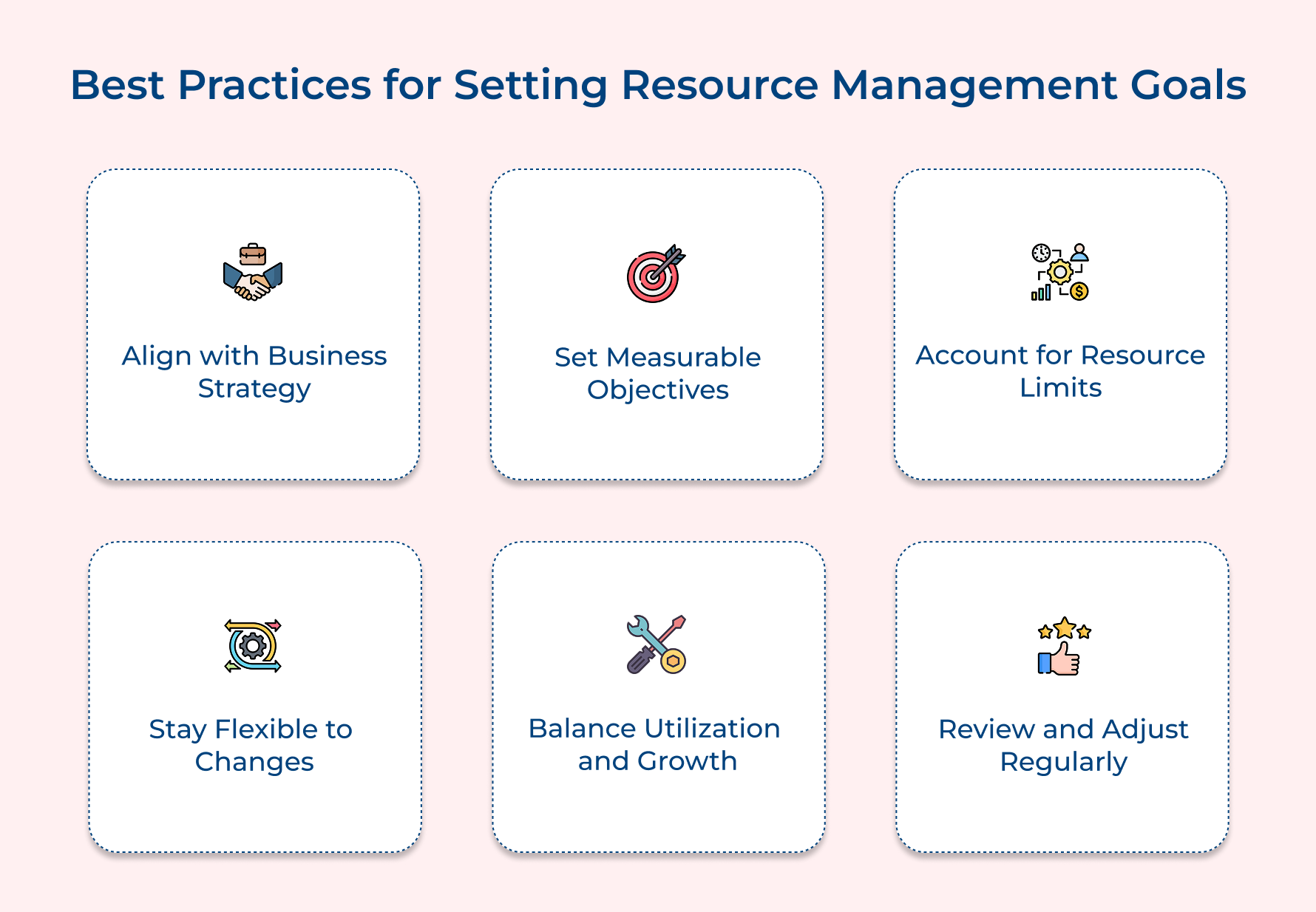
1. Align Goals with Business Strategy and Client Expectations
Resource management goals must directly support your organization’s strategic direction while reflecting the realities of client demands and market conditions.
Consider these alignment factors when establishing your resource goals:
- Current client portfolio requirements and growth projections
- Emerging market trends that may shift skill demands
- Competitive positioning relative to similar service providers
Successful goal alignment requires regular communication between leadership teams and project managers to ensure resource objectives remain relevant. Monitor how well your staffing decisions support broader business outcomes and adjust goals when strategic priorities shift or market conditions change significantly.
2. Set Measurable and Time-Bound Objectives for Accountability
Vague resource management goals create confusion and make it impossible to track progress or celebrate achievements within your organization. Specific metrics and deadlines transform abstract concepts like “better utilization” into concrete targets that teams can work toward systematically.
Ask yourself these critical questions before finalizing resource objectives:
- What specific metrics will indicate success in this area?
- How frequently should we review progress toward these goals?
- Which stakeholders need visibility into our resource management performance?
Create dashboards that provide real-time visibility into goal progress while establishing regular review cycles that allow for course corrections.
3. Consider Resource Constraints and Market Realities
Resource management goals must acknowledge the practical limitations of talent availability and budget constraints within your specific market context.
Unrealistic objectives that ignore these factors often lead to frustration as well as poor decision-making rather than improved performance outcomes.
4. Incorporate Flexibility for Changing Project Demands
Static resource management goals can become roadblocks when project requirements change or client priorities shift unexpectedly. Building flexibility into your objectives keeps them relevant throughout dynamic project lifecycles.
Key ways to stay adaptable:
- Conduct quarterly goal reviews for strategic adjustments
- Use scenario planning to prepare for different demand patterns
- Implement cross-training to boost team versatility
Flexible goals give teams clear direction without rigid constraints, enabling them to respond quickly to changing circumstances while maintaining high service quality.
5. Focus on Both Utilization and Employee Development
Balancing immediate revenue through high utilization with long-term talent development is key to sustainable success for professional service organizations. Focusing only on billable hours can lead to burnout and skill stagnation, hurting future performance.
Consider how much non-billable time to allocate for learning, which emerging skills clients will need and how to measure training ROI.
Effective resource management recognizes that today’s junior staff are tomorrow’s leaders, so investing in development strengthens both individual capabilities and organizational knowledge.
6. Establish Regular Review and Adjustment Mechanisms
Resource management goals need constant attention to stay effective as business conditions and organizational capabilities change.
Regular reviews are essential: track performance against metrics monthly, assess strategic alignment quarterly with leadership and conduct comprehensive annual goal reassessments. These reviews help spot early signs that adjustments are needed and celebrate wins that motivate the team.
Involve key stakeholders in these discussions while keeping focus on the outcomes that truly drive organizational success, ensuring goals remain relevant, actionable and aligned with overall strategy.
Streamline Project Success with Clear Resource Management Objectives
Effective resource management objectives serve as your project’s navigation system, guiding teams toward successful outcomes while optimizing talent utilization. These strategic goals transform chaotic staffing decisions into purposeful actions that drive profitability.
Organizations that implement clear resource management frameworks consistently deliver projects on time and within budget while maintaining high client satisfaction. Remember that successful resource objectives balance immediate operational needs with long-term talent development investments.
Limit time — not creativity
Everything you need for customer support, marketing & sales.

Shivank Kasera is part of the marketing team at Kooper, where he focuses on building content that helps agencies and service providers grow. With a keen interest in SaaS, operations, and scalability, he translates practical insights into actionable resources for business leaders.