Remote Project Management Guide with Benefits and Strategies
- What is Remote Project Management?
- Key Benefits of Remote Project Management
- What Are The Roles of a Remote Project Manager?
- Actionable Strategies for Remote Project Management
- Common Challenges of Remote Project Management
- Best Practices for Remote Project Management
- Top 4 Remote Project Management Tools
- Redefine the Way Teams Work Together with Remote Project Management
- FAQs about Remote Project Management

Key Highlights:
- Remote project management transforms distance into a strategic advantage for teams.
- Build trust, accountability and transparency to succeed in project management for remote teams.
- Clear communication channels and the right tools ensure seamless collaboration across time zones.
It feels impossible to manage remote teams, especially when you’re used to office environments where quick conversations solve problems instantly. Distance creates communication gaps and you can’t see if team members struggle until projects fall behind schedule.
Remote project management transforms these challenges into advantages when you apply the right strategies and understand how distributed work functions. Clear systems replace physical proximity while intentional communication builds stronger connections than casual office interactions ever could.
This guide shows you how to lead remote teams effectively through proven strategies that successful managers use daily. You’ll learn practical approaches for communication and accountability plus tools that make distance irrelevant to project success.
What is Remote Project Management?
Remote project management is the practice of coordinating team members and resources to complete projects when everyone works from different locations. It relies on digital tools and clear communication to keep work moving forward. The focus shifts from physical oversight to outcome-based leadership and trust.
This approach requires managers to adapt traditional project management principles for virtual environments. You need stronger documentation practices because you can’t just walk over to someone’s desk.
Key objectives:
- Building trust: Create psychological safety so team members feel comfortable sharing progress and challenges without face-to-face interaction.
- Maintaining visibility: Ensure everyone understands project status and individual responsibilities through transparent tracking systems.
- Enabling collaboration: Facilitate smooth teamwork across time zones and distances using appropriate technology as well as scheduled touchpoints.
- Measuring performance: Track deliverables and outcomes rather than hours worked since you can’t observe daily activities directly.
- Sustaining engagement: Keep remote team members motivated and connected to the project’s purpose despite physical separation.
Key Benefits of Remote Project Management
Remote project management opens up strategic advantages that go beyond simple cost savings. Let’s explore how this approach transforms client-based businesses.
Access to Global Talent
You can hire the best specialists for each project regardless of where they live. This means your clients get top-tier expertise without geographic limitations. Your team becomes truly best-in-class rather than best-available-locally.
Reduced Overhead Costs
Office space and utilities become optional expenses rather than fixed costs that drain your budget monthly. You redirect those savings into better tools or competitive pricing. Your profit margins improve while maintaining service quality.
Increased Productivity
Team members work during their peak energy hours instead of fixed schedules that suit everyone poorly. Fewer interruptions mean deeper focus on complex client deliverables. Projects often move faster and project delivery is quicker with async work than traditional office settings.
Faster Client Response Times
Having team members across time zones means someone is always available to handle urgent client needs. You can provide support and updates outside traditional business hours. Clients appreciate the responsiveness without you paying overtime premiums.
Improved Client Satisfaction
Remote teams often communicate more deliberately through documented channels that clients can review anytime. Transparency increases because everything lives in shared digital spaces. Clients feel more involved in the process without disruptive site visits.
What Are The Roles of a Remote Project Manager?
A remote project manager wears multiple hats to keep distributed teams aligned and productive. These roles go beyond traditional management because distance changes how leadership works.

- Communication orchestrator: The manager ensures information flows smoothly between team members who never share physical space. They choose which messages need real-time discussion versus asynchronous updates. Clear communication prevents costly misunderstandings.
- Culture architect: They actively build team cohesion and shared values despite everyone working from separate locations. It means creating rituals and touchpoints that build connection. Strong culture prevents isolation as well as turnover.
- Technology enabler: The manager selects and implements tools that make remote collaboration feel natural rather than forced. They train team members on effective tool usage. Technology becomes an advantage rather than a barrier.
- Performance monitor: They track deliverables and outcomes without micromanaging daily activities or screen time monitoring. Trust gets balanced with accountability through clear metrics. Results matter more than visible busyness.
- Conflict mediator: The manager spots and resolves tensions before they escalate since remote work hides interpersonal friction. They create safe spaces for difficult conversations. Quick intervention prevents team dysfunction.
- Client liaison: They maintain strong client relationships and translate requirements into actionable tasks for remote teams. Regular updates keep clients confident despite not seeing daily work. Transparency builds trust across the distance.
Actionable Strategies for Remote Project Management
Discover the key strategies to maximize your team’s remote project management potential and achieve outstanding outcomes.

1. Establish Clear Communication Channels
Communication channels are the pathways your team uses to share information and collaborate across distances. This strategy matters because unclear communication creates confusion and delays that compound quickly in remote settings.
When choosing communication channels you need to consider your team’s working patterns and project complexity. Match each channel’s strengths to the type of information being shared.
Here are four communication channels your business should consider:
- Instant messaging platforms: These tools enable quick questions and rapid responses that keep work momentum going throughout the day.
- Video conferencing software: Face-to-face conversations build rapport and handle complex discussions that text-based communication often muddles.
- Email systems: Formal documentation and detailed explanations work best here since recipients can review thoroughly before responding.
- Project management platforms: Task updates and project-specific discussions stay organized in one searchable location for future reference.
Now here’s the question most teams face. How do you know which channel to use when something urgent comes up? Use instant messaging for issues needing responses within an hour. Reserve video calls for problems requiring immediate collaborative problem-solving. Let email handle important matters that can wait until the next business day.
2. Build a Strong Team Culture
Team culture encompasses the shared values and social bonds that make people feel connected to their work. This strategy becomes critical in remote settings because distance naturally erodes the casual interactions that build trust.
Here are three effective ways to build culture remotely:
- Schedule regular virtual team bonding: Set up monthly non-work video calls where team members play games or share personal interests. These sessions create the water cooler moments that remote work eliminates naturally.
- Celebrate wins and milestones publicly: Recognize completed projects and individual achievements in team channels where everyone can see them. Public acknowledgment validates effort and shows team members that their contributions matter beyond just task completion.
- Encourage informal social interactions: Create dedicated chat channels for hobbies or casual conversation separate from work discussions. These spaces humanize team members beyond their job functions and spark organic friendships.
Consider a marketing agency managing multiple client projects across three continents. They implemented “Coffee Roulette” where random team pairs met virtually each week for casual chats. Within months team collaboration improved because people felt comfortable reaching out to colleagues they’d connected with personally.
3. Use the Right Project Management Tools
Project management tools are digital platforms that help you plan tasks and track progress across distributed teams. Remote work demands these tools because you can’t physically see what everyone is working on.
Here are four key considerations when selecting your project management software:
- Integration capabilities: The tool should connect seamlessly with your existing communication and file storage systems to prevent data silos.
- Scalability options: Your chosen platform must be backed by artificial intelligence that accommodates team growth and increasing project complexity without requiring a complete switch later.
- User interface simplicity: Complex interfaces create adoption resistance so prioritize tools that team members can learn quickly. Having no-code automation is the best option.
- Customization flexibility: Different projects need different workflows so your tool should adapt to your processes rather than forcing rigid templates.
Based on these factors you should test platforms with your actual team before committing. Look for tools that offer free trials and gather honest feedback from team members who’ll use them daily.
4. Set Clear Goals and Expectations
Clear goals and expectations mean everyone understands exactly what they’re working toward as well as how success gets measured. This strategy becomes essential remotely because you can’t course-correct through quick desk visits or casual conversations.
You implement this by documenting specific deliverables with concrete deadlines and quality standards upfront. Define what “done” looks like for each task so team members don’t guess at completion criteria.
Pro tips:
- Use SMART criteria: Frame every goal as Specific, Measurable, Achievable, Relevant and Time-bound to eliminate interpretation gaps.
- Review expectations weekly: Brief check-ins catch drift early before small misunderstandings become major project derailments.
5. Implement Robust Documentation Practices
Documentation practices involve creating written records of decisions and processes that team members can reference anytime. This strategy proves vital for remote teams because you can’t rely on overhearing conversations or asking someone across the desk.
If you’re unsure where to begin implementing robust documentation practices, consider these five key questions:
- What information does someone need to complete this task independently?
- Where will team members look first when they need this information?
- Who needs access to this documentation and when?
- How will we keep this information current as projects evolve?
- What format makes this easiest to find and understand quickly?
You implement robust documentation by creating templates for recurring processes and storing everything in centralized locations. Make documentation part of task completion rather than an afterthought that people skip when deadlines approach.
6. Build Accountability and Transparency
Accountability and transparency mean team members take ownership of their work while everyone can see project progress clearly. This strategy matters in remote settings because invisible work creates anxiety and managers struggle to support team members effectively.
You use this approach by implementing visible tracking systems where everyone updates their progress regularly. Schedule consistent one-on-one meetings where team members discuss challenges privately. Create shared dashboards that show project health at a glance so stakeholders don’t constantly interrupt workers.
Pro tips:
- Require brief status updates at the same time so accountability becomes habit rather than burden.
- Track completed deliverables instead of hours worked since remote productivity looks different from traditional office presence.
7. Prioritize Work-Life Balance Boundaries
Work-life balance boundaries are the limits that separate professional responsibilities from personal time and wellbeing. This strategy becomes crucial in remote project management because home and office blend together dangerously.
Here are three ways to prioritize these boundaries effectively:
- Respect different time zones: Schedule meetings during overlapping work hours and rotate inconvenient times fairly across team members.
- Discourage after-hours messaging expectations: Establish norms that emails and messages sent outside business hours don’t require immediate responses.
- Encourage breaks and offline time: Remind team members to take lunch breaks and step away from screens regularly. Create a culture where taking vacation days is celebrated rather than seen as abandoning the team.
But here’s the challenge many managers face. What happens when client emergencies genuinely require after-hours work? The answer lies in making these exceptions rare and acknowledged. When urgent situations arise, communicate clearly why it’s necessary and compensate with time off later.
Common Challenges of Remote Project Management
Remote project management brings undeniable advantages but also introduces obstacles that can derail even experienced teams. Understanding these challenges helps you prepare solutions before problems escalate.

Communication Breakdown Across Distance
Remote teams struggle with miscommunication because nuanced conversations get lost through screens and text. Tone misinterpretations create conflicts while delayed responses slow decision-making that would happen instantly in person.
Difficulty Building Team Cohesion
Creating genuine connections between people who never meet face-to-face requires intentional effort most managers underestimate. Isolation grows when team members feel like isolated workers rather than part of something bigger.
Technology Dependency and Technical Issues
Your entire operation collapses when internet connections fail or software platforms experience outages beyond your control. Technical problems that take minutes to fix in person can halt productivity for hours remotely.
Tracking Progress Without Micromanaging
Managers face the tricky balance of ensuring accountability while respecting autonomy since they can’t see daily work. The temptation to over-monitor creates resentment while hands-off approaches risk discovering problems too late.
Managing Across Multiple Time Zones
Coordinating work when team members operate on different schedules creates constant scheduling headaches and delayed collaboration. Someone always sacrifices their preferred working hours which breeds frustration over time.
These challenges might seem daunting but each one has practical solutions that successful remote teams use daily. The key lies in addressing these issues proactively rather than waiting for them to cause problems.
- Create clear guidelines for which channels to use and expected response times to prevent confusion.
- Host monthly team bonding sessions that focus on connection rather than work topics.
- Identify alternative tools and communication methods before primary systems fail during critical moments.
- Measure completed deliverables and quality rather than tracking hours or constant status updates.
- Alternate inconvenient time slots so no team member always bears the burden of off-hours calls.
Best Practices for Remote Project Management
Beyond the core strategies we’ve covered, several other practices can elevate your remote project management effectiveness. These additional approaches address nuances that separate good remote teams from exceptional ones.
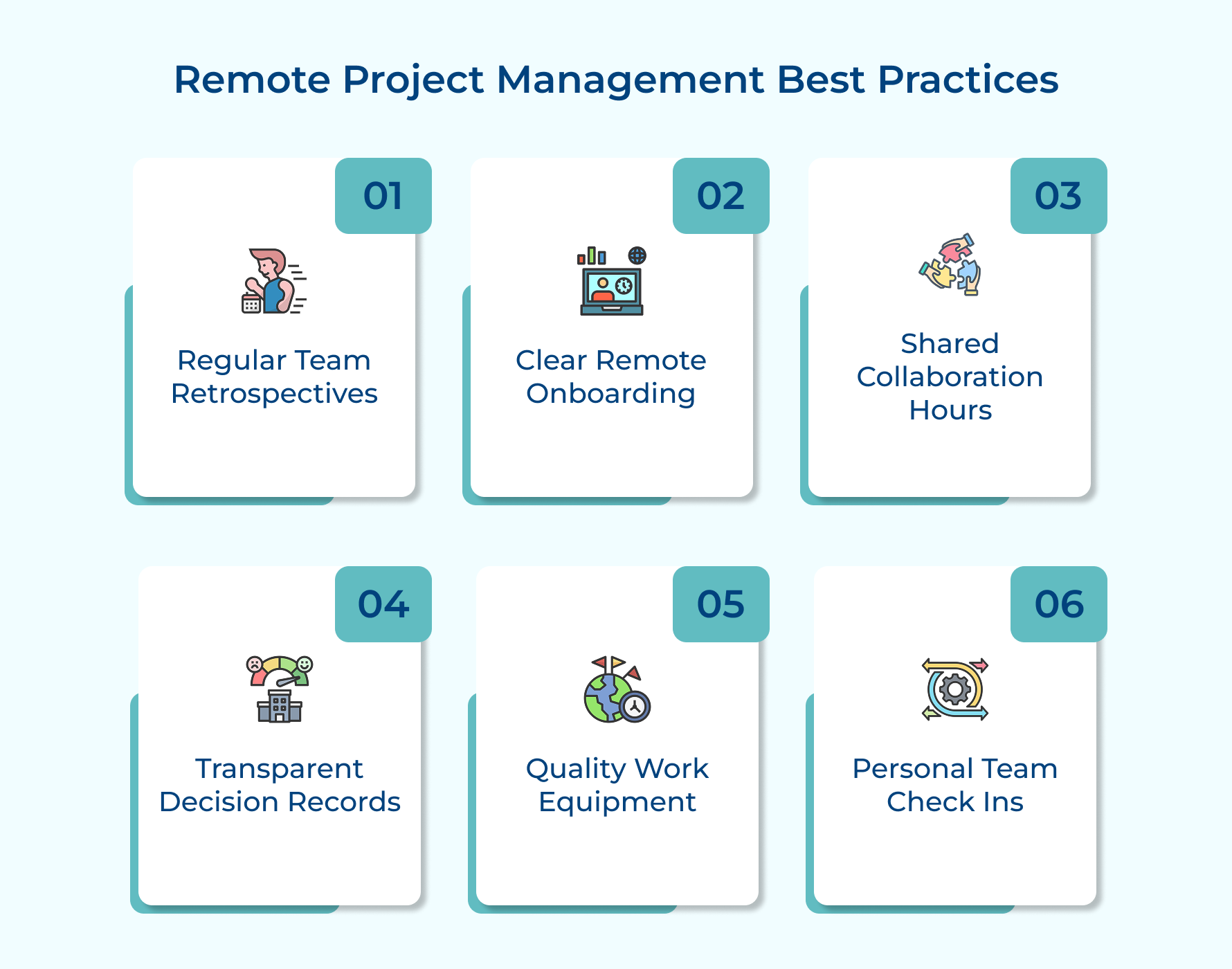
Conduct Regular Retrospectives
Make time to pause after key milestones as well as talk openly about what went well and what didn’t. These conversations help teams learn fast, improve future Analytics initiatives and make everyone feel heard in the process.
Create Detailed Onboarding Processes
Remote hires don’t get to learn by overhearing conversations. Clear documentation, structured training and walkthroughs of tools / culture help new team members settle in faster while contributing with confidence.
Establish Core Collaboration Hours
Set a shared window each day when everyone is available. It makes real-time client interaction and quick decisions easier, while still leaving room for focused work outside those hours.
Document Team Decisions Transparently
Don’t just note what was decided—capture why. This saves time, avoids repeated debates and keeps everyone aligned, especially when working with Agile Methodologies.
Invest in Quality Equipment
Reliable internet and good headsets aren’t perks—they’re essentials. Clear audio and stable connections reduce frustration while keeping collaboration smooth.
Build Personal Connection Touchpoints
Start meetings with quick personal check-ins. These small moments build trust, reduce misunderstandings and make remote teamwork feel more human.
Top 4 Remote Project Management Tools
The right tools transform remote project management from chaotic to streamlined by creating virtual workspaces where teams coordinate seamlessly. Let’s explore four essential categories of tools that address different aspects of remote collaboration.

Task and Workflow Management Platforms
These tools act like a shared control center for your projects. Everyone can see what needs to be done, who owns each task and when it’s due. This visibility keeps work moving and avoids confusion.
Video Conferencing Solutions
Video calls help teams connect in real time, even when they’re miles apart. Screen sharing makes it easier to explain ideas, review work and make decisions quickly. Seeing faces also helps build trust as well as clarity.
Team Communication Applications
Messaging apps replace quick office chats. Teams can talk in channels based on topics or projects and switch to direct messages when needed. Conversations stay organized without relying on long email threads.
File Sharing and Collaboration Systems
Cloud tools let teams access and edit files from anywhere. Multiple people can work on the same document at the same time without worrying about versions. Collaboration feels faster and more natural.
Redefine the Way Teams Work Together with Remote Project Management
Remote project management isn’t just about adapting old methods to new technology. It’s about embracing a fundamentally different approach where distance becomes an advantage rather than an obstacle to overcome.
Success requires intentional communication and trust-based leadership that traditional management never demanded. When you implement these strategies thoughtfully your team becomes more productive and connected than any office-bound group could achieve.
Limit time — not creativity
Everything you need for customer support, marketing & sales.

Neeti Singh is a passionate content writer at Kooper, where he transforms complex concepts into clear, engaging and actionable content. With a keen eye for detail and a love for technology, Tushar Joshi crafts blog posts, guides and articles that help readers navigate the fast-evolving world of software solutions.