Project Risk Management Process, Strategies & Best Practices
- What is Project Risk Management?
- Key Benefits of Project Risk Management
- 6 Common Types of Project Risks You Should Know
- How to Manage Risk in Project Management?
- Tips and Best Practices for Project Risk Management
- Project Risk Management Challenges & How to Overcome Them
- Best Tools and Software for Project Risk Management
- Examples of Project Risks & Risk Management Strategies
- Stay a Step Ahead for Success with Project Risk Management
- FAQs about Agency Account Management
Key Highlights:
- Implement project risk management’s actionable strategies with clear examples for every project to turn uncertainty into a manageable advantage.
- Leverage essential best practices and modern tools to create a proactive risk management plan that evolves with your project.
- Learn to convert lessons learned into organizational wisdom, ensuring continuous improvement and avoiding repeated mistakes.
Every project manager has experienced that sinking feeling when unexpected problems derail carefully planned timelines and blow budgets completely out of control. These surprises don’t just hurt current projects – they damage your professional reputation and erode stakeholder confidence in your future initiatives.
Risk management is what keeps your project from turning into a gamble. If you skip it, you’re left hoping nothing goes wrong during execution. That usually means reacting to problems instead of preventing them.
Strategic project risk management turns uncertainty into an advantage. It gives you clear ways to spot problems early and deal with them before they affect your deliverables.
What is Project Risk Management?
Project risk management is the systematic process of identifying, analyzing and responding to potential events that could impact your project’s success. The proactive approach helps you make informed decisions and keeps your project on track even when uncertainty strikes.
A software development project faces different risks than constructing a bridge or launching a marketing campaign. Software projects worry about changing requirements. Construction projects focus on weather delays and material costs. Marketing campaigns stress about audience response. Each project type demands its own risk lens because the variables are completely different.
Positive risk management captures opportunities that could benefit your project beyond original expectations. Negative risk management prevents or reduces threats that could derail your timeline or budget.
Key objectives:
- Risk identification: Systematically discover all potential risks that could affect your project before they become problems.
- Risk analysis: Evaluate each risk’s likelihood and potential impact to prioritize your response efforts effectively.
- Risk response planning: Develop specific strategies to either avoid, mitigate, transfer, or accept each identified risk.
- Risk monitoring: Continuously track known risks and watch for new ones throughout the project lifecycle.
- Communication: Keep all stakeholders informed about risk status and ensure everyone understands their role in risk management.
Key Benefits of Project Risk Management
Understanding the benefits helps you see why risk management isn’t just administrative overhead but a strategic advantage. Let’s explore how proper risk management transforms your project outcomes.
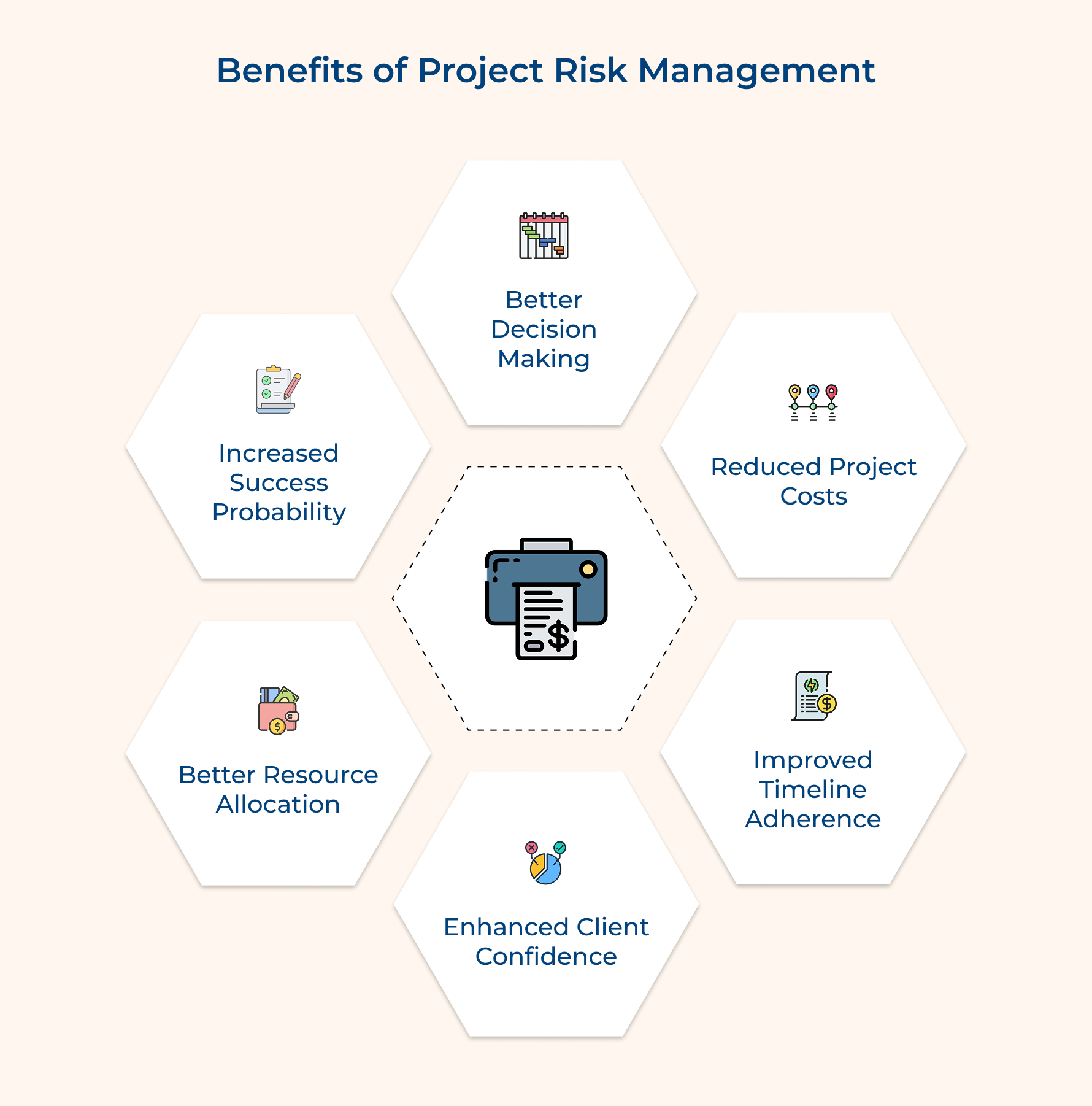
Better Decision Making
Risk management helps you see possible outcomes before investing time or money. By looking at risk data, you can weigh options and pick the approach that fits your project goals as well as supply chain realities.
Reduced Project Costs
Spotting risks early saves you from costly surprises. Instead of paying for last-minute fixes, you can use preventive measures that keep budgets under control.
Improved Timeline Adherence
When you know where delays might happen, you can build realistic schedules. With backup plans in place, your project stays on track even if supply chain issues or other obstacles pop up.
Enhanced Client Confidence
Showing that you’ve planned for risks builds trust. Clients see you’ve analyzed risk data, prepared for challenges and thought ahead, which boosts their confidence.
Better Resource Allocation
Understanding risk areas lets you use resources wisely. You can put your strongest team members where supply chain risks are highest while keeping efficiency in other areas.
Increased Success Probability
You greatly improve your chances of delivering on time and within budget when you have a structured approach to risk management. Data-driven planning consistently outperforms reactive problem-solving.
6 Common Types of Project Risks You Should Know
Every project faces unique challenges but certain risk categories appear consistently across different industries and project types. Understanding these fundamental risk types helps you build comprehensive protection for your project.
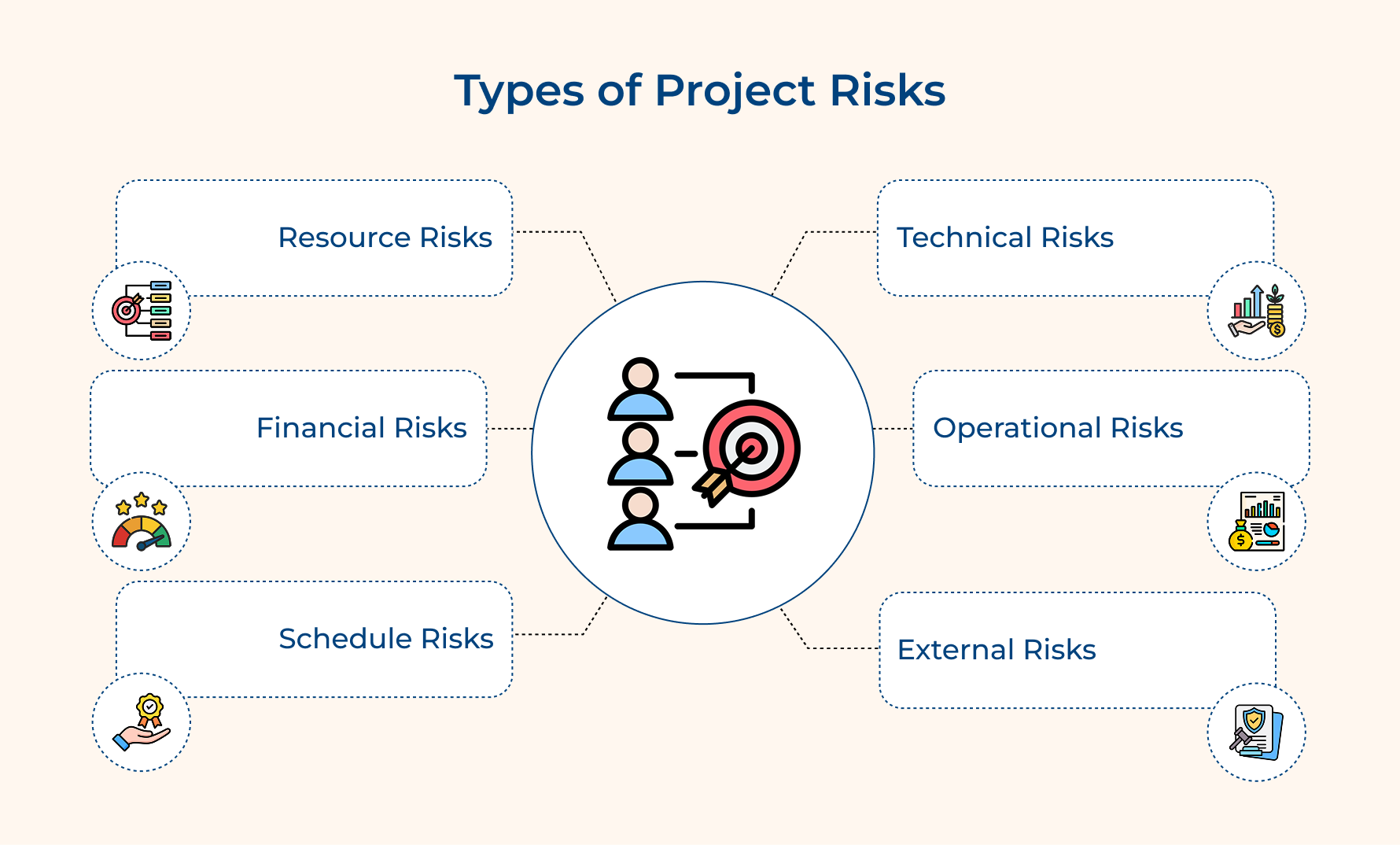
1. Resource Risks
Resource risks emerge when your project lacks the right people with appropriate skills at critical moments. Think of trying to build a house without experienced carpenters or launching software without skilled developers available.
Common resource risk indicators you should monitor:
- Key team members planning to leave during critical phases
- Skills gaps that weren’t identified during project planning
- Competition for scarce specialists across multiple organizational projects
Resource constraints can cascade quickly turning minor staffing issues into major project delays. Smart project managers identify resource dependencies early and develop backup plans including cross-training as well as external contractor relationships.
2. Financial Risks
Budget overruns represent one of the most common project failures across all industries. Financial risks include cost escalation and funding shortfalls that can halt progress completely.
Real-world examples of financial risks include:
- Construction material costs increasing by thirty percent during long projects
- Currency fluctuations affecting international projects with multi-year timelines
Financial planning requires building realistic contingency reserves and maintaining visibility into spending patterns. Regular budget reviews help catch cost drift before it becomes a crisis threatening project viability.
3. Schedule Risks
Timeline pressure creates stress throughout your entire project ecosystem affecting quality and team morale. Schedule risks often compound because delays in early phases compress time available for later activities.
Dependencies between tasks create vulnerability where one delayed activity can trigger cascading schedule problems. Weather delays in construction or regulatory approval delays in product launches exemplify how external factors disrupt carefully planned timelines.
4. Technical Risks
Technology failures or performance issues can derail even well-funded projects with strong teams. Technical risks include unproven technologies and integration challenges between different systems or components.
Technical risk examples across different industries:
- New software frameworks that lack adequate documentation or community support
- Manufacturing equipment that cannot achieve required precision or production speeds
Prototype development and proof-of-concept testing help validate technical approaches before full implementation. Technical reviews with independent experts can identify potential issues that internal teams might overlook.
5. Operational Risks
Daily operations create ongoing vulnerability through process failures and human errors. Operational risks affect project execution quality and can damage relationships with stakeholders as well as end users.
Communication breakdowns between distributed teams represent a classic operational risk that affects project coordination. Quality control failures during manufacturing or testing phases can force expensive rework cycles that consume contingency time and budget.
6. External Risks
Forces beyond your direct control can impact projects regardless of internal planning quality. External risks include regulatory changes and market shifts that alter project requirements or eliminate business justification.
How to Manage Risk in Project Management?
Managing risk isn’t about eliminating uncertainty, it’s about staying prepared. A clear step-by-step process helps you spot issues early and keep projects on track.
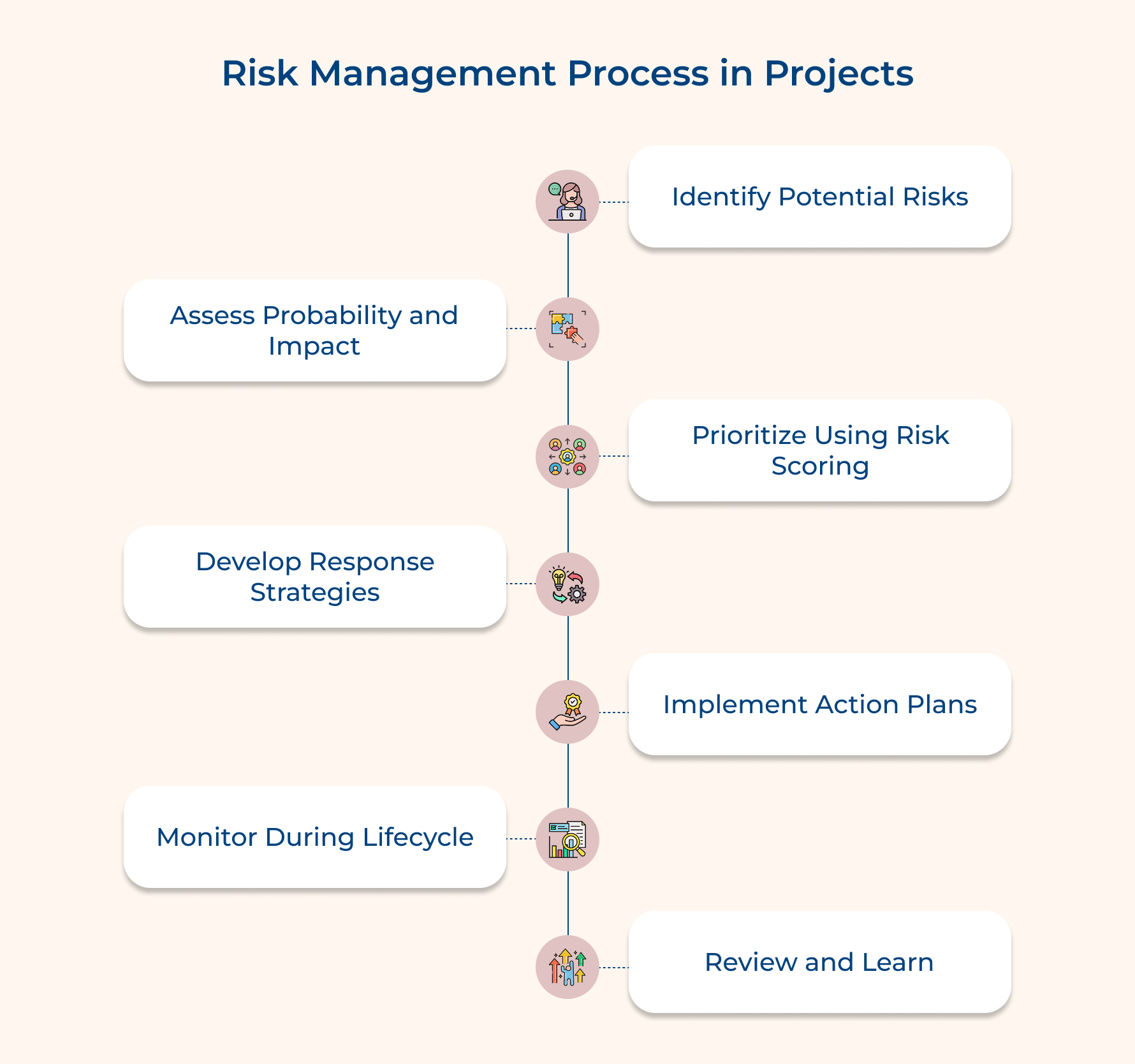
1. Identify All Potential Project Risks
Risk identification forms the foundation because you cannot manage threats you haven’t discovered yet. This step requires casting a wide net to capture every possible scenario that could derail your project success.
Four essential questions help uncover potential project risks effectively:
- What could prevent us from meeting our project deadlines?
- Which resources might become unavailable during critical phases?
- What external factors could disrupt our planned approach?
- Where have similar projects encountered unexpected problems before?
Beyond these questions effective risk identification requires creating safe spaces where team members feel comfortable sharing concerns. You need diverse perspectives to build risk management techniques because different roles see different vulnerabilities.
2. Assess Risk Probability and Impact
Assessment transforms your risk list from abstract concerns into measurable factors that guide decision making. Without proper evaluation you might waste resources on unlikely scenarios while ignoring genuine threats to project success.
Evaluate Likelihood of Each Risk Occurring
Probability assessment examines historical patterns and current conditions to estimate how likely each risk might materialize. You need realistic percentages rather than gut feelings for meaningful analysis.
Determine Potential Consequences on Project Objectives
Impact evaluation measures what happens if the risk becomes reality considering effects on timeline budget scope and quality. Each consequence needs specific measurement rather than vague descriptions.
Create Risk Probability and Impact Matrix
The matrix provides visual representation plotting probability against impact to identify which risks demand immediate attention. This tool helps stakeholders understand relative risk levels quickly.
3. Prioritize Risks Using Risk Scoring
Prioritization represents the pivotal moment where you transform risk awareness into focused action by concentrating limited resources on threats that matter most. This step prevents the common mistake of treating all risks equally.
Calculating risk scores using probability times impact creates objective rankings that remove emotional bias from risk management decisions. Mathematical scoring helps justify resource allocation to skeptical stakeholders who question risk management investments.
Rank risks from highest to lowest priority considering both numerical scores and business context factors. Rankings guide resource allocation ensuring critical risks receive attention first while lower-priority items wait for available capacity.
Here are three client project risks ranked by priority:
- Server infrastructure failure during product launch (High probability high impact)
- Key developer leaving mid-project (Medium probability high impact)
- Minor design changes requested by client (High probability low impact)
So how do you focus attention on the most critical threats first? Your energy should go toward preventing catastrophic failures rather than perfecting protection against minor inconveniences.
4. Develop Response Strategies for Risks
Response strategy development transforms your risk insights into concrete action plans that actively protect your project from identified threats. You need a clear plan to act. Otherwise, you are just writing down risks for no reason. That expensive document won’t help you when trouble comes.
This step functions as your project’s defense system where you decide whether to avoid transfer mitigate or accept each risk based on cost-benefit analysis. Think of it like choosing insurance policies, you need different coverage levels for different types of potential losses.
- Match your response strategy to your organization’s risk tolerance rather than trying to eliminate every possible threat.
- Always have backup plans ready because your primary risk response might fail when you need it most.
5. Implement Risk Response Action Plans
Implementation is the most critical phase in project risk management. A brilliant plan is pointless if your team fails to execute it when a problem arises. This is what truly separates successful projects from failures.
Focus on these three key approaches:
- Proactive Execution: Don’t wait. Start preventive measures immediately; it’s far cheaper than emergency firefighting.
- Clear Communication: Ensure every team member knows their specific role using simple checklists, not complex manuals.
- Documentation Standards: Keep a real-time log of what worked and what didn’t. This allows the team to adapt quickly.
Consider this example: a marketing agency secures backup freelancers before the peak season. This direct action is what provides real protection, turning your risk analysis into actual results.
6. Monitor Risks Throughout Project Lifecycle
Consider risk monitoring as your project’s early warning system. As an Active Risk Manager, you can’t just set a plan and forget it. You need to constantly watch for changes because project conditions are always shifting.
Your key job is to run a simple, five-step process:
- Hold regular check-ins to review known risks.
- Track trigger points that warn you a risk is about to hit.
- Actively hunt for new risks that weren’t there before.
- Check if your solutions are actually working.
- Keep everyone in the loop with clear communication.
The biggest challenge is avoiding fatigue, where your team gets bored of monitoring. Fight this by rotating duties and celebrating when you successfully avoid a problem. This active approach keeps your team engaged and turns your risk plan into a powerful, living tool.
7. Review and Learn from Outcomes
Think of the review step as your chance to turn your hard-earned experience into company wisdom. It’s how you stop making the same mistakes and start getting better at handling problems on every project.
To run a great review, just ask your team four key questions:
- What risks actually happened and did our plans work?
- What did we miss completely when we were first planning?
- Which solutions gave us the most bang for our buck?
- How can we spot risks more accurately next time?
The goal is to document these lessons learned. This isn’t just a report, it’s a cheat sheet for future project managers to avoid our pitfalls and copy our wins.
You’ve got to update the company’s playbook. This is how you make sure everyone benefits, not just your team. Here’s how to do it:
- Revise your risk templates with new risks and better criteria.
- Update training materials with real stories from your projects.
- Tweak the official procedures to be simpler and more effective.
This way you make sure your entire organization gets smarter with every project you finish.
Tips and Best Practices for Project Risk Management
Effective risk management separates successful project managers from those who constantly fight fires. These proven practices will transform your approach from reactive crisis management to proactive protection.
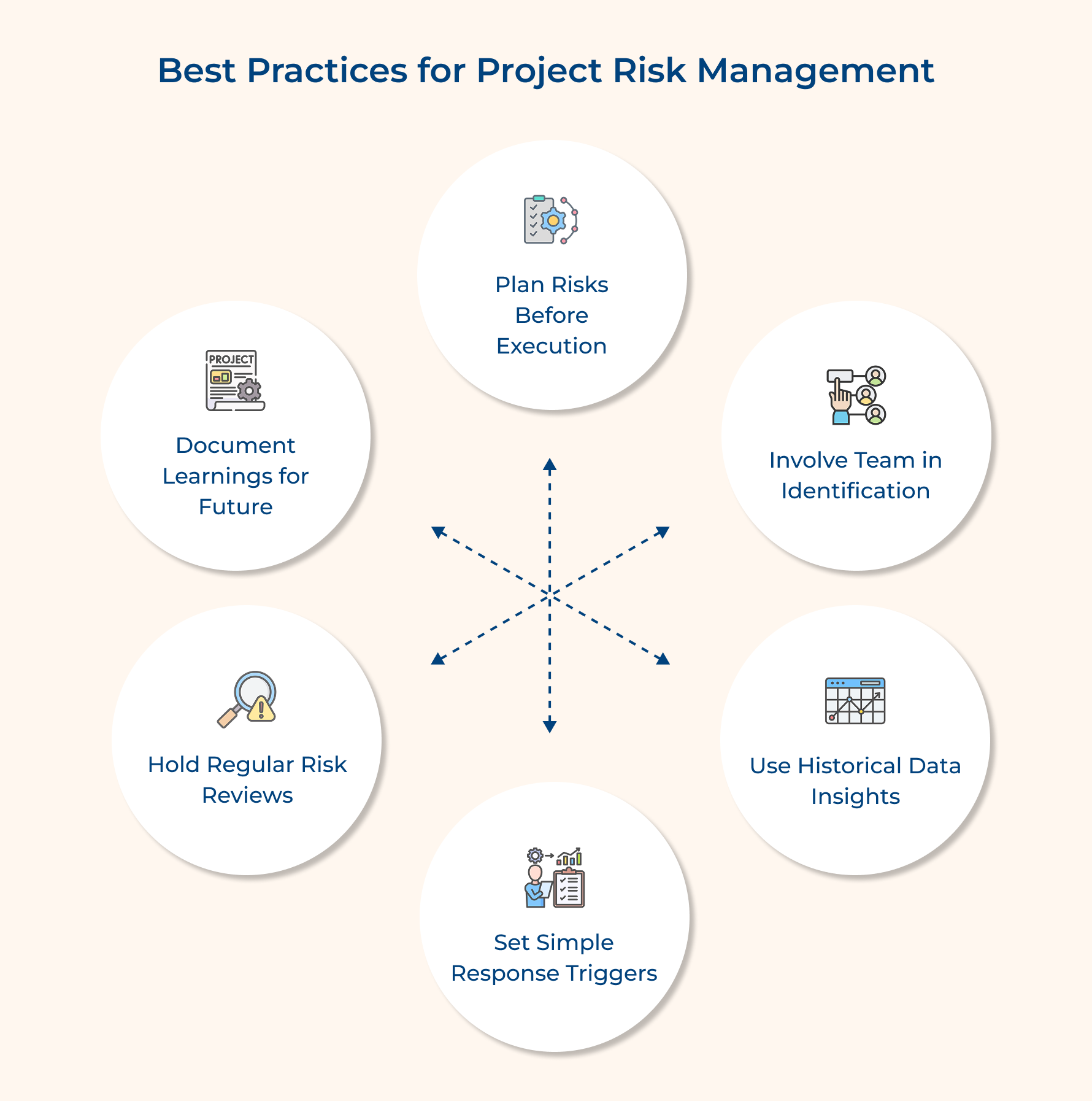
- Risk planning before project execution: Risk management works like insurance – you need coverage before problems occur rather than after accidents happen. Early planning builds protective measures into your project foundation instead of retrofitting solutions later.
- Involve the team in risk identification: Different team members see different vulnerabilities because they work in unique areas with distinct perspectives. Developers spot technical risks while business analysts identify stakeholder communication issues that managers might miss.
- Use historical data as a guide: Past projects show you what typically goes wrong and what protective measures actually work effectively. Review completed project documentation to identify patterns that apply to your current situation.
- Create simple risk response triggers: Complex warning systems fail under pressure so establish clear measurable conditions that signal when to activate responses. Think traffic lights rather than sophisticated displays requiring interpretation during stressful moments.
- Schedule regular risk review meetings: Risk conditions change as projects progress so monthly discussions keep your protective strategies current. These meetings maintain team awareness and ensure everyone stays alert to emerging threats.
- Document everything: Your risk management experiences become valuable organizational assets helping future teams avoid known pitfalls. Documentation invests in your organization’s collective intelligence and capability building.
Project Risk Management Challenges & How to Overcome Them
Even experienced project managers struggle with risk management because it requires predicting uncertainty. Understanding these common obstacles helps you prepare better strategies.
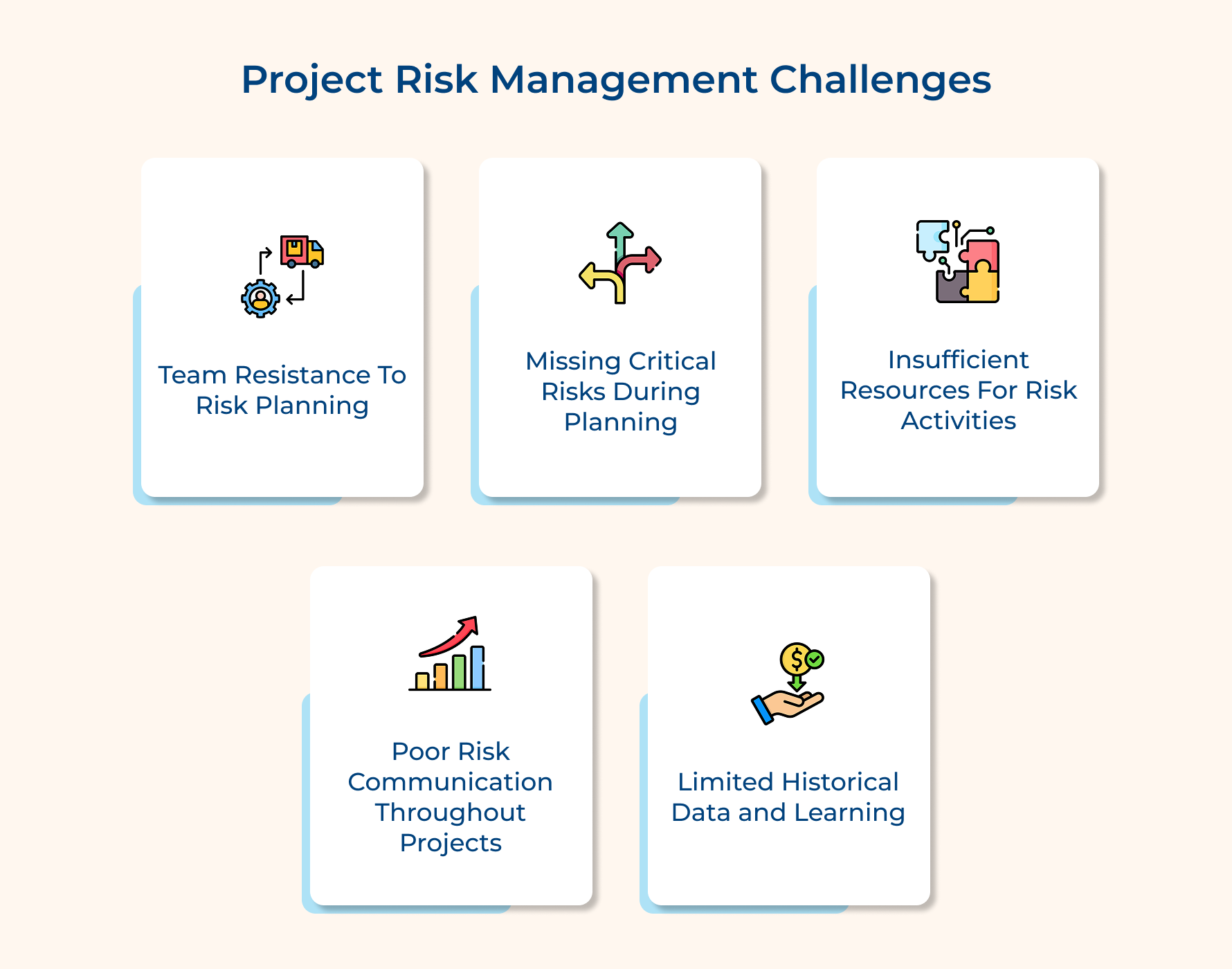
Team Resistance to Risk Planning
Many team members see risk management as bureaucratic overhead that delays real work without providing tangible value. This resistance stems from past experiences where risk planning felt like academic exercises rather than practical protective measures.
Missing Critical Risks During Planning
Project teams often overlook important risks because they lack experience with similar projects or face pressure to start quickly. The challenge intensifies with innovative projects where historical data provides limited guidance for potential problems.
Insufficient Resources for Risk Activities
Organizations frequently underestimate the time and budget needed for effective risk management treating it as optional rather than essential. This resource shortage forces teams to choose between thorough risk planning as well as meeting aggressive timelines.
Poor Risk Communication Throughout Projects
Risk information often stays trapped within project management circles instead of reaching stakeholders who need updates for decision making. Communication breakdowns leave teams unprepared when risks materialize because people lack awareness or preparation time.
The key to overcoming these challenges lies in building risk management into your organizational culture rather than treating it as optional.
- Build risk awareness through regular training sessions that demonstrate real value rather than theoretical concepts.
- Create simple risk identification templates that make the process faster and more comprehensive for busy teams.
- Establish dedicated risk management budgets as standard line items rather than hoping to find resources during execution.
- Implement standardized risk communication protocols that automatically update stakeholders about current threat levels and response actions.
- Develop organizational knowledge repositories that capture and share risk management lessons learned across all projects as well as departments.
Best Tools and Software for Project Risk Management
These tools serve as your digital safety net, catching problems before they become disasters.
Kooper
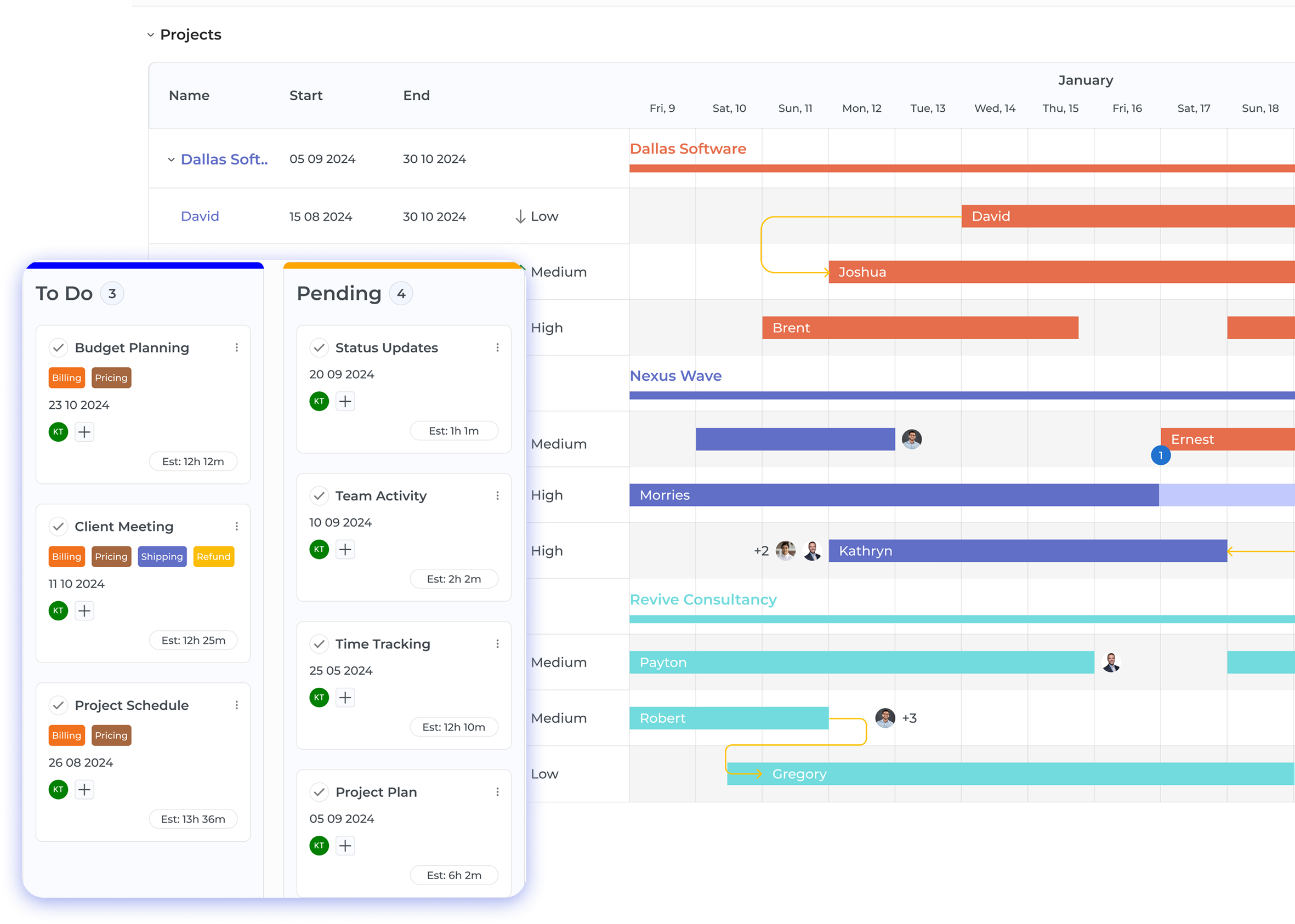
Kooper functions as an all-in-one project management platform with built-in risk tracking capabilities that integrates project management. This unified approach eliminates the typical software juggling act by combining project timelines, resource allocation, financial tracking and risk monitoring within a single intuitive dashboard system.
Microsoft Project
Microsoft Project serves as your foundational platform where you can integrate risk tracking directly into project timelines and resource planning. The software allows you to link specific risks to tasks while automatically adjusting schedules when mitigation activities require additional time.
Monday.com
Monday.com provides visual project boards templates that make risk status immediately apparent through color-coded indicators and automated notifications when risks escalate. This platform excels at keeping risk information visible as well as actionable rather than buried in complex documentation that nobody reads.
Smartsheet Risk Register Templates
Smartsheet combines spreadsheet familiarity with database functionality creating risk registers that multiple team members can update simultaneously while maintaining data integrity. The platform automatically calculates risk scores and generates reports for stakeholders who need executive summaries rather than detailed information.
Examples of Project Risks & Risk Management Strategies
Here are some examples to help you understand how different types of projects face unique risks and require tailored management approaches.
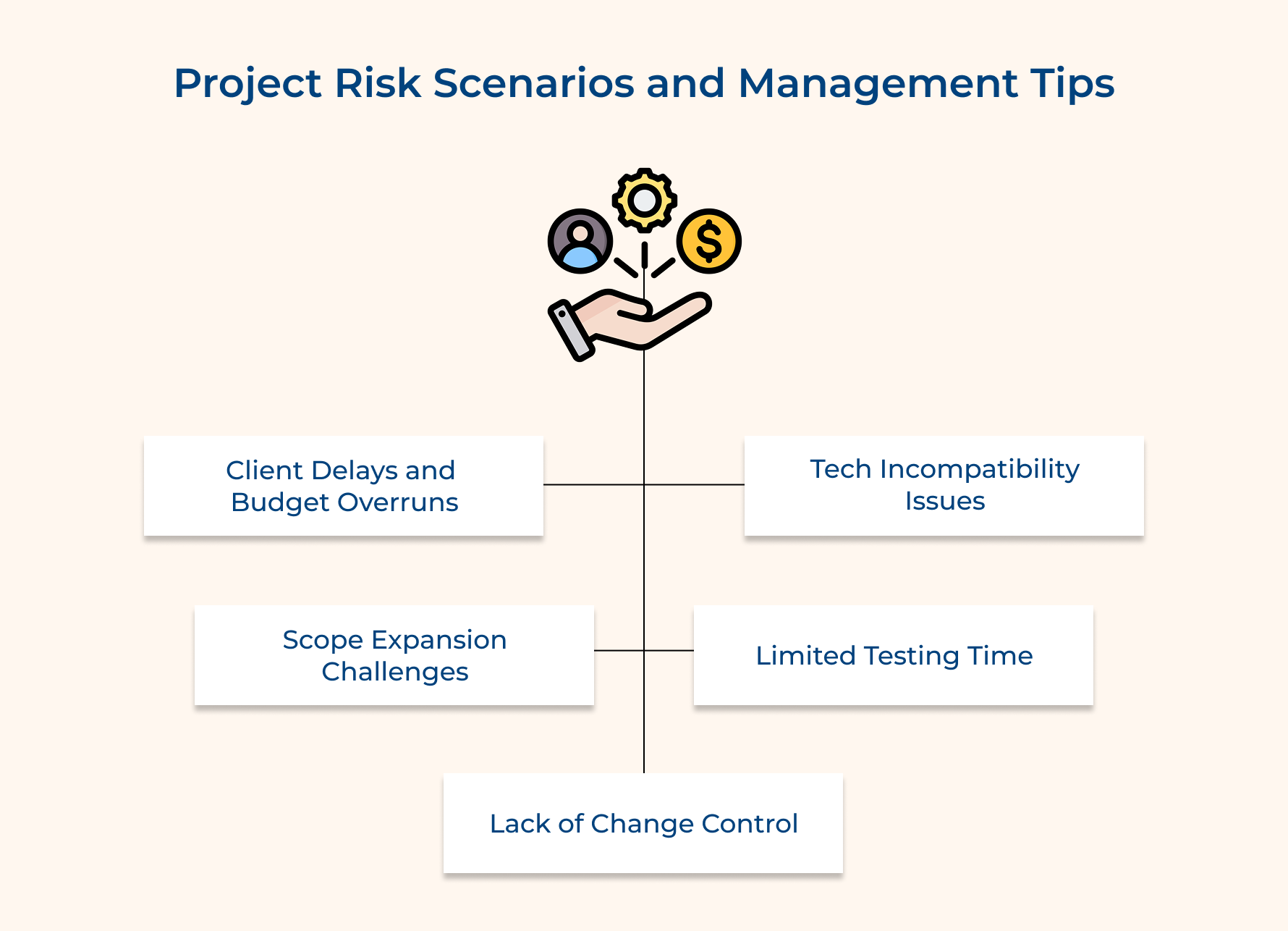
Marketing Campaign Launch for Agency Client Project
Your client asks for huge, last-minute changes right before launch. This causes delays and blows your budget.
Why It Happens:
This usually occurs if the client hasn’t been checking in regularly or if the final idea looks different from what they first imagined.
How to Handle It:
- Get the client to sign off on their approval at every major step. No surprises!
- Keep an extra 15% of the budget set aside just for emergencies.
- Have a clear rule: any big change after final approval means the deadline automatically gets pushed back.
Digital Transformation Consultancy Project
The new tech doesn’t work with the company’s old, outdated systems. This can stop the whole project for weeks.
Why It Happens:
Old systems often have weird, custom fixes that nobody remembers or wrote down.
How to Handle It:
- Do a deep dive into the old tech before you start anything else.
- Schedule lots and lots of time for testing.
- Always have a “panic button”—a plan to revert back to the old system if something goes wrong. Keep the old system running until you’re 100% sure the new one is stable.
Software Development Project for Professional Services
The client keeps asking for “one more small feature,” slowly making the project bigger and more complex than originally agreed.
Why It Happens:
Clients often don’t know exactly what they need until they start seeing and using a real, working product.
How to Handle It:
- Show the client working versions of the software early and often to get feedback.
- Use a flexible (agile) process that allows for new ideas.
- Have a clear process for change requests. Every new feature gets a price tag and a new deadline, so the client can decide if it’s worth it.
Stay a Step Ahead for Success with Project Risk Management
Project risk management helps you see problems before they happen. This turns scary unknowns into a plan you can control, protecting your schedule and budget. Think of it as installing headlights on your project journey.
Successful project managers don’t just react to problems, they anticipate and prepare for them using systematic processes that protect their projects while building stakeholder confidence. Master these fundamentals to consistently deliver projects on time and within scope.
Limit time — not creativity
Everything you need for customer support, marketing & sales.

Shivank Kasera is part of the marketing team at Kooper, where he focuses on building content that helps agencies and service providers grow. With a keen interest in SaaS, operations, and scalability, he translates practical insights into actionable resources for business leaders.