A Complete Guide to Project Resources in Project Management
Key Highlights:
- Balanced resource allocation prevents overallocation and burnout, boosting team productivity as well as project quality across phases.
- Accurate planning of people as well as materials reduces project delays, controls costs, while securing efficient delivery.
- Transparent resource management enables data-driven decisions, improves future project outcomes and raises client / stakeholder satisfaction.
Your project plan looks perfect on paper but then reality hits and suddenly you are scrambling for a budget or waiting on team members who are stuck on other work.
Project resources represent the actual fuel that powers your work forward. When you mismanage people or run out of materials at critical moments, deadlines slip and costs spiral out of control quickly.
This guide walks you through what project resources really mean and shows you practical ways to manage them. Learn how to identify what you need and allocate resources smartly so your projects finish on time.
What are Project Resources in Project Management?
Project resources are the essential inputs needed to complete a project successfully. These include people with specific skills, equipment, materials, budget allocation, time availability and sometimes intangible assets like knowledge or technology.
When you manage project resources effectively, your team can deliver work on schedule and within budget constraints. Poor resource management leads to bottlenecks where team members sit idle or become overwhelmed. The right resources in the right place at the right time determine if your project succeeds or struggles unnecessarily.
Key objectives:
- Resource allocation: Assign the right people and materials to specific tasks based on their skills as well as availability.
- Cost control: Track and manage spending on resources to stay within the approved project budget.
- Capacity planning: Ensure you have enough resources available throughout the project lifecycle without overcommitting.
- Utilization optimization: Maximize the productive use of each resource while avoiding burnout or waste.
- Conflict resolution: Address competing demands when multiple projects need the same limited resources simultaneously.
Why are Project Resources Important?
Understanding why resources matter helps you see the bigger picture of project success. Let’s explore the core reasons that make resource management a critical skill for any project manager.
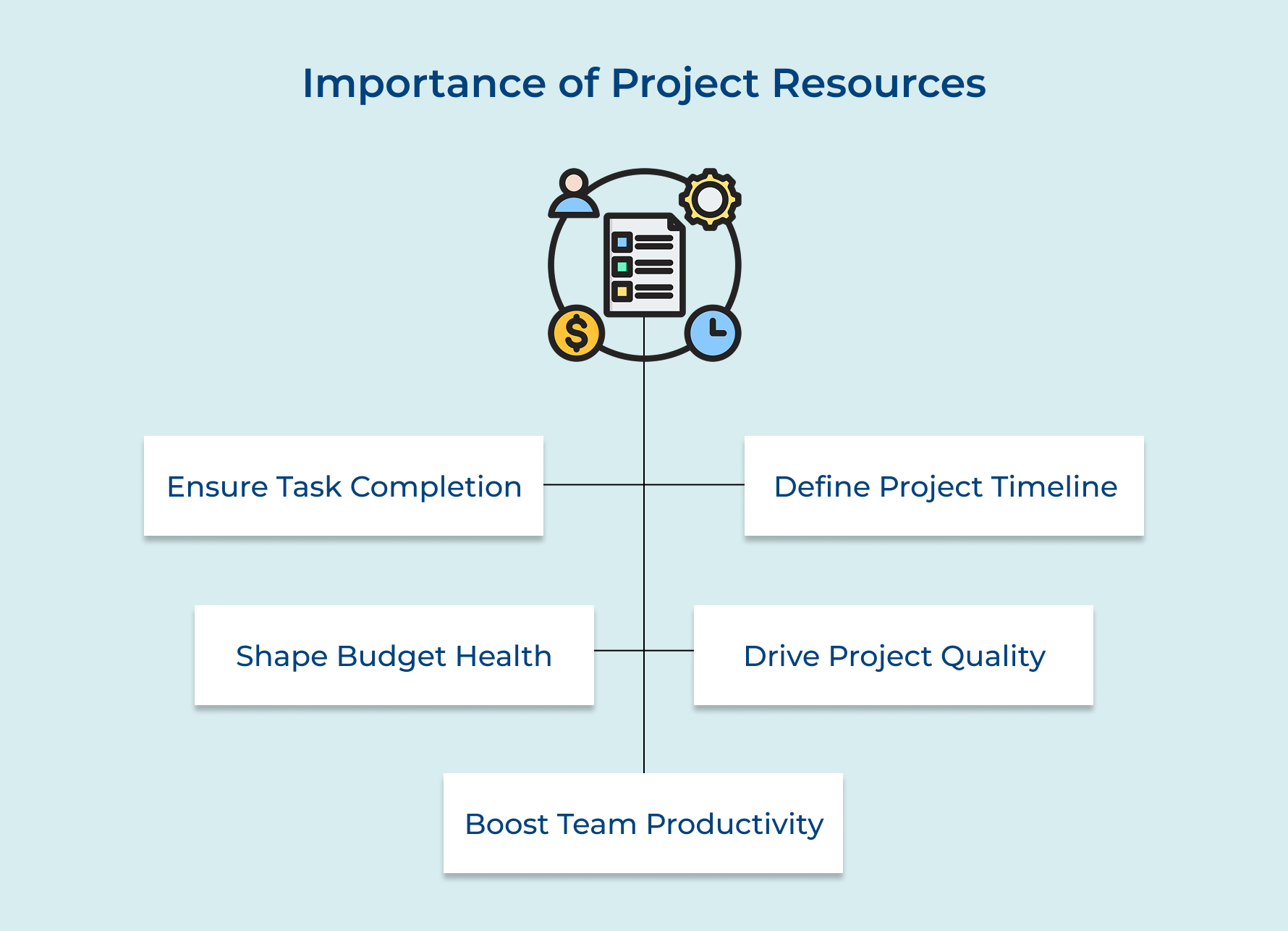
Enable Task Completion and Deliverables
A project plan only works when your team has what they need to get things done. Proper resource scheduling turns ideas into real deliverables instead of letting them get stuck on paper.
The right people, tools and timelines keep work flowing smoothly from start to finish.
Determine Project Timeline and Schedule
Your project’s pace depends on how well resources are managed. Smart resource forecasting helps you plan realistic timelines based on actual team capacity. It ensures balanced workloads and fewer delays.
Impact Budget and Financial Health
Every resource costs money, from skilled talent to equipment. Thoughtful allocation of resources helps control spending while maintaining quality. When you forecast needs early, you avoid surprise expenses and stay within budget.
Influence Quality of Project Outcomes
Quality depends on the caliber of resources you assign. Experienced people and reliable tools deliver better outcomes than rushed or underfunded setups. Investing wisely pays off in fewer errors and happier clients.
Affect Team Morale and Productivity
When teams have the tools and support they need, productivity soars. Lack of resources leads to burnout and frustration. Adequate planning shows your team they’re valued as well as motivates them to do their best work.
7 Important Types of Project Resources and How to Manage
Here are the various types of project resources and how you can adeptly manage them to ensure project success.
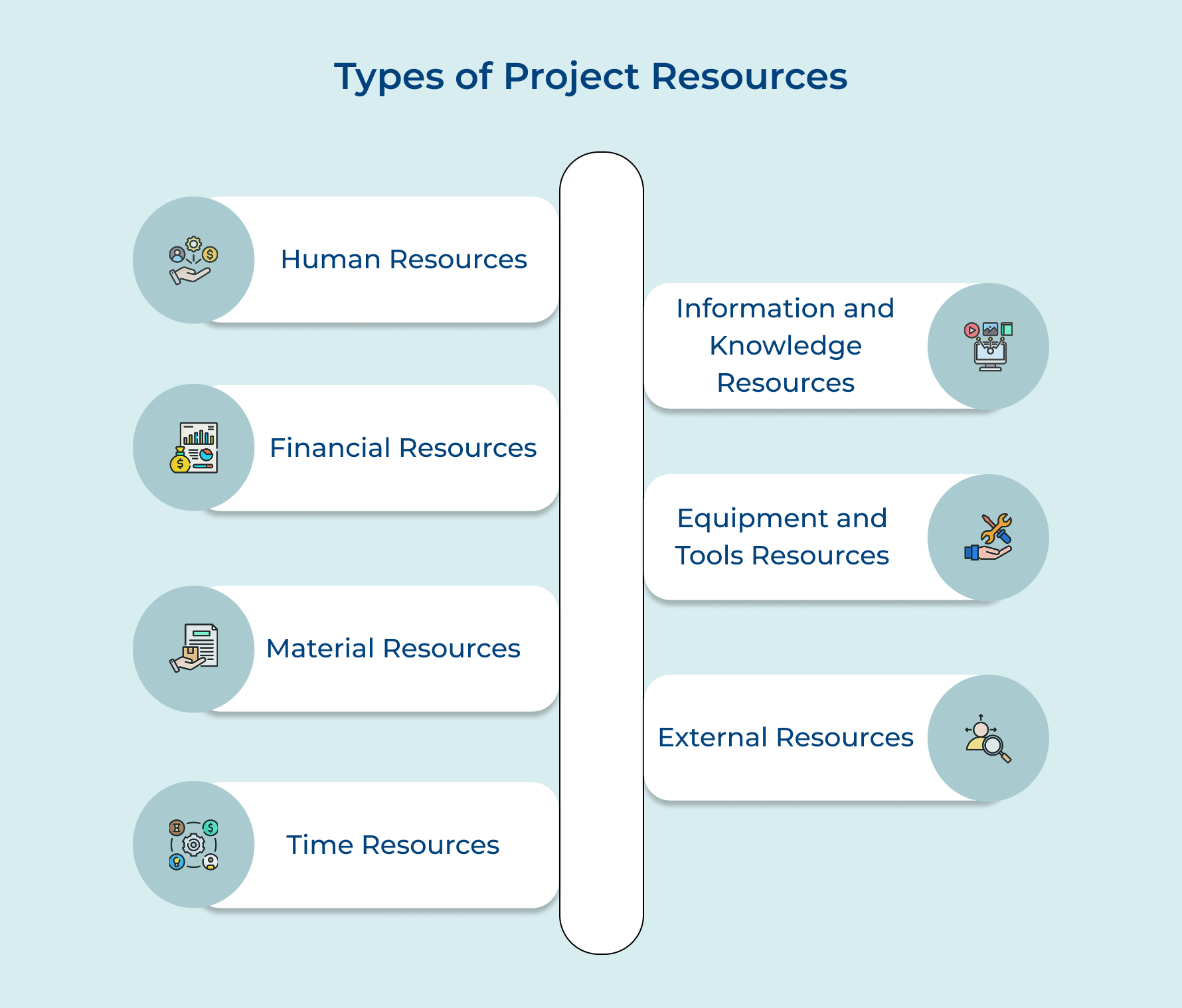
1. Human Resources
Human resources are the people who bring projects to life with their skills and creativity. No amount of money or tools can replace their problem-solving abilities. Success depends on having the right people doing the right work at the right time.
Typical roles include:
- Project managers who coordinate goals and timelines.
- Technical specialists who handle coding or engineering tasks.
- Support staff who manage logistics and documentation.
- Subject matter experts who guide key decisions.
Manage them effectively by identifying the skills each task needs and match them to your team’s strengths. Monitor workloads to prevent burnout and provide growth opportunities so team members can take on more complex roles as the project evolves.
2. Financial Resources
Financial resources cover all the funds needed to execute your project – from paying team members to purchasing materials. Without proper financing, even the best plans can fail mid-way. Effective management ensures your project stays on track and within budget.
Common financial resources include:
- Project budget allocation
- Contingency reserves
- Operating expenses
- Capital expenditures
- Stakeholder funding
Track spending against your budget and use forecasting tools to anticipate future costs. Set approval workflows for major purchases and monitor cash flow closely. This ensures funds are available when needed and prevents budget shortfalls that could disrupt project delivery.
3. Material Resources
Material resources include the physical supplies and raw materials your team needs to keep the project moving. Without them, work can halt entirely – unlike people, materials can’t multitask. Shortages cause production delays and impact overall delivery.
Common material resources include:
- Construction materials: Concrete, steel and lumber that must arrive on time as well as meet quality standards.
- Office supplies: Essentials like paper and printer ink that support daily operations.
- Manufacturing components: Parts, circuits and packaging materials that ensure product quality.
Efficient management starts with accurate forecasting of quantities and timelines. Build strong relationships with dependable suppliers and maintain organized storage to protect while accessing materials easily. This ensures work continues smoothly without costly delays.
4. Time Resources
Time resources refer to the limited hours and days available to complete your project. Unlike money or materials, once time is lost, it can’t be recovered. Hence, making it the most critical resource. Every project runs within strict timelines that shape priorities and decisions.
Key questions to ask include:
- How much time does each task truly need?
- Which activities can overlap and which must follow a sequence?
- Where might scheduling conflicts cause delays?
Effective time management starts with realistic scheduling that considers task dependencies. Include buffer time for high-risk activities and monitor your critical path closely. Even a small delay there can affect your final delivery. Treating time as a valuable resource ensures your project stays on track from start to finish.
5. Information and Knowledge Resources
Information and knowledge resources include the data, insights as well as expertise that guide project decisions. Without them, teams risk errors, rework and poor outcomes. Managing these effectively helps maximize resource capacity by ensuring everyone has the information they need, when they need it.
Key tools include:
- Documentation and repositories that store decisions while preventing knowledge loss.
- Communication channels like meetings, dashboards and collaboration platforms that keep teams aligned.
- Email threads that record discussions and outcomes for easy reference.
Sharing lessons learned and best practices turns project experience into future efficiency. When knowledge flows freely and is well-organized, your team can make smarter decisions. Thus, optimizing time, effort as well as overall resource capacity.
6. Equipment and Tools Resources
Equipment and tool resources include the physical as well as digital instruments your team needs to get work done. Even skilled professionals can’t perform well without the right tools. Reliable equipment boosts productivity, while poor planning causes delays and resource conflicts.
To manage effectively:
- Track and maintain assets to prevent breakdowns while planning replacements in advance.
- Plan utilization to ensure tools are available when needed and avoid overlap between teams.
- Check technology compatibility before purchase to prevent workflow disruptions.
Proper planning enhances team collaboration, allowing everyone to work efficiently without waiting for shared tools. Anticipating needs and minimizing equipment bottlenecks will help you maintain steady progress across all project phases.
7. External Resources
External resources include the people and services outside your organization who help complete projects. They’re essential when internal teams lack specific skills or when workloads spike beyond capacity. Hiring contractors or partners gives you access to specialized expertise without long-term costs.
Use external resources to fill temporary gaps, manage peak workloads, or add flexibility without increasing permanent headcount. To avoid resource conflicts, define clear deliverables, timelines and quality standards in every contract.
Strong team collaboration is key. Build extra communication time into schedules so external contributors understand project goals and context. When managed well, external resources enhance agility and strengthen project outcomes.
Common Mistakes When Assigning Project Resources
Resource assignment errors can derail even well-planned projects before work really begins. Understanding these common pitfalls helps you avoid costly mistakes that waste time and money.
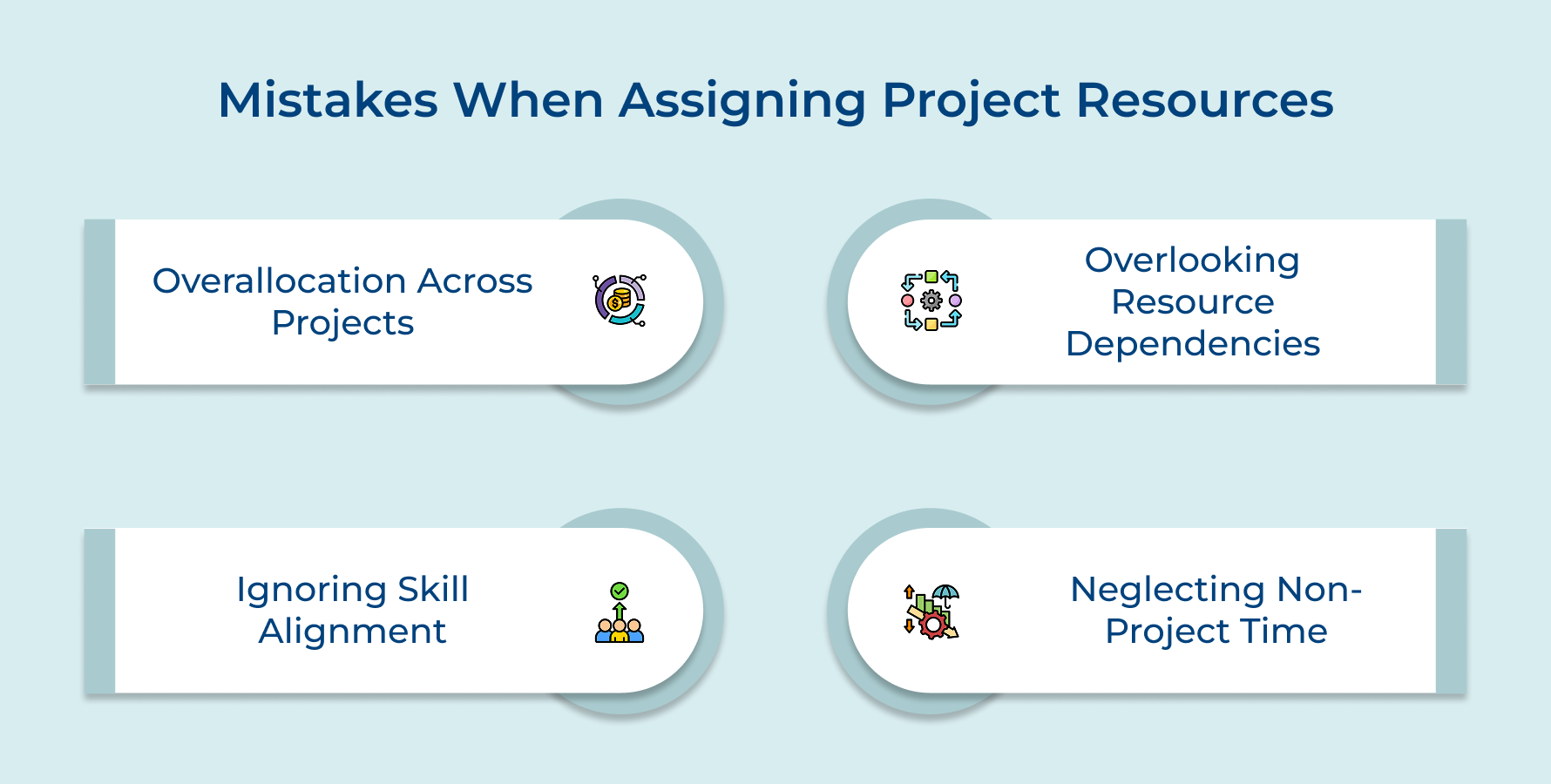
Overallocating Team Members Across Multiple Projects
Project managers often assign the same person to several projects simultaneously without checking their actual availability. This creates impossible workloads where individuals cannot meet commitments because they literally lack enough hours in the day.
Assigning Tasks Without Considering Skill Levels
Managers sometimes assign work based on who seems available rather than who possesses the right expertise for the task. A junior team member given complex work they cannot handle will struggle and produce poor results. This mismatch wastes time on rework and damages team confidence when people fail at assignments beyond their capabilities.
Ignoring Resource Dependencies and Sequencing
Assigning resources without understanding which tasks must finish before others can start creates scheduling chaos and idle time. Team members show up ready to work but cannot proceed because prerequisite activities remain incomplete.
Failing to Account for Non-Project Time
Allocating resources as if people work on projects eight hours daily ignores reality like meetings and administrative duties. Employees need time for emails, training and organizational responsibilities that reduce their actual project availability. Unrealistic assignments based on full-time availability guarantee schedule slips when work takes longer than expected.
- Smart project managers use systematic approaches to prevent these common errors and keep projects running smoothly.
- Create a centralized resource calendar that shows all commitments across projects so you spot conflicts before making assignments.
- Match task complexity to skill levels by reviewing team capabilities first and assigning work that stretches but does not overwhelm people.
- Map task dependencies early in planning to sequence resource assignments properly and avoid costly idle time waiting for prerequisites.
- Calculate realistic availability by assuming people work only five to six productive hours daily after accounting for meetings and administrative work.
Project Resources: Your Key to Seamless Project Success.
Project resources form the foundation that transforms your project plans into real achievements and tangible results. Managing people, money, materials, time, information, equipment and external partners effectively determines if you deliver on schedule or struggle with delays. Each resource type connects to others in ways that multiply your success when coordinated properly.
Start viewing resource management as a strategic advantage rather than just administrative work that fills spreadsheets. The projects that finish successfully are those where managers anticipate needs early and adjust allocations as conditions change. Master these resource fundamentals and you will consistently deliver projects that meet expectations while building stronger teams along the way.
Limit time — not creativity
Everything you need for customer support, marketing & sales.

Shivank Kasera is part of the marketing team at Kooper, where he focuses on building content that helps agencies and service providers grow. With a keen interest in SaaS, operations, and scalability, he translates practical insights into actionable resources for business leaders.