How to Identify and Manage Project Deliverables
- What Are Project Deliverables?
- Importance of Identifying Project Deliverables
- 5 Essential Types of Project Deliverables You Must Know
- How to Identify Project Deliverables in 7 Simple Steps
- 6 Actionable Strategies for Managing Project Deliverables
- Practical Tips & Techniques for Tracking Deliverables
- Real Life Examples of Project Deliverables
- Common Challenges with Project Deliverables & Tips to Overcome Them
- Elevate Your Project Management with Precise Deliverables
- FAQs about Project Deliverables

Key Highlights:
- A clear breakdown of what project deliverables are, their types and how they fit into your project management plan.
- Seven practical steps to identify project deliverables accurately and set your team up for on-time delivery.
- Real-world project deliverables examples across marketing, software and professional services to guide your planning process.
Projects fail when teams lose track of what they’re supposed to deliver and when it’s due. Unclear deliverables create confusion and frustrated stakeholders who expected something completely different from what you produced.
Poor deliverable management keeps you constantly putting out fires, explaining delays and managing client disappointment at every turn. Your team works hard but struggles to prioritize because nobody’s sure which outputs matter most or what success actually looks like.
This guide breaks down project deliverables into simple concepts and shows you six practical strategies to manage them effectively. You’ll learn how to identify, track as well as deliver outputs that meet expectations every single time.
What Are Project Deliverables?
Project deliverables are the tangible or intangible outputs that a project must produce to be considered complete. These can include products, services, documents, or results that meet specific requirements and are handed over to stakeholders or clients upon completion.
Who Is Responsible for Managing Project Deliverables?
The project manager owns the primary responsibility for managing deliverables. They coordinate with team members to ensure each output meets quality standards and deadlines while keeping stakeholders informed throughout the process.
Main goals:
- Clear expectations: Deliverables define exactly what the project will produce so everyone knows what success looks like from the start.
- Progress tracking: They serve as milestones that help teams measure advancement and identify potential delays before they become major problems.
- Quality control: Each deliverable includes specific criteria that ensure the final output meets the required standards and specifications.
- Accountability: They assign clear ownership for each output so team members know their responsibilities and can be held accountable for results.
Importance of Identifying Project Deliverables
Identifying project deliverables upfront sets the foundation for successful project execution. It transforms vague goals into concrete outputs that teams can plan around and deliver.
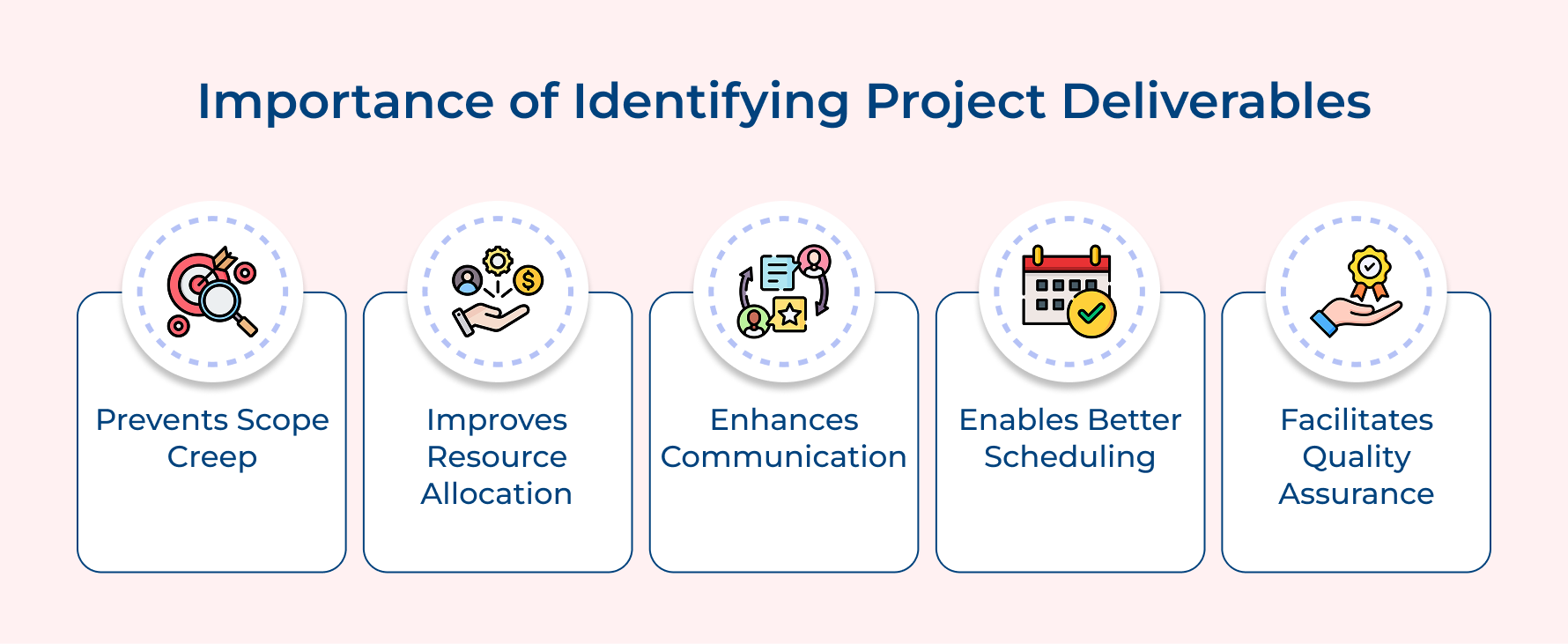
1. Prevents Scope Creep
Clearly identified deliverables act as boundaries that protect your project from growing beyond its original intent. Once project team members know exactly what’s included and what isn’t, it becomes a lot easier to politely push back on additional requests that were never part of the agreement.
2. Improves Resource Allocation
Knowing your deliverables upfront lets you put the right people and budget behind each output. You can match skills to specific tasks and stop wasting resources on work that doesn’t actually move the needle toward final results.
3. Enhances Communication
Well-defined deliverables give everyone a shared language to talk about progress. Rather than chasing abstract goals, your team and stakeholders can reference key performance indicators tied to specific outputs when giving updates or flagging concerns.
4. Enables Better Scheduling
Deliverables work as anchor points that hold your project schedule together. You can reverse-engineer from delivery dates to build realistic timelines and spot dependencies between outputs that need to happen in a specific order before others can kick off.
5. Facilitates Quality Assurance
Every deliverable comes with acceptance criteria that spell out what “done” actually looks like. That makes it pretty straightforward to test each output against requirements before it goes into the handover document or lands in a client’s inbox.
5 Essential Types of Project Deliverables You Must Know
Project deliverables come in different forms depending on their purpose and audience. Understanding these types helps you categorize outputs correctly and manage them with the right approach.
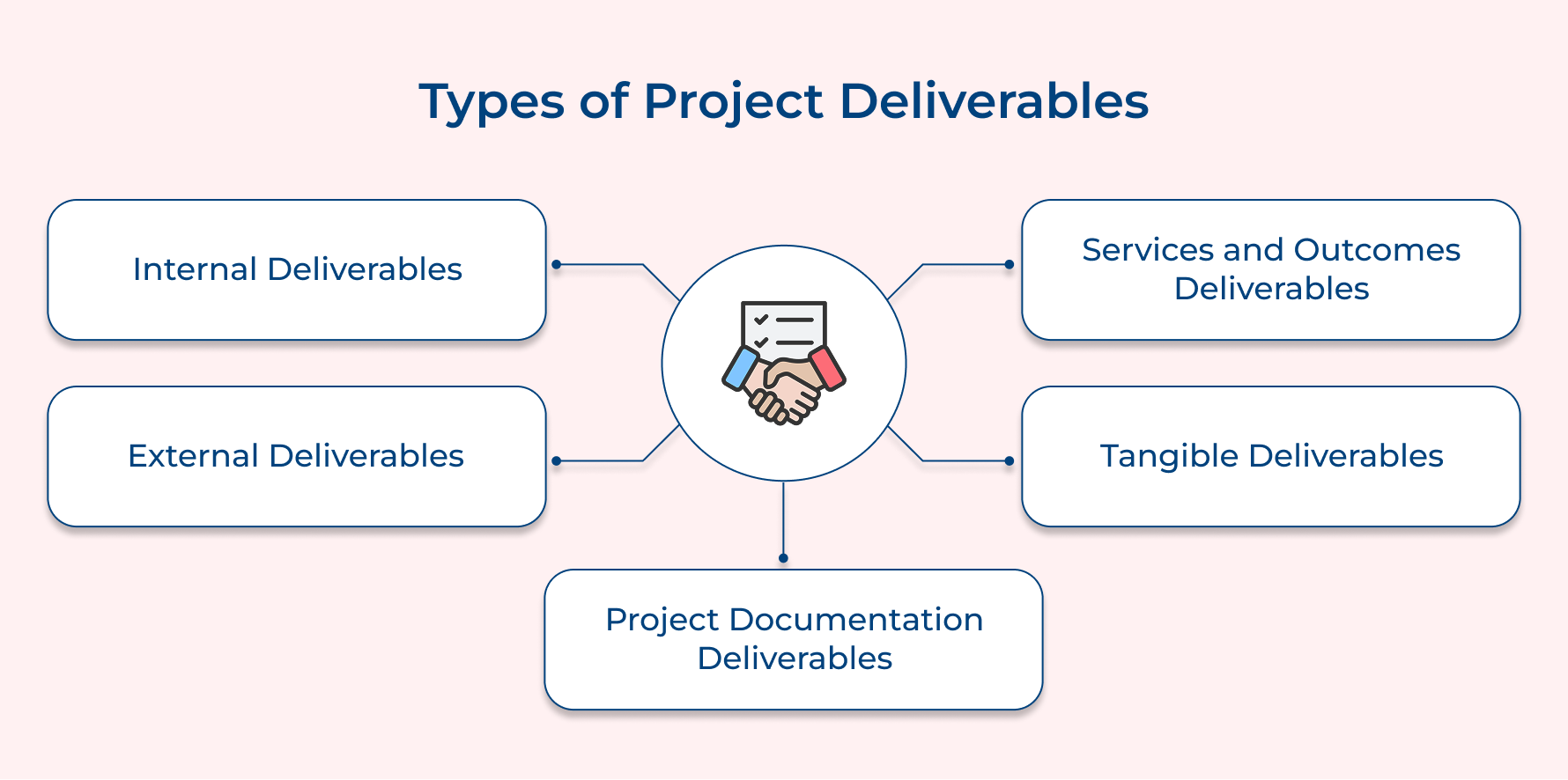
1. Internal Deliverables
Internal deliverables are outputs created for use within your project team or organization. These items support the project’s progress but aren’t typically shared with clients or external stakeholders.
Common examples include:
- Status reports that track progress and flag issues for team leads
- Meeting minutes that document decisions and action items
- Risk assessments that identify potential problems before they escalate
They keep your team organized and ensure everyone has the information needed to do their work effectively. Internal deliverables often serve as building blocks that eventually contribute to external outputs and help maintain smooth operations behind the scenes.
2. External Deliverables
External deliverables are the outputs you hand over to clients or stakeholders outside your organization. These represent the primary value that your project creates and are usually defined in contracts or agreements.
3. Project Documentation Deliverables
Project documentation deliverables are formal records that capture plans and processes throughout the project lifecycle. These written materials provide reference points and ensure everyone understands how the project should unfold.
Key documentation types include:
- Project charter that defines scope and authorizes the project to begin
- Requirements specification that details exactly what the solution must accomplish
- Change requests that formally document any modifications to original plans
Documentation creates a paper trail that protects both the project team and stakeholders from misunderstandings. It clarifies expectations and serves as proof of what was agreed upon if disputes arise later or when future teams need guidance.
4. Services and Outcomes Deliverables
Services and outcomes deliverables are intangible results that provide value through actions or improvements rather than physical products. These might include training sessions or performance enhancements that can’t be touched but deliver measurable benefits.
5. Tangible Deliverables
Tangible deliverables are physical or digital products you can see and interact with directly. These concrete outputs are easy to verify because you can hold them or open them and check their features.
They typically have the clearest acceptance criteria since stakeholders can examine them and confirm they match specifications. Tangible deliverables leave no room for interpretation about whether they exist or not and often become the most memorable part of a project.
How to Identify Project Deliverables in 7 Simple Steps
In this article, we will guide you through seven essential steps to pinpoint and define your project deliverables effectively, setting a solid foundation for success.
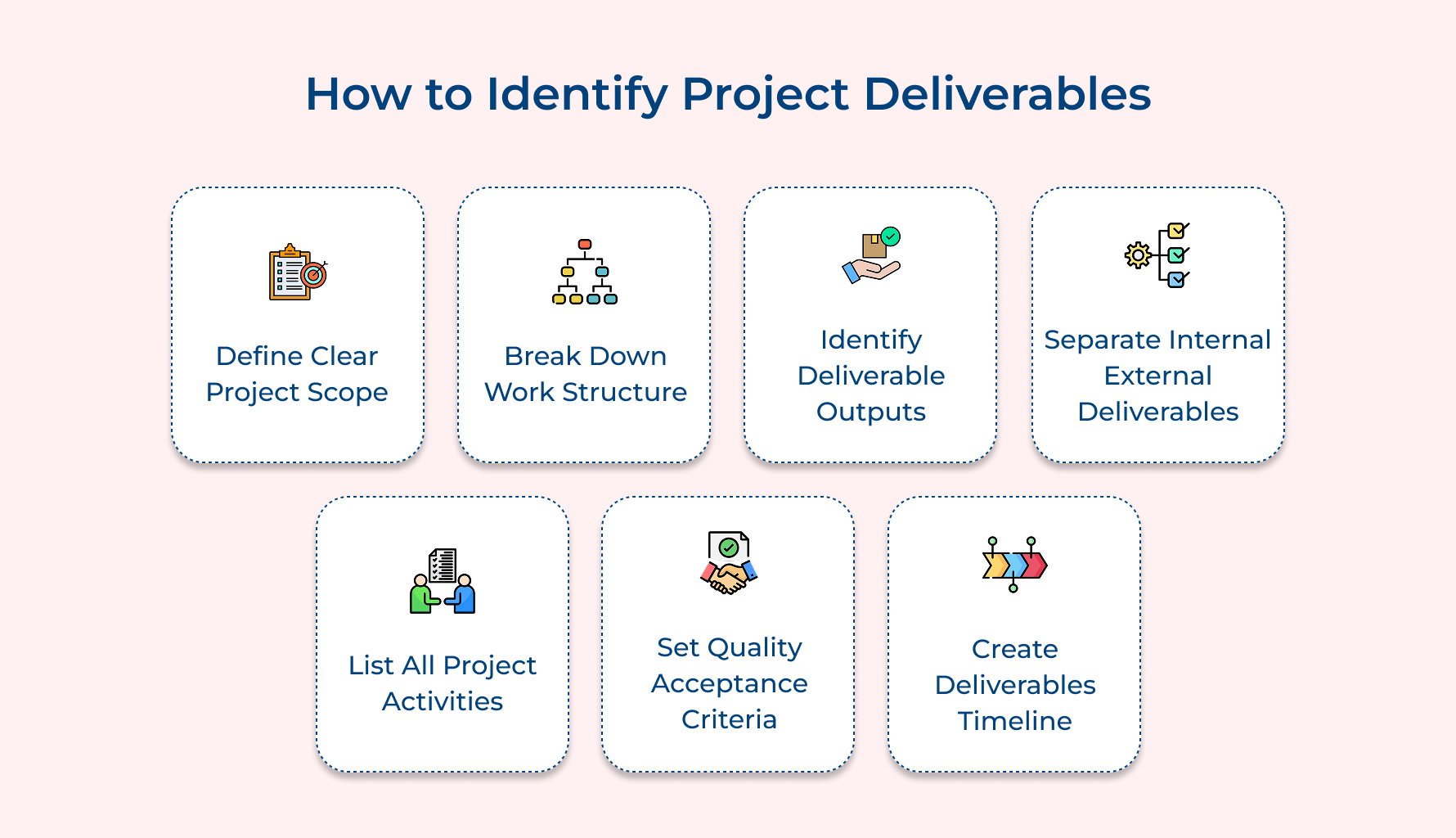
1. Define Your Project Scope Clearly
Your project scope is the starting point for everything. It draws a clear line between what you’re committing to deliver and what’s simply out of bounds. You’ll constantly second-guess if something belongs in the project or not when there is no clear scope.
A solid scope acts like a filter. When a stakeholder throws in a new request, you check it against your project plan document and either include it or push back with confidence. Here are two quick examples of what good scope looks like:
- Software migration: Moving customer data to a new CRM, excluding records older than five years
- Marketing campaign: Covering social media and email newsletters, but not video ads or print
2. Break Down the Work Structure
Big projects get overwhelming fast. Breaking work into smaller chunks makes deliverables easier to spot, assign and manage. Here are three approaches that actually work:
- Top-down: Start with major phases, then drill into smaller outputs within each one
- Deliverable-based: Organize everything around outputs, not departments or activities
- Phase-gate: Use review checkpoints where specific deliverables must be done before moving forward
For example, a product launch can be broken into development, marketing, and sales enablement phases. This helps surface deliverables like prototypes, digital assets, and training guides you might have missed otherwise.
3. Identify Specific Deliverable Outputs
Identifying specific outputs means moving beyond general goals to pinpoint the exact items your project will produce. This step transforms abstract objectives into concrete deliverables that your team can create and stakeholders can evaluate.
List Tangible and Intangible Outputs
Start by cataloging everything your project will produce regardless if it’s physical or conceptual. Tangible outputs include documents and software while intangible ones cover training as well as process improvements.
Define Measurable Completion Criteria for Each
Every deliverable needs clear criteria that indicate when it’s finished and ready for acceptance. Vague standards like “high quality” don’t work because different people interpret them differently and this causes disputes later.
Assign Clear Ownership to Team Members
Each deliverable should have one person accountable for its completion even if multiple people contribute to it. This prevents confusion about who’s responsible and ensures someone is actively tracking progress toward completion.
4. Separate Internal and External Deliverables
Not all deliverables carry the same weight. Knowing which outputs go to clients versus which ones stay internal helps you prioritize effort and allocate resources smartly.
Here’s how to tell them apart:
- Check your contract: External deliverables are usually spelled out; internal ones come from your methodology
- Ask who receives it: Anything leaving your team is external and gets higher priority
- Look at approval needs: External outputs need formal sign-off; internal ones just need team-leader acceptance
- Consider polish levels: Client-facing work needs professional presentation; internal documents just need to be functional
External deliverables affect client satisfaction and payments. Internal ones exist to make those external outputs possible. Your most experienced team members should always be on work that goes directly to clients.
5. List All Project Activities Thoroughly
Every deliverable is the result of multiple tasks. Listing all activities means nothing gets overlooked while your team knows exactly what needs to happen and in what order.
Work backwards from each deliverable — ask what tasks are needed to produce it, then keep drilling until you’ve mapped the full workflow. A risk register at this stage helps flag activities that carry uncertainty so you can plan around them early.
Pro tip:
- Involve team members who’ll do the actual work since they often spot tasks that managers miss during planning.
- Review past similar projects to identify commonly forgotten activities like testing periods or stakeholder review cycles.
6. Set Quality Standards and Acceptance Criteria
Setting quality standards defines exactly what “done” looks like for each deliverable before work begins. Without these criteria teams waste time creating outputs that don’t meet expectations and stakeholders reject work because success was never clearly defined.
Before establishing your quality standards ask yourself these critical questions:
- What specific features or characteristics must this deliverable have?
- How will stakeholders test or evaluate if it meets requirements?
- What are the minimum acceptable performance levels or accuracy rates?
- Who has final authority to approve or reject this deliverable?
These questions force you to think concretely about success criteria rather than relying on vague assumptions. They reveal gaps in your understanding and push you to get stakeholder input before your team invests significant effort.
Now you can define acceptance criteria by translating stakeholder needs into measurable benchmarks like “report must include five data visualizations” or “software loads in under three seconds.” Each criterion should be objective enough that anyone can verify if it’s been met.
7. Create a Deliverables Timeline Schedule
A deliverables timeline isn’t just a list of milestone dates, it’s a sequenced schedule that shows what needs to happen before something else can begin. Website design gets approved before development starts. Training materials wait until product features are locked.
Gantt charts inside your project management software work well here, they make dependencies visual and help your team see the full picture at a glance.
Best practices:
- Add buffer time between major deliverables to account for unexpected revisions or stakeholder delays that almost always occur.
- Schedule internal deliverables strategically so they’re ready when needed for external outputs without creating unnecessary bottlenecks in your workflow.
6 Actionable Strategies for Managing Project Deliverables
Managing deliverables effectively separates successful projects from chaotic ones. These strategies help you stay organized and keep every output on track from start to finish.
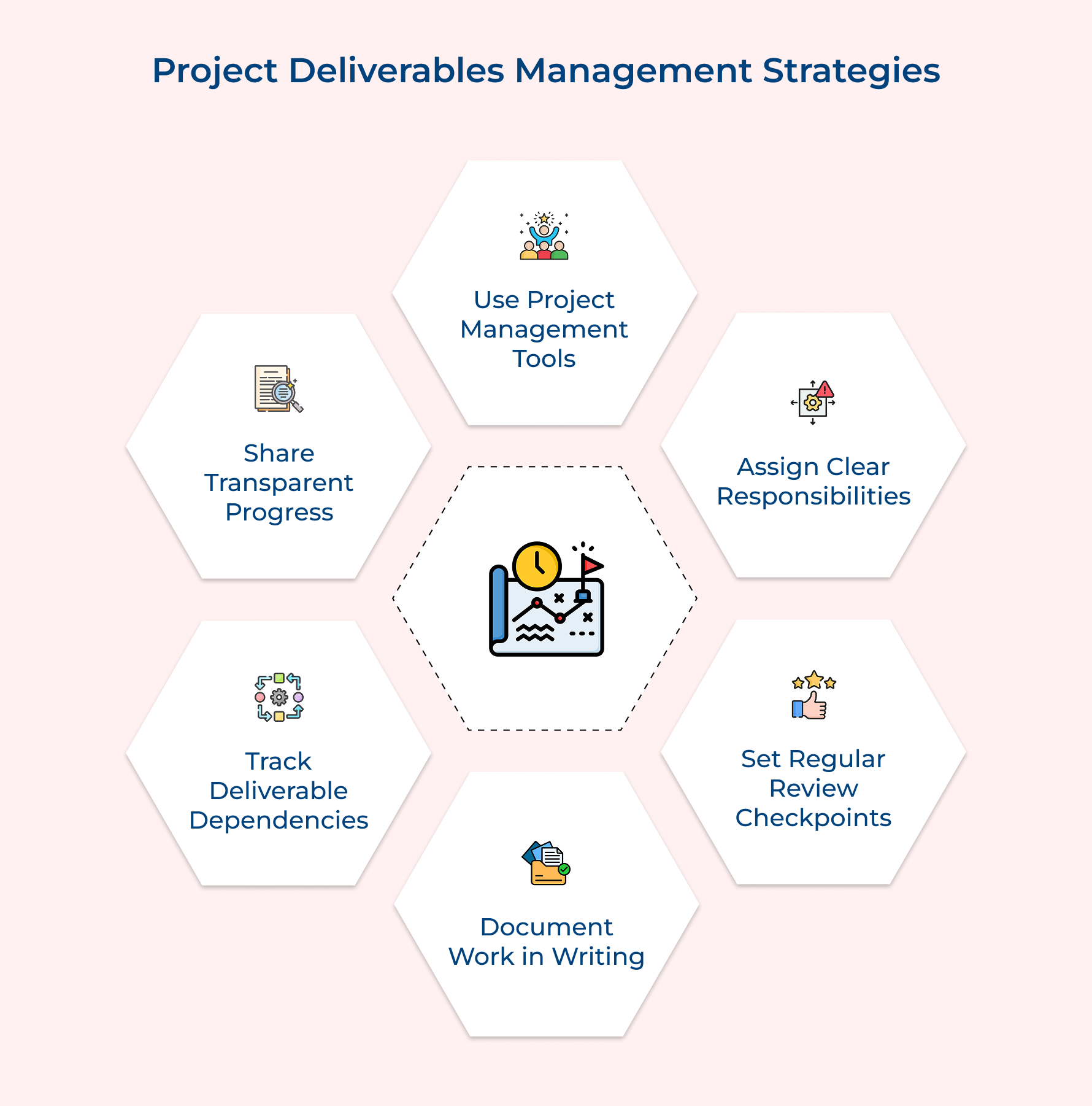
1. Use Project Management Tools
Project management tools centralize all your deliverable information in one accessible location instead of scattering it across emails and spreadsheets. These platforms let you track progress in real-time and quickly identify which outputs are falling behind schedule or need immediate attention from your team.
2. Assign Clear Responsibilities
Every deliverable needs one person who owns its completion even when multiple team members contribute to the work. This single point of accountability ensures someone is actively monitoring progress and makes it crystal clear who to approach when questions or problems arise during execution.
3. Establish Regular Review Checkpoints
Schedule consistent review sessions where stakeholders can examine deliverables and provide feedback before they’re considered final. These checkpoints catch quality issues or misaligned expectations early when they’re still easy to fix rather than discovering problems at the very end when changes become expensive.
4. Document Everything in Writing
Written documentation creates a permanent record of what was agreed upon and prevents the “I thought you meant something different” conversations later. This includes acceptance criteria, change requests and approval sign-offs that protect both your team as well as stakeholders from misunderstandings about deliverable requirements.
5. Monitor Dependencies Between Deliverables
Some deliverables can’t start until others are finished so tracking these relationships prevents your team from getting blocked. When you understand which outputs depend on others you can prioritize accordingly and adjust schedules proactively when delays threaten to create a domino effect across your project.
6. Communicate Progress Transparently
Keep stakeholders informed about deliverable status through regular updates that honestly report both wins and challenges. This transparency builds trust and gives everyone early warning when problems emerge so the team can collaborate on solutions before minor setbacks become major crises.
Practical Tips & Techniques for Tracking Deliverables
Tracking deliverables requires systematic approaches that keep you informed without drowning in administrative work. These practical techniques help you maintain visibility while keeping your team productive.
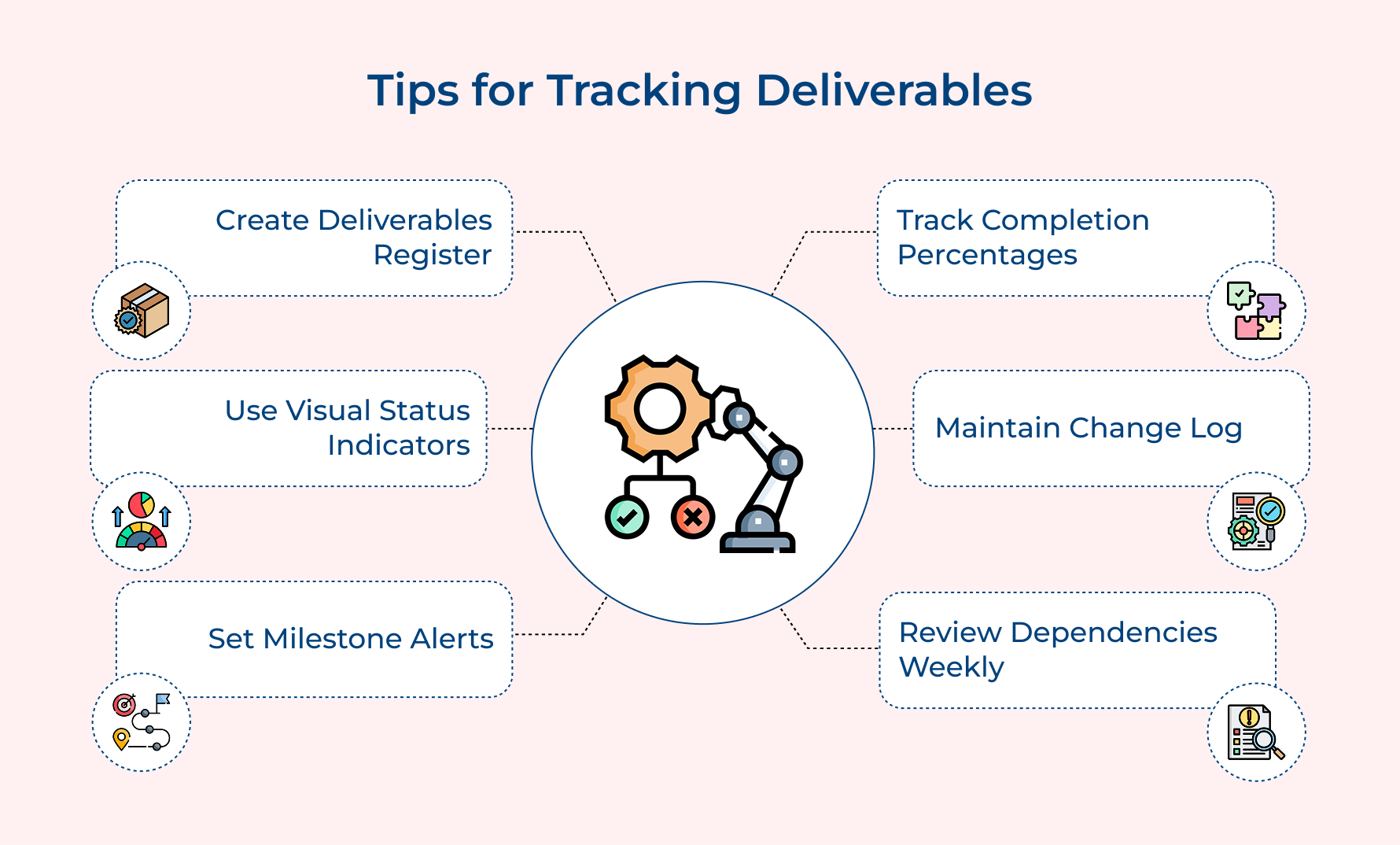
- Create a deliverables register: Build a master list that catalogs every deliverable with its owner and deadline as well as current status in one document for quick reference.
- Use visual status indicators: Apply color coding like red-yellow-green to show deliverable health at a glance so you can spot problems without reading detailed reports.
- Set milestone alerts: Configure automatic reminders that notify you when deliverable deadlines approach so nothing sneaks up on you during busy project periods.
- Track completion percentages: Monitor how much work remains on each deliverable rather than just marking things complete or incomplete for more accurate progress assessment.
- Maintain a change log: Record every modification to deliverable scope or requirements with dates and approvals so you have a clear audit trail throughout.
- Review dependencies weekly: Check if delayed deliverables are blocking other work and adjust priorities accordingly to prevent cascading schedule problems across your project.
Real Life Examples of Project Deliverables
Real-world examples help clarify what deliverables look like across different project types. Here’s how deliverables vary and how teams can manage them effectively.
1. Marketing Campaign Project
Marketing campaigns produce deliverables like social media content, email templates and analytics reports that drive brand awareness. Manage these by setting approval workflows for creative assets and tracking engagement metrics to measure success against objectives.
2. Software Development Project
Software projects deliver functional code, user documentation and testing reports that create a working application. Track these using version control for code changes and maintaining bug logs while scheduling demos where stakeholders test features.
3. Professional Services Project
Professional services generate deliverables such as strategic recommendations and implementation roadmaps as well as training materials that solve business problems. Manage these through client review sessions at each milestone and document all advice in formal reports for reference.
Common Challenges with Project Deliverables & Tips to Overcome Them
Even well-planned projects encounter obstacles that threaten deliverable quality and timelines. Recognizing these common challenges helps you prepare strategies to overcome them before they derail your project.
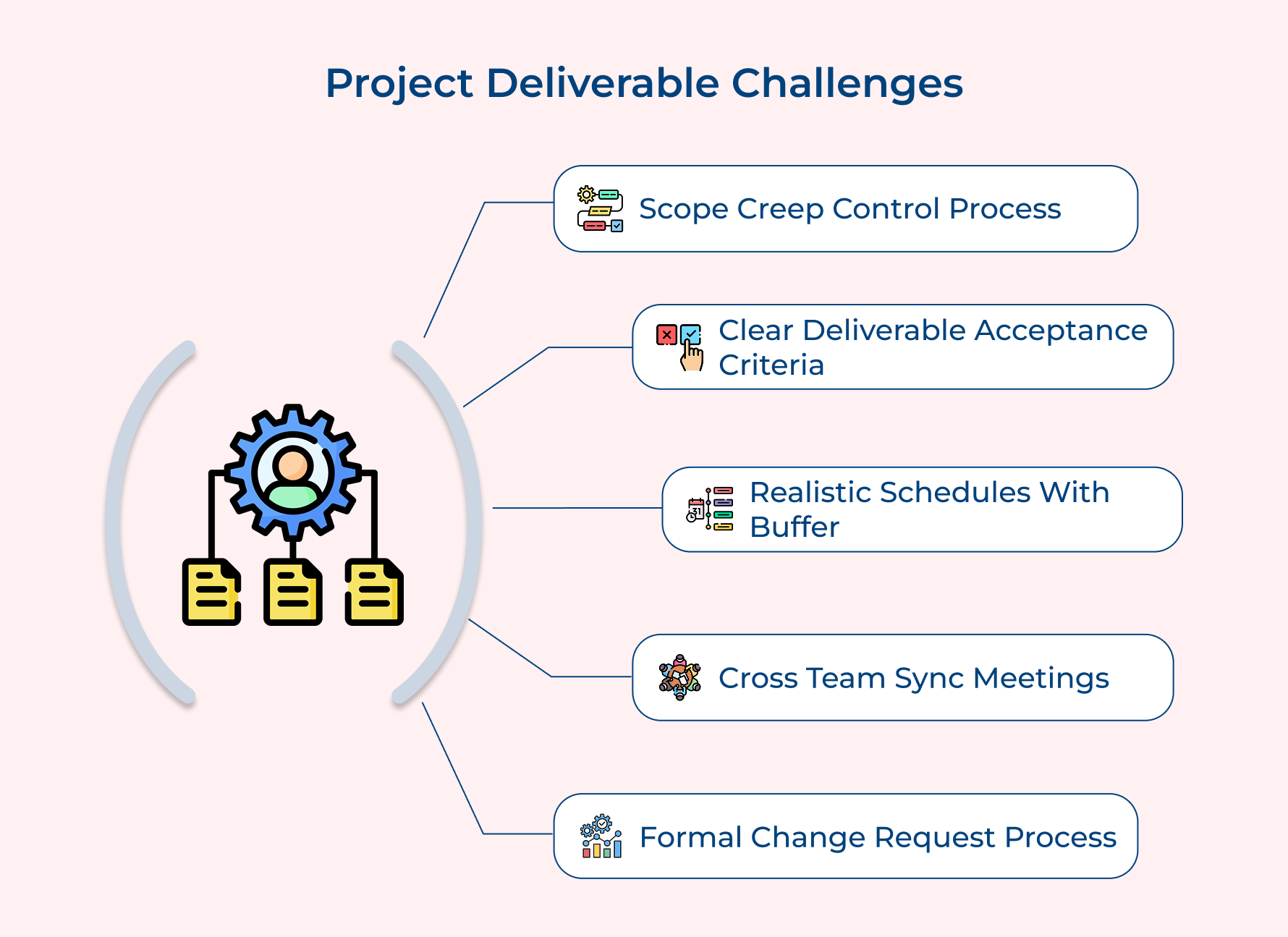
1. Scope Creep and Changing Requirements
Stakeholders often request additional features or changes after deliverables are defined which expands the project beyond its original boundaries. These constant modifications drain resources and push deadlines further out while team members struggle to keep up with evolving expectations.
2. Unclear Acceptance Criteria
Vague definitions of what constitutes a completed deliverable lead to endless revision cycles and frustrated stakeholders who reject work. Teams waste time guessing what stakeholders want instead of working confidently toward clearly defined standards that everyone agreed upon upfront.
3. Unrealistic Deadlines and Resource Constraints
Projects frequently commit to delivery dates without adequately assessing the time and people needed to produce quality outputs. Teams end up rushing through work or cutting corners to meet impossible timelines which compromises deliverable quality and increases the likelihood of failures.
Here are practical solutions that help you navigate each challenge successfully.
- Implement a formal change control process that requires stakeholders to submit requests through official channels with impact assessments before approval.
- Document detailed acceptance criteria in writing and get stakeholder sign-off before work begins so everyone agrees on success measures.
- Schedule regular cross-team sync meetings where all groups contributing to deliverables share updates and identify integration points early.
- Build realistic schedules with buffer time by involving the people doing the work in estimation and padding timelines for unexpected issues.
Elevate Your Project Management with Precise Deliverables
Understanding and managing project deliverables transforms how you execute projects from start to finish. Clear deliverables create alignment between teams and stakeholders while preventing costly misunderstandings that derail progress as well as waste resources.
Start implementing these strategies to improve your project outcomes and build stakeholder confidence. When you identify and track deliverables systematically you gain control over timelines along with quality while delivering exactly what your stakeholders expect every single time.
Limit time — not creativity
Everything you need for customer support, marketing & sales.

Neeti Singh is a passionate content writer at Kooper, where he transforms complex concepts into clear, engaging and actionable content. With a keen eye for detail and a love for technology, Tushar Joshi crafts blog posts, guides and articles that help readers navigate the fast-evolving world of software solutions.