How to Create a Project Baseline in Project Management
- What is a Project Baseline in Project Management?
- What are the 3 different types of baselines in project management?
- 7 Essential Steps to Build a Strong Project Baseline
- Core Elements That Form your Project Foundation
- Key Benefits of Project Baselines
- What are the consequences of not establishing a project baseline?
- Manage your Project Baselines with Kooper
- FAQs about Project Baseline

Key Highlights:
- A project baseline is the approved version of a project plan used as a reference for performance measurement.
- It enables accurate tracking of project progress and helps identify deviations early for corrective actions.
- Establish clear project objectives, define deliverables and get formal approval from stakeholders to set the baseline.
Many agencies face issues like scope creep, budget overruns, and missed deadlines. What could be the reason? They don’t have solid reference points to track progress or guide decisions during execution.
This lack of planning creates a ripple effect. Clients question deliverables, teams get confused about priorities, and profits take a hit due to uncontrolled scope changes. Over time, it can hurt your reputation and strain client relationships.
That’s where project baselines come in. They turn messy projects into structured, manageable ones. With clear boundaries and performance metrics, you can stay on track, deliver consistent value as well as set your agency up for long-term success.
What is a Project Baseline in Project Management?
A project baseline serves as the official reference point that captures your project’s approved scope, schedule and budget at a specific moment in time. It is a snapshot of your project plan after all stakeholders have signed off on the requirements, timeline and resources. This baseline becomes your measuring stick throughout the project lifecycle, allowing you to track actual performance against what was originally planned and approved.
Once established, the baseline remains fixed unless formal change control processes approve modifications. Project managers continuously compare actual progress, costs and deliverables against this baseline to identify variances early. When deviations occur, teams can quickly assess impact, determine root causes and implement corrective actions to get back on track before small issues become major problems.
The main objectives are:
- Performance measurement becomes possible by providing a consistent standard against which to evaluate actual results versus planned outcomes.
- Change control gets enforced through formal processes that require justification and approval before modifying the original plan.
- Stakeholder alignment improves because everyone works from the same approved version of scope, timeline, and budget expectations.
- Risk management strengthens as teams can spot trends and variances that signal potential issues before they escalate.
- Project accountability increases since clear expectations exist for deliverables, deadlines, and resource utilization across all team members.
What are the 3 different types of baselines in project management?
Different project contexts demand different baseline strategies, and selecting the wrong type can derail even the most well-planned initiatives from the start.
Before diving into baseline types, agencies must evaluate their specific project context using these essential questions to make informed decisions.
- What level of scope certainty exists at project initiation? How likely are requirements to evolve during execution phases?
- How experienced is your team with similar projects, and what does their track record suggest about estimation accuracy?
- What are your client’s expectations regarding change management processes?
- How complex are the technical requirements? What external dependencies could impact your project timeline or deliverables?
- What risk tolerance does your organization have?
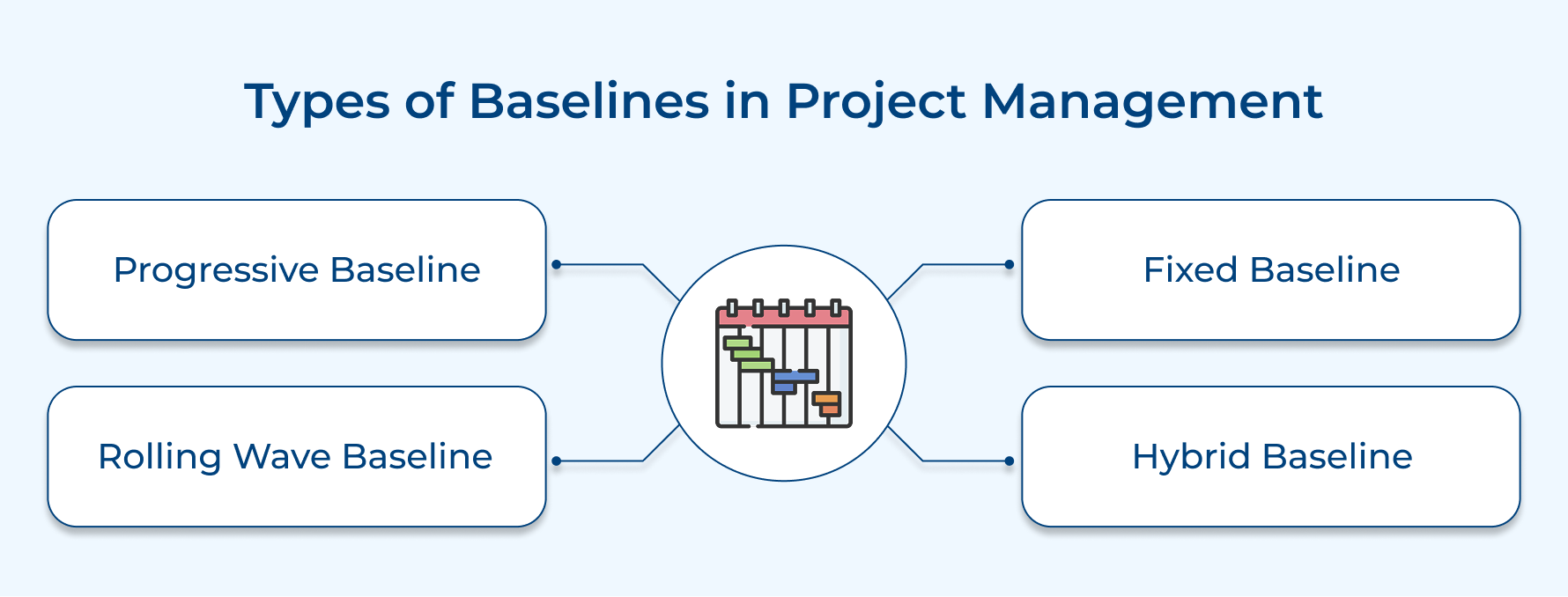
Progressive Baseline
Progressive baselines evolve incrementally as project phases complete and new information becomes available through actual execution experience. This approach works particularly well for complex projects where requirements emerge gradually, allowing teams to refine estimates and scope definitions based on real-world learning as well as stakeholder feedback.
This baseline type reduces early-stage estimation risks while maintaining enough structure to track meaningful progress and communicate effectively with stakeholders. Teams can make informed adjustments without the overhead of formal change control processes, making it ideal for innovative projects or those involving emerging technologies.
Rolling Wave Baseline
Rolling wave baselines provide detailed planning for immediate work while maintaining high-level estimates for future phases that remain deliberately vague until needed. This approach balances planning rigor with flexibility, allowing teams to avoid over-planning distant activities that may change significantly as projects progress and new insights emerge.
The methodology works exceptionally well for long-term projects where early phases inform later requirements, enabling teams to maintain forward momentum while preserving resources for more accurate planning when information becomes available. This approach particularly suits agencies managing multi-year client relationships or complex digital transformation initiatives.
Fixed Baseline
Fixed baselines establish firm scope, schedule, and budget parameters that remain unchanged throughout project execution except through formal change control processes. This traditional approach provides maximum predictability and control. Thus, making it suitable for projects with well-understood requirements, experienced teams, and clients who value certainty over flexibility in project outcomes.
Essential Fixed Baseline Elements:
- Formal change control gates
- Comprehensive upfront planning requirements
- Rigid performance measurement frameworks
- Clear accountability structures
The rigid structure enables precise performance measurement and clear accountability while reducing ambiguity about project boundaries as well as success criteria. However, this approach requires comprehensive upfront planning and carries higher risks when requirements prove inaccurate or when external factors demand significant adjustments to original plans.
Hybrid Baseline
Hybrid baselines combine elements from multiple baseline types to address specific project characteristics and organizational needs more effectively than any single approach. These customized frameworks might fix certain elements like budget and major milestones while allowing scope details to evolve progressively, creating tailored solutions for unique project contexts.
This flexible approach enables agencies to optimize their baseline strategy based on client preferences, project complexity, team capabilities, and risk factors. The key lies in clearly defining which elements remain fixed and which allow flexibility, ensuring all stakeholders understand the rules governing baseline management throughout the project lifecycle.
7 Essential Steps to Build a Strong Project Baseline
Let’s delve into the seven key steps that will equip you with the knowledge and tools to set a robust project baseline, ensuring your project stays on the pathway to success.
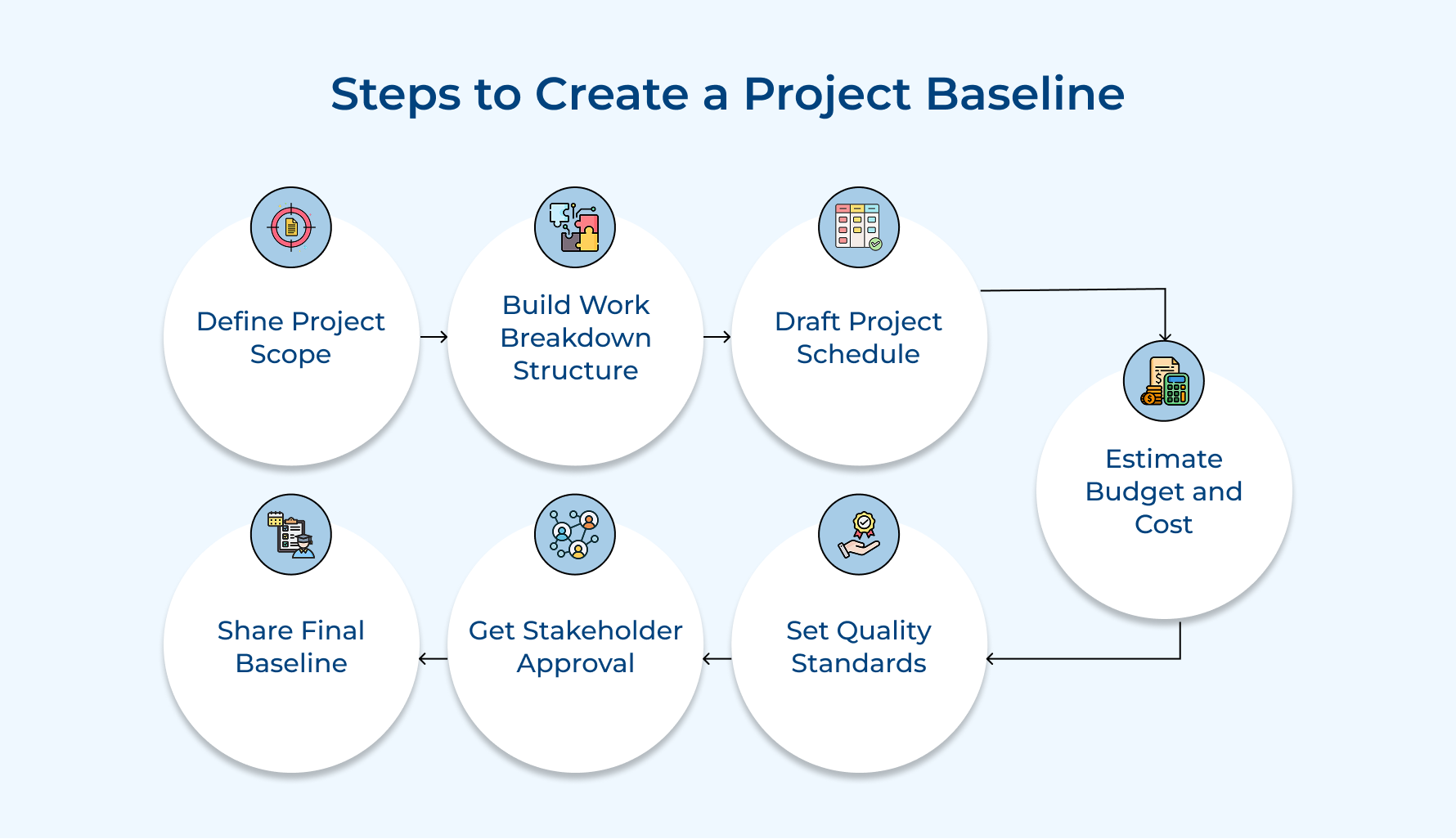
1. Define Complete Project Scope Requirements
Before you start any project, you need to define what it’s actually going to deliver. That’s your first step in building a strong project management baseline. A clear scope keeps your team focused and prevents clients from sneaking in extra requests mid-project.
Here’s what to lock down early:
- Project purpose: Why this project exists and what it solves for the client.
- Deliverables: Detailed breakdowns of features, functions, and results.
- Acceptance criteria: What “done” looks like in measurable terms.
- Constraints: Budget limits, timelines and known assumptions.
Getting all stakeholders aligned on these details avoids confusion and disputes later. Without this foundation, the project is at risk of shifting goals, lost time, and strained client relationships.
2. Develop Comprehensive Work Breakdown Structure
A work breakdown structure (WBS) turns your high-level scope into bite-sized tasks. It’s a core part of any project management baseline because it lays out what exactly needs to be done—and who’s doing it.
There are a few ways to break it down:
- Deliverable-based: Start with big outputs and break them into smaller parts.
- Phase-based: Organize tasks by project stages like discovery, design, or testing.
- Function-based: Split work by team skill sets—design, dev, QA, etc.
This structure helps teams plan, assign, and track tasks efficiently. For example, a website redesign might branch into homepage design, product pages, and checkout. Each branch then gets detailed into tasks with timeframes. The WBS keeps projects organized and nothing slips through the cracks.
3. Create Detailed Project Schedule Timeline
A solid timeline gives your team and clients a clear view of how the project will unfold. It’s not just about dates, it’s the heartbeat of your project management baseline. Done right, it keeps the project on track and avoids last-minute chaos.
Your schedule should include:
- Key milestones: Big checkpoints like approvals, tests, or launch dates.
- Team availability: Factor in vacations, bandwidth, and overlapping projects.
- Client inputs: Build in time for feedback, reviews, and final approvals.
Worried about adding buffer time? Don’t be. Padding your timeline protects both your team and your client from unpredictable delays. It’s smarter to be safe than to push your team into burnout. A thoughtful schedule creates trust and builds project momentum.
4. Establish Accurate Budget and Cost
Budgeting is all about making sure your agency doesn’t deliver great work at a financial loss. A complete project management baseline includes a budget that reflects reality, not guesswork.
Here’s how to build a strong budget:
- Calculate full team costs: Include salaries, overhead, and admin time.
- Estimate hours realistically: Base time per task on past performance.
- Include external costs: Think software, licenses, freelancers, etc.
- Price for change: Set up clear rules for paid scope changes.
Once you’ve mapped tasks in the WBS, assign time and multiply by loaded hourly rates. Don’t forget to add a contingency (10–15% extra) to cover risks and unknowns. That buffer could save your margins if things shift mid-project.
5. Set Quality Standards and Acceptance
What does “good” look like for your client? Quality standards make sure your team knows the answer from day one. They’re a vital part of any project management baseline because they set expectations and prevent revision chaos.
Use these criteria to define quality:
- Performance: Fast page loads, mobile responsiveness, accessibility.
- Visual design: Consistency in fonts, colors, layouts, and branding.
- Content: Clear, accurate, SEO-optimized, and aligned with voice.
- Process: Regular reviews to catch issues early.
Skipping this step leads to opinion-based feedback instead of facts. That means more rework, more frustration, and missed deadlines. Instead, agree on what “done” means—and build checkpoints into your schedule to ensure quality all along the way.
6. Obtain Formal Stakeholder Approval Process
Once your plan is in place, make it official. Stakeholder approval turns your prep work into a committed project management baseline. It protects your team from scope creep and ensures everyone’s on the same page from the start.
Here’s how to handle it:
- Present the full baseline: Include scope, schedule, budget, quality metrics, and risks.
- Collaborate on edits: Invite feedback, but document all changes clearly.
- Secure written approval: Don’t rely on verbal nods, get sign-offs from decision-makers.
This step builds trust and accountability. If scope changes come up later (and they will), your approved baseline gives you a reference point to manage requests without derailing the entire project.
7. Document and Communicate Approved Baseline
A project management baseline isn’t helpful if it’s buried in a forgotten folder. Documentation should be clear, accessible, and actually used by the team. It’s your shared compass to navigate project decisions.
Ask yourself:
- Can team members find what they need fast?
- Is it easy to understand for non-technical stakeholders?
- Does the format work—charts, bullet points, or dashboards?
Make it visual and searchable:
- Dashboards in your PM tool
- Shared drives or cloud folders
- Key updates via email
- Quick reference slides for meetings
When your baseline is visible and easy to use, it keeps everyone aligned. No more guessing games. Everyone knows the plan and sticks to it.
Core Elements That Form your Project Foundation
When you baseline a project plan, you’re essentially locking in the key elements that will guide your team through execution. Together, they create a clear framework for tracking performance and managing change.
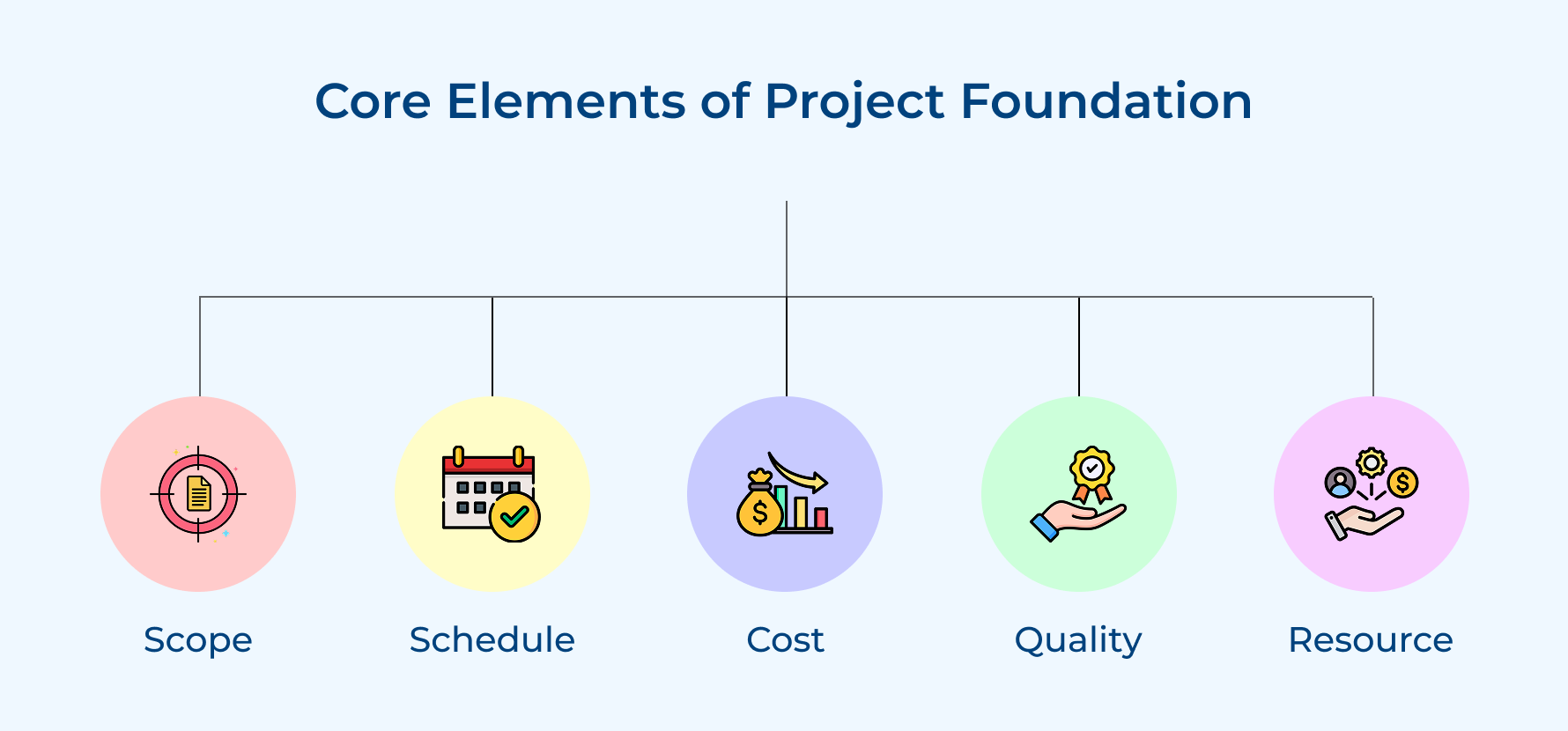
Let’s break them down:
- Scope defines exactly what your team will deliver and just as importantly, what’s out of scope. It outlines detailed requirements and acceptance criteria to avoid scope creep while keeping expectations aligned.
- Schedule sets your timeline. It maps out milestones, dependencies and resource availability so you can stay on track as well as adjust if delays occur.
- Cost captures the approved budget. It’s broken down by tasks and resources, allowing you to monitor spending while avoiding financial surprises.
- Quality ensures your work meets client standards. This includes measurable benchmarks and review processes that drive consistency along with client satisfaction.
- Resource planning allocates the right people and tools for the job. It prevents burnout, ensures coverage and balances capacity across projects.
Have these five areas covered and your project baseline plan becomes a reliable reference point that keeps your team aligned as well as projects on course.
Key Benefits of Project Baselines
Project baselines transform chaotic project environments into structured, measurable endeavors that consistently deliver value for agencies and their clients across all service categories.
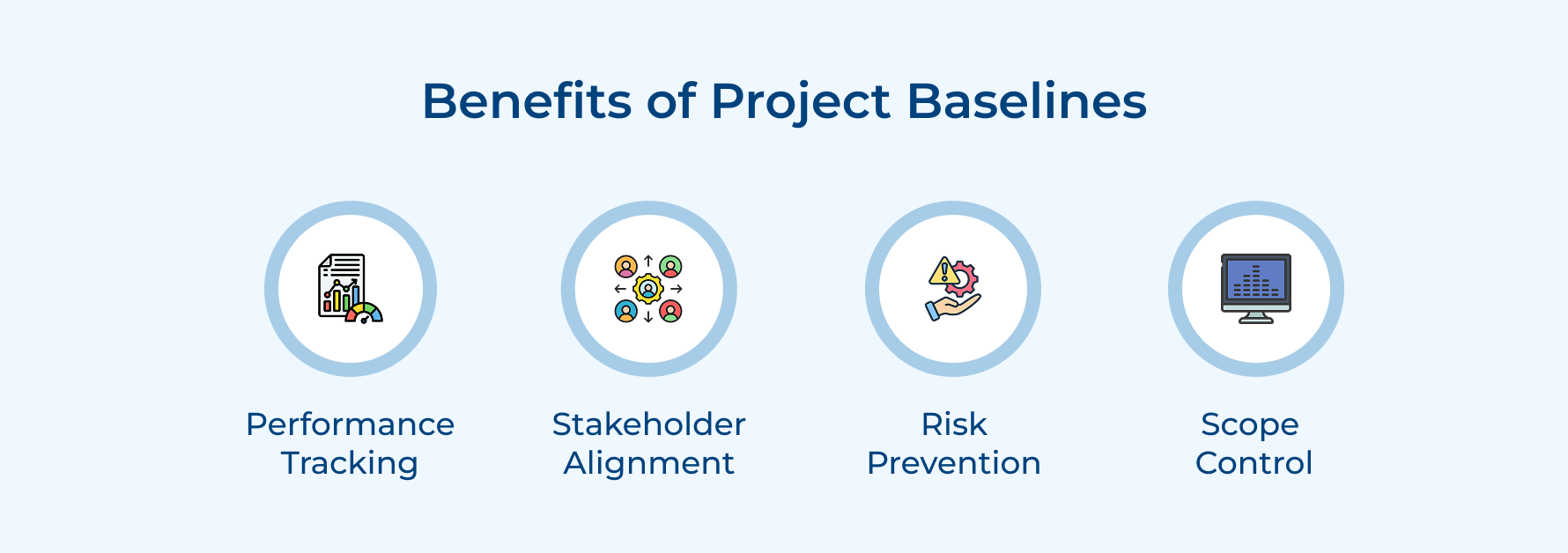
Enhanced Performance Measurement Capabilities
A project baseline gives you a reliable point of comparison to measure actual progress against your original plan. Instead of guessing where things stand, you can clearly identify when tasks are slipping, where resources are under- or over-utilized, and how close you are to key milestones.
Improved Stakeholder Communication and Alignment
With agreed-upon scope, budget, and timelines in place, your project baseline creates a single version of truth for the whole team. It ensures your internal team, clients, and stakeholders all understand what’s expected. Thus, reducing back-and-forth, unnecessary revisions as well as misaligned assumptions throughout the project lifecycle.
Proactive Risk Management and Issue Prevention
Comparing real-time performance to your baseline helps you spot red flags early like delayed approvals or overspending. With that visibility, you can make quick adjustments, reallocate resources, and communicate with clients early to manage expectations while avoiding major disruptions before they become full-blown project risks.
Stronger Change Control and Scope Management
A baseline draws a clear line between planned work and new requests. When change requests come in, your team can assess their impact on cost, time, and resources. This helps protect your margins by ensuring additional work is properly scoped, approved, and billed.
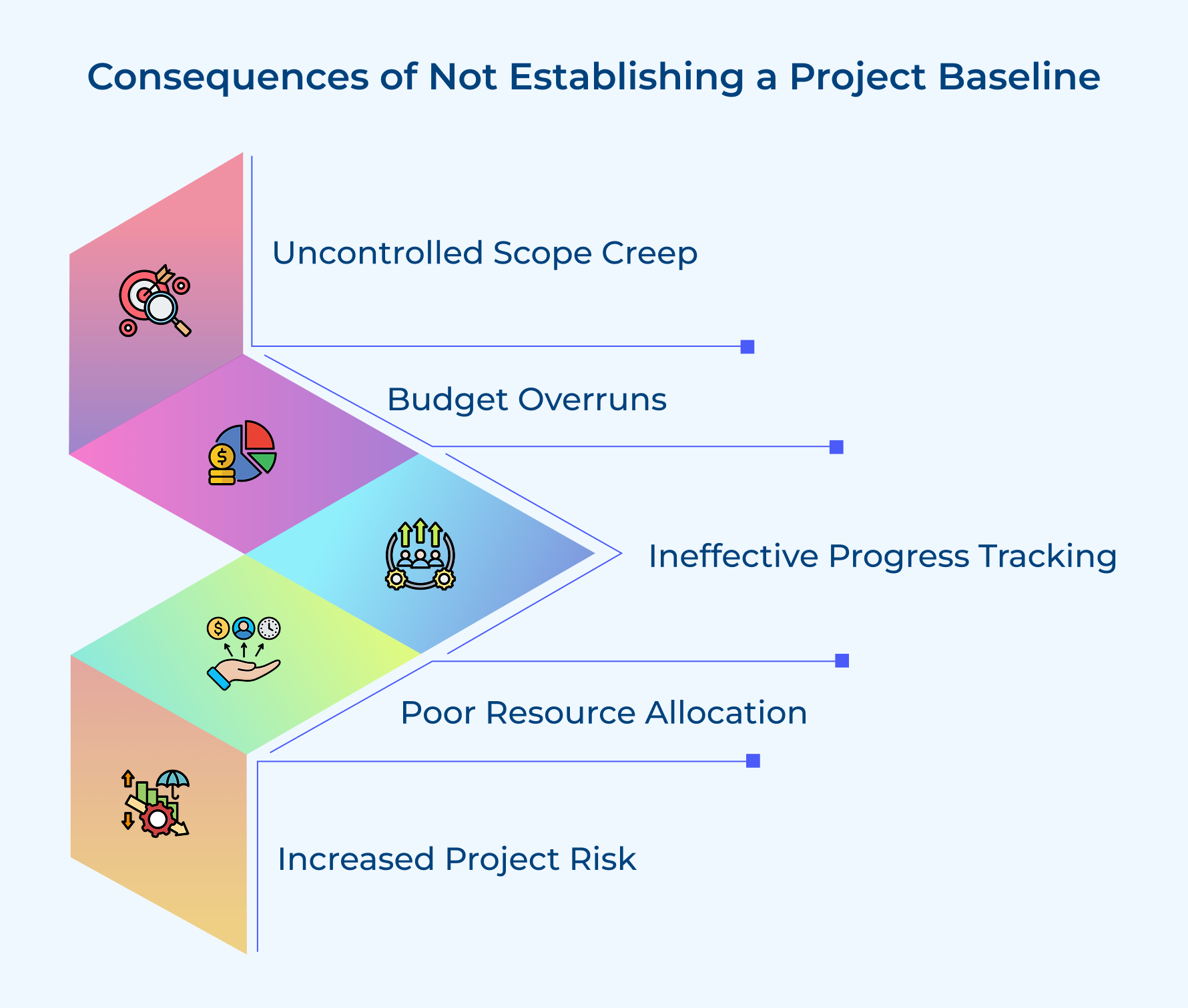
What are the consequences of not establishing a project baseline?
Let’s uncover the significant consequences that can arise when a project is launched without this crucial strategic component.
Uncontrolled Scope Creep and Budget Overruns
Clients naturally request additional features and modifications that seem reasonable in isolation but collectively destroy project economics when there’s no established boundaries. Teams struggle to differentiate between original requirements and new requests, leading to significant unpaid work that erodes margins as well as creates unsustainable precedents for future client interactions.
Ineffective Performance Measurement and Progress Tracking
Project managers lose the ability to objectively assess whether their teams are ahead or behind schedule when no reference point exists for comparison. The measurement gap prevents data-driven decision making and leaves stakeholders operating on assumptions rather than facts, creating confusion about project health as well as realistic completion timelines.
Poor Resource Allocation and Team Coordination
Teams waste time on low-priority activities while critical tasks remain incomplete because no clear roadmap guides daily work prioritization and resource deployment. This inefficiency leads to missed deadlines, team frustration and suboptimal deliverable quality that disappoints clients as well as damages the agency’s professional reputation in the marketplace.
Increased Project Risk and Crisis Management
Problems escalate into crises because teams lack early warning systems that baseline variance analysis typically provides for proactive issue identification. Without baselines, agencies operate in reactive mode, constantly firefighting problems that could have been prevented through systematic monitoring and timely corrective actions.
Smart agencies recognize these consequences as preventable problems rather than inevitable project management challenges, implementing systematic baseline processes that transform chaotic project environments into predictable, profitable client engagements.
- Implement comprehensive scope documentation before any project work begins to establish clear boundaries and prevent unauthorized additions.
- Create detailed project schedules with milestone checkpoints that enable regular progress assessment and early problem identification throughout execution phases.
- Develop formal change control processes that require written approval and impact assessment before modifying any baseline component or project parameter.
- Establish regular stakeholder communication protocols that maintain alignment and address concerns before they escalate into relationship-damaging conflicts or misunderstandings.
Manage your Project Baselines with Kooper
Kooper transforms project baseline management from manual spreadsheet chaos into automated tracking systems that monitor scope, schedule, and budget variances in real-time. The platform centralizes all baseline documentation while providing visual dashboards that keep teams aligned and stakeholders informed throughout project execution phases.
Professional service firms using Kooper experience improved project profitability through better baseline adherence and reduced scope creep incidents. The platform’s integrated approach enables agencies to deliver consistent client experiences while scaling their operations efficiently across multiple concurrent engagements and diverse service offerings.
Limit time — not creativity
Everything you need for customer support, marketing & sales.

Shivank Kasera is part of the marketing team at Kooper, where he focuses on building content that helps agencies and service providers grow. With a keen interest in SaaS, operations, and scalability, he translates practical insights into actionable resources for business leaders.