Ultimate Guide to Professional Services Resource Management
- What is Professional Services Resource Management?
- Why is Resource Management so Important in the Professional Services Industry?
- Distinction: Resource Planning vs Resource Scheduling
- 8 Actionable Steps to Build a Professional Services Resource Management Plan
- Professional Services Resource Planning Problems and How to Overcome
- Elevating Team Potential Through Strategic Resource Management
- FAQs about Professional Services Resource Management

Key Highlights:
- Optimize professional services resource management to boost profitability and prevent employee burnout through strategic planning.
- Effective professional services resource planning ensures accurate forecasting, balanced workloads, and stronger project delivery predictability for long-term success.
- Build sustainable growth with resource management for professional services by aligning skills, improving utilization while building talent development.
Professional services firms struggle with chaotic resource allocation leading to overworked performers, underutilized staff, missed deadlines and declining client satisfaction rates.
Every delay in implementing proper resource management wastes money through inefficient staffing, emergency hiring costs and damaged client relationships from inconsistent delivery.
This guide to professional services resource management reveals proven strategies transforming resource chaos into competitive advantage, optimizing team utilization while building sustainable growth through systematic planning.
What is Professional Services Resource Management?
Professional services resource management is the strategic process of planning, allocating and optimizing human resources across client projects as well as engagements. It involves matching the right people with the right skills to the right projects at the right time. This approach ensures that consulting firms, agencies and service providers can deliver quality work while maximizing both employee utilization as well as profitability.
Effective resource management directly strengthens client relationships by ensuring consistent project delivery and maintaining service quality standards. When clients receive reliable outcomes from well-matched teams, they develop deeper trust and are more likely to expand engagements or provide referrals.
Primary resource management goals:
- Maximize billable utilization rates: Ensuring team members spend optimal time on revenue-generating client work rather than internal tasks.
- Align skill sets with project requirements: Matching specific expertise and experience levels to meet each client’s unique needs effectively.
- Balance workload distribution: Preventing employee burnout while avoiding underutilization that impacts profitability and team morale.
- Improve project delivery predictability: Creating consistent timelines and outcomes that build client confidence as well as enable better planning.
- Develop talent through strategic assignments: Using project rotations to build employee capabilities while meeting current client demands.
Why is Resource Management so Important in the Professional Services Industry?
Smart resource planning is about optimizing performance, profitability and team happiness. Here’s how solid planning impacts your agency:
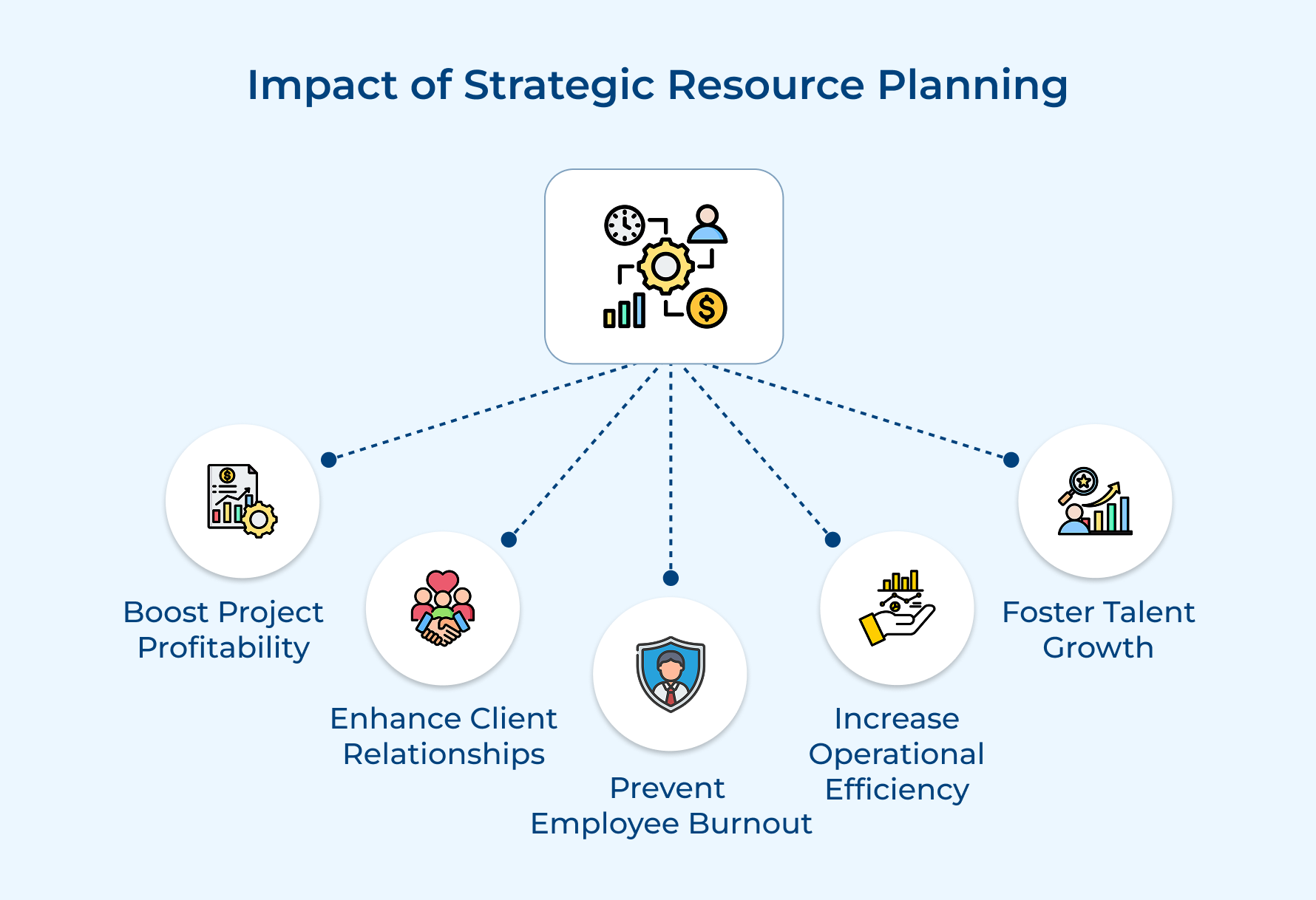
Enhanced Project Profitability and Financial Control
Accurate forecasting and thoughtful talent allocation helps you to avoid budget overruns. Strategic professional services resource planning ensures each team member is used where they add the most value. This precision improves both project outcomes and overall profit margins.
Improved Client Satisfaction and Relationship Strength
When the right people handle the right tasks, projects run smoother. Clients notice consistent service quality and timely delivery. This kind of reliable project management builds long-term relationships and client confidence.
Reduced Employee Burnout and Higher Retention Rates
Balanced workload distribution keeps top performers from burning out. It also gives everyone growth opportunities aligned with their career goals. Happy teams always equals lower turnover and recruitment costs.
Increased Operational Efficiency and Reduced Waste
Strategic planning helps eliminate skill mismatches and project delays. Using a solid work breakdown structure ensures tasks are clear, prioritized and achievable. Teams stay productive and agencies complete more with less.
Strategic Talent Development and Future Readiness
Assigning people to a mix of project types helps them grow professionally. While they gain new skills, clients benefit from fresh thinking. You’re building a stronger, future-ready team through intentional project plans and resource planning.
Distinction: Resource Planning vs Resource Scheduling
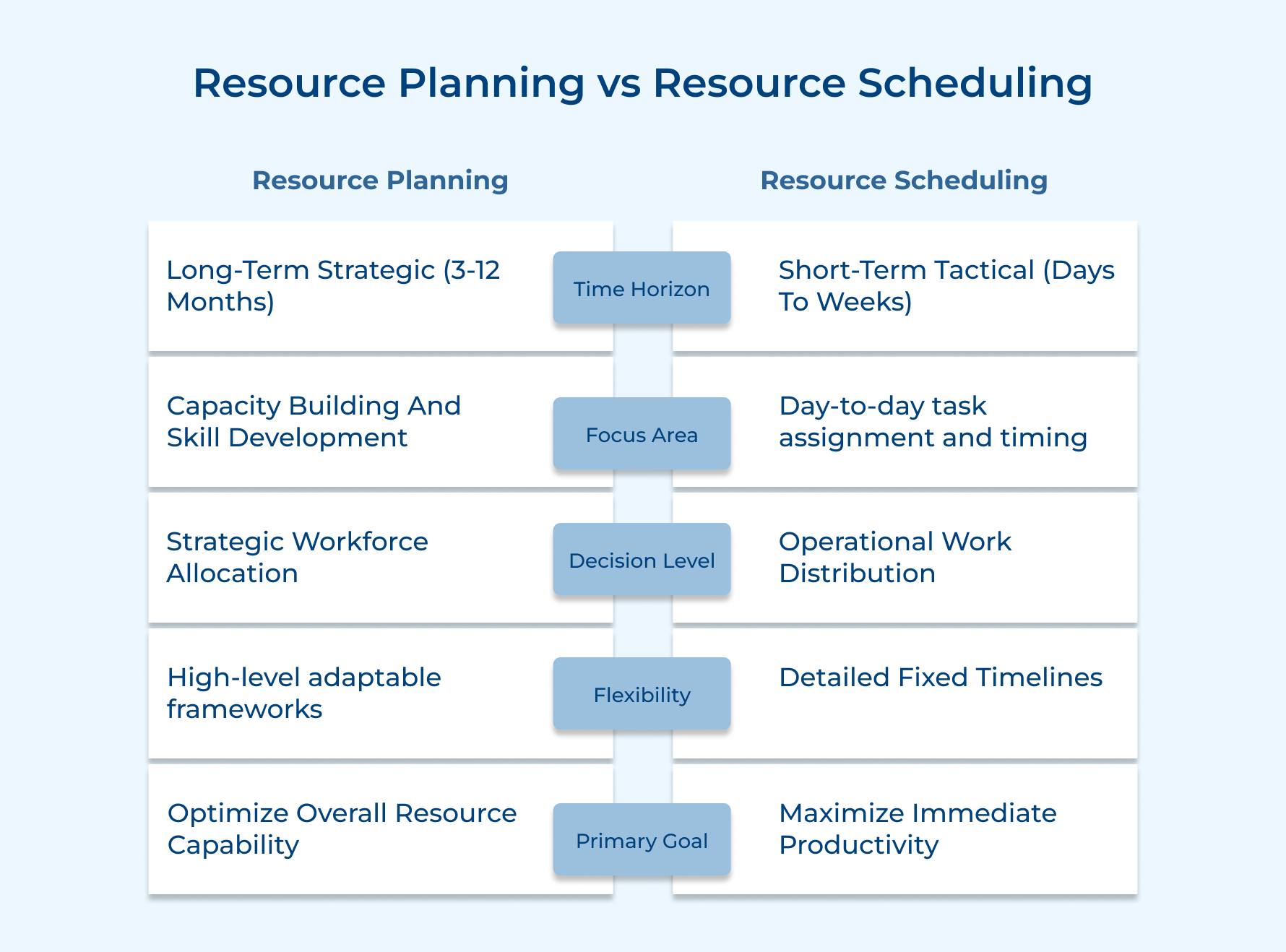
Resource planning and resource scheduling represent two interconnected yet fundamentally different aspects of professional services management that work together to drive operational success.
Time Horizon
Resource planning is all about the long game. Think months or even quarters ahead. It helps you build the right team capabilities for future client needs, seasonal demand or business growth.
Resource scheduling is much more at the moment. It focuses on the next few days or weeks, making sure today’s tasks get done by the right people on time.
Focus Area
Resource planning takes a big-picture view. It’s about making sure your team has the right mix of skills for what’s coming next. That could mean upskilling, hiring, or identifying capability gaps that might affect future project plans.
Resource scheduling is tactical. It’s about assigning specific team members to specific tasks, based on who’s available and what’s most urgent right now.
Decision Level
Resource planning deals with your strategic decisions – who to hire, how to structure your teams and where to invest in talent. These are typically leadership-level choices tied to long-term goals.
Resource scheduling is more operational. It’s about deciding who’s doing what, when and making sure deadlines are hit without overloading anyone.
Flexibility
Resource planning builds flexible frameworks that can evolve as business needs change. It’s ideal for helping your project management strategy stay aligned with shifting priorities and market conditions.
Resource scheduling offers less flexibility. Once tasks are assigned and timelines are set, the focus is on delivering efficiently as well as meeting commitments. It keeps your project plans predictable and your clients happy.
8 Actionable Steps to Build a Professional Services Resource Management Plan
Let’s walk you through eight essential steps to create a resource management plan tailored for professional services, ensuring your projects are executed smoothly and successfully.
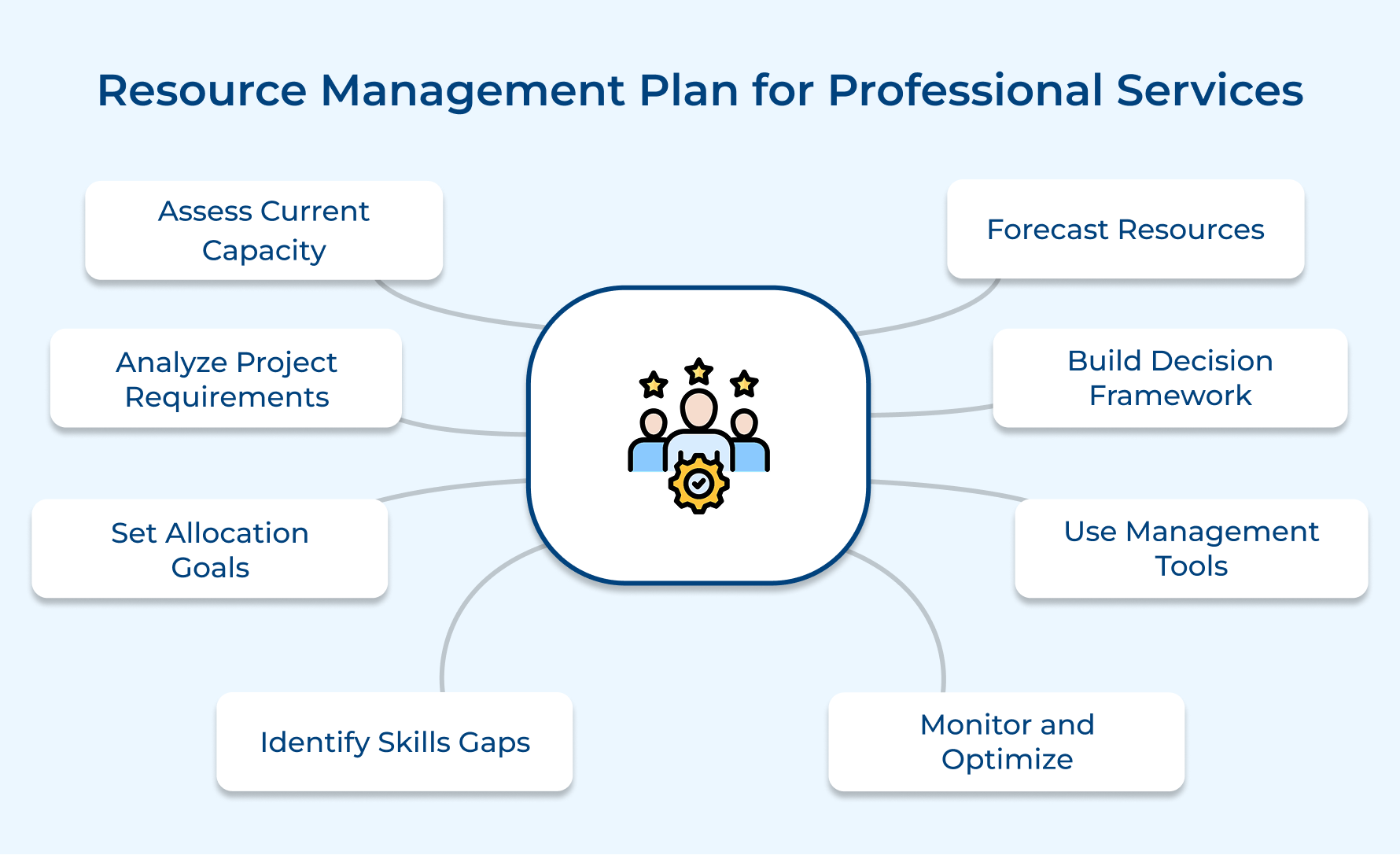
1. Assess Current Resource Capacity
Before making new project commitments or hiring decisions, take stock of your current team capacity. A solid baseline helps ensure your project management stays realistic and scalable.
Here’s how to assess it:
- Map team skills: List each member’s expertise, certifications and strengths across service areas.
- Track utilization: Measure how much of their available time is billable each week or month.
- Identify capacity gaps: Compare current workloads to available resources to see where you’re overextended or underutilized.
Think of it like prepping for a dinner party, you need to know what ingredients (skills and time) you have before planning the menu (project plans). Without this clarity, you risk overpromising and under delivering.
2. Analyze Future Project Pipeline Requirements
Analyzing your future project pipeline is key to staying ahead—not scrambling for talent at the last minute. It’s about knowing what’s coming while making sure your team has the right skills, availability and support.
Ask yourself:
- What confirmed projects are scheduled in the next 6 months and what skills do they need?
- Which potential deals are close to closing and when would they start?
- How do our slow and busy seasons typically impact demand?
- Are any key team members unavailable due to vacations or other commitments?
To turn insights into action, map monthly skill requirements in a spreadsheet and track estimated person-hours. Pair this with time tracking data and monthly pipeline reviews to align sales as well as delivery, keeping your project plans on track.
3. Define Strategic Resource Allocation Goals
To get the most out of your team, set clear goals for how you’ll deploy their time and talent. Strategic resource planning is about aligning daily decisions with long-term business success.
Here are a few smart approaches:
- Utilization targets: Aim for 75–85% billable time for seniors and 60–70% for juniors to allow for learning.
- Profit-driven assignments: Prioritize top talent for high-margin advisory work.
- Client diversity limits: Avoid allocating more than 30% of resources to one client.
- Skill-building time: Reserve 15% for training and future-readiness.
When setting these goals, factor in your client mix, team development needs and your project management roadmap. The right balance ensures your project plans support both today’s delivery and tomorrow’s growth.
4. Identify Skills Gaps and Development
Your team needs the right skills for upcoming work, that’s the only way we can stay ahead. Here’s how to identify and close any gaps:
- Compare skills vs. project needs: Use your project management software to map current capabilities against upcoming project requirements.
- Spot the gaps: This helps reveal where your team may fall short in terms of expertise or capacity.
- Train internally: For smaller gaps, create targeted training programs aligned with each team member’s strengths and goals.
- Hire smartly: For urgent or highly specialized needs, plan strategic hires—but avoid overstaffing for short-term demands.
- Think long-term: Always balance today’s delivery needs with your long-term team development strategy.
This approach keeps your team ready and your client delivery consistent.
5. Create Resource Forecasting and Modeling
Want to stay ahead of staffing surprises? Resource forecasting and modeling help you predict future team needs based on different business scenarios, so you’re never caught off guard. Instead of reacting, you plan smartly using data.
Here’s how:
- Ask questions like: What if we win that big client? What if one scales back?
- Build simple models that estimate how each scenario impacts your staffing, workload and task dependencies.
- Measure team effectiveness using metrics like billable utilization, revenue per employee and client satisfaction.
- Use these insights to create what-if plans so you can scale up or down without the panic.
When your resource planning accounts for different outcomes, your project management stays strong and your team remains balanced no matter what happens.
6. Develop Resource Allocation Decision Framework
Developing a resource allocation decision framework means creating systematic criteria and processes for making consistent choices about who works on which projects. This structured approach is crucial because it eliminates favoritism while ensuring that resource decisions support both client success and business profitability.
Use this framework to evaluate every resource allocation request against predetermined criteria such as client priority, project profitability, employee development goals and strategic importance. This systematic evaluation helps you make objective decisions that balance competing demands while maintaining fairness and transparency across your organization.
Best practices:
- Define specific factors like skill match, availability, career development impact and client relationship importance that guide every resource allocation choice.
- Develop a clear process for resolving resource conflicts when multiple projects compete for the same high-value team members or when urgent needs arise.
7. Implement Resource Management Tools Systems
As your agency grows, spreadsheets just won’t cut it. Implementing a resource management tool helps streamline planning, reduce errors and scale your operations efficiently. But picking the right platform is key.
Here’s what to look for:
- Integration: Make sure it connects with your project management, CRM and accounting tools – no one wants to enter the same data twice.
- Scalability: Choose a system that can grow with you as you take on more clients and projects.
- User-friendliness: If it’s too clunky, your team won’t use it—go for something intuitive.
- Reporting: Dashboards and analytics should help you make smarter decisions, not just store data.
8. Monitor Review and Optimize Continuously
In resource management, set-it-and-forget-it doesn’t work. To stay competitive and responsive, you need to monitor, review, as well as optimize continuously. That means regularly checking if your resource allocation is actually driving results—like better profitability, happier clients and a more engaged team.
Here’s how to make it work:
- Monthly check-ins: Track key metrics like utilization, delivery timelines and client feedback.
- Quarterly strategy reviews: Reassess how well your resource plans align with business goals.
- Feedback loops: Invite input from team members as well as clients to spot what’s working and what’s not.
By building this into your regular rhythm, you ensure your resource strategy evolves with your business, not behind it. Agile project management starts with regular reflection and improvement.
Professional Services Resource Planning Problems and How to Overcome
Resource management challenges can make or break professional services firms, turning profitable opportunities into costly mistakes and satisfied clients into frustrated former customers.
Overallocation and Employee Burnout Crisis
Many firms consistently assign too much work to their top performers while underutilizing junior staff, creating unsustainable workloads that lead to burnout, decreased quality and eventual talent loss. This imbalance occurs because managers naturally gravitate toward their most reliable team members for critical projects without considering long-term capacity limits.
Skills Mismatch and Project Delivery Issues
Professional services firms frequently assign team members to projects that don’t align with their expertise or experience level, resulting in poor client outcomes and inefficient resource utilization. This mismatch happens when firms prioritize availability over capability or fail to maintain accurate records of individual competencies and specializations.
Poor Visibility into Resource Availability
Organizations struggle with fragmented information about who is working on what projects and when team members will become available for new assignments. This lack of visibility creates scheduling conflicts, missed opportunities and reactive decision-making that undermines both profitability as well as client satisfaction across multiple engagements.
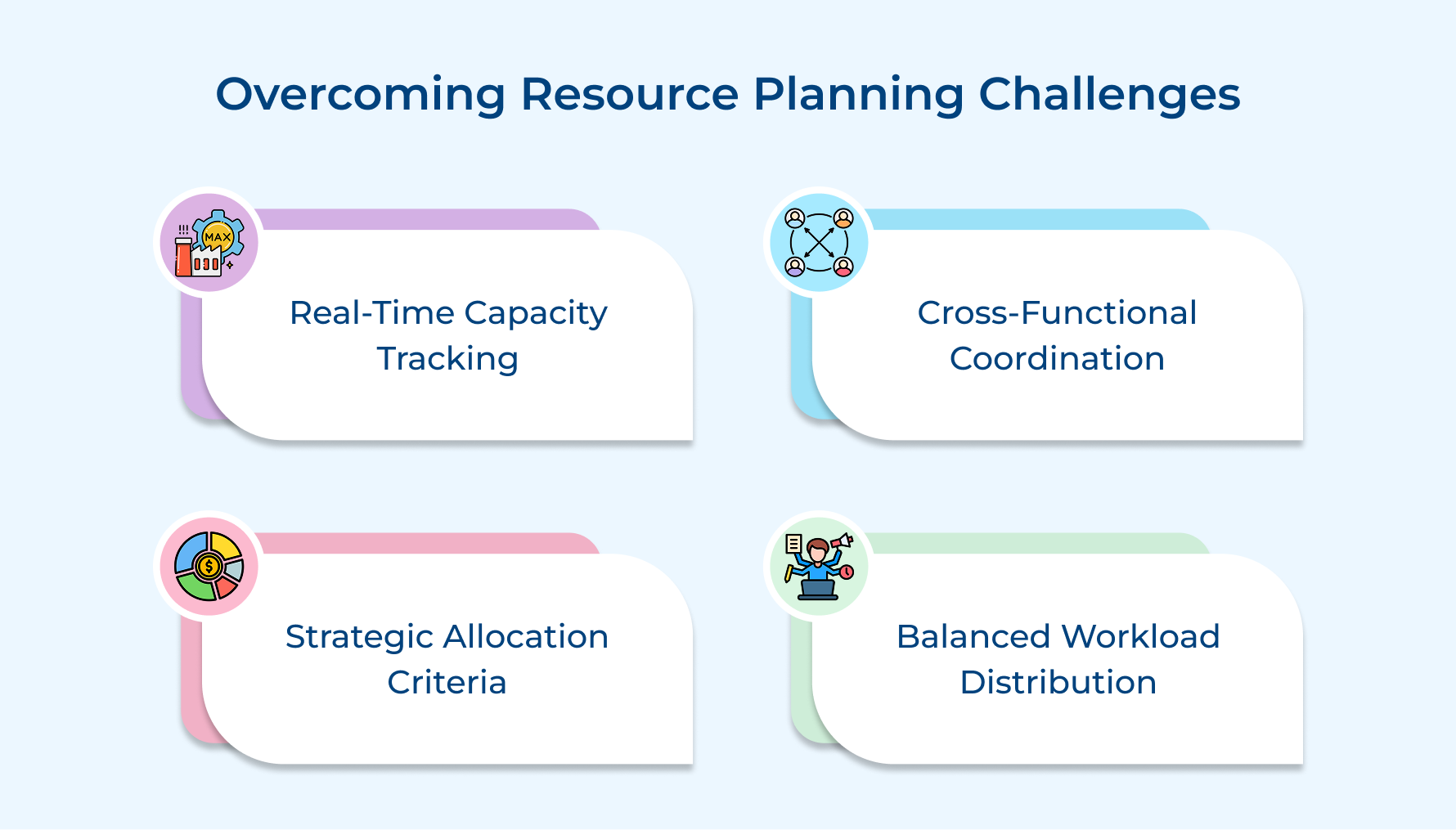
The key to solving these persistent challenges lies in implementing systematic approaches that address both the symptoms and root causes of resource management problems.
- Implement comprehensive resource planning software that provides real-time visibility into team capacity, skills and project assignments across all departments along with service lines.
- Establish clear resource allocation criteria that prioritize projects based on strategic value, client relationships, profitability and team development opportunities rather than just availability.
- Create cross-functional communication protocols that require regular coordination meetings between project managers, department heads and resource planners to prevent conflicts while optimizing assignments.
- Develop balanced workload distribution strategies that deliberately rotate challenging assignments among team members while ensuring adequate support and mentorship for professional growth.
Elevating Team Potential Through Strategic Resource Management
Effective professional service resource management transforms firms by unlocking hidden potential within existing teams while creating sustainable growth pathways. When you align the right people with appropriate projects, you build stronger client relationships and reduce employee burnout significantly.
Strategic resource allocation becomes your competitive advantage by maximizing both individual capabilities and collective team performance across all service offerings. This systematic approach ensures consistent project delivery while fostering professional development that keeps talented employees engaged and motivated long-term.
Limit time — not creativity
Everything you need for customer support, marketing & sales.

Pooja Deshpande is a content contributor at Kooper, focused on creating insightful resources that help agencies and service providers scale efficiently. Passionate about SaaS trends, content strategy, and operational excellence, she delivers practical, easy-to-implement guidance for modern business leaders.