How to Manage Resource Constraints in 8 Effective Strategies
- What are Resource Constraints in Project Management?
- Why are Resource Constraints Important in Project Management?
- Common Types of Resource Constraints Explained
- 8 Powerful Ways to Overcome Resource Constraints in Project Management
- Additional Tips for Avoiding Resource Constraints
- Maximize Potential with Mindful Management of Resource Constraints
- FAQs about Resource Constraints

Key Highlights:
- Resource constraints require project managers to prioritize tasks, optimize schedules and make strategic decisions for project success.
- Human resource constraints, like skill gaps or limited availability, often have the biggest impact on project outcomes and timelines.
- Effective management uses real-time tracking tools to monitor, allocate and optimize resources throughout the project lifecycle.
Project managers in agencies and consultancies face a growing challenge. Multiple high-priority projects compete for the same limited resources like skilled people, tight budgets and short timelines.
Ineffective resource management leads to missing deadlines and going over budget. Results suffer and client relationships take a hit.
Resource constraints don’t have to derail your projects. Having the right strategies helps you turn these challenges into manageable problems.
These eight proven approaches help you boost productivity, set clear expectations and deliver great results without overextending your team.
What are Resource Constraints in Project Management?
Resource constraints represent the fundamental limitations that every project faces regarding available people, budget, time, equipment and materials. Think of them as the boundaries within which your project must operate, like trying to build a house with a specific number of workers, a set budget and a fixed deadline. These constraints force project managers to make strategic decisions about priorities and trade-offs throughout the project lifecycle.
How do resource constraints impact projects?
Resource constraints directly affect project scope and timeline decisions. When you have limited developers or budget you must carefully prioritize which features get built first. This often leads to creative problem-solving and forces teams to focus on what truly matters most.
These limitations also create dependency chains between project activities. If your design team is working on three projects simultaneously their availability becomes a bottleneck. Other teams must wait for deliverables which can cascade delays throughout the entire project schedule.
Main priorities with limited resources:
- Maximize value delivery: Focus limited resources on the highest-impact activities that drive the most business value.
- Optimize resource utilization: Ensure people and assets are working efficiently without burning out or sitting idle.
- Maintain quality standards: Balance speed and cost pressures while preserving the quality your clients expect.
- Build flexibility into plans: Create buffer time and alternative approaches to handle unexpected resource shortages.
- Communicate transparently: Keep stakeholders informed about trade-offs and constraints so they can make informed decisions.
Why are Resource Constraints Important in Project Management?
Resource constraints are critical in project management because they directly impact task dependencies and available work hours. Let’s explore more reasons why they’re important.
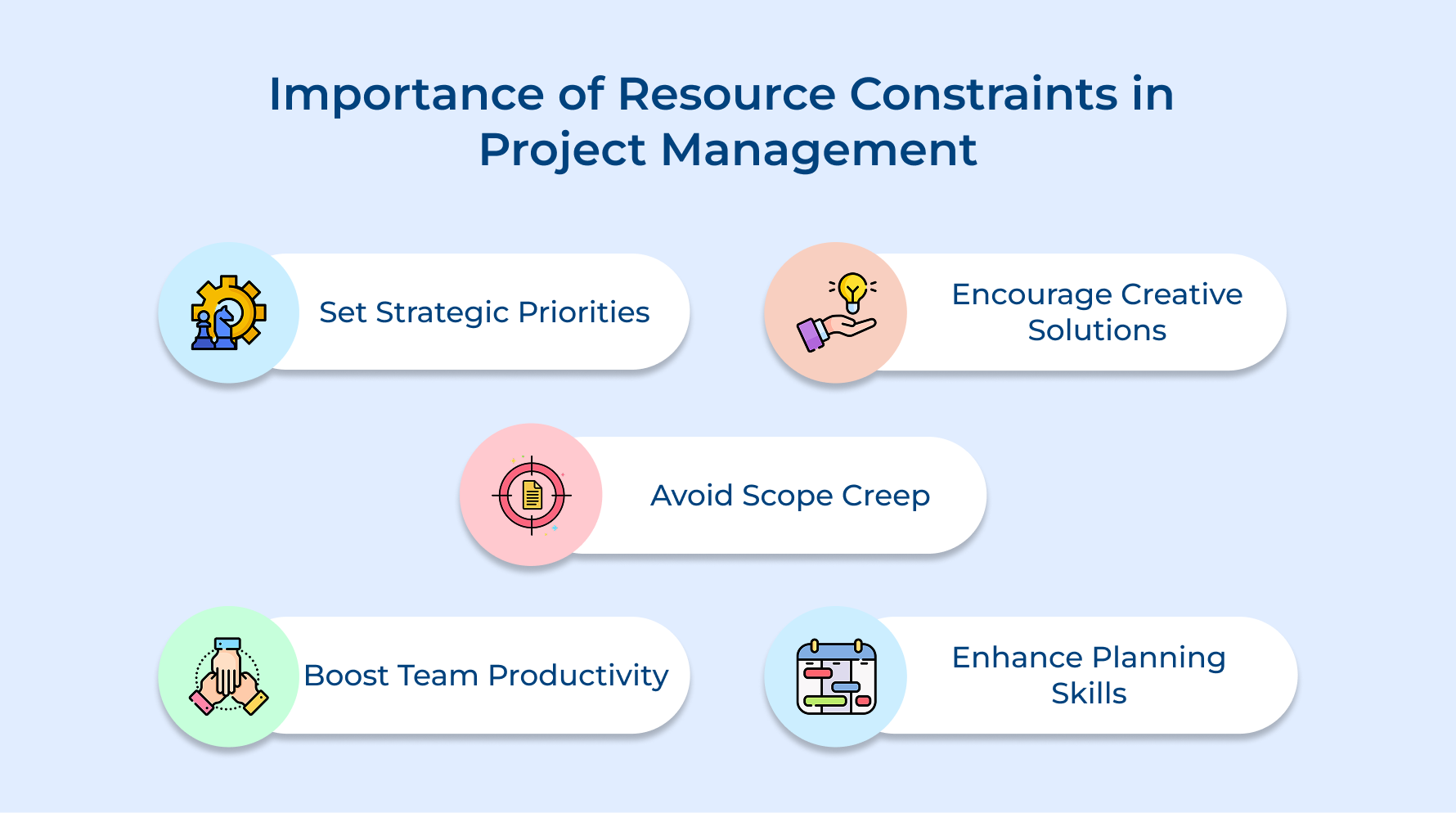
1. Forces Strategic Priority Setting
When you can’t have everything you naturally become better at choosing what matters most. Resource constraints push project teams to identify the highest-value activities and eliminate nice-to-have features that don’t drive real business impact.
2. Drives Innovation and Creative Problem-Solving
Limited budgets and tight timelines often spark the most creative solutions. Teams find innovative ways to achieve goals with fewer resources. This often leads to more efficient processes and breakthrough approaches than unlimited budgets would.
3. Prevents Scope Creep and Feature Bloat
Having clear resource boundaries makes it much easier to say no to additional requests. When stakeholders understand the trade-offs involved they make more thoughtful decisions about what features are truly essential versus what would be nice additions.
4. Improves Team Focus and Productivity
Resource constraints eliminate the paralysis of too many options. Teams work more efficiently when they know exactly what resources are available. The clarity helps them focus on delivering specific outcomes within set limits.
5. Builds Realistic Planning and Risk Management Skills
Working within constraints teaches project managers to create more accurate estimates and identify potential bottlenecks early. This experience develops stronger planning capabilities that benefit all future projects regardless of resource availability.
Common Types of Resource Constraints Explained
Let’s explore various types of resource constraints and offer insights on how to anticipate as well as overcome them. Hence, ensuring your future projects stay on track and deliver results.
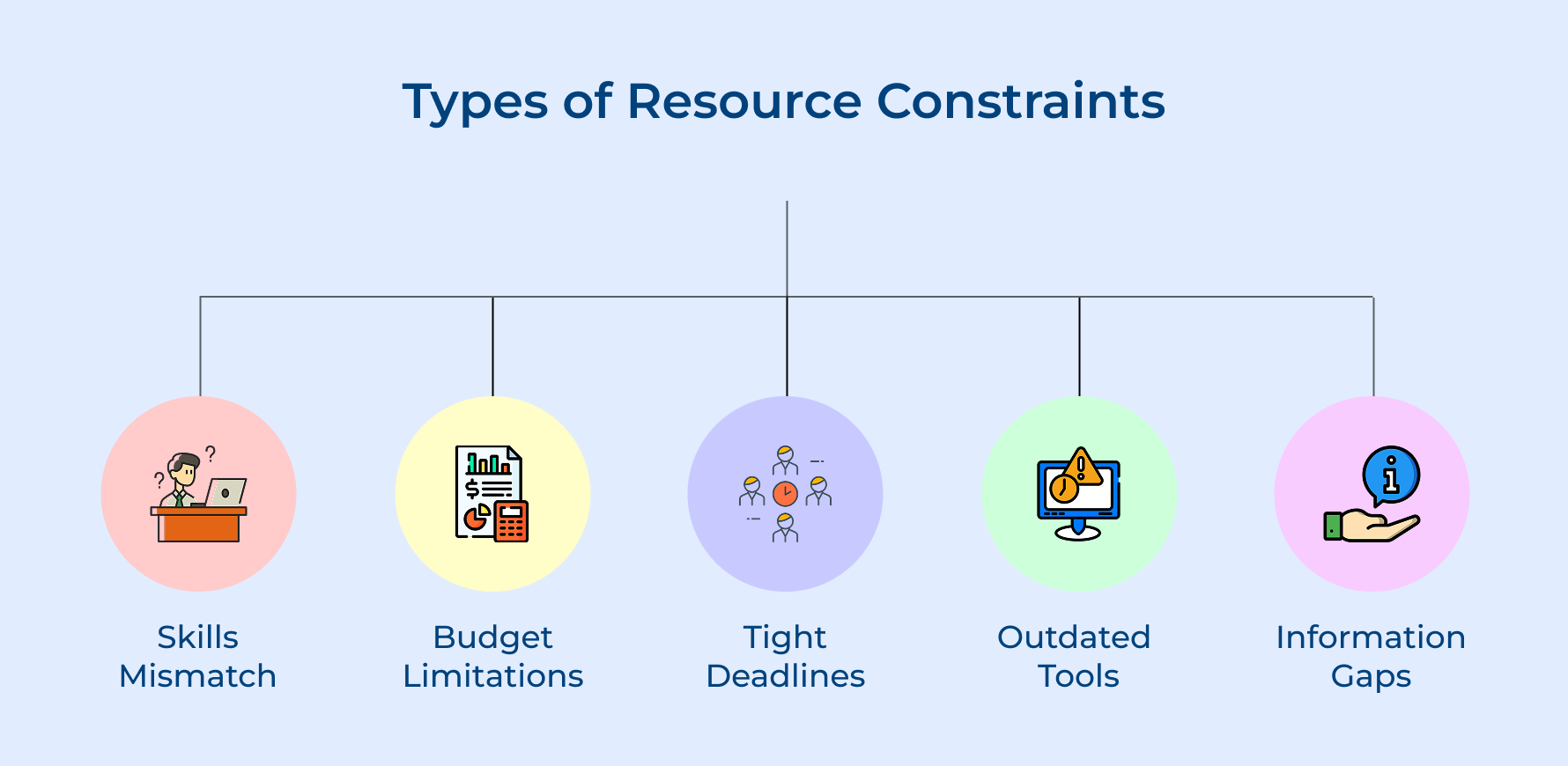
1. Human Resource Constraints
The availability of skilled people represents the most complex resource constraint because humans aren’t interchangeable units. You can’t simply add more developers to finish coding faster or expect a junior designer to replace a senior strategist without significant impact.
Consider these common scenarios that highlight the complexity of human resource management:
- Skills mismatch
- Availability conflicts
- Knowledge transfer bottlenecks
Human constraints extend beyond just headcount to include expertise levels, availability windows and the time needed for knowledge transfer. In consultancies this becomes particularly challenging when client demands peak simultaneously across different accounts requiring the same specialized skill sets.
2. Financial Resource Constraints
Budget limitations force hard choices about scope, quality and timeline that directly impact project outcomes. Every dollar spent on premium software licenses means less money available for additional team members or extended testing phases.
Key questions to consider:
- Which features get cut when the client requests budget reductions mid-project?
- How do you maintain quality standards when cost pressures mount?
- What’s the real cost of choosing cheaper alternatives for tools or talent?
Financial constraints in agencies often create cascading effects where reduced budgets lead to tighter timelines which then require more experienced (expensive) resources to maintain quality. This creates a challenging balance between profitability and client satisfaction that requires constant negotiation as well as creative problem-solving.
3. Time Resource Constraints
Deadlines create pressure that affects every other resource decision in your project ecosystem. Compressed timelines often mean you’ll need more senior resources, accept higher costs, or reduce scope to maintain quality standards.
Examining time pressure reveals several critical factors that project managers must navigate effectively:
- Sequential dependency chains: Tasks that cannot be parallelized create bottlenecks that extend project duration regardless of additional resources
- Quality versus speed trade-offs: The tension between maintaining standards and meeting aggressive deadlines that clients often present as non-negotiable
- Team burnout risks: Extended overtime periods that may deliver short-term results but compromise long-term productivity and employee retention
Time constraints in professional services become particularly acute when client deadlines align with external factors like regulatory changes, competitive launches, or seasonal business cycles. The pressure to deliver on time often forces teams to work overtime which can impact both quality and team morale if not managed carefully.
4. Technology and Equipment Constraints
The tools available to your team directly influence productivity, quality and what’s technically feasible. Outdated software, limited licenses, or inadequate hardware can become significant bottlenecks that slow progress and frustrate team members.
Technology constraints often reveal themselves unexpectedly when teams discover that client systems don’t integrate with preferred tools or when software limitations prevent implementing desired features. These constraints require early identification as well as proactive planning to avoid costly delays or quality compromises.
5. Knowledge and Information Constraints
Missing information or unclear requirements create invisible barriers that can derail even well-planned projects. When stakeholders can’t provide definitive answers or when critical knowledge exists only in someone’s head, teams face constraints that no amount of budget or time can immediately solve.
Information gaps create unique challenges that require strategic approaches to project planning and stakeholder management:
- Stakeholder availability issues
- Requirement ambiguity
- Undocumented processes
Information constraints in consultancies often stem from client organizations where decision-makers are busy, knowledge is siloed, or internal processes haven’t been clearly documented. These constraints require patience, structured discovery processes and the ability to work incrementally while gathering the needed clarity to move forward effectively.
8 Powerful Ways to Overcome Resource Constraints in Project Management
Here are eight proven strategies that can help you manage resource constraints and achieve your project goals.
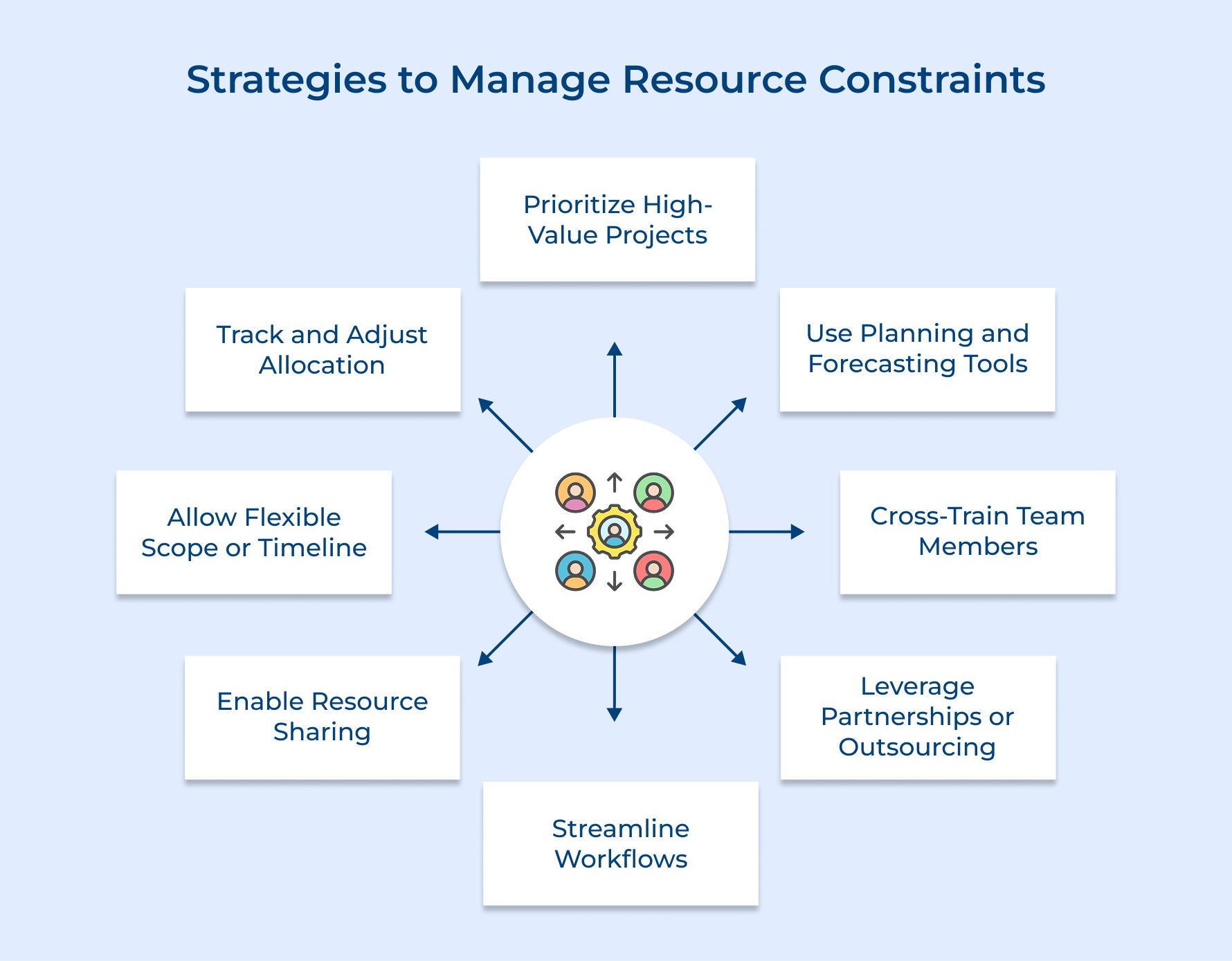
1. Prioritize Projects Using Value-Based Criteria
Value-based prioritization helps you move from reactive juggling to strategic decision-making, especially when multiple projects compete for the same resources. Instead of guessing, you use clear criteria to decide which project plans deserve top priority.
Here are four key criteria high-performing teams use:
- Strategic alignment: Does the project support your long-term business goals and vision?
- Financial return: Will it generate measurable revenue or cost savings within a set timeframe?
- Risk mitigation: Does it address urgent risks or compliance needs that could impact operations?
- Resource efficiency: Will it make the best use of your team’s skills and available resources?
For example, a digital agency faced three website redesign requests. Using these criteria, they prioritized the project that aligned with their e-commerce strategy and delivered the highest profit. Thus, boosting revenue by 40% and strengthening future project plans.
2. Implement Resource Planning and Forecasting Tools
Resource planning tools give project managers the visibility they need to make smart decisions about capacity and staffing. Without insight into utilization rates or future demand, resource commitments become risky guesses.
Before choosing a tool, ask:
- Does it integrate with your current project plans and accounting systems?
- Can it track both technical and soft skills across your team?
- Does it offer real-time visibility into resource availability?
- Can it forecast demand using past project data?
To avoid costly missteps, focus on tools with these essential features:
- Real-time dashboards: Instantly see who’s available and how resources are allocated.
- Capacity forecasting: Spot shortages early with predictive analytics.
- Skill mapping: Match talent to tasks based on competencies and certifications.
- Integration capabilities: Ensure smooth data flow between all key systems.
The right tool streamlines resource planning and strengthens constraint management.
3. Cross-Train Team Members for Flexibility
Cross-training creates organizational resilience by reducing dependency on individual specialists while building a more adaptable and capable workforce. When teams develop multiple complementary skills, organizations can respond more effectively to unexpected resource constraints without compromising project quality or timelines.
Build Multi-Skilled Team Members Across Disciplines
Creating versatile team members requires structured learning programs that gradually expand individual capabilities beyond their primary expertise areas. Start by identifying adjacent skills that complement existing strengths, such as training graphic designers in basic user experience principles or teaching developers fundamental project management concepts.
Create Knowledge Sharing Sessions Between Departments
Regular cross-departmental workshops and lunch-and-learn sessions break down silos while transferring critical knowledge throughout the organization. These informal learning opportunities allow team members to understand how their work connects to other functions and develop appreciation for different perspectives as well as methodologies.
4. Establish Strategic Partnerships and Outsourcing
Strategic partnerships are a smart way to expand your team’s capabilities without the cost and delay of permanent hires or new tools. When internal resources hit their limits, the right external partners bring in specialized skills and extra bandwidth.
Let’s say your consulting firm needs data visualization for a client project. Instead of hiring a full-time expert, you team up with a specialized analytics firm. It’s faster, cheaper and keeps your project plans on track.
But how do you pick the right partner? Look at:
- Quality standards and delivery processes
- Cultural fit and communication styles
- Flexible pricing models and contracts
- Data security and confidentiality protocols
Great partnerships help you strengthen your work breakdown structure, maintain quality and deliver world-class results without stretching internal resources.
5. Optimize Workflows Through Process Improvement
Process optimization is a game-changer for resource effectiveness. When teams waste hours on admin tasks, redundant approvals, or scattered communication, it creates artificial bottlenecks that slow everything down.
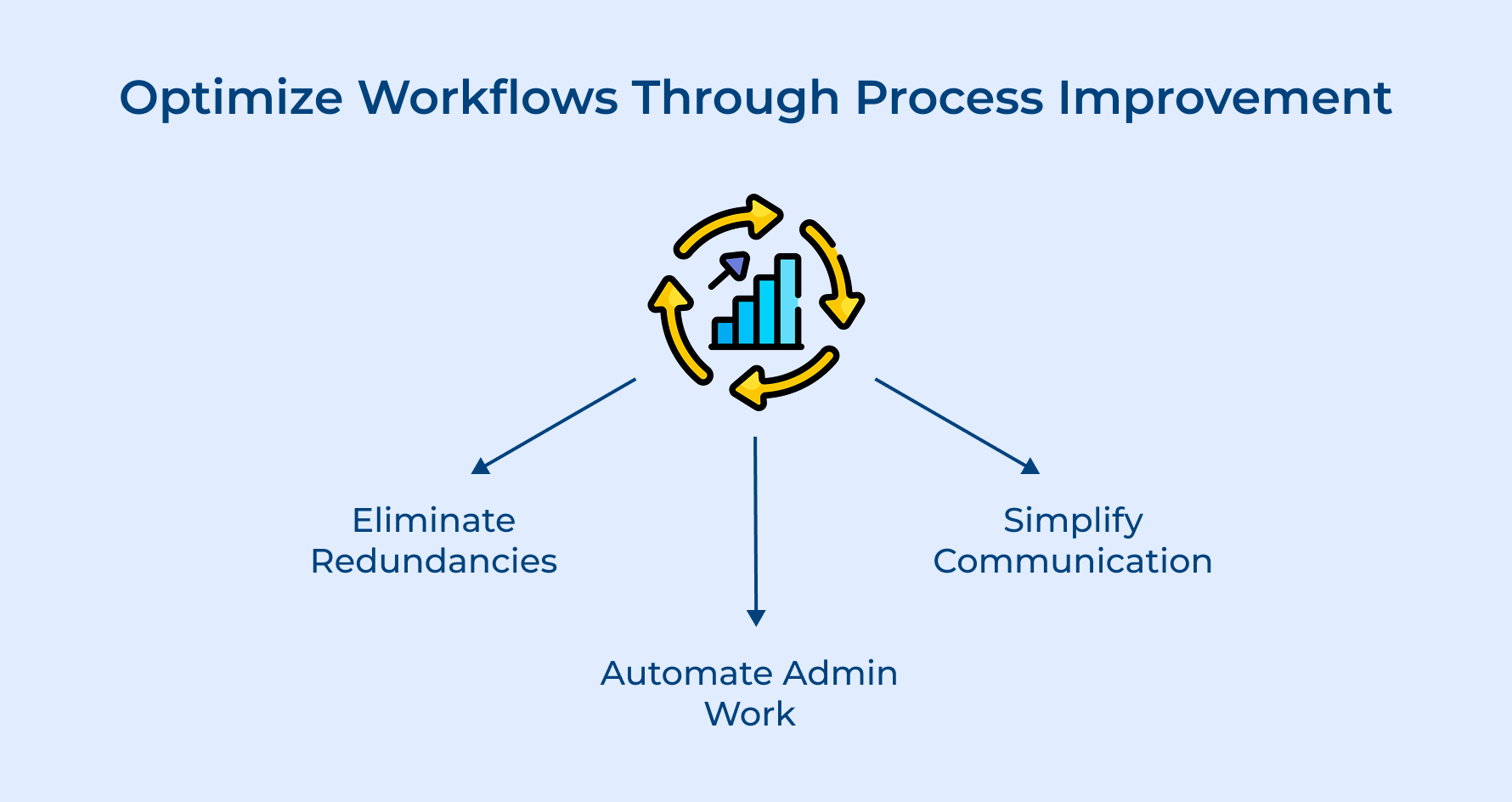
Here are three proven ways to streamline and free up your team:
- Eliminate redundancies: Map out workflows to spot duplicate tasks or unnecessary approvals. Simplify where possible without compromising quality.
- Automate admin work: Use project management software to handle repetitive tasks like status updates, time tracking and invoicing. Hence, freeing your team for higher-value work.
- Simplify communication: Set clear rules for how, where and when communication happens. Fewer meetings, better updates.
By optimizing your processes, every available hour goes toward real progress, helping you deliver better results without burning out your team.
6. Create Resource Sharing Across Projects
Resource sharing maximizes utilization of specialized talent by allowing skilled team members to contribute their expertise across multiple initiatives rather than being dedicated to single projects.
This approach recognizes that most projects don’t require full-time access to every skill set throughout their entire duration, creating opportunities to optimize talent deployment across the organization’s complete project portfolio.
Implementation requires careful coordination of project timelines and clear communication protocols to ensure shared resources can transition smoothly between different initiatives without creating conflicts or delays. Organizations typically achieve this through matrix management structures where specialists report to functional managers.
Best practices:
- Define specific procedures for transitioning shared resources between projects including knowledge transfer requirements and documentation standards.
- Monitor allocation percentages across projects to prevent overcommitment while ensuring optimal capacity utilization for shared team members.
7. Negotiate Flexible Scope and Timeline
Flexible scope and timeline negotiations create breathing room when resources become constrained by allowing project parameters to adapt rather than forcing teams into impossible delivery commitments. This strategic approach acknowledges that rigid project specifications often create artificial resource shortages when unexpected challenges emerge or priorities shift during execution.
consider these essential questions to ensure successful negotiations:
- Can the client accept phased deliveries without compromising their business objectives?
- Which project components represent core value versus nice-to-have enhancements?
- How much schedule flexibility exists before external dependencies become problematic?
- What minimum functionality will satisfy immediate stakeholder needs while allowing future iterations?
These questions help project managers identify realistic negotiation boundaries while ensuring that flexibility discussions focus on genuine constraints rather than convenience preferences.
8. Monitor and Adjust Resource Allocation
Continuous monitoring and adjustment ensures that resource allocation decisions remain aligned with changing project needs as well as organizational priorities throughout the project lifecycle. Five critical metrics provide essential visibility into resource allocation effectiveness:
- Resource utilization rates
- Project completion velocity
- Cost performance index
- Schedule variance indicators
- Team capacity forecasts
Monitoring these metrics provides the foundation for data-driven adjustments, but implementation requires three specific adjustment protocols:
- Reallocate underutilized resources: Move team members from slower projects to initiatives facing capacity shortages or accelerated timelines.
- Adjust project priorities: Shift resources toward higher-value initiatives when capacity limitations force difficult prioritization decisions.
- Modify scope expectations: Negotiate reduced deliverables for lower-priority projects to free resources for critical organizational objectives.
This systematic approach transforms resource management from reactive crisis response into proactive optimization that anticipates constraints before they impact project delivery.
Additional Tips for Avoiding Resource Constraints
Prevention remains more effective than cure when managing resource limitations across professional service organizations. Let’s explore tips in details:
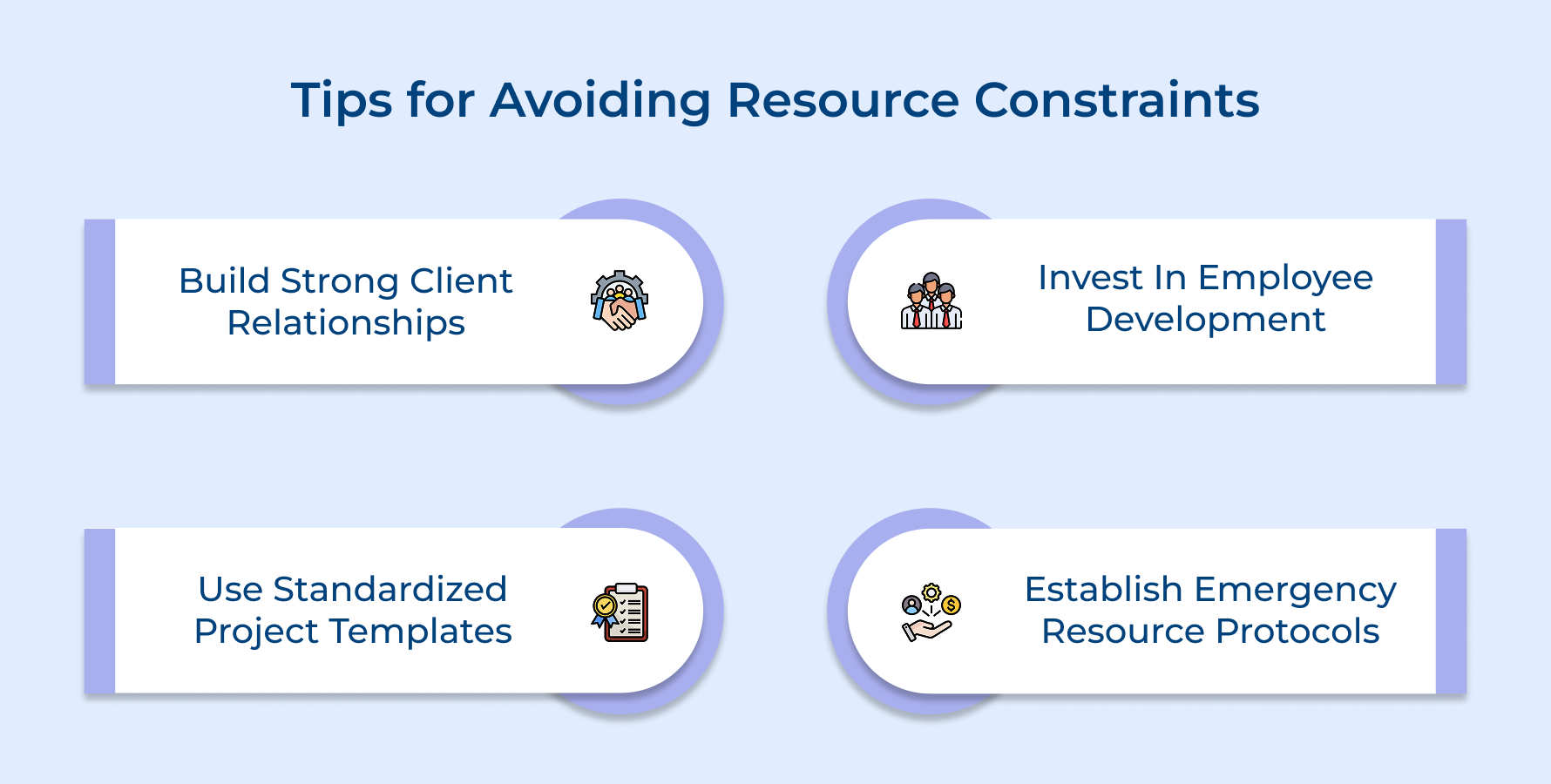
1. Build Strong Client Relationships Through Transparent Communication
Establishing trust through honest conversations about resource realities helps clients understand project constraints before they become problems. When clients appreciate quality-resource connections, they become solution partners rather than demanding obstacles.
2. Invest in Employee Development and Retention Programs
Retaining skilled team members costs significantly less than constantly recruiting replacements while maintaining institutional knowledge that prevents recurring mistakes. Development opportunities keep employees engaged while building flexibility.
3. Create Standardized Project Templates and Methodologies
Using standardized project templates as well as methodologies streamlines execution, reduces onboarding time and ensures consistency. It eliminates repetitive planning efforts and provides reliable estimation baselines, allowing teams to focus energy on solving project-specific challenges effectively.
4. Establish Emergency Resource Protocols for Crisis Situations
Having clear emergency resource protocols helps teams respond quickly to unexpected issues. Predefined escalation paths and backup plans reduce panic, maintain delivery momentum, as well as protect long-term project goals during high-pressure situations or sudden resource shortfalls.
Maximize Potential with Mindful Management of Resource Constraints
Effective management of resource constraints is essential because agencies as well as consultancies operate with finite talent, time and capital while juggling multiple client demands. Without strategic oversight, projects suffer from scope creep, talent burnout and declining service quality.
Professional service firms can enhance resource optimization through dynamic workforce planning, automated project tracking systems and cross-training initiatives. These strategies improve operational efficiency while enabling deeper client relationships through consistent service delivery and proactive communication.
Limit time — not creativity
Everything you need for customer support, marketing & sales.

Pooja Deshpande is a content contributor at Kooper, focused on creating insightful resources that help agencies and service providers scale efficiently. Passionate about SaaS trends, content strategy, and operational excellence, she delivers practical, easy-to-implement guidance for modern business leaders.