8 Successful Strategies to Manage Multiple Projects in 2026
- What is Multi-Project Management?
- Why is Effective Multi-Project Management Important?
- 8 Strategies to Manage Multi Project Management Efficiently
- Challenges You Might Face While Managing Multiple Projects
- Multi-Project Management Examples for Better Planning
- 6 Additional Tips and Best Practices for Multi Project Management
- Streamline Business Success with Multiple Projects Management
- FAQs About Managing Multiple Projects

Key Highlights:
- Effective multi-project management balances resources, prioritizes work as well as builds communication for efficient project delivery across teams and clients.
- Multiple projects cause conflicts, scope creep and stress, demanding strong prioritization as well as proactive management.
- Agencies use multi-project management to optimize resources, boost efficiency, and deliver consistent client satisfaction.
Juggling multiple client projects at once can feel like organized chaos – deadlines clash, teams get stretched thin and communication slips through the cracks. Before you know it, quality drops, burnout creeps in and client trust takes a hit.
Sound familiar? Many professional service teams face the same pressure. But here’s the good news: it doesn’t have to be that way. With the right strategies for managing multiple projects, you can turn chaos into clarity.
The eight strategies below will help you prioritize smarter, allocate resources better and consistently deliver great work, without running your team into the ground.
What is Multi-Project Management?
Multi-project management is the strategic coordination of resources across multiple simultaneous projects to maximize efficiency and outcomes. It involves balancing competing priorities while ensuring each project meets quality standards and deadlines without overwhelming team capacity or depleting resources.
Multi-project management usually involves three main groups working together. First, executive leaders set the overall direction and decide how to use resources. Second, project managers plan the work and track progress. Third, team members carry out the tasks. These team members often work on more than one project at the same time.
Key objectives:
- Optimize resource allocation to prevent bottlenecks and ensure critical skill availability.
- Maintain strategic alignment between projects and overarching business goals.
- Establish clear prioritization frameworks to make sound decisions when conflicts arise.
- Create transparent communication channels that keep all clients informed without overwhelming them.
- Develop standardized processes that reduce redundancy while enabling teams to adapt to changing circumstances.
Why is Effective Multi-Project Management Important?
Let’s delve into the reasons why mastering this skill is crucial in modern enterprises and how it can drive sustainable growth as well as efficiency.
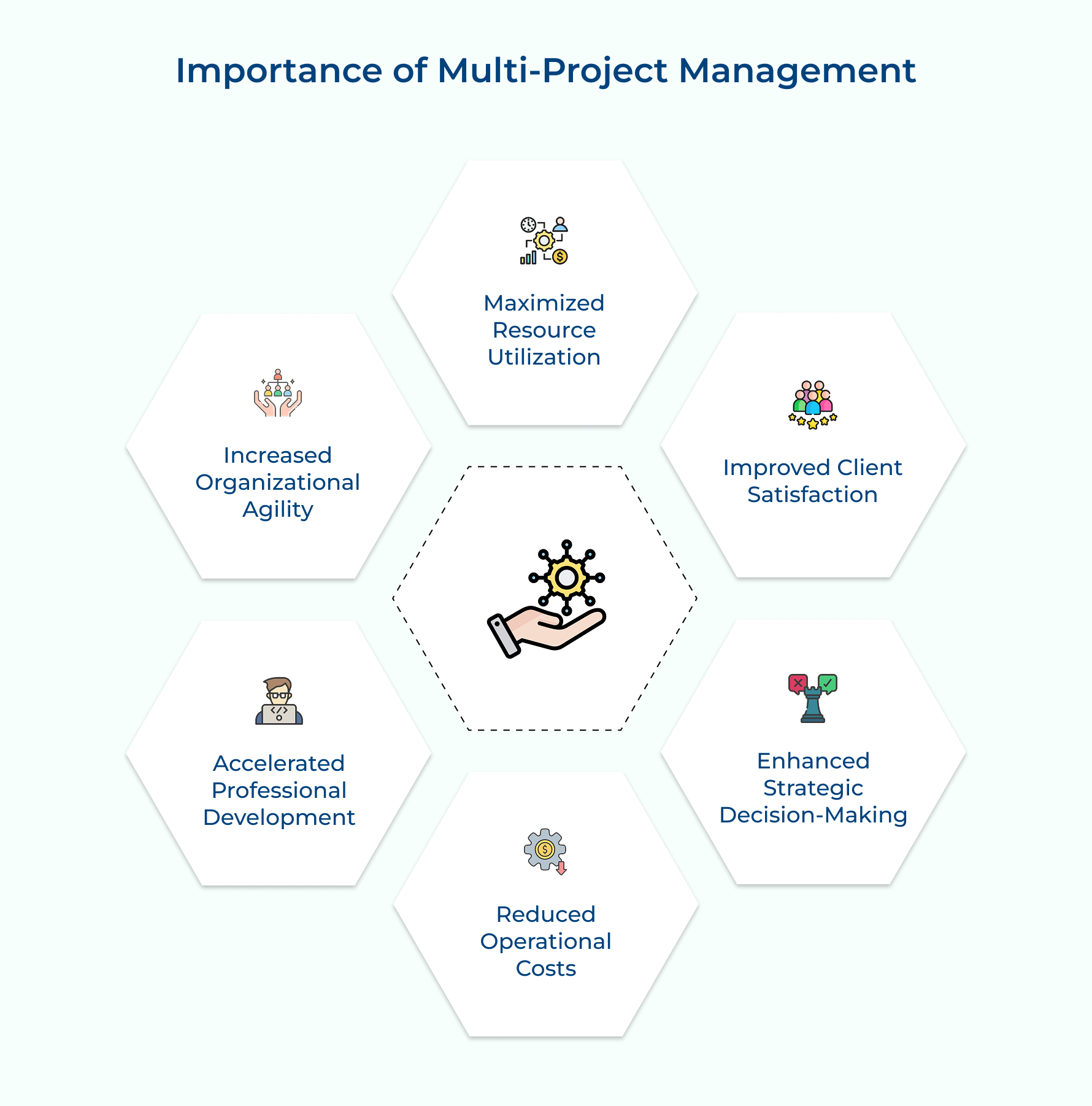
1. Maximized Resource Utilization
Leveraging smart multi-project management, you can match the right people to the right work based on their skills and availability. No more overloading some while others sit idle, it’s all about balance and flexibility.
2. Improved Client Satisfaction
When every project runs smoothly and meets deadlines, clients notice. Great multi-project management keeps things from slipping through the cracks and builds trust that leads to repeat business.
3. Enhanced Strategic Decision-Making
Having a clear view of all your ongoing projects means you can say yes or no with confidence. Multi-project management helps you focus on what really aligns with your goals.
4. Reduced Operational Costs
Running multiple projects efficiently means fewer duplicated efforts and smoother workflows. Good multi-project management helps you trim the fat and protect your profit margins.
5. Accelerated Professional Development
Working across different projects builds skills fast. With multi-project management, your team gets real-world cross-training that makes them more agile and ready for anything.
6. Increased Organizational Agility
Need to shift gears quickly? Teams with solid multi-project management practices are more agile and can jump on new opportunities faster than the competition.
8 Strategies to Manage Multi Project Management Efficiently
Here, we explore eight effective strategies that will empower you to manage multiple projects with confidence and precision.
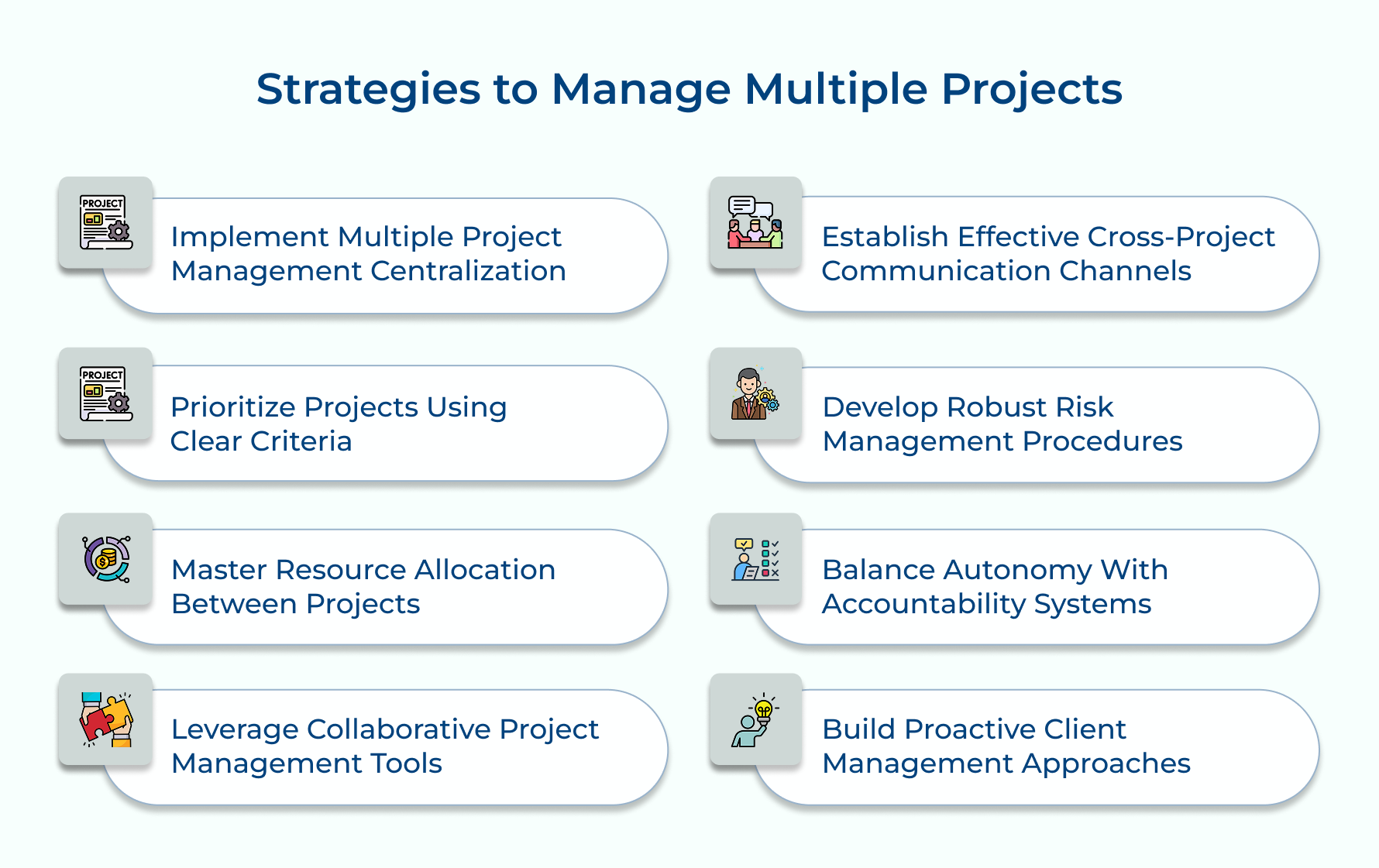
1. Implement Multiple Project Management Centralization
Centralizing your multi-project management setup means putting everything your team needs in one place, no more chasing updates across ten different tools. When your project info lives in a unified system, it’s easier for everyone to stay on the same page, especially when juggling multiple clients.
Here’s how to make it work:
- Use consistent templates: Create standard docs for briefs, status updates, and handoffs so every project follows the same format—no guesswork, no wasted time.
- Standardize workflows: Set up repeatable steps for every project and build visual guides so anyone can jump in with minimal ramp-up.
- Build a shared knowledge base: Document client quirks, smart solutions, and lessons learned in one searchable hub.
For example a digital marketing agency implemented centralization by creating a master template library in their project management system. Each new client onboarding followed identical documentation patterns with customizable sections. This reduced setup time from 4-5 hours to under 30 minutes per client and eliminated instances where important information was missing during project execution.
2. Prioritize Projects Using Clear Criteria
Strategic project prioritization helps you focus on the right work—not just the loudest or most urgent. It’s about making smart, objective decisions on where your team should invest time and energy.
Instead of reacting, you assess each project using clear criteria:
- Strategic alignment: Does the project move the business toward its core goals?
- Resource availability: Do we have the right people available when we need them?
- Financial impact: What’s the return compared to the effort required?
- Client value: Will this deepen a key relationship or unlock new opportunities?
This framework gives you solid ground to stand on when tough calls arise and helps explain those calls to your team as well as clients. Revisit priorities weekly to stay on track.
3. Master Resource Allocation Between Projects
Managing resource allocation between projects means finding the right balance, ensuring your team’s time as well as talent are distributed smartly so no one is overwhelmed and every project gets what it needs.
When done right:
- Project delivery becomes more reliable.
- Team morale stays high.
- Clients get realistic timelines that reflect true capacity.
One marketing agency nailed this by holding weekly planning meetings and using a shared dashboard. Instead of project managers overbooking people, they allocated resources together—cutting conflicts by 70% and keeping deadlines on track.
Helpful tips:
- Use a centralized planning board: Make allocations and workloads visible to all.
- Match skills, not just availability: Assign work based on strengths and growth goals.
4. Leverage Collaborative Project Management Tools
Collaborative project management tools give your team a central space to manage all projects in one place. Hence, reducing miscommunication, improving visibility, and keeping client work on track.
To get the most out of these tools, look for:
- Integration capabilities: Make sure the tool connects easily with your CRM, accounting software, and messaging platforms to avoid manual work.
- Customization flexibility: Choose a tool that fits your workflow, not one that forces you to change how your team works.
- Scalability: Pick a system that grows with you, so you don’t need to switch platforms later
- User-friendly design: Everyone (from leadership to new hires) should be able to use it easily.
One web agency used a tool with auto time-tracking and caught resource issues 3 days sooner.
5. Establish Effective Cross-Project Communication Channels
Effective cross-project communication ensures everyone stays in sync, even when multiple projects are running at once. It breaks down silos, so teams aren’t working in isolation and helps manage shared resources as well as dependencies more effectively.
Instead of treating each project as a standalone effort, this approach builds structured communication across teams, allowing early risk detection and smarter collaboration.
Best practices include:
- Use a visual dependency map: This shows how one project’s timeline affects others, helping teams plan around overlaps.
- Assign a rotating cross-project coordinator: Rotate the role monthly to give team members visibility into broader operations and build organization-wide understanding.
This proactive communication model keeps projects aligned and teams better prepared.
6. Develop Robust Risk Management Procedures
Strong risk management is key for agencies juggling multiple projects. It helps spot potential problems early, so you avoid constant firefighting that drains time and resources across your entire project portfolio.
- Identify risks across projects: Look beyond each project individually and hold regular cross-team meetings where everyone openly discusses possible risks. This teamwork uncovers hidden, system-wide issues that might otherwise go unnoticed.
- Create contingency plans: Prepare response playbooks for common problems, complete with communication templates and escalation steps. Having these ready speeds up reactions and ensures consistent handling of similar issues.
- Monitor early warning signs: Track metrics like unusual time logs, frequent client messages, or delayed approvals to catch trouble before it hits, turning risk management from reactive to proactive.
7. Balance Autonomy With Accountability Systems
Balancing autonomy with accountability means giving your team the freedom to work independently while keeping clear expectations in place. This avoids micromanagement that can kill creativity but still ensures projects stay on track.
Here’s how project managers can strike that balance:
- Clearly outline which decisions team members can make on their own and which need approval. This helps them act confidently without risky mistakes.
- Use simple progress updates focused on results, not constant check-ins, so the team feels trusted but you stay informed.
- Encourage peer accountability through practices like pair programming or collaborative reviews, sharing responsibility and building team trust.
This balance boosts engagement, ownership, and quality. Key metrics to track include on-time delivery, resource use, client satisfaction, and revenue versus estimates.
8. Build Proactive Client Management Approaches
Proactive client management means staying ahead of client needs and potential issues across multiple projects, so you avoid last-minute crises that hurt profits as well as stress your team.
Before building a proactive approach, ask:
- How do different clients like to get updates?
- Where do projects usually expand beyond the original scope?
- Who are the key decision-makers for each client?
- What past feedback shows gaps in our communication?
To put this into practice, create clear onboarding processes that set expectations and schedule regular strategic check-ins, not just project status updates. Train your team with playbooks for common client scenarios and spotting early warning signs.
For example, a digital agency used “Client Success Plans” to capture communication preferences and goals, helping them quickly address major change requests with the right context.
Challenges You Might Face While Managing Multiple Projects
Here are the key challenges that project managers frequently encounter when balancing multiple client engagements.
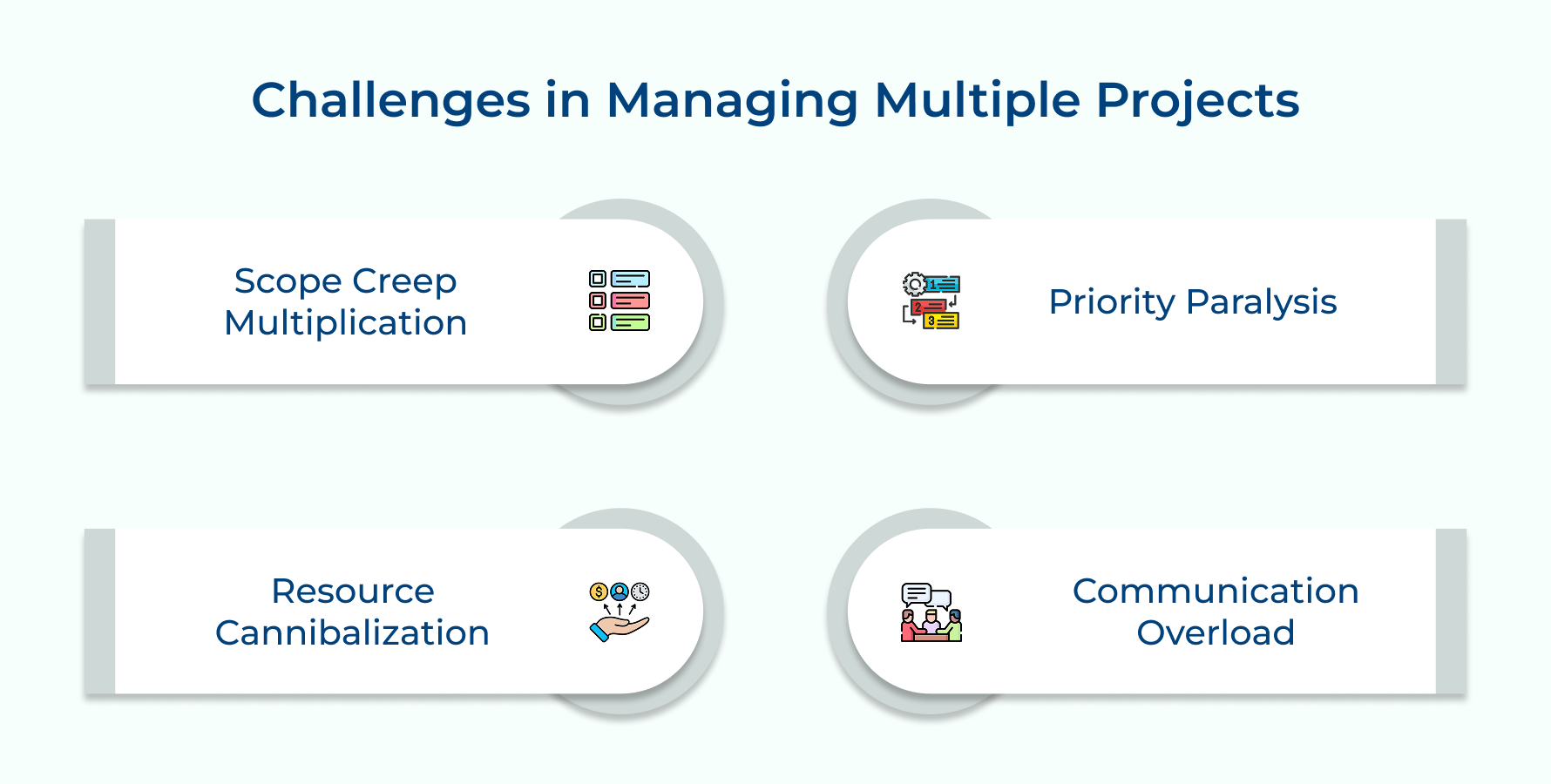
1. Scope Creep Multiplication
When one project’s scope expands, it often triggers a domino effect across your entire portfolio. These small changes pile up, eating into your team’s capacity until deadlines start slipping everywhere and you might not even notice until it’s a full-blown crisis.
2. Priority Paralysis
Without clear prioritization, team members get stuck juggling “urgent” tasks from different projects. This constant switching kills productivity. People spend more time figuring out what to do next than actually getting work done.
3. Resource Cannibalization
High-priority projects can quietly steal resources from others without proper discussion. This hidden shuffle creates gaps and quality issues because team members are spread too thin.
4. Communication Overload
More projects mean more stakeholders, meetings, and updates. Hence, flooding teams with so much information that critical details get lost and real work takes a backseat.
These obstacles are manageable with the right approaches and systems. Here are practical strategies to address the common pitfalls of multi-project environments:
- Set up a formal scope change process that assesses impacts across all projects before approving changes.
- Hold weekly portfolio prioritization meetings to clearly rank deadlines and focus.
- Encourage time-blocking so team members can focus on one project uninterrupted for 2–3 hours.
- Develop a clear escalation flowchart so everyone knows when and how to raise issues effectively.
Multi-Project Management Examples for Better Planning
Looking at real-world applications helps understand how multi-project management principles work in practice. These examples showcase how different organizations implement systems to juggle concurrent projects while maintaining quality as well as efficiency.
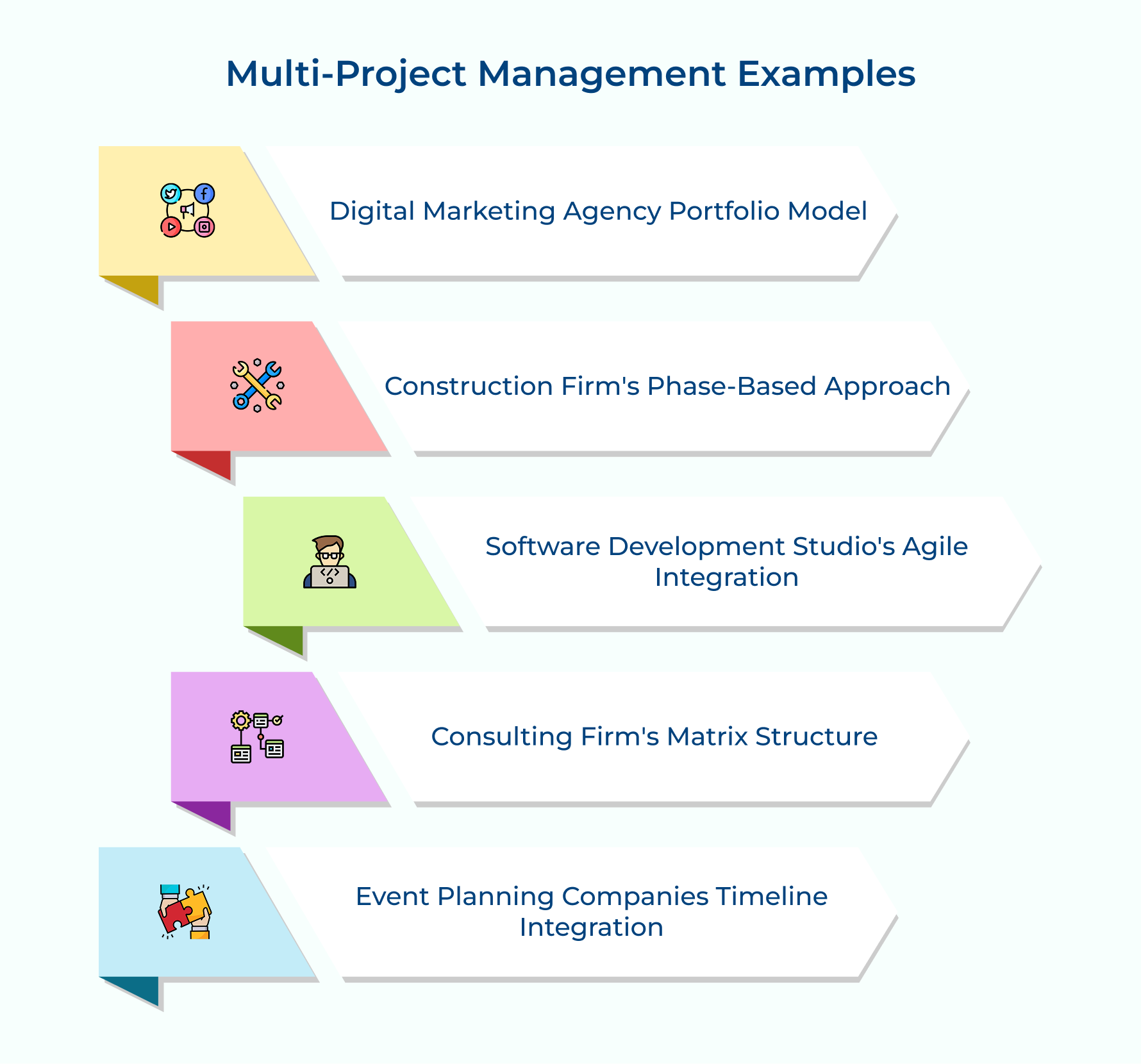
1. Digital Marketing Agency Portfolio Model
A mid-sized marketing agency manages 25+ client accounts simultaneously using a tiered system. Each project manager oversees 4-6 client relationships with varying service levels, while specialized teams (design, content, development) work across all accounts. Their central project dashboard color-codes tasks by urgency and displays resource allocation percentages to prevent overcommitment.
2. Construction Firm’s Phase-Based Approach
A construction management company handles multiple building projects using a phase-based system. Rather than assigning teams to specific projects, they organize resources by construction phases (planning, foundation, framing, finishing). This allows specialized crews to move efficiently between projects while maintaining a consistent quality standard, reducing idle time between project stages.
3. Software Development Studio’s Agile Integration
A software studio uses agile and portfolio management by running synchronized sprints. Teams plan on Mondays, hold mid-week standups, and review on Fridays. This setup balances cross-project coordination with each team’s unique workflow.
4. Consulting Firm’s Matrix Structure
A consulting firm uses a matrix model where consultants join both industry and function teams. Projects pull expertise from both sides, with managers coordinating. Their system shows resources by skills and industries across the project portfolio.
5. Event Planning Companies Timeline Integration
An event management company uses an integrated timeline to manage corporate events. A master calendar tracks milestones, resources move in waves, and buffers before big events handle changes without affecting other projects.
6 Additional Tips and Best Practices for Multi Project Management
These tips complement structured methodologies with actionable practices that can be implemented immediately.
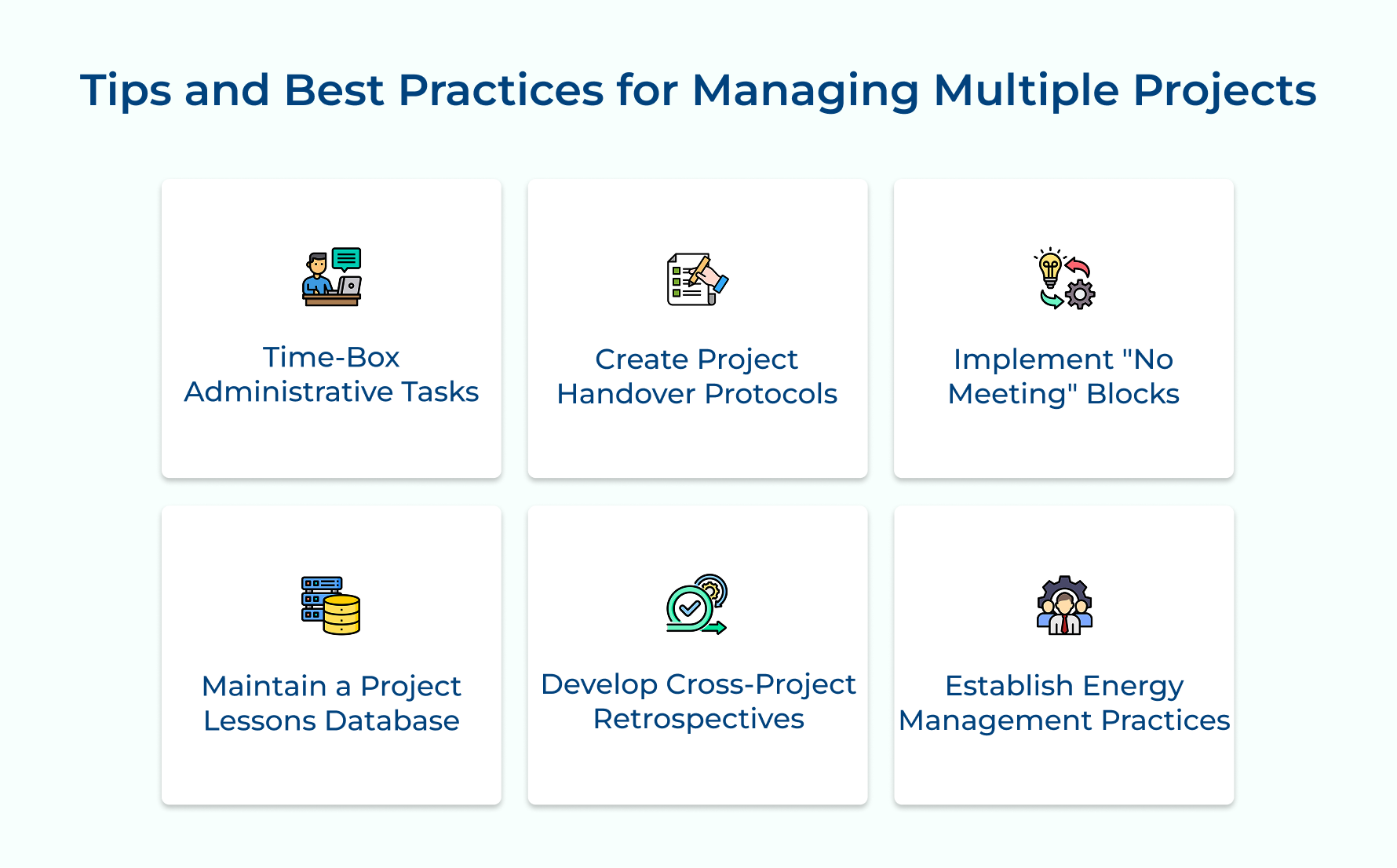
1. Time-box administrative tasks: Set strict time limits for routine project administration like updating trackers or preparing status reports. This disciplined approach prevents administrative work from consuming disproportionate time and creates consistency in how you handle documentation across different projects.
2. Create project handover protocols: Develop standardized transition documents for when team members join or leave projects. These knowledge transfer guidelines ensure critical context isn’t lost during transitions and new team members can quickly understand project history without extensive meetings.
3. Implement “No Meeting” blocks: Designate specific time periods each week where no meetings can be scheduled. These protected blocks allow team members to focus exclusively on deliverable production and reduce the context-switching that severely impacts productivity across multiple projects.
4. Maintain a project lessons database: Document challenges and solutions from each project in a searchable format. This organizational learning repository helps teams avoid repeating mistakes and apply successful approaches across projects without reinventing solutions to recurring problems.
5. Develop cross-project retrospectives: Conduct periodic reviews that examine patterns across all projects rather than evaluating each independently. These holistic assessments reveal systemic issues invisible when looking at projects in isolation and identify improvement opportunities with portfolio-wide impact.
6. Establish energy management practices: Encourage team members to spot peak energy times and align complex tasks accordingly. Matching demanding work with high focus boosts efficiency, reduces stress and improves overall project performance across tasks.
Streamline Business Success with Multiple Projects Management
Managing multiple projects effectively is a necessity for survival in the current professional services landscape. Organizations that master this skill can take on more clients without sacrificing quality or team wellbeing. This structured approach transforms what could be chaotic into a strategic advantage.
Agencies can boost profits and deliver consistent client experiences by following the strategies and best practices mentioned above. The resulting operational efficiency reduces wasteful resource allocation, while better-managed client relationships lead to increased retention and referrals, creating a sustainable cycle of business growth.
Limit time — not creativity
Everything you need for customer support, marketing & sales.

Shivank Kasera is part of the marketing team at Kooper, where he focuses on building content that helps agencies and service providers grow. With a keen interest in SaaS, operations, and scalability, he translates practical insights into actionable resources for business leaders.