How to Calculate Project ROI: A Step-by-Step Guide
- What is ROI in Project Management?
- Essential Benefits of Calculating Project ROI
- 4 Important Types of project ROI
- How to Calculate ROI in Project Management?
- Real Life Examples of Project ROI
- Best Practices for Measuring Project ROI
- Project ROI – Unleashing the True Potential of Your Investments
- FAQs about Project ROI

Key Highlights:
- Understand project ROI to justify budgets, measure performance and make data-driven decisions that maximize organizational efficiency.
- Learn types of project ROI and how to improve returns while minimizing financial risks effectively.
- Follow a multi-step process to calculate, analyze and interpret ROI, ensuring smarter investments as well as stronger stakeholder buy-in for every project.
Many project managers find it hard to justify their projects to stakeholders because they don’t have solid financial proof of their value. When ROI numbers aren’t clear, teams end up fighting for limited resources based on opinions instead of data.
Strong projects get rejected, while flashy but less valuable ones get approved. Even completed projects struggle to show their worth, which makes getting future approvals harder and can hurt your credibility.
Here’s the good news – when you learn how to calculate and explain project ROI, everything changes. You stop looking like someone who just spends money and start being seen as someone who delivers measurable value. This guide walks you through the exact steps to measure project benefits and make smarter investment decisions.
What is ROI in Project Management?
Return on Investment (ROI) in project management measures the financial value a project delivers compared to what you invested in it. It tells you whether the money and resources you poured into a project actually paid off.
ROI helps project managers and stakeholders make smarter decisions about which projects deserve funding. It also shows which ones might be draining resources without delivering meaningful returns.
Calculate ROI in Project Management
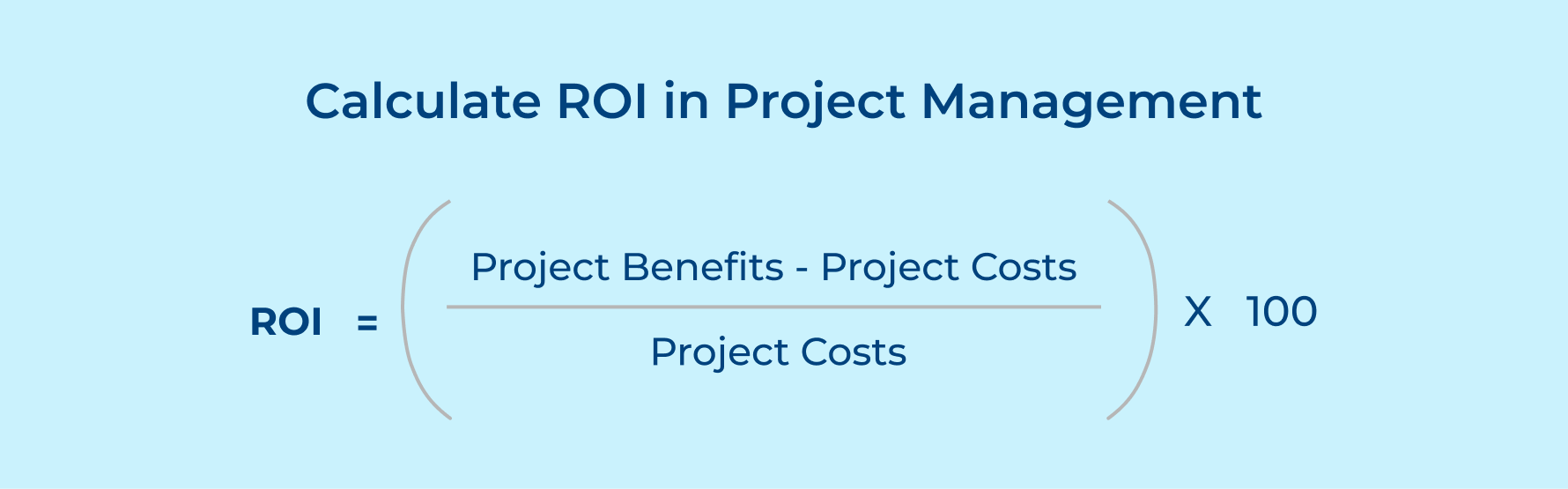
Let’s say your marketing automation project cost $50,000 to implement but generated $80,000 in increased revenue over one year.
Your calculation would be: (($80,000 – $50,000) / $50,000) × 100 = 60% ROI.
This means for every dollar you invested you earned back $1.60.
Key objectives:
- Financial justification: ROI proves to stakeholders that your project deserves budget allocation and resources.
- Performance measurement: It provides a concrete metric to evaluate how well your project performed against expectations.
- Decision making support: ROI data helps you choose between competing projects when resources are limited.
- Stakeholder communication: It translates project success into language that executives and investors understand immediately.
- Continuous improvement: ROI analysis reveals patterns that help you plan better projects and avoid costly mistakes in the future.
Essential Benefits of Calculating Project ROI
Let’s delve into the myriad benefits of calculating project ROI and how this powerful tool can transform your approach to project management.
Latest statistics showcasing roi impact in project management
- Organizations implementing project management best practices are 2.5 times more successful than those without them.
- Companies waste $1 million every 20 seconds due to poor project management practices, totaling approximately $2 trillion annually.
- Organizations that use project management practices achieve a 92% success rate in meeting project objectives.
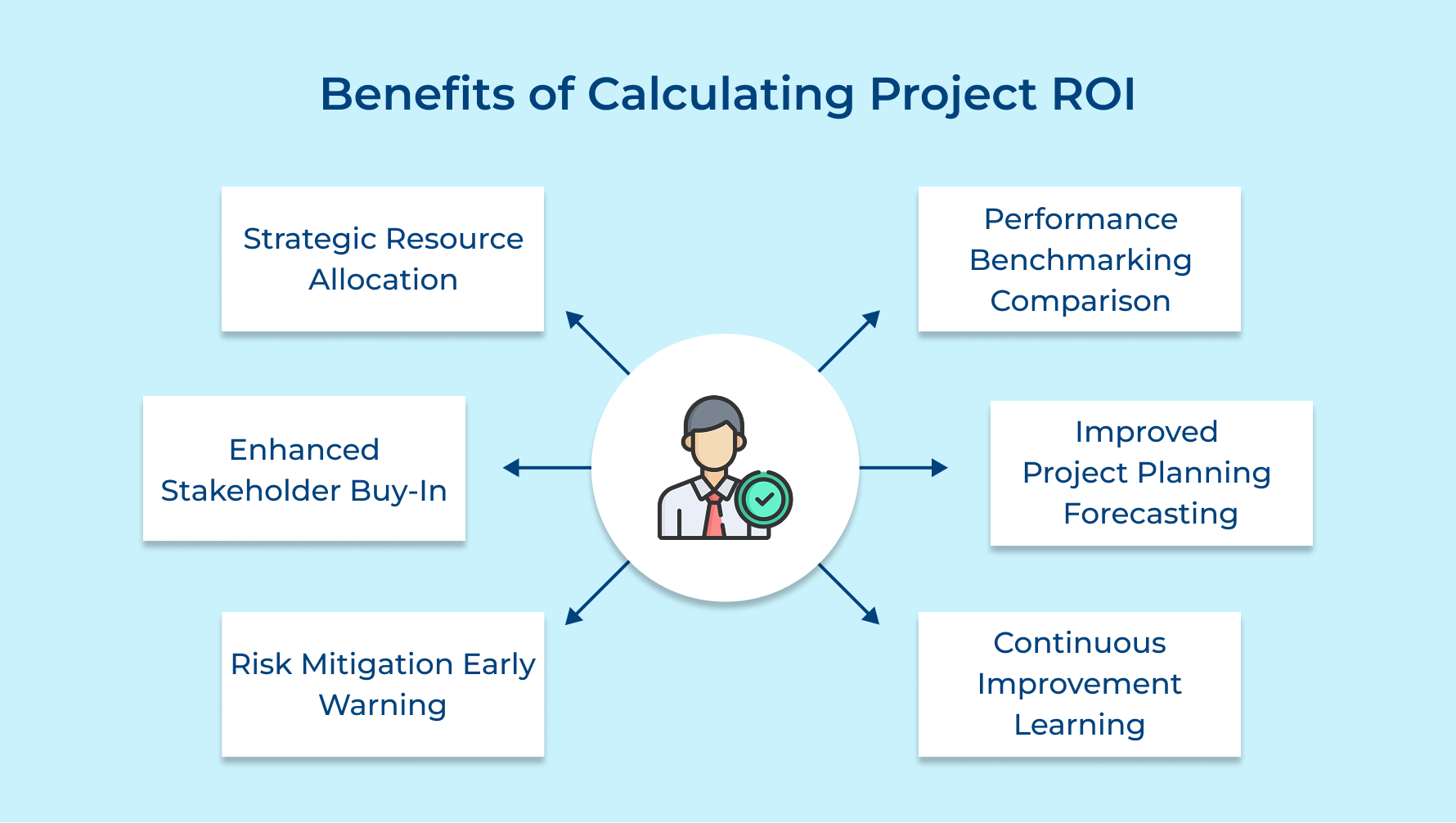
Strategic Resource Allocation
ROI calculation transforms guesswork into data-driven decisions about where to invest your limited resources. When you can clearly see which projects deliver the highest returns you naturally channel funding toward initiatives that multiply your investment rather than drain it.
Enhanced Stakeholder Buy-In
Concrete ROI numbers speak the universal language of business that resonates with executives and investors. Instead of hoping stakeholders understand abstract benefits you present compelling financial evidence that demonstrates exactly how much value your project will create for the organization.
Risk Mitigation and Early Warning System
Regular ROI monitoring acts like a financial radar that detects problems before they become disasters. Actual returns start deviating from projected figures; you can then quickly pivot your approach or implement corrective measures to protect your investment.
Performance Benchmarking and Comparison
ROI provides an objective yardstick for measuring success across different projects and teams within your organization. This standardized metric enables you to identify high-performing approaches and replicate successful strategies while learning from less effective initiatives.
Improved Project Planning and Forecasting
The discipline of calculating ROI forces you to think critically about all costs and benefits throughout the project lifecycle. This rigorous analysis leads to more accurate budgets, better timeline estimates as well as more realistic expectations that increase your chances of project success.
Continuous Improvement and Learning Culture
ROI data creates a feedback loop that drives organizational learning and process refinement over time. Analyzing which factors contributed to high or low returns helps you continuously improve your project management practices and avoid repeating costly mistakes.
4 Important Types of project ROI
Think of project ROI types as different snapshots of your project’s financial journey, each serving a unique purpose in guiding your decisions. Here are different types of project ROI to consider:
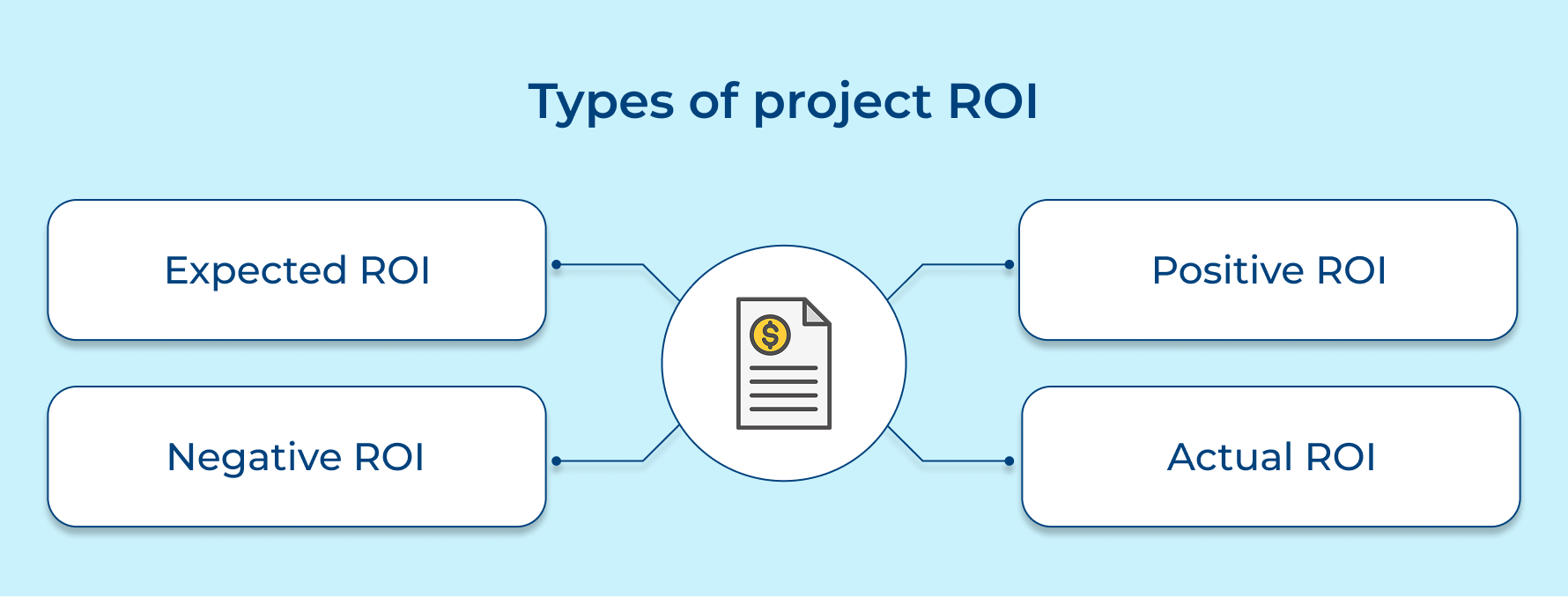
Expected ROI
Expected ROI is your project’s financial forecast before work starts. It uses estimated costs and revenues to predict returns as well as guide approval decisions.
Think of expected ROI as the business case that justifies funding. Smart project managers plan for different scenarios to set clear and realistic expectations.
Here are 3 ways to improve Expected ROI:
- Reduce projected costs through value engineering and efficient resource planning.
- Increase revenue projections by expanding scope to capture additional benefits.
- Accelerate timeline to achieve returns sooner and reduce opportunity costs.
Actual ROI
Actual ROI shows the real financial results of a completed project, using actual costs and verified benefits. It reveals if your projections were accurate and if the project delivered as promised.
Knowing actual ROI gives important lessons for future planning and helps improve estimation. A big gap between expected as well as actual ROI highlights areas where forecasting can be made better.
Here are 3 ways to improve Actual ROI in future projects:
- Document lessons learned to improve cost estimation accuracy in similar projects.
- Implement better scope management to prevent cost overruns and scope creep.
- Establish rigorous benefit tracking systems to capture all project value.
Positive ROI
Positive ROI means your project created more value than it used, making it profitable. It shows the project covered its costs and delivered extra returns for the organization.
Such projects often become success stories and attract future funding. But remember – profitability alone isn’t enough. Make sure these projects also support the organization’s overall goals.
Here are 3 ways to maximize Positive ROI:
- Scale successful project elements to capture additional benefits across the organization.
- Document and replicate best practices that contributed to the positive outcome.
- Use positive results to justify increased investment in similar high-return projects.
Negative ROI
Negative ROI means your project used up more resources than it created, leading to a financial loss. It shows that costs were higher than the benefits, calling for analysis and corrective steps.
Learning why negative ROI happened gives valuable insights to avoid repeating mistakes. Often, the causes are poor planning, unrealistic projections, or scope creep – issues that can be fixed in future projects.
Here are 3 ways to address or fix Negative ROI:
- Conduct thorough post-project analysis to identify root causes and prevent recurrence.
- Implement stronger change control processes to prevent scope creep and cost overruns.
- Develop conservative benefit estimates and include larger contingency reserves in future planning.
How to Calculate ROI in Project Management?
We’ve broken it down into a clear, 7-step process that will empower you to evaluate the true worth of your projects and make decisions grounded in solid financial insights. Let’s get right in:
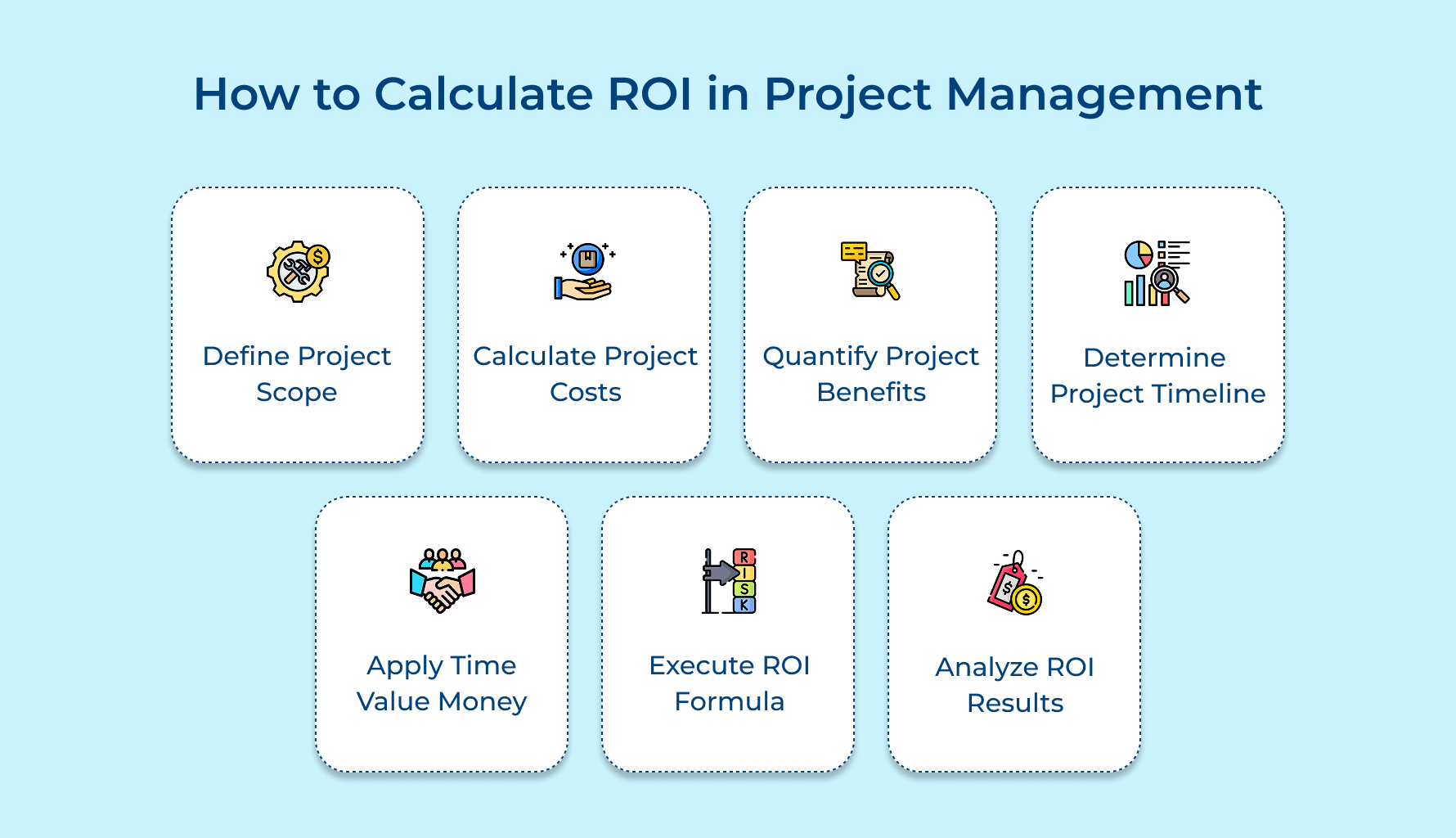
1. Define Project Scope and Objectives
Defining scope and objectives is the first step to accurate ROI. It sets clear boundaries, defines success and shows what benefits the project should deliver. Without it, you can’t measure true value or avoid wasted resources.
Ask yourself these key questions:
- What deliverables will this project produce?
- How will we measure success beyond deadlines?
- Who are the stakeholders and what value do they expect?
- What problems will this solve or opportunities will it create?
Clear scope prevents scope creep and ensures everyone knows the project’s purpose as well as business impact.
Common objectives include:
- Improving efficiency to cut costs and boost productivity.
- Creating new products or services for revenue growth.
- Using technology to improve customer satisfaction and reduce manual work.
Document assumptions and constraints. These details shape costs, benefits and provide a baseline to compare actual performance later.
2. Calculate Total Project Investment Costs
Calculating total project costs means tracking every expense from start to finish, including setup and ongoing operations. It’s more than just equipment or contractor fees – it’s the full picture of your investment.
When you capture all costs, your ROI analysis becomes accurate. If you underestimate, returns look better than they are, leading to poor decisions. By including direct, indirect and even opportunity costs, you get a realistic view of what the project truly demands.
Two pro tips for comprehensive cost calculation:
- Always add a contingency buffer of 10-20% for unexpected expenses that inevitably arise during project execution.
- Track and include the cost of internal resources even if they’re already on payroll because their time has value.
3. Identify and Quantify Project Benefits
This step is about identifying and putting a dollar value on all the positive outcomes your project delivers. It’s often the hardest part of ROI, but also the most important. Benefits go beyond direct revenue, they can include efficiency gains and strategic advantages.
Ways to capture and monetize benefits:
- Stakeholder interviews: Talk to department heads and end users. They can reveal hidden gains like fewer errors, faster decisions, or cost savings.
- Benchmarking: Compare with industry standards or competitors. This helps estimate market share growth or other strategic benefits.
Example: A CRM system costing $100,000 could create $150,000 in annual benefits by lowering support costs, improving sales conversions and boosting retention.
These quantified benefits form the numerator in your ROI calculation and show how the investment creates measurable value.
4. Determine Project Timeline and Duration
Setting your project timeline shows when costs are spent and when benefits are expected. Without clear timing, it’s hard to align expenses with returns for accurate ROI.
Key questions to define your timeline:
- When does the project officially start and what triggers it?
- How long will each major phase take?
- Are there seasonal or business cycle factors to consider?
Breaking the project into phases helps track costs and benefits:
- Planning: Allocate resources for analysis, design and strategy before any tangible benefits appear. This phase lays the groundwork for success as well as ensures costs are understood early.
- Execution: This is when most resources are used to build deliverables and implement solutions. Costs peak here, but it’s also when the project starts creating value that will translate into measurable benefits.
- Deployment: Focus on change management, user adoption and final rollouts. This phase ensures that the project’s intended benefits actually materialize and are sustained over time.
A clear timeline lets you project cash flows realistically and see exactly when the project will start generating positive returns.
5. Apply Time Value of Money
The time value of money adjusts future project benefits to today’s value. The money you receive now is worth more than the same amount in the future. This ensures your ROI reflects the true economic impact, not just nominal dollars.
It’s especially important for projects with benefits over several years. Inflation and missed opportunities reduce the value of future returns. Discounting future benefits to present value helps you compare projects fairly and make smarter investment decisions.
Pro tips:
- Use your organization’s weighted average cost of capital as the discount rate to reflect actual financing costs and investment alternatives.
- Apply different discount rates to different types of benefits based on their certainty level with higher rates for riskier projected returns.
6. Execute the Project ROI Calculation Formula
Calculating ROI is the final step where all your data turns into a clear percentage showing project value. It combines costs, benefits and timing into one metric that stakeholders can easily understand.
ROI Formula Options:
ROI = ((Total Benefits – Total Costs) / Total Costs) × 100
OR
ROI = (Net Present Value / Initial Investment) × 100
Understanding each formula component helps ensure accurate calculations:
- Total benefits: Sum of all quantified advantages including cost savings revenue increases and efficiency gains over the project lifecycle.
- Total costs: Complete investment including direct expenses indirect costs and opportunity costs from project initiation through completion.
- Initial investment: Upfront capital expenditure required to launch and sustain the project through its implementation phases.
Example Calculation:
A marketing automation project costs $75,000 and generates $120,000 in annual benefits.
Using the basic formula: ROI = (($120,000 – $75,000) / $75,000) × 100 = 60%.
This means every dollar invested returns $1.60, indicating a profitable venture that exceeds most organizational investment thresholds.
Industry-specific ROI benchmarks help set realistic expectations:
- Agency projects: Typically target 25-40% ROI due to competitive margins and client budget constraints in creative services.
- Professional services: Generally aim for 15-30% ROI reflecting stable client relationships and predictable revenue streams.
- Consulting projects: Often expect 20-50% ROI depending on specialization level and client transformation scope.
7. Analyze and Interpret ROI Results
Analyzing and interpreting ROI results transforms raw calculations into actionable business intelligence that guides investment decisions as well as project approval processes.
This step helps you make sense of your ROI numbers. It shows how your project compares to organizational benchmarks and other investment options, giving you a clear view of its true value.
Five essential analysis techniques will help you extract meaningful insights:
- Threshold comparison: Evaluate if your calculated ROI meets or exceeds your organization’s minimum acceptable return requirements for project investments.
- Sensitivity analysis: Test how changes in key assumptions like costs or benefits affect your ROI to understand result reliability and risk factors.
The primary challenge involves distinguishing between optimistic projections and realistic expectations while accounting for unforeseen variables.
Overcome this by using conservative estimates conducting scenario planning and building contingency buffers into both cost as well as benefit calculations.
Real Life Examples of Project ROI
Here are some examples that transform abstract ROI formulas into concrete understanding. Let’s examine three scenarios that demonstrate how ROI calculations work in practice.
Positive ROI Calculation Example
A software development company invested in automating their customer onboarding process to reduce manual work and improve client satisfaction.
Here’s how the project financials break down:
Project Investment:
- Development and implementation: $175,000
- Total Project Costs: $200,000
Project Benefits (Annual):
- Reduced labor costs: $180,000
- Additional revenue from faster onboarding: $120,000
- Total Annual Benefits: $300,000
ROI calculation:
ROI = (($300,000 – $200,000) / $200,000) × 100 = 50%
The 50% ROI means the company earned 50 cents in additional value for every dollar invested, demonstrating strong project performance that validates the automation decision.
Negative ROI Calculation Example
A consulting firm implemented new project management software but encountered several challenges that resulted in costs exceeding benefits.
Here’s the financial breakdown:
Project Investment:
- Software and setup: $80,000
- Training and change management: $45,000
- Lost productivity during transition: $25,000
- Total Project Costs: $150,000
ROI calculation:
ROI = (($100,000 – $150,000) / $150,000) × 100 = -33%
The negative 33% ROI indicates the project consumed more resources than it generated, representing a loss that requires analysis to prevent similar issues in future projects.
Actual ROI Calculation Example
A marketing agency completed a website redesign project and calculated actual ROI using real performance data six months later.
Here’s the actual financial performance:
Actual Project Investment:
- Design and development: $85,000
- Total Actual Costs: $125,000
Actual Project Benefits:
- Project fee received: $200,000
- Total Actual Benefits: $245,000
Actual ROI calculation:
ROI = (($245,000 – $125,000) / $125,000) × 100 = 96%
The 96% actual ROI exceeded initial projections, meaning the agency earned 96 cents in additional value for every dollar invested, creating a foundation for future growth and client relationships.
Best Practices for Measuring Project ROI
Measuring project ROI effectively requires disciplined approaches that ensure accuracy and consistency. These proven practices help you avoid common pitfalls while building reliable measurement systems:
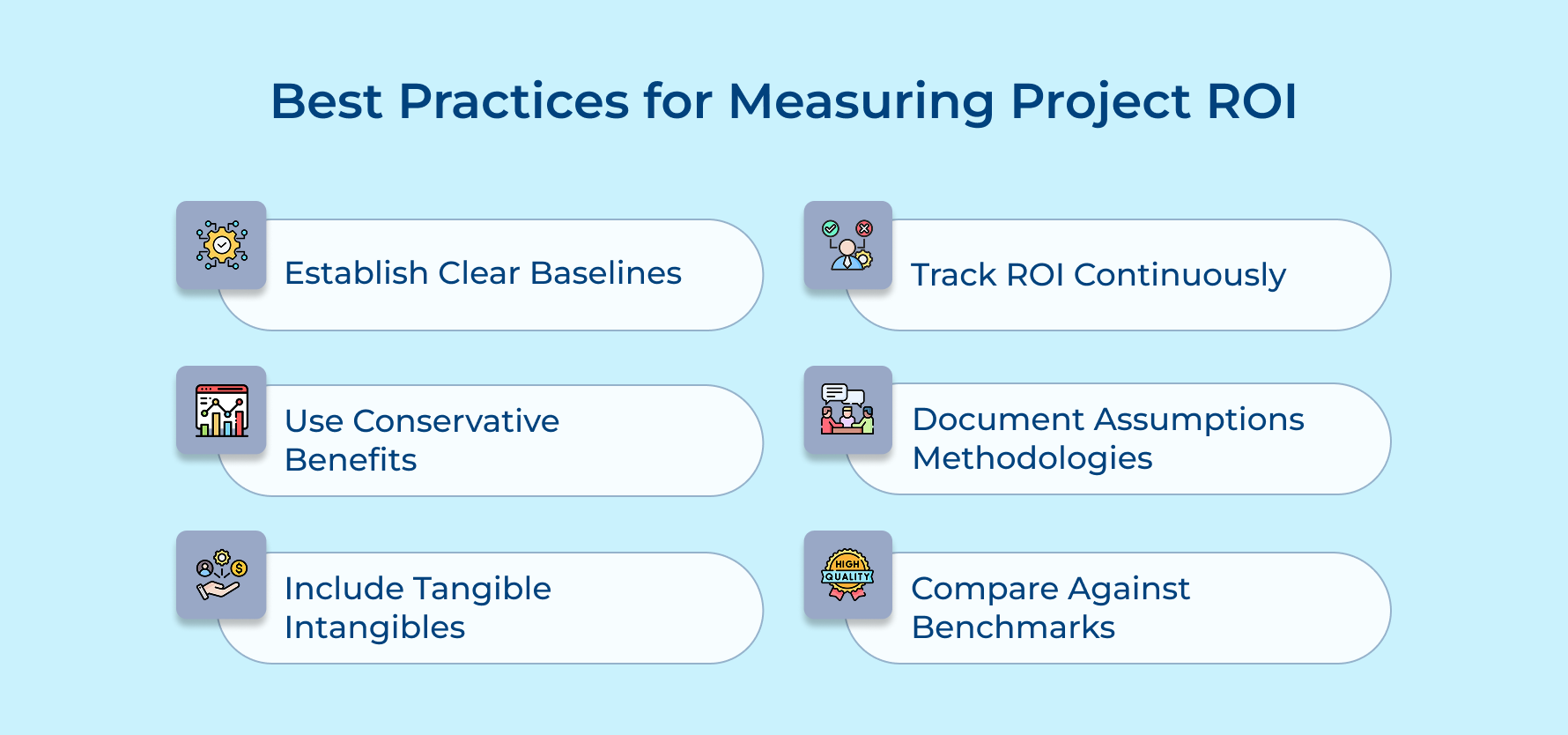
- Establish clear baseline metrics: Treat baseline metrics as a “starting snapshot” of current performance. You can’t accurately measure improvement without them.
- Use conservative benefits and liberal cost estimates: Avoid optimism bias by underestimating benefits and overestimating costs. This sets realistic expectations and boosts credibility when results exceed projections.
- Include tangible and intangible benefits: Quantify clear benefits like cost savings, but also consider softer benefits like morale or customer satisfaction. Assign realistic monetary values without exaggerating.
- Track ROI throughout project lifecycle: Regular monitoring acts as a health check. It highlights trends, warns of issues early and helps optimize performance or correct course when needed.
- Document assumptions and methodologies: Record how you estimated costs and benefits. This builds organizational knowledge and improves future ROI calculations.
- Compare against benchmarks and standards: Benchmarking gives context to your ROI numbers. It shows how your project stacks up against similar initiatives and industry standards.
Project ROI – Unleashing the True Potential of Your Investments
Project ROI calculation transforms abstract project value into concrete financial evidence that drives intelligent business decisions. When you master these measurement techniques you gain the power to justify investments, optimize resource allocation and demonstrate tangible organizational impact.
Remember that effective ROI measurement requires patience, precision and continuous refinement of your analytical approach. By implementing these best practices consistently you create a foundation for sustained project success that maximizes every dollar invested in organizational growth and improvement.
Limit time — not creativity
Everything you need for customer support, marketing & sales.

Shivank Kasera is part of the marketing team at Kooper, where he focuses on building content that helps agencies and service providers grow. With a keen interest in SaaS, operations, and scalability, he translates practical insights into actionable resources for business leaders.