Complete Guide to Consultant Lead Generation Strategies
- What is Consulting Lead Generation?
- Benefits of Lead Generation Strategies for Consulting Businesses
- 5 Smart Steps to Take Before Lead Generation for Consultants
- 8 Effective Lead Generation Strategies for Consulting Businesses
- 5 Mistakes to Avoid in Lead Generation for Consulting Business
- Empower Your Consultancy Business with Precision-Targeted Leads
- FAQs about Lead Generation for Consultants

Key Highlights:
- Lead generation for consultants creates predictable client flow and consistent revenue growth.
- Consultant lead generation strategies help position you as a trusted expert in your niche.
- Effective management consulting lead generation reduces sales effort while boosting premium pricing opportunities.
Many consultants face the same challenge: inconsistent client flow. You might have the expertise to transform businesses and solve complex problems, yet still worry about where your next project will come from.
The real issue is a lack of systematic lead generation for consultants. Networking can feel time-consuming and online marketing often seems overwhelming, leaving you reactive instead of proactive when it comes to growing your consulting practice.
This guide shares eight proven lead generation strategies built for consultants. Each approach is practical and designed to position you as the go-to expert in your niche – while giving you predictable systems to attract clients consistently as well as build long-term business growth.
What is Consulting Lead Generation?
Consulting lead generation is the process of attracting potential leads who need expert advisory services. The goal is building a pipeline of high-quality leads through targeted strategies.
Successful consultants understand clients buy expertise to solve problems they can’t address internally. By leveraging content marketing, networking and a structured generation service, consultants position themselves as trusted experts.
This creates a steady flow of consistent leads, ensuring long-term growth and predictable client acquisition rather than relying on sporadic opportunities.
Prime objectives:
- Build authority: Establish yourself as the go-to expert in your specific consulting niche through thought leadership.
- Generate qualified prospects: Attract potential clients who have both the need and budget for your services.
- Nurture relationships: Develop trust with prospects through consistent value delivery before they’re ready to buy.
- Shorten sales cycles: Pre-educate prospects so they understand your value proposition when you first connect.
- Create predictable revenue: Develop a consistent flow of new opportunities to maintain steady business growth.
Benefits of Lead Generation Strategies for Consulting Businesses
Effective lead generation for professional services transforms how consulting firms attract and convert prospects. Let’s explore the core advantages that make these strategies essential for sustainable growth.
Predictable Revenue Streams
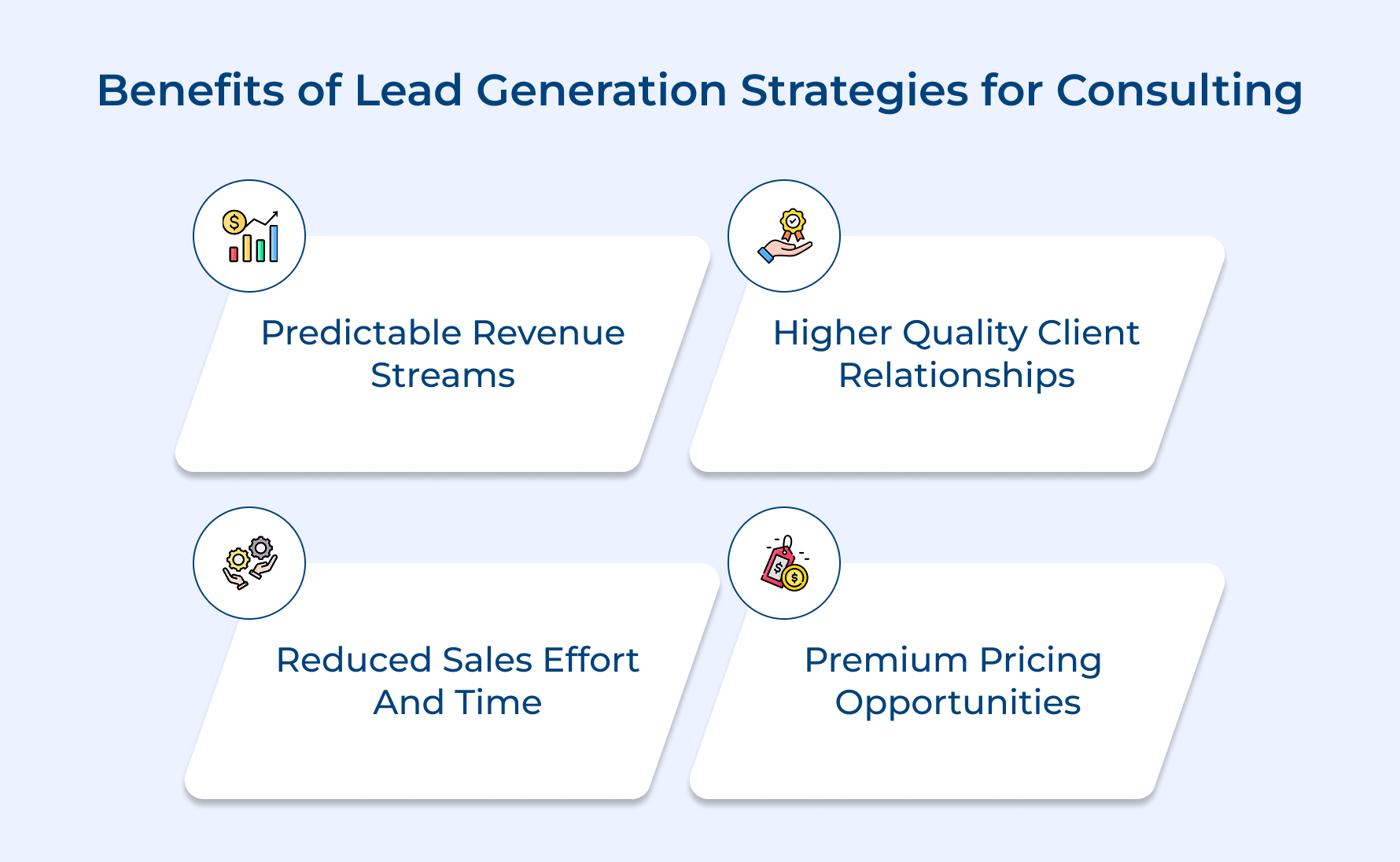
Lead generation creates consistent business flow rather than feast-or-famine cycles. You develop reliable systems that continuously bring qualified prospects into your pipeline. This predictability allows better financial planning and reduces the stress of wondering where your next client will come from.
Higher Quality Client Relationships
Strategic lead generation attracts clients who already understand your value proposition before initial contact. These prospects have been educated through your content and positioning. They enter conversations with realistic expectations and genuine interest in your specific expertise rather than price shopping.
Reduced Sales Effort and Time
Pre-qualified leads require less convincing because they’ve already consumed your educational content and recognized their need. Your sales conversations become consultative discussions rather than persuasive pitches. This efficiency allows you to focus energy on delivery rather than constantly hunting for new business.
Premium Pricing Opportunities
When prospects seek you out based on demonstrated expertise rather than competitive bidding, you command higher fees. Lead generation positions you as the specialist solution rather than a commodity service. Clients who find you through thought leadership are typically willing to pay premium rates for proven expertise.
5 Smart Steps to Take Before Lead Generation for Consultants
Smart consulting firms lay the groundwork before launching lead generation campaigns. These foundational steps ensure your efforts attract the right prospects and convert effectively.
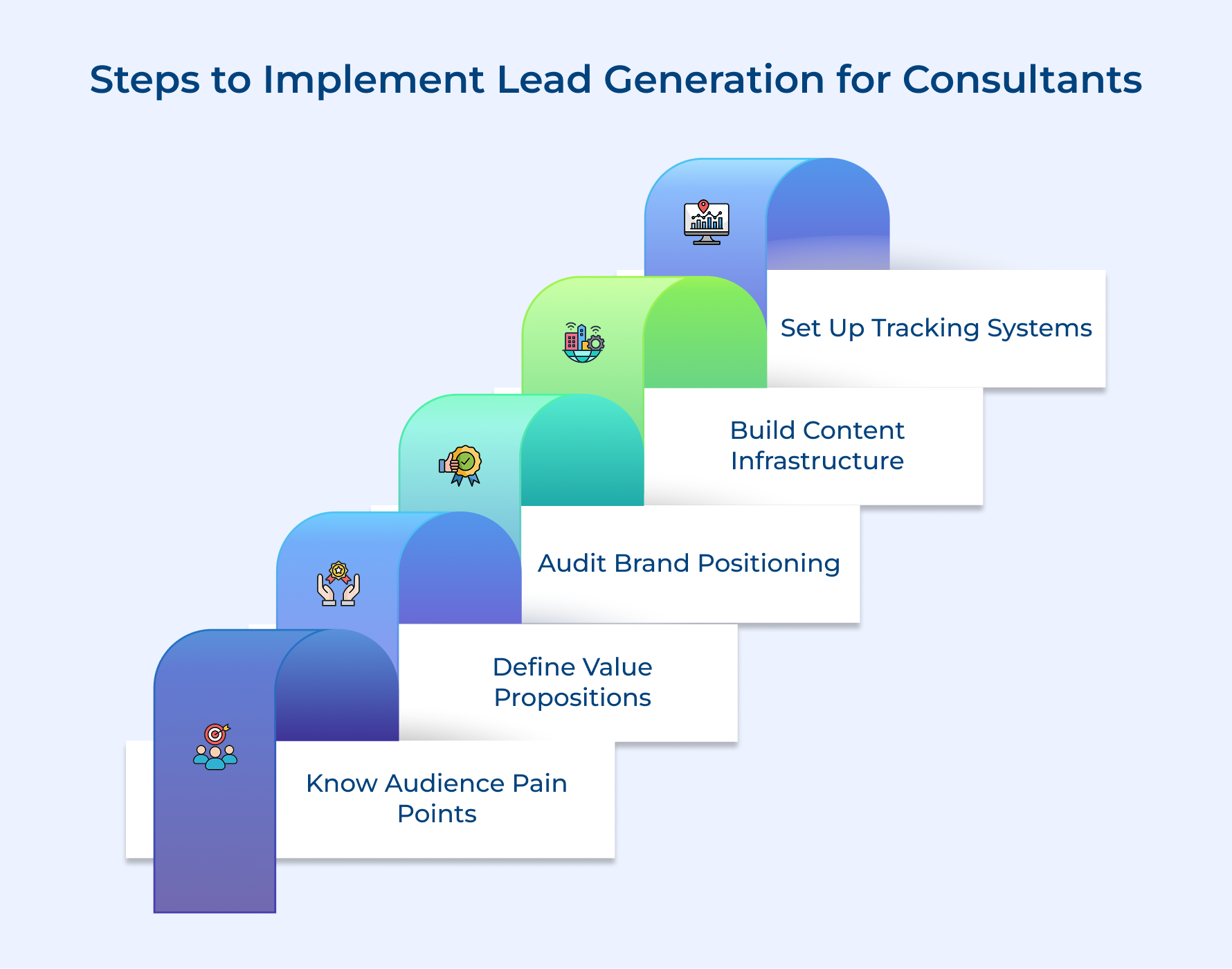
Step 1: Know Your Audience and Understand Their Pain Points
The first step in lead generation is knowing exactly who you want to reach. Build detailed profiles of your ideal clients – their industries, challenges and decision-making habits. Dive into their daily frustrations and the business problems that push them to seek consulting help.
Ask yourself:
- What problems does my consulting solve better than competitors?
- Which industries or company sizes get the most value from my expertise?
- What triggers make prospects start looking for consulting help?
- How do my ideal clients discover and evaluate services like mine?
Think of this step as creating a psychological map of your client’s world. The more precisely you understand their pressures and priorities, the easier it is to position your solutions as the obvious choice.
Step 2: Establish Clear Value Propositions
Once you understand your audience, sharpen your value proposition. Your message should instantly tell prospects why you’re different and why your approach delivers results. Avoid vague consulting jargon and focus on the transformation you bring.
Your value proposition should include:
- Specific outcomes: measurable results clients achieve with you.
- Unique methodology: your distinctive process or framework.
- Ideal client profile: who benefits most from your expertise.
This becomes the foundation for all your marketing and content, it’s the “why you” that makes clients pay attention.
Step 3: Audit Your Current Brand Positioning
Take a fresh look at how your consulting firm is perceived versus how you want to be seen. Often, what you think you’re communicating isn’t what prospects actually take away.
Key elements to review:
- Professional credibility: Do your website and materials showcase authority as well as trust signals?
- Specialization focus: Does your positioning reflect deep expertise or come across as too generalist?
Ask recent prospects about their first impressions and audit your digital presence with fresh eyes. Consistency and clarity here make it obvious you’re the right fit for their challenges.
Step 4: Create Content Infrastructure
Content fuels consulting lead generation, but it needs a system. Instead of posting sporadically, build an infrastructure that keeps your content consistent and aligned with the buyer’s journey.
Your content engine should include:
- Editorial calendar: to plan content that matches client needs at each stage.
- Content templates: for consistent messaging and quality.
- Performance measurement: analytics to see what drives engagement and leads.
Think of it like building a printing press before publishing a newspaper. A strong content system creates authority and attracts qualified prospects reliably.
Step 5: Set Up Tracking and Measurement Systems
Don’t guess what’s working, track it. Analytics tools help you see which lead generation activities actually bring qualified prospects and which waste time.
Tracking should cover:
- Lead sources (where they come from)
- Conversion rates (who turns into a client)
- ROI of each channel
Measurement turns lead generation from guesswork into a repeatable, data-driven process you can refine for steady growth.
8 Effective Lead Generation Strategies for Consulting Businesses
Here’s a breakdown of eight highly effective lead generation strategies designed to help consulting businesses attract and convert potential clients into long-term partners.
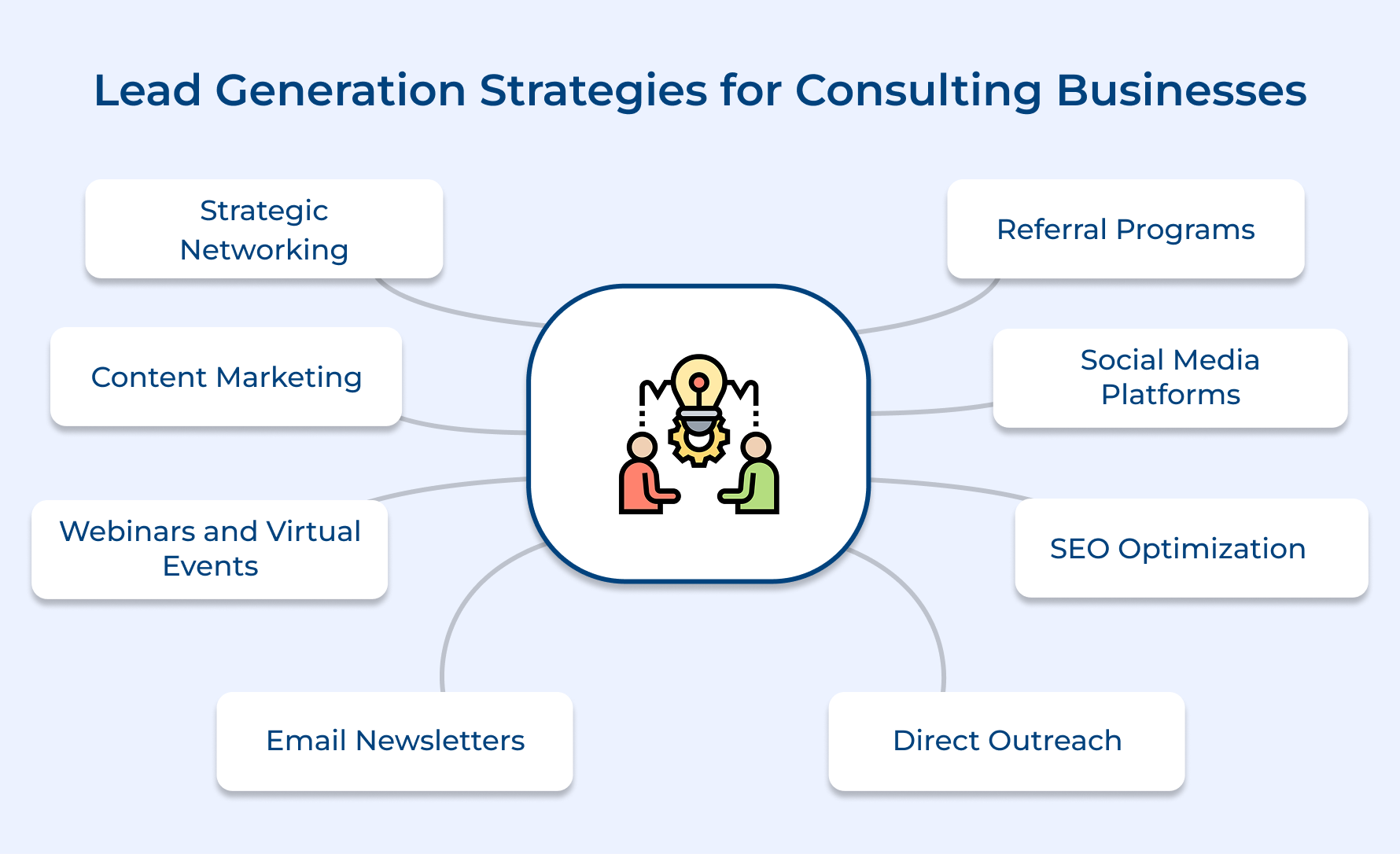
Strategic Networking and Relationship Building
Networking isn’t about handing out business cards or chasing leads, it’s about building genuine relationships. In consulting, trust drives referrals and referrals drive growth.
Here are smart ways to network without feeling “salesy”:
- Speak at conferences: Showcase expertise and attract prospects who need your insights.
- Join executive roundtables: Be part of peer discussions where decision-makers naturally discover your solutions.
- Build a partner ecosystem: Collaborate with non-competing service providers for mutual referrals.
- Set up client advisory boards: Get feedback and open doors to your clients’ professional networks.
Tip: Consultants focusing on lead generation consider helping first. Show genuine interest in solving problems and referrals will follow.
Content Marketing
Content is your chance to show prospects you’re the expert before they ever pick up the phone. Blogs, case studies and videos help position you as a go-to consultant.
Keep these principles in mind:
- Address real client challenges – not broad, generic topics.
- Share practical, actionable advice they can use right away.
- Use anonymized client stories to show proven results.
- Stay consistent, regular publishing keeps you top of mind.
Example: A supply chain consultant writing weekly tips on inventory management during peak season.
Webinars and Virtual Events
Webinars let prospects experience your expertise in real time. They’re perfect for showing how you solve problems and teach.
Ask yourself before hosting:
- What challenge can I solve in 60 minutes?
- Which industry trends are creating urgency?
- How do I balance education (80%) with subtle promotion (20%)?
- What’s my follow-up plan to convert attendees?
Steps to maximize results:
- Pick relevant, urgent topics.
- Promote via LinkedIn + email.
- Deliver real value, not just a sales pitch.
- Engage with polls/Q&A to spot hot leads.
- Follow up within 48 hours while interest is fresh.
Email Newsletters & Drip Campaigns
Consulting sales cycles are long, emails help you stay visible until prospects are ready. The more tailored your emails, the better the response.
Effective approaches:
- Weekly industry insights: Position yourself as the expert who understands market shifts.
- Drip campaigns: Automate sequences that solve common problems and build credibility.
- Personalized updates: Segment by industry, company size, or pain points to stay relevant.
Strategic Partnerships and Referral Programs
Referrals are gold for consulting. Strategic partnerships give you a steady pipeline without heavy marketing spend.
Here’s how to build them:
- Document referral criteria so partners know your ideal client profile.
- Use simple referral tracking to avoid confusion.
- Offer reciprocal value, make introductions too.
- Meet quarterly with partners to explore new opportunities.
Example: A management consultant referring clients to an IT consultant when process improvements require tech upgrades.
Leverage Social Media Platforms
Today’s buyers check you online before calling. Social media is where you build trust and visibility. Keep posts valuable, not just promotional.
Platform strategies:
- LinkedIn: Share in-depth articles and insights for decision-makers.
- Twitter (X): Join real-time conversations with quick insights.
- Facebook groups: Contribute value by answering questions and sharing resources.
- YouTube: Create educational videos that showcase your methodology.
SEO (Search Engine Optimization)
SEO helps consulting firms show up when potential clients search online for services or industry-specific solutions.
Since most buyers start their consultant search with Google, organic visibility is critical for lead generation. Instead of chasing prospects, SEO attracts those already looking for your expertise.
To use SEO effectively, create content that addresses the problems you solve, optimize for local searches and build authority through guest posting. This positions your firm as a trusted solution provider.
Pro tips:
- Use long-tail keywords tied to specific consulting challenges (less competition, higher intent).
- Build dedicated landing pages for each service and geographic market.
- Consistently publish content that demonstrates expertise.
Direct Outreach and Cold Prospecting
Direct outreach is about proactively connecting with potential clients instead of waiting for inbound inquiries. For consulting businesses, this strategy creates a predictable lead flow and helps reach prospects who may never find you organically.
Three effective methods:
- LinkedIn messaging: Personalize connection requests with insights about a prospect’s business challenges, then share resources instead of pitching immediately.
- Strategic emails: Target decision-makers with tailored messages highlighting how you solve their specific issues. Include case studies for credibility.
- Warm calls: Follow up with people who’ve engaged with your content or events, using talking points relevant to their situation.
Pro tips: Time your outreach for when prospects are most receptive, track all interactions and follow up consistently without being pushy.
5 Mistakes to Avoid in Lead Generation for Consulting Business
Lead generation for consulting firms often takes a hit when the fundamentals aren’t done right. Even small mistakes can cost a fortune. Let’s break down what they are — and how to avoid them.
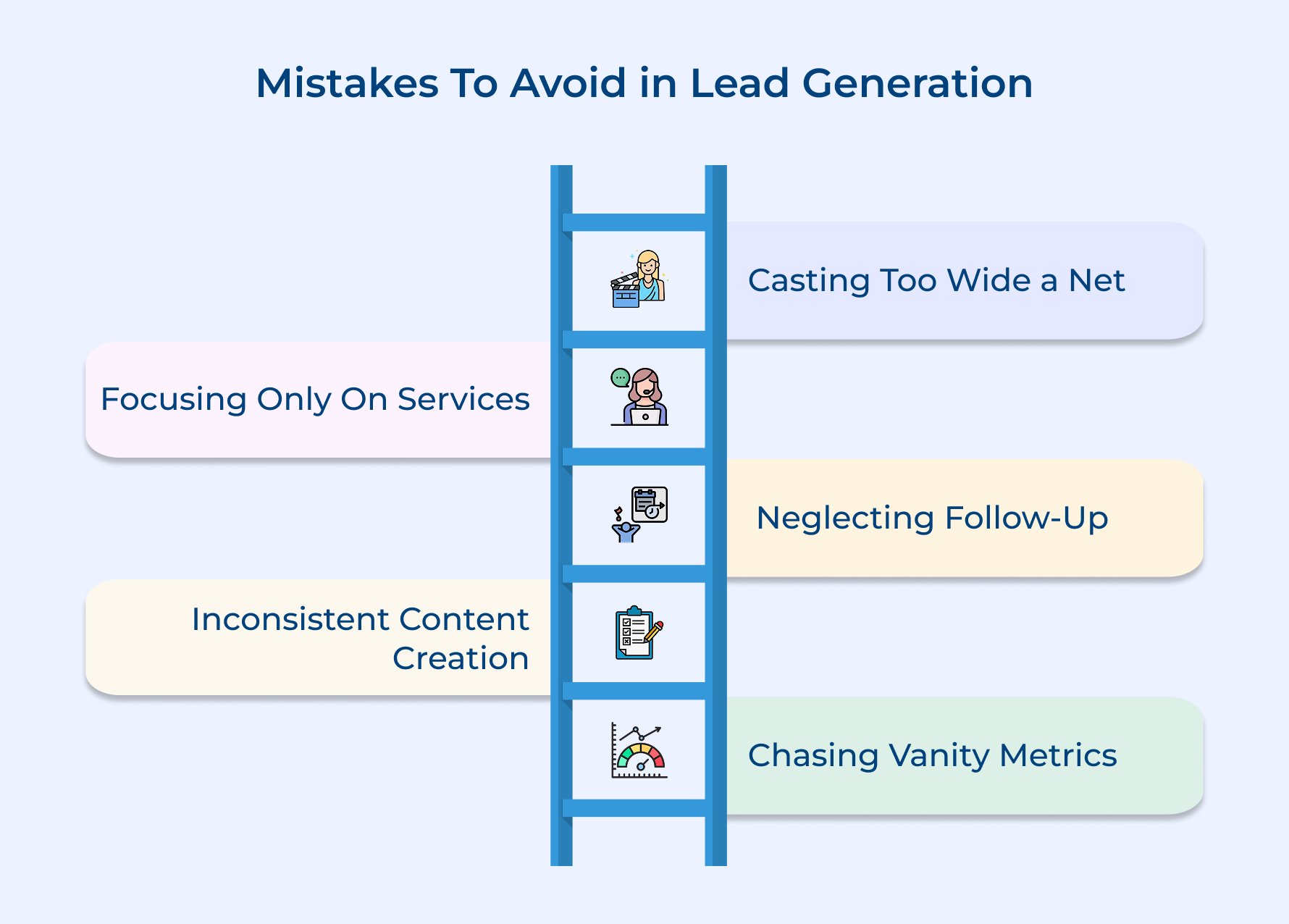
Casting Too Wide a Net
In the current competitive market, many consulting firms avoid niche specialization to reach more people. But broad messaging only dilutes your value and confuses potential clients. Generic promises make it hard for prospects to know if you understand their challenges, often leaving you with a client base that chooses on price instead of expertise. Be specific with your messaging and your audience to ensure good traction.
Focusing Only on Services Instead of Client Outcomes
Too often, consultants explain what they do rather than the transformation clients can expect. Prospects don’t care about methodologies, they want results that align with their revenue goals. Results-focused messaging gives the chance to show how your expertise changes their customer journey for the better.
Neglecting Follow-Up and Lead Nurturing
Firms capture interest through content or paid advertising but don’t stay consistent with communication. Since consulting sales cycles run long, a sales rep who doesn’t nurture leads gives competitors room to step in. Without structured follow-up, even warm opportunities cool off quickly.
Inconsistent Content Creation and Messaging
Many firms start strong with blogs or campaigns but lose momentum over time. Inconsistency weakens thought leadership because clients need repeated proof before trusting you. Mixed messages across platforms also confuse your client base about what you really offer, making every effective tool less impactful.
Measuring Vanity Metrics Instead of Revenue Impact
It’s easy to track likes, followers, or website traffic, but those numbers don’t always connect to consulting contracts. When firms chase vanity metrics, they lose sight of lead quality. Success means measuring how every strategy contributes to revenue goals and long-term growth, not just activity.
Empower Your Consultancy Business with Precision-Targeted Leads
Effective lead generation for consultants transforms businesses from unpredictable project hunting into systematic client acquisition machines. When you implement these strategies with clear positioning and consistent execution you create sustainable competitive advantages that compound over time.
The foundation lies in understanding your ideal clients deeply then building systems that attract them naturally through valuable expertise demonstration. Smart consultants focus on quality relationships over quantity metrics ensuring every lead generation effort contributes to long-term business growth and premium positioning.
Limit time — not creativity
Everything you need for customer support, marketing & sales.

Shivank Kasera is part of the marketing team at Kooper, where he focuses on building content that helps agencies and service providers grow. With a keen interest in SaaS, operations, and scalability, he translates practical insights into actionable resources for business leaders.