What is Scope Creep in Project Management? Causes & Examples
- What is Scope Creep in Project Management?
- 5 Key Benefits of Preventing Project Management Scope Creep
- 6 Common Causes of Scope Creep in Project Management
- How to Identify Scope Creep in Project Management?
- How to Avoid Scope Creep in Project Management in 6 Clear Steps
- Examples of Scope Creep in Project Management
- Keep Your Projects on Track with Scope Creep Management
- FAQs about Scope Creep in Project Management

Key Highlights:
- Learn the scope creep meaning, definition and warning signs in project management across multiple industries as well as methodologies.
- Uncover proven steps to avoid, track and handle scope creep as well as team productivity.
- Explore project manager strategies to control requirements creep, communicate scope and optimize client retention with strong change management.
Your carefully planned project suddenly feels like a runaway train careening toward disaster. What started as a manageable initiative has morphed into an overwhelming monster consuming double your budget and pushing deadlines into next year.
Every day brings new “urgent” requests that stakeholders insist are critical additions. Your team works longer hours while project quality suffers and original objectives become distant memories in the chaos of constant changes.
Understanding the six root causes of scope creep empowers you to build defensive strategies that protect your projects from unauthorized expansion. These proven prevention techniques transform chaotic experiences into predictable successful outcomes.
What is Scope Creep in Project Management?
Scope creep happens when your project gradually expands beyond its original boundaries without proper approval or budget adjustments. This silent project killer sneaks in through small additional requests and feature additions that seem harmless individually. However, these tiny changes accumulate over time and transform your well-planned project into an unrecognizable monster that consumes resources as well as derails timelines.
Scope creep operates through a series of seemingly innocent requests that bypass formal change control processes. Stakeholders ask for “just one small addition” or “a tiny modification” that appears quick and easy to implement. These requests multiply as team members say yes to avoid conflict and the project slowly morphs into something completely different from what was originally planned as well as budgeted.
Primary objectives:
- Establish clear project boundaries and document every requirement in detail before starting any work.
- Implement a formal change request process that requires approval and impact assessment for all modifications.
- Educate stakeholders about the cost and time implications of changes throughout the project lifecycle.
- Maintain regular communication with all parties to manage expectations and address concerns proactively.
- Monitor project progress closely and flag any deviations from the original scope immediately when they occur.
5 Key Benefits of Preventing Project Management Scope Creep
Preventing scope creep acts like a protective shield for your project’s success. These benefits create a foundation that keeps your team focused and your stakeholders satisfied.
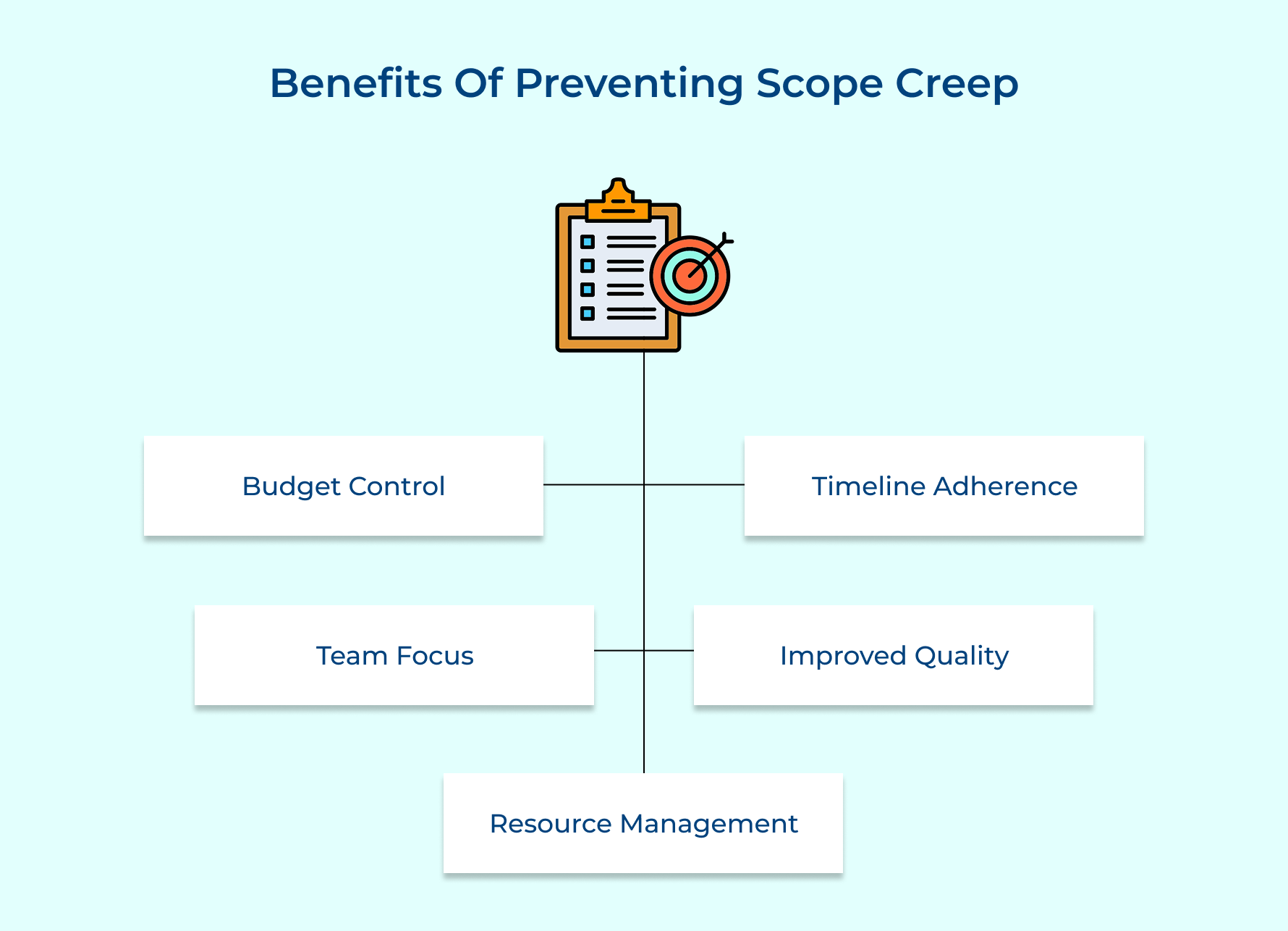
1. Budget Control and Financial Predictability
Preventing scope creep helps you control costs and avoid surprises. Your budget stays intact, making resource allocation easier. With project management software, you can track spending and explain progress clearly to stakeholders.
2. Timeline Adherence and Deadline Achievement
Sticking to scope keeps your project on schedule. No extra tasks means deadlines are met, trust is built and momentum stays strong. In software development, this ensures smooth delivery.
3. Enhanced Team Focus and Productivity
Your team stays laser-focused on original objectives without getting distracted by constant changes and new requirements. This concentration leads to higher quality work and reduces the mental fatigue that comes from constantly switching between different tasks.
4. Improved Quality and Reduced Errors
Preventing scope changes allows your team to perfect the original requirements instead of rushing through multiple modifications. This focused approach results in fewer bugs and higher overall quality since attention remains concentrated on core deliverables.
5. Better Resource Management and Allocation
You can optimize your human and technical resources when the project scope remains stable throughout execution. Team members work more efficiently because they understand their specific roles and responsibilities without confusion from changing requirements.
6 Common Causes of Scope Creep in Project Management
Understanding these root causes helps project managers identify warning signs early and build stronger defenses against uncontrolled project expansion.
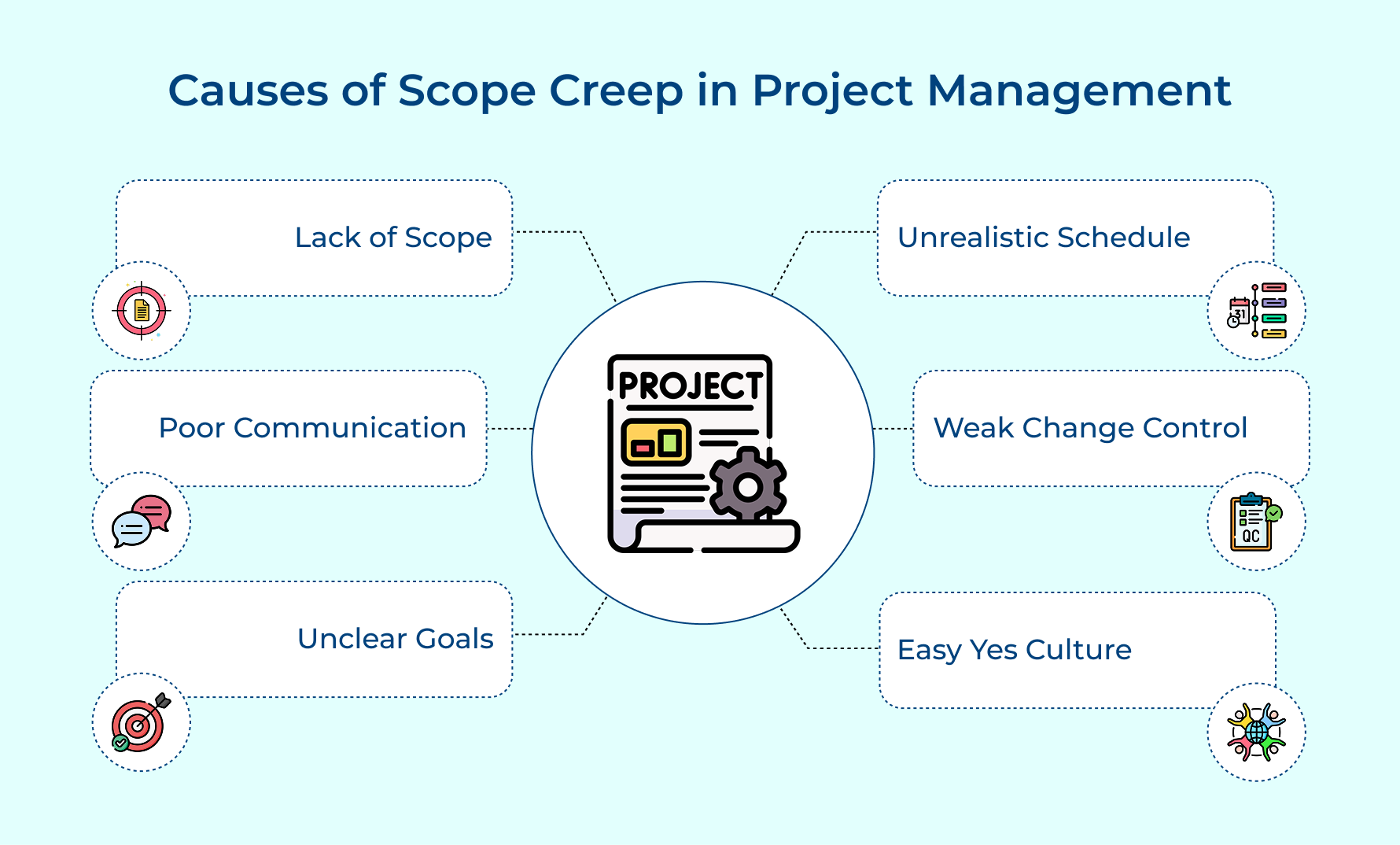
1. Lack of Project Scope
Projects without clearly defined boundaries become magnets for additional requests because stakeholders assume everything is negotiable. When scope documentation lacks specificity team members struggle to determine what falls inside or outside project limits.
Key warning signs to watch for:
- Project documents use general terms like “user-friendly” without specific criteria
- Deliverables are described in broad categories rather than detailed specifications
- Success metrics remain undefined or unmeasurable throughout planning phases
Missing scope definition creates a vacuum that gets filled with assumptions and wishful thinking from all project participants. Teams find themselves building features that were never formally requested while stakeholders expect deliverables that were never officially promised.
2. Poor Communication
Communication breakdowns create information silos where different stakeholders operate with conflicting understandings of project requirements. When teams don’t share updates regularly misalignments compound and create opportunities for unauthorized scope additions.
Critical communication questions to consider:
- Are all stakeholders receiving consistent project updates and status reports?
- Do team members understand how to escalate scope change requests properly?
- Is there a shared understanding of project priorities and constraints across all levels?
Miscommunication leads to misaligned expectations where everyone believes they are working toward the same goal but actually pursuing different visions. This disconnect becomes apparent only when deliverables are presented and stakeholders express surprise about missing features they assumed were included.
3. Unclear Project Goals or Objectives
Fuzzy project objectives invite scope expansion because team members can’t distinguish between essential requirements and additional features. When success criteria remain undefined stakeholders continuously add elements they believe will improve outcomes.
Elements that indicate unclear objectives:
- Goals stated in general terms without quantifiable outcomes
- Multiple conflicting priorities that cannot be ranked or prioritized effectively
- Success criteria that change based on who is asked about them
A software project aimed at “improving customer satisfaction” becomes a moving target where every stakeholder suggests different features. Sales wants faster response times while support requests detailed reporting capabilities and management pushes for cost reduction features. Without clear prioritization all suggestions seem equally valid and necessary.
4. Unrealistic Project Schedule
Compressed timelines force teams to make rushed decisions about scope without proper evaluation of implications. When deadlines feel impossible stakeholders often add requirements hoping to maximize value from limited time windows.
Tight deadlines create pressure that clouds judgment and makes everyone more likely to accept changes without proper impact assessment. Teams may agree to additional work hoping to please stakeholders without considering the cumulative effect on project success.
5. Ineffective Change Control Process
Weak change management systems allow unauthorized modifications to slip into projects without proper impact assessment or approval. When change requests bypass formal evaluation processes, costs and timelines spiral beyond control.
Critical elements missing from weak change processes:
- No standardized forms or procedures for submitting modification requests
- Missing approval workflows that bypass necessary stakeholder review and authorization
- Inadequate impact assessment procedures that fail to calculate true costs and timeline effects
Let’s say a construction project where the architect verbally approves room layout changes during casual site visits. These informal modifications require electrical and plumbing adjustments that weren’t budgeted or scheduled. Without documented approval processes these conversations become expensive misunderstandings that delay project completion.
6. Team Members Saying Yes Too Easily
People-pleasing makes team members say yes to extra work without thinking about the bigger project impact. They focus on keeping everyone happy instead of protecting project success and scope keeps growing with small commitments.
For example, a graphic designer may agree to make “just one more poster variation” for different departments. Each request feels minor, but soon the designer is stuck creating dozens of extra deliverables. This eats up time meant for key tasks like developing brand guidelines.
How to Identify Scope Creep in Project Management?
These diagnostic questions help project managers detect scope creep before it transforms manageable projects into overwhelming challenges that consume excessive resources and miss critical deadlines.
- Are we delivering features or outcomes that weren’t part of the original project charter or statement of work?
- Have stakeholders started using phrases like “while we’re at it” or “since we’re already working on this” when making requests?
- Is the current project timeline extending significantly beyond the original estimated completion date without formal approval?
- Are team members working on tasks that feel disconnected from the core project objectives we established at the beginning?
- Has the project budget increased by more than 10% through informal additions rather than approved change requests?
- Do we find ourselves saying yes to requests without properly evaluating their impact on existing commitments and resources?
- Are different stakeholders requesting modifications based on their individual preferences rather than genuine business requirements?
- Is the project becoming so complex that new team members struggle to understand what we’re actually trying to accomplish?
How to Avoid Scope Creep in Project Management in 6 Clear Steps
Here are six strategic steps to help you maintain control, meet your deadlines and deliver successful projects without the dreaded scope creep.
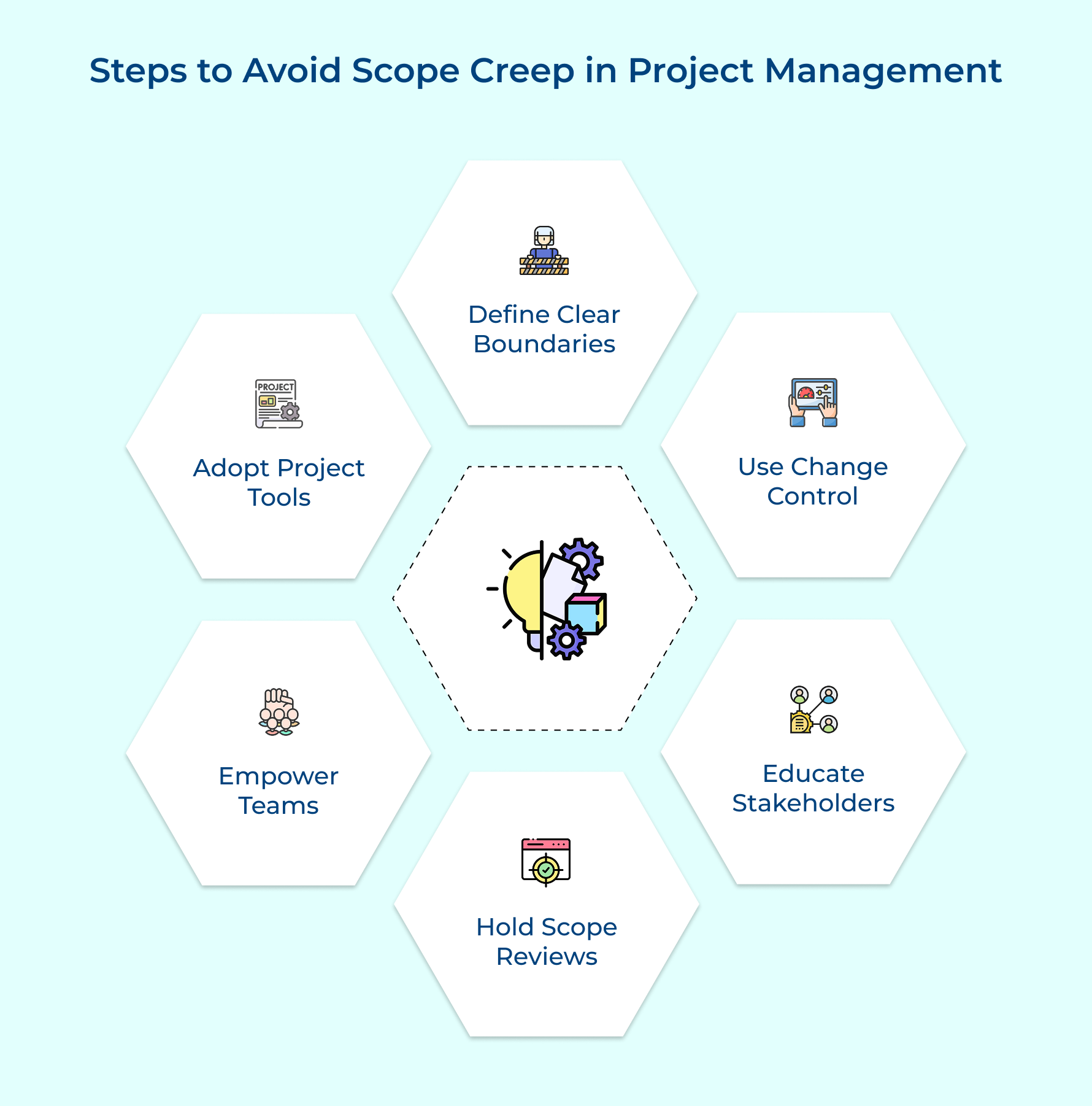
1. Define Clear Project Boundaries Early
Clear project boundaries work like protective walls that stop unauthorized tasks from creeping in. If limits aren’t defined, stakeholders often assume everything is open for negotiation and the project quickly expands.
Here are three ways to set strong boundaries:
- Document deliverables and acceptance criteria: Write clear descriptions of each output, including quality standards and completion rules. This removes ambiguity and prevents undefined features from being added later.
- List what’s excluded: Spell out which activities, features, or outcomes are not part of the scope. This list helps push back when new requests come up.
- Detail functional and technical requirements: Define exactly how systems should work and the technical standards they must follow. This acts as a roadmap and separates core needs from nice-to-have extras.
By aligning expectations early and involving stakeholders in setting boundaries, you reduce future conflicts as well as gain their support in protecting project scope.
2. Implement Formal Change Control Process
Formal change control gives projects a structured way to evaluate modifications while protecting them from unauthorized scope creep. Instead of slipping in through informal channels, every change gets proper review before implementation.
Key questions to ask when setting up change control:
- Who has the authority to approve different types or sizes of changes?
- What details must requesters provide when suggesting modifications?
- How will the team check impact on timeline, budget and resources?
- What documentation will track approved changes across the project lifecycle?
Answering these upfront builds clear governance and avoids confusion during evaluations. With everyone clear on their role, the process runs smoothly and project integrity stays intact.
To implement effectively:
- Use standardized forms that capture details, justification and expected benefits.
- Define who can approve minor vs. major changes, with escalation paths for bigger decisions.
- Require impact analysis on budget, timeline and resources before final approval.
3. Educate Stakeholders About Project Constraints
Stakeholder education transforms potential scope creep sources into project protection allies by helping them understand true change costs. When stakeholders grasp how modifications impact timelines and budgets they make more thoughtful requests as well as support scope discipline.
Here are four ways stakeholder education prevents scope creep effectively:
- Explain how changes affect timeline and budget: Help stakeholders visualize the ripple effects of seemingly small modifications created across interconnected project components and resource allocations.
- Share the cost implications of scope modifications: Break down both direct costs and hidden expenses like testing rework as well as integration challenges that accompany scope changes.
- Communicate resource limitations and competing priorities: Show stakeholders how additional requests force difficult trade-offs between current commitments and new opportunities.
- Demonstrate interconnected project dependencies: Illustrate how changing one element often requires modifications to multiple other components creating cascading effects throughout the project.
Consider a marketing executive requesting additional social media integration after seeing a competitor’s campaign. Once they understand this requires database modifications API development and security testing taking three weeks while delaying launch they might prioritize the original timeline instead.
4. Schedule Regular Scope Review Meetings
Regular scope review meetings create structured checkpoints where teams can identify and address scope drift before it becomes unmanageable. These sessions maintain project focus by continuously validating current activities against original objectives and catching unauthorized additions early.
Four essential agenda items ensure effective scope review meeting outcomes:
- Review recent work completion against original project deliverables and timelines
- Identify any new requests or informal additions that have emerged since last meeting
- Assess current resource allocation compared to baseline project planning assumptions
- Document any approved scope changes and their impact on project constraints
Validating current work against baseline requirements ensures teams stay aligned with original project objectives rather than drifting toward interesting but unplanned activities. This validation process catches scope creep early when corrections are still manageable and inexpensive.
Pro tip: Schedule these meetings at consistent intervals rather than waiting for problems to emerge because prevention costs far less than correction efforts.
5. Empower Teams to Push Back
Team empowerment is the strongest defense against scope creep. Since frontline workers face change requests first, they need the authority to protect project boundaries. If they lack confidence or skills to say no, they may unintentionally allow scope to expand.
Empowerment comes from giving teams the right tools and leadership support to handle requests professionally. With proper training and backing, they can redirect inappropriate demands through formal change channels instead of taking on extra work by default.
Best practices:
- Provide comprehensive training on professional refusal techniques that maintain positive stakeholder relationships while protecting project scope.
- Create organizational culture that rewards saying no to unauthorized requests rather than punishing teams for following scope discipline.
6. Utilize Right Project Management Technology
Project management technology serves as an automated guardian that tracks scope changes and alerts teams when projects drift from original baselines. These digital tools provide objective oversight that human memory and manual tracking systems simply cannot match consistently.
Organizations should prioritize technology solutions that offer real-time baseline comparison features and comprehensive change documentation capabilities rather than basic task management functions. The right tools integrate scope monitoring with budget tracking and timeline management for holistic project oversight.
Four essential technologies support effective scope creep prevention strategies:
- Baseline tracking software: Continuously compares current project status against original plans and highlights deviations automatically for immediate attention.
- Change request management systems: Creates formal workflows that require proper documentation and approval before any scope modifications become official project commitments.
- Resource allocation dashboards: Monitors how team time and budget expenditures align with planned activities to identify unauthorized work patterns early.
- Stakeholder communication platforms: Centralizes all project discussions and requests to prevent informal scope changes from bypassing proper evaluation processes.
Examples of Scope Creep in Project Management
These real-world scenarios demonstrate how scope creep manifests across different industries and project types, helping you recognize similar patterns in your own work.
Marketing Agency Project Scope Creep
A social media campaign originally designed for three platforms gradually expanded to include influencer partnerships, email marketing and video content creation. The client kept requesting “small additions” like Instagram Stories and LinkedIn posts that seemed minor individually but doubled the project timeline as well as budget requirements.
Website Development Project Scope Creep
A simple business website project transformed into a complex e-commerce platform when the client discovered competitors offered online shopping capabilities. What started as a five-page informational site grew to include payment processing, inventory management, customer accounts and mobile app integration without corresponding budget adjustments.
Consultancy Project Scope Creep
A strategic planning consultation expanded from analyzing current operations to redesigning entire organizational structures and implementing new software systems. The consulting team agreed to additional workshops, training sessions and process documentation that tripled their original time commitment while maintaining the same fixed fee.
IT Project Scope Creep
A network security upgrade project ballooned into a complete infrastructure overhaul when stakeholders realized they could also modernize servers and implement cloud migration. The IT team found themselves managing hardware procurement data migration and staff training alongside the original security improvements without additional resources or timeline extensions.
Keep Your Projects on Track with Scope Creep Management
Effective scope creep management in project management turns chaos into control. It creates predictable, successful outcomes by setting boundaries and enforcing disciplined change processes. These protective measures ensure your projects deliver intended value within planned timelines and budgets.
Remember that preventing scope creep requires constant vigilance and stakeholder cooperation rather than one-time setup activities. When you implement these strategies consistently your projects become reliable engines for organizational success that stakeholders trust and teams enjoy working on.
Limit time — not creativity
Everything you need for customer support, marketing & sales.

Pooja Deshpande is a content contributor at Kooper, focused on creating insightful resources that help agencies and service providers scale efficiently. Passionate about SaaS trends, content strategy, and operational excellence, she delivers practical, easy-to-implement guidance for modern business leaders.