How to Build an Effective Consulting Sales Process (7 Steps)
- What is a Consulting Sales Process?
- Downsides of Not Creating a Consulting Sales Process
- Key Principles of Successful Consultative Selling
- 7 Actionable Steps of a Successful Consulting Sales Process
- Advanced Techniques for Consulting Sales Mastery
- Redefine Your Sales Approach with Consulting Sales
- FAQs about Consulting Sales

Key Highlights:
- Avoid inconsistent income and stalled growth with a proven consulting sales framework.
- A consultative selling approach helps you uncover client pain points and build lasting relationships.
- Streamline sales cycles, qualify leads better and scale faster with systematic consulting sales strategy.
Picture this, you’re an expert consultant with deep knowledge but your phone isn’t ringing and qualified prospects seem impossible to find. You’re watching competitors win deals while you struggle to convert conversations into paying clients despite having superior expertise.
This frustrating cycle happens because most consultants treat sales as an afterthought rather than a systematic process.
Fortunately there’s a proven framework that transforms scattered sales efforts into predictable client acquisition. This comprehensive guide on consulting sales explains a proven seven-step process. It shows how successful consultants identify and close high-value opportunities. You’ll also learn how they build lasting client relationships that lead to consistent referrals.
What is a Consulting Sales Process?
A consulting sales process is a structured roadmap that guides consultants through converting prospects into paying clients. This systematic approach helps you avoid getting lost in lengthy sales cycles and ensures you’re addressing client needs at every step.
What is Consultative Selling?
Consultative selling forms the backbone of effective consulting sales processes. Rather than pushing services you think clients need you become a trusted advisor who listens deeply and asks probing questions. The approach focuses on understanding pain points before proposing solutions.
Key importance:
- Increases conversion rates: A structured process helps you identify qualified prospects and avoid wasting time on poor-fit clients.
- Builds trust faster: Following consistent steps demonstrates professionalism and shows prospects you understand their journey.
- Shortens sales cycles: Clear stages prevent back-and-forth confusion as well as keep momentum moving toward decisions.
- Creates predictable revenue: When you can track prospects through defined stages you can better forecast income and plan your business growth.
Downsides of Not Creating a Consulting Sales Process
Operating without a structured business consulting sales process is like building a house without blueprints – looks fine at first, but weak foundations cause hidden issues.
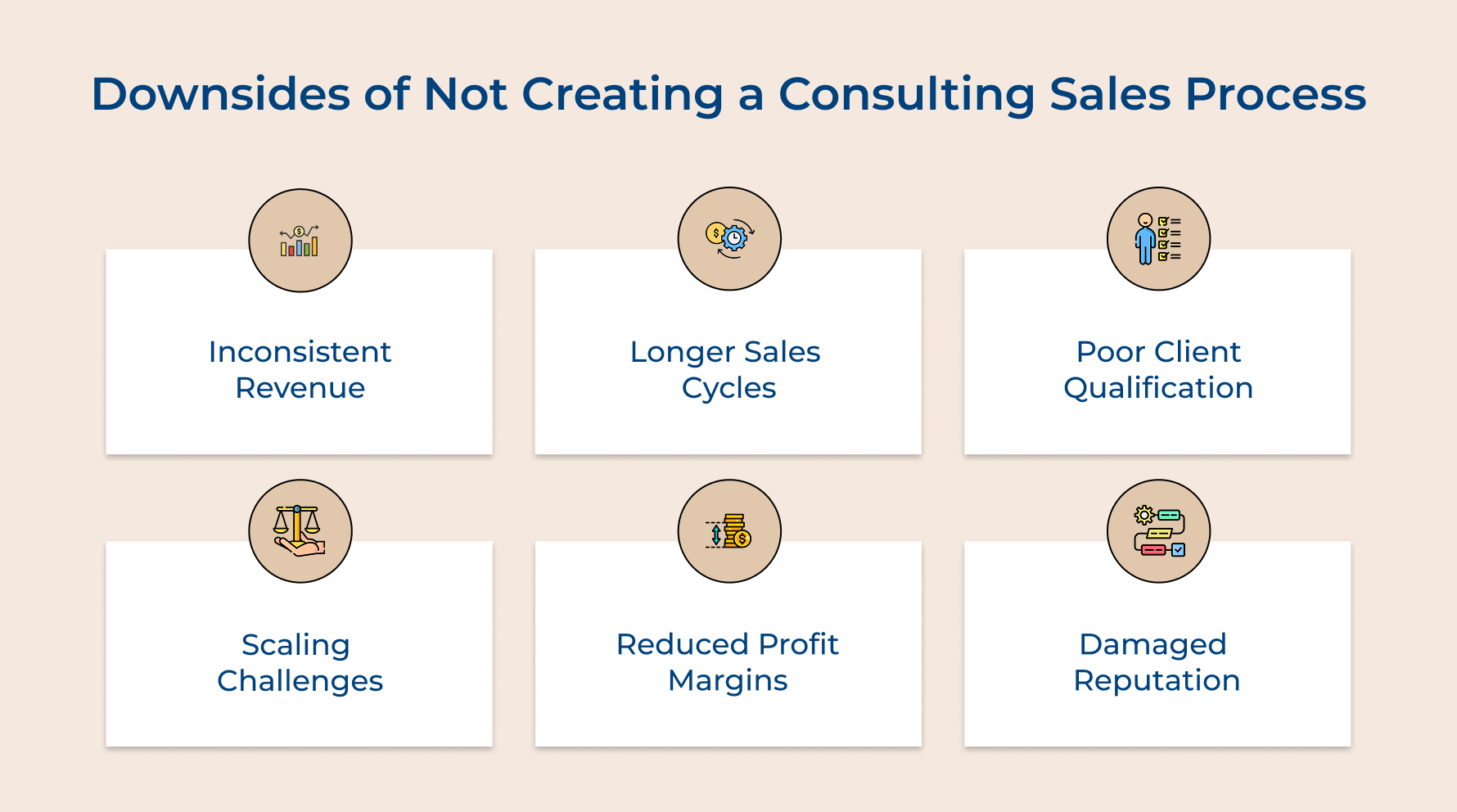
1. Inconsistent Revenue Streams
A vague sales process makes your income feel like a roller coaster – booms one month, dry spells the next. You’re left scrambling for clients instead of relying on a steady pipeline.
2. Longer Sales Cycles
When there’s no structure, prospects get stuck. They keep asking the same questions, decisions drag on and nobody knows what the next step should be.
3. Poor Client Qualification
Failing to screen properly means you’ll waste time chasing prospects who aren’t ready or can’t afford your services – while the right clients slip through the cracks.
4. Difficulty Scaling Your Business
If every sales call feels like starting over, growth stalls. You can’t train your team or repeat success without a solid framework in place.
5. Reduced Profit Margins
A disorganized approach often leads to underpricing or saying yes to bad terms just to close deals. That’s how you end up overworked and underpaid.
6. Damaged Professional Reputation
Inconsistent follow-ups and unclear communication leave a poor impression. In consulting circles, word spreads quickly and a bad sales experience can stick with you.
Key Principles of Successful Consultative Selling
Understanding these core principles helps consultants build deeper relationships while uncovering opportunities that competitors miss entirely.
Before diving into consulting sales principles, consider these foundational questions:
- What specific problems does your expertise solve best?
- How do you currently identify qualified prospects?
- What questions reveal the deepest client pain points?
- When do prospects feel most confident choosing consultants?
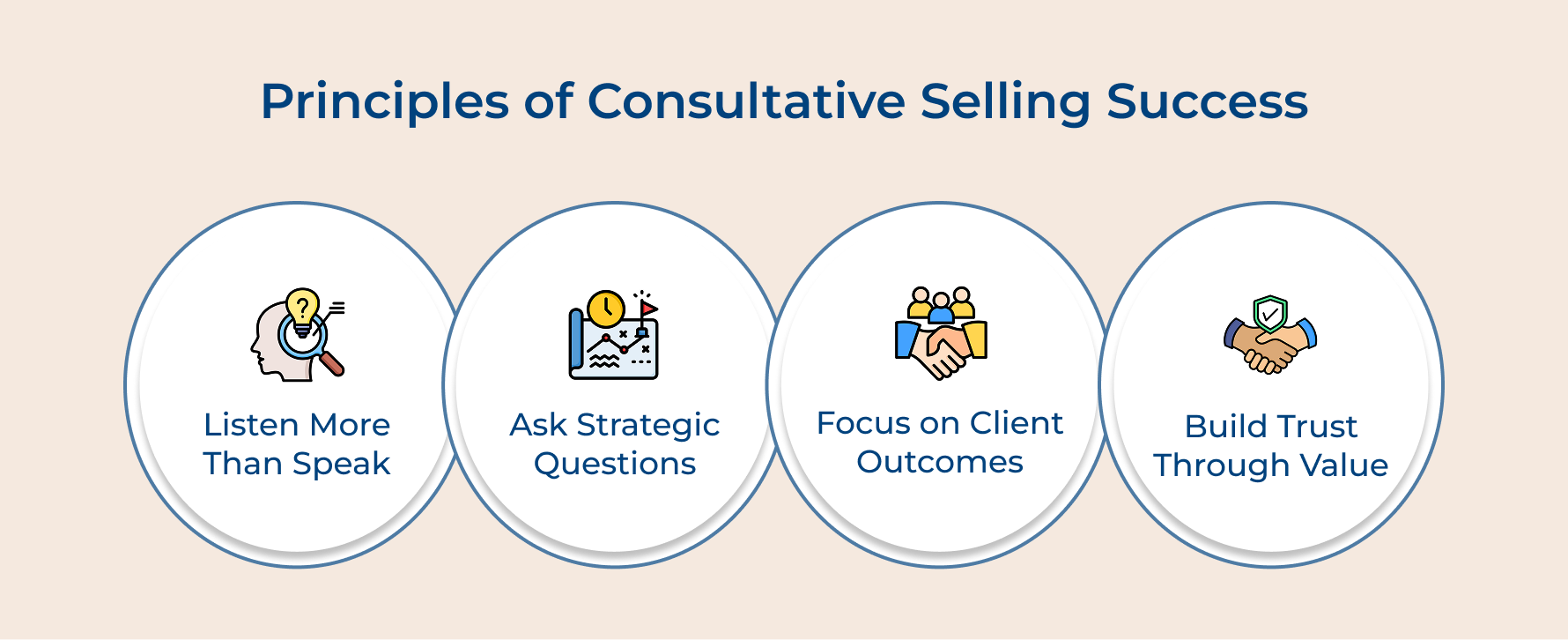
1. Listen More Than You Speak
Successful sales in consulting business requires disciplined listening that uncovers hidden challenges and motivations driving prospect decisions. Focus on understanding their complete situation before offering any solutions or demonstrating your expertise through questioning.
2. Ask Strategic Questions That Create Insight
Exceptional consultants distinguish themselves by asking questions that prospects haven’t considered but desperately need to explore. These strategic inquiries demonstrate your expertise while helping clients discover new perspectives about their challenges.
3. Focus on Client Outcomes Rather Than Your Services
Consulting sales techniques center conversations around measurable business results that matter most to prospects rather than listing your capabilities. This outcome-focused approach helps clients envision success while justifying investment decisions.
4. Build Trust Through Consistent Value Delivery
Every interaction should provide genuine value that demonstrates your expertise and commitment to client success. Consistent value delivery builds trust incrementally while differentiating you from competitors who focus primarily on closing deals.
7 Actionable Steps of a Successful Consulting Sales Process
Join us as we explore each phase of this process, offering crucial insights that could redefine your consulting and sales management.
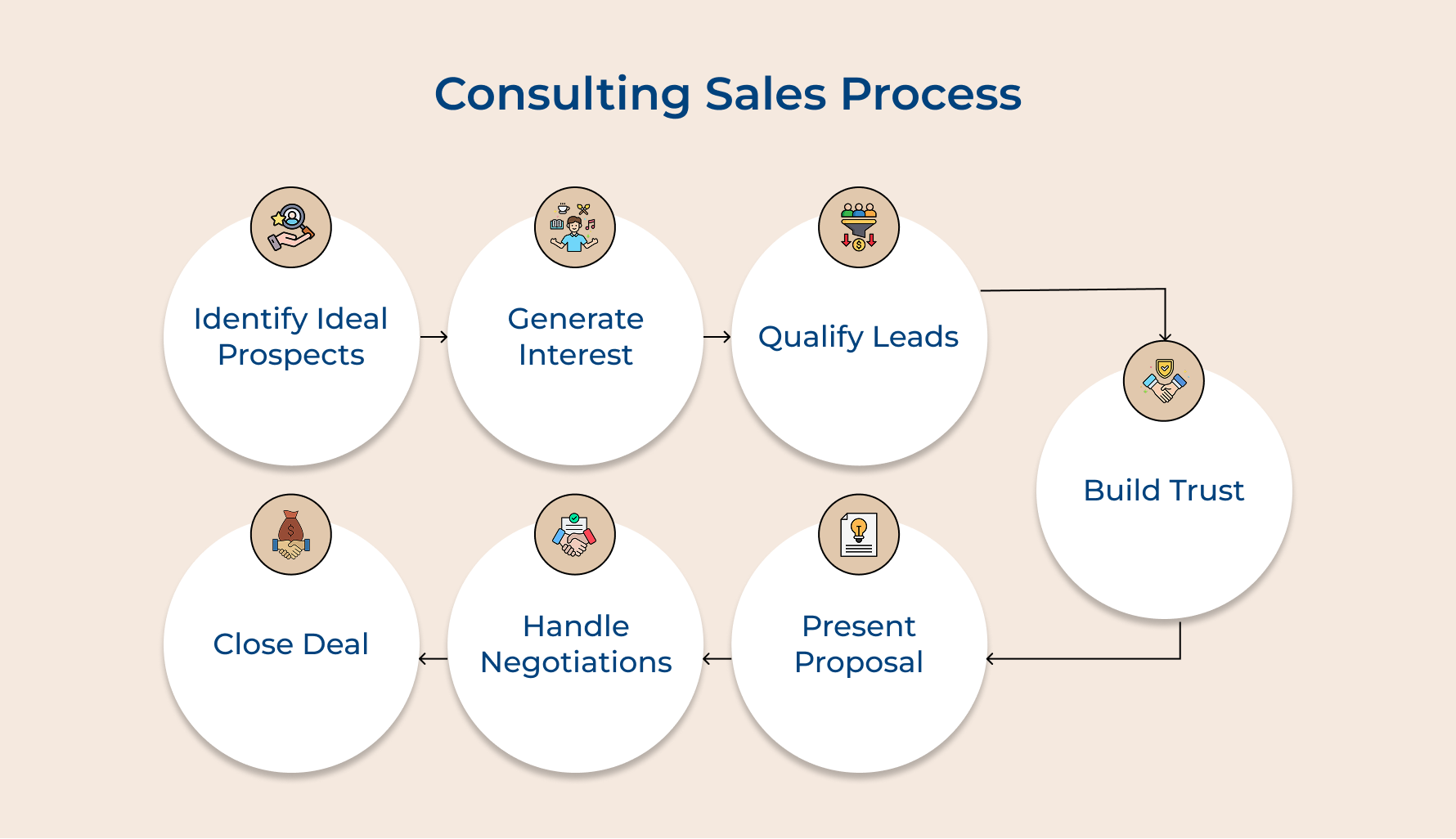
1. Identify Your Ideal Target Prospects
The foundation of successful consulting business sales begins with crystal-clear identification of who you serve best and why they need your expertise. Understanding that not every person looking for consulting is your ideal client saves you from costly mismatches and disappointing outcomes.
The success of your prospecting efforts depends on four key factors that shape your entire approach:
- Industry expertise alignment
- Problem-solution fit assessment
- Budget capacity evaluation
- Geographic service boundaries
Consulting sales prospecting involves systematically identifying potential clients who match your ideal customer profile and have pressing needs. When it comes to finding prospects consultants typically choose between two fundamental approaches:
- Inbound prospecting: Creating valuable content and resources that naturally attract qualified prospects to contact you first.
- Outbound prospecting: Proactively reaching out to identified prospects through direct communication channels like email and phone calls.
Most consulting businesses achieve better results by combining both approaches rather than relying solely on inbound or outbound methods. Here are four essential tips for more effective prospecting:
- Research thoroughly: Understand prospect challenges before making any contact to demonstrate genuine interest in their specific situation.
- Personalize your approach: Generic messages get ignored so customize every outreach attempt based on individual prospect research findings.
- Focus on value delivery: Lead with insights and helpful information rather than immediately pitching your services or credentials.
2. Generate Initial Interest and Awareness
This stage is all about grabbing attention and showing prospects why your expertise matters. If you don’t spark initial interest, even the most qualified leads won’t know you exist.
Consultants can build awareness and create genuine interest through three consulting sales steps:
- Content marketing: Share blog posts, case studies, or industry reports that highlight your expertise and address real challenges your prospects face. Post them on platforms where your audience is already searching for solutions.
- Networking activities: Show up at industry events, professional groups and online communities where prospects gather. Focus on building authentic relationships instead of pushing a hard sell.
- Strategic outreach: Send tailored messages that point to specific challenges or opportunities you’ve noticed. Add insights or resources that prove you understand their world.
For example, a cybersecurity consultant might publish articles on data breach prevention and share them on LinkedIn, where CTOs are actively seeking answers.
3. Discover and Qualify Lead Potential
This crucial stage involves deep investigation to understand prospect needs while determining if they’re genuinely ready and able to invest in consulting services. Skipping proper qualification leads to wasted effort on prospects who can’t or won’t move forward.
Here are five essential questions every consultant should ask during lead qualification:
- What specific challenges are keeping you awake at night?
- What’s your timeline for addressing these issues?
- Who else is involved in making this decision?
- What budget range have you allocated for solving this problem?
- What happens if you don’t address this challenge soon?
These questions help you understand pain intensity decision-making processes and financial capacity while building trust through genuine interest in their situation.
What else can you do beyond asking questions? Schedule structured discovery calls where you listen more than you talk while assessing their budget reality and decision-making timeline. This approach reveals project scope requirements through natural conversation rather than formal interrogation sessions.
4. Build Relationships Through Trust Development
This stage turns qualified prospects into real opportunities by building credibility and showing that you truly understand their business challenges. If trust isn’t established, prospects won’t feel confident investing in your consulting expertise.
The key is to consistently show up as a knowledgeable advisor. Ask thoughtful questions, share relevant experiences and offer industry insights that prove you understand their world. By addressing concerns early, you remove roadblocks before they stall progress.
Pro tips:
- Take time to fully understand their situation before jumping into solutions or showcasing your expertise.
- Always follow through on commitments – delivering what you promise, when you promise it, builds confidence in your professionalism and reliability.
5. Present Your Proposal or Solution
This is where you formally present your solution with clear deliverables and outcomes. A strong, tailored proposal can be the deciding factor between winning or losing an opportunity you’ve worked hard to build.
Every proposal should be customized to the client’s challenges and goals discussed during discovery. Sending something generic signals you don’t fully understand (or worse, don’t care about) their unique situation.
A compelling proposal should cover four essentials:
- Executive summary: Summarize their challenges and your solution in language that resonates with decision-makers.
- Detailed methodology: Outline your step-by-step approach, including timelines, milestones and how progress will be measured.
- Investment structure: Present clear pricing, payment terms and any additional costs they should anticipate.
- Success metrics: Define measurable outcomes that prove value and demonstrate ROI.
6. Navigate Negotiations and Address Objections
A management consulting sales is about addressing concerns and refining terms to create a win–win agreement. Negotiations are a natural part of the process – most prospects will have questions or requests before they’re ready to commit.
Handle pricing concerns with value, not hours
When fees come up, shift the focus from costs to outcomes. Show how your expertise drives revenue, improves efficiency, or prevents expensive mistakes that far outweigh the investment.
Adapt terms based on feedback
Pay close attention to input on timelines, deliverables, or payment structures. Suggest alternatives that ease their concerns while still protecting your interests. Flexibility in smaller areas often unlocks agreement on the critical ones.
Engage all stakeholders
Identify decision makers and influencers early. Facilitate discussions that let each voice be heard, so stakeholders feel involved in shaping the agreement rather than simply handed a contract.
7. Close Deal and Begin Onboarding
The final stage turns prospects into paying clients and lays the groundwork for both project success as well as long-term relationships. A strong closing and onboarding process sets expectations, avoids misunderstandings while building momentum toward the results you’ve promised.
The best way to do this is through clear contracts that define responsibilities, timelines and success metrics, followed by a structured kickoff process. When everyone knows their role from the start, you create confidence, alignment and excitement about the work ahead – turning the project launch into a positive first step toward lasting success.
Best practices:
- Document everything clearly: Put all agreements scope changes and expectations in writing to prevent confusion as well as protect both parties throughout the engagement.
- Start strong with momentum: Schedule your first project activities within days of contract signing to maintain excitement and demonstrate immediate value.
- Establish regular check-ins: Create communication rhythms from day one that keep stakeholders informed, engaged and confident in your progress toward their goals.
Advanced Techniques for Consulting Sales Mastery
Mastering consulting firm sales goes beyond the basics – it’s about refining strategies that win trust, shorten cycles and maximize value. Here are advanced techniques to help you get there.
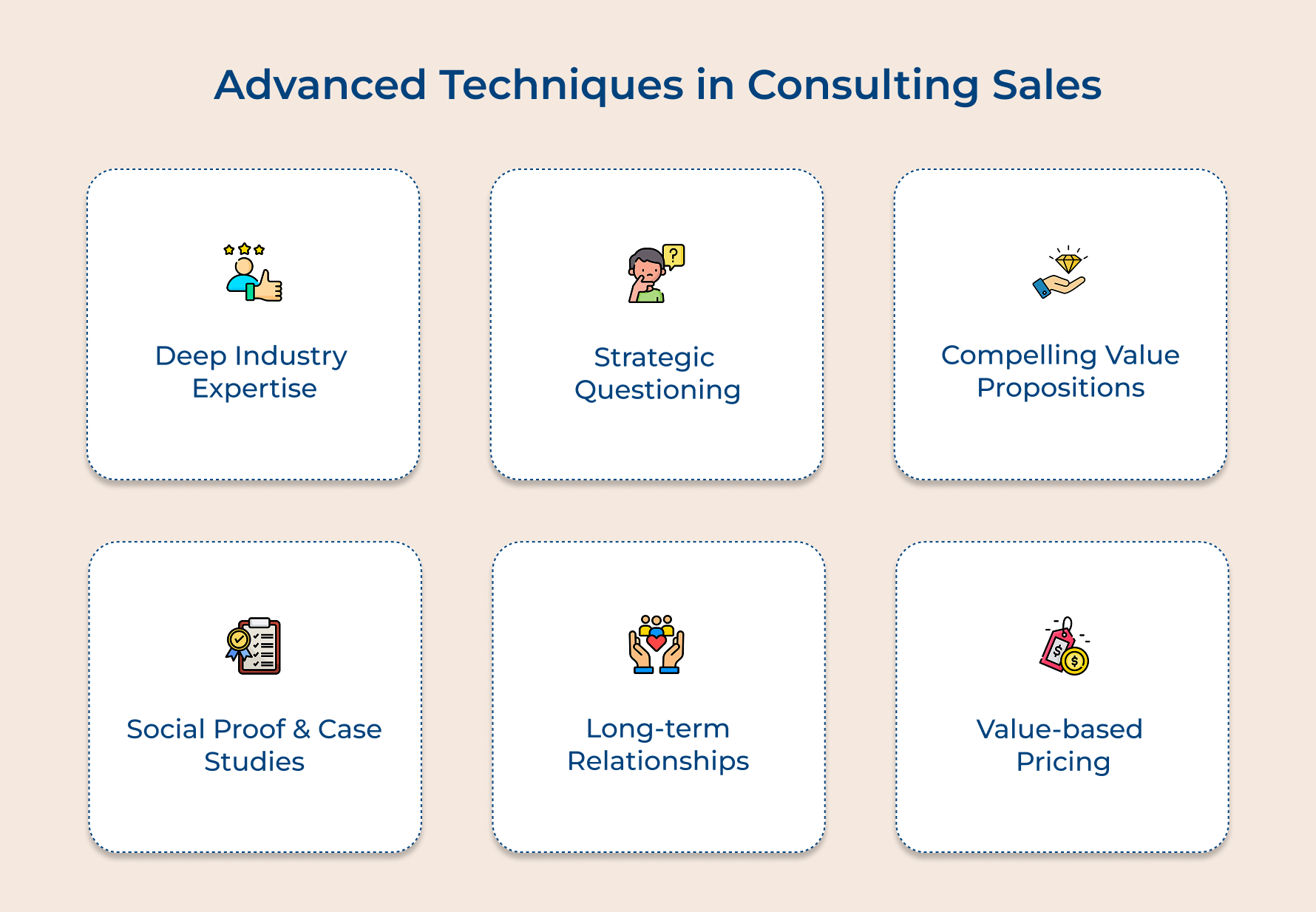
1. Develop Deep Industry Expertise and Thought Leadership
In a consultative sales approach, being seen as the go-to expert in your niche gives you a magnetic pull – prospects come to you instead of you chasing them. When your expertise is recognized, price becomes less of a hurdle because clients value your unique perspective.
Key ways to establish thought leadership:
- Publish regularly: Share articles and insights addressing real industry challenges.
- Speak at events: Attend conferences where your ideal clients and sales force gather.
- Create frameworks: Develop unique models or tools that solve recurring problems.
This kind of positioning shifts you from “just another consultant” to a trusted advisor who commands premium rates. It takes consistent effort, but the returns compound as your reputation grows.
2. Master the Art of Strategic Questioning
Exceptional consultants use sales techniques rooted in curiosity. By asking thoughtful questions, you help prospects uncover challenges they didn’t even realize they had. This not only demonstrates expertise but also creates urgency for your services.
- Strategic questioning equals deeper insights and stronger trust.
- Active listening ensures prospects feel heard and understood.
- Quality questions lead to quality information, which sets you apart from competitors.
When clients experience this, they stop seeing you as a vendor and start viewing you as a strategic partner.
3. Create Compelling Value Propositions That Resonate
A strong value proposition explains why prospects should choose you over competitors—or even their internal teams. Generic statements fall flat, but tailored propositions that tie directly to client pain points spark immediate interest.
Ask yourself: Does my message connect to their goals, challenges and desired outcomes? When it does, you’ll see engagement rise.
4. Leverage Social Proof and Case Studies Strategically
Prospects want reassurance before investing. They need proof you can deliver and that’s where social proof comes in. Using the right examples reduces risk and builds confidence.
Effective forms of social proof include:
- Case studies showing measurable results.
- Video testimonials from industry leaders.
- Recognition, awards, or endorsements from respected organizations.
Match social proof to their situation so they can see themselves achieving similar success.
5. Build Long-term Relationships Beyond Individual Projects
Great consultants focus on customer relationships rather than just transactions. A single project may pay today, but ongoing partnerships drive recurring revenue and valuable referrals.
To nurture long-term ties, ask yourself:
- How can I add value beyond the current scope?
- What future challenges might this client face?
- Who in their network could also benefit from my expertise?
Clients who view you as a trusted advisor will return repeatedly and recommend you to others.
6. Develop Systematic Follow-up and Nurturing Processes
Not every prospect is ready right away, but that doesn’t mean they won’t be later. Consistent, thoughtful follow-up keeps you top of mind.
Nurturing strategies include:
- Sharing relevant insights or industry updates.
- Inviting prospects to webinars or events.
- Checking in during key industry shifts.
The goal is to provide value without being pushy, so when they’re ready, you’re the first consultant they call.
7. Price Based on Value Rather Than Time or Competition
In consultative sales, positioning your services as an investment is key. Value-based pricing allows you to capture the true impact of your work rather than being limited by hours or market rates.
To do this effectively:
- Highlight measurable outcomes, like cost savings or revenue growth.
- Frame your services as high-ROI solutions, not expenses.
- Have the confidence to stand by your expertise and impact.
This approach shifts conversations from “How much do you charge?” to “What results will I achieve?” – a powerful mindset shift that strengthens both trust and profitability.
Redefine Your Sales Approach with Consulting Sales
Think of mastering consulting sales as building a bridge between your expertise and client success. Without structured processes you’re essentially throwing solutions at walls hoping something sticks. This systematic approach transforms uncertainty into predictable revenue streams while establishing your credibility in competitive markets.
When consultancies implement these proven methodologies they unlock three critical advantages that compound over time. Higher conversion rates boost profitability while streamlined processes improve operational efficiency. Most importantly structured relationship building creates deeper client engagement that generates referrals and repeat business naturally.
Limit time — not creativity
Everything you need for customer support, marketing & sales.

Pooja Deshpande is a content contributor at Kooper, focused on creating insightful resources that help agencies and service providers scale efficiently. Passionate about SaaS trends, content strategy, and operational excellence, she delivers practical, easy-to-implement guidance for modern business leaders.