6 Strategic Phases of Project Delivery in Project Management
- What is Project Delivery?
- Benefits of Having a Good Project Delivery Framework
- Types of Project Delivery Methods
- Understanding the 6 Core Phases of Project Delivery in Project Management
- 7 Essential Steps of Successful Project Delivery
- 5 Best Tools for Project Delivery Management
- Streamline Efficient Project Delivery Process With Kooper
- FAQs about Project Delivery

Key Highlights:
- A clear project delivery framework helps agencies scale, boost efficiency, and exceed client expectations.
- Benefits of structured delivery include predictable profitability, reduced risks, and higher client satisfaction.
- Six project delivery phases guide agencies from initiation to closure with structured workflows.
Many agencies struggle with chaotic project delivery that drains profits and drives clients away. Teams often work late, yet deadlines slip and budgets spiral due to scope creep as well as poor resource management.
Teams scramble to fix problems rather than prevent them, leading to burnout and damaging your agency’s reputation in competitive markets. This “firefighting” mode makes growth unsustainable.
The solution lies in building a clear project delivery framework. Agencies that master delivery frameworks improve profitability, scale confidently and consistently exceed client expectations. This guide explores proven strategies to help you build sustainable delivery processes for long-term success.
What is Project Delivery?
Project delivery is the structured process of turning client requirements into finished deliverables through coordinated planning and execution. It encompasses everything from initial scope definition to final handoff. This process ensures teams meet deadlines while maintaining quality standards and client satisfaction throughout the project lifecycle.
Effective project delivery directly determines an agency’s profitability and client retention rates. When delivery processes run smoothly agencies can take on more projects without sacrificing quality.
Key components of project delivery:
- Scope management: Defining clear boundaries around what will and won’t be included in the project deliverables.
- Resource allocation: Strategically assigning team members and tools based on project requirements along with available capacity.
- Timeline orchestration: Creating realistic schedules that account for dependencies while building in buffer time for unexpected challenges.
- Quality assurance: Implementing review processes and checkpoints to ensure deliverables meet both internal standards as well as client expectations.
- Stakeholder communication: Maintaining regular touchpoints with clients and team members to keep everyone aligned on progress.
Benefits of Having a Good Project Delivery Framework
A solid project delivery process acts as your agency’s operational backbone. It transforms chaotic project execution into predictable and profitable outcomes. Let’s explore its benefits:
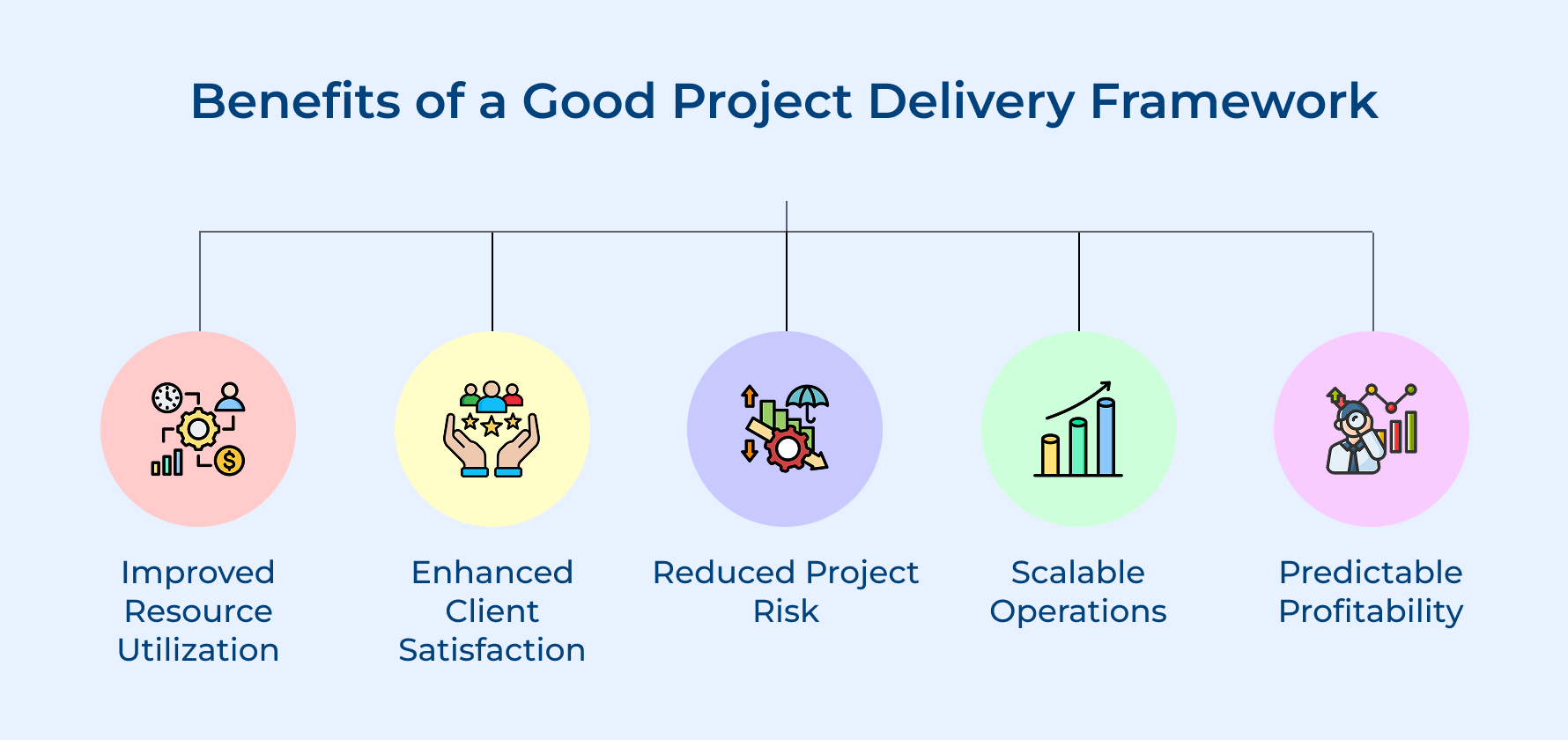
Improved Resource Utilization
Teams work far more efficiently when they follow established processes instead of reinventing the approach for every new project.
A clear project delivery framework takes away the guesswork, helping people stay focused on meaningful tasks rather than spending time on repetitive administrative work that adds little value for clients.
Enhanced Client Satisfaction
Clients notice the difference when your agency communicates clearly and delivers on time. With structured project delivery, they receive consistent updates and predictable timelines.
This builds trust as well as positions your agency as more professional than competitors who rely on ad-hoc processes.
Reduced Project Risk
Framework-driven projects identify potential issues before they become expensive problems through systematic risk assessment protocols.
Teams can proactively address challenges rather than scrambling to fix crisis situations that drain budgets and morale.
Scalable Operations
As your agency grows, structured frameworks make it easier to bring new team members on board.
Clear guidance on project delivery means new hires quickly understand expectations, saving them from trial-and-error learning and helping them contribute productively from day one.
Predictable Profitability
Standardized delivery processes help agencies estimate project costs and timelines more accurately leading to better profit margins.
Teams avoid scope creep and budget overruns that eat into earnings on what should be profitable engagements.
Types of Project Delivery Methods
Project delivery methods determine how agencies structure client relationships and manage project execution from start to finish. Try these different methods to find what works best for you.
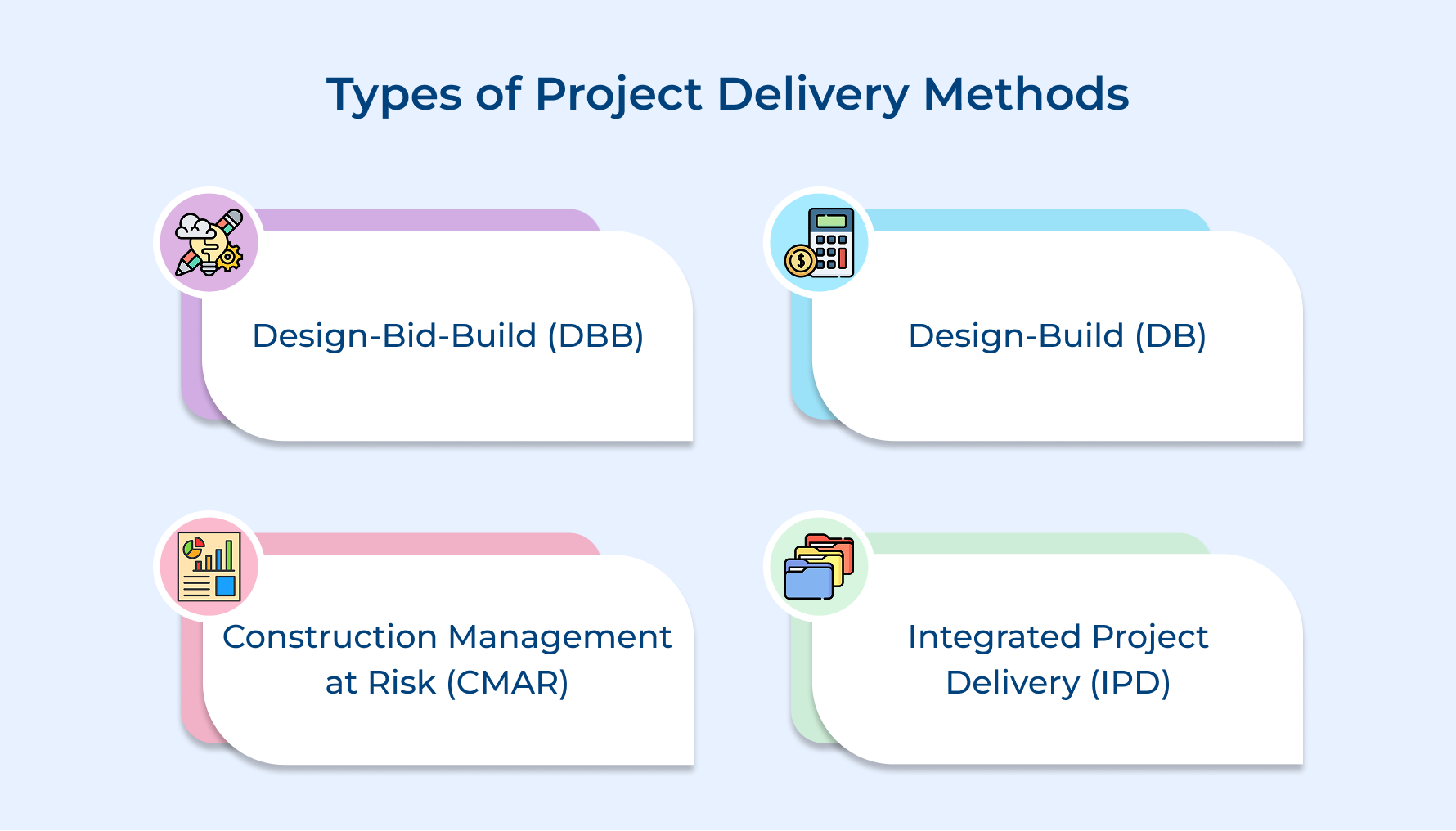
Design-Bid-Build (DBB)
This traditional linear approach separates design and execution into distinct phases with different teams handling each stage.
Clients receive complete project specifications before implementation begins ensuring clear expectations but limiting flexibility for changes during development.
Design-Build (DB)
Single teams handle both planning and execution phases creating streamlined communication as well as faster project delivery timelines.
An integrated approach reduces coordination challenges between different vendors while giving clients one primary point of contact throughout the engagement.
Construction Management at Risk (CMAR)
Agencies take financial responsibility for project outcomes while providing management expertise during both design and implementation phases.
This method balances client cost certainty with agency expertise allowing for collaborative problem-solving when challenges arise during execution.
Integrated Project Delivery (IPD)
All stakeholders including clients share both project risks and rewards through collaborative decision-making from project inception.
The partnership approach aligns everyone’s interests toward successful outcomes while requiring high levels of trust and transparent communication between all parties.
Understanding the 6 Core Phases of Project Delivery in Project Management
Project delivery unfolds through six distinct phases that guide agencies from initial client contact to final handoff. Each phase builds upon the previous one creating a structured pathway to successful project completion.
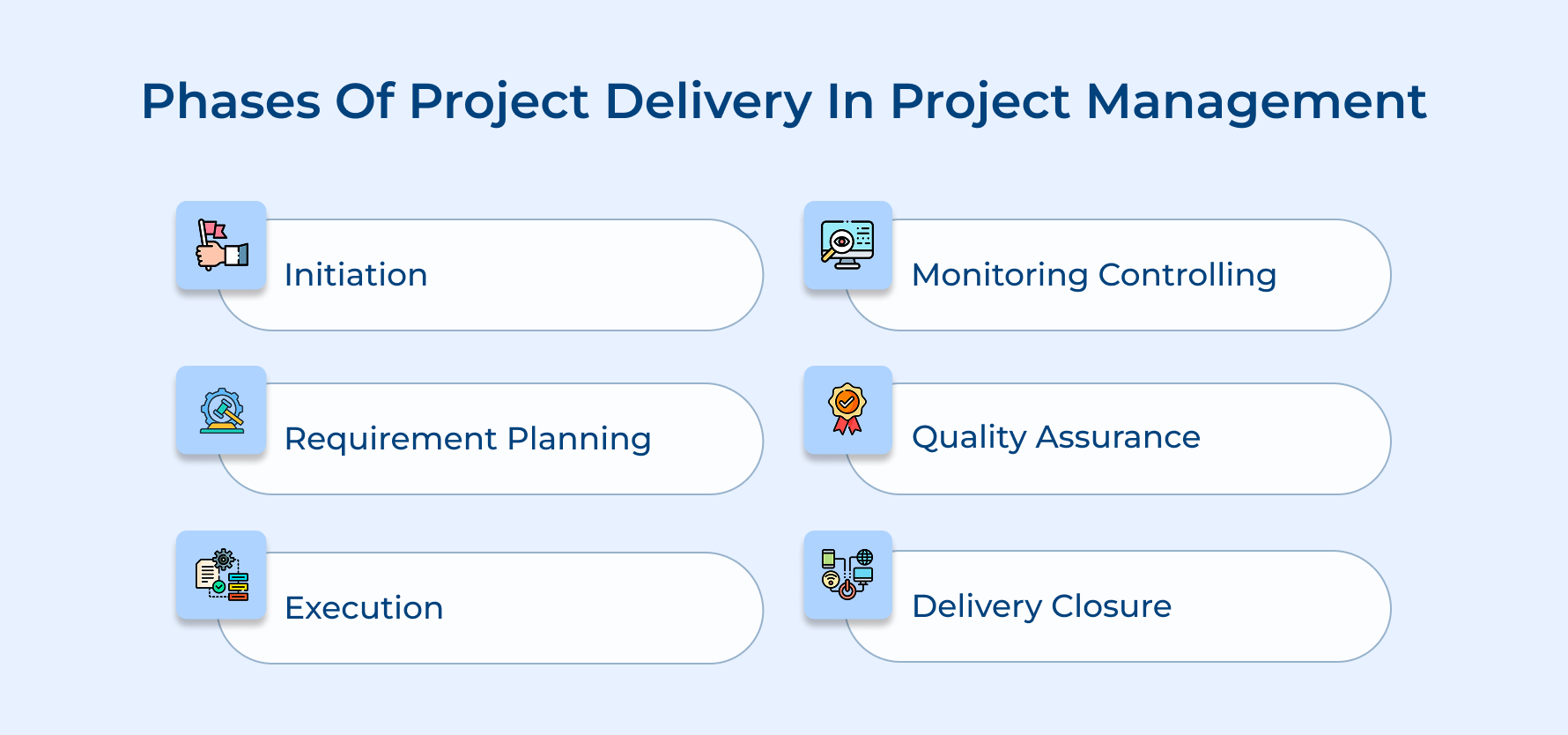
Phase 1: Initiation
Project initiation starts when agencies spot new opportunities and carry out early feasibility checks with potential clients. At this stage, teams look closely if a proposed project fits the agency’s strengths and overall strategic goals before committing valuable resources to detailed planning.
Some of the key factors that shape successful project initiation include:
- Identifying stakeholders and setting up early engagement strategies
- Reviewing resource availability across the current project portfolio
- Assessing potential risks and planning initial mitigation steps
Agencies also create project charters during this phase, outlining high-level objectives and defining what success should look like. Taking the time to establish this foundation helps prevent scope creep, miscommunication and other issues that often cause delays or costly changes later in the project lifecycle.
Phase 2: Requirement Planning
Requirements planning is where agencies turn broad client ideas into clearly defined deliverables through a structured design process. Teams run stakeholder interviews and workshops to uncover not just the obvious needs but also the deeper business objectives that might not surface right away.
Some of the critical questions that guide effective requirement gathering include:
- What specific outcomes will show project success for every stakeholder?
- How could shifting market conditions affect the project’s relevance over time?
- Which requirements are essential versus nice-to-have features that can be postponed?
This stage also includes building work breakdown structures and mapping out resource allocation plans based on team skills as well as availability. Agencies that plan carefully also prepare a realistic cost estimate and add buffer time into schedules, knowing that complex projects rarely follow the initial assumptions perfectly.
Phase 3: Execution
Project execution is the stage where all the planning turns into real, tangible work. Teams roll up their sleeves to deliver on approved plans, following set timelines and ensuring every task contributes to the bigger project goals.
Strong execution is about striking the right balance, maintaining productivity while keeping a close eye on quality. Challenges and scope changes are almost guaranteed, but how they’re managed makes all the difference.
Skilled project managers know that success is about staying flexible within a clear structure. That balance often determines if a project wraps up on schedule and within budget, or drifts into delays as well as extra costs.
Phase 4: Monitoring and Controlling
Monitoring as well as controlling run alongside project execution to make sure everything stays on track with the approved scope, budget and overall plan. Teams regularly track key performance indicators and hold review sessions to spot potential issues early.
Strong control also means having a clear process for managing changes. Every proposed adjustment is weighed carefully against project constraints and client objectives to avoid unnecessary risks.
Professional agencies go a step further by keeping detailed audit trails of all decisions and approvals. This not only protects client relationships but also builds internal accountability, giving everyone confidence that projects are being handled with transparency and discipline.
Phase 5: Quality Assurance
Quality assurance encompasses systematic review processes that verify deliverables meet both technical specifications and client expectations before final presentation.
Teams conduct multiple testing cycles and stakeholder reviews to identify gaps or improvements that enhance overall project value.
Core quality assurance practices that protect project outcomes include:
- Structured testing protocols that validate functionality across different scenarios
- Peer review processes that leverage diverse team perspectives
- Client feedback integration mechanisms that address concerns before final delivery
Quality control extends beyond technical accuracy to include user experience considerations and long-term maintainability factors.
Agencies that invest in thorough quality assurance processes build reputations for reliability that generate referrals and repeat business from satisfied clients.
Phase 6: Delivery and Project Closure
Project delivery wraps up with a formal handoff of completed work along with clear documentation that helps clients get long-term value from the project. Teams also provide training and support materials so the transition from development to day-to-day operations feels smooth for client organizations.
Key questions that guide a successful project closure include:
- Have all contractual obligations been met as agreed?
- What lessons can be applied to improve future project delivery?
- How can the client relationship continue beyond this engagement?
Closure also involves final invoicing and completing the necessary administrative tasks for internal records. Smart agencies take this opportunity to run post-project reviews with both clients and their own teams, capturing insights that sharpen delivery processes as well as strengthen their position in a competitive market.
7 Essential Steps of Successful Project Delivery
Discover the essential steps that form the backbone of successful project management and unlock the potential to lead your projects to victory.
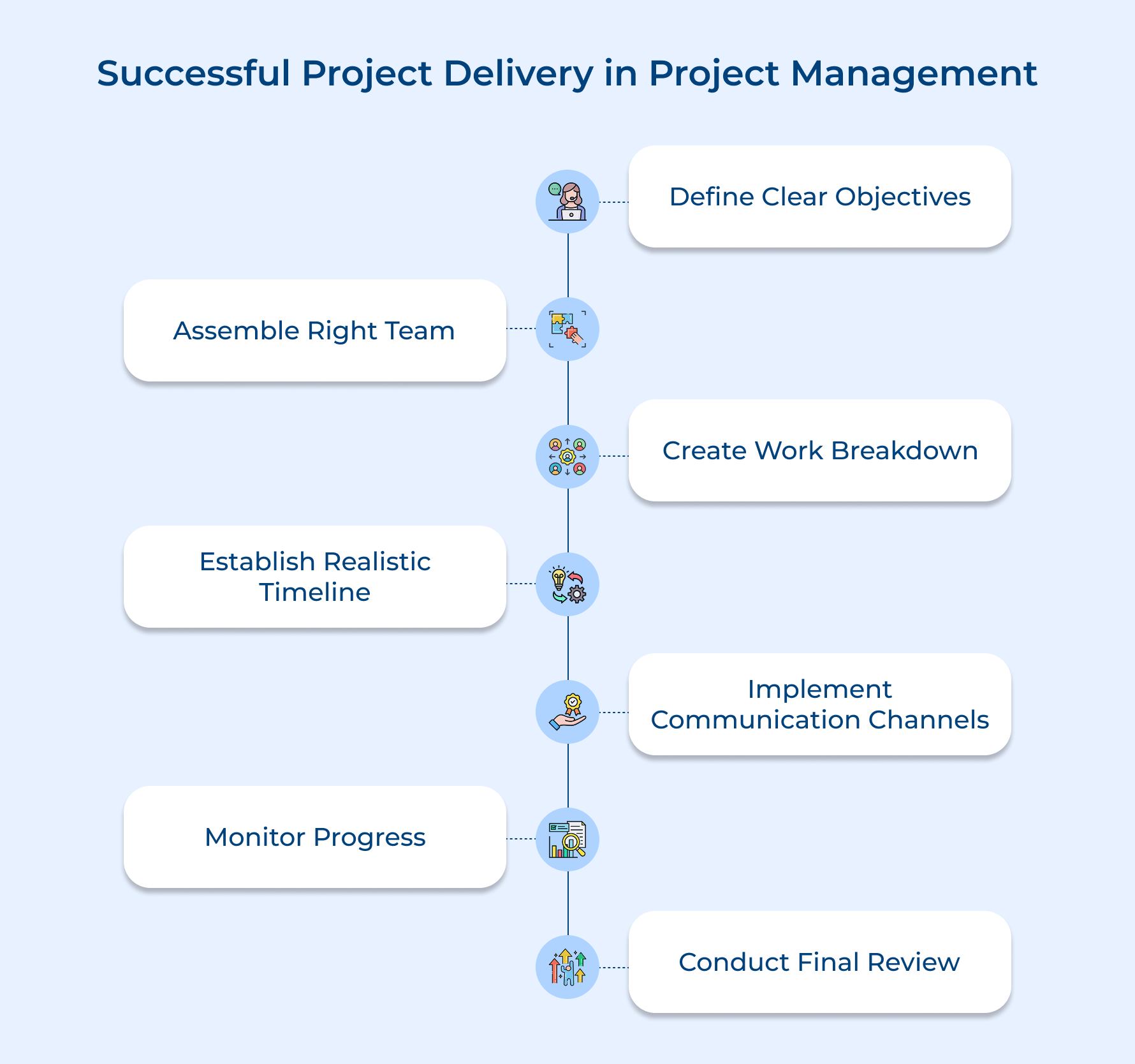
1. Define Clear Project Objectives
Strong project objectives are the foundation for successful delivery. Without them, teams risk scope creep, misaligned expectations and client frustration.
When working with clients, use structured methods to uncover real needs and turn them into actionable goals:
- Discovery workshops: Bring stakeholders together to define the project vision and expected outcomes.
- SMART goals: Translate vague ideas into Specific, Measurable, Achievable, Relevant and Time-bound objectives.
- Success metrics: Set clear indicators that prove value and define what “done” looks like.
- Stakeholder alignment: Ensure all decision-makers agree on priorities and boundaries before work begins.
Example: A digital marketing agency tasked with boosting website performance might set objectives like increase organic traffic by 30% and reduce page load times under two seconds within three months.
2. Assemble Right Team Members
Your project team can make or break success. Skills gaps or personality clashes can stall progress, no matter how solid the plan.
Ask yourself these questions when building a team:
- What technical skills are required that we might not already have?
- Do communication styles complement each other?
- How will different problem-solving approaches shape creative solutions?
Other factors to optimize team performance:
- Skill diversity: Blend senior expertise with junior talent.
- Availability alignment: Confirm key members can commit during critical phases.
- Cultural fit: Choose people who align with the project and company culture.
3. Create Detailed Work Breakdown
Big projects feel overwhelming until you break them down into manageable parts. A work breakdown structure (WBS) helps reveal hidden complexities and creates accountability.
How to make it work:
- Break complex tasks into smaller chunks: Assign clear ownership to ensure nothing slips through the cracks.
- Estimate effort realistically: Smaller tasks are easier to predict. Use past project data to guide estimates, adjusting for team skills and complexity.
4. Establish Realistic Project Timeline
Unrealistic deadlines are a recipe for stress, poor quality and unhappy clients. Instead, create a timeline that reflects real-world constraints.
Best practices:
- Add buffer time: Add about 20% to estimates since projects rarely run perfectly.
- Schedule milestone reviews: Check progress every two weeks to catch slippage before it snowballs.
- Set clear roadmaps: Use the timeline as a guide for daily decisions, resource allocation and client expectation management.
5. Implement Strong Communication Channels
Clear communication is the backbone of project delivery. Work gets duplicated, clients feel left out and productivity suffers when you don’t implement effective communication channels.
Key communication practices:
- Status reporting: Share regular updates to keep everyone aligned.
- Issue escalation: Define clear paths so problems reach decision-makers quickly.
- Change management: Document scope changes and their impact on budget/timelines.
- Knowledge sharing: Encourage structured exchanges so knowledge doesn’t get stuck in silos.
Choosing the right method depends on urgency and audience:
- Routine updates → email or chat
- Complex or sensitive discussions → video calls or in-person meetings
The right channel at the right time keeps stakeholders confident and teams productive.
6. Monitor Progress Against Plan
Monitoring progress keeps projects on track and ensures small issues don’t snowball into costly delays. By keeping a close eye on performance, teams can spot concerns early and make timely adjustments that protect both budgets as well as timelines.
Key areas to focus on include:
- Schedule performance index: Checking if tasks are moving faster or slower than expected.
- Budget variance %: Comparing actual spending to planned budgets to prevent overruns.
- Quality defect rate: Measuring how often deliverables need rework to meet standards.
In addition to metrics, human insight matters just as much:
- Regular team check-ins uncover challenges data may miss.
- Stakeholder feedback sessions highlight risks that could affect project momentum.
7. Conduct Thorough Final Review
The final review is your last chance to ensure quality before handing over deliverables. Skipping it can mean missed details, costly fixes and damaged trust.
Best practices for closure:
- Fresh perspective: Involve someone outside daily project work for unbiased review.
- Document findings: Record issues, fixes and lessons learned for future projects.
- Confirm obligations: Double-check all contractual and quality standards are met.
- Post-project reviews: Gather feedback from clients and internal teams to improve future delivery.
A thorough review not only protects your agency’s reputation but also strengthens client relationships for repeat business.
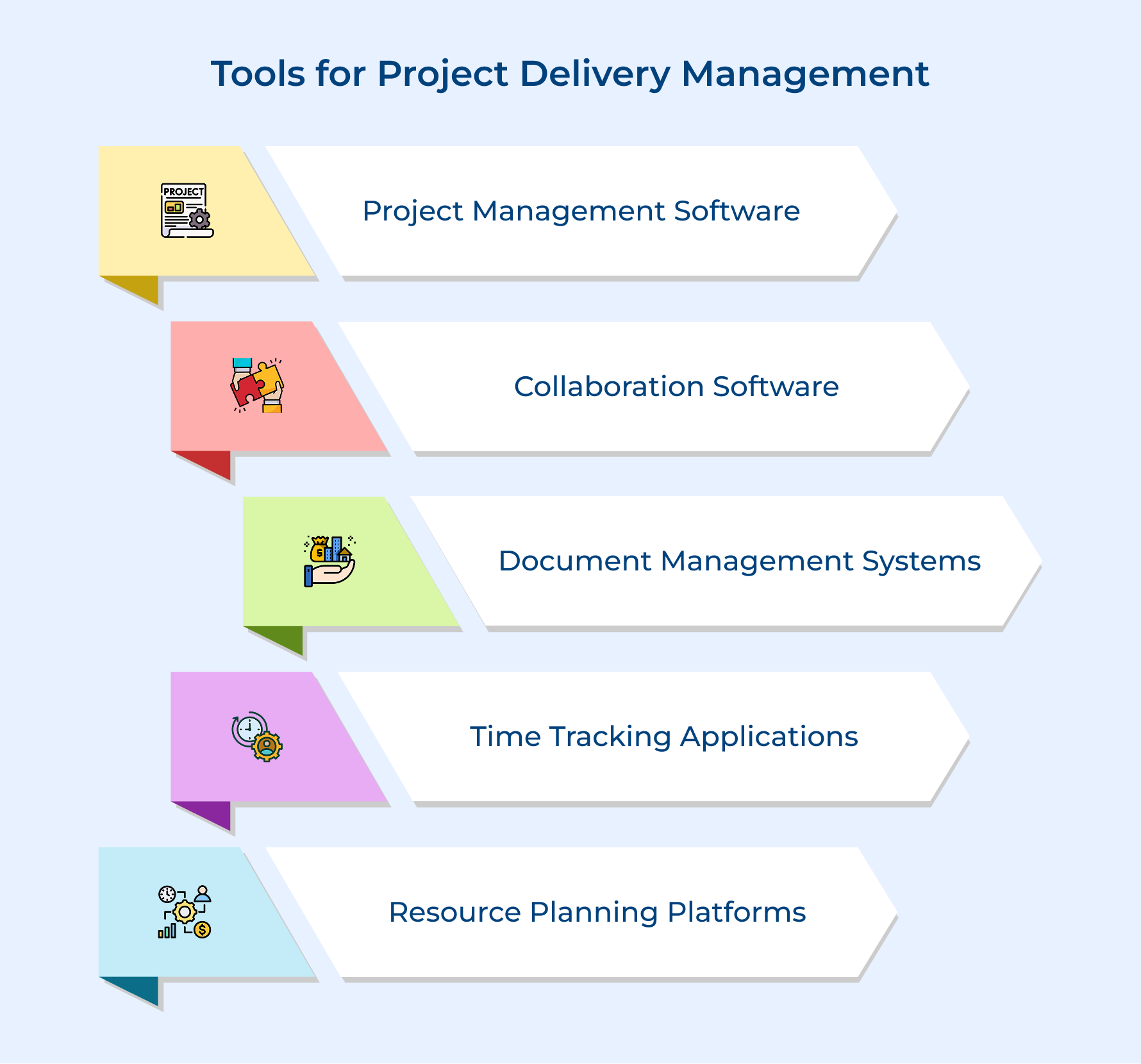
5 Best Tools for Project Delivery Management
The right digital tools transform chaotic project execution into streamlined delivery processes. These platforms serve as your project’s operational foundation.
Project Management Software
Platforms like Kooper centralize task assignments and deadline tracking while providing visual progress indicators. These tools eliminate scattered email confusion and create accountability through transparent work allocation as well as status updates.
Collaboration Software
Real-time platforms such as Slack enable instant communication and file sharing that keeps distributed teams connected. These tools reduce email delays while creating searchable conversation histories that preserve important decisions.
Document Management Systems
Centralized repositories like Google Drive ensure team members access current document versions while maintaining organized folder structures. These systems prevent version control nightmares when team members work with outdated files.
Time Tracking Applications
Tools like Toggl provide accurate project profitability insights by capturing how team members spend working hours. This data helps improve future estimates while identifying resource-heavy activities during budgeting.
Resource Planning Platforms
Scheduling tools like Float optimize team allocation across multiple projects while preventing overcommitment that leads to burnout. These platforms provide visual capacity planning for informed project acceptance decisions.
Streamline Efficient Project Delivery Process With Kooper
Successful project delivery frameworks provide the structural foundation that transforms unpredictable agency operations into profitable and scalable business systems. Without these frameworks agencies struggle with scope creep and missed deadlines that erode both profit margins as well as client relationships over time.
Kooper consolidates project management and resource planning into one integrated platform that helps agencies track profitability in real-time while maintaining transparent client communication. This comprehensive approach enables professional services businesses to optimize team utilization and deliver consistent results that strengthen long-term client partnerships.
Limit time — not creativity
Everything you need for customer support, marketing & sales.

Shivank Kasera is part of the marketing team at Kooper, where he focuses on building content that helps agencies and service providers grow. With a keen interest in SaaS, operations, and scalability, he translates practical insights into actionable resources for business leaders.