How to Build Sales Funnel for Agency that Converts
- What is the Agency Sales Funnel?
- Key Benefits of a Formal Agency Sales Funnel
- How to Build a Sales Funnel for Agencies in 8 Quick Steps
- Understanding the 5 Basic Stages of an Agency Sales Funnel
- Best Practices for Sales Funnel Optimization for Agencies
- Common Mistakes to Avoid When Building a Sales Funnel
- Streamline Success With a Custom Sales Funnel for Your Agency
- FAQs about Build Sales Funnel for Agency

Key Highlights:
- An agency sales funnel maps client journeys from awareness to conversion, helping agencies attract ideal prospects and close deals systematically.
- Eight structured steps (right from defining clients to optimization and referrals) show how to build a sales funnel for agency growth.
- Avoid common mistakes like generic funnels, vanity metrics and skipping nurturing content to strengthen your sales funnel agency strategy.
Struggling with inconsistent client acquisition is more common than anything else in an agency. What matters is how you get through this hurdle.
Many agencies depend on referrals and random outreach, which leads to that all-too-familiar feast-or-famine cycle. Without a clear system in place, your team wastes time chasing the wrong leads while ideal clients move on. Sound familiar? It doesn’t have to be this way.
Building a sales funnel for your agency creates a clear, repeatable path to attract and convert the right clients. By guiding prospects through their decision journey with the right touchpoints, you’ll turn chaos into clarity and start growing steadily with clients who truly fit.
What is the Agency Sales Funnel?
An agency sales funnel is a strategic framework that maps the journey of potential clients from initial awareness to becoming paying customers for professional service firms. A sales funnel shows how prospects move through different stages of engagement with your agency.
It highlights key conversion points where leads become clients through targeted interactions and relationship building.
How Does a Sales Funnel for Agencies Work?
The agency sales funnel begins with broad awareness activities like content marketing and networking to attract potential clients who might need your services. These awareness efforts aim to position your agency as an authority while capturing initial interest through valuable resources that address common pain points in your target market.
As prospects move deeper into the funnel, the focus shifts to building relationships with personalized communication and showing your expertise. This stage includes discovery calls, proposal presentations, and handling objections. Qualified prospects then move toward commitment through clear and well-structured service agreements.
Key objectives:
- Generate qualified leads who genuinely need your agency’s specific expertise and services.
- Build trust through consistent value delivery before asking for any financial commitment.
- Demonstrate clear return on investment that justifies your agency’s pricing structure.
- Reduce sales cycle length by identifying and addressing objections early in the process.
- Create a repeatable conversion system that can scale as your agency grows over time.
Key Benefits of a Formal Agency Sales Funnel
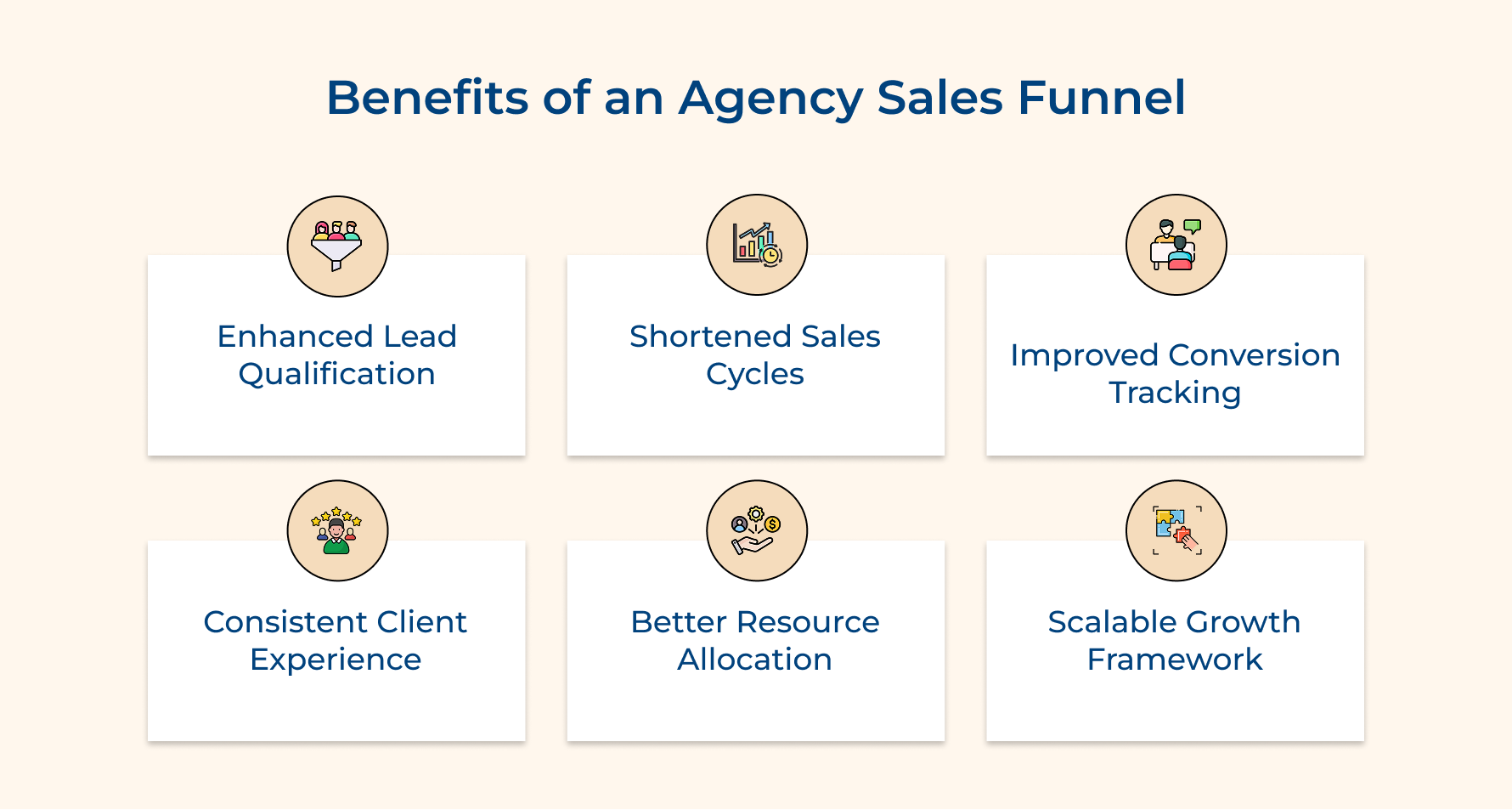
A formal sales funnel provides agencies with a structured approach to convert prospects into clients through strategic touchpoints. When implemented effectively, it transforms chaotic business development into a predictable system for sustainable growth.
1. Enhanced Lead Qualification
No more wasting time on leads that were never a fit to begin with. A well-structured funnel helps you spot the right prospects early, so your team can focus on those who are actually ready to buy.
2. Shortened Sales Cycles
When each stage of the journey is mapped out, you know exactly what works and when. That means less guesswork, fewer delays, and more deals closing faster.
3. Improved Conversion Tracking
A defined funnel shows where prospects drop off. By fixing issues in messaging, timing, or touchpoints, agencies improve engagement, build stronger relationships, and boost close rates effectively.
4. Consistent Client Experience
A solid funnel ensures every prospect gets the same seamless experience, no matter who they talk to. This consistency builds trust and strengthens professional relationships with your agency.
5. Better Resource Allocation
Knowing which parts of the funnel need which types of support helps you assign the right people and content where they’ll have the biggest impact.
6. Scalable Growth Framework
As your agency grows, your sales process shouldn’t fall apart. A documented funnel makes it easy for new team members to plug in and keep the momentum going.
How to Build a Sales Funnel for Agencies in 8 Quick Steps
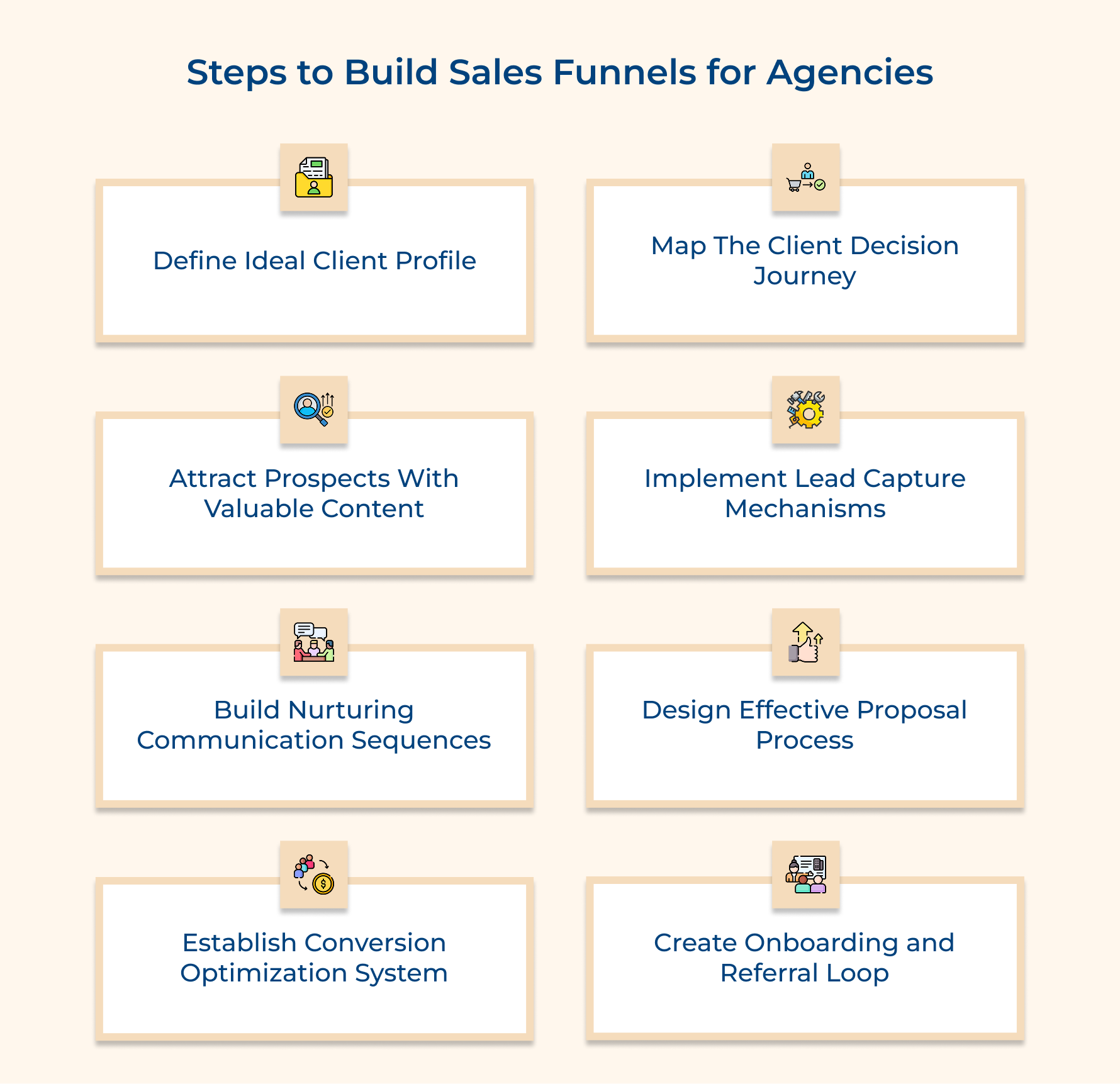
Let’s guide you through eight essential steps to construct a sales funnel that not only attracts prospects but also nurtures them into becoming returning clients.
1. Define Your Ideal Client Profile
Want to attract better-fit clients and stop wasting time on leads that go nowhere? It all starts with defining your ideal client profile. The types of organizations that benefit most from your services and bring real value to your agency. Here’s how to get clear:
- Analyze your best clients: Look at your top 5–10 most profitable relationships. What do they have in common – industry, size, challenges?
- Pinpoint the problems you solve best: Talk to your delivery teams. What issues do you consistently knock out of the park?
- Create decision-maker personas: Understand who makes the call, what they care about, as well as how they evaluate agencies.
This clarity ensures your entire sales funnel becomes more focused and effective.
2. Map the Client Decision Journey
Mapping your client’s decision journey helps you truly understand how they go from problem-aware to picking your agency. It’s about aligning with their process, not your assumptions. Here’s how to get it right:
Ask the key questions:
- What event or pain point made them realize they needed help?
- Where did they first look for solutions – Google, LinkedIn, referrals?
- Who got involved in the decision-making and when?
- What criteria did they use to shortlist and choose a partner?
Go deeper with:
- Client interviews: Talk to recent clients about their exact path, what they searched, who they spoke to and what made them choose you.
- Digital tracking: Use analytics to see which pages or content types prospects engage with at each stage.
3. Attract Prospects with Valuable Content
Want to attract the right prospects before they ever talk to sales? Focus on creating valuable, relevant content that speaks directly to their early-stage challenges. When you provide helpful insights up front, you position your agency as a trusted expert.
Here’s how to do it well:
- Answer real questions: Create content that tackles the exact pain points your ideal clients research when problems first pop up.
- Be where they are: Share your content on platforms your audience actually uses like LinkedIn, industry blogs, email, etc.
- Go beyond surface-level advice: Use concrete examples and practical steps they can take.
Pro tip: Start with cornerstone content that covers foundational issues before jumping into trendy topics.
4. Implement Lead Capture Mechanisms
To turn curious visitors into real leads, you need smart lead capture mechanisms, tactical points where prospects are motivated to trade their contact info for something valuable. It’s the key step between content engagement and starting a real relationship.
Here are a few high-performing lead magnet ideas for agencies:
- Industry benchmark reports: Use anonymized client data to show prospects how they stack up against peers. It taps into their competitive side and proves you know their space.
- Case study collections: Instead of random success stories, group them by industry or challenge. It helps prospects see clear relevance.
- Interactive tools: Think calculators, audits, or self-assessments. One agency’s website conversion calculator brought in 47 qualified leads in just a month!
5. Build Nurturing Communication Sequences
Nurturing leads who aren’t ready to buy yet is key to keeping them engaged and building trust over time. Instead of letting qualified prospects drift into “maybe later” limbo, use strategic communication sequences to stay top of mind without being pushy. Here’s how:
- Make it personal
Skip the generic follow-ups. Customize your emails based on earlier conversations. Mention a challenge they shared and offer one useful insight that’s relevant to their situation. Templates are fine, but only as a starting point.
- Check in with purpose
Set up short yet helpful calls. Use these chats to build on previous discussions, offer new ideas, and end with a clear, valuable next step, even if they’re not ready to commit.
6. Design Effective Proposal Process
Most agencies send the same generic proposal to every prospect and it shows. To stand out and actually close deals, you need a proposal process that’s structured, strategic, as well as client-focused.
Here’s how to make your proposals powerful:
- Tell a story: Use a problem-solution narrative. Start with the client’s current challenges, then show how your services lead to their ideal outcome. Make them the hero, your agency is the guide.
- Give clear options: Include a simple options matrix with 3 service tiers. It makes it easier for clients to choose what fits, without needing a custom quote every time.
- Show the ROI: Don’t just list prices, build an ROI case. Tie your fees to tangible results (e.g., increased leads, better retention) and show the potential impact in real numbers.
Tip: Create service-specific templates, then customize the strategic parts to each client. Efficient and personal.
7. Establish Conversion Optimization System
To keep your agency’s sales funnel performing at its best, you need a conversion optimization system. It is a structured way to spot and fix the weak links in your process using real data.
Start by asking:
- Which funnel stage converts the least? Compare to industry benchmarks.
- What’s different about leads who move fast vs. those who stall?
- Do conversion rates vary by lead source or client industry?
One agency found their website redesign proposals converted at half the rate of SEO ones. By shifting the focus to business outcomes instead of technical specs, they saw a major jump in conversions.
Key tips:
- Track the right metrics: Focus on indicators tied to revenue—not vanity stats.
- Use consistent methods: Make sure everyone tracks data the same way, every time.
8. Create Onboarding and Referral Loop
Want to turn your happy clients into a steady source of new business? That’s the power of building an onboarding and referral loop, a system that transforms your funnel from a one-way track into a repeatable growth engine.
Here’s how to make it happen:
- Create a standout onboarding experience
Go beyond the basics. Use welcome kits, structured kickoff calls, and clear expectations to wow clients from day one. A great first impression builds trust and sets the stage for referrals later.
- Spot the right moments
Identify key success milestones in your projects where clients feel the most value. Train your team to use these moments to explore upsells or gently ask for referrals.
- Make it a system
Agencies that grow effortlessly don’t just deliver great work, they have processes that turn satisfied clients into repeat customers and brand advocates.
Imagine if most of your new business came from your existing relationships. That’s what this loop unlocks.
Understanding the 5 Basic Stages of an Agency Sales Funnel
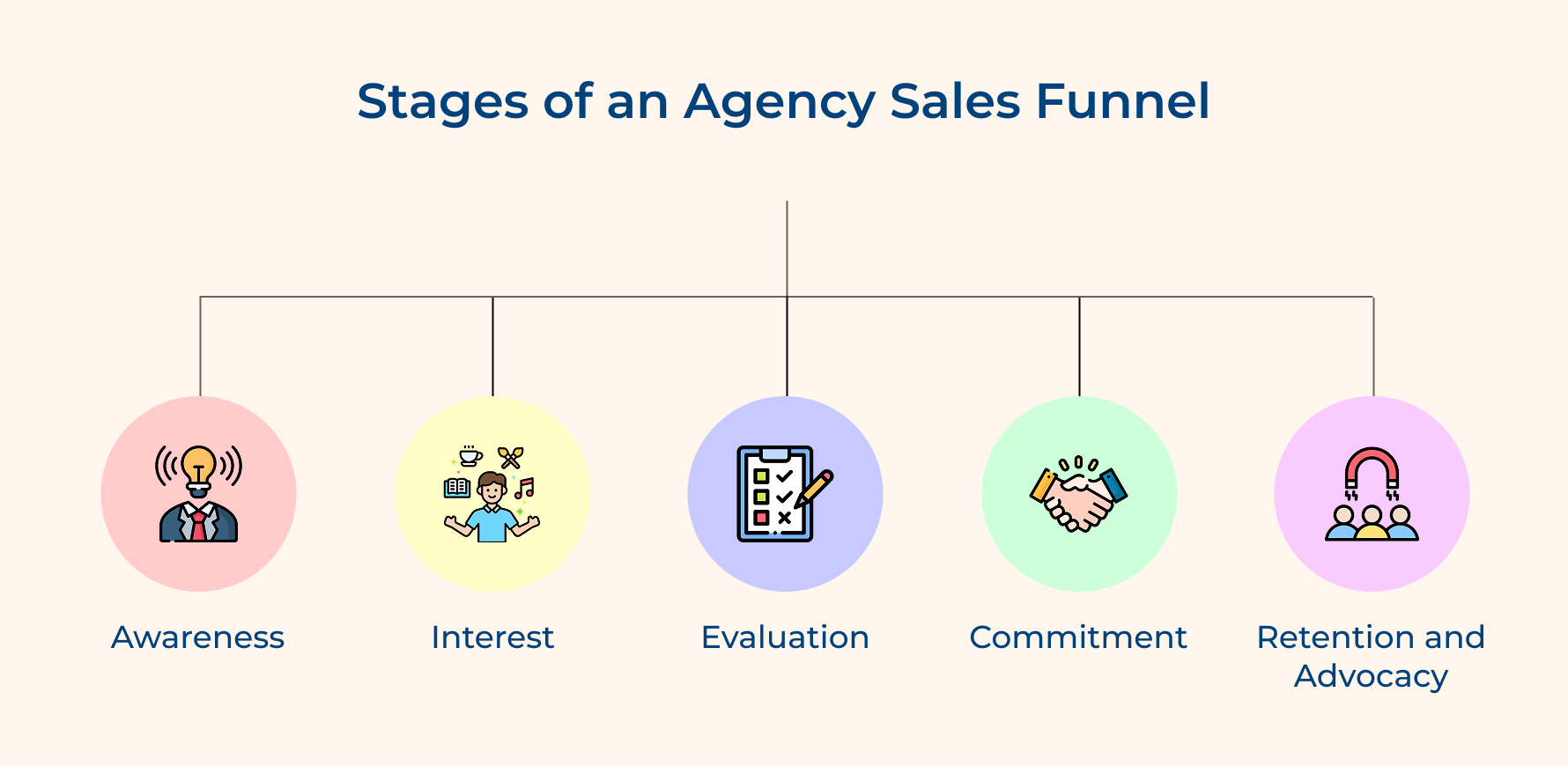
Understanding these five fundamental stages helps professional service agencies create targeted strategies for moving prospects through their decision-making process.
1. Awareness
This is when potential clients first discover your agency. It may be through a blog post, a Google search, or social media. The goal here? Getting noticed by the right people.
- Are you creating content that speaks directly to the problems your ideal clients are searching for?
- Which channels bring you your best leads?
- How is your messaging different from competitors right from the start?
Focus on visibility with content that answers real questions and shows you understand their challenges.
2. Interest
Now prospects start digging deeper. They’re engaging with your content, maybe downloading a guide or checking out your case studies.
- How can you nurture that curiosity?
- Show off your unique approach and expertise with content that goes beyond basics.
- Help them see why you are different and better suited to solve their problems.
3. Evaluation
At this point, prospects seriously consider working with you. They might ask for a consultation or details on how you work. But sometimes they get stuck here. Common reasons why:
- They can’t tell how you’re different from others.
- Your case studies show results but not how you got there.
- They’re unsure how your services fit their specific needs.
Address these concerns clearly to help them feel confident choosing you.
4. Commitment
Prospects have picked you, they’re negotiating terms, timelines, and budgets. This is when hesitation can creep in. To keep things moving:
- Offer phased options so they can start small.
- Give a clear preview of the onboarding process.
- Reduce risk with guarantees or phased payments.
Help prospects feel secure and informed so they say “yes” without second-guessing.
5. Retention and Advocacy
The retention and advocacy stage deepens client relationships beyond project delivery. Top agencies gather feedback, keep clients engaged, and implement referral programs that turn satisfied clients into advocates.
This ongoing connection fuels steady new business, builds trust, and strengthens your agency’s reputation. Hence, creating a powerful cycle of growth through loyal, repeat partnerships and enthusiastic referrals.
Best Practices for Sales Funnel Optimization for Agencies
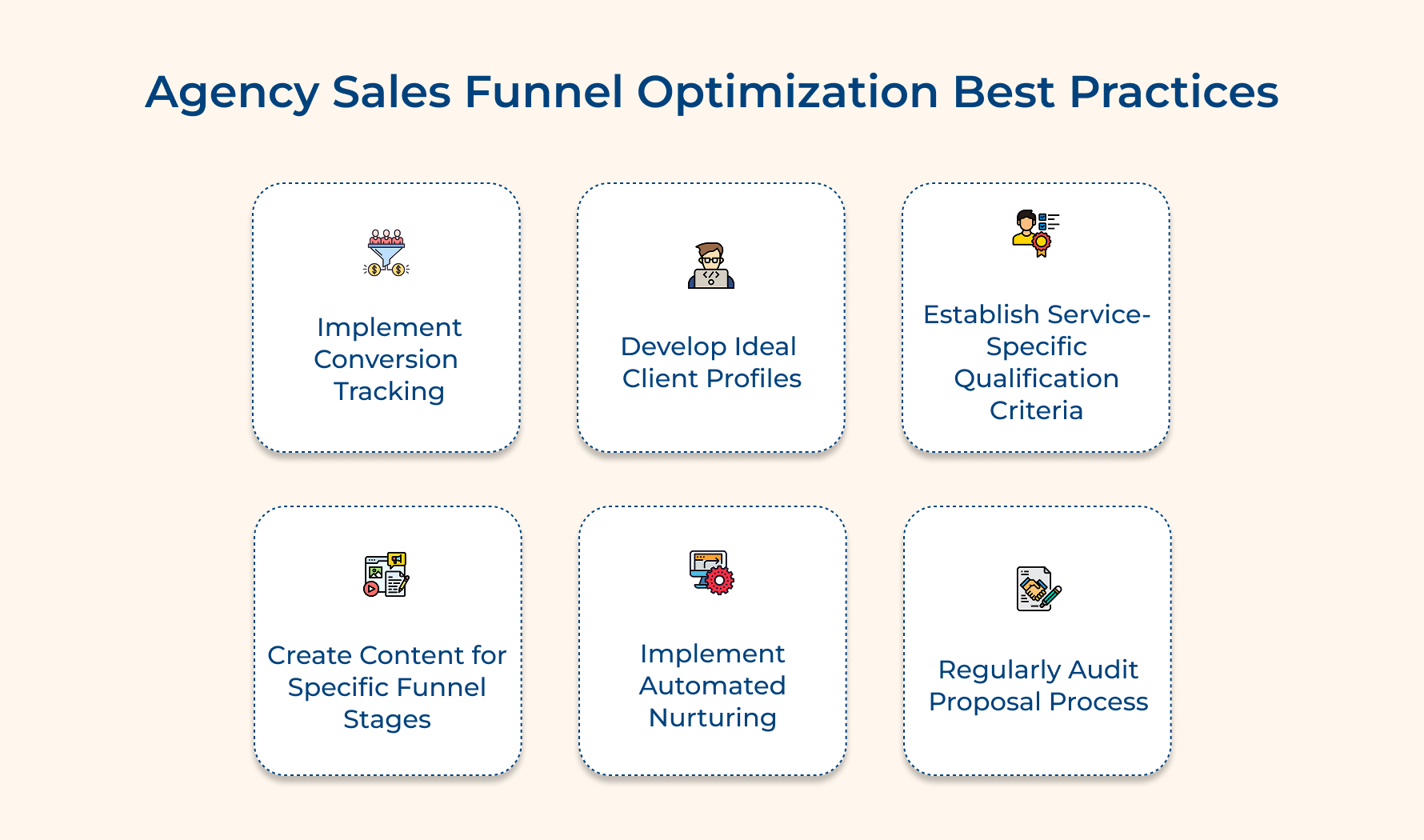
These six best practices help professional service agencies identify and eliminate the friction points that slow down or derail promising opportunities.
1. Implement Conversion Tracking Across All Stages
Track prospect movement through every funnel stage with specific conversion metrics for each transition point. This granular visibility helps you identify exactly where potential clients get stuck rather than just seeing that they disappeared somewhere in the process.
2. Develop Ideal Client Profiles for Each Service Offering
Create detailed profiles of perfect-fit clients for specific service lines rather than having one generic agency-wide profile. Document their distinct challenges, evaluation criteria, and decision-making processes for each service you offer.
3. Establish Service-Specific Qualification Criteria
Define clear qualification criteria that help you quickly identify which prospects truly need your specific expertise and which are unlikely to convert. Document these criteria while training your team to recognize qualification signals during initial interactions.
4. Create Content for Specific Funnel Stages
Develop tailored content resources that address the exact questions and concerns prospects have at each stage of their decision journey. Map each piece to specific funnel positions rather than creating generic “awareness” or “consideration” content.
5. Implement Automated Nurturing
Review your proposal process quarterly by examining win/loss patterns across different service lines and client types. Identify which proposal elements consistently appear in winning versus losing situations.
Common Mistakes to Avoid When Building a Sales Funnel
Even well-established agencies often struggle with sales funnel implementation due to fundamental errors that undermine their business development efforts.
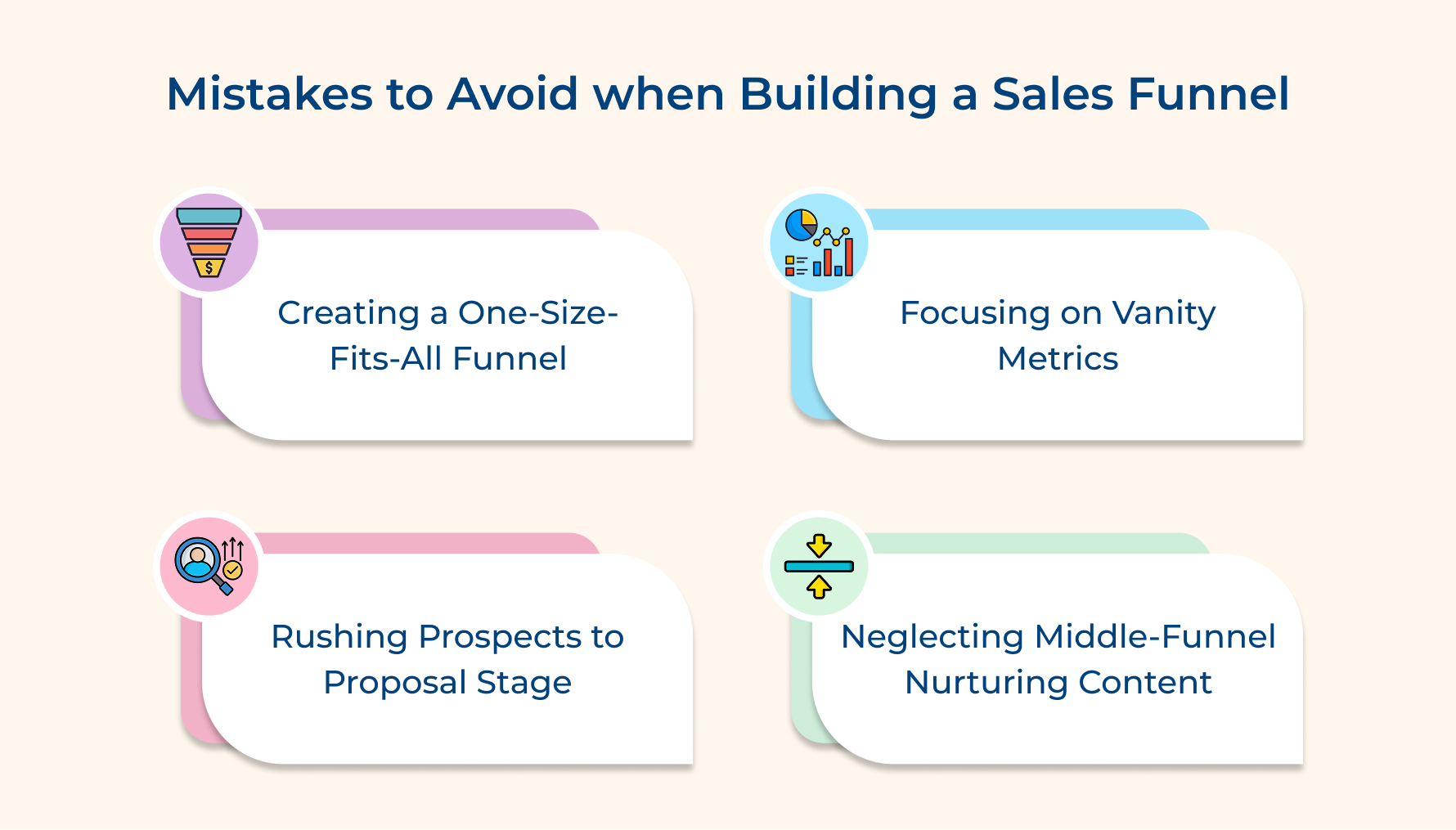
1. Using the Same Funnel for Everything
Trying to run all your services through one generic funnel? That’s a recipe for confusion. Each service has its own buying journey, and forcing every prospect through the same path means you risk losing them along the way. Instead, build micro-funnels tailored to each offering.
2. Chasing Vanity Metrics
Page views and impressions look nice on reports, but they don’t tell you if your funnel’s actually converting. Shift your focus to stage-by-stage conversion data so you can see where prospects drop off and fix real issues, not just surface-level fluff.
3. Jumping to Proposals Too Fast
We get it—you’re excited to close the deal. But pushing someone to the proposal stage too soon (before understanding their needs or showing your value) often backfires. Build in qualification steps and discovery conversations so the proposal feels like a natural next move, not a leap.
4. Skipping Middle-Funnel Content
Most agencies do a great job with awareness content but forget the stuff that helps prospects evaluate and compare options. Think: detailed case studies, service breakdowns, or FAQs. Give your leads the info they need to feel confident moving forward.
What to Do Instead:
- Build custom funnels for each service
- Track conversion rates, not just clicks
- Qualify leads before pitching
- Use lead scoring based on real client patterns
- Regularly audit your funnel to spot weak spots
Streamline Success With a Custom Sales Funnel for Your Agency
When you build a sales funnel for agency growth, you turn chaotic business development into a predictable system. Mapping each stage guides prospects from awareness to becoming loyal advocates for your services.
Successful agencies know funnel development is not a one-time task but an ongoing process. Continuous measurement and refinement turn the funnel into an advantage, delivering steady qualified leads and reducing feast-or-famine cycles for service firms.
Limit time — not creativity
Everything you need for customer support, marketing & sales.

Shivank Kasera is part of the marketing team at Kooper, where he focuses on building content that helps agencies and service providers grow. With a keen interest in SaaS, operations, and scalability, he translates practical insights into actionable resources for business leaders.