Small Business Management Explained: How to Manage and Grow
- What is Small Business Management?
- Why is Small Business Management Important?
- Key Benefits of Small Business Management for Growth
- 8 Actionable Small Business Management Tips
- Tools for Small Business Management
- What Are The Limitations of Small Business Management
- Manage Smarter, Grow Faster with Small Business Management
- FAQs about Small Business Management

Key Highlights:
- Practical small business management strategies that help owners organize operations, control costs, improve communication and create consistent business growth systems.
- Clear breakdown of small business management tips and processes to handle daily operations, finances, as well as customer experience efficiently.
- Actionable guidance on managing small business challenges using planning, automation, communication and proven management frameworks for long-term stability.
Running a small business feels overwhelming when you’re juggling finances, employees and customers all at once without clear systems. Most owners struggle because they lack structured management approaches that turn daily chaos into predictable operations.
The good news is that proven management principles can transform how your business operates regardless of your industry or experience level. You’ll discover how to build systems that free up your time while improving results across every part of your business.
Let’s explore the small business management strategies that separate thriving companies from those that barely survive their first few challenging years in operation.
What is Small Business Management?
Small business management involves planning and controlling all aspects of running a company with fewer employees as well as smaller revenue. It covers daily operations like hiring staff and tracking finances. Business owners handle multiple roles while making strategic decisions to help their company grow sustainably.
Good small business management creates better customer experiences through reliable service and faster response times. Clients benefit from personal attention and consistent quality when businesses run efficiently.
Key principles:
- Clear vision: Define where your business is heading and communicate that direction to everyone on your team.
- Financial discipline: Track every dollar coming in and going out so you can make informed spending decisions.
- Customer focus: Listen to feedback and adapt your offerings based on what clients actually need.
- Efficient operations: Streamline your processes to eliminate wasted time and reduce unnecessary costs.
- Team development: Invest in training your people because skilled employees drive better business results.
Why is Small Business Management Important?
Effective management determines if small businesses survive their critical first years or fail unexpectedly.
The Evidence Behind Strong Management:
- 95% of small businesses improved efficiency by implementing technology platforms and proper management systems in 2022 for better resource allocation.
- Companies with engaged teams through effective management are 17% more productive with stronger team performance and firms that provide training to engaged employees outperform by 202%.
- 65.3% of small businesses are profitable, with 80% of owners feeling optimistic about their company’s future when implementing effective management practices.
- Small businesses that adopt technology and digital management tools experience 76% growth rates, demonstrating the competitive advantage of proper management practices.
Strong management practices separate thriving businesses from struggling ones by creating stability and enabling smart decisions during challenges.
Key Benefits of Small Business Management for Growth
Good management isn’t just about avoiding problems. It’s the foundation that lets your business expand deliberately and capture new opportunities.
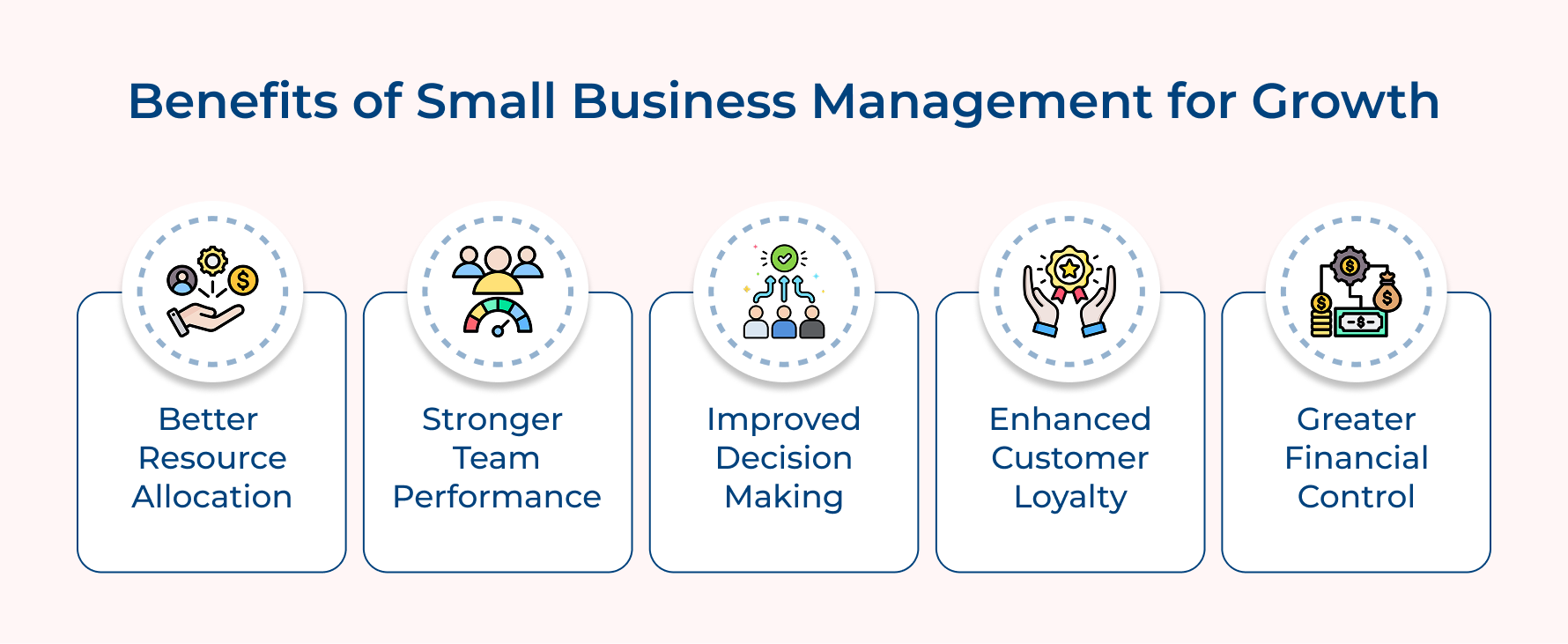
Better Resource Allocation
Strong management helps you channel time and money into activities that actually deliver returns, instead of spreading resources too thin. Better time management helps you quickly spot which investments drive growth and which ones quietly eat into your budget. This sharper focus helps you scale faster without needing extra capital.
Stronger Team Performance
Good management makes roles clear and gives people the confidence to do their best work. When expectations are set and feedback is consistent, teams feel motivated as well as accountable. Supported by solid business administration practices, productivity improves naturally – without constant oversight.
Improved Decision Making
Effective management systems give you real data on what’s working and what needs fixing. You stop relying on gut feelings and start making decisions backed by evidence. This structured approach, often encouraged by Small Business Administration guidelines, helps reduce mistakes that slow growth.
Enhanced Customer Loyalty
When management prioritizes service quality, customers stick around and spread the word. Clear processes ensure consistent experiences no matter who handles the interaction. Staying aligned with business law also builds trust, making customers feel confident choosing you again.
Greater Financial Control
Strong management keeps you aware of cash flow and upcoming expenses before problems arise. Through smart business planning, you avoid sudden financial stress and gain the flexibility to invest when the right opportunity appears.
8 Actionable Small Business Management Tips
Let’s uncover eight essential tips that can help streamline your processes, enhance productivity and drive your business toward success.
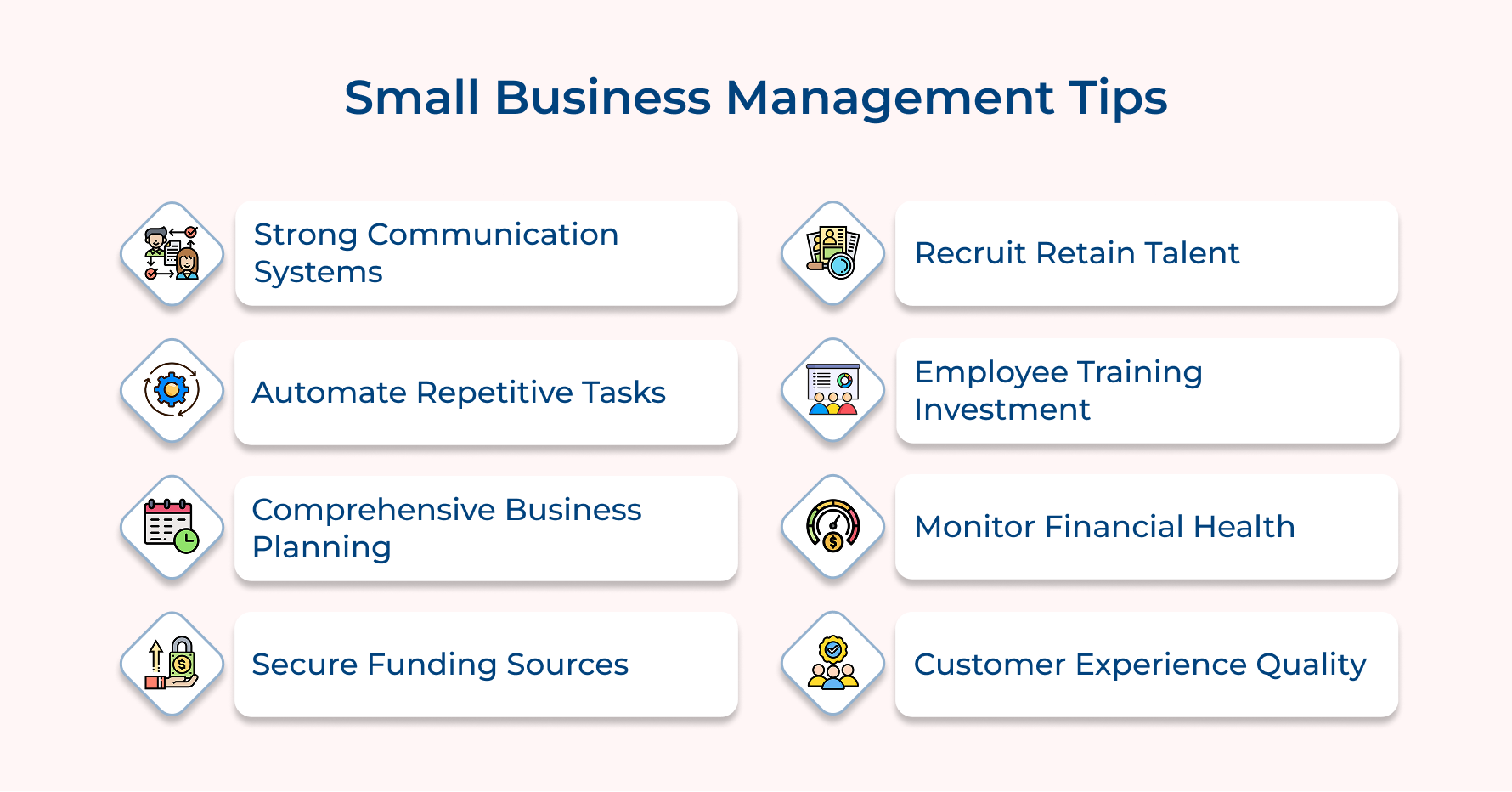
1. Build Strong Communication Systems Daily
Clear communication prevents misunderstandings that cost time and money while keeping everyone aligned on priorities. Poorly structured communication leaves teams disconnected, with key information falling through the cracks.
What makes a communication system actually work in practice? You need consistency rather than perfection. Schedule touchpoints at predictable intervals so team members know when they’ll get updates and can plan their work accordingly.
Here are communication systems that create real management impact:
- Daily stand-up meetings: Quick 15-minute check-ins where each person shares what they’re working on and any blockers they face.
- Shared project dashboards: Central hubs like Asana or Trello where everyone can see task progress without sending endless email threads.
- Open-door policies with boundaries: Set specific times when you’re available for questions so people aren’t interrupting deep work constantly.
- Written documentation repositories: Create a single source of truth for processes and decisions so people can find answers independently.
Strong communication systems reduce the frustration that makes good employees leave and help your team move faster toward shared objectives. When information flows freely, problems get solved before they become crises.
2. Automate Repetitive Tasks When Possible
Automation frees up hours you’d otherwise spend on mundane tasks so you can focus energy on strategy and relationship building. Manual processes drain resources and introduce human errors that automation eliminates completely.
Here’s how automation transforms daily operations in practical ways:
- Appointment scheduling tools: Systems like Calendly let clients book meetings automatically based on your availability without the back-and-forth email dance. You save hours each week and clients get instant confirmation which improves their experience immediately.
- Invoice generation software: Accounting platforms create and send invoices on schedule while tracking payments as well as sending reminders to late payers.
- Email marketing sequences: Automated welcome series and follow-up campaigns nurture leads while you sleep instead of requiring you to remember each touchpoint.
Consider a consulting business that automated client onboarding. New clients now receive welcome packets and contracts automatically after signing up. This cut administrative time by 60% each month which freed the owner for more billable work.
3. Develop a Comprehensive Business Plan
A business plan serves as your roadmap for making consistent decisions aligned with where you want the company to go. An incomprehensive plan means you react to whatever comes up instead of building deliberately toward specific outcomes that matter.
Starting your planning process requires honest answers to foundational questions:
- Where do you want your business to be in three years? This question forces you to envision concrete outcomes like revenue targets or market position rather than vague hopes.
- Who are your ideal customers and what specific problems do you solve for them? Understanding this shapes every decision from pricing to marketing messages.
- What makes you different from competitors in ways customers actually care about? Identifying your unique value prevents you from competing only on price.
- How will you fund growth without running out of cash? Financial planning ensures you don’t expand faster than your resources allow.
Start by writing down your three-year vision and then work backward to identify what needs to happen this year. Break annual goals into quarterly milestones with specific metrics you can track monthly.
Businesses create different plan types depending on their needs like :
- Operational plans detail daily workflows and processes
- Strategic plans outline long-term competitive positioning and growth initiatives.
- Financial plans project revenue and expenses to ensure profitability.
4. Secure Appropriate Funding Sources Early
Funding provides the runway you need to build your business before revenue can sustain operations on its own. Starting undercapitalized forces you to make desperate short-term choices that undermine long-term success and limit growth potential.
Calculate how much money you need to cover at least six months of expenses plus initial investments in equipment and inventory. Add a 20% buffer because unexpected costs always emerge during launch as well as growth phases regardless of planning.
Pro tips:
- Track every dollar borrowed and maintain detailed records for tax purposes as well as future funding rounds.
- Start with the least dilutive funding options first before giving up equity to investors.
5. Recruit and Retain Top Talent
Hiring the right people determines if your business can deliver quality work consistently and scale operations without constant bottlenecks. Poor hiring decisions cost thousands in wasted training time and lost productivity while damaging team morale. Your team makes or breaks your business regardless of how good your product is.
An ideal recruiting process for small businesses follows these steps:
- Write detailed job descriptions that outline responsibilities and required skills clearly before posting anywhere.
- Screen candidates through phone interviews first to assess basic qualifications before investing time in lengthy meetings.
- Conduct structured interviews with consistent questions that reveal problem-solving abilities and cultural alignment.
- Check references thoroughly by asking previous employers specific questions about work quality and reliability.
Once you’ve recruited talent, the real work begins with integration and development. New hires need clear expectations from day one plus regular check-ins during their first 90 days. Give them small wins early to build confidence and momentum.
Retaining top talent requires deliberate ongoing effort beyond just hiring:
- Competitive compensation packages: Pay market rates or above and review salaries annually to prevent good employees from job hunting.
- Career development opportunities: Provide training budgets and clear advancement paths so people see a future with your company.
- Recognition and appreciation: Acknowledge excellent work publicly and privately because feeling valued keeps people engaged long-term.
- Work-life balance respect: Honor boundaries around working hours and time off so burnout doesn’t drive your best people away.
6. Invest in Employee Training Programs
Practical software project management strategies help teams plan projects better. They support smooth execution and on-time delivery. These strategies also help teams stay within budget. Quality standards remain consistent throughout the project.
Clear explanations of software project management phases make work easier to manage. Defined roles reduce confusion and improve accountability. Metrics help teams track progress. The right tools improve coordination across the entire software development lifecycle.
Actionable guidance on scope control prevents unexpected changes. Clear communication keeps everyone aligned. Risk management helps teams handle issues early. Proper documentation improves delivery consistency, strengthens collaboration and increases customer satisfaction.
Best practices:
- Start training on day one with comprehensive onboarding that covers company culture before jumping into specific job tasks.
- Schedule quarterly skill development sessions where team members learn new tools or techniques relevant to their evolving roles.
7. Monitor Financial Health Consistently
Monitoring finances helps you spot problems before they become crises and identify opportunities to improve profitability. Ignoring financial data means you’re flying blind and will likely run out of cash unexpectedly.
Track these essential metrics to maintain financial health consistently:
- Cash flow statements show money moving in and out.
- Profit margins reveal what you actually keep per sale.
- Accounts receivable aging tracks who owes you money.
- Operating expense ratios measure spending efficiency.
These metrics tell you in case your business model actually works or needs adjustment before problems escalate. Use this financial data to make informed decisions about hiring and purchasing equipment or cutting unnecessary expenses that drain resources.
8. Focus on Customer Experience Quality
Customer experience determines if people buy once or become loyal advocates who refer others to your business repeatedly. Poor experiences drive customers to competitors even when your product quality matches or exceeds alternatives.
Gathering feedback reveals what’s working and what frustrates customers:
- Post-purchase surveys sent via email ask specific questions about satisfaction immediately after transactions.
- Direct phone calls to select customers provide detailed qualitative insights that surveys miss completely.
- Online review monitoring on platforms shows unfiltered opinions from real users.
Once you gather feedback, responding quickly to complaints becomes critical for maintaining trust and preventing negative word-of-mouth. Address issues within 24 hours and offer genuine solutions rather than excuses.
Personalized interactions make customers feel valued as individuals rather than transaction numbers. Here are personalized interaction opportunities throughout the customer journey:
- Welcome messages that reference how the customer found you or what they’re trying to accomplish.
- Birthday acknowledgments with special offers that show you remember important dates.
- Product recommendations based on previous purchases that demonstrate you understand their preferences.
- Handwritten thank-you notes after significant purchases that add an unexpected human touch.
Tools for Small Business Management
The right tools transform chaotic operations into smooth workflows by automating tasks and centralizing information. Smart software investments pay for themselves through time savings.
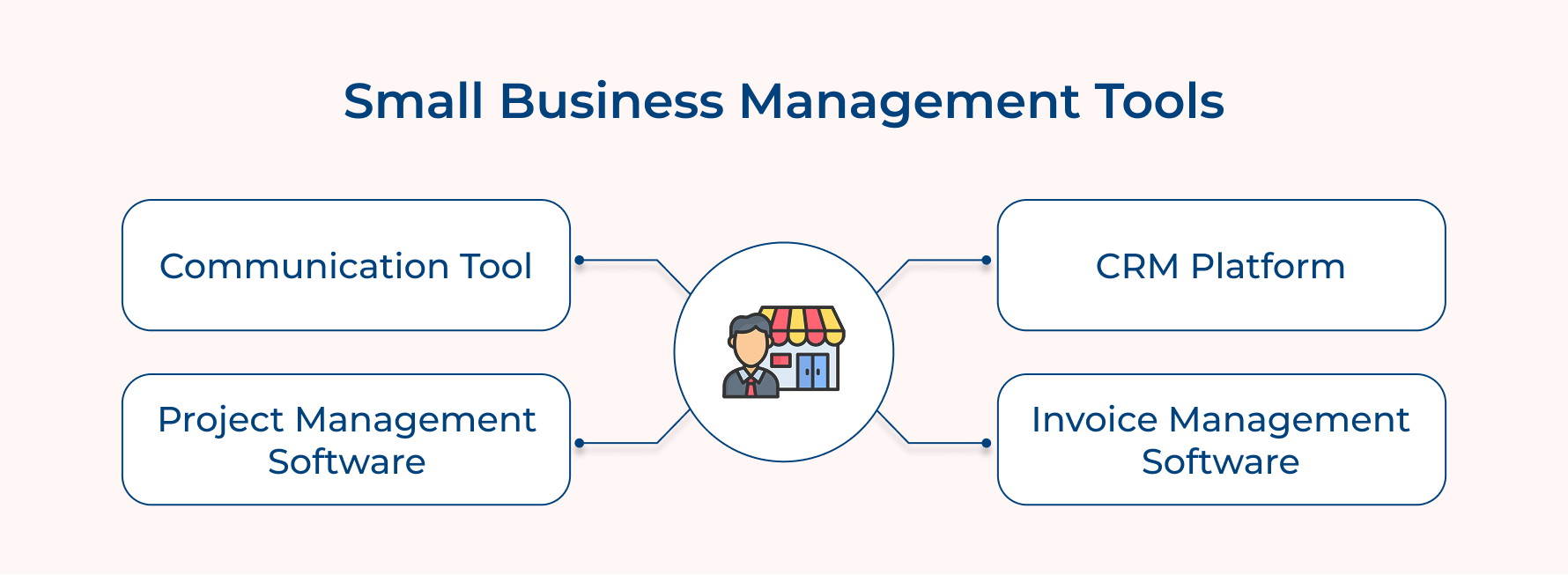
Communication Tool
Communication platforms create centralized spaces where your team can exchange messages and share files without endless email chains. These tools organize conversations by topic which means important decisions don’t get lost in unrelated discussions. Real-time messaging keeps everyone connected which speeds up problem-solving significantly.
CRM Platform
Customer relationship management systems store every client detail including purchase history and previous conversations in one accessible database. This centralized information helps your team provide consistent service because anyone can see what a customer needs. The platform tracks sales opportunities and alerts you when it’s time to follow up.
Project Management Software
Project management platforms give you visibility into who’s working on what and if tasks are progressing on schedule. These systems break large initiatives into smaller actionable steps with clear ownership so team members know their responsibilities. Visual dashboards show bottlenecks forming before they cause major delays.
Invoice Management Software
Invoice management systems automate the entire billing cycle from creating professional invoices to tracking which clients have paid. These platforms generate financial reports instantly which shows you exactly how much cash is coming in versus going out. Automated payment reminders reduce awkward conversations while ensuring you get paid faster.
What Are The Limitations of Small Business Management
Even the best management practices face real constraints that can slow growth and limit what small businesses can achieve. Understanding these limitations helps you plan realistically.
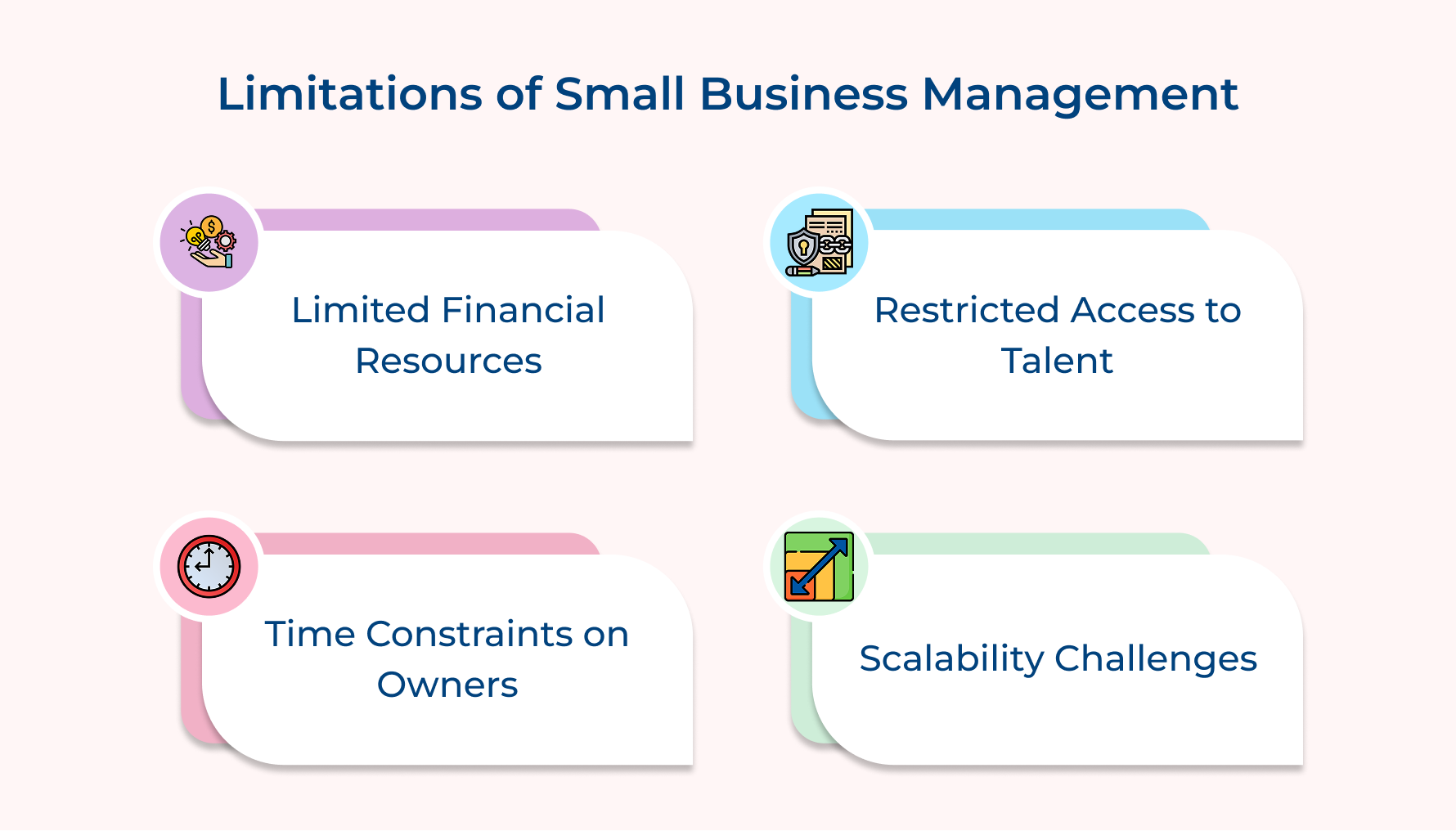
Limited Financial Resources
Small businesses rarely have deep cash reserves to weather unexpected expenses or invest in growth opportunities that suddenly appear. Every dollar must work harder because there’s no cushion for mistakes or unproven strategies. This forces difficult choices between immediate needs and long-term investments.
Restricted Access to Talent
Small companies struggle to compete with larger firms that offer higher salaries and comprehensive benefits packages. Your hiring pool shrinks when skilled candidates choose corporate stability over small business uncertainty. Limited budgets mean you often settle for less experienced employees.
Time Constraints on Owners
Business owners wear multiple hats from sales to accounting which leaves little time for strategic planning. The constant demand to handle daily operations prevents you from stepping back to see the bigger picture. This lack of time becomes a bottleneck that limits growth speed.
Scalability Challenges
Processes that work with five employees break down completely when you hire your tenth person without proper systems. Small businesses often lack the infrastructure needed to maintain quality as operations expand. Growth requires painful restructuring that temporarily disrupts operations.
Overcoming these limitations
- Secure flexible funding through lines of credit before you desperately need emergency cash reserves.
- Attract talent through flexible schedules and meaningful work instead of competing purely on compensation.
- Delegate operational tasks to trusted team members so you can focus on high-impact strategic activities.
- Build scalable systems early by documenting processes and investing in tools that grow with your needs.
Manage Smarter, Grow Faster with Small Business Management
Effective small business management isn’t about doing everything perfectly but about building systems that work consistently for your specific situation. The tools and strategies covered here help you avoid common pitfalls while focusing energy on activities that actually move your business forward.
Start implementing one tip at a time rather than attempting to overhaul everything overnight and overwhelming yourself completely. Small improvements in communication or financial tracking compound over months into significant competitive advantages that separate thriving businesses from struggling ones.
Limit time — not creativity
Everything you need for customer support, marketing & sales.

Neeti Singh is a passionate content writer at Kooper, where he transforms complex concepts into clear, engaging and actionable content. With a keen eye for detail and a love for technology, Tushar Joshi crafts blog posts, guides and articles that help readers navigate the fast-evolving world of software solutions.