Project Management Skills Every Manager Should Have
- What are Project Management Skills?
- Why Are Project Management Skills Important?
- Who Needs Project Management Skills?
- 14 Essential Project Management Skills for High-Impact Project Delivery
- How to Develop Your Project Management Skills?
- Examples of Project Management Skills Across Projects
- Navigate Projects with Ease Using the Best Management Skills
- FAQs About Project Management Skills

Key Highlights:
- Project management skills transform team chaos into coordinated execution that consistently delivers real, measurable results.
- Strong planning, scheduling and communication abilities separate successful project outcomes from costly, avoidable failures.
- Certifications from the Project Management Institute unlock better roles, higher pay and industry-recognized credibility fast.
Ever watched a project crash because no one knew who was doing what? Team chaos is real and it usually comes down to leaders missing the right skills to keep everyone on the same page.
Talented teams still miss deadlines and disappoint clients when priorities shift while nobody tracks progress. Budgets spiral. Reputations take a hit.
Here’s the good news: project management skills are completely learnable. Practice and consistency make the difference between scattered efforts along with coordinated wins. This guide breaks down the essential abilities you need to lead confidently and actually get things done together.
What are Project Management Skills?
Project management skills are the practical abilities that help you plan, organize and execute projects from start to finish. These skills let you coordinate teams, manage resources, meet deadlines and deliver results that match what was promised.
How Project Management Skills Work?
These skills create structure in chaos. You break big goals into smaller tasks, assign responsibilities, track progress and solve problems as they pop up. Good project managers connect all the moving parts so nothing falls through the cracks and everyone knows what to do next.
When you manage projects well, clients get what they expect on time and within budget. They see regular updates and clear communication. Problems get solved quickly which eventually builds trust and makes clients want to work with you again.
Key objectives:
- Clear goal setting: Define exactly what success looks like before the project starts so everyone works toward the same target.
- Efficient resource allocation: Put the right people and tools on the right tasks to avoid waste as well as maximize productivity.
- Risk management: Spot potential problems early and create backup plans so surprises don’t derail your timeline.
- Quality delivery: Ensure the final outcome meets standards and requirements without cutting corners or rushing at the end.
Why Are Project Management Skills Important?
Strong project management skills separate successful projects from failed ones. They’re the difference between organized execution and expensive chaos.
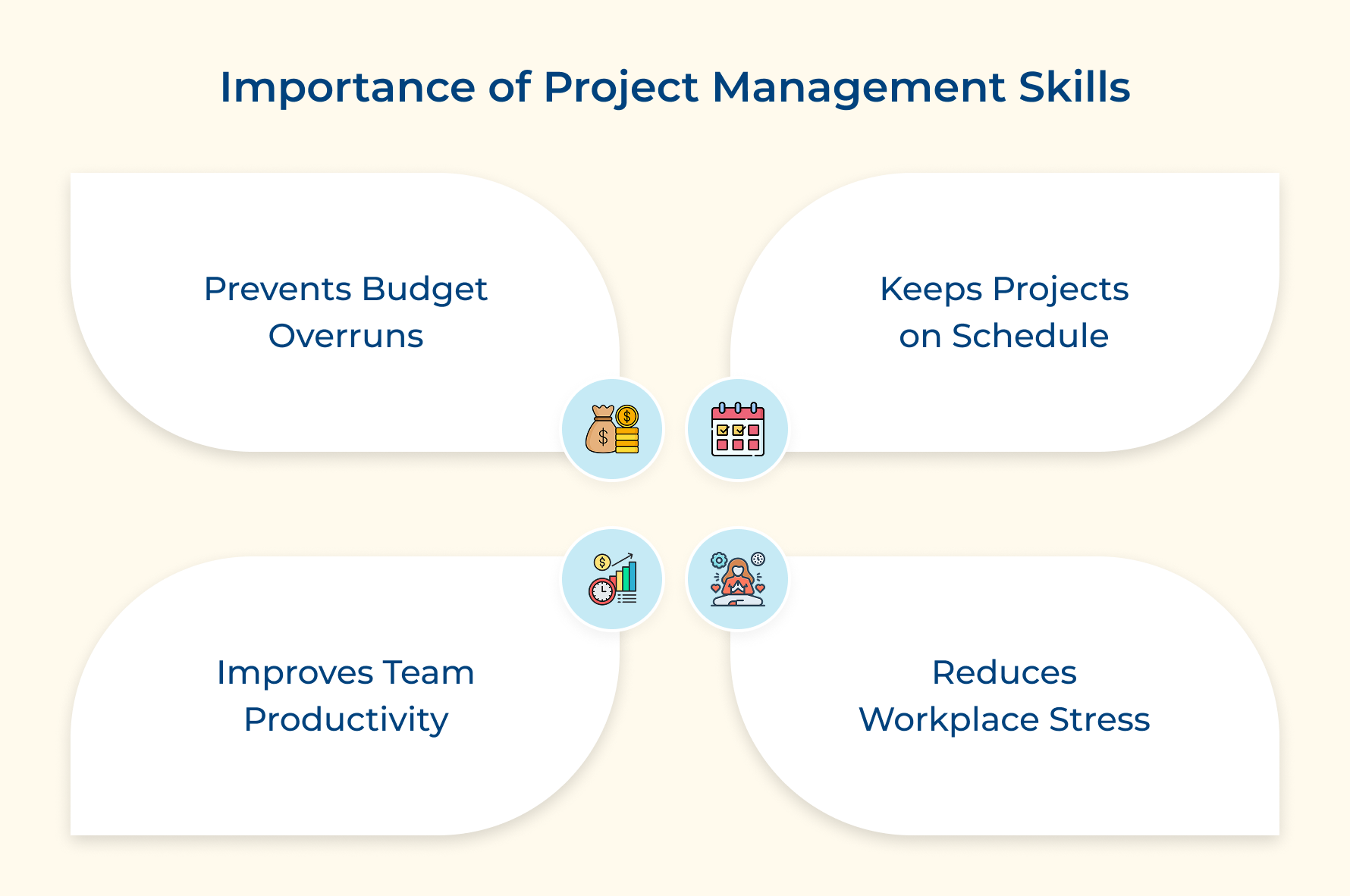
1. Prevents Budget Overruns
Costs spiral quickly on poorly managed projects. Strong project management skills help you track spending and catch budget issues early. You stay within financial limits and avoid surprise expenses that hurt profitability – something professional associations consistently flag as a top leadership priority.
2. Keeps Projects on Schedule
Deadlines slip the moment nobody owns the timeline. Project management skills help you build realistic schedules and monitor progress daily. You spot delays before they snowball and adjust plans accordingly.
3. Improves Team Productivity
Teams perform better knowing their roles and priorities. These skills eliminate confusion and cut wasted effort. Everyone stays focused on tasks that actually move the project forward.
4. Reduces Workplace Stress
Chaos and uncertainty create real anxiety for everyone involved. Good project management brings order and predictability to the work environment. People feel confident because they understand what’s happening and what comes next, while the inherent risks of unclear expectations simply disappear.
Who Needs Project Management Skills?
Project management isn’t just for people with “manager” in their title. Multiple roles in service firms need these skills to deliver quality work and keep clients happy.

1. Project Managers
The Skilled project managers own the entire project lifecycle from kickoff to completion. They coordinate teams and handle client expectations daily. Strong project management skills are non-negotiable for this role since it’s literally their job description.
2. Project Portfolio Managers
Overseeing multiple projects simultaneously is no small feat. These managers decide how to allocate resources across competing priorities and ensure everything stays on track. Spotting connections between projects that others miss is where real technical expertise comes into play.
3. Account Managers
Client relationships live and die on trust. Project management skills help account managers set realistic expectations and communicate accurate timelines. Overpromising is one of the fastest roads to project failure while protecting both client confidence and team morale starts here.
4. Team Leads
Small groups need clear direction to stay productive. Organizational skills help team leads track tasks, manage deadlines and keep everyone accountable. Bridging the gap between high-level project goals and day-to-day execution is exactly where great team leads prove their value.
14 Essential Project Management Skills for High-Impact Project Delivery
The best project managers blend hard skills with soft skills and technical know-how. This combination helps them handle complex projects while keeping teams motivated and clients satisfied.

A. Hard Project Management Skills
1. Knowledge of Project Management Methodologies
Different projects need different approaches to succeed. Agile works great for software development while Waterfall suits construction projects better. Understanding multiple methodologies lets you pick the right framework for each situation.
Start with Agile and Waterfall since they’re most common. Then explore hybrid approaches that mix elements from different frameworks to match your project needs.
Popular methodologies every project manager should understand:
- Agile for iterative development with frequent client feedback
- Waterfall for sequential projects with fixed requirements
- Scrum for team-based sprints with daily standups
2. Project Planning
Planning turns vague ideas into concrete action steps. You define what needs to happen and in what order to reach your goal. Without solid planning, teams waste time figuring out what to do next.
Among the essential project management skills, this one helps you identify dependencies between tasks and allocate realistic time for each one. Your roadmap becomes the reference point when things go off track.
Essential components that make planning comprehensive:
- Work breakdown structure that divides big goals into manageable pieces
- Resource requirements listing who and what you need
- Milestone markers that show major achievement points
3. Project Scheduling
A schedule puts specific dates on your project plan. You decide when each task starts and when it must finish. This creates accountability because everyone knows exactly when their work is due.
Any project manager working to strengthen their project management skills needs to build in buffer time for unexpected delays. Critical path analysis helps you spot which delays will impact your final deadline.
For example, if you’re launching a website, your schedule might show design finishing by week 3 and development starting week 4. This prevents developers from sitting idle.
4. Project Tracking
Wondering how you know if your project is actually on track? You monitor task completion and compare actual progress against scheduled milestones. This early warning system lets you course-correct before small delays become major problems.
You use metrics like percentage complete to measure real advancement. These check-ins also give team members a chance to raise issues while there’s still time.
5. Workload Management
Teams burn out when work distribution feels unfair or overwhelming. You need to see who’s swamped and who has capacity for more tasks. Balancing workload keeps productivity high and prevents your best people from quitting mid-project.
Key factors in managing team workload effectively:
- Individual capacity based on skills and current commitments
- Task complexity that requires focused attention versus routine work
- Personal work styles where some people prefer multitasking while others need single-focus time
Developing this skill in project management helps you redistribute tasks when someone hits a rough patch. The flexibility builds loyalty because people know you care.
6. Risk Management
Projects always face potential problems that could derail success. You identify these risks early and decide how to handle each one. Some risks get eliminated while others just need monitoring along with backup plans.
You assess each risk’s likelihood and potential impact instead of just hoping for the best. High-probability and high-impact risks get the most attention as well as resources for mitigation strategies.
For example, if a key vendor might miss their delivery date, your risk plan could include identifying backup suppliers now rather than scrambling later.
B. Soft Project Management Skills
7. Communication Skills
Projects fail more often from communication breakdowns than technical problems. You need to explain complex ideas in ways different audiences understand. A developer needs different information than a client about the same project issue.
Communication channels that project managers must master:
- Written updates through emails and status reports
- Verbal presentations for stakeholder meetings
- Visual communication using charts and diagrams
If you’re cultivating important project management skills, learning to listen actively and ask clarifying questions saves countless hours. Regular updates keep stakeholders informed without overwhelming them with unnecessary details.
8. Organizational Skills
Juggling multiple tasks and deadlines requires serious organizational ability. You track action items from meetings while ensuring nothing slips through the cracks. This means maintaining systems that the whole team can follow consistently.
When building your project management skill set, learning to create central locations for information stops people from constantly asking where to find things. Consistent naming conventions save hours of searching over a project’s lifetime.
Essential organizational systems that keep projects running smoothly:
- Centralized file storage with clear folder structures
- Meeting notes with assigned action items and due dates
- Status dashboards showing current progress at a glance
9. Problem-Solving Skills
No project goes exactly as planned and problems pop up constantly. You need to analyze issues quickly and identify root causes rather than just symptoms. Then you generate potential solutions and pick the best option.
You gather relevant data but also trust your experience and intuition. Sometimes the best solution comes from trying something unconventional that hasn’t been done before.
For example, when a client suddenly cuts your budget by 30%, problem-solving means evaluating which features to postpone rather than delivering lower quality across everything.
10. Adaptability
Change hits every project whether you’re ready or not. Client priorities shift and team members leave unexpectedly. You need mental flexibility to adjust plans without falling apart or clinging to outdated approaches.
Mastering this critical project management skill lets you view changes as new information rather than personal attacks. The mindset helps you pivot quickly and bring your team along instead of resisting the inevitable.
Signs that you’re successfully adapting to change:
- Quick plan revisions without team panic
- Maintaining quality despite shifting requirements
- Learning from disruptions to improve future planning
11. Collaboration
Projects succeed through teamwork rather than individual heroics. You bring together people with different skills to work toward shared goals. This means facilitating discussions where everyone contributes and creating environments where people actually help each other.
What makes collaboration work in project environments:
- Psychological safety where people share concerns without fear
- Clear roles so everyone knows their contribution
- Recognition systems that reward team wins over individual glory
Building this as part of your project management skills creates trust that makes people willing to go the extra mile when deadlines get tight.
C. Technical Project Management Skills
12. Gantt Chart Proficiency
Creating and reading Gantt charts is fundamental for visual project planning. Learning this as a core project management skill involves knowing when to use this format versus other methods.
Practicing with real project data helps you spot scheduling conflicts instantly. You develop an eye for unrealistic timelines just by glancing at the chart.
Core Gantt chart skills project managers must develop:
- Creating accurate task dependencies that reflect real workflow
- Adjusting timelines when delays occur without breaking the whole schedule
- Presenting complex schedules to non-technical stakeholders
For example, a Gantt chart for an office renovation would show demolition completing before electrical work begins. The visual connection makes dependencies crystal clear.
13. Workflow Automation Setup
Setting up automated workflows requires understanding process logic and conditional triggers. You need to identify which project tasks follow predictable patterns that machines can handle.
For those expanding their technical project management skills, starting with simple automations before building complex workflows prevents frustration. You create rules that trigger actions based on specific conditions like task completion.
Common workflow automations that save project managers hours weekly:
- Automatic notifications when tasks reach certain stages
- Template generation for recurring project types
- Status report compilation from multiple data sources
14. Time Tracking Analysis
Using time tracking software effectively goes beyond just logging hours. For anyone serious about building project management skills, this one helps you spot where estimates consistently miss the mark.
You compare estimated versus actual time across different phases and team members. These insights inform better planning for future projects and help justify budget requests with concrete evidence.
Key metrics to track for project insights:
- Variance between estimated and actual task duration
- Time distribution across different project phases
- Individual productivity patterns and peak performance hours
How to Develop Your Project Management Skills?
Let’s explore key techniques and insights that can help you hone your project management skills, from effective communication to agile methodologies.
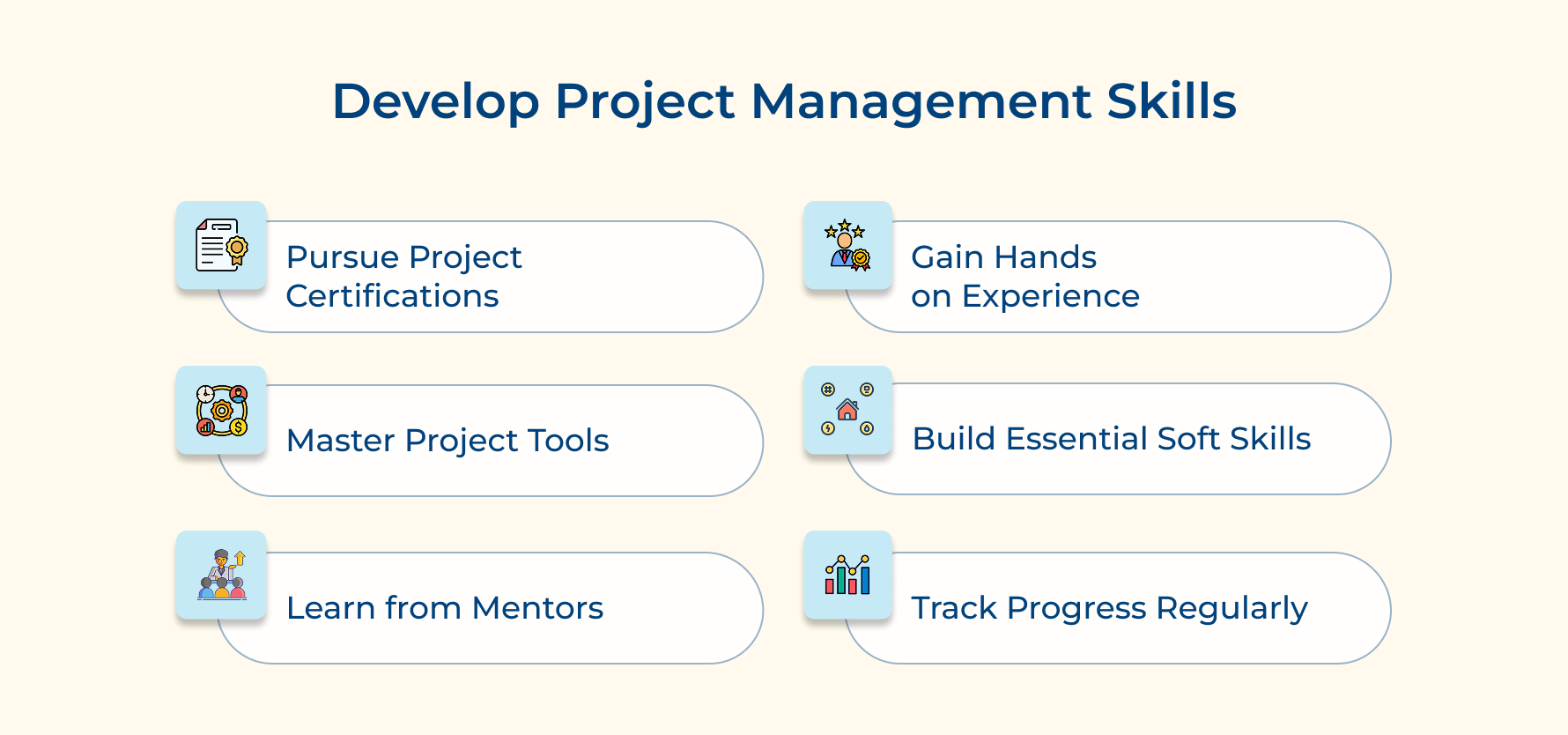
1. Pursue Project Management Certifications
Certifications prove your knowledge and show employers you mean business. Structured learning paths cover real methodologies and best practices — and getting certified unlocks better project management roles as well as higher-paying opportunities. The Project Management Institute offers some of the most respected credentials in the field.
Consider these certifications:
- PMP (Project Management Professional)
- CAPM (Certified Associate in Project Management)
- PRINCE2 Foundation and Practitioner
- Agile Certified Practitioner (PMI-ACP)
- Certified ScrumMaster (CSM)
These credentials teach frameworks that work across industries and sharpen the terminology needed to communicate confidently. Picking the right one starts with honest self-assessment.
2. Get Hands-On Project Experience
Real-world practice beats textbook knowledge every single time. Facing actual project challenges teaches lessons no classroom can replicate. Here’s how to start building experience practically:
- Volunteer for small internal projects: office events or team initiatives let you practice planning without high stakes
- Take assistant or coordinator roles: supporting experienced managers reveals decision-making patterns in a safe environment
- Shadow project veterans regularly: watching how they handle conflict builds technical expertise and expands your network organically
Coordinating a quarterly team offsite, for example, gives you real budgeting and vendor experience without risking client relationships. Small opportunities compound quickly into a strong professional track record worth talking about.
3. Master Project Management Tools
Tools are the backbone of modern project management. Struggling with basic software while others automate tasks is a surefire path toward project failure. Platform proficiency isn’t optional anymore — it’s expected.
Most tools share core functions but differ in reporting and automation capabilities. Learning one platform deeply makes picking up others significantly easier. Here’s how to build tool confidence fast:
- Start with one free tool and practice on personal projects first
- Watch tutorial videos at 1.5x speed to absorb features quickly
- Explore reporting dashboards before jumping to advanced automation
Staying current with project management trends means knowing which platforms teams actually use. Depth beats breadth – master one tool completely before exploring the next.
4. Develop Essential Soft Skills
Technical knowledge gets you hired. Soft skills keep you effective, respected and influential. Strong communication as well as leadership are what guide teams through real pressure — and ultimately determine whether projects thrive or collapse.
Navigating office politics, resolving conflicts early and reading team dynamics all require deliberate practice. Key soft skills every project manager needs:
- Active listening: surfaces unstated concerns before they escalate
- Emotional intelligence: helps you read and respond to team energy
- Conflict resolution: addresses friction before it derails timelines
Building these skills is straightforward. Lead one meeting weekly and focus purely on facilitation. Ask for honest feedback after presentations. Small, consistent efforts sharpen these abilities faster than any single training session ever could.
5. Learn from Experienced Mentors
Mentors compress your learning curve dramatically. Their hard-won insights from real successes and failures save years of costly trial as well as error. A good mentor also opens doors to industry connections that accelerate a career in project management.
Use these questions to find the right fit:
- Does their experience align with your career direction?
- Can they commit to regular monthly check-ins?
- Do they demonstrate leadership you genuinely admire?
- Will they challenge you beyond your comfort zone?
The right mentor offers honest feedback, not just encouragement. Reach out to senior project managers in your organization first. Ask specific questions about challenges you’re currently navigating rather than broad career advice.
6. Reflect and Track Your Progress
Self-reflection turns everyday experiences into lasting lessons. Tracking progress keeps you accountable and makes growth visible over time. Skipping this step means repeating mistakes and missing patterns that could sharpen your approach significantly.
Regular reflection helps spot skill gaps before they quietly become serious weaknesses. Here’s what your tracking system should capture:
- Specific wins and the strategies behind them
- Challenges faced and exactly how you resolved them
- Skills still needing development and focused practice
Staying aware of evolving project management trends also belongs in your reflection routine. Set a recurring Friday reminder to write three sentences about your week. Review entries every quarter to spot trends and set sharper learning goals going forward.
Examples of Project Management Skills Across Projects
Different projects demand different skill combinations to succeed. Here’s how project managers apply their abilities across various client scenarios.
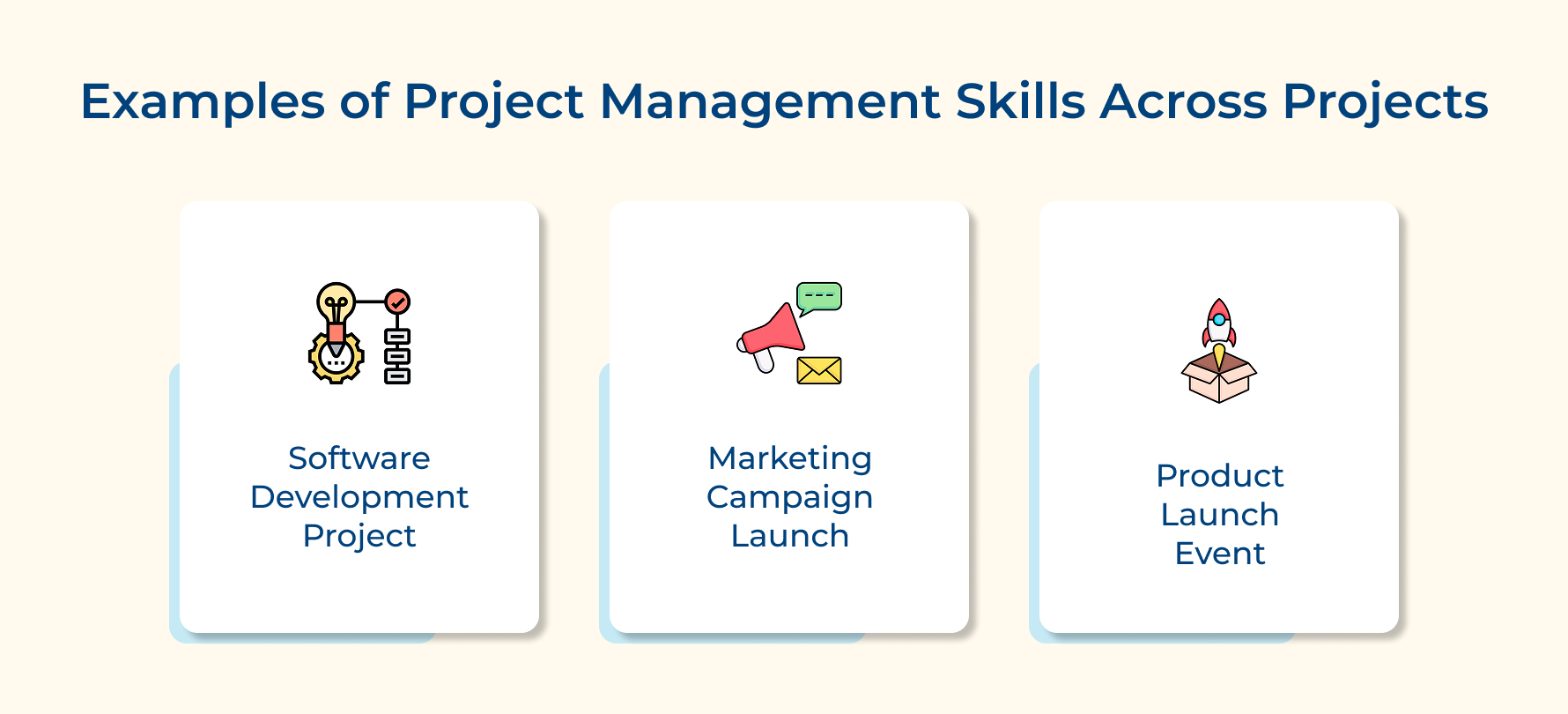
1. Software Development Project
Software projects require strong technical coordination and adaptability as requirements evolve constantly. You need excellent communication to translate between developers and non-technical stakeholders. Agile methodology knowledge and risk management help you handle changing priorities.
2. Marketing Campaign Launch
Marketing campaigns demand creative collaboration and tight deadline management across multiple vendors. You need organizational skills to coordinate designers and copywriters simultaneously. Budget management becomes critical when allocating funds across different channels.
3. Product Launch Event
Events demand exceptional attention to detail and crisis management under extreme time pressure. You need collaboration skills to manage caterers and AV technicians across tight timelines. Workload management keeps your team from burning out during intense final weeks.
Project management skills transform chaos into controlled execution that delivers real results. Strong planning, communication and technical abilities help you guide teams through challenges. These skills separate successful projects from expensive failures.
Start building your abilities today through certifications and hands-on experience as well as mentorship. Track your progress and adapt as you learn what works best. Master these skills and you’ll confidently handle any project that comes your way.
Limit time — not creativity
Everything you need for customer support, marketing & sales.

Neeti Singh is a passionate content writer at Kooper, where he transforms complex concepts into clear, engaging and actionable content. With a keen eye for detail and a love for technology, Tushar Joshi crafts blog posts, guides and articles that help readers navigate the fast-evolving world of software solutions.