How to Build an Effective Resource Request Workflow
- What is a Resource Request Workflow?
- Key Benefits of a Resource Request Workflow
- 8 Essential Steps to Build an Effective Resource Request Workflow
- Who is Involved in a Resource Request Workflow?
- Challenges in Resource Request Workflow and How to Overcome
- Streamlining Success with an Efficient Resource Request Workflow
- FAQs about Resource Request Workflow

Key Highlights:
- Resource request workflow achieves enterprise-wide visibility of resources with clear workflows, dashboards and metrics for smarter planning.
- Reduce conflicts with standardized request forms, automated approvals and transparent prioritization techniques for optimized project execution.
- Enhance accuracy by using resource scheduling software, skills matrices and communication tools for seamless workflow management.
Project managers often face chaos in resource allocation. Different teams compete for the same skilled people, which creates conflicts and delays that push timelines off track.
When there is no structured process, things get worse. Deadlines slip, stakeholders get frustrated and resources are wasted as teams scramble for talent through office politics or informal channels.
A resource request workflow changes this completely. It brings order with clear steps, fair evaluation and transparent approvals. Combined with capacity planning, it ensures every project gets the right people at the right time.
Let’s explore this concept and help you enhance your team’s overall workflow process.
What is a Resource Request Workflow?
A resource request workflow is a structured process that governs how project managers formally request and obtain human resources or materials needed for client projects. This systematic approach creates clear pathways for submitting resource needs through predefined approval chains.
The workflow ensures proper evaluation of resource availability and alignment with project requirements before allocation decisions are made. Resource request workflows prevent project delays by establishing clear communication channels between project managers and resource allocators.
Core objectives:
- Standardize the process: Create consistent procedures for all resource requests across different projects and departments.
- Ensure proper authorization: Establish clear approval levels based on resource type and project budget requirements.
- Optimize resource allocation: Match available resources with project needs while considering skills and capacity constraints.
- Maintain project visibility: Provide stakeholders with clear status updates on resource request approvals and timelines.
- Enable tracking and reporting: Create audit trails for resource decisions as well as performance metrics for future planning.
Key Benefits of a Resource Request Workflow
A well-structured workflow system simplifies how teams request and allocate resources. Let’s now explore how it benefits project managers.
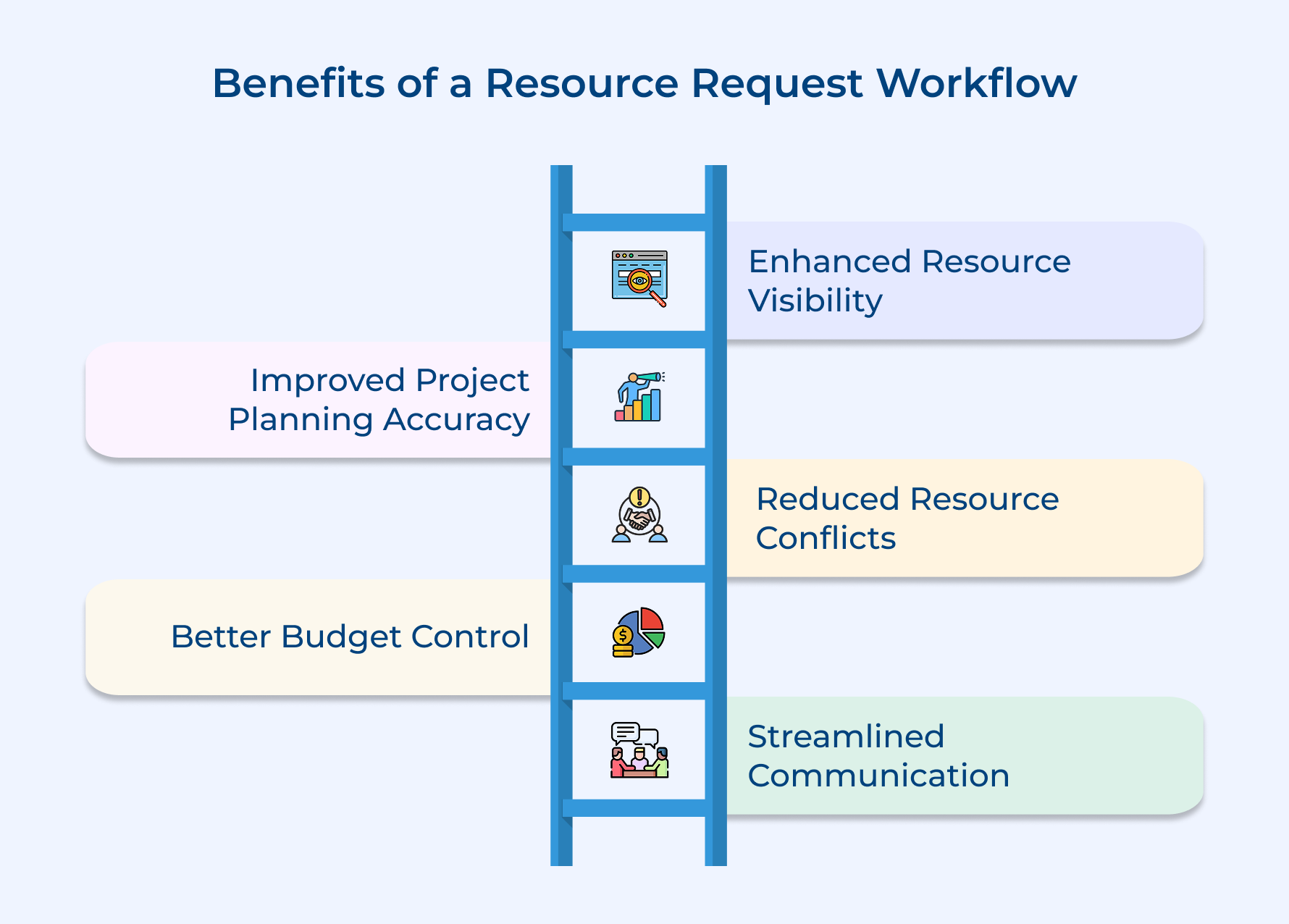
Enhanced Resource Visibility
Project managers get enterprise-wide visibility of all available resources. This clarity removes guesswork and helps them make smarter allocation decisions. Teams can also spot bottlenecks early and plan backup strategies to keep projects moving smoothly.
Improved Project Planning Accuracy
Structured workflows give managers reliable timelines for approvals and resource availability. Using past data and resource metrics, they can create schedules that are more realistic. This reduces timeline risks as well as helps set achievable milestones with stakeholders.
Reduced Resource Conflicts
Formal processes prevent projects from fighting over the same resources. Clear prioritization techniques help resolve competing demands fairly. Teams avoid last-minute scrambles and can focus on delivery instead of negotiations.
Better Budget Control
Approval workflows check that resource costs fit within budgets before commitments are made. Finance can track expenses in real time against planned spend. It prevents overruns and supports accurate financial reporting.
Streamlined Communication
Standardized workflows improve communication between project teams and managers. Everyone knows their roles in allocation, reducing confusion while ensuring the right decisions reach the right people quickly.
8 Essential Steps to Build an Effective Resource Request Workflow
This guide will walk you through eight essential steps to create a clear and effective resource request workflow. Following these steps will help transform chaos into a structured, seamless process.
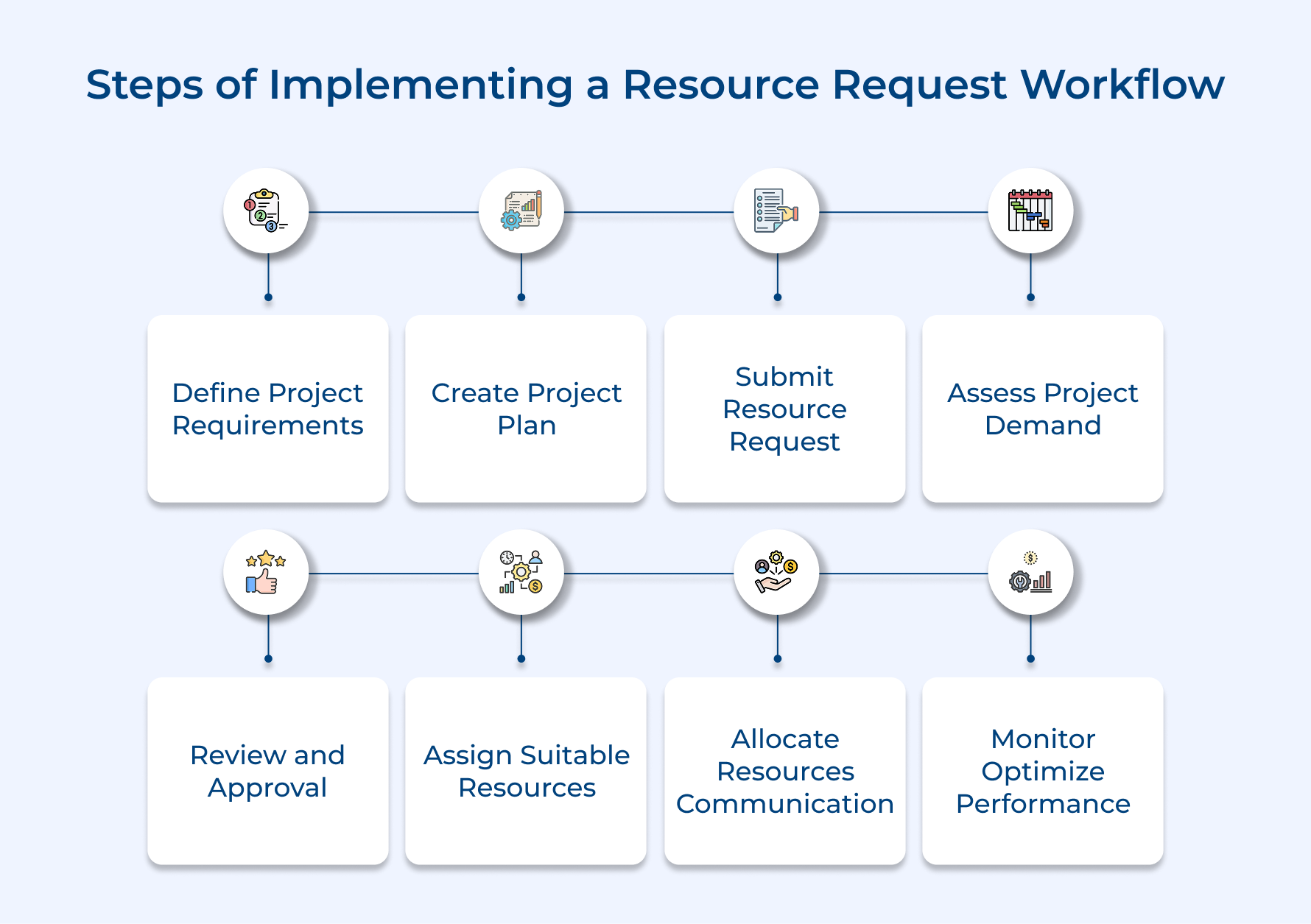
1. Define Clear Project Requirements
Defining clear project requirements establishes the foundation for accurate resource allocation decisions. When teams don’t have clear guidelines, they often request the wrong resources. This wastes time fixing mismatched assignments.
Project managers should document specific technical skills and experience levels needed for each project phase. This preparation enables resource managers to evaluate requests against available talent pools and make informed allocation decisions quickly.
Pro tips:
- Create standardized requirement templates to ensure consistency across all project requests and reduce approval delays.
- Include both mandatory and preferred qualifications to give resource managers flexibility in assignment decisions.
2. Create a Detailed Project Plan
A detailed project plan turns requirements into clear timelines and resource assignments. Using resource scheduling software, managers can see exactly when specific skills are needed, avoiding last-minute scrambling.
Here are three ways to build a solid project plan:
- Work breakdown structure: Split big projects into smaller, manageable tasks with clear deliverables. This helps spot hidden resource needs and prevents missed requirements from causing delays.
- Resource mapping timeline: Visualize when different skills are needed throughout the project. This makes it easy to identify conflicts early and plan ahead.
- Milestone-based planning: Organize projects around key deliverables, specifying which resources are needed at each milestone. This gives clear checkpoints to evaluate performance and adjust assignments as needed.
For example, a software project may need frontend developers in the first month and backend specialists later. A clear plan with resource scheduling software ensures smooth transitions between these skill requirements.
3. Place the Resource Request
Placing the resource request initiates the formal evaluation process that connects project needs with available organizational resources. Skipping this step leads to informal resource grabbing and creates conflicts between competing project priorities.
Consider these formal steps when submitting resource requests effectively:
- Complete standardized request forms with all required project and resource information.
- Submit requests through designated channels to ensure proper routing and tracking capabilities.
- Include detailed justifications explaining why specific resources are essential for project success.
- Specify priority levels and urgency indicators to help resource managers make appropriate allocation decisions.
- Attach supporting documentation such as project plans and stakeholder approvals for comprehensive evaluation.
Resource managers must balance multiple competing requests simultaneously while considering organizational priorities and strategic objectives. Clear communication and complete documentation significantly improve approval chances as well as reduce back-&-forth clarification cycles.
4. Assess the Project Demand
Assessing project demand evaluates business value and strategic alignment before committing organizational resources. This critical evaluation prevents resource waste on low-priority initiatives as well as ensures alignment with company objectives and capacity constraints.
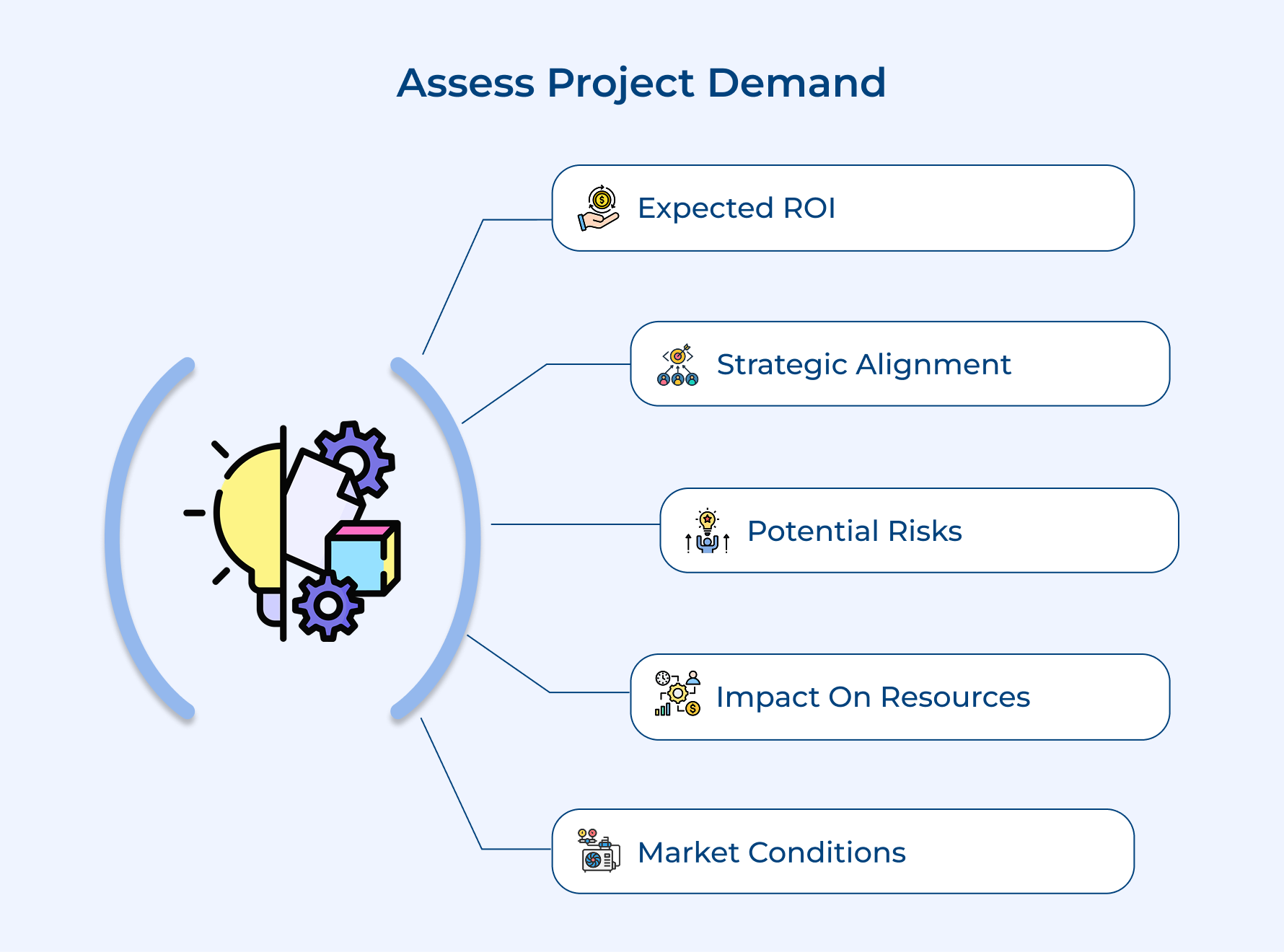
Are you struggling to assess your project demand effectively? Professional services and agencies should consider these four essential questions for assessing project demand:
- What is the expected return on investment for this specific project initiative?
- How does this project align with current organizational strategic priorities and goals?
- What are the potential risks and consequences of delaying or rejecting this request?
- How will this project impact existing commitments and resource allocation across other initiatives?
Resource managers should also consider external market conditions and client expectations when evaluating project demand. Economic factors and competitive pressures often influence project prioritization decisions as well as require careful balance with internal capacity limitations.
5. Review and Approval Process
The review and approval process checks resource requests through a structured evaluation as well as agreement among stakeholders. A centralized resource management approach ensures requests follow organizational policies and stay within budget.
Route Requests Through Stakeholders
Project requests should move through the proper approval chain. Each stakeholder adds expertise and perspective, helping make well-informed decisions while giving final authorization.
Conduct Feasibility and Budget Checks
Assess financial and operational feasibility to confirm projects fit available resources along with budget limits. This step highlights risks and constraints that could affect project success.
Obtain Management Sign-Offs
Final approval from management confirms the resource allocation and gives the official go-ahead to start the project. This formal sign-off ensures accountability and secures leadership support for the approved resources throughout the project.
6. Identify and Assign Suitable Resources
Identifying and assigning the right resources links project needs with the team’s available skills. This ensures projects get the expertise they need while making the best use of your organization’s talent.
Matching skills to project requirements is key to effective resource allocation. Project managers can use skill matrices to compare what a project needs with what each team member can offer. This helps assign the right people to the right tasks.
Considering resource availability and workload helps prevent burnout as well as keeps productivity steady across multiple projects. Look at three main factors:
- Current project commitments and deadlines that might conflict with new work.
- Upcoming vacations or planned time off that could affect timelines.
- Historical workload and performance data to gauge how much each team member can handle.
Check competency and experience to ensure team members can deliver results. For example, a developer assigned to database optimization should have completed similar projects successfully before.
7. Resource Allocation and Communication
Resource allocation and communication transforms approved requests into actionable team assignments with clear expectations as well as accountability structures. This step bridges the gap between planning and execution by establishing formal working relationships along with communication protocols.
Project managers implement this step by conducting kickoff meetings that introduce team members and outline project objectives while establishing regular check-in schedules. Clear documentation of roles prevents confusion and ensures everyone understands their specific contributions to project success.
Pro tips:
- Create detailed role matrices that specify decision-making authority and escalation paths to prevent delays during critical project phases.
- Schedule regular one-on-one meetings with key resources to address concerns early and maintain strong working relationships throughout the project.
8. Monitor and Optimize Performance
Monitoring and optimizing performance ensures resources deliver expected results while identifying improvement opportunities for future workflow iterations. This ongoing evaluation prevents performance issues from escalating and provides data for continuous process refinement as well as organizational learning.
Here are five key performance indicators that effectively measure Resource Request Workflow success:
- Resource Request Approval Time
- Resource Utilization Rate
- Project Timeline Adherence
- Resource Allocation Accuracy
- Stakeholder Satisfaction Score
These metrics provide comprehensive visibility into workflow efficiency and help identify bottlenecks that slow down resource allocation processes. Regular measurement supports data-driven decisions while helping justify workflow investments to leadership and stakeholders.
Organizations should analyze collected data to identify patterns and implement targeted improvements rather than simply tracking metrics passively. For example consistently long approval times might indicate need for streamlined authorization processes or additional decision-making authority at lower organizational levels.
Who is Involved in a Resource Request Workflow?
A resource request workflow brings together key stakeholders who influence allocation decisions. Each role ensures fairness, efficiency and alignment with project goals.
Project Manager
The project manager starts the process by filling out a resource request form based on project needs and deadlines. They identify the skills required and communicate these clearly to stakeholders. Throughout the workflow, they advocate for their project while balancing other organizational priorities and resource availability.
Resource Manager
The resource manager reviews requests using an automated workflow. They match available capacity with project needs and organizational goals. By coordinating across departments, they ensure resources are used efficiently and maintain visibility for future planning.
Talent Acquisition Team
When internal resources aren’t enough, the talent acquisition team steps in. They find external candidates or manage contractors to fill gaps. Using communication tools, they work closely with project managers to understand technical needs and timelines, ensuring smooth integration of new resources into the project.
Challenges in Resource Request Workflow and How to Overcome
Resource request workflows face obstacles that can derail project timelines. Understanding these challenges helps project managers address issues proactively.
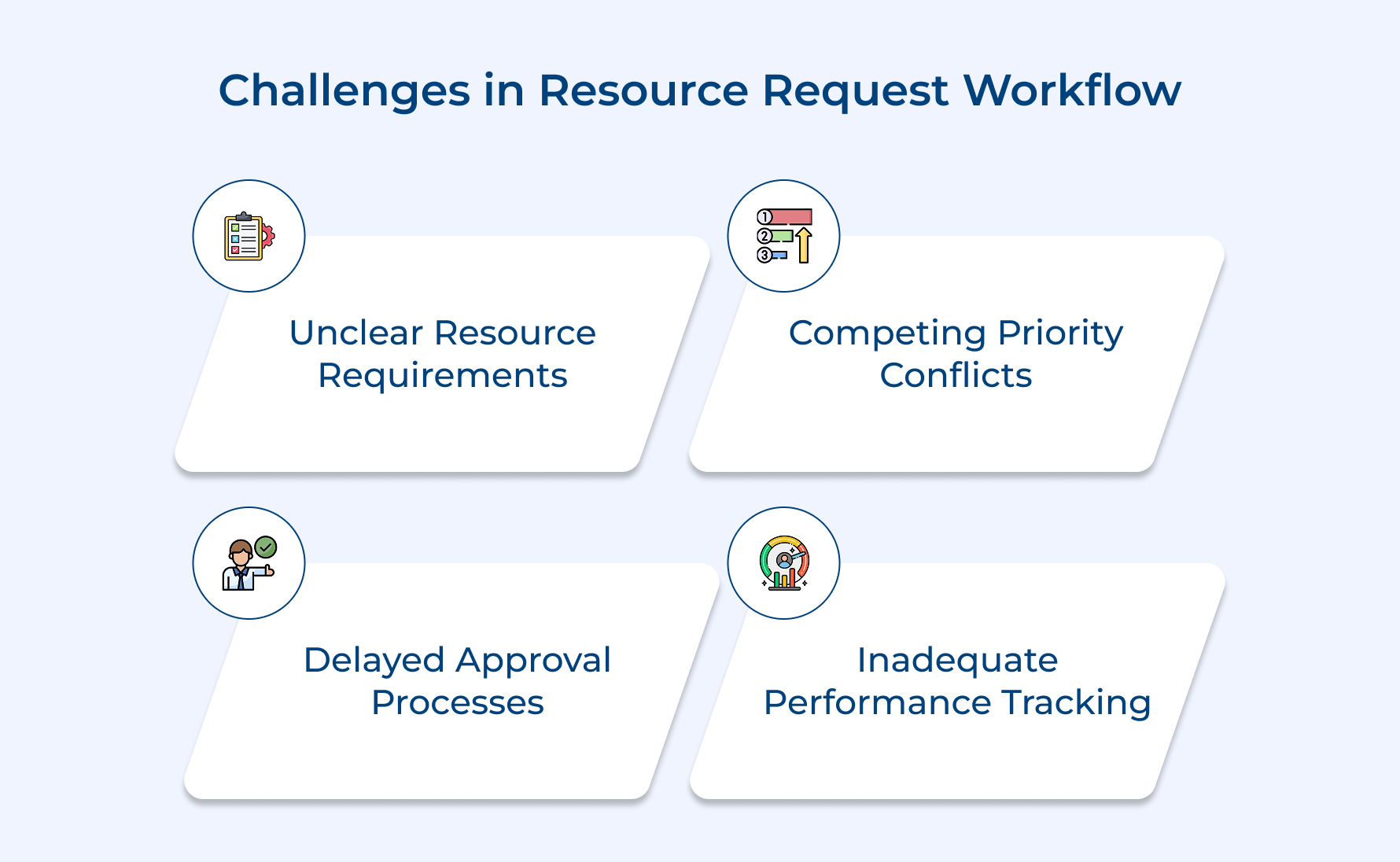
Unclear Resource Requirements
Project managers submit vague requests lacking specific skill definitions or experience requirements. This forces resource managers to make assumptions about needs. The result leads to mismatched assignments requiring costly corrections during critical project phases.
Competing Priority Conflicts
Multiple projects demand the same skilled resources creating allocation dilemmas for managers. Without clear prioritization criteria teams engage in resource battles that delay starts. This often results in projects receiving second-choice resources instead of ideal matches.
Delayed Approval Processes
Complex approval chains with multiple stakeholders create bottlenecks extending allocation timelines beyond acceptable windows. Each layer adds delays especially when decision-makers travel or prioritize other tasks. Extended timelines force project managers to adjust schedules and compromise quality.
Inadequate Performance Tracking
Organizations fail to measure workflow effectiveness through meaningful metrics revealing process weaknesses. Without data-driven insights teams repeat mistakes and miss optimization opportunities. This prevents continuous improvement as well as maintains inefficient processes.
These solutions address root causes rather than symptoms and require leadership commitment for consistent application.
- Develop standardized requirement templates with specific skill matrices for consistent request quality.
- Establish transparent priority scoring based on client impact to resolve competing demands objectively.
- Streamline approvals by defining authority levels and implementing automated routing to reduce delays.
- Implement resource management software providing real-time visibility into team capacity across departments.
- Create dashboard systems tracking key indicators and generating reports for continuous improvement.
Tips and Best Practices for Resource Request Workflows
Effective resource request workflows require strategic planning and consistent execution to deliver optimal results. These proven practices help organizations streamline processes and improve allocation outcomes.
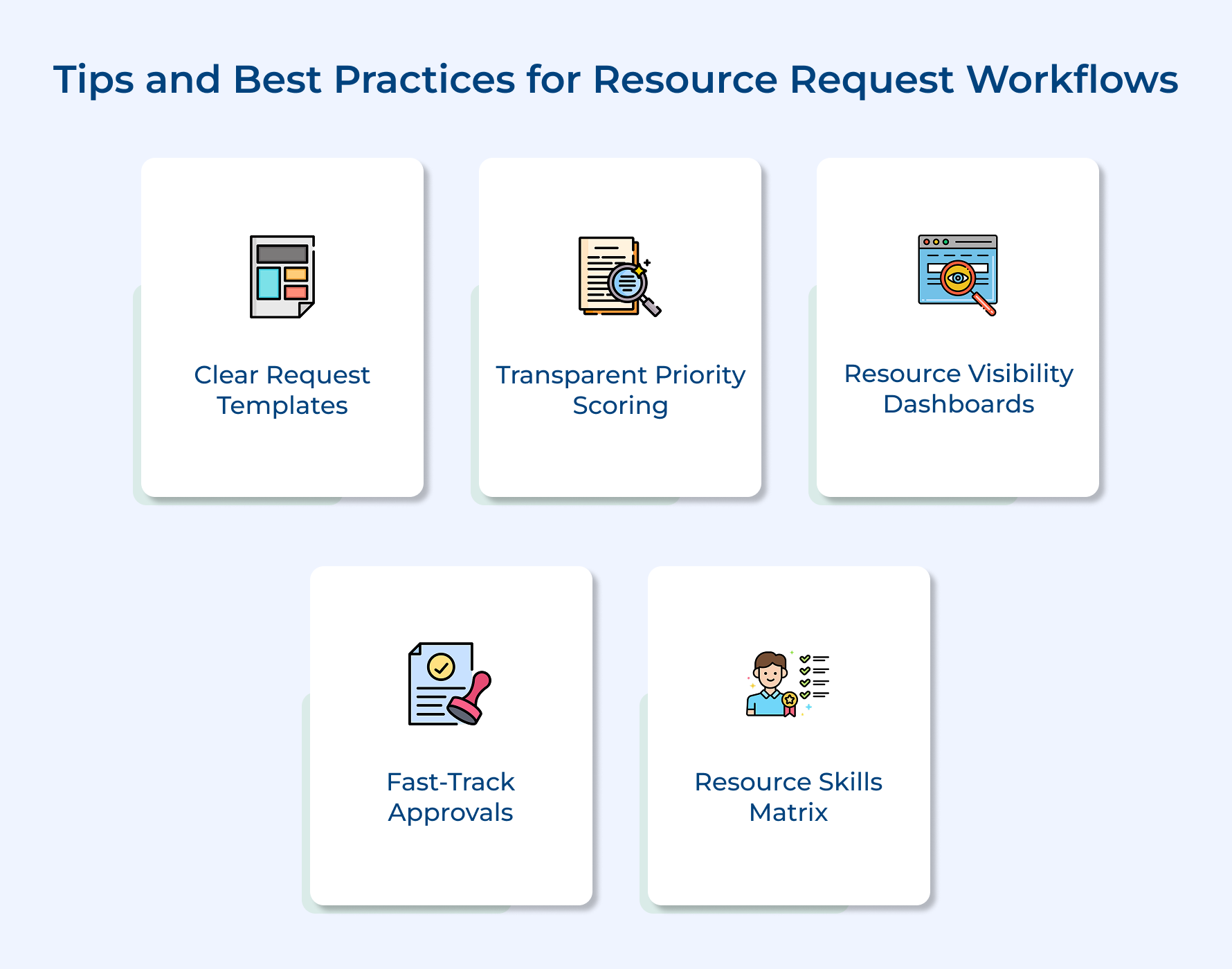
1. Establish Clear Request Templates and Standards
Standardized templates eliminate confusion and ensure project managers provide comprehensive information during request submission. These structured formats guide requestors through essential details including skill requirements and timeline expectations reducing approval delays.
Consider these essential template components for maximum effectiveness:
- Required technical skills and certification levels
- Project timeline with specific milestone dates
- Budget constraints and resource cost parameters
Templates should evolve based on organizational learning and feedback from requestors as well as resource managers. Regular updates incorporate new project types and address common information gaps discovered during workflow execution maintaining template relevance.
2. Implement Transparent Priority Scoring Systems
Priority scoring systems give teams clear, objective rules for evaluating competing resource requests across projects and departments. They consider factors like client impact and strategic alignment, helping allocate resources fairly while avoiding favoritism.
When creating a scoring system, ask questions like:
- Does this project match our current strategic goals?
- What are the financial impacts if resources are delayed?
- Which stakeholders will be most affected by this decision?
Good scoring systems combine numbers with qualitative insights to capture the full value of each project. Regular review sessions keep scoring consistent across evaluators, building trust in how resources are allocated.
3. Create Resource Visibility Dashboards
Resource visibility dashboards provide real-time insights into team capacity and availability across organizational departments as well as skill areas. These centralized systems enable informed decision-making by displaying current workloads and future commitments clearly reducing conflicts.
Dashboard effectiveness depends on accurate data input and regular maintenance by team leads along with project managers. Automated integrations with project management tools reduce manual entry and improve information accuracy for critical allocation choices.
4. Establish Fast-Track Approval Processes
Fast-track approval processes handle urgent resource needs quickly while keeping evaluation and oversight intact. These pathways use pre-approved criteria and delegated authority to improve client satisfaction while keeping projects on schedule.
When designing fast-track approvals, consider:
- What counts as a truly urgent resource need versus just perceived urgency?
- Which authority levels can approve different types of expedited requests?
- How will these approvals be documented and tracked?
Emergency protocols should maintain necessary checks but shorten approval times from days to hours. Clear communication ensures stakeholders know when and how to use these expedited processes, preventing misuse.
5. Develop Resource Skills Matrix Systems
Skills matrix systems track team members’ competencies and experience to match the right people with the right projects. They list both technical and soft skills with proficiency ratings, helping improve project results as well as team satisfaction.
Key components to include:
- Technical skills and certification status
- Past project experience in similar areas
- Availability, preferences and career goals
Regular assessments keep the skills matrix up to date and show progress in professional development. Encouraging team members to update their own profiles ensures accuracy and boosts engagement, making resource matching more effective.
Streamlining Success with an Efficient Resource Request Workflow
Resource request workflows serve as the operational backbone that transforms project planning into executable reality through systematic resource allocation processes. These structured approaches eliminate guesswork and create predictable pathways for securing the right talent at optimal times.
Successful implementation requires clear templates, transparent prioritization systems and continuous performance monitoring to maximize organizational efficiency. When executed properly, these workflows become strategic assets that drive project success while also enhancing overall business performance.
Limit time — not creativity
Everything you need for customer support, marketing & sales.

Shivank Kasera is part of the marketing team at Kooper, where he focuses on building content that helps agencies and service providers grow. With a keen interest in SaaS, operations, and scalability, he translates practical insights into actionable resources for business leaders.