How to Build a Project Communication Plan with Best Practices
- What is a Project Management Communication Plan?
- Advantages of Project Management Communication Plan
- How to Create a Project Management Communication Plan in 8 Effective Steps
- 6 Tips for Managing the Project Communications Plan
- Practical Examples of a Successful Project Communication Plan
- How do I Measure the Effectiveness of a Communication Plan?
- Keep Everyone at One Place with a Structured Project Communication Plan
- FAQs about Project Communication Plan

Key Highlights:
- Use a project communication plan template to ensure regular updates reach all stakeholders, streamlining the plan in project management.
- A structured plan in project management keeps teams aligned and prevents miscommunication throughout the project lifecycle.
- Implementing a project communication plan template enables consistent messaging, timely escalation and effective coordination.
Most agencies run into project chaos because no one’s on the same page, team members rely on outdated info, clients are left in the dark, and miscommunication keeps piling up.
Without a proper Project Communication Plan, things quickly spiral. Teams spend hours just figuring out what’s going on instead of doing actual work. Decisions get delayed, and small issues snowball into a full-blown crisis.
However, it doesn’t have to be this way. A simple, seven-step plan brings order to the chaos. It sets up clear, consistent workflows so everyone knows what’s happening, when, and why. Let’s now explore the way to make faster decisions, fewer surprises, and stronger relationships built on trust.
What is a Project Management Communication Plan?
A project management communication plan serves as your roadmap for keeping everyone informed throughout a project’s lifecycle. It defines who needs what information, when they need it and through which channels that information flows.
Consider a website redesign project where your communication plan specifies that clients receive weekly progress emails on Fridays while internal team members get daily stand-up updates via Slack. The plan also outlines that major milestone completions trigger immediate stakeholder notifications through both email and project dashboard updates.
Essential elements:
- Stakeholder mapping: Identify every person who needs project information and their specific role in decision-making.
- Communication frequency and timing: Establish when updates happen whether daily standups or monthly executive briefings.
- Content specifications: Define what type of information each audience receives from technical details to high-level progress summaries.
- Channel selection: Choose the right medium for each message type – if it is email reports, Slack updates or face-to-face presentations.
- Escalation protocols: Create clear pathways for urgent issues and define who handles different types of project concerns.
Advantages of Project Management Communication Plan
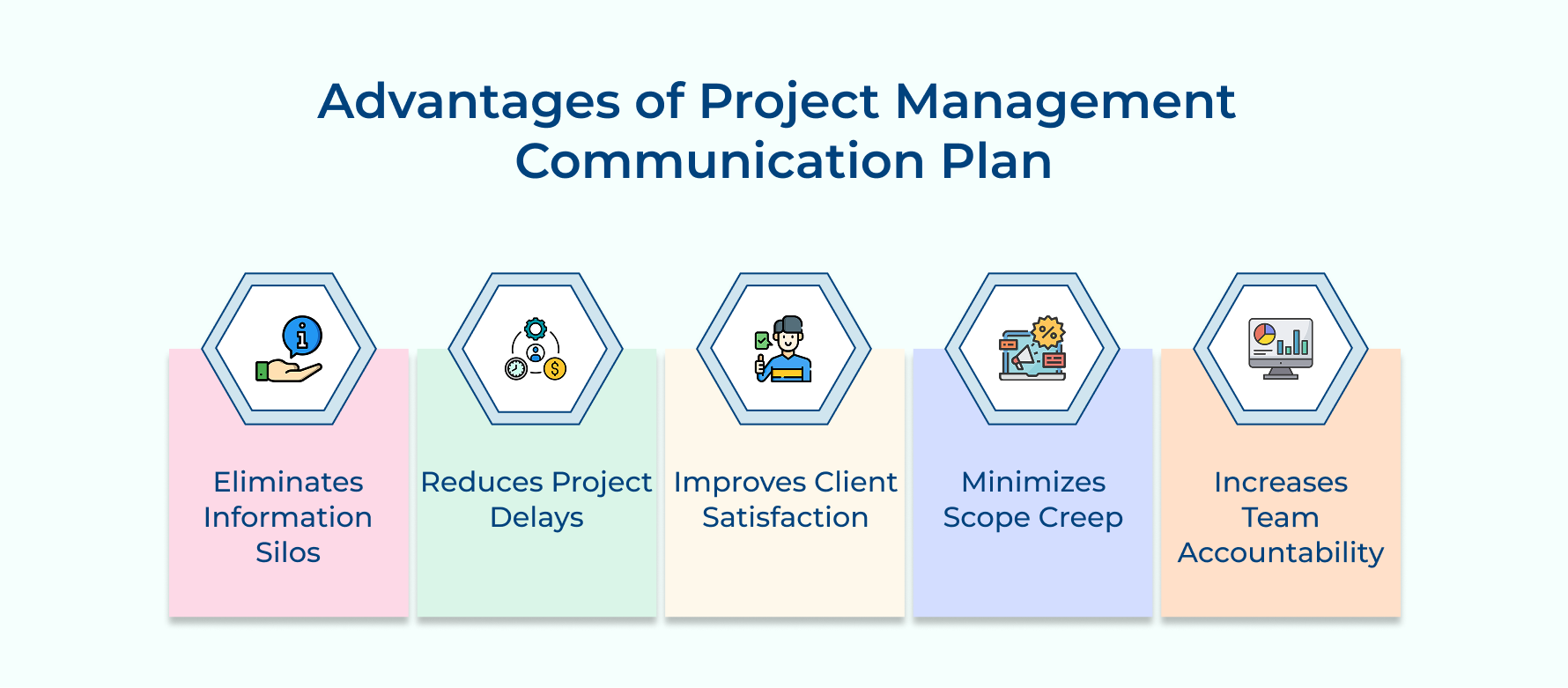
When projects go off track, it’s usually the lack of clear communication. That’s why a solid communication plan is non-negotiable. It eliminates the guesswork, keeps everyone aligned with the project goals.
1. Eliminates Information Silos and Confusion
With structured communication, teams aren’t left piecing together scattered info. Everyone gets the same updates, through the right channels, at the right time. That means no outdated documents or no mixed messages, just smooth and informed progress.
2. Reduces Project Delays and Timeline Slippage
A well-planned communication structure ensures that critical updates and urgent blockers reach decision-makers quickly. Instead of waiting around for feedback, your team moves forward with confidence and clarity.
3. Improves Client Satisfaction and Trust
Clients don’t like surprises. Regular check-ins and planned updates make them feel informed. It’s easier to build trust when your clients know what’s happening, what’s next, and why.
4. Minimizes Scope Creep and Unexpected Changes
Having a record of past conversations helps you manage change requests better. When new ideas come in, you can refer back to agreed-upon plans and guide clients through proper approvals, keeping scope in check.
5. Increases Team Accountability and Ownership
Assigning communication responsibilities means nothing slips through the cracks. Everyone knows what they’re accountable for, from sending status updates to scheduling person meetings.
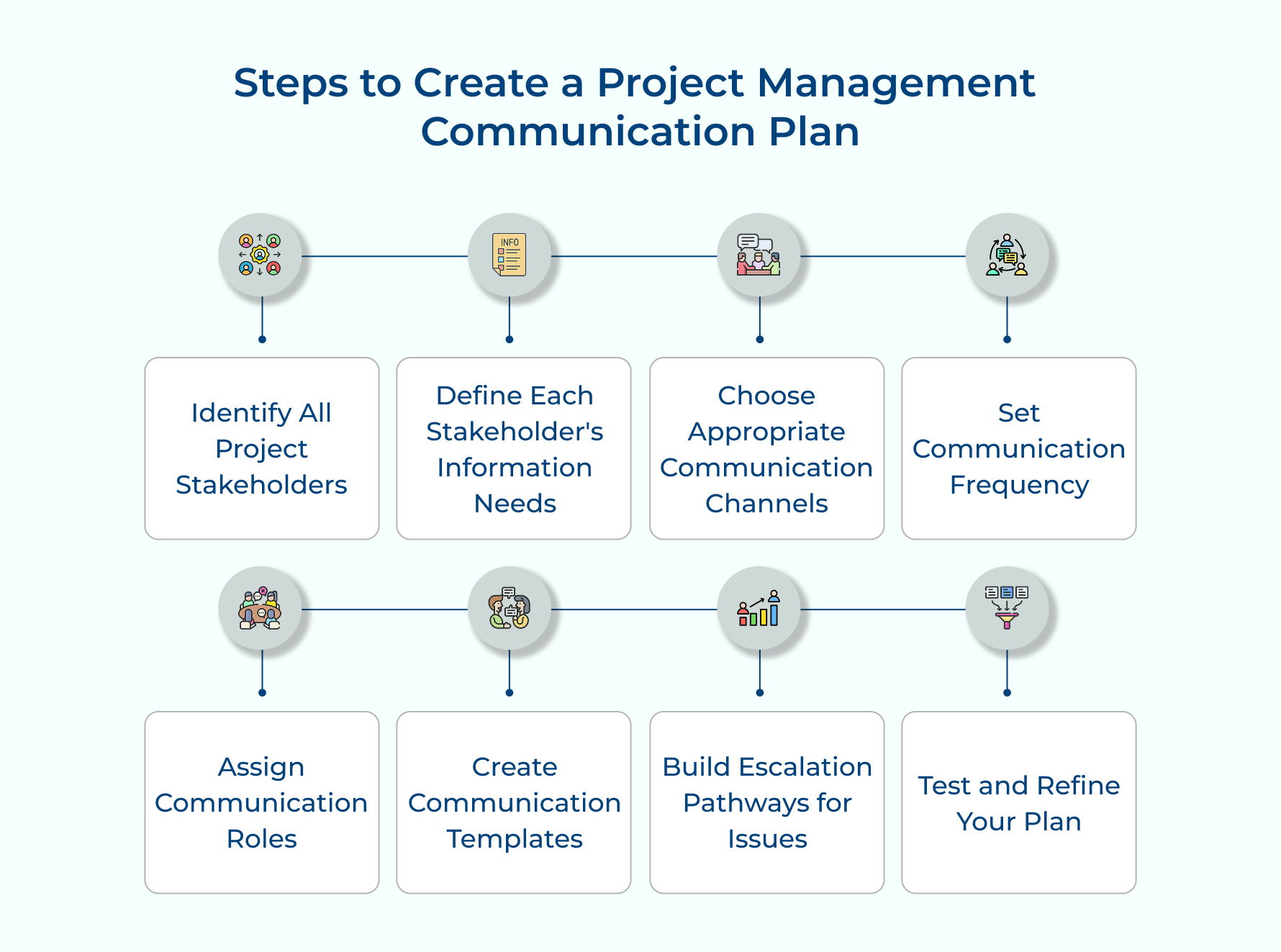
How to Create a Project Management Communication Plan in 8 Effective Steps
Delve into the step-by-step process of creating a robust communication plan, equipping you with the tools necessary to bridge gaps and enhance team synergy.
1. Identify All Project Stakeholders
You can’t build a strong communication schedule without knowing who you’re talking to. That’s where stakeholder analysis comes in. If you miss key people early on, you risk misaligned expectations and project chaos.
Start by mapping out everyone involved, from your core team to clients, department heads, and even end users. Then, talk to team leads across departments to spot less obvious stakeholders. Don’t forget to look at past projects to see who typically gets involved and when.
How do you know you’re done? Simple. If you’re confident that no surprises will pop up mid-project and everyone who needs updates or makes decisions is on your list, your stakeholder analysis is complete. And, your communication plan is set to succeed.
2. Define Each Stakeholder’s Information Needs
Effective communication in project management isn’t just about sharing updates—it’s about sending the right info to the right people at the right time. Here’s a quick checklist to tailor communication for each stakeholder:
- What decisions do they need to make?
- What part of the project impacts their daily work?
- Do they prefer high-level summaries or detailed info?
- What risks or issues should they know right away?
- Which outcomes matter most to their goals?
Also, timing matters. A CEO may want a monthly snapshot, while your team needs daily touchpoints. Use team meetings for real-time sync and share meeting minutes for clarity as well as follow-up. Targeted communication keeps everyone informed and engaged without flooding inboxes.
3. Choose Appropriate Communication Channels
Choosing the right communication channel can make or break your project’s momentum. It’s all about making sure they’re seen, understood, and acted on. The trick? Match the channel to the message’s urgency, complexity, and your stakeholder’s preferences.
Here are four go-to channels that keep project communication smooth:
- Email: Great for formal updates or executive summaries.
- Project management tools: Ideal for task tracking and timelines.
- Video calls: Perfect for feedback, alignment, or deeper discussions.
- Instant messaging: Best for quick, real-time coordination.
- Take a website redesign, for example: weekly updates via email, daily team chats on Slack, and client reviews over video.
4. Set Communication Frequency and Schedules
A solid communication schedule keeps your project on track without overwhelming your stakeholders. It ensures the right people get the right updates at the right time—so decisions can be made quickly and confidently.
Use regular updates (like weekly reports or team standups) to create rhythm and predictability. Then add trigger-based messages for urgent issues that need fast action.
Best practices to keep in mind:
- Start with frequent updates early on, then scale back as trust and project stability grow.
- Always notify stakeholders if the communication schedule changes, many plan their own tasks around your timing.
A thoughtful communication schedule keeps everyone aligned, engaged, and focused without flooding inboxes or causing delays.
5. Assign Communication Roles and Responsibilities
Assigning clear communication roles keeps your project running smoothly and avoids the “who was supposed to send that?” confusion. When everyone knows what they’re responsible for, updates flow faster and nothing slips through the cracks.
Here are four key roles to consider:
- Project communication manager: Oversees all messaging and keeps internal as well as external teams aligned.
- Client liaison: Acts as the client’s go-to person, translating technical details into clear, business-friendly updates.
- Technical communicator: Handles updates between vendors and technical teams, ensuring the right people get the right implementation details.
Choose roles based on team size and individual strengths, put your best communicators in client-facing roles as well as your detail-focused folks on documentation. It’s all about playing to your team’s strengths.
6. Create Communication Templates and Standards
Templates and standards might not sound exciting, but they’re game-changers for keeping project communication clear, fast, as well as consistent. When your updates follow a familiar format, stakeholders can spot what matters without digging through cluttered emails or inconsistent notes.
Before creating templates, ask:
- What format helps stakeholders make quick, informed decisions?
- How do we flag urgent items without losing full project visibility?
- What approval steps ensure accuracy and speed?
Here are a few must-have templates for smoother communication:
- Weekly Status Report – Track progress, milestones, blockers
- Change Request – Outline scope changes, impact, and approvals
- Issue Escalation Notice – Highlight urgent problems and actions
- Kickoff Communication Kit – Set clear expectations from day one
7. Build Escalation Pathways for Issues
Escalation pathways are your safety net when things go sideways. Without a clear process, critical issues can sit unresolved, slowing down your project or damaging client trust. A solid escalation system ensures the right people act fast, before problems explode.
Here’s how to set one up:
- Severity level classification: Define what counts as low, medium, or high priority, and set clear timelines for handling each. No more guesswork.
- Decision authority mapping: Outline who can make which calls. Document approval limits so your team knows exactly when to escalate.
- Response time requirements: Set expectations for how quickly leaders must respond to escalated issues, build accountability into the process.
8. Test and Refine Your Plan
The step involves piloting your communication plan with the group before full rollout for easy identification of gaps that are not obvious during planning. It reveals practical issues such as the client not checking the designated channels or updates not appearing at the perfect times.
You can use feedback from this phase to adjust timing and refine message content or switch channels that are not working. It is recommended to run the test for at least two full communication cycles so that you see how the plan performs during routine updates and when urgent situations arise.
Pro tip:
- Ask pilot participants specific questions about what confused them, rather than just the plan overall.
- Document the changes you make so that plan updates build on lessons rather than only just repeating the same error.
6 Tips for Managing the Project Communications Plan
These management strategies ensure your communication plan stays effective throughout your project lifecycle rather than becoming another forgotten document.
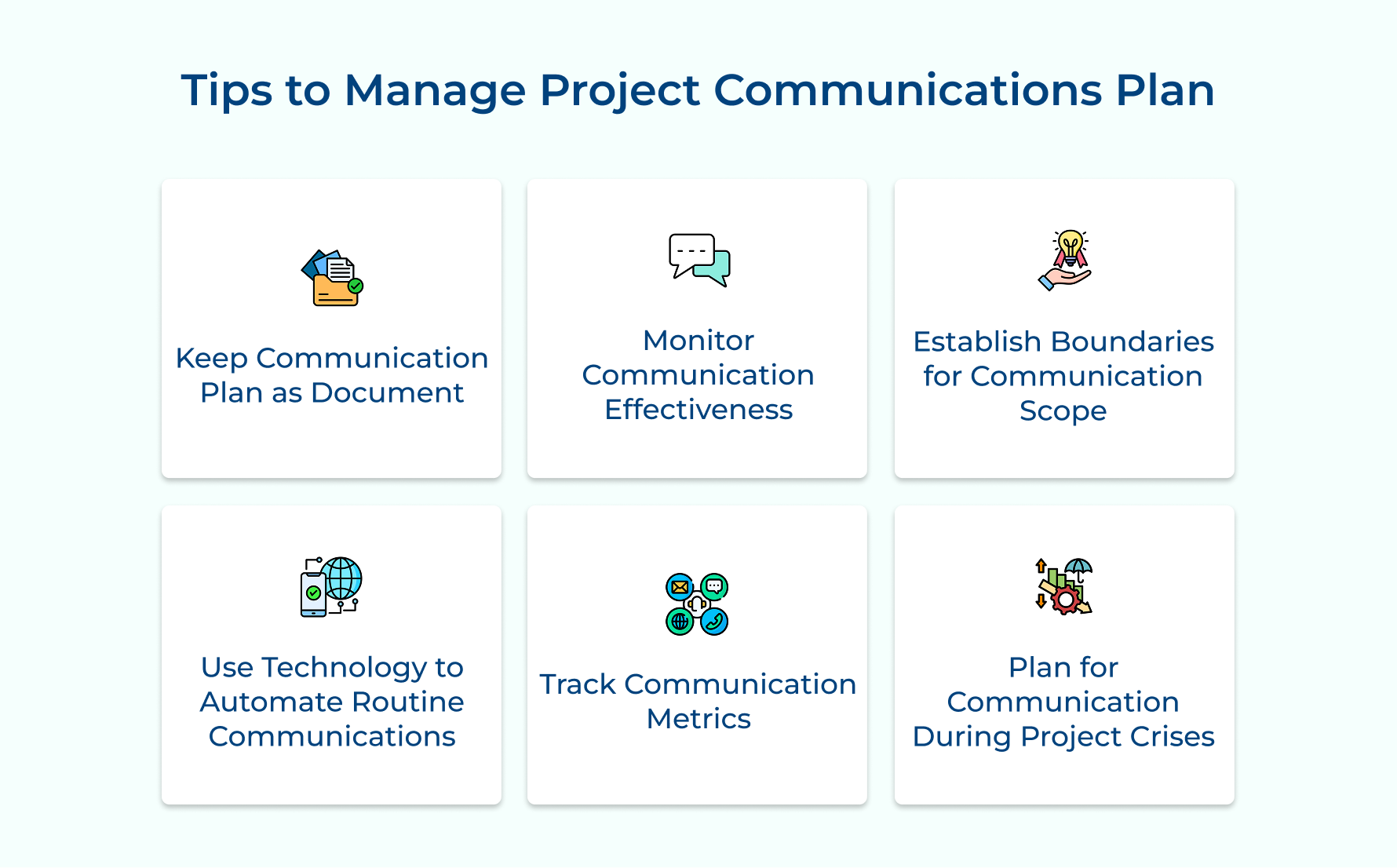
Keep Your Communication Plan as a Living Document
Your communication plan should evolve with your project just like any other project artifact that requires regular maintenance. Update contact information and communication preferences immediately when stakeholders change roles or new team members join.
Monitor Communication Effectiveness Through Feedback Loops
Regularly ask stakeholders if they receive the right information at the right time through appropriate channels. Create simple feedback mechanisms like monthly check-ins to identify communication gaps before they impact project success.
Establish Clear Boundaries for Communication Scope
Define what types of communications fall under your formal plan versus informal day-to-day interactions. This boundary setting helps team members understand when to follow formal procedures versus handling routine questions through casual channels.
Use Technology to Automate Routine Communications
Leverage project management tools to handle repetitive status updates and routine notifications automatically. Automated reminders and standardized reports ensure consistency while freeing up time for relationship building as well as complex problem-solving conversations with stakeholders.
Track Communication Metrics and Response Rates
Measure how quickly stakeholders respond to different communication types and which channels generate the best engagement. These metrics help you optimize your approach by identifying which methods work best for specific stakeholders.
Plan for Communication During Project Crises
Develop specific protocols for communicating during emergencies when normal channels might be inadequate. Crisis communication plans should include backup contact methods and shortened approval processes that allow for rapid decision-making during unexpected challenges.
Practical Examples of a Successful Project Communication Plan
These real-world examples demonstrate how different project types require tailored communication approaches to match stakeholder needs and project complexity levels.
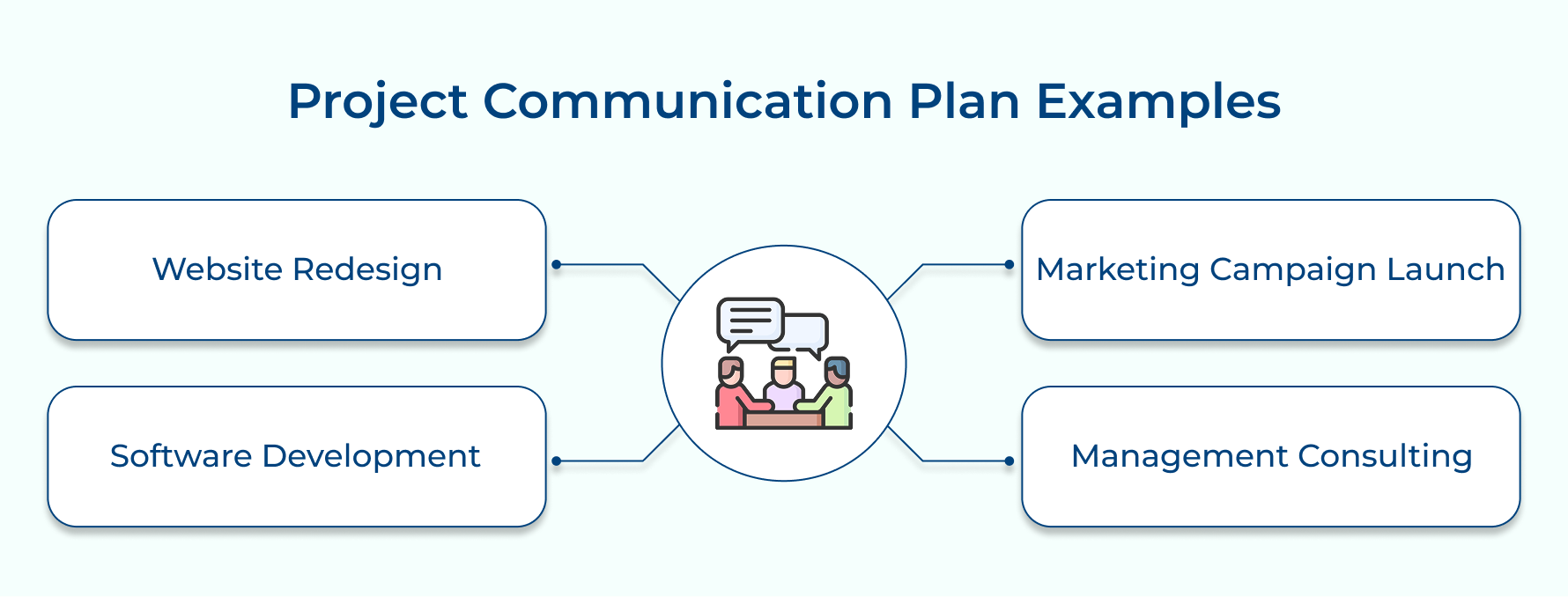
Website Redesign Project Communication Plan
This communication plan centers around visual deliverables and iterative feedback cycles that require frequent client input throughout the design process. Weekly design review meetings allow clients to provide feedback on mockups while daily team updates coordinate technical implementation.
The plan includes milestone-based communications where clients receive detailed progress reports at key design stages like wireframe completion and user testing. Email summaries follow each review meeting to document decisions and next steps for stakeholder alignment.
Software Development Project Communication Plan
Technical projects demand clear communication between developers and non-technical stakeholders who need progress updates without overwhelming technical jargon or implementation details. Daily stand-ups keep teams synchronized while weekly client calls translate technical progress into business impact.
Sprint review demonstrations allow clients to see working features and provide feedback before final implementation while automated reports track quality metrics. The plan includes escalation procedures for technical roadblocks that might impact delivery dates and require immediate decisions.
Marketing Campaign Launch Communication Plan
Campaign projects require coordination across multiple departments including creative teams and media buyers who must work together under tight deadline constraints. Daily creative reviews ensure messaging consistency while weekly media meetings align advertising spend with campaign objectives.
Launch preparation involves intensive communication during the final week with hourly check-ins between teams to coordinate timing across different channels. Post-launch communication includes real-time performance monitoring and weekly analysis reports that inform future campaign optimizations.
Management Consulting Project Communication Plan
Consulting engagements require structured communication that balances client collaboration with internal knowledge sharing across practice areas and senior leadership oversight. Weekly client steering committees review progress against deliverables while daily team huddles coordinate research activities and analysis development.
The plan emphasizes executive-level reporting with monthly board presentations and bi-weekly sponsor updates that highlight strategic insights as well as recommendations. Internal communications include knowledge capture sessions and practice area briefings that ensure intellectual capital gets shared across the broader consulting organization.
How do I Measure the Effectiveness of a Communication Plan?
These measurement approaches help you understand if your communication plan actually improves project outcomes rather than just creating more meetings and reports.
Key assessment questions:
- Are stakeholders receiving the information they need to make timely decisions without experiencing information overload or confusion?
- Do team members feel confident about project status and their individual responsibilities based on the communication they receive?
- How quickly do critical issues get escalated and resolved compared to projects without structured communication plans?
- Are clients satisfied with the frequency and quality of project updates they receive throughout the engagement lifecycle?
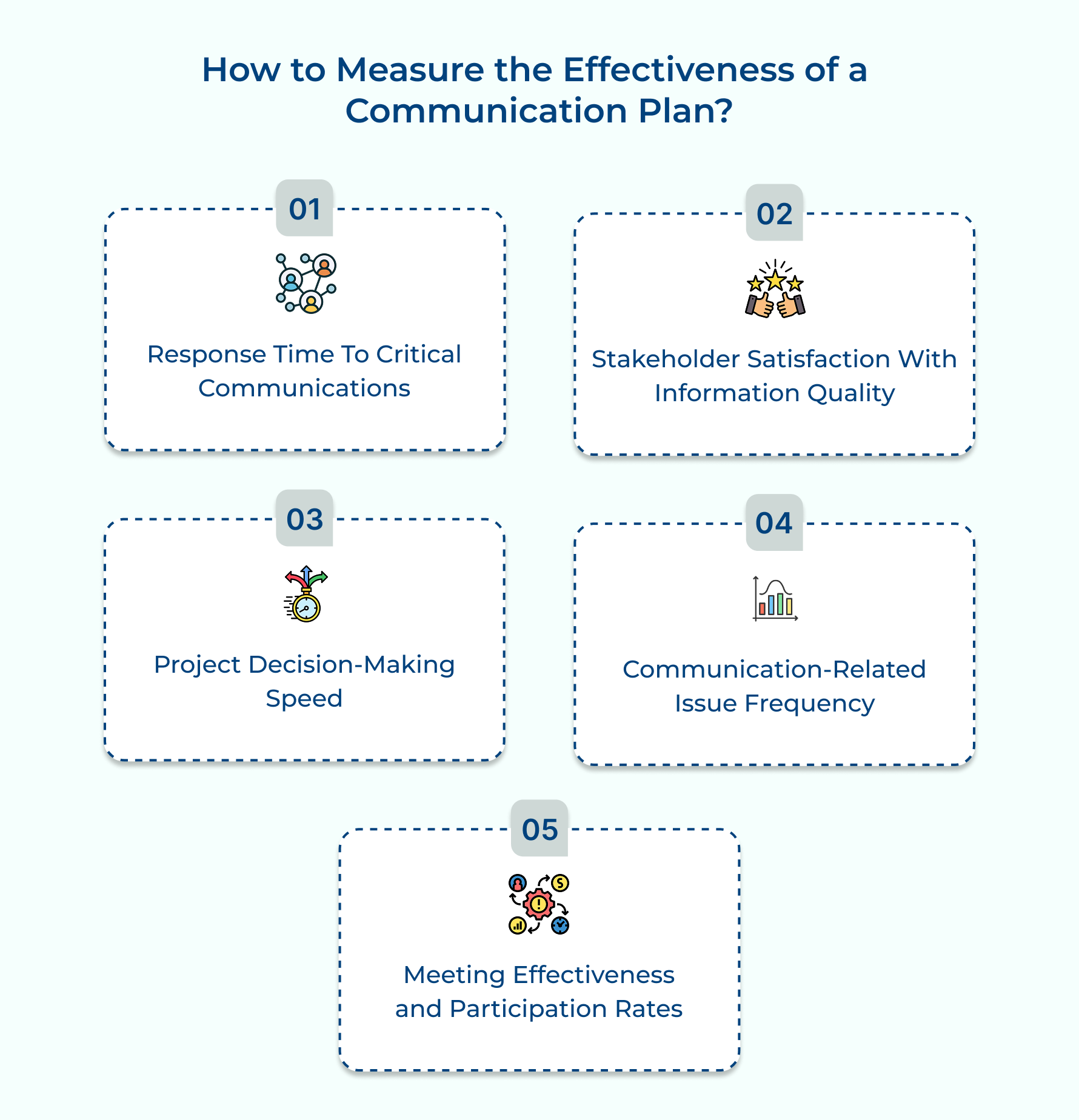
Response Time to Critical Communications
Track how quickly stakeholders act on urgent updates. Fast responses mean your channels and urgency signals are clear.
Stakeholder Satisfaction with Information Quality
Check if stakeholders feel they’re getting relevant, easy-to-understand info. High scores equals your messages hitting the mark.
Project Decision-Making Speed
Measure how long it takes to get approvals after sending a request. Shorter cycles show your communication gives enough context, fast.
Communication-Related Issue Frequency
Count issues caused by unclear or missing info. Fewer problems over time means your plan is working.
Meeting Effectiveness and Participation Rates
Look at attendance and engagement in key meetings. High rates mean people find them useful and well-structured.
Keep Everyone at One Place with a Structured Project Communication Plan
Structured project communication plans transform chaotic workflows into predictable systems where stakeholders receive the right information at the right time. This systematic approach prevents costly miscommunications that derail timelines and damage client relationships.
Agencies implementing robust communication frameworks see measurable improvements in project delivery speed and client satisfaction while reducing internal coordination overhead. Clear structures enable teams to focus on billable work rather than clarifying confusion.
Limit time — not creativity
Everything you need for customer support, marketing & sales.

Shivank Kasera is part of the marketing team at Kooper, where he focuses on building content that helps agencies and service providers grow. With a keen interest in SaaS, operations, and scalability, he translates practical insights into actionable resources for business leaders.