Maximize Agency Profits with Effective Billable Utilization
- What is Billable Utilization?
- Key Reasons Billable Utilization Impacts Agency Success
- How to Calculate & Track Billable Utilization for Agencies?
- A. How to Calculate?
- B. How to Track Billable Utilization?
- Top Factors Impacting Billable Utilization
- Billable Utilization vs. Resource Utilization: Key Differences Explained
- 7 Effective Tips to Improve Billable Utilization
- Maximize Agencies’ Productivity with Billable Utilization
- FAQs about Billable Utilization
Key Highlights:
- Billable utilization reveals how much of employees’ time directly contributes to client revenue versus internal tasks.
- High billable utilization signals efficient resource use, but consistently high rates may risk overworking staff.
- Monitoring billable utilization helps agencies balance profitability with sustainable workloads and employee satisfaction.
Most agencies struggle with unpredictable revenue and unclear profitability because they lack proper visibility into how their team’s time converts into billable income. It leads to resource waste and missed opportunities.
If you don’t track utilization accurately, you can’t set realistic targets or price services correctly. You also won’t know why some months are profitable while others overuse your resources.
This comprehensive guide breaks down the exact formulas, tracking methods, and implementation strategies. Master billable utilization calculations and transform your agency’s financial predictability as well as operational efficiency.
What is Billable Utilization?
Billable utilization measures how much of your team’s available working time gets converted into revenue-generating client work. It shows the percentage of total work hours that can actually be billed to clients versus time spent on internal tasks, training, or bench time. This metric serves as the bridge between having talented people on payroll and turning their expertise into sustainable business income.
Low utilization rates directly squeeze profit margins since you’re paying salaries without corresponding client revenue. High utilization maximizes the return on your human capital investment and creates predictable cash flow patterns. Pushing utilization too high can lead to employee burnout and quality issues that damage client relationships.
Key objectives:
- Maximize revenue per employee: Convert more paid hours into billable client work rather than letting talent sit idle on the bench.
- Improve resource planning: Match staffing levels with actual project demands to avoid overstaffing during slow periods.
- Enhance profitability: Increase the ratio of billable income to fixed salary costs for better margins on each team member.
- Identify capacity gaps: Spot when you need to hire more people or when current staff can handle additional client work.
- Balance Workload Distribution: Ensure utilization targets don’t create unsustainable pressure that leads to quality problems or employee turnover.
Key Reasons Billable Utilization Impacts Agency Success
Understanding billable utilization transforms how professional service firms approach profitability and resource management. Let’s explore why this metric deserves your attention.
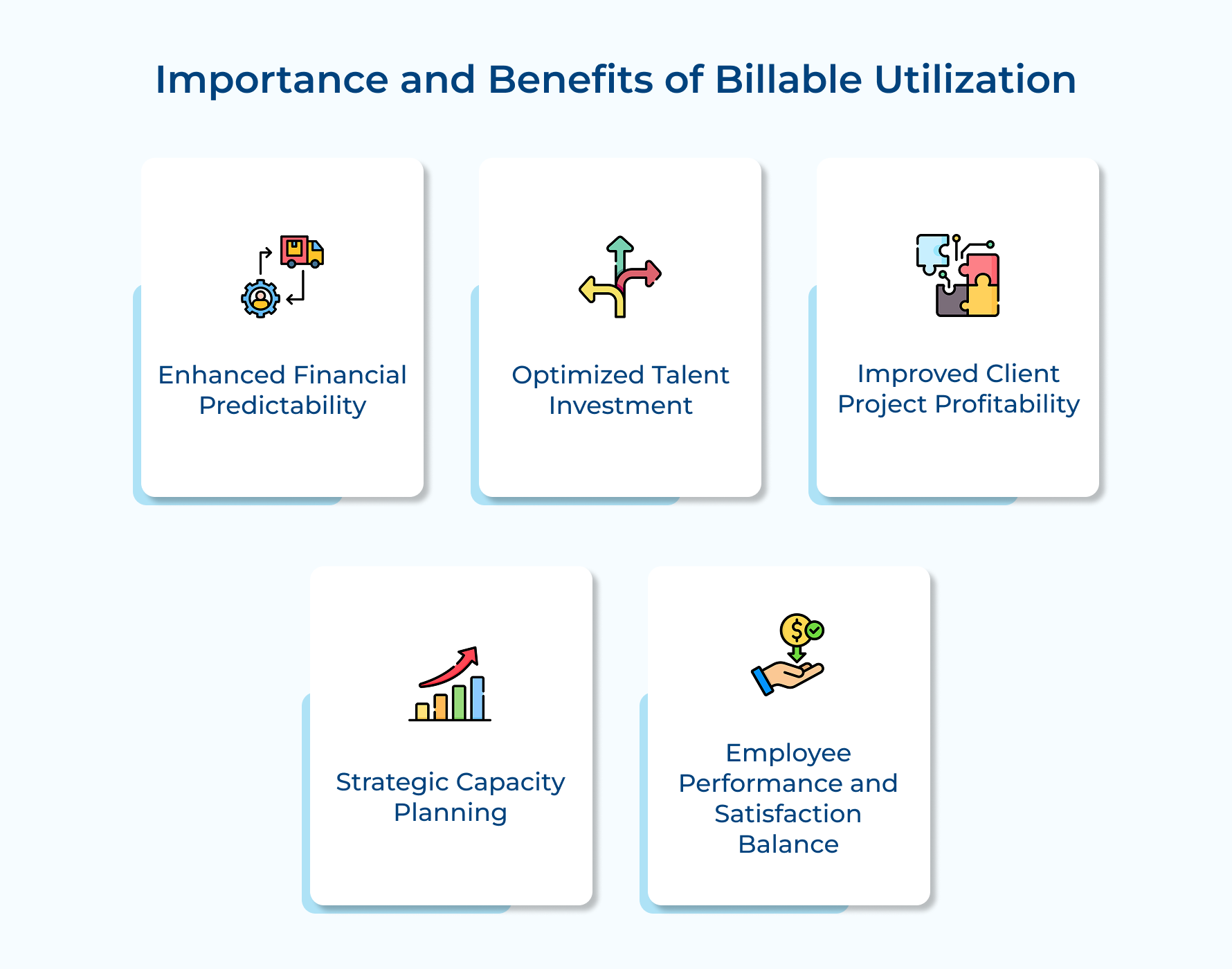
Enhanced Financial Predictability
Consistent utilization tracking creates reliable revenue forecasting patterns that help you plan investments and expansion decisions. You’ll know exactly how much income each team member generates monthly which removes guesswork from budgeting processes.
Optimized Talent Investment
Understanding which roles and skill sets generate the highest billable returns guides your hiring as well as training priorities. It prevents you from building expensive teams that don’t translate into proportional revenue growth for your business.
Improved Client Project Profitability
Tracking utilization by project type reveals which services deliver the best margins and which ones drain resources. The insight helps you adjust pricing strategies and focus business development efforts on the most profitable service offerings.
Strategic Capacity Planning
Real utilization data shows when you’re approaching maximum capacity versus when you have room for additional clients. This prevents the common mistake of either turning away profitable work or overpromising when resources are already stretched thin.
Employee Performance and Satisfaction Balance
Monitoring utilization helps identify team members who are either overwhelmed or underutilized so you can redistribute workload appropriately. You create a better work-life balance while ensuring everyone contributes meaningfully to business objectives and feels valued.
How to Calculate & Track Billable Utilization for Agencies?
Let’s explore how to measure billable utilization step by step, helping you track it accurately and ensure your agency runs at peak efficiency.
A. How to Calculate?
Measuring billable utilization is all about turning time-tracking data into insights you can actually use. It shows how well your team’s hours are being spent on client work that brings in revenue, making it a key metric for understanding your firm’s efficiency and profitability.
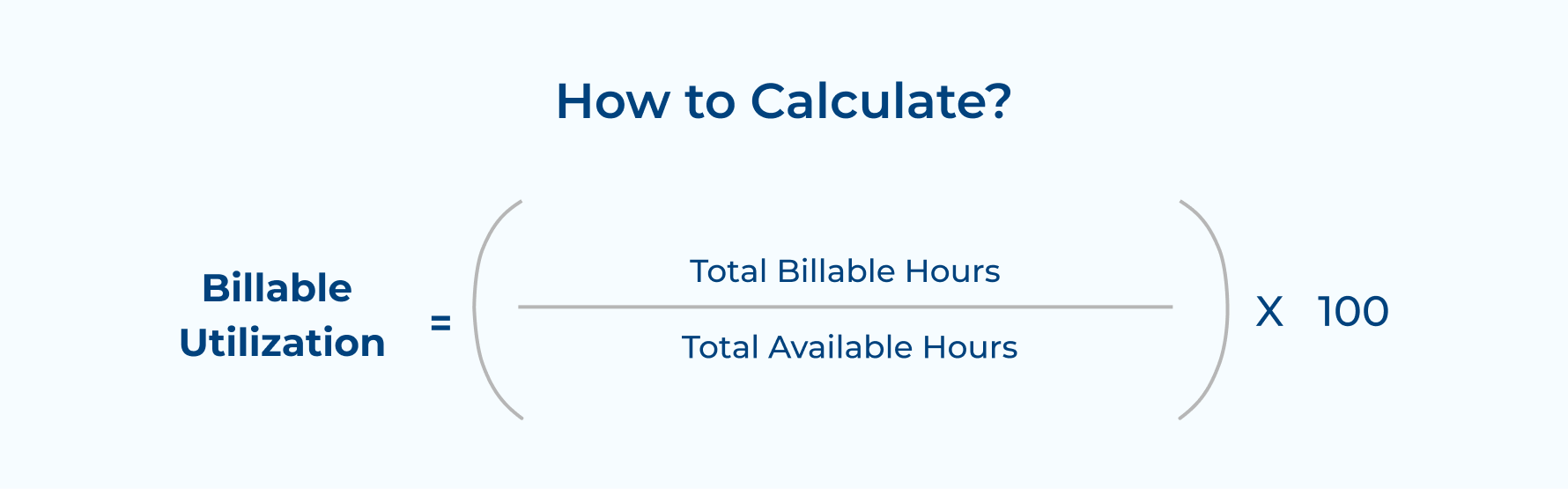
Formula
Components
- Total billable hours are the hours your team spends on client work that you can invoice like consulting, project tasks, or client meetings.
- Total available hours are the total time your team could work during a set period, minus time off for vacations, holidays, or sick days. It gives you a baseline for measuring productivity and efficiency.
Benchmarks for Professional Services
Most successful agencies and consultancies target billable utilization rates between 70-80% as the sweet spot for sustainable profitability. This range allows enough buffer time for essential non-billable activities while maximizing revenue generation from your talent investments.
Step-by-Step Calculation Process
Let me walk you through the complete calculation process using a systematic approach that ensures accuracy and helps you understand what each number means for your business.
Step 1: Define your measurement period: Choose a specific timeframe for analysis such as monthly or quarterly periods to ensure consistent data collection and meaningful trend analysis across your organization.
Step 2: Gather complete time tracking data: Collect accurate records of all billable hours worked by each team member during your measurement period through your established time tracking system or software.
Step 3: Calculate total available working hours: Multiply standard work hours per day by total working days in the period then subtract approved vacation time, holidays, and sick leave from calculations.
Step 4: Apply the utilization formula: Divide total billable hours by total available hours then multiply by 100 to convert the decimal result into percentage format for easier interpretation.
Example Calculation
Consider a 5-person team working 40 hours weekly for 4 weeks:
- Available Hours Calculation: 5 people × 40 hours × 4 weeks = 800 total hours
- Billable Hours Logged: 560 hours across all client projects
- Utilization Rate: 560 ÷ 800 × 100 = 70%
This 70% rate indicates the team converted seven out of every ten available hours into revenue-generating work, which falls within the healthy benchmark range for professional services.
B. How to Track Billable Utilization?
Let’s walk through the essential steps and tools needed to track billable utilization effectively, helping you unlock new levels of efficiency as well as profitability.
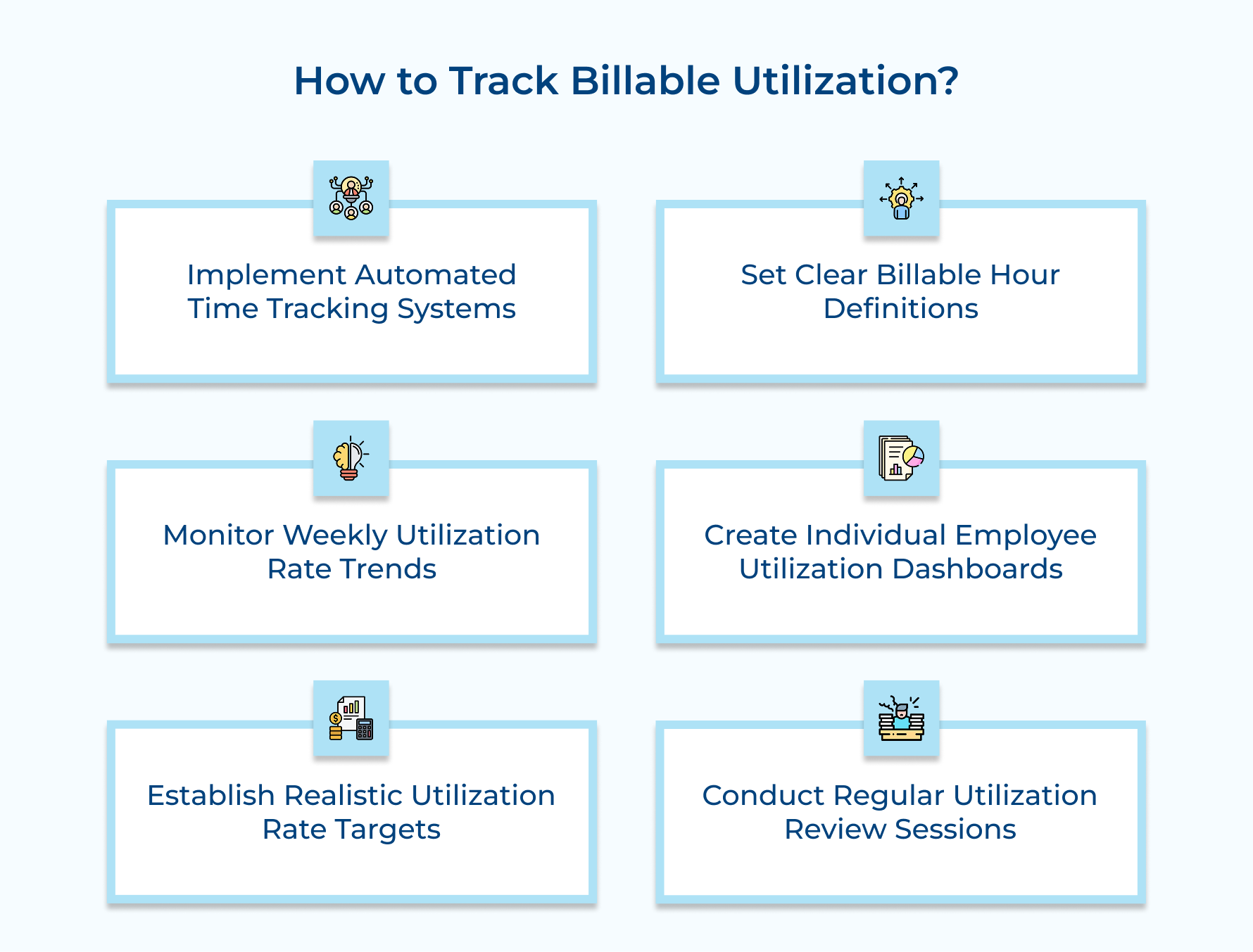
1. Implement Automated Time Tracking Systems
Automated time tracking takes the hassle out of manual logging by capturing work hours electronically, making your data more accurate and less prone to error. But before jumping into a new tool, ask yourself a few key questions:
- Can it integrate smoothly with your current workflow?
- Do you need detailed data for client billing or just high-level insights?
- Will your team be comfortable with automatic tracking?
- What’s your budget for buying and maintaining the software?
Choosing the right system means finding one that fits naturally into how your team already works. Once set up correctly, automated tracking becomes a game-changer for measuring billable utilization. It gives you reliable, real-time data for smarter decisions.
Look for these four must-have features:
- Real-time activity detection
- Project code integration
- Detailed, customizable reporting
- Approval workflows to validate entries
Tracking billable hours becomes seamless and insightful with the right tool in place.
2. Set Clear Billable Hour Definitions
Defining what counts as a billable hour is key to measuring utilization accurately. Without clear rules, it’s easy for teams to mix up client work with internal tasks. Start by creating activity-based categories, list out what’s billable (like client meetings or revisions) and what’s not (like admin work or team training).
Set clear client communication rules. Should quick emails or calls be billed? If so, define minimum time blocks (say, 30 minutes) to keep it consistent.
Also, document when internal work might qualify as billable, like building reusable tools for clients.
One agency found their utilization rate dropped 12% after tightening email billing policies, proof that clarity helps. The goal is to remove the guesswork and make billing fair, consistent as well as accurate.
3. Monitor Weekly Utilization Rate Trends
Tracking billable utilization weekly gives you a clearer, more immediate picture of how your team is performing. Unlike monthly reviews, weekly monitoring helps you catch sudden drops or spikes in workload early.
Spotting short-term trends help you adjust project schedules, shift resources, or ramp up client outreach when things start slowing down. If utilization dips for two weeks straight, it’s a sign to dig deeper. Maybe a project wrapped up, a client delayed feedback, or your team has unassigned hours.
Pro Tips:
- Use simple weekly graphs to quickly spot trends or dips.
- Set automatic alerts when utilization falls below your target.
- These small steps help you stay proactive, not reactive, in managing your team’s time and productivity.
4. Create Individual Employee Utilization Dashboards
Individual employee dashboards provide personalized views of utilization metrics that help team members understand their performance while giving managers visibility into individual productivity patterns. These key performance indicators should appear prominently on every employee’s utilization dashboard for comprehensive tracking:
- Weekly Billable Hours Logged
- Monthly Utilization Percentage
- Project Time Distribution
- Year-to-Date Performance Trend
When people can see their own utilization data in real-time they naturally become more conscious about how they spend their time and take ownership of improving their efficiency.
Although metrics provide valuable insights for tracking individual employee utilization it becomes equally important to ask targeted questions for comprehensive performance understanding:
- How satisfied are you with your current workload?
- Which projects energize you most effectively?
- What obstacles prevent higher billable utilization?
- Where do you need additional support?
It is recommended to customize dashboard views based on role and responsibility levels because senior consultants need different metrics than junior team members for effective performance management.
5. Establish Realistic Utilization Rate Targets
Realistic utilization targets balance business profitability needs with employee wellbeing by setting achievable goals. Different agencies establish various utilization benchmarks depending on their specific circumstances and business models:
- Senior consultants: 70-75% – Experienced professionals who balance client work with mentoring and business development responsibilities
- Mid-level employees: 75-80%- Established team members who focus primarily on billable client projects with minimal administrative duties
- Junior staff: 65-70% – Entry-level professionals who require additional training time and skill development alongside their client work
- Project managers: 60-65% – Leadership roles that involve significant non-billable coordination, planning, and team management activities
What should you consider when setting these targets? Well, think about your team’s current capacity and stress levels first. Are people already working overtime regularly? Then pushing for higher utilization might backfire. What about your industry standards and client expectations? Some sectors naturally have lower utilization because of the collaborative nature of the work.
6. Conduct Regular Utilization Review Sessions
Regular utilization reviews involve scheduled meetings where managers and team members discuss performance trends, identify challenges as well as develop improvement strategies together for better resource management.
These sessions work best when you create a collaborative environment where people feel comfortable discussing their workload challenges and capacity constraints. Use the meetings to connect utilization data with real business outcomes so everyone understands how their individual performance contributes to overall company success.
Pro Tips:
- Focus on solutions rather than problems: Use low utilization as a starting point for problem-solving discussions instead of performance criticism.
- Document action items with deadlines: Create specific follow-up plans with clear accountability measures and timeline expectations for implementation.
Top Factors Impacting Billable Utilization
Several interconnected elements determine how effectively your team converts available time into billable revenue. Understanding these factors helps you identify improvement opportunities and potential bottlenecks.
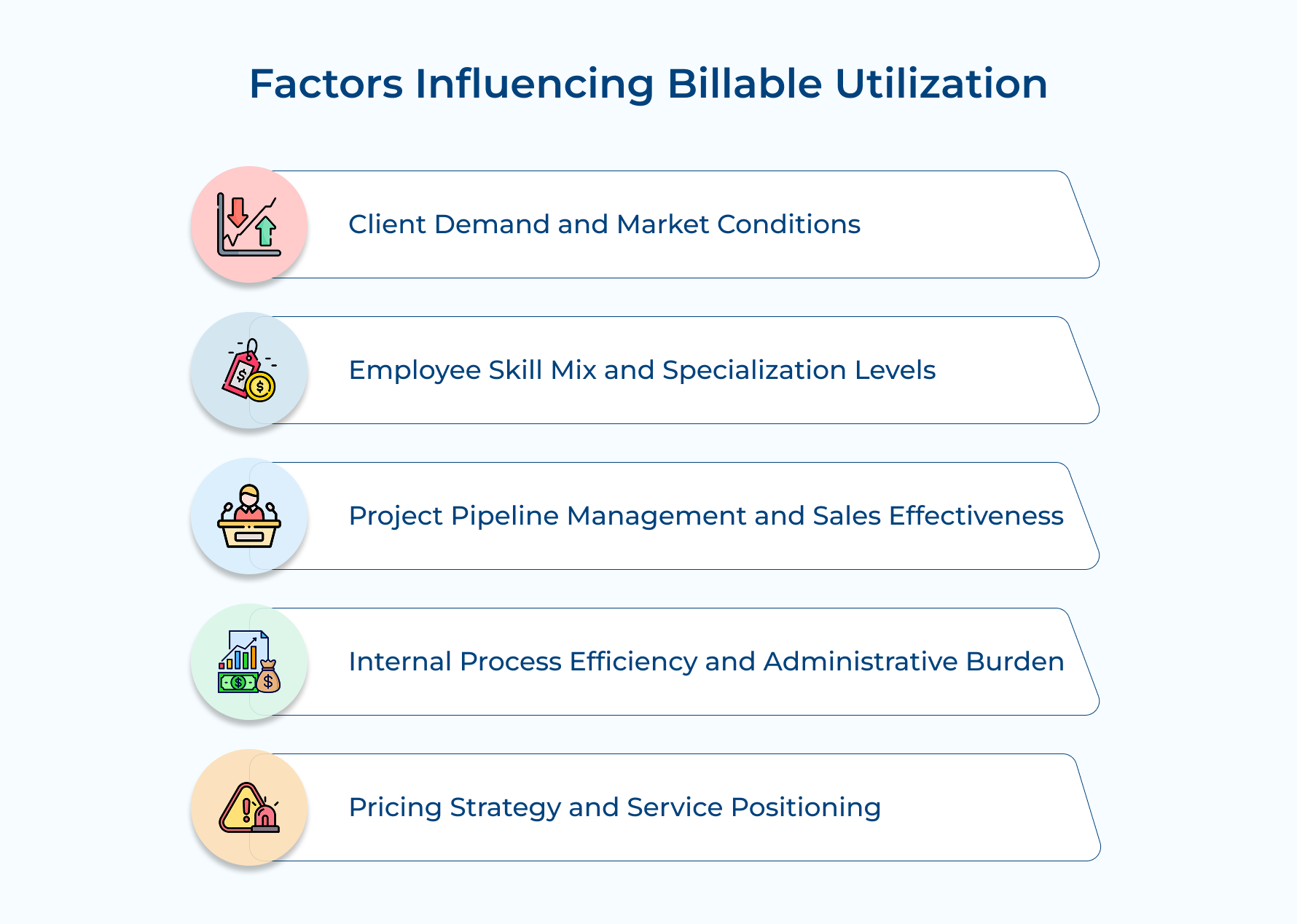
Client Demand and Market Conditions
Your utilization rate often reflects the market. During slowdowns, clients may delay or cut back projects. Peak seasons can stretch your resources thin, making it tough to serve everyone.
Employee Skill Mix and Specialization Levels
The right balance of specialists and generalists matters. Highly specialized team members are often in demand and command higher rates. But too much specialization can cause delays if key people aren’t available. Generalists offer flexibility, though they may have lower billable rates.
Project Pipeline Management and Sales Effectiveness
Inconsistent sales equates to inconsistent workload. A weak pipeline leads to feast-or-famine cycles—teams swing between overbooked and underutilized. Strong sales and pipeline management keep the work flowing steadily.
Internal Process Efficiency and Administrative Burden
Not all time is billable, even if you’re busy. Tasks like proposal writing, internal reviews, and admin reduce billable capacity. Streamlining workflows and cutting unnecessary approvals boosts available billable time.
Pricing Strategy and Service Positioning
How you price your services directly impacts utilization. Premium pricing may mean fewer clients but higher profit per hour. Lower pricing can drive up demand but needs more hours to hit revenue goals.
Billable Utilization vs. Resource Utilization: Key Differences Explained
These two metrics often get confused but they measure fundamentally different aspects of your team’s productivity. Understanding their distinctions helps you make better operational decisions.
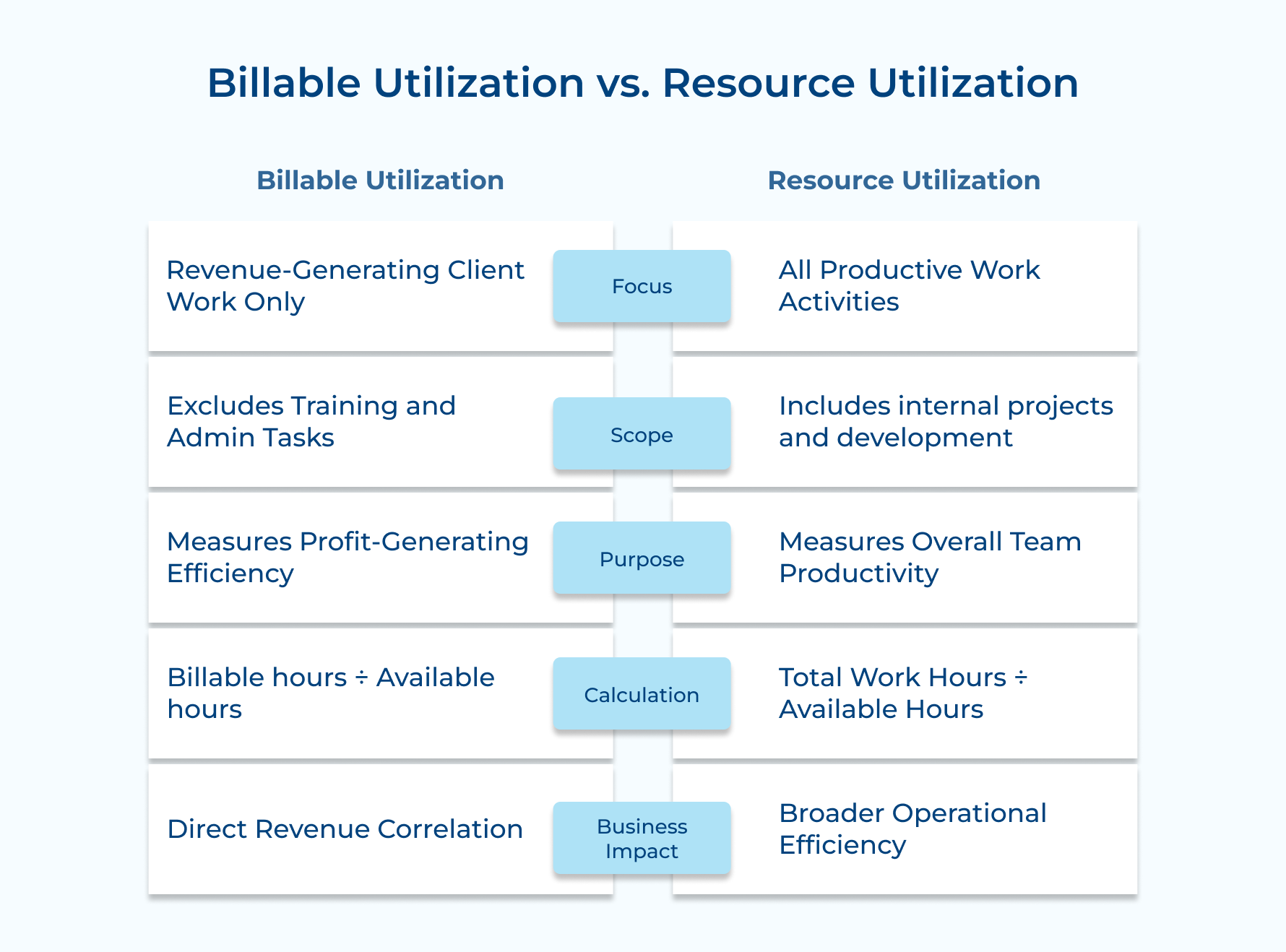
Focus and Revenue Generation
Billable utilization zooms in only on time spent doing client work that earns revenue. It’s a critical metric because it shows how much of your team’s time is actually turning into billable income.
Resource utilization includes all productive activities, even ones that don’t directly earn money, like internal projects or training. These may not show up on invoices, but they still add value and support long-term growth.
Scope of Activities Measured
The billable utilization formula leaves out things like internal meetings, proposals, or business development. That’s intentional, it keeps the focus on pure revenue-driving work.
Resource utilization gives you the bigger picture. It includes anything productive (like team training or upgrading internal systems) so you can see how well you’re using your team’s full capacity.
Purpose and Strategic Application
Billable utilization tells you how efficiently you’re turning salaries into revenue. It’s key for setting pricing, planning capacity, and knowing when to find more client work.
Resource utilization shows if your team is staying engaged and working on meaningful tasks, even during slower periods. It helps balance profit goals with team development and morale.
Calculation Methods and Data Sources
To get accurate billable utilization, you need detailed time tracking that clearly separates billable from non-billable hours. The billable utilization formula is: (Total Billable Hours ÷ Total Available Hours) × 100
Resource utilization is simpler to calculate since it includes all productive hours, making it easier for broader capacity planning.
7 Effective Tips to Improve Billable Utilization
Here are seven impactful tips designed to help you enhance billable utilization while maintaining a healthy work-life balance for your team.
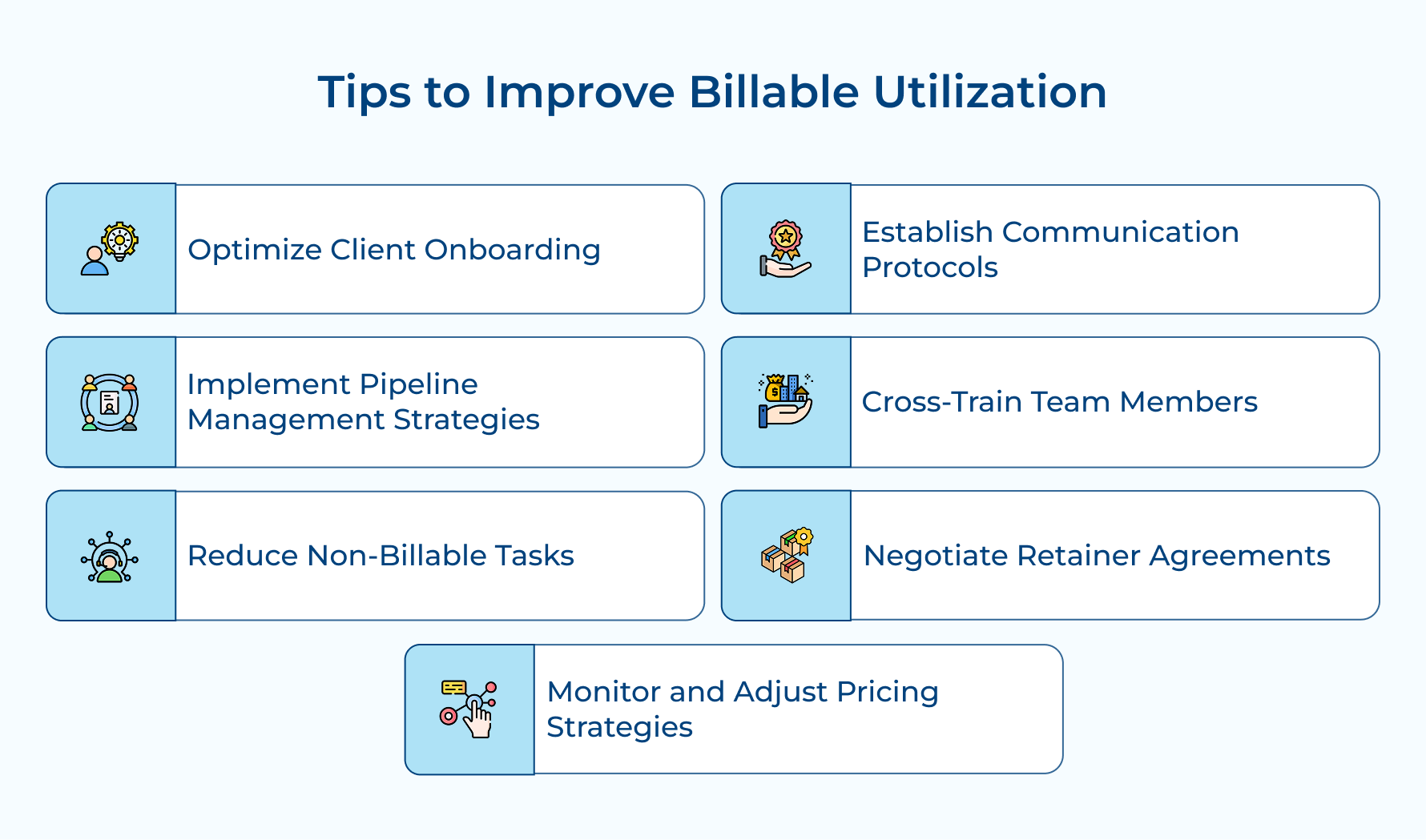
1. Optimize Client Onboarding and Project Kickoff Processes
The faster you get from “contract signed” to “project started,” the sooner your team can begin billing.
- Are there bottlenecks in your current onboarding process?
- Does your team have everything they need—briefs, tools, contacts—on day one?
Smoother onboarding eliminates downtime and turns new wins into immediate revenue.
2. Implement Proactive Pipeline Management Strategies
Don’t let your team swing between overwork and idleness.
- Do you have visibility into when current projects will wrap up?
- Are you planning ahead to keep the flow of new work consistent?
When you manage your pipeline well, utilization stays stable, even through slow seasons.
3. Reduce Non-Billable Administrative Tasks Through Automation
Too much time spent on internal admin tasks eats into billable hours.
- What processes are still manual that could be automated?
- Are you using tools that simplify time tracking, invoicing, and reporting?
Focus on automating:
- Invoice generation
- Time and project tracking
- Client updates and reporting
Automation frees your team to focus on work that actually brings in revenue.
4. Establish Clear Communication Protocols With Clients
Clear communication protocols protect your team’s time.
- Do clients know your availability and response timelines?
- Have you defined what qualifies as billable versus “quick favors”?
Setting expectations builds trust while reducing scope creep and keeps the focus on high-value work.
5. Cross-Train Team Members for Flexible Resource Allocation
A versatile team is a more utilized team.
- Who on your team is the only one who can do certain tasks?
- Where can you build an overlap through training?
Cross-training helps fill gaps when key people are unavailable and keeps everyone engaged by offering variety as well as growth opportunities.
6. Negotiate Retainer Agreements for Predictable Revenue Streams
Want stable revenue and predictable work? Retainers help.
- Can you convert any project clients into monthly retainer agreements?
- What baseline services can you offer on a recurring basis?
Retainers ease pressure on sales and ensure consistent utilization across the team.
7. Monitor and Adjust Pricing Strategies Based on Utilization Data
Your pricing should match your team’s bandwidth.
- Is low utilization a pricing issue—or a market fit issue?
- Are you leaving money on the table when you’re consistently booked?
Use utilization data to fine-tune rates and avoid burnout or underperformance.
Maximize Agencies’ Productivity with Billable Utilization
Billable utilization serves as the critical bridge between talent investment and revenue generation, making it essential for agencies to survive in competitive markets. Without proper tracking, agencies risk bleeding profits through inefficient resource allocation and unclear pricing strategies.
Effective utilization management transforms agencies by creating predictable revenue streams, optimizing staff productivity, and enabling data-driven decisions that enhance client satisfaction. This strategic approach builds sustainable growth while maintaining healthy work-life balance for teams. RetryClaude can make mistakes. Please double-check responses.
Limit time — not creativity
Everything you need for customer support, marketing & sales.

Shivank Kasera is part of the marketing team at Kooper, where he focuses on building content that helps agencies and service providers grow. With a keen interest in SaaS, operations, and scalability, he translates practical insights into actionable resources for business leaders.