A Complete Guide to Creative Project Management in Agencies
- What is Creative Project Management?
- Why Creative Project Management is Important?
- 7 Critical Steps in Creative Project Management Process
- Creative Project Management vs. Traditional Project Management
- Creative Project Management Tips and Best Practices
- Top 4 Creative Project Management Software You Should Consider
- Challenges of Creative Project Management for Agencies
- Transform Ideas into Success with Creative Project Management
- FAQs About Creative Project Management

Key Highlights:
- Creative project management balances artistic vision with business goals for sustainable success.
- Agencies can boost profitability and efficiency by mastering creative project management strategies.
- Collaborative feedback, agile adaptation and clear briefs drive impactful creative project outcomes.
Creative teams often find themselves caught between delivering artistic brilliance and meeting business goals. Even with talented people and the best intentions, projects can run over budget as well as leave clients feeling frustrated.
Things can spiral without robust creative project management! Profit margins shrink, teams burn out and client trust takes a hit. And it’s not just one-off projects at risk. Long-term growth as well as competitiveness can suffer too.
That’s where creative project management comes in. It brings the structure needed to keep things on track, so teams can do their best work without blowing timelines or budgets. With the right tools, workflows and approaches tailored for creative environments, agencies can stay innovative.
What is Creative Project Management?
Creative project management is the structured approach to planning, executing and delivering creative projects while balancing artistic vision with business objectives. It combines traditional project management principles with flexibility to nurture innovation. At the same time, it keeps projects on track through effective resource allocation, timeline management and quality control.
Creative project management works by establishing clear project goals and expectations before breaking down the work into manageable phases. Teams collaborate through dedicated workflows while project managers monitor progress and solve problems as they arise. The process adapts to changing requirements while maintaining focus on both creative excellence and business outcomes.
Key components:
- Creative brief development that clearly defines objectives, audience, deliverables and success metrics.
- Resource allocation that optimally assigns team members based on skills, availability and project needs.
- Milestone planning with realistic timelines that account for creative exploration and revision cycles.
- Collaborative feedback systems that gather input from stakeholders without stifling creative vision.
- Agile adaptation capabilities that allow teams to pivot when creative opportunities or challenges emerge.
Why Creative Project Management is Important?
Here’s how creative project management supports your entire team through the creative project lifecycle:
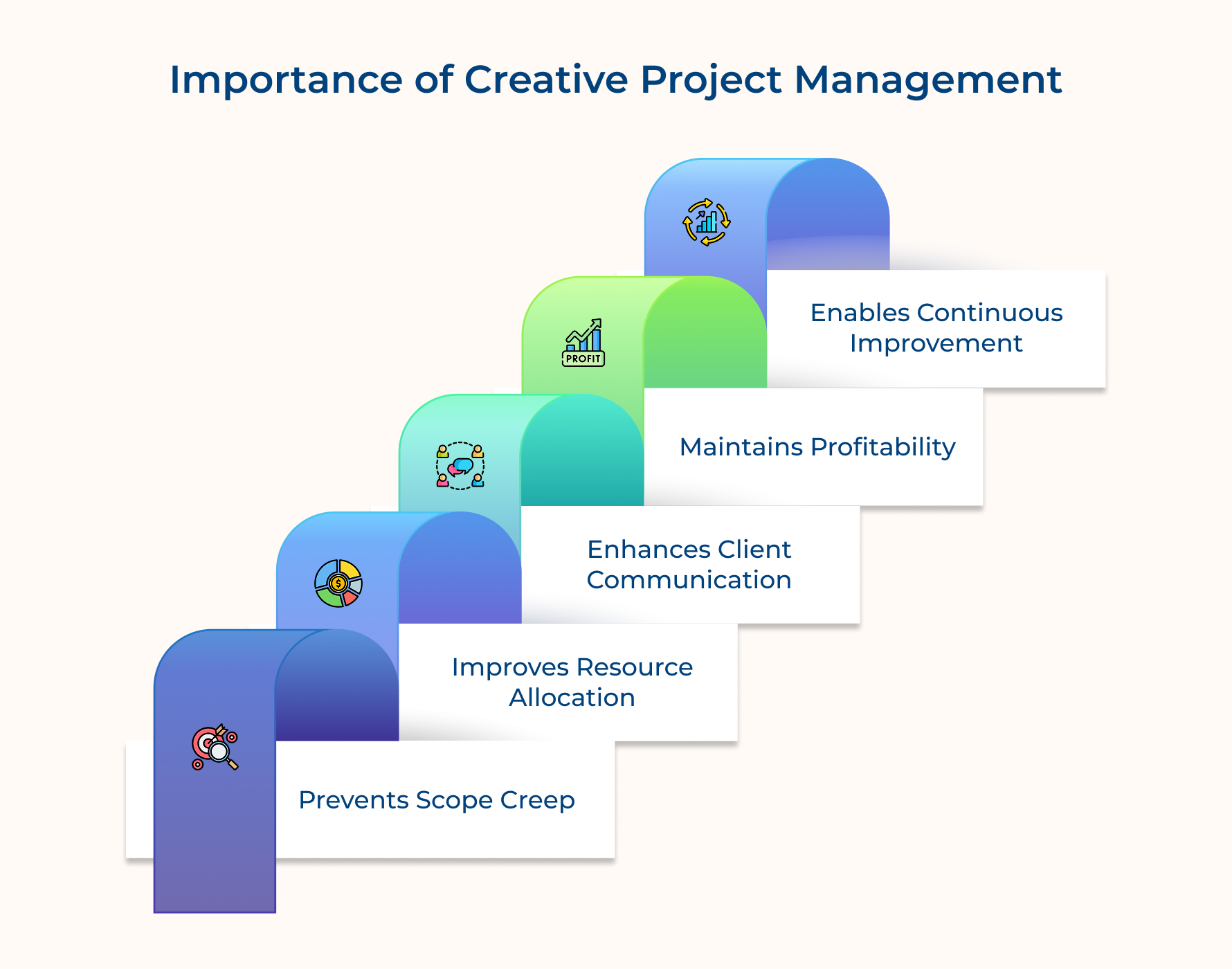
1. Prevents Scope Creep
Ideas evolve, but without boundaries, they derail timelines. Clear scope definitions and change processes help you adapt while staying on track.
2. Improves Resource Allocation
Matching the right talent to the right task ensures your team thrives even during intense marketing campaigns.
3. Enhances Client Communication
Consistent updates as well as structured feedback loops build trust and prevent confusion, letting clients see progress without micromanaging.
4. Maintains Profitability
Creative work is unpredictable. Unlike traditional project managers, you need agile tools to track hours and costs to keep budgets in control.
5. Enables Continuous Improvement
Your team can refine processes as well as make better estimates for the next project just by documenting what worked and what didn’t.
7 Critical Steps in Creative Project Management Process
To guide you through this creative journey, we’ll explore a proven 7-step process that can help you shepherd your team’s imaginative vision into reality without compromising on creativity.
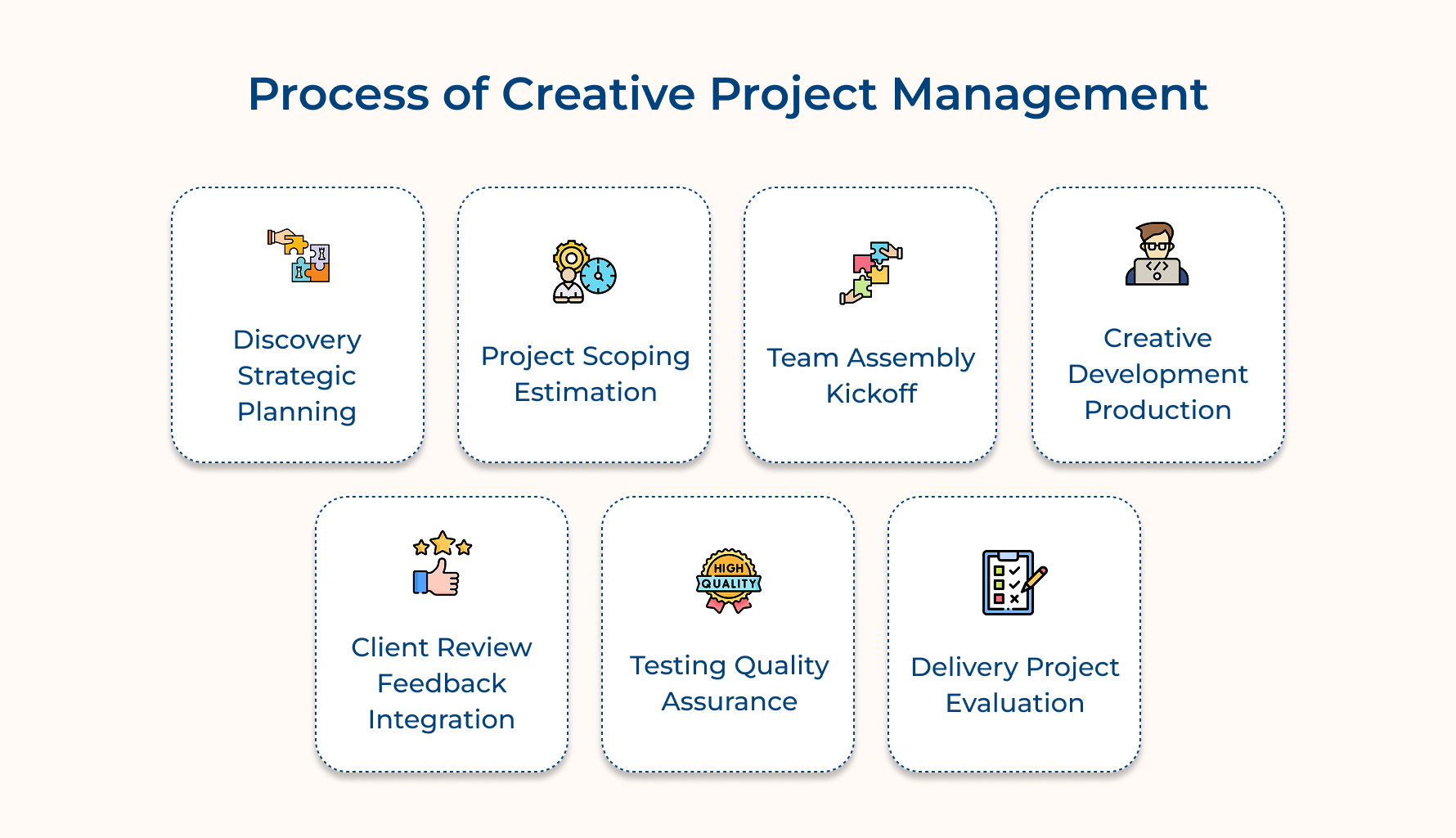
1. Discovery Strategic Planning
Strategic discovery sets the stage for everything that follows. It gives your project team a clear roadmap, aligns everyone on the project scope and prevents costly rework later.
Start by asking the right questions, beyond the brief.
- What business problem are we solving?
- Who’s the audience?
- How will we know we’ve succeeded six months from now?
These help uncover hidden goals that shape creative ideas in meaningful ways. Use a discovery questionnaire to get honest insights and define success in concrete terms. Instead of vague goals like “build awareness,” aim for something measurable like boosting qualified traffic within three months.
The clarity ensures your team stays focused, makes better decisions and brings creative ideas to life that actually move the needle.
2. Project Scoping Estimation
Project scoping turns big-picture goals into a clear task list with realistic resource needs. It helps your team stay focused and prevents scope creep that eats into profits.
A well-defined scope protects everyone by clearly listing deliverables, specs, revision limits and approval steps. It keeps creative work on track as well as limits time wasted on administrative tasks or endless feedback loops.
Break work into value-based tiers (strategic, standard, basic) to shift the focus from “how much does it cost” to “what value will I get?” Link revisions to milestones to create natural decision points and avoid open-ended changes.
Use visual tools to show how client influence narrows as the project moves forward. Set clear change request procedures, backed by cost implications, to manage any scope adjustments professionally.
3. Team Assembly Kickoff
Assembling the right team turns planning into action. Success starts with matching technical skills to project needs and making sure your team works well together. Good chemistry and clear roles lead to smooth collaboration as well as better outcomes.
Team Formation Checklist:
- Have we identified all specialized skills required for project deliverables?
- Are team members available during the entire project timeline?
- Does each role have a primary and backup person assigned?
- Have we balanced workloads to prevent overburdening key team members?
Use this as a guide to assign the right people. While meeting client needs, look for chances to help junior staff grow. For kickoff meetings, ditch the dry slides and go interactive. Use journey maps or visuals to energize the team and make sure everyone gets their role.
4. Creative Development Production
Creative development is where ideas take shape. The best agencies strike a balance, giving teams space to explore while keeping things organized and on track.
Start with open brainstorming to spark bold, unexpected ideas. Don’t judge and just capture everything. Then narrow it down using filters tied to project goals. Present a few strong concepts, each with a clear “why” that ties back to business outcomes.
Keep workflows visible so everyone knows what’s next and where things might bottleneck. Use regular check-ins to fix issues early. Make sure assets and brand guidelines are easy to find.
Want to work like a top agency? Use consistent presentation templates, share updates that highlight blockers and keep version control tight so nothing gets lost in the shuffle.
5. Client Review Feedback Integration
Client reviews can make or break a project. Handled well, they keep things moving and elevate the work. Handled poorly, they stall momentum as well as drain your team’s energy.
Present work with purpose. Tie everything back to project goals, not just “what do you think?” Run reviews like decision-making sessions. Ask focused questions like, “Does this headline capture the core benefit?” to get actionable input.
Smart feedback strategies:
- Use real-time markup tools so clients can comment directly. No more guessing what they meant.
- Get top-level approval early to avoid last-minute rejections.
- Involve only those with the right decision authority for each phase.
Record feedback during meetings and organize it into three buckets: strategic must-haves, personal preferences and off-goal suggestions. This clarity helps your team stay efficient—and focused on delivering great creative, fast.
6. Testing Quality Assurance
Testing makes sure your creative work actually delivers on its goals. Catching issues late can blow up timelines and budgets, so it’s smart to build testing into every stage.
Start with technical checks: Does everything load quickly? Work on all devices? Are interactive elements reliable and accessible? Use clear pass/fail criteria so you’re not relying on opinion.
Quality Assurance Checklist:
- Does it meet the project brief?
- Has it been tested on all required devices/platforms?
- Are interactive elements fully functional?
- Is branding consistent throughout?
- Does it align with original success metrics?
Also test the creative side. Clarity of message, visual flow, brand fit and emotional response. Run quick user tests when possible. Document what needs fixing and prioritize based on impact.
7. Delivery Project Evaluation
Project delivery isn’t just about sending the final files, it’s about wrapping things up right and learning from the experience. Strong delivery improves team collaboration and helps you hit future project deadlines more accurately.
Here’s how to do it well:
- Create a Complete Handover Package
Include final assets, usage guidelines and technical documentation. - Host a Formal Walkthrough
Show clients how to use what you’ve delivered and answer any lingering questions. - Focus on Small Process Improvements
Don’t overhaul everything at once—fix one pain point at a time (like tightening up client presentations). - Spot Recurring Issues
Notice if certain phases (like video editing) often miss deadlines? That’s a signal to improve that part. - Use Real Data for Future Planning
Build your own estimating formulas based on your team’s actual speed and strengths—not industry averages. - Do a Team Debrief
Discuss what worked, what didn’t and what to improve for next time.
Creative Project Management vs. Traditional Project Management
In this comparison, let’s delve into the core distinctions between creative and traditional project management, helping you to choose the right path for your next project.
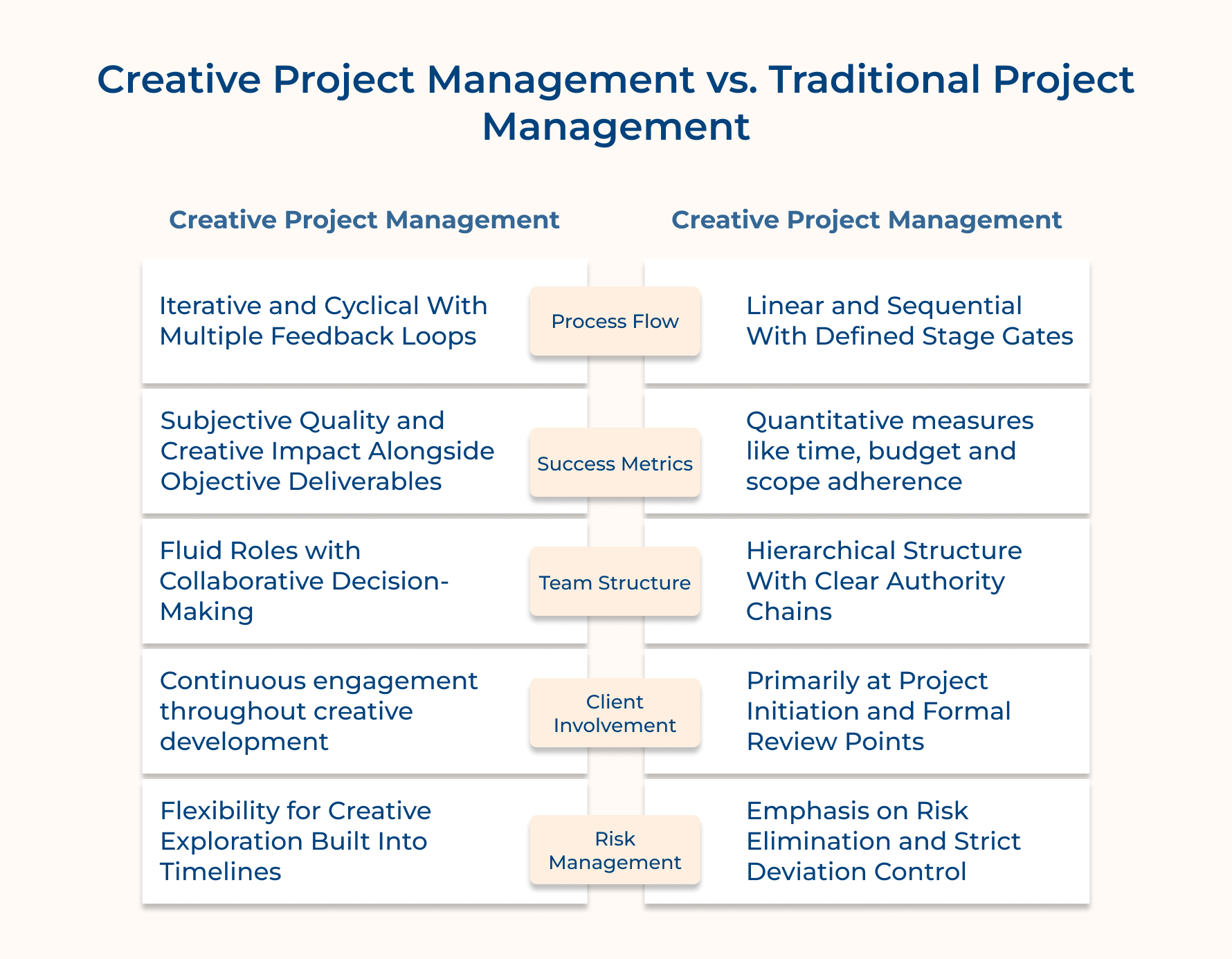
1. Process Flow
In creative projects, things move in cycles. Ideas are explored, shaped by feedback and refined repeatedly. The process is fluid, often adapting as new insights emerge.
Traditional project management, by contrast, follows a strict step-by-step approach. Finish one stage before starting the next. It’s more about predictability than discovery.
2. Success Metrics
Creative success isn’t just about hitting deadlines or budgets. It’s also about brand fit, emotional impact, originality and audience connection. Sure, meeting deliverables matters, but so does the creative spark.
Traditional models focus heavily on the “iron triangle”: time, cost and scope, with success measured by how closely the actual outcomes match the original plan.
3. Team Structure
Creative teams often work in flatter structures where everyone can contribute ideas. Collaboration is key and decisions often come from expertise rather than hierarchy.
Traditional teams are more top-down, with clear roles, responsibilities and approvals flowing through a project manager.
4. Client Involvement
In creative projects, clients are more like partners. There are regular check-ins, feedback loops and collaboration throughout the process. This helps shape the final output in real time.
Traditional models keep client input more structured, limited to milestone reviews as well as formal approval stages to avoid scope disruptions.
Creative Project Management Tips and Best Practices
These best practices will help you develop frameworks that nurture creativity while ensuring reliable delivery and client satisfaction.
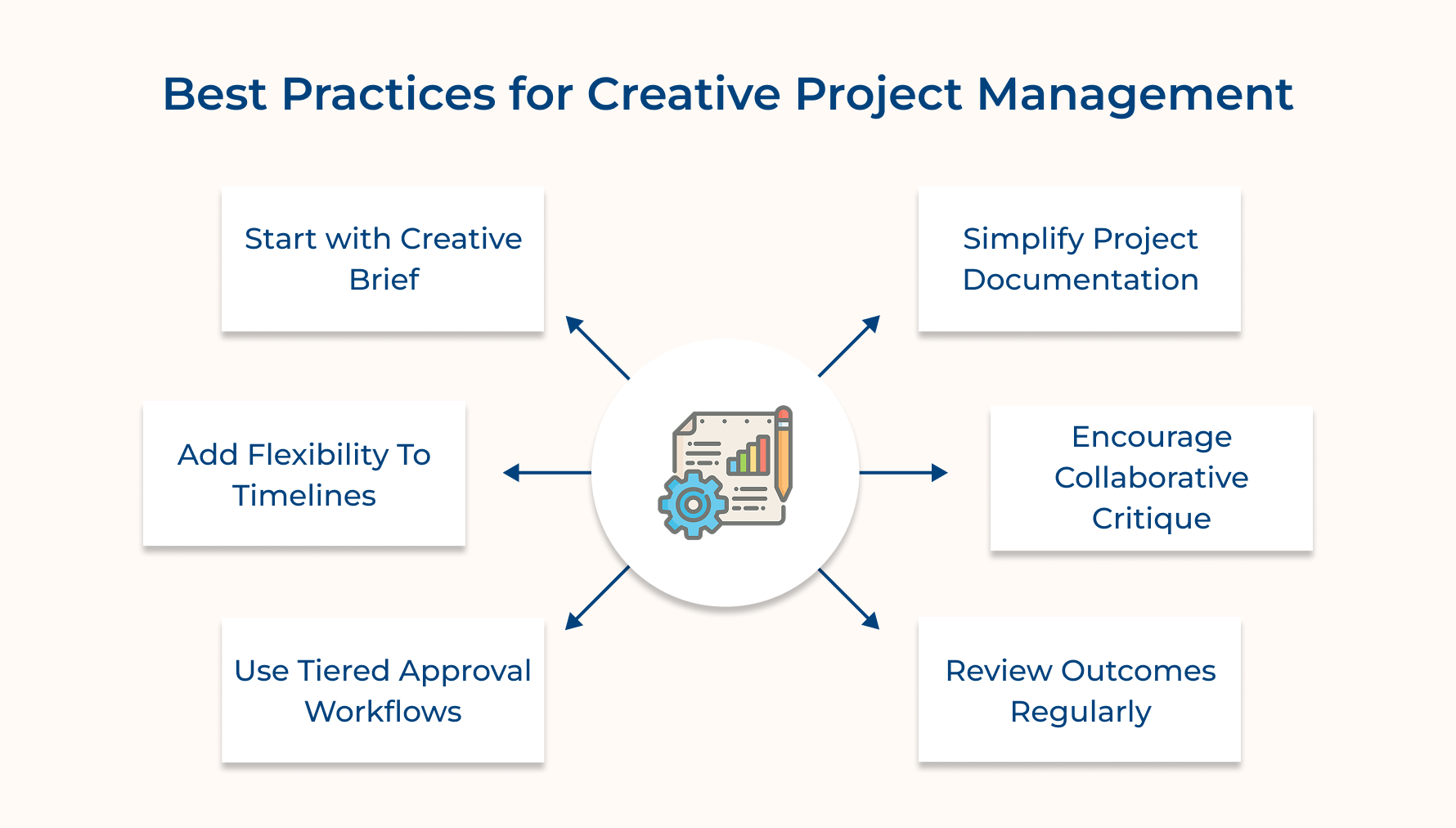
1. Start with a comprehensive creative brief
A solid brief outlines business goals, audience insights and what success looks like. It keeps your creative team focused while ensuring client expectations are clear from the start.
2. Build flexibility into your project timelines
Creativity can’t be rushed. Pad your timelines with exploration phases and buffers between deliverables. This lets ideas evolve naturally and keeps teams from scrambling when surprises pop up.
3. Implement tiered approval workflows
Break your process into stages. Get big-picture concepts approved before diving into details. It keeps senior stakeholders involved at key moments and saves your team from redoing polished work after a late-stage rejection.
4. Establish creative-friendly documentation systems
Manage creative projects with tools that support creative flow. Keep documentation light but effective, using platforms that fit naturally into how your team works.
5. Create collaborative critique cultures
Build a culture where feedback is honest, respectful and constructive. Regular review sessions help strengthen the work and avoid surprises during client presentations.
6. Practice continuous portfolio analysis
After delivery, take time to review. Compare outcomes with initial goals. What worked? What didn’t? Over time, this builds smarter project planning and strengthens your creative edge.
Top 4 Creative Project Management Software You Should Consider
These specialized tools offer features designed specifically for creative workflows and agency business models.
Kooper
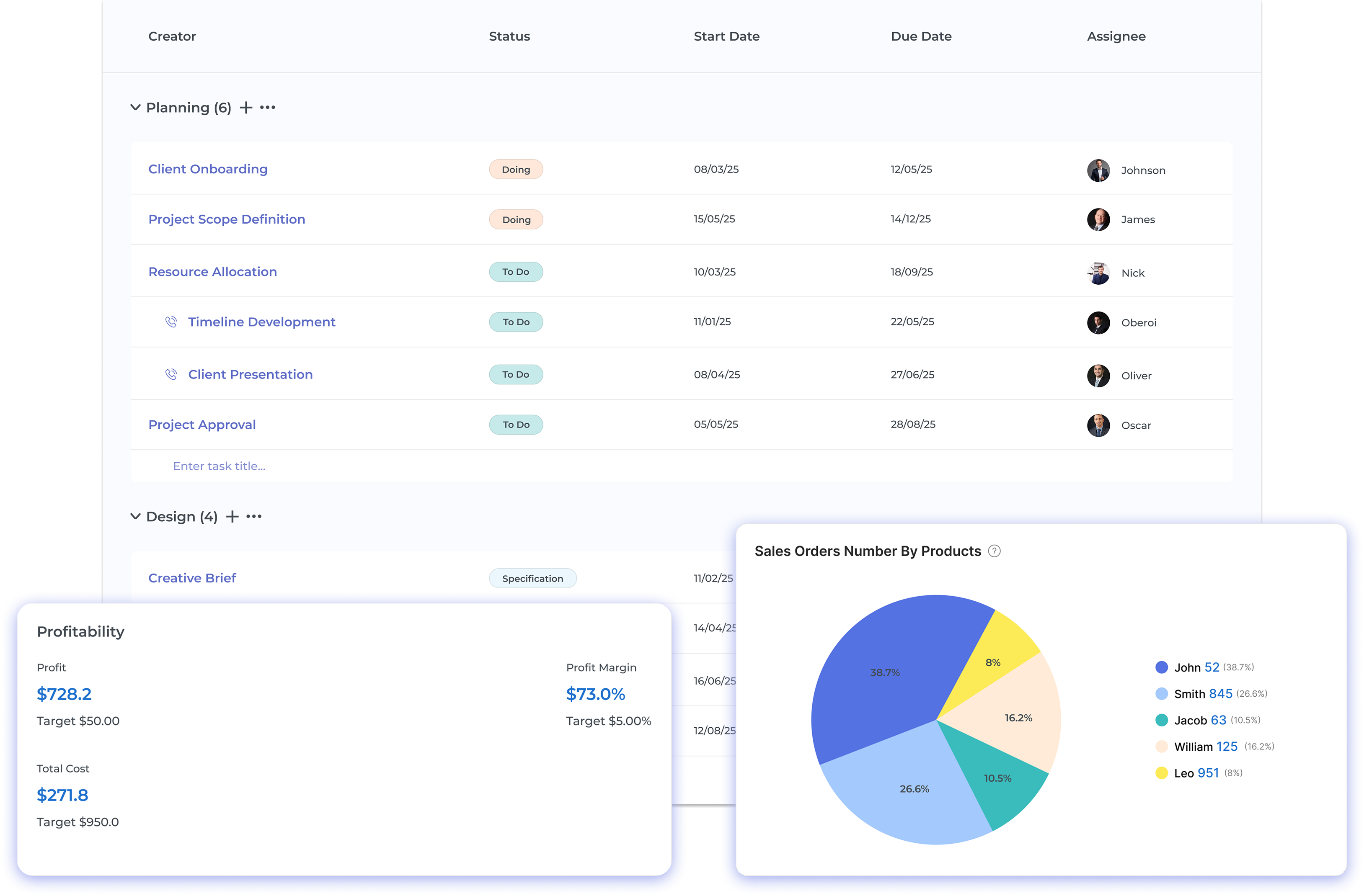
Kooper is an all-in-one agency management platform built for creative and professional service teams. It bridges the gap between project execution and financial visibility, helping agencies balance creativity with profitability from a single dashboard.
Key features:
- Resource planning and scheduling: Productive’s color-coded scheduling board shows team capacity across projects. It highlights overallocation and availability gaps.
- Real-time profitability tracking: Each project displays live budget usage and profitability metrics. This continuous visibility helps managers spot scope creep immediately.
- Customizable creative workflows: Agencies can create workflows tailored to different project types. Tasks move through stages like Concept, Review and Approval.
- Time tracking with budget awareness: Team members track time on specific tasks while seeing budget context. This builds natural budget awareness without exposing full financial details.
- Client portal with approval workflows: Clients get secure access to review deliverables and provide feedback directly on the platform. Approvals happen faster, while interactions remain professional.
Veemo Projects
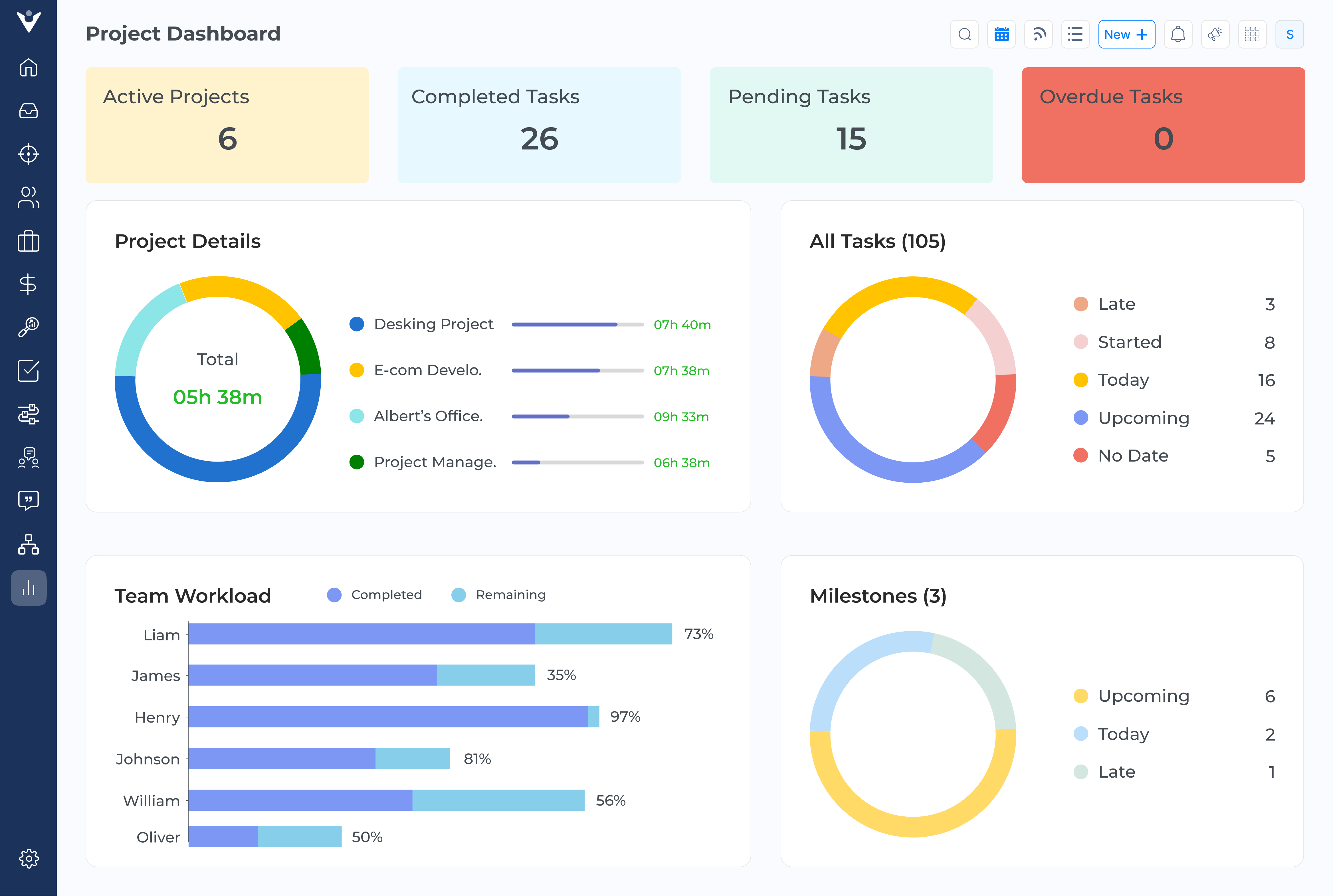
Veemo Projects is a user-friendly project management platform built for creative agencies handling multiple clients and complex deliverables. It blends robust features with intuitive design to keep both project managers and creatives aligned from start to finish.
Key features:
- Portfolio dashboard: Monitor project health, workloads and milestones at a glance
- Client workspaces: Branded, secure spaces for clear client collaboration
- Collaborative task management: Organized tasks with comments, subtasks and custom fields
- Integrated time tracking: Log billable hours without disrupting workflows
- Resource scheduling: Visualize team capacity and match skills to tasks
Monday.com
Monday.com offers highly visual project management through customizable boards that adapt to any creative workflow. Its color-coded interface makes project status instantly recognizable, while automation features eliminate repetitive tasks that drain creative energy. The platform excels at bridging the gap between creatives and account managers through flexible views.
Productive
Productive stands out as an all-in-one agency management solution that seamlessly connects project management with profitability tracking. Its integrated approach combines resource scheduling as well as financial management in one platform, giving agency leaders real-time visibility into both project performance and business metrics.
Challenges of Creative Project Management for Agencies
Creative projects are exciting but come with their own set of tricky challenges. Here’s how they usually show up and what you can do about them:
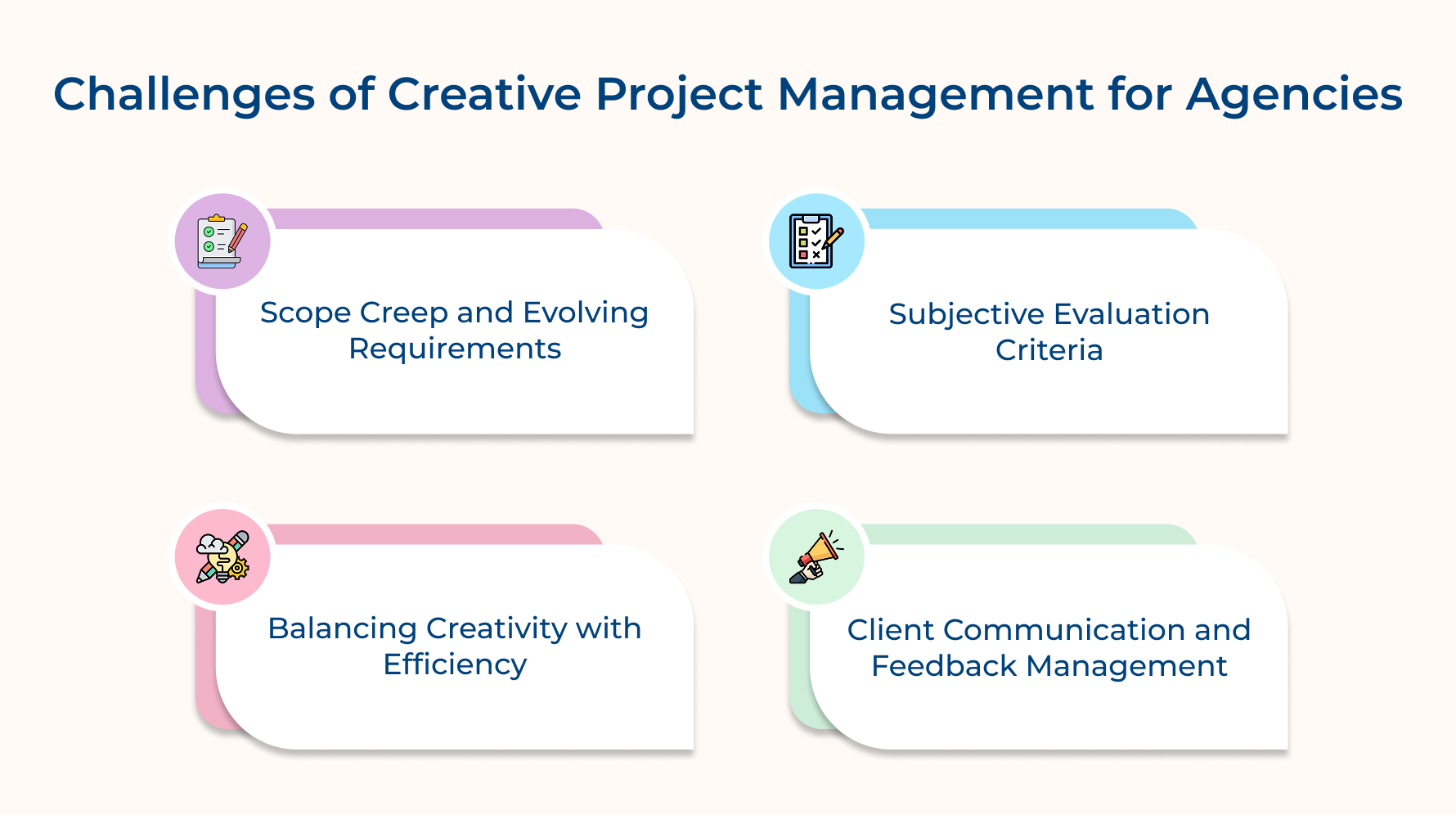
Scope Creep and Evolving Requirements
Ideas evolve, clients share feedback and small tweaks pile up. Before you know it, the project has doubled in size but not in budget. Clear deliverable definitions and milestone approvals can help stop this in its tracks.
Subjective Evaluation Criteria
Creative work doesn’t have black-and-white success metrics. What one person loves, another might hate. This makes sign-off tricky. Instead of relying on taste, tie creative choices to business goals for a more objective review process.
Balancing Creativity with Efficiency
You want room for creative freedom but not at the cost of missed deadlines or drained budgets. Build in structured ideation phases before moving into production, so exploration and execution don’t clash.
Client Communication and Feedback Management
Clients often aren’t fluent in design language. Plus, with multiple stakeholders, feedback can be vague or conflicting. Use collaborative platforms to collect input in an organized, prioritized way.
Over-relying on Key People
Specialized team members can become bottlenecks. Cross-training builds flexibility and helps keep things moving smoothly.
Transform Ideas into Success with Creative Project Management
Effective creative project management bridges the gap between artistic vision and business outcomes, transforming abstract concepts into tangible client value. By implementing structured workflows that still nurture innovation, agencies can consistently deliver high-quality creative products while maintaining financial viability and team wellbeing through every project phase.
Strategic investment in project management systems tailored for creative work drives agency growth through improved resource utilization, clearer client communication as well as more accurate forecasting. This systematic approach reduces costly rework, increases client retention through transparent delivery processes and ultimately builds an agency’s reputation for reliability without compromising creative excellence.
Limit time — not creativity
Everything you need for customer support, marketing & sales.

Shivank Kasera is part of the marketing team at Kooper, where he focuses on building content that helps agencies and service providers grow. With a keen interest in SaaS, operations, and scalability, he translates practical insights into actionable resources for business leaders.