How Smart Workload Prioritization Improves Team Productivity
- What is Workload Prioritization?
- How to Prioritize Workload for Your Organization in 8 Practical Steps
- Key Benefits of Effective Workload Prioritization
- 5 Smart Workload Prioritization Methods You Should Consider
- Roles of AI and Automation in Workload Prioritization
- Best Practices and Tips for Enhancing Workload Prioritization Process
- Achieve Client Satisfaction with Strategic Workload Prioritization
- FAQs about Workload Prioritization

Key Highlights:
- Workload prioritization helps teams focus on high-impact tasks, boosting client satisfaction and reducing burnout.
- Agencies can maximize billable utilization and improve resource allocation efficiency by applying structured workload prioritization methods.
- Regularly reviewing and refining workload prioritization processes ensures adaptability, better strategic planning as well as long-term organizational growth.
Drowning in endless task lists while important deadlines slip through the cracks? Professional teams across agencies and consultancies struggle daily with competing priorities that create stress as well as compromise client satisfaction.
This overwhelming workload creates chaos. It causes teams to miss important opportunities and disappoint clients. Team members feel burned out and stressed. They struggle to tell the difference between urgent tasks and busy work that seems important but adds little value.
Discover seven proven steps that transform chaotic workload management into systematic excellence. These workload prioritization strategies help you focus energy on high-impact activities while maintaining quality standards and team morale.
What is Workload Prioritization?
Workload prioritization is the systematic process of ranking and organizing tasks based on their urgency as well as strategic value to achieve maximum impact with limited resources. Think of it as creating a roadmap that helps teams decide what deserves immediate attention versus what can wait. This approach ensures that high-stakes projects get the focus they need while preventing less critical work from consuming valuable time and energy.
Teams evaluate each task using criteria like deadlines and business impact to create a ranked order of importance. They then allocate resources and time slots based on these rankings while regularly reviewing priorities as new projects emerge or circumstances change. This creates a dynamic system that adapts to shifting demands while maintaining focus on what matters most.
Key objectives:
- Maximize revenue generation by focusing efforts on projects that directly contribute to the bottom line and client satisfaction.
- Reduce client escalations through proactive attention to time-sensitive deliverables that could damage relationships if delayed.
- Optimize team utilization by matching the right expertise to the right projects at the right time.
- Meet contractual obligations by ensuring deadline-driven commitments receive appropriate resource allocation and attention.
- Enable strategic growth by protecting time for business development activities and capability-building initiatives that drive long-term success.
How to Prioritize Workload for Your Organization in 8 Practical Steps
How to prioritize workload is a question every organization finds difficult to answer. Here are 8 smart steps to succeed despite tight deadlines, different energy levels and countless high-priority tasks.
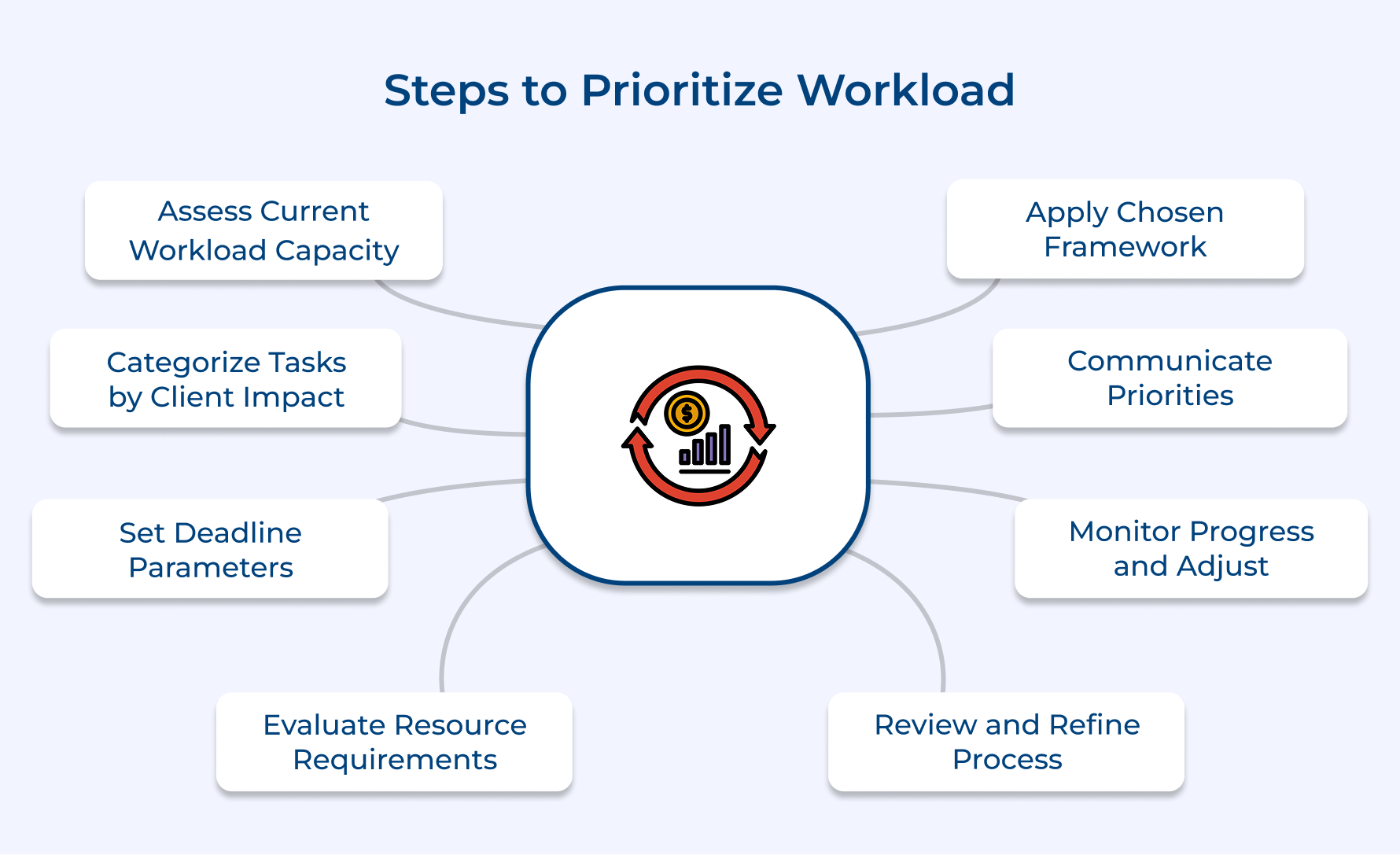
1. Assess Current Workload Capacity
Assessing your team’s workload capacity starts with being honest about what they can handle right now. It’s the first step to avoid overcommitting and burning out your team or letting clients down.
Ask yourself these four key questions:
- Who’s actually available? Look at current workloads and who has room for new work.
- Do we have the right skills? Match team strengths with upcoming project needs.
- What’s our weekly limit? Know how many billable hours can be delivered without hurting quality.
- Where are the bottlenecks? Identify slowdowns that could derail timelines.
Also, ask: “If this project landed tomorrow, would we need to work weekends?” If yes, capacity is already stretched.
2. Categorize Tasks by Client Impact
Using a structured approach to task management helps your team stay focused on what really matters, client satisfaction and business results. One smart way to do this is by applying the urgent-important matrix, but with a client-centric twist.
Here’s how:
- Start with impact: Ask, Does this task directly affect a client deliverable or is it internal work?
- Think about timing: What happens to client satisfaction if this task is delayed by a week?
- Measure visibility: Prioritize tasks that the client will see and evaluate, like presentations or campaign assets.
- Follow the money: Focus on revenue-driving work—tasks tied to billable hours or contract renewals.
- Build relationships: Give weight to tasks that strengthen trust and long-term partnerships.
This keeps your efforts aligned with what clients truly value.
3. Set Clear Deadline Parameters
Setting clear deadline parameters is a must for smooth project delivery. It’s all about giving your team clarity, avoiding last-minute stress, and managing client expectations. Here’s a simple task list to build deadline discipline into your time management process:
- Set hard deadlines: Lock in non-negotiable dates tied to contracts.
- Add soft milestones: Use internal check-ins to track progress and catch delays early.
- Build in buffers: Allow time for feedback, revisions, and scope changes.
- Define cut-off points: Set clear deadlines for client input or approvals.
Always ask: “What might delay this?” Then work backward from the final due date to build a timeline that’s realistic—and flexible when needed.
4. Evaluate Resource Requirements Thoroughly
Evaluating resource needs upfront is key to hitting deadlines and delivering quality work. It’s about getting clear on the time, skills, as well as support each task demands. Here’s a breakdown using a conversational and structured approach:
1. Estimate Time per Task
Break projects into smaller pieces. Use past project data to set realistic timelines and always add a 20–30% buffer. Client feedback and unexpected hiccups can slow things down more than you expect.
2. Match Skills to People
Assign tasks based on strengths. Give high-value work to senior team members and save simpler tasks for junior staff. This avoids overloading or underutilizing your talent and keeps quality high.
3. Plan for External Help
Will you need freelancers or vendors? Identify those needs early. That way, you can budget smartly and avoid last-minute scrambles that lead to rushed or overpriced work.
5. Apply Chosen Prioritization Framework
Using a prioritization framework consistently helps your team stay focused, avoid confusion, and make smarter decisions across all projects. Here’s how to apply one effectively:
1. Pick the Right Fit: First Ask, What drives our agency’s success—revenue, urgency, or client impact?
- For revenue-focused work, use value-based prioritization.
- For fast-moving tasks, the Eisenhower Matrix works well.
2. Create a scoring template: Standardize how tasks are evaluated using criteria like urgency, impact, and effort. Use simple rating scales and include notes for transparency.
3. Hold weekly prioritization sessions: Get everyone together to review priorities, adapt to changes, and avoid solo decision-making.
4. Compare across projects: Don’t just prioritize within teams—evaluate tasks across departments so the most important work always gets the resources.
6. Communicate Priorities to Stakeholders
Communicating priorities clearly helps everyone (clients as well as team members) stay aligned and work efficiently. When you explain why certain tasks take precedence, you avoid confusion and build trust.
Why it matters:
- Reduces scope creep: Clients understand what comes first and why added requests may shift timelines.
- Aligns your team: Everyone knows what’s urgent and what can wait.
- Builds client trust: Transparency shows thought behind decisions, not random shifts.
Let’s say you’re juggling three clients. By telling them, “Client A’s renewal deck comes first, so Client B’s routine update will be next,” you set expectations.
Pro tip: Document these decisions. It keeps things accountable and gives you a record for future planning or client discussions.
7. Monitor Progress and Adjust
Monitoring progress means checking in regularly to see how your top-priority tasks are moving along and quickly adjusting when things don’t go as planned. It helps you catch small issues before they become big clients or delivery problems.
Key metrics to track:
- Task completion rates: How many tasks are actually getting done?
- Resource utilization: Are people working on the right things?
- Client satisfaction scores: Are you meeting expectations?
- Budget variance: Are you staying within cost estimates?
- Timeline adherence: Are deadlines being met?
Adjust when needed:
- Reassign resources if priorities shift.
- Update deadlines when scope changes.
- Re-rank priorities based on new business needs.
What is the ultimate goal here? It is to stay flexible. Prioritization works best when it evolves with your real-world challenges.
8. Review and Refine Process
Reviewing and refining your prioritization process means stepping back after a project wraps up to ask: What worked? What didn’t? This kind of reflection helps your team fine-tune decision-making and reduce stress on future projects.
Here’s how to do it:
- Hold review sessions after major projects. Walk through what was prioritized, why, and how it played out.
- Ask your team:
What felt smooth or logical in our prioritization?
Where did confusion or last-minute chaos creep in?
Pro tips:
- Spot patterns: Which priority calls consistently led to success? Which didn’t?
- Get broad feedback: Ask both your team as well as clients how your priorities impacted timelines, quality, and trust.
This feedback loop makes your task management stronger with every project.
Key Benefits of Effective Workload Prioritization
When you start prioritizing workload the right way, your team doesn’t just work harder, they work smarter. Let’s break down the benefits of using a structured approach with the right project management tool and prioritization techniques:
Before diving into specific advantages let’s address four core questions that illuminate why prioritization matters.
What happens without prioritization? Teams become reactive and struggle with constant context switching that reduces overall productivity and quality of deliverables.
Who makes prioritization decisions? Successful organizations typically assign this responsibility to senior project managers or department heads who understand both client needs and resource constraints.
When should priorities be reviewed? Most effective teams reassess priorities weekly or bi-weekly while maintaining flexibility for urgent client requests that require immediate attention.
How do you measure prioritization success? Key indicators include improved deadline adherence client satisfaction scores and reduced employee stress levels alongside better profit margins per project.
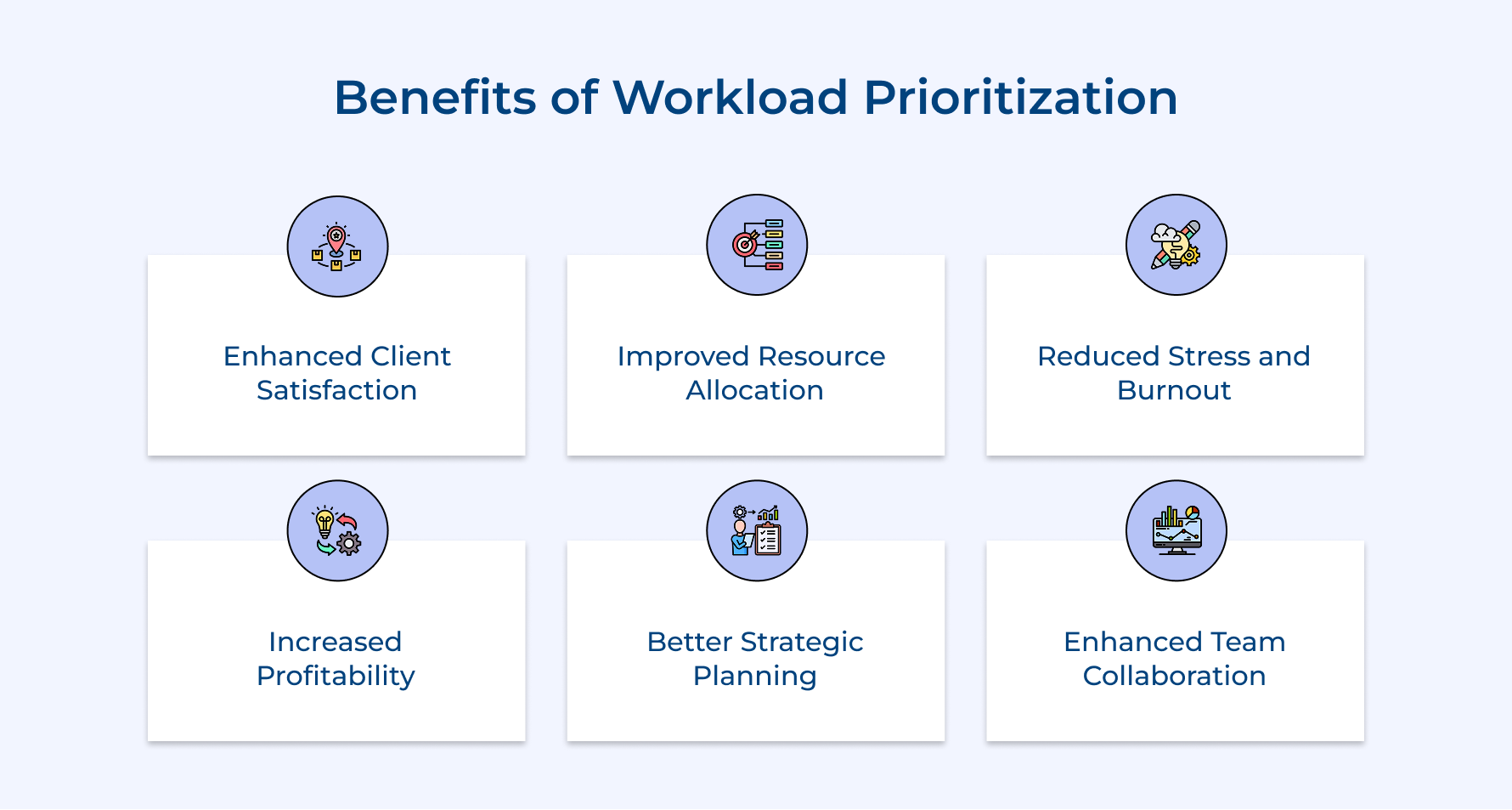
Enhanced client satisfaction emerges: Clients feel the difference when their most critical needs get attention first. You hit deadlines, maintain quality, and build trust by making their priorities your priorities.
Improved resource allocation efficiency: When managers know who’s available and what they’re good at, they can delegate tasks more effectively. Senior staff handle high-impact work, while junior team members get growth opportunities.
Reduced stress and burnout occurs: A single tasklist of tasks, clearly prioritized, helps your team focus on what matters now and what can wait. That clarity removes the chaos of juggling everything at once.
Increased profitability results: Focusing on high-value work means more billable hours and better results. With consistent delivery, you can confidently charge premium rates.
Better strategic planning capabilities emerge: Prioritization protects time for long-term goals, not just current fires. That’s how you stay ahead instead of always catching up.
Enhanced team collaboration develops: When everyone knows the plan, coordination improves. Fewer conflicts, better communication and more momentum because everyone’s rowing in the same direction.
5 Smart Workload Prioritization Methods You Should Consider
Different prioritization frameworks suit different types of professional services depending on their client mix and project complexity. Let’s explore five proven methods that agencies and consultancies use to bring order to their workload chaos.
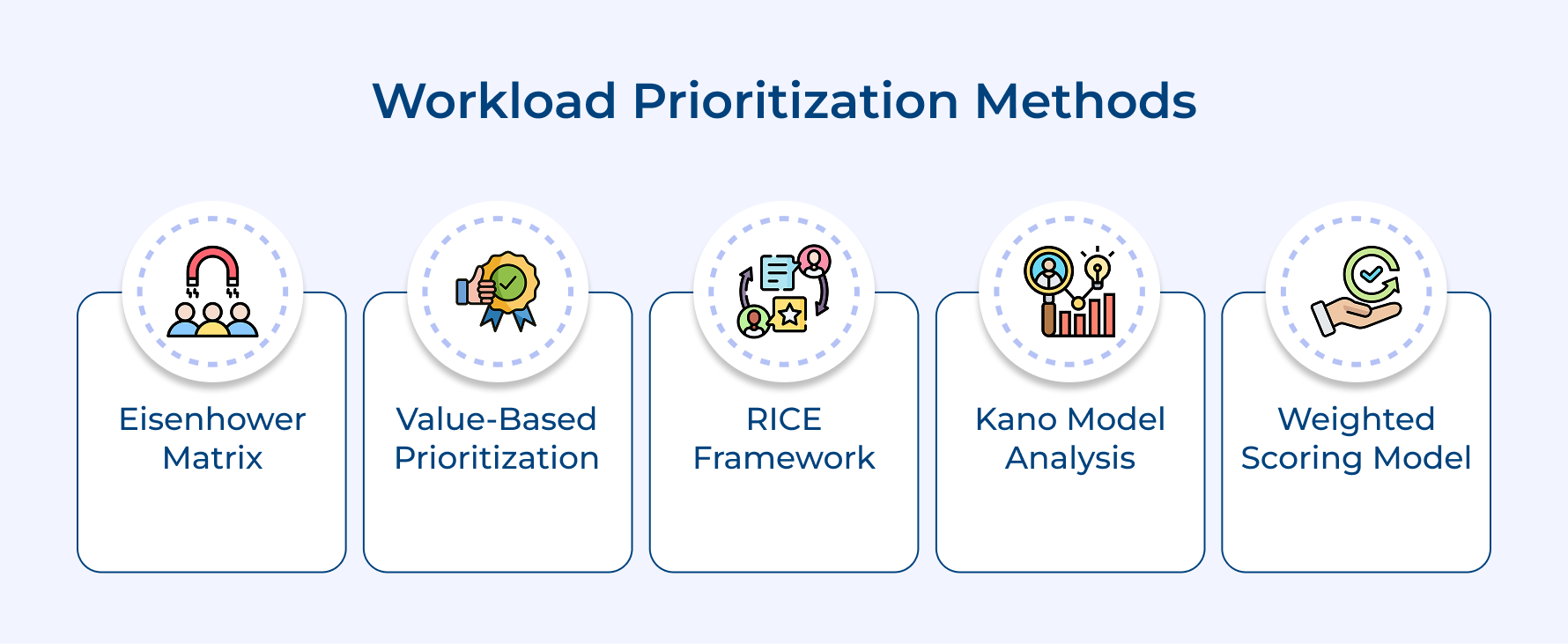
Method 1: Eisenhower Matrix
The Eisenhower Matrix divides all tasks into four quadrants based on urgency and importance levels creating a visual framework for decision-making. This method helps teams distinguish between what feels urgent versus what actually drives business results forward.
Three key implementation considerations make this framework particularly effective in professional services environments:
- Quadrant one captures genuine emergencies like system outages or contract deadline violations that require immediate response
- Quadrant two houses strategic work such as business development activities that often gets postponed despite driving long-term success
- Quadrant three includes interruptions like non-critical meetings that feel important but provide minimal business value
Professional services find this method particularly effective because client requests often appear urgent but may not contribute significantly to long-term relationship building. The matrix forces teams to evaluate each task objectively rather than responding emotionally to pressure.
Method 2: Value-Based Prioritization
This approach ranks work based on the financial impact and strategic value each project delivers to both the client as well as the service provider. Teams calculate potential revenue alongside relationship-building opportunities to create a comprehensive scoring system. Understanding three core value dimensions helps teams implement this method successfully:
- Immediate revenue impact: measures direct billing opportunities and contract values while considering payment terms
- Future business potential: evaluates whether current work could lead to expanded engagements or referrals
- Skill development value: considers how projects enhance team capabilities for pursuing higher-value opportunities
Value-based prioritization works exceptionally well for consultancies handling multiple client accounts because it ensures high-revenue projects receive appropriate attention. This method also helps teams justify resource decisions by connecting daily work activities to measurable business outcomes.
Method 3: RICE Framework (Reach Impact Confidence Effort)
RICE scoring evaluates each task across four dimensions to create objective rankings that remove emotional bias from prioritization decisions. Teams assign numerical scores for reach and impact while estimating confidence levels along with effort requirements.
Agencies often prefer RICE because it provides quantitative justification for prioritization choices that clients and internal stakeholders can easily understand as well as support. The framework particularly excels when teams need to compare completely different types of work using consistent criteria.
Method 4: Kano Model Analysis
The Kano Model categorizes features and deliverables into basic expectations versus delighters that exceed client expectations along with creating competitive advantages. This psychological approach helps teams understand which work elements clients consider mandatory versus those that generate genuine excitement.
Professional services benefit from Kano analysis because it prevents teams from over-investing in basic requirements while ensuring adequate attention goes toward creating memorable client experiences. This method particularly helps when planning project phases and determining where to allocate premium talent.
Method 5: Weighted Scoring Model
This comprehensive approach assigns different importance weights to various criteria such as deadline urgency and client relationship value then scores each task accordingly. Teams create customized scoring systems that reflect their specific business priorities.
Consultancies with diverse client portfolios find weighted scoring particularly valuable because it accommodates multiple decision factors while maintaining consistency across different project types. The flexibility to adjust weights based on business conditions makes this method adaptable to changing circumstances.
Roles of AI and Automation in Workload Prioritization
These technologies help professional services teams make smarter resource allocation decisions while reducing the cognitive burden of constant priority reassessment.
Automated Task Classification and Scoring
Instead of manually sorting every task, AI now steps in. Using natural language processing, it can scan new tasks and instantly categorize them by urgency as well as client impact. It even learns from past work to assign scores based on what your business truly values.
Predictive Resource Planning and Capacity Forecasting
Machine learning looks at your past project data to predict what (and who) you’ll need for upcoming work. It spots bottlenecks before they happen and helps you schedule the right people at the right time.
Real-Time Priority Adjustment Based on Changing Conditions
Projects change all the time – deadlines shift, client needs evolve. AI tools keep an eye on everything in real-time and suggest priority changes as things unfold, so your team stays aligned with current goals, not outdated plans.
Intelligent Workload Distribution Across Team Members
AI looks at each team member’s skills and current workload, then recommends who should take on what. This keeps workloads balanced and ensures that specialized tasks go to the right people.
Performance Analytics and Prioritization Optimization
AI doesn’t just make decisions, it learns from them. It tracks how your prioritization choices turn out as well as highlights what worked and what didn’t. Over time, your team gets sharper at making calls that reduce stress and boost success.
Best Practices and Tips for Enhancing Workload Prioritization Process
These proven practices help professional services teams maintain effective priority management while adapting to changing client needs and business conditions.
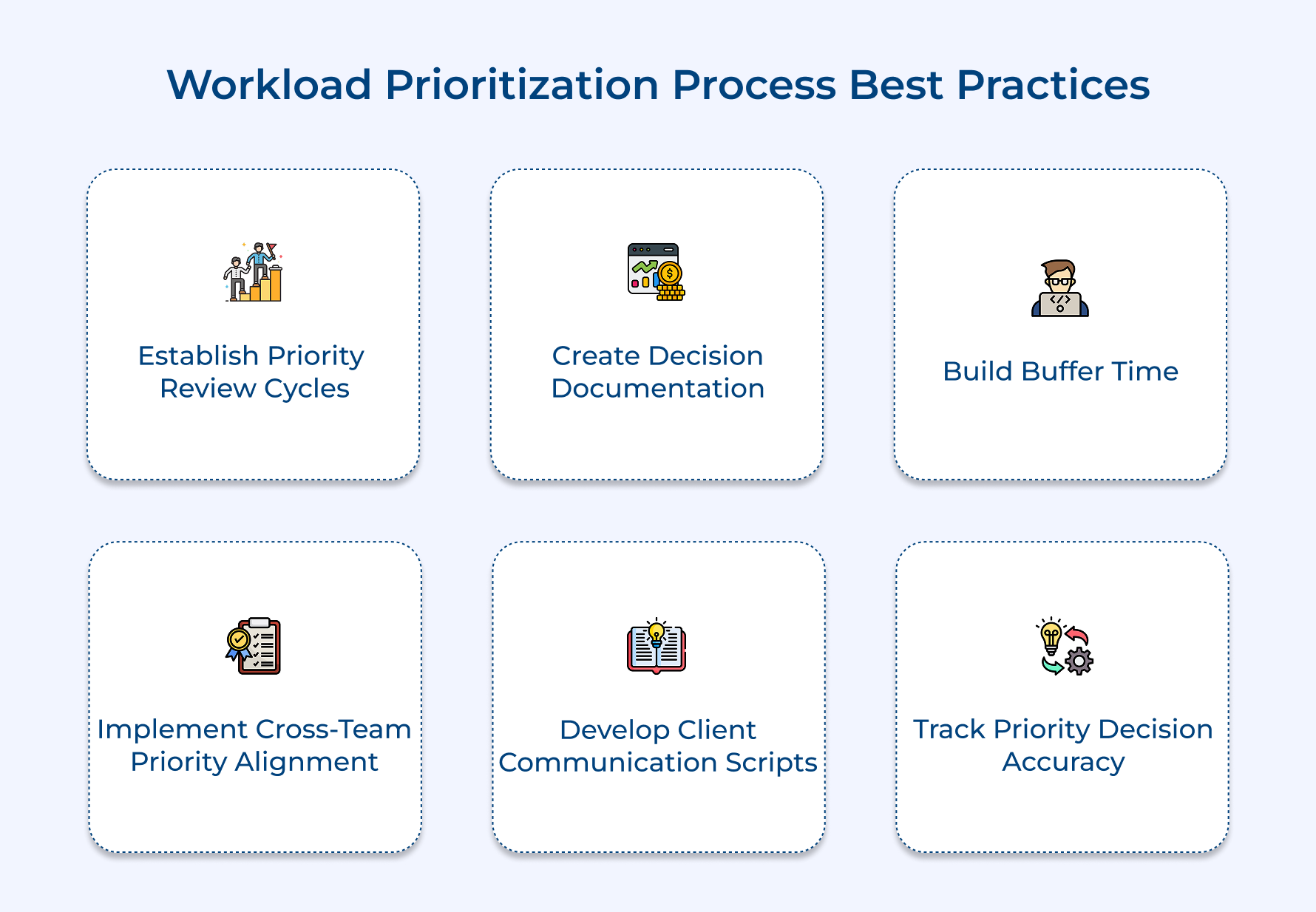
Establish Regular Priority Review Cycles
Hold short weekly meetings to revisit task priorities as new updates come in. This helps keep focus on what matters now without losing sight of long-term goals.
Create Priority Decision Documentation Templates
Create a quick form to document why certain tasks were prioritized — think client impact, team capacity, or deadline pressure. It keeps everyone aligned and builds consistency over time.
Build Buffer Time Into High-Priority Tasks
For top-priority tasks, always pad timelines by 20–30%. This gives room for client feedback, surprises, or delays without derailing other work.
Implement Cross-Team Priority Alignment Sessions
Bring different teams together monthly to compare priorities. It avoids overlaps and ensures everyone’s working toward the company’s bigger goals.
Develop Client Communication Scripts for Priority Discussions
Draft a few go-to scripts to explain prioritization calls to clients. It helps set expectations and keeps conversations smooth, even when priorities shift.
Track Priority Decision Accuracy Over Time
Look back at how your priority calls turned out. Did the right things get done? Were clients happy? Use that insight to keep improving your process.
Achieve Client Satisfaction with Strategic Workload Prioritization
Strategic workload prioritization transforms chaotic service delivery into systematic excellence that consistently exceeds client expectations while protecting team wellbeing. Smart agencies use proven frameworks and regular review cycles to ensure high-impact work receives appropriate attention as well as resources.
Successful prioritization requires ongoing commitment to process refinement, client communication and team alignment rather than one-time framework implementation. Organizations that master these principles enjoy stronger client relationships, higher profitability and sustainable growth through disciplined resource allocation decisions.
Limit time — not creativity
Everything you need for customer support, marketing & sales.

Shivank Kasera is part of the marketing team at Kooper, where he focuses on building content that helps agencies and service providers grow. With a keen interest in SaaS, operations, and scalability, he translates practical insights into actionable resources for business leaders.