Project Performance Tracking Strategies for Growing Teams
- What is Performance Tracking in Project Management?
- Why Project Performance Tracking Matters
- Important Types of Project Performance Reports
- 7 Actionable Steps on How to Track Project Performance
- Practical Tips for Project Tracking and Reporting
- Keep Your Team On Course With Real-Time Project Performance Tracking
- FAQs about Project Performance Tracking

Key Highlights:
- Structured project performance tracking brings clarity to progress, costs and risks so teams act early instead of reacting late.
- Real-world frameworks and reporting methods turn scattered data into clear insights stakeholders actually understand.
- Consistent tracking habits improve delivery predictability, protect margins and keep teams aligned on priorities throughout the project lifecycle.
You’re managing multiple projects but constantly wondering whether they’re actually on track or quietly heading toward disaster. Late nights reviewing spreadsheets leave you with more questions than answers about where your team really stands and if deadlines are achievable.
Project performance tracking eliminates this uncertainty by giving you a clear systematic way to monitor progress against your plan. When you track the right metrics consistently you catch problems while they’re still fixable and make decisions based on facts rather than hope.
This guide walks you through everything from defining measurable objectives to taking corrective actions when variance appears. You’ll learn how to build tracking habits that keep projects profitable and clients happy throughout delivery.
What is Performance Tracking in Project Management?
Performance tracking is the systematic process of monitoring and measuring how well a project is progressing against its planned objectives. It involves collecting data on key metrics like schedule adherence and budget consumption.
Think of performance tracking as your project’s vital signs monitor. Just as doctors track heart rate and blood pressure to assess patient health, project managers track specific indicators to gauge project wellness. These measurements create a factual foundation for discussions with stakeholders as well as guide corrective actions when things drift off course.
Key objectives:
- Early problem detection: Identify issues before they become major roadblocks that derail the entire project.
- Informed decision making: Provide concrete data that helps managers choose the best path forward with confidence.
- Resource optimization: Ensure people and budgets are allocated efficiently based on actual progress data.
- Continuous improvement: Create historical records that help teams learn from both successes and mistakes for future projects.
Why Project Performance Tracking Matters
Performance tracking isn’t just administrative busywork. It directly impacts your ability to deliver value to clients and maintain profitable relationships.
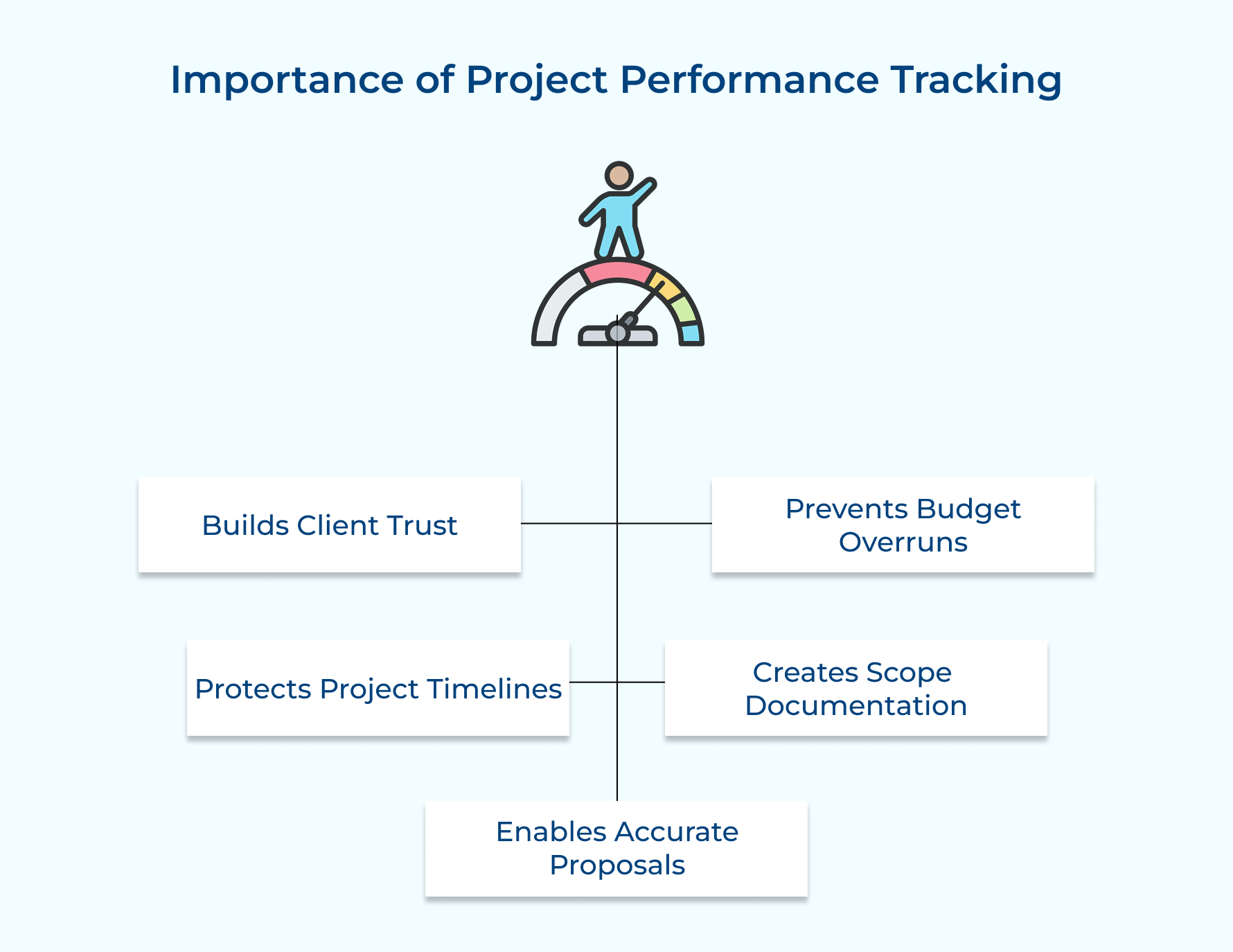
Builds Client Trust Through Transparency
Clients feel confident when you regularly share clear, accurate updates with them. They can see where things stand, how their investment is being used and that nothing is hidden. This kind of openness shows you’re in control and reduces surprises that can strain relationships.
Prevents Budget Overruns That Hurt Margins
Comparing planned costs with real numbers helps you catch cost variance early. You can quickly see where Time Spent is creeping up and fix issues before they turn into serious margin leaks or unplanned write-offs.
Protects Timelines Clients Depend On
Clients often align launches and internal plans with your delivery dates. Watching schedule variance closely helps you rebalance resources or reset expectations early, instead of missing deadlines that disrupt their business.
Creates Documentation for Scope Disputes
Consistent tracking supports strong project scope budget management. When questions come up about work done or invoices, you have clear records that protect your revenue while keeping client conversations objective and professional.
Enables Accurate Future Proposals
Historical performance data shows your true delivery capacity and typical challenge areas. This knowledge helps you write realistic proposals that you can actually deliver on profitably instead of winning work through overpromising.
Important Types of Project Performance Reports
Understanding these types helps you communicate the right information to the right people at the right time.
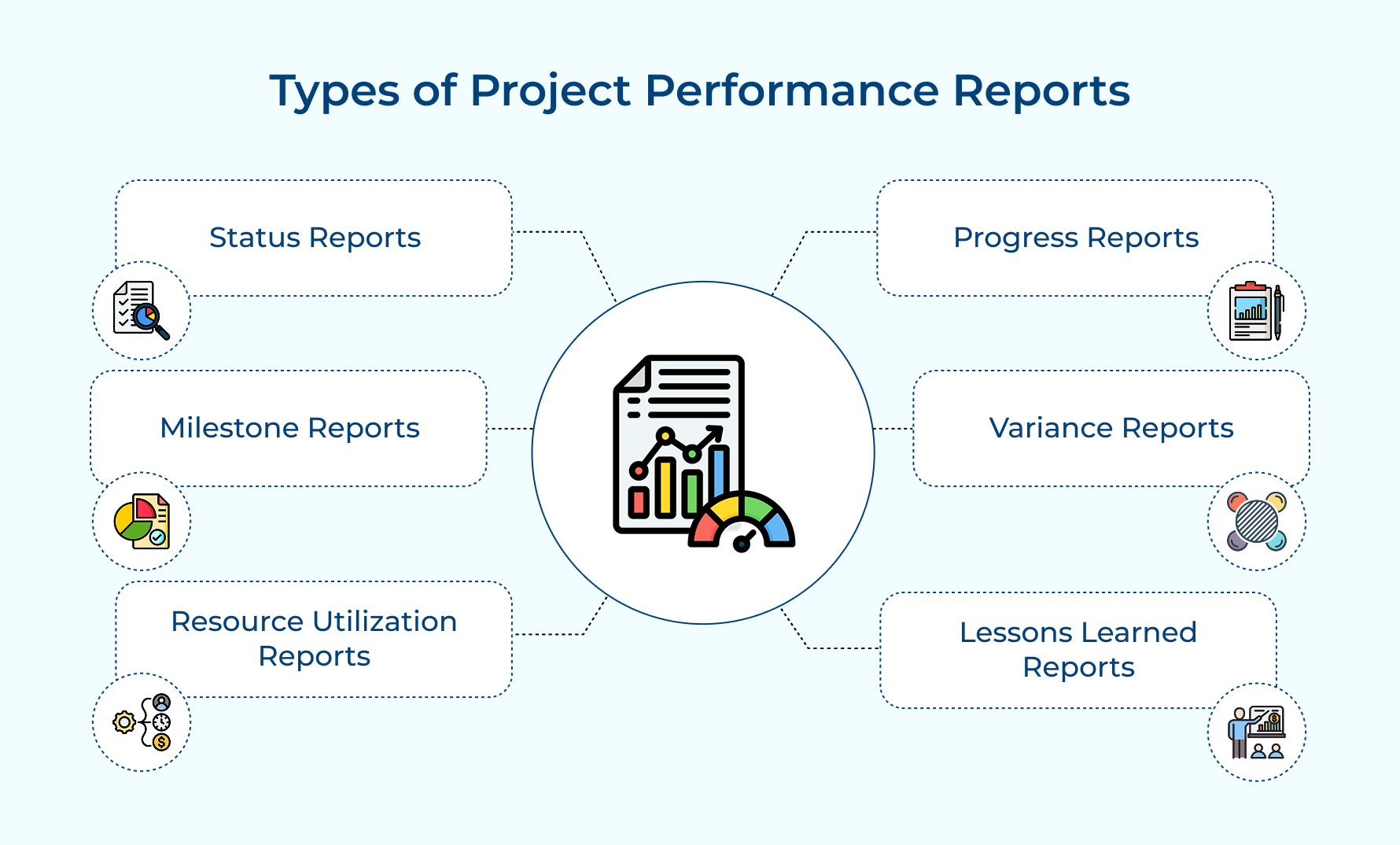
Status Reports
Status reports give everyone a quick, easy-to-understand view of where the project stands today versus where it should be. They usually roll up schedules, spending and risks into one place, often through a project dashboard that’s easy to scan. Instead of digging through details, stakeholders get real-time updates on what’s on track and what needs attention.
Progress Reports
Progress reports are all about momentum – focus on what actually moved forward since the last update, not just where things sit. By reviewing completed deliverables, closed task lists and reduced cycle time, you help clients clearly see the value your team is delivering week by week.
Milestone Reports
Milestone reports zoom out and focus on the moments that really matter. It highlights if major phases or key deliverables landed as planned. For executives managing a broader project portfolio, these reports quickly show which initiatives are advancing smoothly and which ones may need intervention.
Variance Reports
Variance reports explain the gap between plan and reality in simple terms. They show where actual results drifted from budget estimates, timelines, or scope and by how much. This clarity helps teams make informed adjustments instead of reacting too late.
Resource Utilization Reports
Resource utilization shows how well your people and tools are being used. These reports reveal overloads, idle capacity, or skill mismatches before burnout or delays set in. When paired with predictive analytics, these insights help you plan smarter staffing decisions ahead of time.
Lessons Learned Reports
Lessons learned reports capture insights that numbers alone can’t explain. It combines team feedback, client input like Net Promoter Score, along with retrospective discussions to highlight what worked and what didn’t. Over time, this knowledge strengthens future planning and delivery across all projects.
7 Actionable Steps on How to Track Project Performance
In this article, we’ll guide you through 7 essential steps to effectively track project performance, ensuring your projects consistently deliver on their promises.
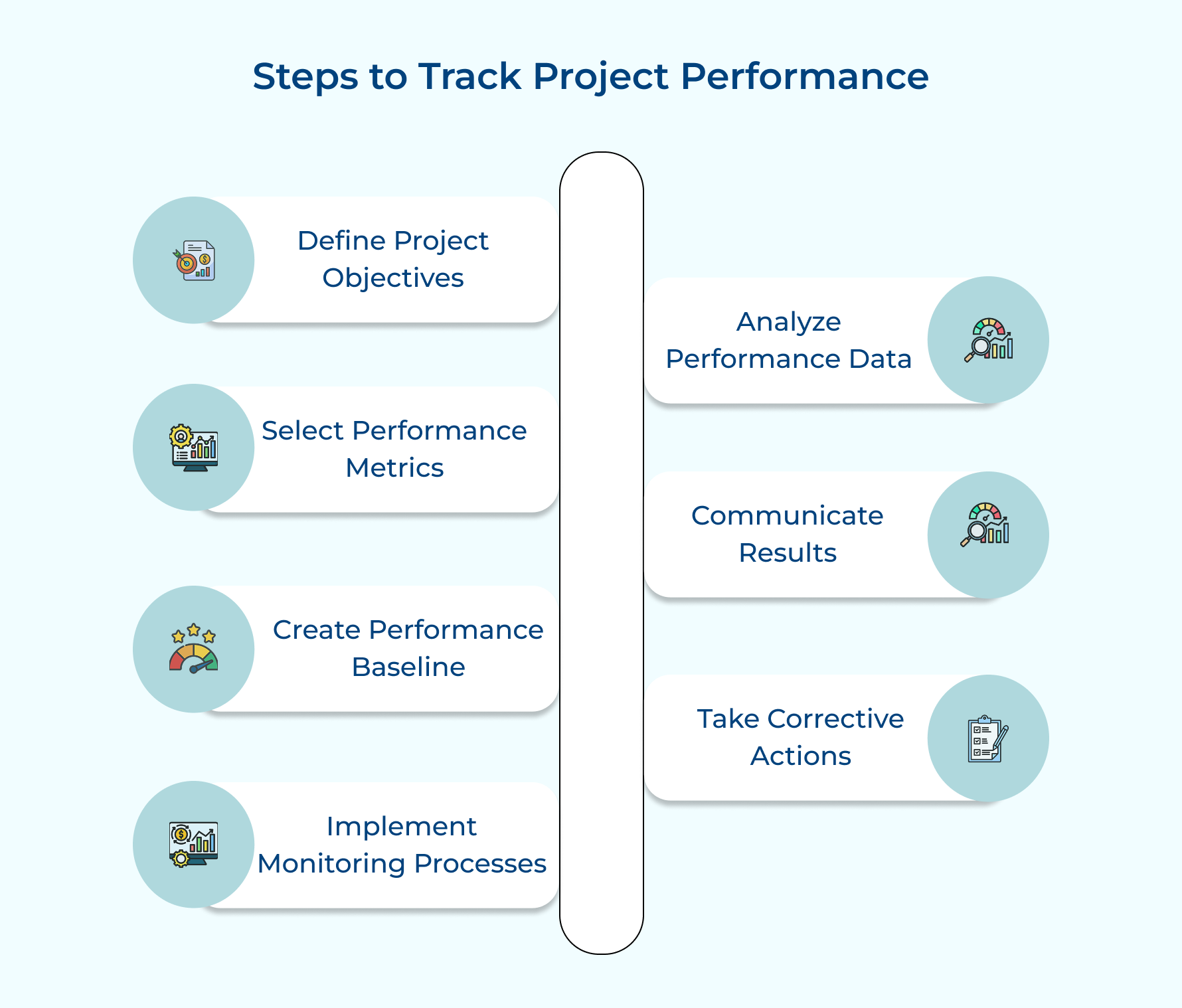
1. Define Clear Project Objectives
Defining clear project objectives means establishing exactly what success looks like before you begin any work. This step is essential because vague goals make it impossible to measure if you’re on track or veering off course.
Here are three effective ways to define objectives that you can actually measure:
- Start with the end deliverable in mind: Work backwards from what the client ultimately needs to receive. Write down tangible outputs like “a mobile app with user authentication” rather than fuzzy concepts like “improved digital presence.”
- Attach numbers and dates to every objective: Transform general goals into specific targets by adding quantifiable elements. Instead of “fast website performance” specify “page load times under 2 seconds on 4G connections.”
- Validate objectives with everyone who has a stake: Schedule alignment meetings where stakeholders confirm they agree on what you’re building. Document their approval so you can reference this consensus when scope creep emerges.
For example, a marketing agency might define their website redesign objective as “Launch a responsive WordPress site with 15 pages by March 30th that achieves a 90+ Page Speed score.” This clearly defines what, when and the quality standard they’ll track.
2. Select Relevant Performance Metrics
Select relevant performance metrics to identify the specific measurements that tell you if your project is healthy or struggling. The right metrics act like dashboard instruments that show exactly where attention is needed.
Consider these when choosing which metrics deserve your tracking effort:
- Metrics must directly connect to your defined objectives and show progress toward them
- Measurements should be simple enough that team members can collect data without complex analysis
- Selected indicators need to provide actionable insights that inform your decisions
- Tracking methods must be sustainable throughout the project without causing burnout
The best metrics combine leading indicators that predict future problems and lagging indicators that confirm past performance. This balanced approach gives you both foresight and hindsight for steering your project effectively.
Here are the five most essential metrics that project-based organizations consistently use:
- Schedule Performance Index showing if tasks are completing faster or slower than planned
- Budget burn rate measuring how quickly you’re consuming allocated funds
- Resource utilization percentage indicating in case team members are optimally deployed
- Defect density tracking quality issues found per deliverable
- Stakeholder satisfaction scores capturing client perception through regular feedback
These KPIs create a comprehensive health picture during implementation. Schedule metrics prevent timeline disasters while budget tracking protects profit margins and satisfaction scores confirm you’re meeting actual client needs.
3. Create Your Performance Baseline
Creating your performance baseline means documenting your original plan so you have something concrete to compare against later. Your baseline becomes the fixed reference point that makes all future measurements meaningful.
Documenting your initial project schedule establishes the timeline expectations everyone agreed to before work began. You record task sequences and milestone dates so this original plan remains accessible for comparison.
Client-based organizations typically document these types of initial schedules:
- Phase-based timelines showing major stages like discovery, design, development and launch
- Sprint schedules detailing iteration dates and planned story points per cycle
- Gantt charts displaying task dependencies and critical path activities
Once your schedule is locked, you establish approved budget allocations that define spending limits. This financial baseline captures how much each work package should cost and lets you spot overspending early enough to take action.
After the timeline and budget are set, you record planned resource assignments across your team. This creates clarity about who should work on what throughout the project. You document resource plans effectively through these two approaches:
- Create a responsibility matrix that maps each team member to specific deliverables with their time commitment
- Build a capacity plan showing hour allocations per person so you can spot conflicts before assignments begin
4. Implement Regular Monitoring Processes
Implementing regular monitoring processes means establishing consistent routines for collecting and reviewing performance data. This step is critical because sporadic tracking creates blind spots where problems grow unnoticed until they become crises.
You use monitoring processes by building them into your team’s weekly rhythm so tracking becomes habitual rather than optional. Regular check-ins transform raw data into conversations about what’s working and what needs adjustment before small issues compound.
Best practices:
- Set specific calendar blocks for data collection so it never gets pushed aside by urgent tasks
- Rotate tracking responsibilities among team members to prevent burnout and build shared accountability
5. Analyze Performance Data Continuously
Analyzing performance data continuously means regularly examining collected metrics to understand what they reveal about your project’s health. This step is significant because raw numbers mean nothing until you interpret patterns and calculate how far you’ve drifted from your plan.
Before you start analyzing your performance data, consider answering these four questions:
- What was supposed to happen according to our baseline plan?
- What actually happened during this reporting period?
- How large is the gap between planned and actual results?
- Why did this variance occur and what does it mean?
These questions help you move beyond simply recording numbers to actually understanding the story your data tells. They force you to think critically about causes rather than just documenting symptoms.
You implement efficient analysis by comparing each metric against your baseline and calculating specific variance percentages. Look for patterns across multiple data points because a budget overrun combined with schedule delays often signals deeper resource problems needing immediate attention.
6. Communicate Results to Stakeholders
Communicating results to stakeholders means sharing what you’ve learned from performance analysis in ways different audiences can understand. This step is essential because even perfect tracking accomplishes nothing if decision-makers don’t receive timely information about project status.
Before you communicate results to clients or stakeholders, prepare these essentials:
- Summary dashboard highlighting critical metrics: Create visual overviews showing red, yellow and green status indicators so executives grasp the situation instantly.
- Variance explanations with context: Document why actual performance differs from the plan with specific causes so stakeholders understand if issues are controllable.
- Recommended next actions: Propose concrete solutions or decisions needed so your communication drives progress rather than just reporting problems.
After preparing your materials, the effectiveness of communication depends heavily on matching your message format to each audience’s needs and preferences.
Clients often fall somewhere in between while appreciating transparency about both challenges and how you’re addressing them. Organizations commonly use these established channels to share performance findings:
- Weekly status email updates: Send structured written reports that stakeholders can review on their schedule with links to detailed dashboards.
- Bi-weekly review meetings: Host live discussions where you present findings and facilitate real-time questions for resolving complex issues.
- Project management dashboards: Maintain online portals where stakeholders can check current metrics whenever they want without waiting for reports.
- Executive briefings for milestones: Schedule sessions for critical decision points where you need formal approval or significant course corrections.
When you address questions and concerns promptly during these communications, you build trust as well as keep projects moving forward productively. Clients and stakeholders typically ask these common questions with appropriate responses:
- “Why are we behind schedule?”
Response: Identify specific tasks that slipped, explain root causes and outline the recovery plan with adjusted timelines.
- “Can we add this feature?”
Response: Assess scope change impact on timeline and budget, present trade-off options, as well as get formal approval.
- “Are we hitting the deadline?”
Response: Show current trajectory based on trends and explain in case you need additional resources or scope adjustments.
- “Why did costs increase?”
Response: Break down where additional expenses occurred and propose budget re-forecasts or savings elsewhere.
7. Take Corrective Actions When Needed
Taking corrective actions means making deliberate changes to get your project back on track when performance data reveals drift from the plan. This step is needed because identifying problems without fixing them wastes all the tracking effort.
You use corrective actions by first diagnosing the root cause of variance and then selecting interventions that address underlying issues. Strategic adjustments that tackle fundamental problems prevent recurring issues from dragging down performance.
Pro tips:
- Document every corrective action with its expected impact so you can verify if interventions actually worked
- Update your baseline only when stakeholders formally approve scope changes to maintain variance calculation integrity
Practical Tips for Project Tracking and Reporting
Effective tracking and reporting requires more than just collecting data. These six practical tips will help you build a system that actually improves project outcomes.
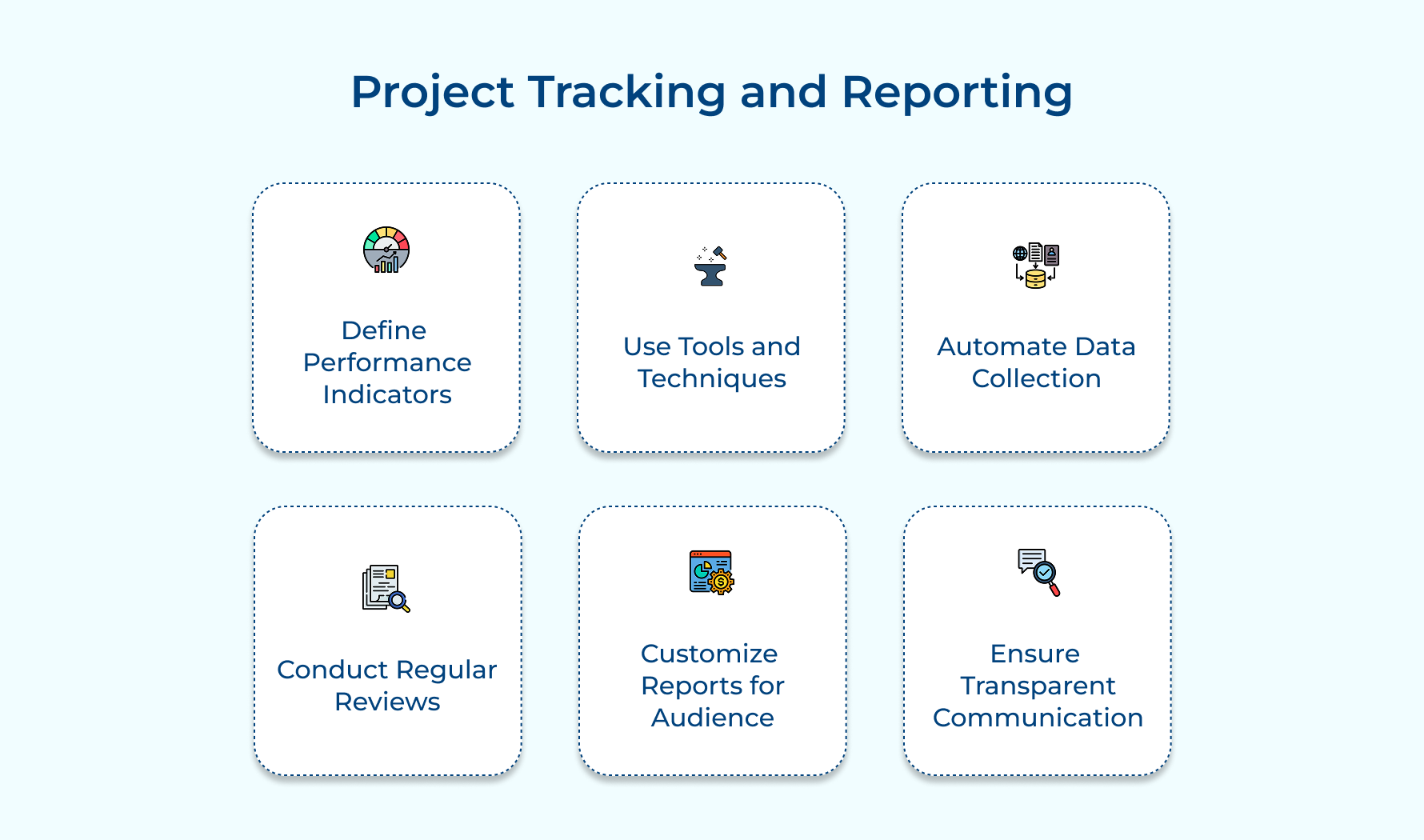
Establish Key Performance Indicators (KPIs)
Choose three to five metrics that truly matter for your specific project rather than tracking everything possible. Focus on indicators that directly connect to stakeholder priorities and give you early warning signals when problems emerge.
Implement Effective Tools and Techniques
Select project management software that matches your team’s technical comfort level and workflow preferences. The best tool is one your team will actually use consistently rather than the most feature-rich option that sits abandoned.
Use Technology to Automate Data Collection
Set up automated reporting wherever possible so your team spends time analyzing insights instead of manually compiling spreadsheets. Integration between tools eliminates duplicate data entry that wastes hours and introduces human error into your tracking.
Schedule Regular Performance Reviews
Block dedicated time on the calendar for analyzing metrics and discussing findings with your team each week. Consistency matters more than perfection because regular reviews catch small problems before they become expensive crises.
Tailor Reports to Each Audience
Create different report formats for executives who need summaries versus team members who need operational details. A single generic report rarely serves anyone well because different stakeholders need different information to make their decisions.
Keep Communication Transparent and Honest
Report bad news as quickly as good news so stakeholders can help solve problems while solutions are still available. Hiding struggles until they become catastrophic destroys trust and eliminates options for collaborative course correction.
Keep Your Team On Course With Real-Time Project Performance Tracking
Real-time project performance tracking transforms how you deliver work by replacing guesswork with concrete data. When you monitor the right metrics consistently, you catch problems early and make informed decisions that keep projects profitable as well as clients satisfied.
The seven steps outlined here create a complete tracking system that works for any project-based organization. Start with clear objectives and relevant metrics, then build monitoring habits that turn raw data into actionable insights your team actually uses to succeed.
Limit time — not creativity
Everything you need for customer support, marketing & sales.

Neeti Singh is a passionate content writer at Kooper, where he transforms complex concepts into clear, engaging and actionable content. With a keen eye for detail and a love for technology, Tushar Joshi crafts blog posts, guides and articles that help readers navigate the fast-evolving world of software solutions.