A Practical Guide for Teams to Operational Metrics & KPIs
- What are Operational KPIs and Metrics?
- Why Tracking Operational Metrics Is Important?
- Key Operational KPIs and Metrics to Track
- Financial Metrics
- Operational Efficiency Metrics
- Human Resource Metrics
- Customer-Focused Metrics
- How to Implement Operational Metrics in Your Organization: 6 Steps
- Unlock the Potential of Your Business with Precise Operational Metrics
- FAQs about Operational Metrics KPIs

Key Highlights:
- Track the right operational metrics to uncover inefficiencies impacting profitability and daily business performance.
- Operational KPIs and metrics provide real-time visibility into processes, resources along with customer experience gaps.
- Stop relying on intuition by using data-driven insights from well-defined operational KPIs.
You’re running your business but something feels off. Sales look decent on paper yet profits are shrinking. Teams seem busy but projects keep missing deadlines and customer complaints are quietly increasing.
The problem isn’t your team’s effort or your business model. You’re flying blind because you’re not measuring what actually matters in your daily operations.
This guide reveals the top operational metrics KPIs that give you clarity about what’s really happening in your business. You’ll learn which numbers to track, why they matter and how to use them for smarter decisions that improve both efficiency as well as profitability.
What are Operational KPIs and Metrics?
Operational KPIs and metrics are measurable values that track how well your business executes its day-to-day activities. They focus on the efficiency and effectiveness of your core processes rather than long-term strategic goals. These indicators help you monitor everything from production speed to customer service quality in real time.
These metrics give you immediate visibility into what’s working and what needs fixing. When you track the right operational data, you can spot bottlenecks before they become expensive problems and make quick adjustments that keep your business running smoothly.
Key objectives:
- Process efficiency: Measure how quickly and cost-effectively you complete routine tasks.
- Quality control: Track defect rates and ensure your outputs meet standards consistently.
- Resource utilization: Monitor whether you’re using your people, equipment and materials effectively.
- Customer satisfaction: Gauge how well you’re meeting customer expectations in your daily interactions.
- Cost management: Keep tabs on operational expenses to maintain profitability and reduce waste.
Why Tracking Operational Metrics Is Important?
Tracking operational metrics transforms how organizations understand and improve their daily performance. Here are why these metrics play an important role:
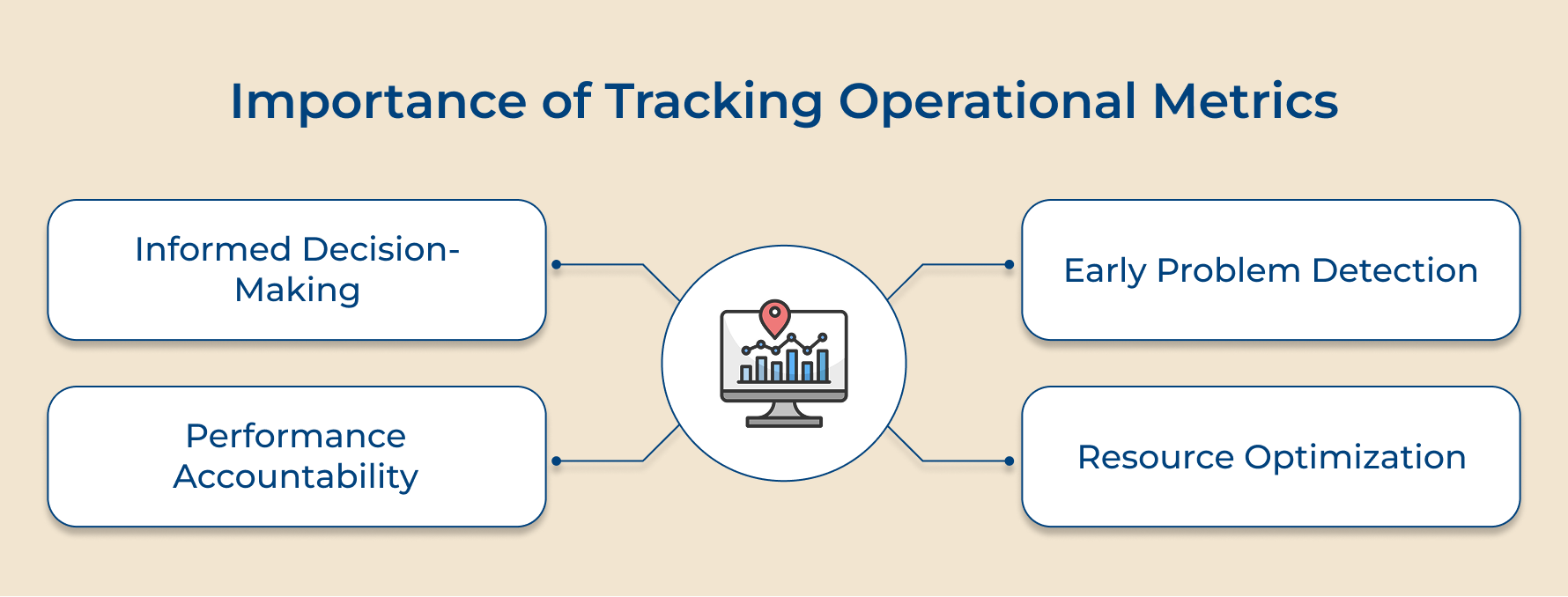
Informed Decision-Making
You stop relying on gut instinct and start seeing what’s actually working, especially when you consistently track performance metrics. Real data shows you where things are smooth, where they’re stuck and how daily actions align with your bigger strategic objectives.
Early Problem Detection
Operational data works like an early warning system. A dip in productivity, quality, or First Pass Yield tells you something’s off long before customers complain or revenue takes a hit. Fixing small issues early is far easier—and cheaper—than dealing with major breakdowns later.
Performance Accountability
Tracking performance makes expectations visible. Teams know what success looks like and how their work contributes to shared goals like growth as well as customer acquisition. That transparency builds ownership, encourages consistency and keeps everyone focused on doing their best work.
Resource Optimization
Once you measure how time, money and effort flow through your operations, waste becomes obvious. You can redirect resources toward high-impact work, cut out low-value activities and get more return without stretching your team thinner.
Key Operational KPIs and Metrics to Track
Let us explore the key operational KPIs and metrics you need to track to ensure your organization not only survives but thrives in the current dynamic business scenario.
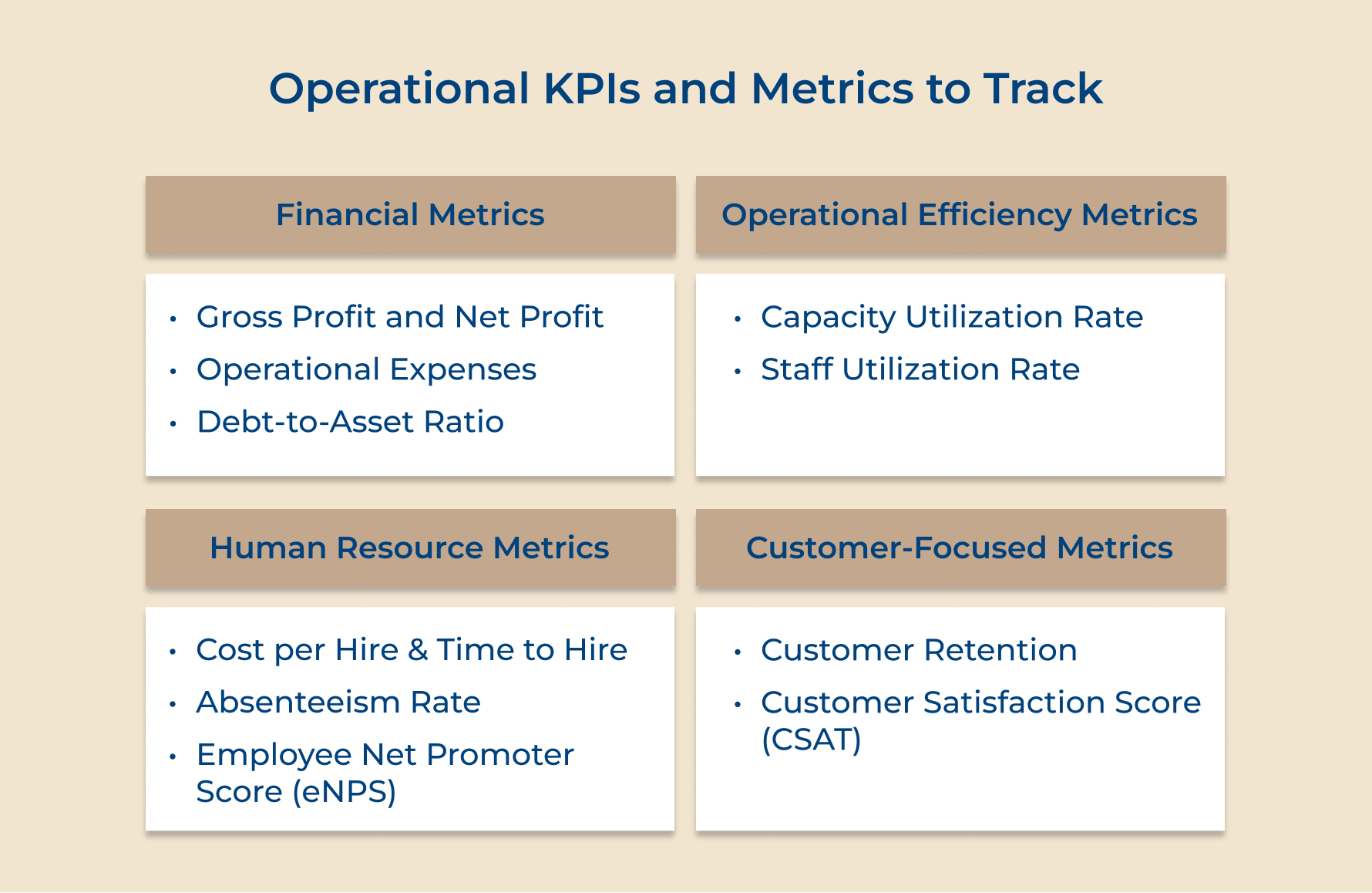
Financial Metrics
1. Gross Profit and Net Profit
These metrics reveal how much money your business actually keeps after covering costs. Gross profit shows earnings after direct production costs, while net profit accounts for all expenses including overhead and taxes. They’re essential operational metrics because they directly indicate whether your daily operations are financially sustainable.
Formula:
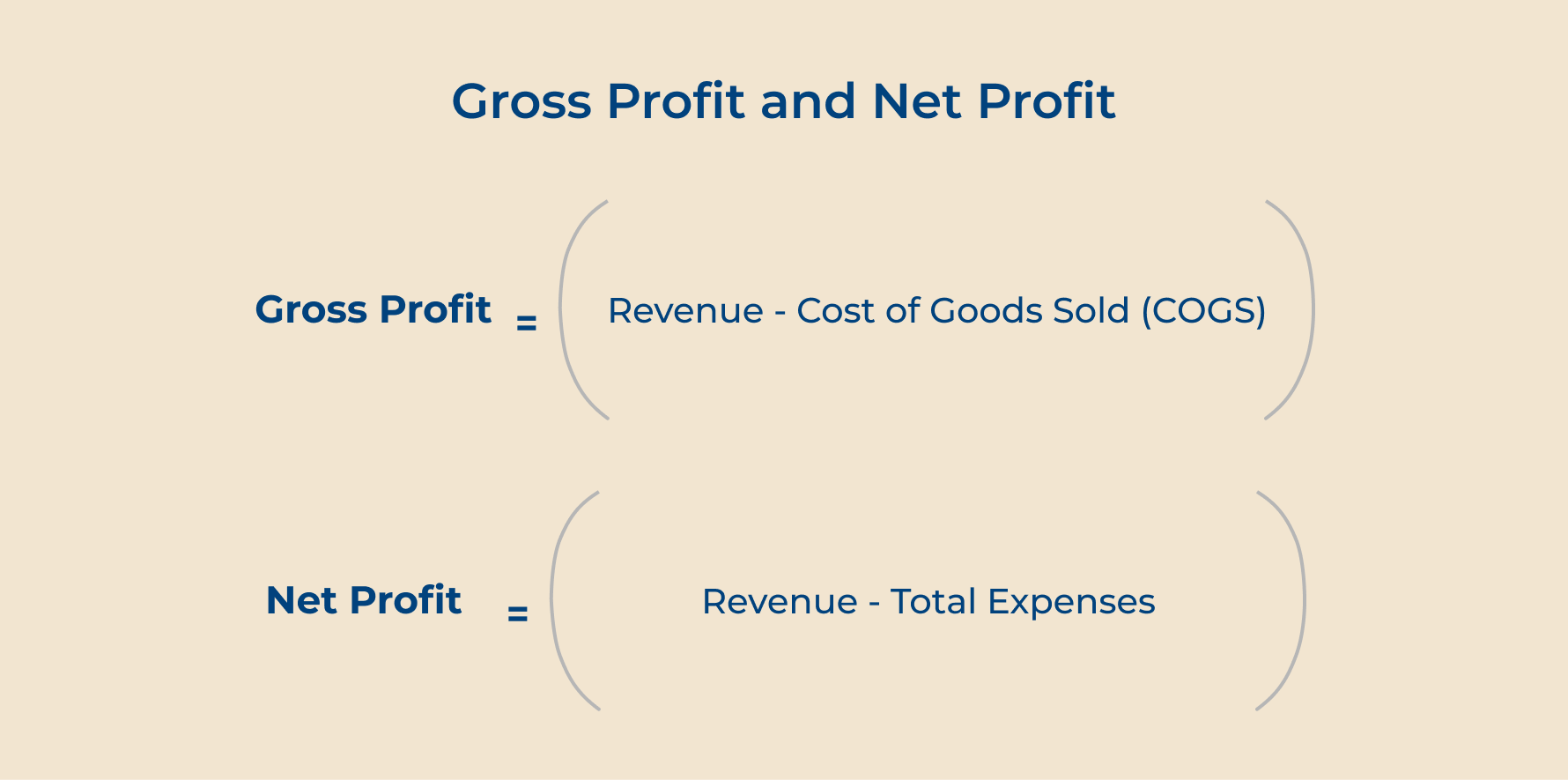
The formula breaks down into these components:
- Revenue: The total income generated from selling your products or services.
- Cost of goods sold: Direct costs tied to producing what you sell, including materials and labor.
- Total expenses: All costs including COGS, operating expenses, taxes and interest payments.
Industry standards vary widely, but healthy businesses typically target gross profit margins between 50-70% for service companies and 25-40% for product-based businesses. Net profit margins usually fall between 10-20% depending on your sector and business model.
Calculation example:
If your company generates $500,000 in revenue with $200,000 in COGS and $150,000 in operating expenses, your gross profit equals $300,000 and your net profit equals $150,000.
2. Operational Expenses
Operational expenses track the ongoing costs required to run your business day-to-day. It includes everything from rent and utilities to salaries as well as software subscriptions. Monitoring operational expenses is crucial because these costs directly impact your profitability and can quickly spiral out of control if left unchecked.
Formula:
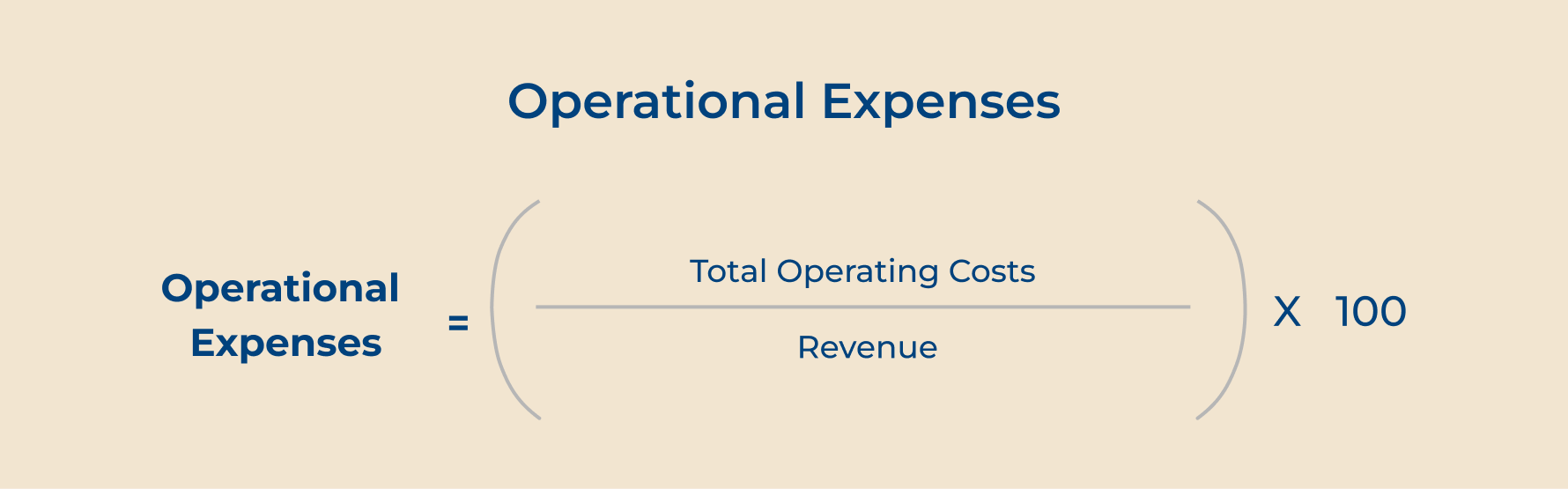
The formula breaks down into these components:
- Total operating costs: All expenses needed to maintain business operations excluding COGS.
- Revenue: Your total sales income for the period being measured.
Most profitable businesses aim to keep operational expenses below 60-80% of revenue depending on their industry. Calculate this monthly by adding all operating costs and dividing by revenue to see if expenses are consuming too much of your income.
For example a business with $100,000 in monthly revenue and $65,000 in operating costs has an operational expense ratio of 65%, which sits within a healthy range for most industries.
How to improve this metric:
- Automate repetitive tasks to reduce labor costs and improve efficiency without sacrificing quality.
- Regularly review vendor contracts and subscriptions to eliminate unused services while negotiating better rates.
3. Debt-to-Asset Ratio
This ratio measures how much of your company’s assets are financed through debt rather than equity. It shows the proportion of what you own versus what you owe. The operational metric matters because it indicates your financial leverage and ability to weather economic downturns or unexpected expenses.
Formula:

The formula breaks down into these components:
- Total debt: All short-term and long-term liabilities your business owes to creditors.
- Total assets: Everything your company owns including cash, inventory, equipment and property.
Ideal benchmark and calculation approach:
A healthy debt-to-asset ratio typically falls below 0.5 or 50%, meaning less than half your assets are debt-financed. Calculate this quarterly by pulling figures from your balance sheet to ensure you’re not becoming overleveraged or putting your business at risk.
Calculation example:
If your business has $200,000 in total assets and $80,000 in total debt, your debt-to-asset ratio is 0.4 or 40%, indicating a conservative and relatively safe financial position.
To improve this metric?
- Pay down existing debt strategically by focusing on high-interest obligations first while maintaining operational cash flow.
- Increase asset value through retained earnings rather than taking on additional debt for growth initiatives.
Operational Efficiency Metrics
4. Capacity Utilization Rate
Capacity utilization metric is all about how much of your available production capacity you’re actually using. It compares your current output to your maximum potential output if all resources were fully deployed. Tracking capacity utilization is important because it reveals whether you’re maximizing your investment in equipment and facilities or leaving money on the table.
Formula:
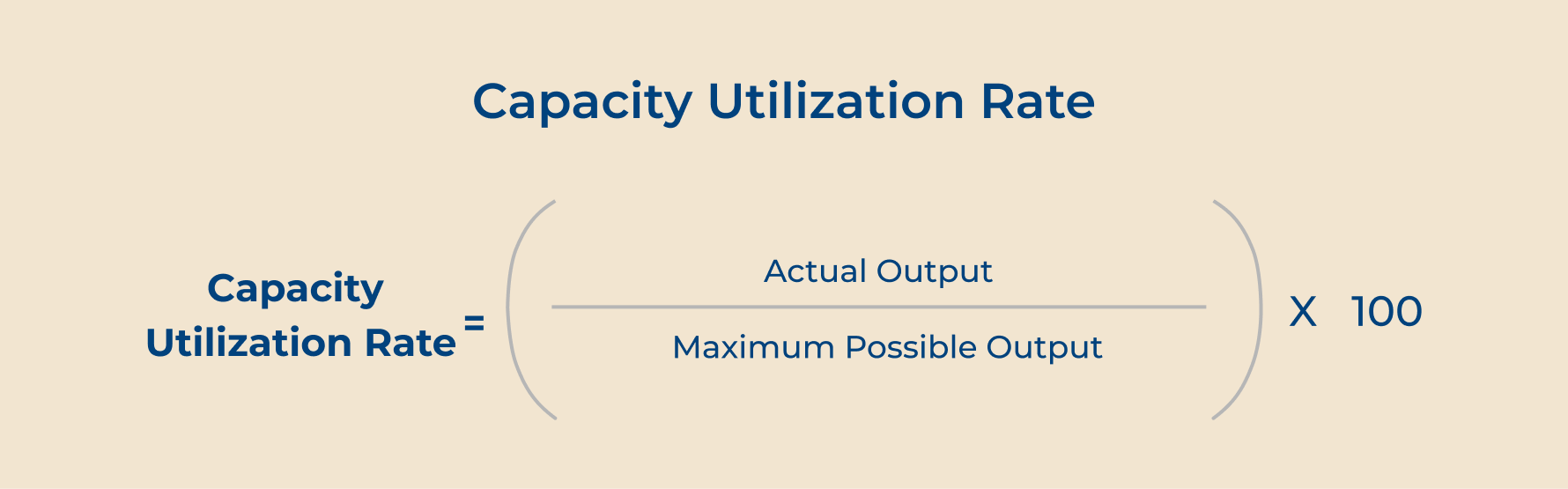
The formula breaks down into these components:
- Actual output: The real production volume achieved during a specific period.
- Maximum possible output: The theoretical maximum your operation could produce at full capacity.
Most manufacturers aim for capacity utilization between 80-85% as this sweet spot balances efficiency with flexibility for maintenance and unexpected demand. Running consistently above 90% risks equipment breakdowns, while staying below 70% suggests you’re wasting resources or have excess capacity.
5. Staff Utilization Rate
Staff utilization rate speaks about how much of your employees’ available time is spent on productive, billable, or value-generating work. It helps you understand whether your workforce is operating efficiently or if time is being wasted on non-essential activities. The operational metric matters because labor is often your biggest expense and maximizing its value directly impacts profitability.
Formula:
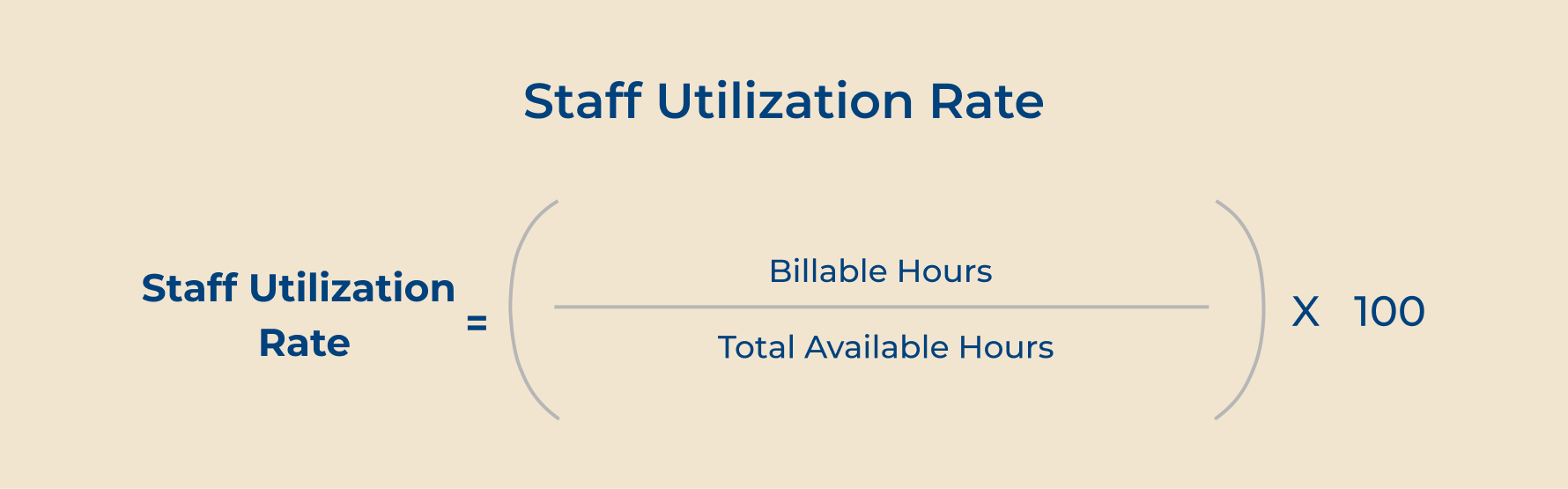
The formula breaks down into these components:
- Billable hours: Time employees spend on revenue-generating or productive work activities.
- Total available hours: All working hours available after accounting for vacation and holidays.
Professional services firms typically target utilization rates between 70-85% for billable staff, leaving room for training and administrative tasks. Calculate this weekly or monthly by tracking time spent on client work versus total hours to identify productivity gaps.
Calculation example:
An employee works 160 hours in a month and logs 120 hours on billable client projects, resulting in a 75% utilization rate that falls within the healthy target range.
Human Resource Metrics
6. Cost per Hire & Time to Hire
These twin metrics reveal how efficiently your recruitment process operates and how much you invest to bring new talent aboard. Cost per hire includes all expenses from job postings to recruiter salaries, while time to hire measures days from posting to acceptance. They’re critical because hiring delays cost you productivity and high recruitment costs drain your budget.
Formula:
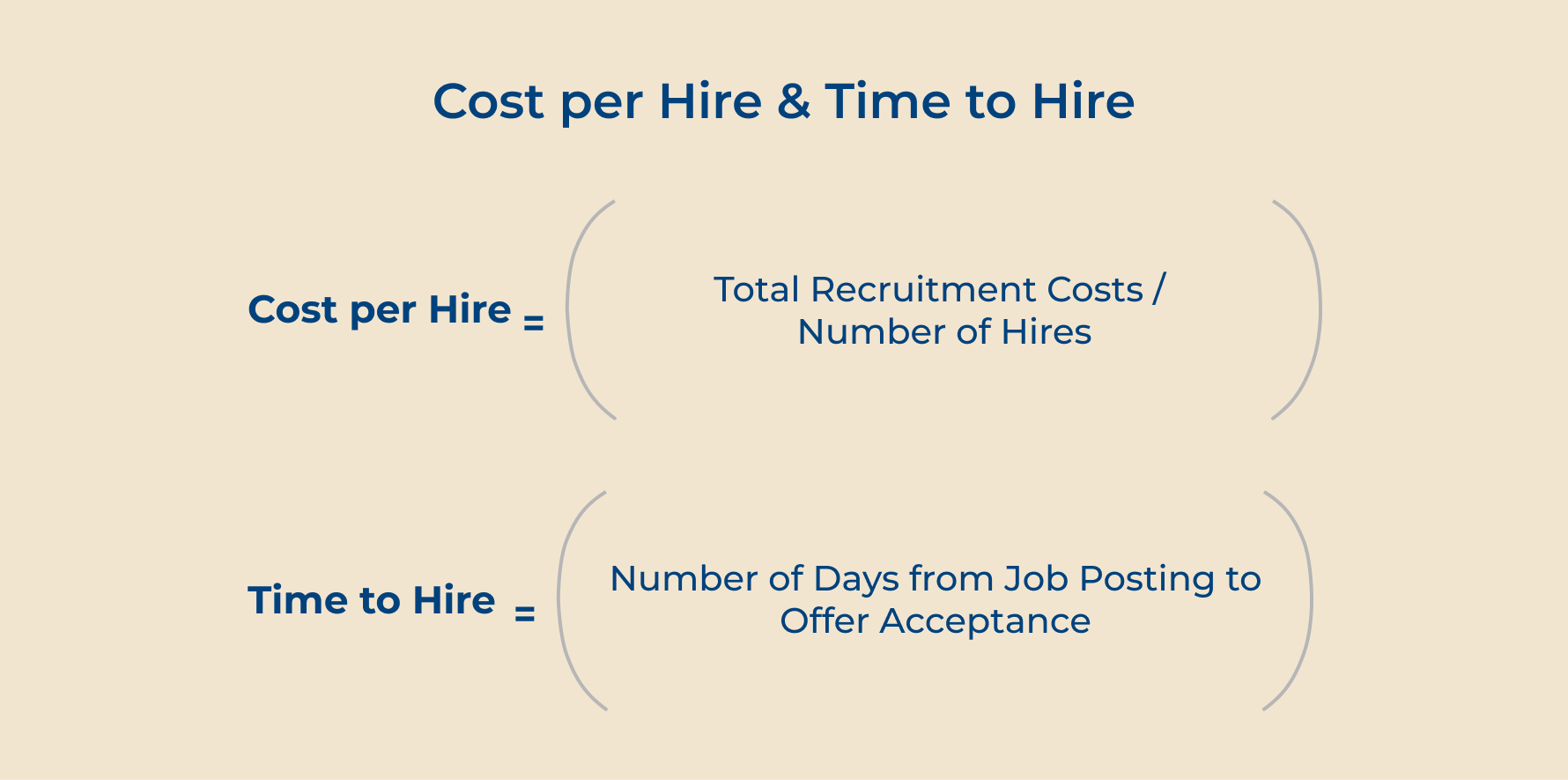
The formula breaks down into these components:
- Total recruitment costs: All expenses including advertising, recruiter fees, software and interview time.
- Number of hires: Total employees successfully recruited during the measurement period.
- Number of days: Calendar days elapsed through your entire hiring process.
Ideal benchmark for these metrics: The average cost per hire ranges from $4,000 to $5,000 depending on role complexity. Time to hire typically averages 30-45 days for most positions.
Calculation example:
If your company spent $40,000 on recruitment in a quarter and hired 10 people, your cost per hire is $4,000. A position posted January 1st with acceptance on February 15th shows 45 days time to hire.
7. Absenteeism Rate
Absenteeism rate tracks how often employees are absent from work when scheduled to be there. It captures unplanned absences beyond approved vacation time. High rates signal potential morale problems and directly impact your operational capacity.
Formula:
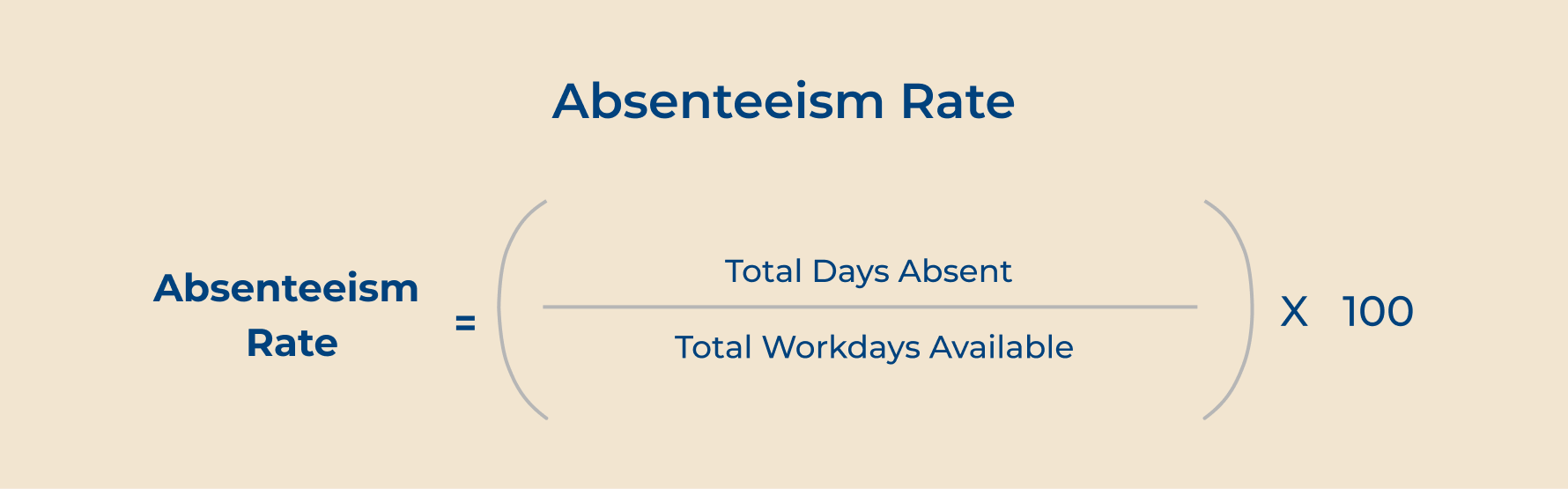
The formula breaks down into these components:
- Total days absent: Number of unscheduled days employees missed during the period.
- Total workdays available: Total scheduled workdays for all employees combined.
Ideal benchmark and calculation approach: A healthy absenteeism rate typically falls between 1.5-3% across most industries. Calculate monthly by tracking absent days against scheduled days to spot trends early.
Your team of 20 employees has 400 total scheduled workdays in a month and records 12 absent days, resulting in a 3% absenteeism rate.
8. Employee Net Promoter Score (eNPS)
eNPS gauges employee satisfaction by asking how likely they are to recommend your organization as a workplace. Employees rate on a 0-10 scale and you subtract detractors from promoters. It’s vital because engaged employees perform better and high turnover disrupts operations.
Formula:
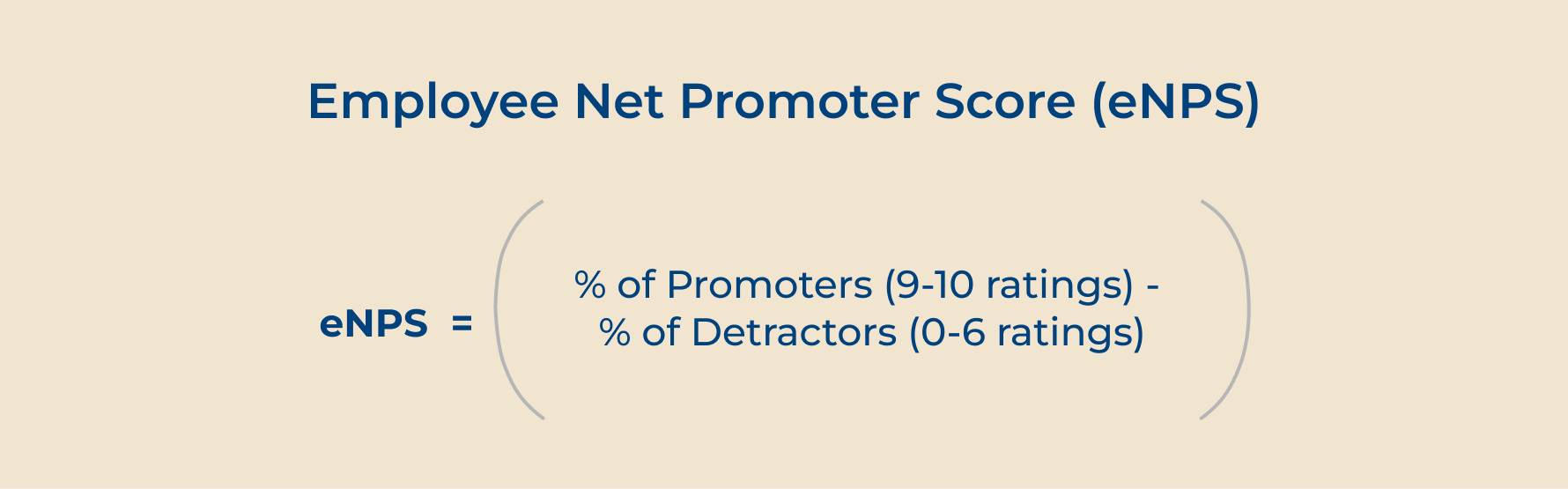
The formula breaks down into these components:
- Promoters: Employees who rate 9-10 and actively champion your workplace.
- Detractors: Employees who rate 0-6 and may spread negative sentiment.
Ideal benchmark and calculation approach: A positive eNPS above zero is decent, but top organizations achieve scores between 10-30. Survey employees quarterly to track engagement trends.
How to improve this metric:
- Act on employee feedback by implementing suggested improvements and communicating what changes you’ve made.
- Invest in career development opportunities that show employees you’re committed to their long-term success.
Customer-Focused Metrics
9. Customer Retention
Customer retention measures the percentage of customers who continue doing business with you over a specific period. Retention is crucial because keeping existing customers costs far less than acquiring new ones.
Formula:
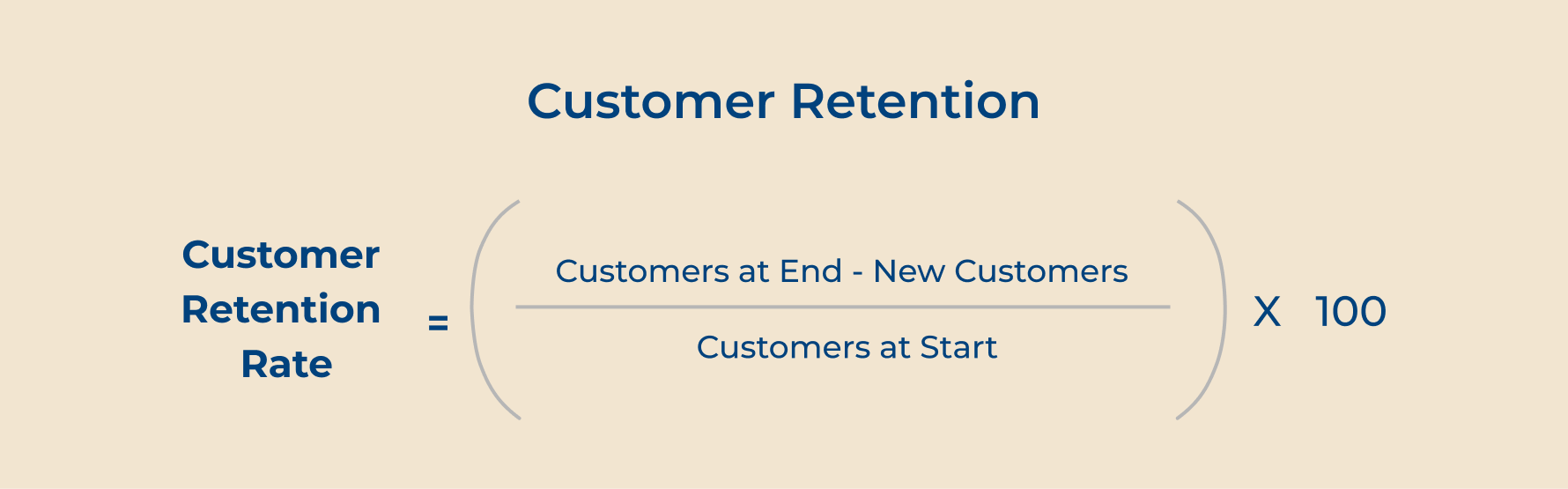
The formula breaks down into these components:
- Customers at end: Total customers you have at the period’s conclusion
- New customers: Customers acquired during the measurement period
- Customers at start: Total customers you had when the period began
Ideal benchmark for this metric: Strong retention rates generally fall between 75-90% annually for B2B businesses and 60-80% for consumer businesses.
Calculation example:
You started the year with 1,000 customers, gained 200 new ones and ended with 1,100 total. Your retention rate is 90%.
10. Customer Satisfaction Score (CSAT)
CSAT directly measures how satisfied customers are with your product or service. Customers typically rate satisfaction on a 1-5 scale. It provides immediate feedback on whether your operations meet customer expectations.
Formula:
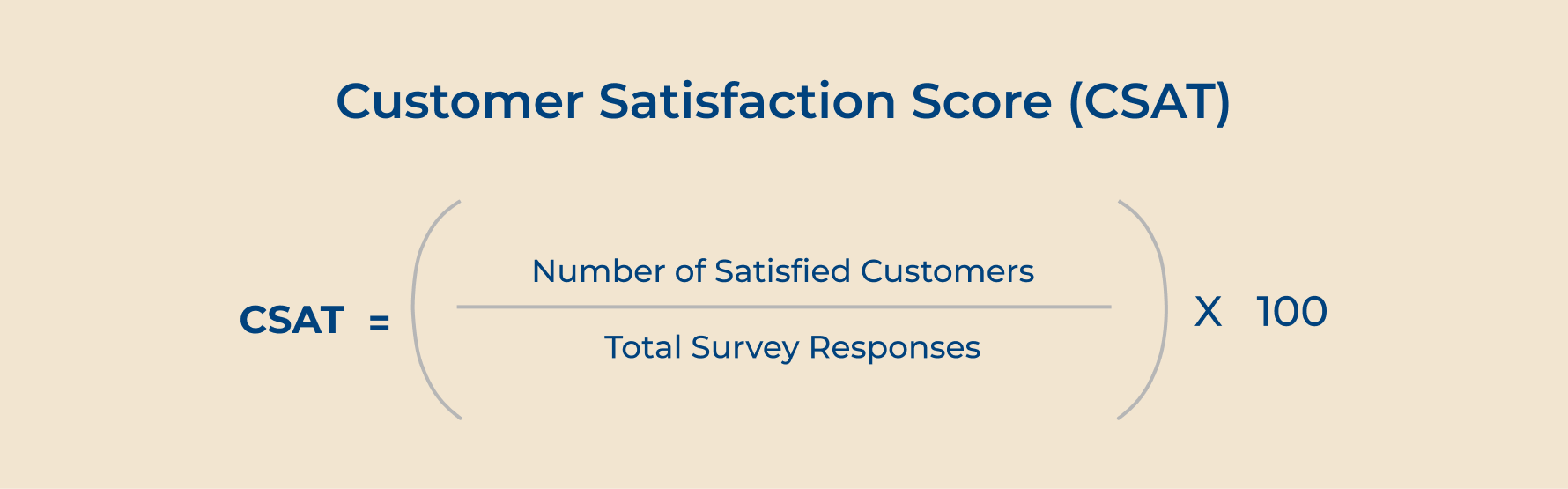
The formula breaks down into these components:
- Number of satisfied customers: Customers who rate their experience as 4 or 5.
- Total survey responses: All customers who completed your satisfaction survey.
Ideal benchmark and calculation approach:
Most successful companies maintain CSAT scores above 80%. Survey customers immediately after key touchpoints to capture accurate sentiment.
How to improve this metric:
- Respond quickly to customer inquiries and resolve issues on first contact to reduce frustration.
- Train frontline staff thoroughly so they can confidently address customer needs without escalations.
How to Implement Operational Metrics in Your Organization: 6 Steps
Whether you are starting from scratch or looking to refine your existing process, here’s a detailed guide outlining the six essential steps to successfully implement operational metrics in your organization
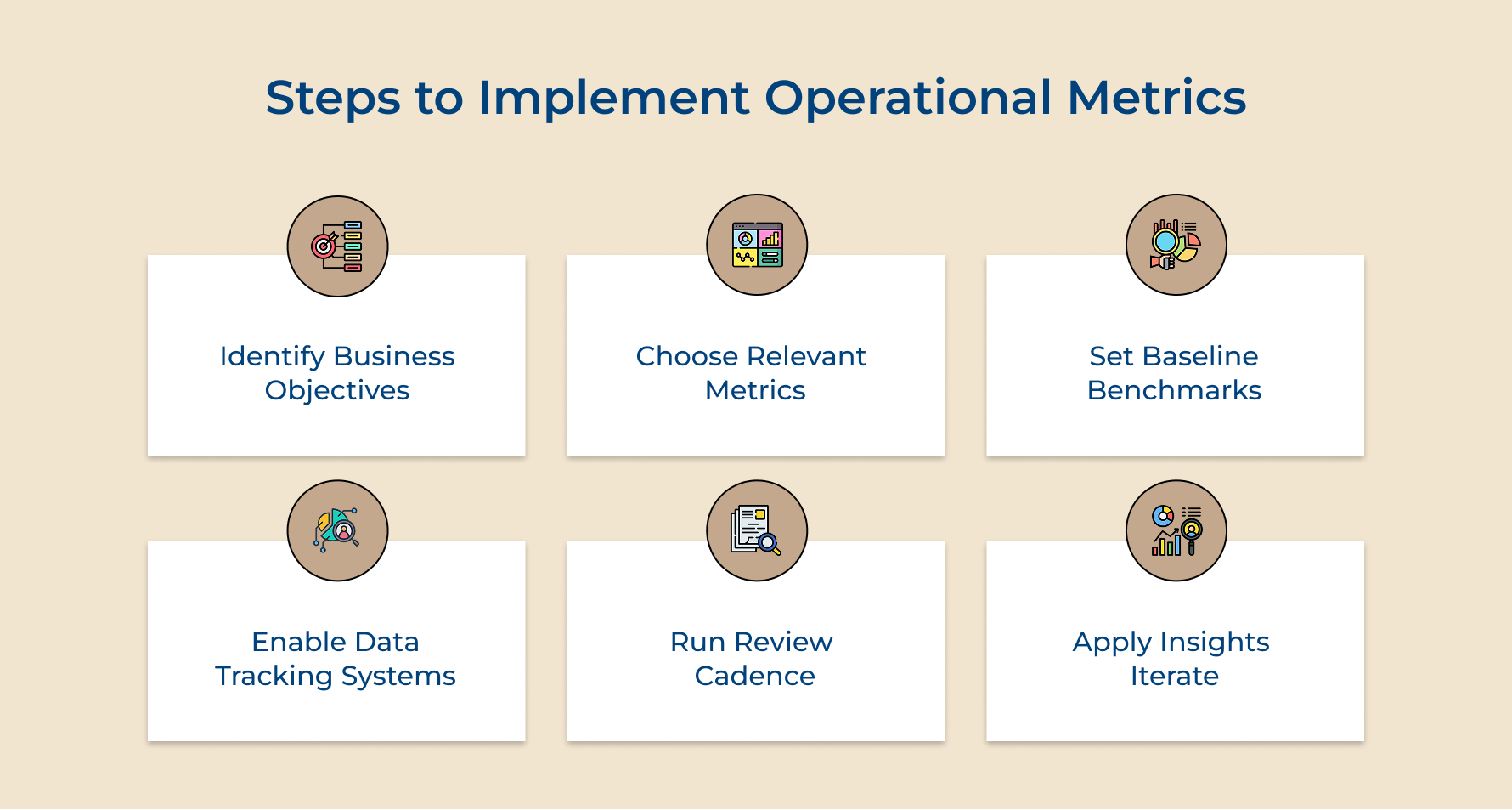
1. Identify Your Critical Business Objectives
This step involves determining what matters most to your business success and aligning your measurement efforts accordingly. It’s important because tracking metrics without clear objectives wastes resources and creates confusion about what actually drives your organization forward.
Here are three effective ways to identify your critical objectives:
- Align metrics with strategic goals: Identify which operational areas directly support your mission and long-term priorities and focus measurement efforts there.
- Assess current operational pain points: Speak with teams to pinpoint bottlenecks, quality gaps and recurring customer complaints.
- Prioritize measurement gaps: Focus on processes with limited visibility where better data will speed up decisions and fixes.
For example a growing e-commerce company might identify customer satisfaction and order fulfillment speed as critical objectives. They realize these areas directly impact repeat purchases and determine whether their growth trajectory continues or stalls in a competitive market.
2. Select the right operational metrics for your business
It is all about selecting the right metrics for each department. Every team contributes in a different way, so one-size-fits-all metrics don’t work. When you use department-specific measures, you clearly see what success looks like for each team. This makes performance easier to track and improve.
Consider these five key factors when choosing departmental metrics:
- Departmental goals and functions: Sales teams need conversion and revenue metrics while operations teams require efficiency as well as quality measurements.
- Data availability and accessibility: Choose metrics you can actually track with existing systems rather than theoretical ideals requiring massive infrastructure investments.
- Frequency of measurement: Some metrics like daily production output need constant monitoring while others like quarterly employee satisfaction work better with periodic review.
- Actionability of insights: Select metrics that point toward specific improvements rather than interesting numbers that don’t suggest clear next steps.
- Balance of leading and lagging indicators: Leading metrics predict future performance while lagging metrics confirm past results and you need both perspectives.
Should you involve department managers in selecting their own metrics? Absolutely, because they understand the nuances of their work better than anyone else. Their input ensures you choose measurements that reflect real operational challenges rather than what looks good in a boardsheet presentation.
3. Establish Baseline Performance and Benchmarks
Measure your current performance levels and set reference points to define success or failure. It’s crucial because without knowing where you start, you cannot measure progress or determine whether your improvement efforts actually work.
What happens without baselines? You’re essentially flying blind through your operations with no way to distinguish normal fluctuations from genuine problems. Teams celebrate improvements that might actually be declining performance or panic over variations that fall within acceptable ranges for your industry.
Here are four ways to establish solid baselines and benchmarks:
- Collect current performance data: Gather at least three months of historical data across your chosen metrics to understand typical performance ranges and account for seasonal variations.
- Research industry standards: Look at published benchmarks from trade associations, research firms, or competitors’ public reports to understand what good performance looks like in your sector.
- Consult with experienced practitioners: Talk to industry veterans or hire consultants who know realistic performance expectations and can help you avoid setting impossibly high or embarrassingly low targets.
- Start conservative and adjust: Set initial benchmarks slightly above current performance rather than aspirational levels that demoralize teams when consistently missed.
Why does this context matter for your success? Benchmarks give your team concrete targets to aim for and help you celebrate real wins when they happen. They also prevent you from accepting mediocre performance simply because you don’t know that better results are possible and achievable.
Examples of practical baselines different businesses might establish:
- A manufacturing plant might set a baseline defect rate of 2% based on current performance with a benchmark target of 1% aligned with industry leaders.
- A customer service team could establish a baseline average response time of 6 hours with a benchmark goal of 2 hours matching competitor standards.
- A sales department might record a baseline conversion rate of 15% and set a benchmark of 20% based on top performer achievements within the team.
4. Implement Data Collection and Tracking Systems
The focus here is on building systems that capture operational data automatically and consistently. Manual tracking wastes time and often leads to errors that reduce confidence in your metrics as well as decisions.
Existing tools should be reviewed to see if they can support key measurements like overall equipment effectiveness or if new solutions are required. Automated data flows reduce human error and allow teams to spend more time analyzing results instead of collecting data.
Pro tips:
- Choose tools that integrate with your existing software rather than creating data silos requiring manual reconciliation.
- Build in data validation rules that flag unusual values immediately so you can investigate anomalies before they corrupt reports.
5. Create Regular Review and Reporting Cadence
A regular review cadence keeps metrics alive and useful. Real value comes from consistently looking at the numbers and acting on what they show, not just collecting data.
Set a routine for metric reviews
Weekly or monthly check-ins make sure metrics stay visible, even during busy periods. Faster operations benefit from weekly reviews, while longer cycles can rely on a monthly rhythm to track Process Performance effectively.
Use dashboards that are easy to read
Clear visual dashboards turn raw data into simple charts and trends. Leaders can quickly understand what’s working and what’s not, instead of digging through spreadsheets. This is especially helpful for teams like human resources tracking changes over time.
Assign clear ownership for each metric
Every metric needs a named owner. Accountability ensures someone is watching results, spotting issues and taking action when numbers shift – such as a rising turnover rate that needs immediate attention.
6. Act on Insights and Adjust
This final step transforms your collected data into concrete improvements that enhance your operations. It’s needed because measuring performance without making changes wastes effort and leaves opportunities unexploited.
Why do trends matter and how do you spot them? Trends reveal whether performance is genuinely improving versus experiencing normal variation. You spot them by comparing current metrics against your baseline over multiple periods and looking for consistent directional movement.
Once you’ve identified what needs fixing, you need to test solutions and measure whether they work. Metrics provide objective evidence of whether your improvement initiatives deliver results.
Here are practical ways to turn insights into action:
- Root cause analysis: Investigate underlying causes rather than treating symptoms that will reappear after quick fixes.
- Pilot testing changes: Test improvements on a small scale first before rolling them out organization-wide.
- Track improvement impact: Measure whether your changes actually moved the needle before declaring victory.
Your business strategy shifts and market conditions change, which means yesterday’s metrics might miss today’s critical factors. Review your metric portfolio quarterly to retire measurements that no longer drive decisions.
Unlock the Potential of Your Business with Precise Operational Metrics
Operational metrics KPIs transform how you run your business by replacing guesswork with concrete data about what’s actually happening in your operations. When you track the right indicators and act on what they reveal, you gain control over efficiency as well as profitability.
Start small by implementing metrics that address your most pressing challenges and build from there as you become comfortable with the process. The organizations that succeed aren’t those with the most metrics but those that consistently measure what matters and adjust based on reality.
Limit time — not creativity
Everything you need for customer support, marketing & sales.

Neeti Singh is a passionate content writer at Kooper, where he transforms complex concepts into clear, engaging and actionable content. With a keen eye for detail and a love for technology, Tushar Joshi crafts blog posts, guides and articles that help readers navigate the fast-evolving world of software solutions.